
国际贸易

Search documents
开创合作共赢新局面
Jing Ji Ri Bao· 2026-01-09 22:04
Group 1: Core Perspectives - Expanding high-level opening-up is a strong driving force for promoting high-quality development, as emphasized in the 2025 Central Economic Work Conference [1] - The importance and urgency of expanding high-level opening-up are increasingly prominent as the international economic and trade landscape continues to evolve [1] Group 2: Trade Agreements and Economic Zones - The Regional Comprehensive Economic Partnership (RCEP) has been in effect for four years, significantly benefiting companies like Yunnan Hongta Plastic Co., which enjoyed over 600,000 yuan in tariff reductions by 2025 [2] - China has signed 24 free trade agreements with 31 countries and regions, with trade with free trade partners accounting for approximately 44% of total foreign trade [2] - The Hainan Free Trade Port officially commenced full island closure operations by the end of 2025, resulting in 1,972 new foreign trade registered enterprises in its first week [2] Group 3: Digital Trade Development - The Fourth Global Digital Trade Expo attracted 1,812 participating companies, achieving a total investment and trade intention signing amount exceeding 160 billion yuan [5] - In the first half of 2025, China's digitally deliverable service imports and exports reached 1.5 trillion yuan, while cross-border e-commerce imports and exports hit 1.3 trillion yuan, both setting historical highs [5] Group 4: Green Trade Initiatives - Green trade is becoming a crucial aspect of China's participation in global climate governance, with a focus on industrial greening and low-carbon products [4] - By 2025, China's exports of new energy vehicles and lithium-ion batteries continued to grow, with green products gaining international recognition [4] - The development of green trade is deeply rooted in the national "dual carbon" strategy and green development philosophy [4] Group 5: Belt and Road Initiative - High-quality co-construction of the Belt and Road Initiative is a vital path for expanding high-level opening-up and creating win-win cooperation [7] - In 2025, the China-Europe Railway Express operated 20,022 trains, with a total value exceeding 67.7 billion USD, connecting 128 cities in China and 232 cities in 26 European countries [7] - China has signed 16 free trade agreements with 22 Belt and Road countries, enhancing trade cooperation efficiency [8]
关于深圳国际贸易“信用证结算”实务操作及最新案例解析的函
Sou Hu Cai Jing· 2026-01-09 05:43
Core Insights - The article emphasizes the importance of international settlement in trade, particularly focusing on the practical operations and risk management of letter of credit (L/C) settlements in Shenzhen's foreign trade sector [3][10]. Group 1: Importance of International Settlement - International settlement is a critical component of international trade, directly affecting the security of trade funds, contract fulfillment, and the establishment of corporate international credibility [3]. - Shenzhen, as a major hub for foreign trade and an opening window for international commerce, requires a robust understanding of international settlement mechanisms, especially the complex letter of credit [3][4]. Group 2: Risks in Letter of Credit Operations - The primary risks associated with letter of credit operations include discrepancies in document submission, fraud and false documentation, bank operational risks, and human errors [4][5]. - Companies must establish a systematic document management system and enhance team expertise to effectively manage these risks and maintain control in letter of credit transactions [4]. Group 3: Benefits of Using Letters of Credit - Utilizing letters of credit can enhance transaction security by mitigating trust issues between buyers and sellers, thus reducing the risk of non-delivery [5]. - Proper settlement tools and financing arrangements can optimize cash flow and support business expansion [5]. - Letters of credit can help mitigate exchange rate and policy risks, providing clarity on responsibilities and reducing disputes arising from differing trade policies [5]. Group 4: Training and Capacity Building - Companies are encouraged to engage in systematic training to improve their understanding and operational capabilities regarding letter of credit processes and risk management [7][10]. - Key training areas include understanding the credit system, mastering operational points, strengthening risk control, and effectively utilizing financing tools [7][10]. - Familiarity with international rules such as UCP600 and ISBP745 is essential for companies to avoid errors in document formats, content, and submission deadlines [8]. Group 5: Conclusion - The article concludes that despite the complexity and specialization of letter of credit operations, they remain a vital tool for ensuring the safety of international trade [10]. - Shenzhen's foreign trade enterprises should proactively adapt to international regulations and enhance their letter of credit operational capabilities as a core skill for foreign trade [10].


【UNforex财经事件】贸易逆差大幅回落 关税裁决与货币政策变量叠加
Sou Hu Cai Jing· 2026-01-09 04:13
Group 1 - The core point of the article highlights a significant reduction in the U.S. trade deficit in October, dropping to $29.4 billion, which is the lowest level since 2009, deviating from market expectations and adding uncertainty to the macroeconomic environment [1][2][3] - The reduction in trade deficit is attributed to a notable decline in imports and stable exports, indicating a shift in trade flows and corporate behavior following the implementation of tariff policies [1][2] - The improvement in trade data is not comprehensive but concentrated in specific categories, such as increased exports of gold and other metals, while a significant decrease in pharmaceutical imports also contributed to lowering the overall deficit [2] Group 2 - Despite the reduction in trade deficit alleviating some concerns about the "backlash effect" of tariffs, uncertainties regarding trade policies remain, particularly with the U.S. Supreme Court set to rule on the government's authority to impose additional tariffs under the International Emergency Economic Powers Act [2] - Discussions around monetary policy are also sensitive, with U.S. Treasury Secretary Mnuchin indicating that President Trump may finalize the next Federal Reserve Chair selection soon, which could impact market expectations regarding interest rates [2] - Overall, the narrowing trade deficit provides a temporary reference for the effects of tariff policies, but underlying structural changes and policy expectations continue to create uncertainty in the market [3]
【UNforex财经事件】贸易结构短期修复 关税裁决与利率预期再成焦点
Sou Hu Cai Jing· 2026-01-09 04:07
Group 1 - The core point of the article highlights a significant reduction in the U.S. trade deficit in October, dropping to $29.4 billion, which is the lowest level since 2009, providing new insights into macroeconomic conditions amid ongoing tariff discussions [1][2]. - The trade deficit narrowed by nearly 40% compared to the previous month, driven by a notable decline in imports and relatively stable exports, indicating adjustments in trade flows and corporate behaviors following the implementation of tariff policies [2][3]. - The improvement in trade data is not broad-based but concentrated in specific categories, particularly with a significant increase in gold and other metal exports, while pharmaceutical imports decreased, reflecting short-term adjustments in response to high tariffs [3]. Group 2 - Despite the positive trade data, uncertainties regarding tariff policies remain, as the U.S. Supreme Court is set to rule on whether the government can continue imposing tariffs under the International Emergency Economic Powers Act, which could influence future trade policies [4]. - Discussions around monetary policy are also intensifying, with expectations that the next Federal Reserve chair will be announced soon, and current interest rates are perceived to be above neutral levels, indicating potential for policy adjustments [4]. - Overall, while the significant narrowing of the trade deficit provides a temporary validation of tariff effects, the underlying structural changes and policy expectations suggest that market conditions may continue to fluctuate based on these uncertainties [5].
全球贸易下行压力增大
Jing Ji Ri Bao· 2026-01-08 21:43
Core Insights - The global trade environment is experiencing significant volatility due to unilateral measures by the U.S., particularly the implementation of "reciprocal tariffs," which have intensified trade tensions and uncertainty in international trade policies [1][2] Group 1: Trade Policy and Uncertainty - The World Trade Organization (WTO) has identified policy uncertainty as a core indicator of the deteriorating global trade environment, with U.S. tariff increases being a key source of this uncertainty [2] - U.S. tariff measures have led to spillover effects, prompting other countries to raise tariffs and adjust their trade policies, resulting in increased global trade policy volatility [2] - The uncertainty surrounding U.S. trade actions has made it difficult for countries to predict future developments, distorting trade volume data and contributing to a fragmented global supply chain [2][3] Group 2: Trade Growth and Temporary Factors - The WTO revised its global trade growth forecast for 2025, initially predicting a decline but later adjusting it to a growth of 0.9% due to "preemptive imports" by U.S. companies ahead of tariff implementations [4] - Despite the temporary boost in trade figures, the WTO warns that this "preemptive import" effect will not last, and trade demand is expected to decline as tariffs take effect and inventories are depleted [4] - Other temporary factors, such as rising prices of commodities and short-term export incentives, have also contributed to inflated trade figures, masking underlying weaknesses in actual demand [4] Group 3: Emerging Industries and Trade Dynamics - While emerging industries like artificial intelligence and digital services have shown some potential to drive trade, they are insufficient to reverse the downward trend in traditional trade [5] - The concentration of AI-related industries in a few economies limits the broader benefits for developing countries, and the reliance on physical exports remains strong in many economies [5] - The potential for AI to enhance global trade significantly by 2040 is contingent on reducing policy and technological disparities, which are currently exacerbated by ongoing trade uncertainties [5] Group 4: Future Trade Outlook - Global trade is expected to face ongoing downward pressure due to structural, institutional, and cyclical factors, leading to slower growth and increased volatility [6] - Rising trade barriers and protectionist measures are identified as core risks to the trade outlook, potentially increasing costs and disrupting global supply chains [6] - Geopolitical tensions and supply chain restructuring may temporarily boost alternative trade, but long-term effects are likely to reduce overall cross-border trade intensity [6]
The Supreme Court may rule Friday on Trump's tariffs. Here's what's at stake for the economy
CNBC· 2026-01-08 19:25
Core Viewpoint - The U.S. Supreme Court is set to rule on the legality of President Trump's tariffs, which could significantly impact trade policy and the U.S. fiscal situation [1]. Group 1: Legal Framework - The ruling will address whether the administration can levy tariffs under the International Emergency Economic Powers Act (IEEPA) and if reimbursement is required for importers who have already paid the duties [2]. - The court may grant limited powers under the IEEPA and require only limited repayment, among other options [3]. Group 2: Implications for Tariffs - Even if the White House loses the case, it retains other tools to implement tariffs without relying on the emergency powers cited under the IEEPA [3]. - Treasury Secretary Scott Bessent indicated that the ability to collect tariffs at current revenue levels remains intact, but the ruling could limit the president's flexibility in using tariffs for national security and negotiation purposes [4].

2025年柬埔寨国际贸易额逾652亿美元
Zhong Guo Xin Wen Wang· 2026-01-08 12:52
Core Insights - Cambodia's international trade is projected to exceed $65.2 billion in 2025, representing an approximate 18% growth compared to 2024 [1] Trade Partners - China is expected to remain Cambodia's largest trading partner, with bilateral trade reaching $19.73 billion, a nearly 30% increase year-on-year [1] - ASEAN ranks as the second-largest trading partner with $16.37 billion, followed by the United States at $13.15 billion [1] Export and Import Data - Cambodia's exports are forecasted to be $31.28 billion, reflecting a 17% increase, while imports are expected to reach $33.96 billion, marking an 18% growth [1] - Key export products include garments, footwear, travel goods, automotive tires, electronic components, as well as specialty agricultural products like rice, cassava, and cashews [1] Trade with Thailand - Trade between Cambodia and Thailand is projected to total $3.657 billion in 2025, showing a nearly 15% decline from $4.295 billion in 2024 due to border situation impacts [1]
回顾:沉默6天后蒙古国终于签字了,中国已获得想要的,美国却不如意
Sou Hu Cai Jing· 2026-01-08 04:32
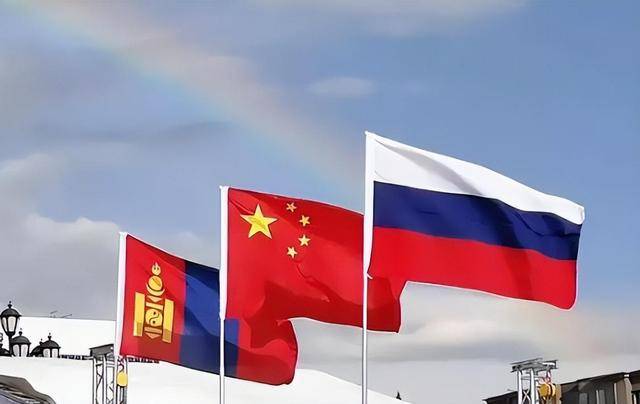
Group 1 - The core point of the article is that Mongolia has signed a currency swap agreement with China, which allows it to reduce its dependence on the US dollar and embrace the Chinese yuan, amidst the backdrop of the US Federal Reserve's interest rate hikes [1][4][5] - The currency swap agreement, signed in mid-August, marks a new phase in economic cooperation between China and Mongolia, enabling direct trade and investment settlements in yuan, thus improving trade efficiency and reducing transaction costs [4][5] - Mongolia's decision to abandon the dollar is influenced by its economic reliance on China and the increasing burden of debt due to US interest rate hikes, which have made dollar transactions inefficient and risky [4][5] Group 2 - The trend of de-dollarization is becoming more pronounced globally, with many countries opting for local currencies or currency alliances, challenging the dollar's hegemonic status [7][9] - Mongolia's historical context and its strategic position between East and West allow it to adopt a rational foreign policy, seeking to maximize its benefits from both China and the US [11][14] - The recent agreements with the US, including an open skies agreement and a rare earth supply agreement, reflect Mongolia's strategy to balance its relationships while ensuring its own interests are prioritized [14][16] Group 3 - The frequent interest rate hikes by the US Federal Reserve are causing significant global economic turmoil, with rising inflation and declining consumer confidence in the US, which may lead to a recession [17] - Emerging markets are particularly affected by the Fed's policies, experiencing currency depreciation and economic challenges, which could exacerbate global economic instability [17] - The article suggests that the Fed's actions could have a cascading effect on the global economy, urging for responsible policy coordination among nations to mitigate negative impacts [17]
一线反馈:中国-拉美航运与贸易怎么样了
Di Yi Cai Jing· 2026-01-06 11:46
Core Insights - China is projected to be the largest source of imports for Latin America in 2025, with a growth rate of 13% [10] - The ongoing tensions between the US and Venezuela have led to cautious behavior among Chinese companies, but many continue to explore opportunities in the South American market [1][2] Trade and Shipping Impact - Current shipping and trade activities in Latin America remain stable, although some clients have paused shipments or adjusted routes due to the situation in Venezuela [2] - Major shipping companies have not ceased operations in Venezuela, and all ports are reported to be open and functioning normally [2][3] - The overall impact on trade is limited, as Venezuela has been under US sanctions for years, resulting in already low trade volumes [2][3] E-commerce and Market Dynamics - E-commerce platforms like Mercado Libre are focusing on expanding their logistics and local accounts in key markets such as Brazil and Mexico, aiming for significant growth in cross-border business [4] - Chinese sellers have seen a 38% increase in sales in Latin America, with plans to increase transaction volumes fivefold in the next three years [4] Shipping Rates and Market Trends - Shipping rates for Latin America have been declining, contrasting with rising rates in other regions like Europe and the US [5][6] - The shipping demand in the South American route is stabilizing, with signs of a potential market recovery [6] Sector-Specific Insights - The demand for high-value products such as machinery, electronics, and automotive parts is increasing in Latin America, alongside traditional exports like energy and agricultural products [8][9] - Chinese automotive exports to Latin America are expected to rise significantly, with a projected increase of 33% in 2025 [9] Future Trade Relations - The growth in trade between China and Latin America is supported by free trade agreements and tariff reductions, enhancing trade facilitation [10] - The evolution of bilateral economic relations will depend on the geopolitical situation and its impact on trade dynamics [10]
锚定开放新坐标 激活外事新动能 滨州市外办以“滨企创世界”行动谱写高水平开放新篇章
Xin Lang Cai Jing· 2026-01-04 15:53
Core Viewpoint - The article emphasizes the "Binhai Enterprises Create the World" initiative by the Binzhou Municipal Government, aimed at enhancing international cooperation and supporting local enterprises in their global expansion efforts, aligning with China's broader strategy for high-level opening up and cooperation [1][9]. Group 1: Institutional Framework and Policy Support - The Binzhou Municipal Foreign Affairs Office has established a systematic framework to support enterprises in their international ventures, including the issuance of guiding opinions and the formation of a specialized working group involving 22 foreign-related departments [2]. - A memorandum of cooperation was signed between the provincial foreign affairs office and the Binzhou government to enhance high-quality development in foreign affairs, along with the release of a service list for internationalization that includes 100 items and 29 service flowcharts [3]. Group 2: International Cooperation and Networking - The city successfully hosted the International Friendship Cities Day and a business matchmaking event, attracting nearly 80 foreign guests from 24 countries, marking a record scale for foreign affairs events in Binzhou [4]. - The city has expanded its network of international friendship cities to 15 countries and 19 cities, enhancing its global outreach and collaboration opportunities [4]. Group 3: Resource Integration and Service Optimization - A comprehensive foreign affairs resource database has been established, covering 175 countries and 10 major UN agencies, providing over 18,000 instances of overseas information consulting services to local enterprises [7]. - The city has implemented a three-tier foreign affairs service network to ensure efficient problem-solving and service delivery to enterprises, enhancing the overall support for international cooperation [8]. Group 4: Performance and Achievements - Over 200 enterprises were organized for international ventures, resulting in nearly 400 trade matching activities with 71 countries, achieving a record signing amount of over 6 billion yuan [5]. - The city has successfully invited foreign delegations, including a group from South Africa, facilitating significant agricultural exchanges and collaborations [6].
