
旅行用品

Search documents
2026年1月柬埔寨服装、鞋类及旅行用品出口额达14.7亿美元 同比增长超8%
Shang Wu Bu Wang Zhan· 2026-02-26 16:44
Core Insights - In January 2026, Cambodia's exports of garments, footwear, and travel goods reached $1.47 billion, marking an over 8% increase compared to $1.36 billion in the same month last year [1] Group 1: Export Performance - Garment exports amounted to $1.01 billion, reflecting a year-on-year growth of 6.8% [1] - Textile exports reached $70 million, showing a significant year-on-year increase of 35.6% [1] - Footwear exports were approximately $200 million, with a year-on-year growth of 16.9% [1] - Travel goods exports totaled $190 million, experiencing a modest year-on-year increase of 1.1% [1] Group 2: Economic Impact - The garment, footwear, and travel goods sectors are crucial drivers of economic growth in Cambodia [1] - Major export markets for these products include the United States, Europe, the United Kingdom, Canada, South Korea, and Japan [1]
今年首月柬埔寨与RCEP成员国贸易额实现大幅增长
Zhong Guo Xin Wen Wang· 2026-02-21 01:04
Group 1 - The total trade volume between Cambodia and RCEP member countries exceeded $3.7 billion in January, with exports amounting to $927 million, a year-on-year increase of 19.34%, and imports reaching $2.83 billion, up 13.32% [1] - Cambodia's major trading partners within RCEP include China, Vietnam, Japan, and South Korea, highlighting the importance of these relationships for the country's trade dynamics [1] - The Royal Academy of Cambodia's economist emphasized that RCEP is crucial for diversifying and expanding Cambodia's export markets, especially amid uncertain global political and economic conditions [1] Group 2 - The Garment, Footwear, and Travel Goods (GFT) sector in Cambodia achieved an export revenue of approximately $1.398 billion in January, reflecting a year-on-year growth of 7.2% [2] - Within the GFT sector, garment exports totaled $1.014 billion, increasing by 6.7%, while footwear exports reached $196 million, up 16.8%, and travel goods exports amounted to $188 million, growing by 1.1% [2] - The GFT sector is the largest source of foreign exchange for Cambodia, accounting for 46.5% of the country's total exports, with primary markets including the United States, European Union, Canada, and Japan [2]
王府井免税北京首家机场店正式开业
Xin Jing Bao· 2026-02-11 13:12
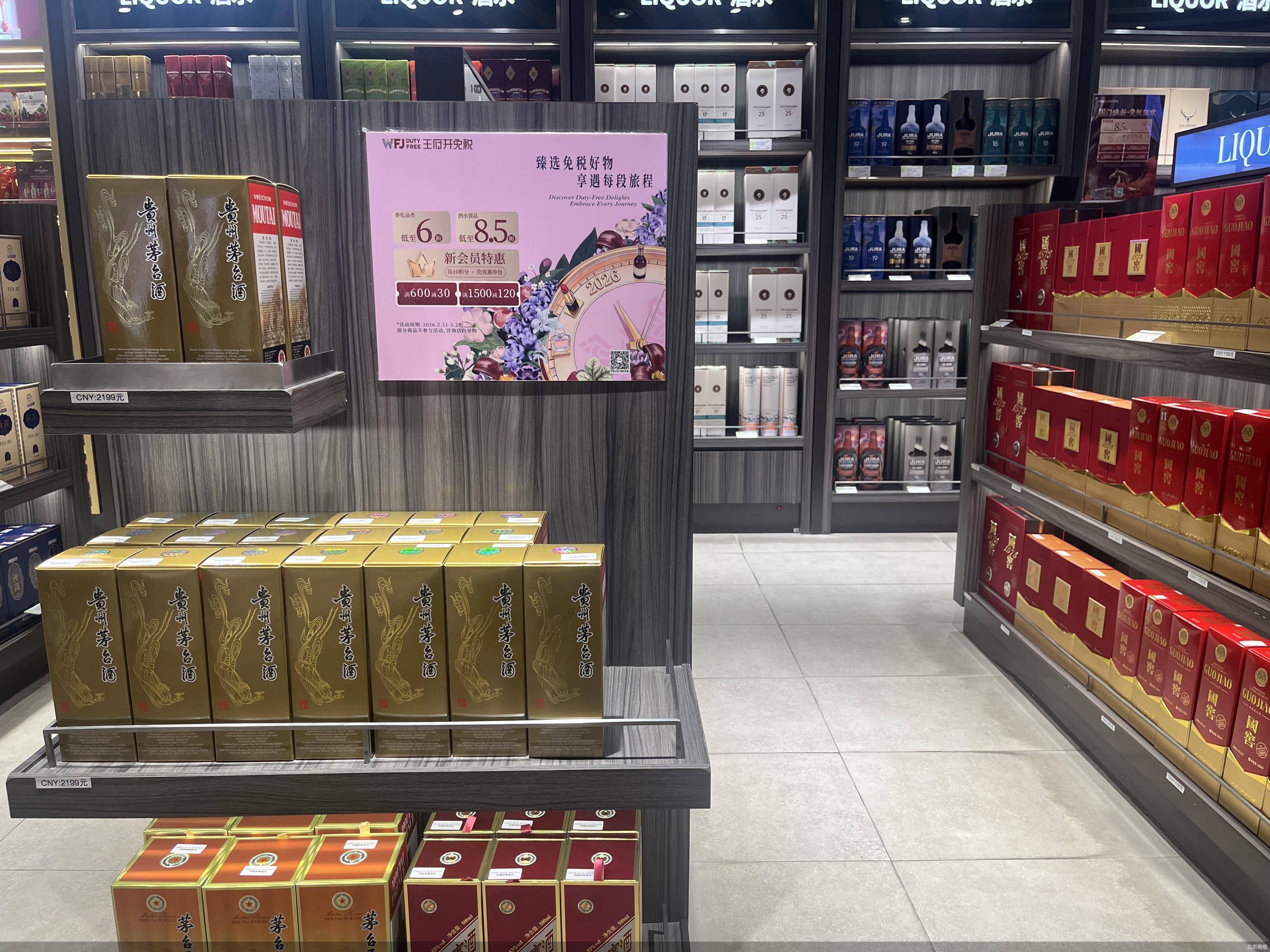
Core Insights - Wangfujing Duty-Free officially opened its duty-free store at Capital Airport T2 terminal, marking its entry into the Beijing-Tianjin-Hebei international aviation hub and establishing a presence in the core duty-free market [1] - The store features popular duty-free categories such as perfumes, cosmetics, alcohol, digital products, and travel items, showcasing both international brands and local cultural products [1] - The opening of the airport store signifies the establishment of a comprehensive consumption loop from inbound first purchases, in-city repurchases, to outbound supplementary purchases [1] Group 1 - The store is located in the international transit area of T2 terminal and includes a variety of high-end products, with a focus on integrating supply chain and marketing resources to create competitive advantages [1] - In 2025, Beijing received 5.48 million inbound tourists, a 39% increase, and the airport's passenger throughput reached 70.76 million, with a year-on-year growth of 5% [1] - Wangfujing Duty-Free expects to continue sales growth in Beijing, driven by the recovery of international inbound tourism [1] Group 2 - Beijing has been approved as a pilot for international consumption environment construction, supporting the development of international consumer clusters and tax refund stores [2] - The T2 duty-free store has implemented multiple initiatives to enhance the shopping experience for inbound tourists, including multilingual payment platforms and plans to incorporate AI technology and cultural experiences [2] - The second phase of the store's opening will focus on creating a cultural zone for domestic brands, providing international travelers with exposure to Chinese local culture [2]

引入科技数码、国潮精品 王府井免税北京首家机场店开业
Bei Jing Shang Bao· 2026-02-11 08:29
Core Insights - Wangfujing Duty-Free officially opened its duty-free store at Beijing Capital Airport T2, marking its first presence in a major international hub in China [1][4] - The T2 project is seen as a strategic move to enhance the international consumption center in Beijing, with a focus on high customer spending and unique shopping experiences [3][7] Group 1: Business Strategy - The T2 duty-free store is part of Wangfujing Group's dual-driven strategy of "taxable + duty-free" and aims to expand into high-end consumer markets [4][8] - The store features a mix of popular categories including imported cosmetics, domestic and international beverages, travel goods, and electronics, catering to diverse consumer needs [4][8] Group 2: Competitive Advantage - The competitive edge of the T2 duty-free store lies in its precise product mix, unique brand experiences, and deep integration of omnichannel services, transitioning from traditional retail to value experiences [7] - The store emphasizes the introduction of domestic trendy products and cultural IP items, enhancing its appeal to consumers [4][7] Group 3: Future Developments - Wangfujing Group has been rapidly expanding its duty-free operations since obtaining a license in 2020, with plans for further projects in Harbin and Mudanjiang airports, filling gaps in Northeast China [8] - The collaboration between Wangfujing Group, Shougang Group, and Capital Airport Group aims to optimize store operations and innovate consumer experiences, promoting high-quality development in the airport duty-free sector [8]

入境成都 下了飞机就能逛免税店
Xin Lang Cai Jing· 2026-01-22 19:12
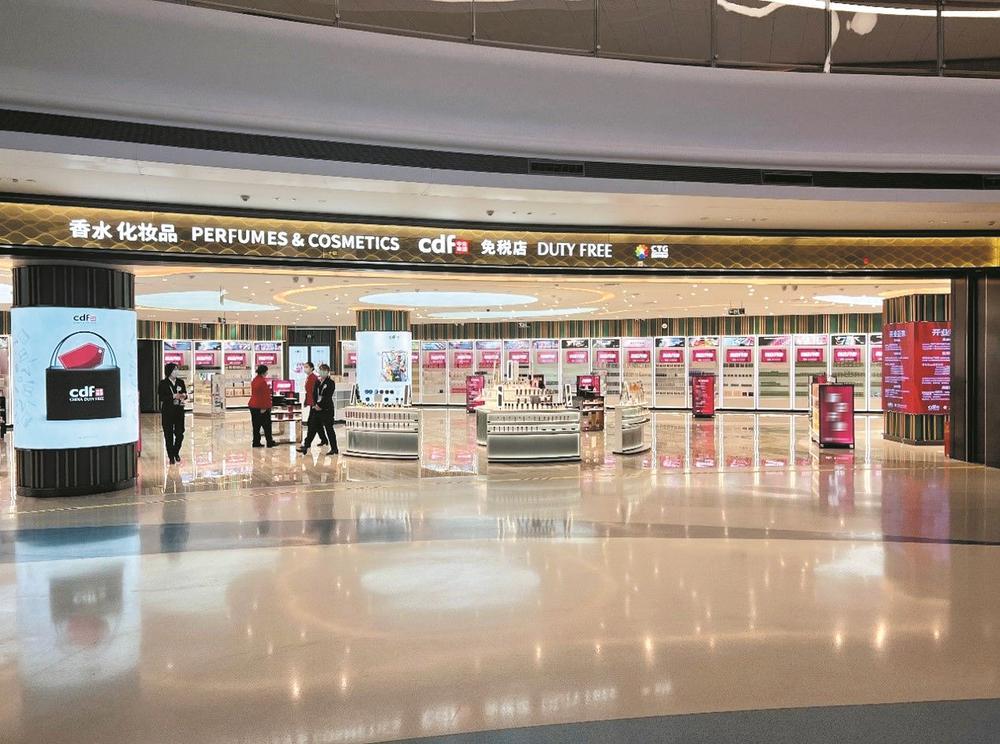
Core Viewpoint - Chengdu Tianfu International Airport has been approved to establish a new duty-free shop for incoming travelers, enhancing the shopping experience for passengers arriving in Chengdu [1][3]. Group 1: Duty-Free Shop Establishment - The new duty-free shop will allow travelers arriving at Chengdu's airport to shop immediately after disembarking [1]. - The establishment of the duty-free shop is part of a broader initiative by the Ministry of Finance, Ministry of Commerce, Ministry of Culture and Tourism, General Administration of Customs, and State Taxation Administration to set up new duty-free shops at 41 ports, including Chengdu Tianfu International Airport [2]. - The airport's outbound duty-free shop, operated by China Duty Free Group, has an area exceeding 2,800 square meters and offers a variety of products including cosmetics, luxury goods, tobacco, alcohol, skincare products, food, and travel items [2][3]. Group 2: Shopping Regulations and Consumer Insights - The inbound duty-free shop will have different regulations compared to outbound shops, primarily in terms of the target audience and tax-free spending limits [4]. - Travelers can spend up to 5,000 RMB tax-free on personal items upon entry, with an additional allowance from the duty-free shop, bringing the total to a maximum of 8,000 RMB [6]. - There is a common misconception that prices at duty-free shops are always lower than those at regular stores; however, prices can vary due to different supply channels and promotional activities [6].
2025年柬埔寨国际贸易额逾652亿美元
Zhong Guo Xin Wen Wang· 2026-01-08 12:52
Core Insights - Cambodia's international trade is projected to exceed $65.2 billion in 2025, representing an approximate 18% growth compared to 2024 [1] Trade Partners - China is expected to remain Cambodia's largest trading partner, with bilateral trade reaching $19.73 billion, a nearly 30% increase year-on-year [1] - ASEAN ranks as the second-largest trading partner with $16.37 billion, followed by the United States at $13.15 billion [1] Export and Import Data - Cambodia's exports are forecasted to be $31.28 billion, reflecting a 17% increase, while imports are expected to reach $33.96 billion, marking an 18% growth [1] - Key export products include garments, footwear, travel goods, automotive tires, electronic components, as well as specialty agricultural products like rice, cassava, and cashews [1] Trade with Thailand - Trade between Cambodia and Thailand is projected to total $3.657 billion in 2025, showing a nearly 15% decline from $4.295 billion in 2024 due to border situation impacts [1]
首家全品类便利店亮相国门商圈,旅客冬日出行体验再升级
Zhong Guo Min Hang Wang· 2025-12-24 06:51
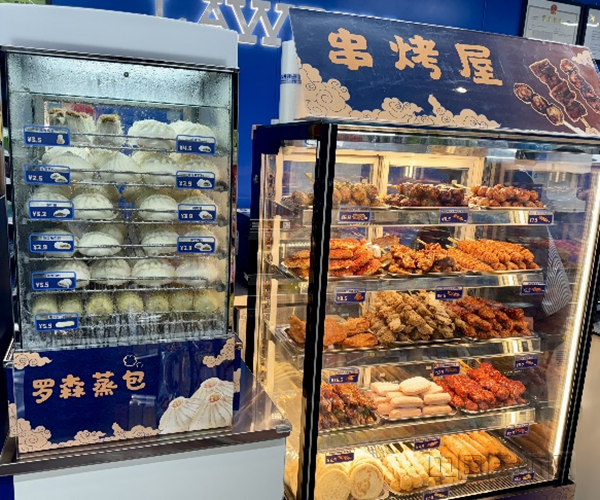
Group 1 - The core idea of the news is the launch of the first all-category convenience store at Beijing Capital International Airport's T3 terminal, aimed at meeting diverse passenger needs [1][2]. - The new convenience store enhances the travel experience by offering a variety of products, including instant meals and freshly prepared hot food, thus transitioning from basic travel necessities to a more enjoyable shopping experience [2][3]. - The successful establishment of the convenience store is attributed to the collaboration between the airport's commercial company and various departments, overcoming challenges related to space modification and facility adaptation [3]. Group 2 - The convenience store introduces a live cooking model, offering items such as buns, fried skewers, coffee, and soy milk, which significantly improves convenience and passenger satisfaction [2]. - Future plans include opening another all-category convenience store in the T2 terminal, ensuring that passengers in different areas can enjoy warm meals during winter [2]. - The airport's commercial company aims to continuously adapt to new consumption trends and enhance the airport shopping environment by collaborating with quality brands and partners [3].
今年前11月柬埔寨服装鞋类及旅行用品出口达148亿美元 劲增16.9%
Shang Wu Bu Wang Zhan· 2025-12-20 04:27
Core Viewpoint - The report from the Cambodian Ministry of Commerce indicates a steady growth in the export of garments, footwear, and travel goods, reaching $14.84 billion in the first 11 months of the year, a 16.9% increase compared to $12.69 billion in the same period last year [1] Export Performance - Garment exports amounted to $10.46 billion, reflecting a year-on-year growth of 17% [1] - Textile exports reached $620 million, showing a significant increase of 36.7% [1] - Footwear exports totaled $1.91 billion, marking a growth of 26.4% [1] - Travel goods exports were valued at $1.85 billion, with a modest increase of 3.7% [1] Economic Impact - The garment, footwear, and travel goods sectors are crucial drivers of economic growth in Cambodia and represent the largest source of foreign exchange earnings [1] - The primary export markets for these products include the United States, Europe, the United Kingdom, Canada, South Korea, and Japan [1] Labor Market Update - The minimum wage for workers in the garment, footwear, and travel goods sectors will increase from $208 to $210 next year [1] - Currently, the minimum wage system applies only to these three manufacturing sectors, with other industries not yet included [1]
今年前10个月柬埔寨服装鞋类及旅行用品出口超136亿美元 同比劲增20%
Shang Wu Bu Wang Zhan· 2025-11-20 12:30
Core Insights - Cambodia's exports of garments, footwear, and travel goods reached $13.62 billion in the first ten months of this year, marking a significant increase of 20% compared to $11.35 billion during the same period last year [1] Export Performance - Garment exports totaled $9.62 billion, reflecting a year-on-year growth of 20.29% [1] - Textile exports amounted to $560 million, with a notable increase of 38.77% [1] - Footwear exports reached $1.73 billion, showing a growth of 29.9% [1] - Travel goods exports were $1.71 billion, growing by 5.8% [1] Economic Impact - The garment, footwear, and travel goods sectors are crucial drivers of Cambodia's economic growth and serve as a strategic foundation for maintaining foreign exchange reserves [1] - Major export markets include the United States, Europe, the United Kingdom, Canada, South Korea, and Japan [1] Future Projections - The total export value for garments, footwear, and travel goods in 2024 is projected to be $13.92 billion, representing a 23% increase from $11.29 billion in 2023 [1] Labor Market Update - The minimum wage for workers in the garment, footwear, and travel goods sectors will increase from $208 to $210 next year [1] - Currently, the minimum wage policy applies only to these three manufacturing sectors, with other industries not yet included [1]
今年前3个季度柬埔寨服装鞋类及旅行用品出口超122亿美元 同比增长16.7%
Shang Wu Bu Wang Zhan· 2025-10-23 19:23
Core Insights - Cambodia's exports of garments, footwear, and travel goods reached $12.21 billion in the first three quarters of this year, marking a 16.7% increase compared to $10.46 billion in the same period last year [1] Group 1: Export Performance - Garment exports totaled $8.64 billion, reflecting a year-on-year growth of 16.9% [1] - Textile exports amounted to $510 million, showing a significant increase of 34.7% [1] - Footwear exports reached $1.54 billion, with a growth rate of 26.7% [1] - Travel goods exports were valued at $1.53 billion, growing by 3.2% [1] Group 2: Economic Impact - The garment, footwear, and travel goods sectors are crucial drivers of Cambodia's economic growth and the largest source of foreign exchange income [1] - Major export markets include the United States, Europe, the United Kingdom, Canada, South Korea, and Japan [1] Group 3: Labor Standards - The minimum wage for workers in the garment, footwear, and travel goods factories will increase from $208 to $210 next year [1][2]