智能穿戴设备

Search documents
爆发元年与洗牌前夜:AI眼镜“成长的烦恼”
Xi Niu Cai Jing· 2025-11-28 02:28
Core Insights - The AI glasses market in China is experiencing explosive growth, with significant sales increases during the "Double 11" shopping festival, indicating a strong consumer demand for this technology [2][6][8] - Major tech companies like Alibaba, Baidu, and Xiaomi are entering the AI glasses space, intensifying competition with established players like Rokid and Thunder Innovation [3][4] - Despite the growth, the industry faces challenges such as high return rates, supply chain issues, and a lack of killer applications, which hinder its maturity [8][9][10] Group 1: Market Dynamics - The AI glasses market is projected to grow significantly, with global shipments expected to exceed 40 million units by 2029, and China leading in growth rates [6] - Major brands like Ray-Ban Meta have contributed to the market's transition from concept to consumer-level products, with sales reaching 2 million units since launch [6] - The "Double 11" sales data shows a staggering 25-fold increase in smart glasses sales on Tmall, with other brands like Thunder Innovation and Rokid also reporting over 80% growth [7][8] Group 2: Competitive Landscape - Established players focus on core hardware technology, while internet giants leverage AI ecosystem integration to capture market share [3][4] - Xiaomi's AI glasses, priced at 1999 yuan, aim to create a seamless ecosystem with its other devices, lowering the entry barrier for consumers [4] - Baidu's re-entry into the market with its AI glasses Pro showcases the company's commitment to integrating AI capabilities into wearable technology [3] Group 3: Challenges and Risks - High return rates are a significant concern, with average rates around 30% on major platforms and as high as 40-50% on Douyin [8][9] - Technical issues such as weight, battery life, and performance are common complaints among users, impacting overall satisfaction [9] - The industry lacks a "killer application" that would drive daily usage and consumer loyalty, making it difficult for companies to establish a strong market presence [10][11] Group 4: Future Outlook - The year 2025 is anticipated to be a pivotal year for AI glasses, but current high return rates and user experience challenges indicate that the market is still in an exploratory phase [12] - The industry must focus on technological advancements and real-world applications to transition from novelty items to essential smart devices [12] - Companies are encouraged to prioritize user feedback and rapid iteration to overcome existing barriers and achieve widespread adoption [12]

智能眼镜更新
2025-11-28 01:42
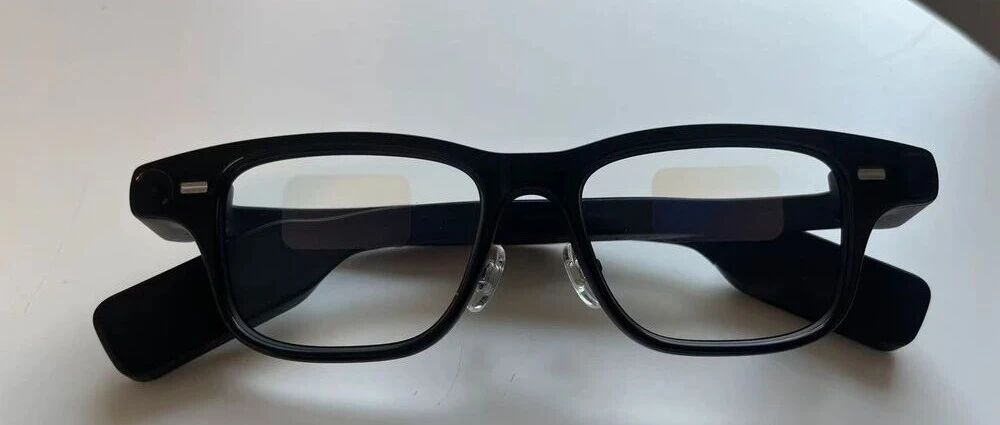
Summary of Quark Smart Glasses Conference Call Company and Industry Overview - The conference call discusses **Quark Smart Glasses**, a product in the **smart eyewear industry**. Key Points and Arguments 1. **Comfort and Design**: Quark Smart Glasses outperform competitors in comfort due to flexible hinges, optimized weight distribution, and a nose pad design tailored for Asian facial structures, significantly enhancing user experience and addressing discomfort issues common in traditional smart glasses [2][4][5] 2. **Optical Performance**: The glasses utilize **ZhiGe optical waveguide modules** with a light transmittance of **97%-98%**, surpassing the industry average of around **90%**. This improvement effectively addresses issues like rainbow effects, light leakage, and image blurriness, enhancing visual experience despite higher manufacturing costs [2][11] 3. **Battery Design**: The glasses feature a **pluggable battery design** that allows users to replace batteries in seconds without interrupting usage, providing a practical solution to battery anxiety compared to competitors that require the device to be removed for charging [2][4] 4. **Ecosystem Integration**: The integration with the **Alibaba ecosystem** (including apps like Gaode Navigation, Alipay, and Taobao) provides Quark Smart Glasses with a unique competitive advantage, creating software and hardware barriers that are difficult for competitors to replicate [2][6][7] 5. **Sales Forecast**: Quark Smart Glasses are projected to achieve sales of over **200,000 units** within a year, positioning them as a leader in the industry, although there are concerns regarding supply chain disruptions and whether production capacity can meet demand [2][9] 6. **Pricing Strategy**: The current pricing of **3,699 RMB** is deemed reasonable based on market research, with consumers showing a willingness to pay a premium for the Alibaba brand [2][10] 7. **Manufacturing Costs**: The estimated manufacturing cost of the glasses ranges from **2,000 to 2,500 RMB**, with key components including optical modules and waveguides being significant cost drivers [3][14] 8. **Local Processing Power**: Local processing capabilities are essential for ensuring functionality during network instability, countering the notion that cloud computing can replace the need for robust on-device processing [16] 9. **Supply Chain Dynamics**: The ODM supplier for the glasses is **Luxshare**, while the screen supplier is **JBD**, indicating a solid supply chain structure [17] 10. **Market Trends**: The global AR glasses market is expected to grow significantly, with projections indicating that companies like Rokid could achieve **500,000 units** in shipments by **2026**, driven by advancements in hardware technology and ecosystem development [19] Additional Important Insights - **Technical Barriers**: Quark's choice of more expensive technologies creates a barrier to entry for competitors, as they may take time to catch up with Quark's innovations [6] - **Consumer Acceptance**: The glasses weigh **51 grams**, allowing for all-day wear without discomfort, which is a significant improvement over competitors like Meta [12] - **Future Product Development**: Future iterations of smart glasses may explore new technologies beyond current offerings, as companies like Huawei and Alibaba are moving away from existing AR solutions [12] - **Competitive Landscape**: The competitive landscape in the AR/VR market is evolving, with major players like Meta facing skepticism regarding their sales forecasts, while Chinese brands are expected to launch promising products [25][26] This summary encapsulates the essential insights from the conference call regarding Quark Smart Glasses and the broader smart eyewear industry.
阿里夸克AI眼镜打破“续航焦虑”,南芯科技推动超长续航革命
半导体行业观察· 2025-11-28 01:22
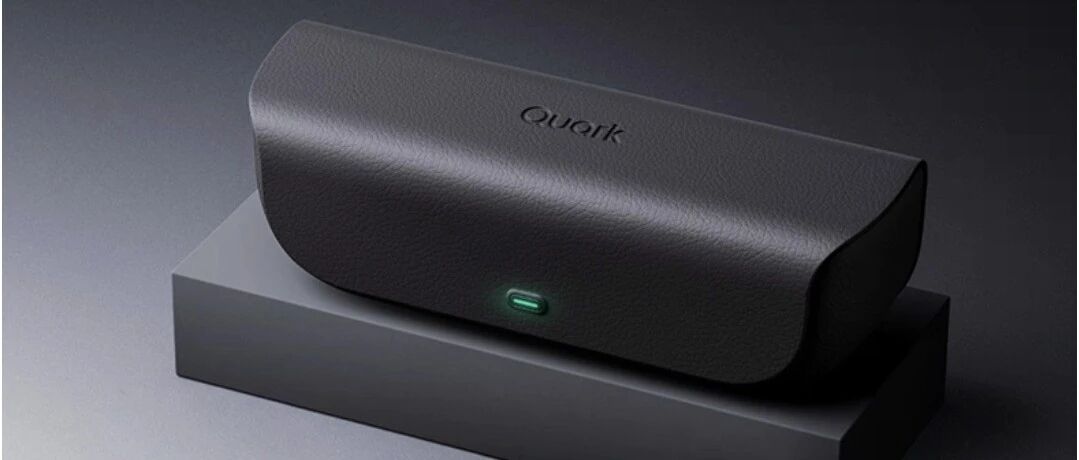
Core Viewpoint - The AI glasses industry is transitioning from conceptual exploration to practical application, with significant investments from major tech companies, marking it as a potential "next-generation mainstream computing terminal" [1]. Group 1: Industry Dynamics - The AI glasses market is experiencing explosive growth, with major players like Meta, Apple, Huawei, Baidu, Xiaomi, Lenovo, and OPPO entering the field [1]. - Alibaba's Quark AI glasses achieved top sales on Tmall within half a day of pre-sale, indicating strong market interest and competition [3]. Group 2: Product Features - The Quark AI glasses feature a dual-chip architecture and a focus on "long battery life," addressing user concerns about battery anxiety [3]. - The glasses promise 24-hour continuous use through innovative design, including a dual-battery system and detachable temple design for hot-swappable battery replacement [3][5]. Group 3: Technological Innovations - Nanchip Technology provides a battery balancing IC that ensures even charging and discharging between the dual batteries, enhancing the stability and longevity of the battery life [7]. - The Quark AI glasses utilize high-efficiency charging chips from Nanchip, improving overall charging efficiency and supporting various charging scenarios [8]. Group 4: Market Projections - By the first half of 2025, China's smart glasses shipments are expected to exceed 1 million units, representing a year-on-year growth of 64.2% and capturing 26.6% of the global market share [15]. - The global smart glasses market is projected to surpass 40 million units by 2029, with China's compound annual growth rate expected to reach 55.6%, the highest globally [15]. Group 5: Strategic Directions - Nanchip Technology aims to focus on four strategic directions: enhancing power technology efficiency, expanding product offerings, deepening strategic partnerships, and strengthening ecosystem development [18].


夸克AI眼镜入场 大模型能力与场景生态建设成竞争焦点
Shang Hai Zheng Quan Bao· 2025-11-27 18:20
Core Insights - Quark AI glasses are equipped with navigation, payment, and AI Q&A functions, leveraging Alibaba's internal ecosystem to address the current ecological challenges faced by AI glasses [5][6] - The AI glasses market is rapidly growing, creating new market opportunities for companies within the industry [5][11] Product Launch - On November 27, Quark AI glasses were officially launched, featuring two series (S1 and G1) with a total of six models, priced from 1,899 yuan to 3,799 yuan [8] - The S1 series includes three models with different frame styles and colors, while the G1 series focuses on fashion and portability [8] Market Dynamics - The competition in the AI glasses sector is intensifying, with a focus on AI model capabilities and ecosystem development [5][6] - Analysts suggest that a successful consumer-facing AI terminal product could provide Alibaba's core e-commerce ecosystem with new traffic sources, creating a synergy between technology empowerment and business growth [8] Industry Consensus - There is a growing consensus in the industry that the key to AI glasses lies in AI technology rather than just combining AI with eyewear [8][9] - The true potential of AI glasses is seen in their ability to serve as genuine AI terminals rather than mere novelty devices [8] Collaborative Efforts - Alibaba has formed an industry ecosystem alliance for Quark AI glasses, collaborating with companies like Qualcomm and Luxshare Precision to enhance product development and production capabilities [10] - Strategic partnerships between listed companies and AI glasses manufacturers are driving industry development, with companies like Guanghe Tong and Lens Technology actively participating in the ecosystem [11] Technological Advancements - The hardware implementation of AI glasses in China is not considered a significant challenge due to the maturity of the consumer electronics supply chain [10] - Companies are focusing on developing new products and technologies, such as bone conduction microphones for AI glasses, to meet the evolving market demands [11]
夸克AI眼镜S1:阿里AI生态的第一块“物理外挂”
硬AI· 2025-11-27 14:20
Core Viewpoint - The article discusses the launch of Alibaba's Quark AI Glasses S1, highlighting its potential as a significant hardware product in the post-smartphone era, integrating AI capabilities into daily life and consumer interactions [11][12]. Group 1: User Experience - The Quark S1 glasses are designed to be comfortable and unobtrusive, weighing approximately 50 grams with a 7.5mm ultra-narrow temple, making them suitable for all-day wear [15][16]. - The glasses provide a lightweight heads-up display (HUD) for navigation, allowing users to receive directions without looking at their phones, enhancing safety while cycling [17][18]. - The glasses enable seamless price comparison and payment during offline shopping, utilizing visual recognition and voice authentication for a quick and secure transaction process [20][21]. - Equipped with a 12MP Sony IMX681 sensor, the glasses can capture high-quality images, even in low-light conditions, making them a practical tool for spontaneous photography [21][23][24]. - The overall experience shifts frequent smartphone tasks like navigation, price comparison, and payment directly to the user's sensory experience, reducing the need to pull out a phone [25]. Group 2: Engineering and Design - The Quark S1 features a dual-chip architecture with Qualcomm AR1 and Hengxuan BES2800, optimizing power consumption and performance for various tasks [28][29]. - It employs a dual optical engine for adjustable display settings, enhancing user comfort and visual experience [30]. - The glasses incorporate a hot-swappable battery design, allowing users to replace the battery without shutting down the device, effectively eliminating concerns about battery life [31][32]. Group 3: Industry Perspective - The global smart glasses market has seen significant growth, with major companies entering the space; Quark S1 stands out due to Alibaba's direct involvement in creating a comprehensive model that integrates hardware, software, and ecosystem [35]. - The glasses represent a new entry point for Alibaba in the AI era, shifting from traditional digital interfaces to wearable technology, which could enhance user engagement and transaction frequency [36][37]. - Despite the potential, the Quark S1 faces challenges such as user habit transition, supply chain costs, and privacy concerns associated with camera-equipped devices [40][41].
Q3’25国内消费级AI/AR市场销量同比增幅186%,阿里、百度入局,雷鸟、影目等新品不断
CINNO Research· 2025-11-27 09:29
Group 1 - The core viewpoint of the article highlights the significant growth in the domestic consumer-grade AI/AR market, with a year-on-year sales increase of 186% in Q3 2025, particularly driven by the AR segment which saw sales surpassing 129,000 units [1] - The domestic consumer-grade AR market experienced a year-on-year sales growth of 109% in Q3 2025, with notable contributions from brands like Thunderbird, Rokid, and XREAL [1][3] - The one-piece AR glasses category achieved remarkable growth, with sales soaring by 355% year-on-year, indicating a strong market expansion driven by new product launches from brands like Leqi and Yingmu [1] Group 2 - The market for non-screen AI glasses, while lacking display functionality, is actively cultivating the market, with notable performances from Xiaomi's AI smart glasses and Thunderbird V3 glasses in Q3 [2] - During the Double Eleven shopping festival, AI/AR glasses saw rapid growth across major e-commerce platforms, with new products from Alibaba and Baidu selling out quickly, demonstrating the strong impact of new product launches combined with promotional events [6] - Thunderbird maintained its leading position in the AR brand landscape, while Rokid surged to second place with significant sales growth, showcasing its strong market presence [3][8] Group 3 - Future developments in AI/AR glasses are expected to focus on multiple directions, including enhanced user experience through lightweight designs, improved display technology, and innovative battery solutions to address power concerns [7][8] - The price of AR glasses is anticipated to decrease, making them more accessible to a broader consumer base, which will further expand the market [8] - AI functionality is projected to become a core competitive advantage for AI/AR glasses, with brands continuously exploring and optimizing AI features to provide smarter and more convenient services to users [8]

AI端侧最佳载体?一文看懂AI眼镜产业链
Hua Er Jie Jian Wen· 2025-11-27 09:08
Core Insights - The AI glasses market is gaining attention due to its lightweight design and intuitive interaction, driven by a large existing user base and low AI penetration rates, indicating significant growth potential for the industry [1][5] - Major tech companies are entering the market, with Alibaba launching its first AI glasses powered by its self-developed model, and Meta's collaboration with Ray-Ban resulting in sold-out smart glasses [1][2] - IDC predicts that global smart glasses shipments will reach 12.8 million units by 2025, with a 26% year-on-year growth, and the Chinese market expected to grow by 107% [1] Market Potential - The growth of the AI glasses market is primarily driven by the replacement of a large existing market, particularly in China, where nearly 50% of the population is myopic, representing a potential user base of around 700 million [5] - The annual sales of prescription glasses in China are approximately 150 million units, with sunglasses also maintaining stable sales, indicating a robust market for AI glasses [5] - The report anticipates that as AI and AR technologies mature post-2030, AI+AR smart glasses will enter a high-growth phase, with global sales potentially reaching 1.4 billion units and a penetration rate of 70% [2][5] Cost Structure - The cost structure of AI glasses is dominated by chips and optics, which are the highest value segments in the supply chain [7] - Different AI glasses have varying cost focuses; for instance, Huawei's AR glasses have 78% of their costs in optical modules and screens, while Xiaomi's AI glasses have over 25% of costs in the main chip [7] - The report identifies that in the future, the main costs will be in computing chips, optical modules, and display screens, making them focal points for investment in the supply chain [7] Technology Pathways - The choice of technology in optical display significantly impacts product form and user experience, with current mainstream AR glasses using the Birdbath solution, which has limitations such as low transparency and bulkiness [9] - The waveguide solution is seen as a promising direction due to its high transparency and lightweight design, although its complex manufacturing process poses challenges for mass production [9] - Micro OLED is currently the mainstream display technology, but Micro LED is viewed as a more ideal solution for AR due to its high brightness and longevity, despite facing manufacturing challenges [12] Computing Power - The choice of computing unit directly affects the performance and battery life of AI glasses, with the "SoC+MCU" combination being identified as the optimal solution for balancing performance and power consumption [15][18] - The global SoC market is projected to grow from $161.9 billion in 2025 to $237.8 billion by 2030, driven by the expansion of the AI glasses market [15] Supply Chain Components - Besides chips and optics, other components like storage and batteries are crucial in the AI glasses industry [20] - ePOP and eMCP are the main storage solutions, with ePOP being favored for its compact size and low power consumption [20] - High-density steel shell batteries are key to overcoming the weight, endurance, and computing power challenges in AI glasses [20]
进军AI硬件市场!阿里(09988)夸克AI眼镜售价1899元起 搭载千问大模型、深度整合生态服务
智通财经网· 2025-11-27 08:24
Core Insights - Alibaba has launched its first AI glasses, Quark AI Glasses S1, powered by its self-developed Qianwen model, marking its entry into the consumer AI wearable device market [1][5] - The glasses are priced at 1899 yuan and are deeply integrated with Alibaba's ecosystem, including services like Alipay, Gaode Map, and Taobao [1][4] - The rapid growth of the Qianwen model, with over 10 million downloads in just one week of public testing, indicates a significant moment for AI applications [1][5] Product Features - The Quark AI Glasses S1 features dual flagship chips for quick response, a dual-display solution with a brightness of up to 4000 nits, and capabilities for 3K video recording [2][3] - The glasses include five microphone arrays and bone conduction technology for better voice recognition in noisy environments [3] - The product boasts a unique dual battery design for extended standby time and ergonomic features for comfortable all-day wear [3] Ecosystem Integration - The core competitive advantage of the Quark AI Glasses lies in its deep integration with Alibaba's ecosystem, allowing users to make payments and shop seamlessly [4] - Collaborations with companies like NetEase and Tencent enhance the user experience by providing music services [4] - Alibaba's CEO has emphasized the potential of AI glasses as a new sensory hub for human-computer interaction [4] Market Context - The launch comes at a time when competition in the smart glasses market is intensifying, with Meta holding a dominant market share [5][6] - In the past year, China's smart glasses shipments reached 1.6 million units, with Xiaomi capturing about one-third of the market [6] - Alibaba's strategy to release consumer hardware is part of its transformation into an "AI-First" company, aiming to expand its AI capabilities into hardware [6]
最低1899元起,夸克AI眼镜发布两个系列六款单品
Bei Jing Shang Bao· 2025-11-27 08:09
Core Insights - Quark AI glasses were officially launched on November 27, featuring two series: S1 and G1, with a total of six models available [1] Product Details - The S1 series includes three models with various frame styles and colors, with the lowest price starting at 3,799 yuan [1] - The G1 series focuses on fashion and lightweight design, offering two frame styles and a sunglasses option, with prices starting at 1,899 yuan [1] - All six models are equipped with Alibaba's latest Qianwen AI assistant [1]
我们试了夸克最新AI眼镜,它能帮阿里打赢流量入口之争吗?
虎嗅APP· 2025-11-27 07:47
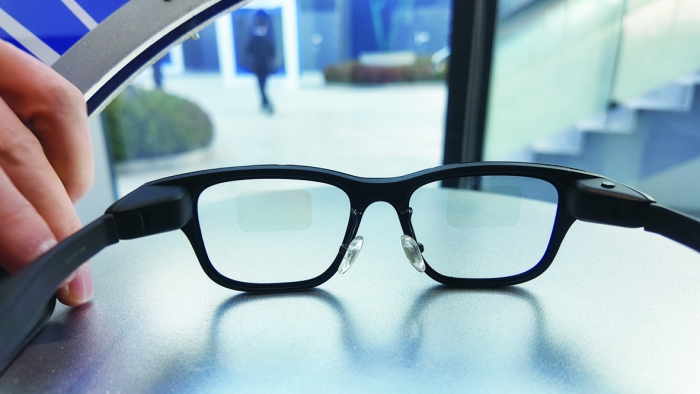
Core Viewpoint - The article discusses the launch of Quark AI glasses, highlighting their integration with Alibaba's ecosystem and the innovative solutions developed to address industry pain points in the AI glasses market [4][6]. Group 1: Product Features and Innovations - Quark AI glasses S1 and G1 series were officially released on November 27, marking Alibaba's entry into the AI glasses sector [4]. - The glasses utilize a dual-chip design with Qualcomm AR1 and Hengxuan BES2800, employing a high-end diffraction waveguide display solution, which effectively addresses common issues like color dispersion and font clarity [8][10]. - The glasses feature a "near-eye navigation system" developed in collaboration with Gaode and Qualcomm, allowing for seamless integration of navigation services directly onto the glasses [10][11]. - Quark AI glasses S1 boasts a replaceable 287mAh battery with a total runtime of 7 hours, supporting hot-swappable battery packs for extended use [14][15]. - The weight of the glasses is 51g, which is considered acceptable given the technology packed into the device, and the design ensures a balanced weight distribution for comfort [15][16]. Group 2: User Experience and Human Factors - The product team conducted extensive tuning and validation to enhance user experience, particularly in addressing optical issues and improving camera performance in low-light conditions [21][22]. - The design of the button layout and operational logic reflects successful human factors research, making it intuitive for users to operate the glasses with one hand [23]. - Features like an independent camera button and an adaptive teleprompter function that adjusts scrolling speed based on user speech demonstrate a focus on user-centric design [26][27]. Group 3: Market Position and Future Outlook - The Quark AI glasses S1 are positioned as a leading product in the market, with the potential to become a dark horse if initial sales are strong [27]. - The article notes that while the product excels in user experience and functionality, there remains significant room for improvement, reflecting the nascent stage of the AI glasses market [28][30].