消费电子

Search documents
国际观察|2026美国消费电子展上的人工智能新趋势
Xin Hua She· 2026-01-10 03:41
Core Insights - The 2026 CES highlighted a shift in focus from AI model capabilities to practical product applications, emphasizing the integration of AI into existing systems and scalable deployment [1][2] - AI is becoming a foundational capability in products rather than a standalone highlight, with significant applications in personal devices, automotive systems, and industrial platforms [2][4] AI as a System-Level Capability - Discussions at CES have transitioned from technical specifications to practical applications of AI, focusing on what AI can do and how it can be embedded in current systems [1][2] - AI systems showcased include autonomous decision-making agents and physical AI systems that interact with real environments, indicating a move towards industrial applications [1][2] Robotics and Physical AI Breakthroughs - Robotics was a major focus at CES, with products designed for specific applications in manufacturing, logistics, retail, and elder care, emphasizing stability and long-term operation [3] - Robots demonstrated capabilities in various environments, performing tasks such as sorting, transporting, and providing services, showcasing advancements in automation and reliability [3] Edge and Cloud Collaboration - There is a notable trend towards running AI models locally on devices to enhance real-time performance, energy efficiency, and privacy, while cloud services continue to support training and updates [4] - The collaboration between edge and cloud computing is seen as essential for the future of AI, with both needing to evolve together to meet industry demands [4] Industry Logic Changes Reflected at CES - The event illustrates that AI is reshaping product forms and industry divisions, with increased importance placed on chips, manufacturing, and system integration beyond just internet companies [5] - The focus on deep hardware-software collaboration indicates that achieving a complete system capability and scalable delivery is becoming a new competitive threshold in the AI industry [5]
9点1氪:系统故障致机票低至0.4折,海航:已售机票均有效;最高法:以婚姻为目的给予的购车、购房款应视为彩礼;MiniMax总市值超千亿港元
36氪· 2026-01-10 01:19
Group 1 - Hainan Airlines experienced a temporary system failure that caused some flight ticket prices to display abnormally low rates, with prices as low as 70 yuan for a flight from Hangzhou to Shenzhen, equating to 0.4 of the original price [3] - The airline confirmed that all tickets sold during the incident remain valid and that the system has been restored to normal operations [3] Group 2 - Major banks in China have seen short-term large-denomination certificate of deposit (CD) rates drop below 1%, entering the "0" range, with rates for 1-month and 3-month CDs at 0.9% [5] - The decline in rates indicates a significant shift in the banking sector, aligning short-term CD rates closely with regular fixed-term deposit rates [5] Group 3 - The Supreme People's Court of China has clarified that funds given for purchasing cars or houses with the intent of marriage should be treated as bride price, impacting legal interpretations of such financial transactions [4] - This ruling may influence future disputes regarding financial gifts in the context of marriage, potentially leading to increased legal cases in this area [4] Group 4 - Apple is reportedly accelerating the selection process for a new CEO, with John Ternus, the current Senior Vice President of Hardware Engineering, emerging as a leading candidate [6] - The current CEO, Tim Cook, has expressed a desire to reduce his workload, indicating a potential transition in leadership within the company [6] Group 5 - Xiaomi has announced a price reduction for its Xiaomi 17 model and has eliminated the use of small print in its marketing materials, responding to criticism regarding transparency in advertising [8] - The company aims to enhance user experience by ensuring that key information is clearly presented [8] Group 6 - The number of corporate bankruptcies in Germany has reached a 20-year high, with 15,619 cases reported in 2025, reflecting ongoing structural pressures in the economy [20] - This trend indicates significant challenges for businesses in Germany, with a notable impact on employment as approximately 170,000 jobs were affected by these bankruptcies [20]




苹果恐创1991年以来最长连跌天数
Ge Long Hui A P P· 2026-01-09 23:21
Core Viewpoint - Apple's stock price is experiencing a prolonged decline, potentially matching its longest losing streak in over thirty years, with a drop of 1.1% on Friday and a total decline exceeding 5% since the downturn began [1] Group 1: Stock Performance - Apple's stock is on track for its eighth consecutive trading day of decline, which would be unprecedented since 1991 if it continues to nine days [1] - Historical data shows that Apple has faced similar streaks of declines in 2025, 2022, 2016, and 1998, but none have reached nine consecutive days [1] Group 2: Market Pressures - The recent downturn is attributed to increased demand for artificial intelligence data center construction, leading to rising prices for memory chips and other components [1] - This situation is putting additional pressure on Apple and other computer and device manufacturers [1]
折叠iPhone或采用三星COE OLED面板
Xin Lang Cai Jing· 2026-01-09 22:52
格隆汇1月10日|iPhone Fold将成为首款采用三星COE OLED技术的苹果设备,这项技术可使屏幕更 亮、更纤薄。 据悉,在传统OLED屏幕中,面板上方会加装一层偏光片,用来减少反光、提升对比度。 但该设计存在明显弊端,偏光片会吸收OLED屏幕自身发出的部分光线,进而降低屏幕亮度与发光效 率。 ...
中国科技闪耀国际消费电子展
Sou Hu Cai Jing· 2026-01-09 21:23
Group 1 - The CES 2026 showcased a transformation in the Chinese tech industry, highlighting a shift from traditional home appliance giants to a diverse representation of both established and emerging companies, reflecting the industry's ecological vitality and innovative resilience [2][3][4] - Major Chinese companies like Hisense and TCL are focusing on technological breakthroughs to redefine industry standards, with Hisense launching a new RGB-Mini LED display technology, predicting a shipment of 500,000 units by 2026 [2] - Companies are moving from showcasing individual products to demonstrating systematic capabilities, with firms like Lens Technology and Guangdong Lingyi demonstrating comprehensive AI hardware ecosystems [4] Group 2 - The integration of AI with hardware is a key highlight, with numerous humanoid robot companies participating, indicating a significant advancement in the execution capabilities of robots, which is expected to drive commercialization in this sector [5] - The CES 2026 featured 23 AI glasses booths, with 16 from Chinese brands, showcasing their innovation in AR/VR hardware and interaction experiences [5] - Chinese companies are pursuing deep localization and compliance in their global operations, moving away from a simplistic export model to a more integrated approach, as seen with Aiper's strategy of local R&D and distribution [6] Group 3 - The competition in the AI sector is intensifying, with a focus on practical applications and the efficiency of chips, as companies like NVIDIA, Intel, AMD, and Qualcomm compete for advancements in AI computing [7][8] - The emergence of embodied intelligence is reshaping the participation landscape, with a significant presence of humanoid robot companies at CES, indicating a structural change in the representation of Chinese enterprises [8] - The CES serves as a platform for showcasing the future of technology, where the integration of AI with physical products is expected to drive growth engines for the next decade [8]
2026年停更新品 华硕“失守”游戏手机业务
Xin Lang Cai Jing· 2026-01-09 19:44
Core Viewpoint - ASUS will suspend the launch of new smartphones, including ZenFone and ROG Phone, in 2026 due to regular business adjustments and rising component costs, particularly storage prices, which have become unsustainable for the company's mobile division [1][4][5]. Group 1: Business Strategy and Market Position - ASUS has focused on two main smartphone lines: the high-performance ROG gaming phones and the cost-effective ZenFone series, but has primarily sold ROG phones in mainland China for many years [1][2]. - The company has faced significant challenges in the smartphone market, with its mobile business revenue consistently declining from 18% in 2016 to just 1% in 2023 [3]. - The competitive landscape for gaming smartphones has intensified, leading to the exit of several brands from the market, including Razer and Lenovo's gaming phone line [3]. Group 2: Financial Performance - Despite the struggles in the smartphone sector, ASUS's overall performance has been strong, driven by AI servers and commercial PCs, with a revenue of 535.98 billion New Taiwan Dollars (NTD) in the first three quarters of 2025, a 24% year-on-year increase [5][6]. - The third quarter of 2025 saw a record revenue of 189.91 billion NTD, a 21% increase year-on-year, although gross profit declined by 9% due to rising costs [6]. - The company's server business is growing, accounting for nearly 20% of revenue, with plans for further expansion in the AI server market [6]. Group 3: Industry Trends and Challenges - The global memory chip market is experiencing significant price increases, with DRAM costs rising approximately 25% for low-end smartphones and 10% for high-end models, impacting overall production costs [4][5]. - The smartphone market is expected to face declining shipment forecasts due to weak demand, further pressuring manufacturers [5]. - ASUS plans to raise prices on some PC products starting January 5, 2026, in response to rising memory and storage costs [7].
苹果股价或将追平1991年以来最长连跌纪录
Jin Rong Jie· 2026-01-09 18:15
本文源自:金融界AI电报 苹果周五盘中一度下跌1.1%,或迎来连续第八个交易日下跌。尽管苹果公司在历史上曾多次出现相同 时长的连跌行情,分别发生在2025 年、2022年、2016年和1998年,但自1991年以来,其股价从未出现 过连续九个交易日下跌的情况。 ...
CES观察|智能眼镜群雄逐鹿 清洁电器进化“具身智能”
Xin Jing Bao· 2026-01-09 15:03
Group 1: Core Insights - CES 2026 focuses on systemic transformations in artificial intelligence technology, with smart glasses emerging as a key highlight of the event [1] - The year 2026 is anticipated to be a golden period for the development of smart glasses, driven by an increasing number of players entering the market [2][3] - AI is being fully integrated into home appliances and consumer electronics, with traditional companies merging with new entrants [1][6] Group 2: Smart Glasses Development - Over 50 companies, including notable brands like Thunder Innovation, XREAL, and Rokid, showcased their smart glasses at CES 2026 [2] - New lightweight models were introduced, such as Rokid's AI+AR glasses weighing only 49 grams and another model at 38.5 grams [2] - The Chinese market is seeing a surge in AI glasses from various brands, including Xiaomi and Lenovo, since 2025 [2][3] Group 3: Market Trends and Opportunities - The introduction of new national subsidy policies in China has expanded the categories eligible for subsidies, including smart glasses [3] - The global shipment of smart glasses is projected to exceed 11 million units in 2026, indicating a competitive and diverse market landscape [3] - The penetration rate of cleaning robots in global households remains below 10%, suggesting significant growth potential in the cleaning appliance sector [4] Group 4: Cleaning Appliances and AI Integration - Cleaning appliances, particularly robotic vacuums, are advancing towards embodied intelligence, with innovations like bionic designs enabling multi-floor cleaning [4] - Chinese brands have rapidly increased their market share in the global robotic vacuum sector, capturing 65.7% of the market in the first three quarters of 2025 [5] - AI is becoming a core capability across home appliances, with companies like TCL and Hisense showcasing advanced AI-integrated products at CES [6][7]
CES深度观察|AI硬件消费时代的“幕后英雄”走向台前
Sou Hu Cai Jing· 2026-01-09 14:48
Core Insights - The 2026 CES in Las Vegas highlighted a shift from technological innovation to practical applications of AI, with a focus on new hardware products like smart cockpits, embodied robots, and AI glasses [1][3] - Chinese supply chain companies are transitioning from being "behind the scenes" to taking a front-row role in the AI hardware consumer era, showcasing their capabilities at CES [3][4] Group 1: Chinese Companies' Participation - A total of 942 Chinese companies participated in CES 2026, accounting for approximately 22% of the total exhibitors, marking a significant increase from 204 companies in 2021 [4] - The participation of Chinese firms has evolved from sporadic entries to organized group participation, reflecting a robust global presence [4][6] Group 2: Technological Advancements and Market Position - Chinese manufacturers are diversifying their strategies to capture the global AI hardware market, with companies like TCL focusing on key interactive display technologies and automakers like BYD and Great Wall leveraging AI for international expansion [6][9] - Companies like Lens Technology are transitioning from traditional component suppliers to comprehensive AI hardware ecosystem platforms, showcasing their capabilities in various AI applications [11][15] Group 3: Innovations and Product Launches - Lens Technology presented a range of innovations at CES, including a bionic dexterous hand and ultra-thin glass products for aerospace applications, demonstrating their advanced manufacturing capabilities [13][24] - The company also showcased integrated solutions for smart automotive cockpits, which have gained traction among leading automotive brands like Tesla and NIO [15][20] Group 4: Supply Chain Evolution - The evolution of the supply chain in China is driven by the need for manufacturers to adapt to the AI hardware landscape, enabling them to redefine their roles and capabilities [9][27] - Lens Technology's strategic shift illustrates how traditional manufacturing strengths can be leveraged to create competitive advantages in the AI era, with a focus on high-quality production and innovation [20][26] Group 5: Future Outlook - The transformation of Chinese supply chain companies signifies a broader shift in the manufacturing landscape, moving from scale advantages to technological leadership [28] - As these companies continue to innovate and expand globally, the AI hardware industry is expected to experience enhanced collaboration, richer application scenarios, and greater resilience [28]


昔日“国民充电宝”罗马仕又被供应商告了 一审输了!需支付货款超千万元
Mei Ri Jing Ji Xin Wen· 2026-01-09 14:45
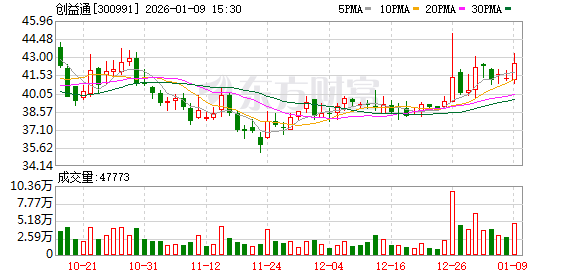
Core Viewpoint - The company Romoss, once known as the "national power bank," is currently facing legal disputes while initiating a "rebirth plan" for restructuring [2][5]. Group 1: Legal Disputes - On January 9, the company Chuangyitong announced a court ruling requiring Jiangmen Romoss to pay 12.71 million yuan in unpaid goods and interest [2][4]. - Chuangyitong had supplied goods worth 18.01 million yuan to Jiangmen Romoss from March to July 2023, but only received 2.3 million yuan, leaving an outstanding balance of 15.71 million yuan [4]. - Jiangmen Romoss and Shenzhen Romoss are involved in multiple lawsuits, with Jiangmen Romoss being a defendant in at least four cases, including financial loan contract disputes and contracting disputes [6]. Group 2: Financial Impact - Chuangyitong plans to recognize a credit impairment loss of 7.86 million yuan on accounts receivable from Jiangmen Romoss and a write-down of 3.15 million yuan on inventory, which is expected to reduce its profit by 11.01 million yuan for the first half of 2025 [5]. - The company reported a net profit of -0.8142 million yuan for the first half of 2025, indicating financial strain [5]. Group 3: Operational Status - Romoss has extended its suspension of operations for an additional year, following a recall of its power banks due to safety concerns [5]. - The company has initiated a "rebirth plan" aimed at restructuring, with implementation expected to begin in January 2026 [5].