
商业航天

Search documents
两大商业航天明星企业,IPO有新进展
Xin Lang Cai Jing· 2026-01-21 01:41
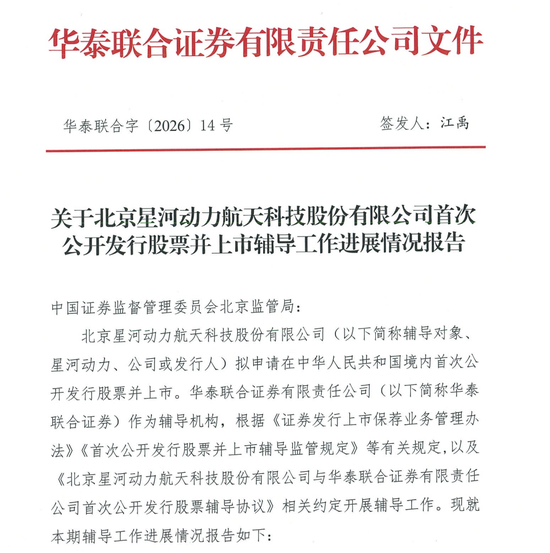
据证监会官网,北京星河动力航天科技股份有限公司(简称"星河动力")于近日更新IPO辅导进展,辅 导机构为华泰联合证券有限责任公司。 此前,星河动力于2025年10月在北京证监局进行了IPO辅导备案,加入商业火箭公司IPO队列。 星河动力成立于2018年,是国内首家实现火箭量产、高密度发射并实现商业化的民营商业火箭企业。 2025年,智神星一号可重复使用液体运载火箭主发动机CQ-50完成了超过10000s累积试车,实现了32% —105%大范围变推能力的重大突破。同时,星河动力相继完成了智神星一号火箭二子级动力系统试车 与一子级七机并联海上平台试车,该箭型的大型地面试验宣告全面收官,目前遥一火箭已完成总装总测 出厂,即将进场开展首飞任务。 1月20日,星河动力宣布近日在安徽池州牛头山发动机试车台,开展了智神星二号大型可重复使用运载 火箭主发动机(CQ-90)全系统热试车,试验取得圆满成功。 此外,星际荣耀航天科技集团股份有限公司(简称"星际荣耀")也于近日更新IPO辅导进展,辅导机构 为天风证券(维权)股份有限公司、中信证券股份有限公司。 星际荣耀官网显示,公司于2016年10月成立。2019年,公司自主研制的 ...

商业航天板块走弱,航天动力触及跌停
Xin Lang Cai Jing· 2026-01-21 01:37
Group 1 - The commercial aerospace sector is experiencing a downturn, with significant declines in stock prices [1] - Aerospace Power has hit the daily limit down, indicating severe market pressure [1] - Other companies such as Aerospace Nanhu, Aerospace Mechatronics, Aerospace Development, Ruike Laser, China Satellite Communications, and Lucky Film have also seen their stock prices drop in tandem [1]



从实验室到公开市场:蓝箭航天IPO折射商业航天行业“成人礼”挑战
Feng Huang Wang· 2026-01-21 01:36
Core Viewpoint - The commercial space industry is transitioning from a hidden phase to a more visible one, driven by the rapid construction of low-orbit satellite constellations and increasing launch demands, but faces significant challenges in technology maturity, financial sustainability, and corporate governance [1] Group 1: Technology Disclosure - Rocket payload capacity is a critical metric for commercial space companies, but the presentation of this data in prospectuses poses a cognitive barrier [2] - For example, Blue Arrow's "Zhuque-3" rocket shows a significant discrepancy between its measured near-Earth orbit capacity of 11.1 tons and its design target of 21 tons, lacking a clear technical pathway and timeline for achieving the latter [2] - The failure of the first-stage recovery during the inaugural flight indicates that the rocket is still in the early validation stage, highlighting the gap to commercial operational goals [2] Group 2: Financial Reality - The commercial space industry generally requires substantial upfront investment for R&D, leading to prolonged periods of low revenue and continuous losses, with cash flow constraints being a norm [4] - Blue Arrow is noted for its high investment intensity among private rocket companies, facing dual pressures of funding and profitability, with cumulative losses exceeding 3.5 billion yuan over three and a half years and 98% of its revenue in the first half of 2025 coming from a single client [4] - The company has significant pre-receivables linked to launch delays, and despite R&D investments nearing 2.3 billion yuan, it faces negative gross margins and a debt ratio exceeding 40% [4] Group 3: Governance Challenges - Governance issues, including control lawsuits and centralized decision-making, pose significant challenges for commercial space startups transitioning to public companies [5] - Blue Arrow's actual controller is involved in two unresolved lawsuits that could impact the stability of his shareholding, raising concerns about governance stability during the IPO process [6] - The company employs a special voting rights structure that grants the actual controller decisive influence over major decisions, which may conflict with the interests of minority shareholders post-IPO [6] Group 4: Industry Implications - The IPO process for Blue Arrow represents a systematic public market examination of the Chinese commercial space industry, necessitating more transparent technical disclosures, clearer financial narratives, and standardized governance structures [8] - The industry must learn to engage with a broader investor base, where the IPO is not just about financing but also about enhancing strategic clarity, operational norms, and communication credibility [8]
资本搭台助“星”路通途
Jin Rong Shi Bao· 2026-01-21 01:29
Core Viewpoint - Beijing Weihan Technology Co., Ltd. has emerged as a leading supplier of thermal control systems in the commercial aerospace sector, successfully applying its solutions to over 300 satellites and deep space probes, highlighting the rapid growth and potential of the commercial aerospace industry in China [1][3][9]. Company Overview - Weihan Technology started as a private startup in the commercial aerospace field nine years ago and has since developed core technologies in thermal control systems, becoming the first private supplier in this domain in China [1][3]. - The company has established a production line in Dezhou, which has enabled it to enhance its production capabilities and secure bulk orders for satellite thermal control systems [9]. Industry Context - The commercial aerospace industry encompasses various fields, including rocket launches, satellite applications, and space tourism, transitioning from custom production to mass production [3]. - The rise of commercial aerospace has been supported by government policies, such as the 2015 National Medium- and Long-Term Development Plan for Civil Space Infrastructure, which encourages social capital participation [3][11]. Investment and Support - Weihan Technology received significant investment from Lushin Venture Capital, which not only provided funding but also connected the company with other enterprises and resources in the industry [8][9]. - Lushin Venture Capital focuses on disruptive innovation and has invested in over 300 companies, primarily in hard technology sectors, emphasizing the importance of core technology and strategic positioning in the competitive commercial aerospace market [8][10]. Future Prospects - The demand for satellite constellations is increasing, with China submitting applications for 203,000 new satellites to the International Telecommunication Union by the end of 2025, indicating a significant growth opportunity for companies in this sector [4][5]. - The industry is characterized by high technology, high investment, high risk, high efficiency, and long cycles, necessitating patient capital to support startups through the challenges of mass production [9][10].

金融界财经早餐:贸易战升级,欧美股市“黑天鹅”,黄金白银爆发;财政部发声支出力度“只增不减”;多家银行卫星上天;顶级游资集体熄火(1月21日)
Jin Rong Jie· 2026-01-21 01:27
2、发改委发声,将研究制定出台2026年-2030年扩大内需战略实施方案;正在研究制定城乡居民增收计划;正在谋划推进一批"十五五"时期高技术产业标志 性引领性重大工程;研究设立国家级并购基金,促进创新创业创造,加快培育和发展新质生产力。 3、何立峰出席世界经济论坛2026年年会并发表致辞,强调中国经济顶压前行向新向优发展,将持续推进高水平对外开放,巩固对科技创新类贷款的财政贴 息与再贷款支持。 4、欧美贸易战,川普称将对法国葡萄酒和香槟征收200%关税。欧盟回应,丹麦某养老基金表态将退出美国国债市场,德国智库称,美国加关税绝大部分由 美国人自己承担。此外,川普在社交媒体发布图片引发争议,手拿美国国旗登上格陵兰岛,身后站着万斯和鲁比奥,旁边指示牌上写着"格陵兰岛2026年成 为美国领土"。 二、资本市场必读 1、贸易战升级,欧美股市大跌,美股三大指数大幅收跌,标普500指数跌2.06%并创去年10月以来最大单日跌幅,道指跌1.76%,纳指跌2.39%;科技股普 跌,英伟达、特斯拉跌超4%;热门中概股多数下跌,纳斯达克中国金龙指数跌1.44%。 2、现货黄金突破4750美元,国际金价突破4700美元,国际银价大涨 ...
快讯:恒指低开0.34% 科指跌0.7% 科网股普跌 黄金股普涨 商业航天概念股继续走弱
Xin Lang Cai Jing· 2026-01-21 01:25
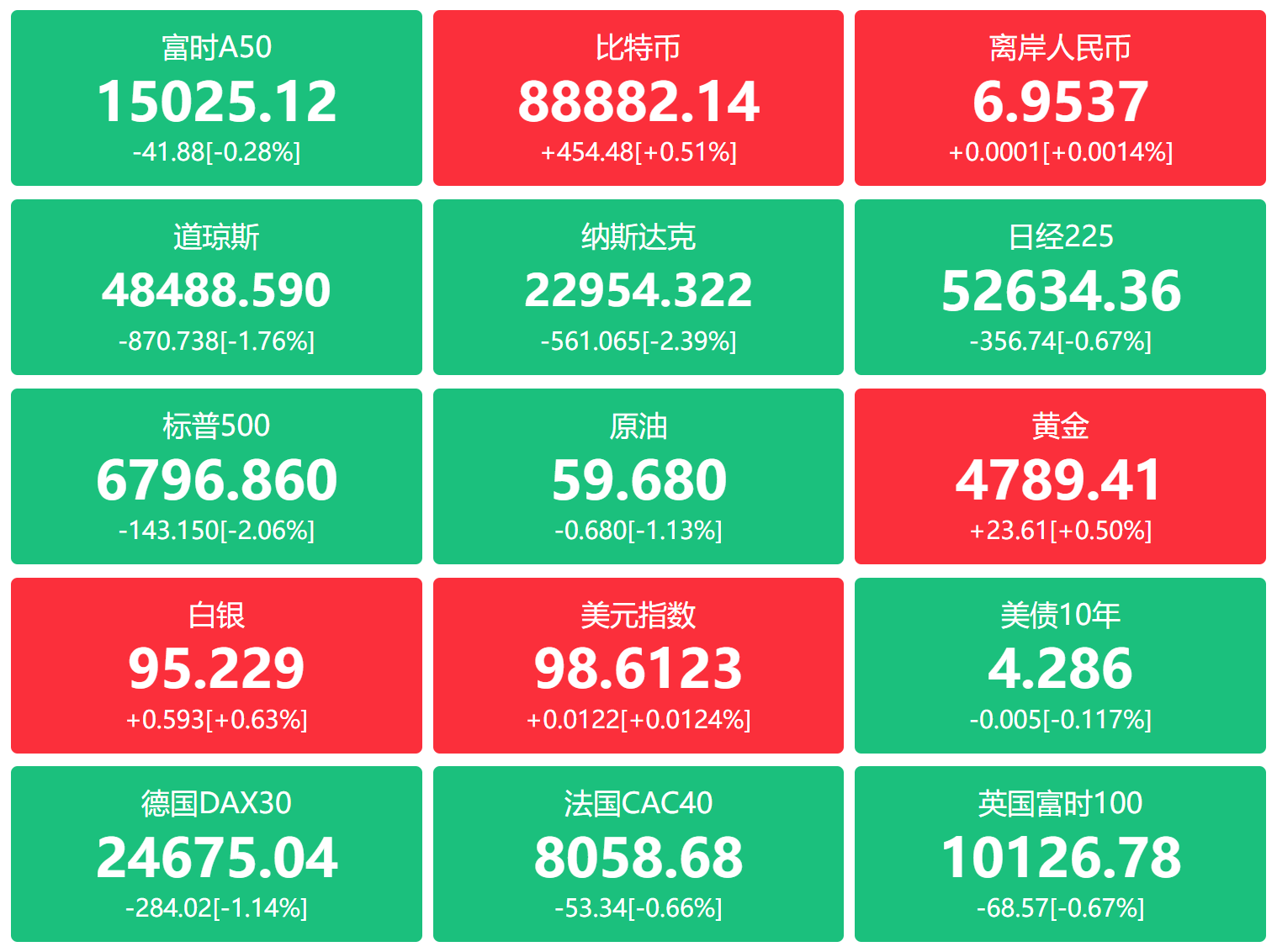
美股周二显著向下,受地缘政局紧张影响,市场避险情绪升温,三大指数均录得显著跌幅收市。美元走 势向下,美国十年期债息急升至4.29厘水平,金价持续破顶,油价表现则靠稳。 今日港股三大指数集体低开,恒指开盘跌0.34%,报26397.04点,恒科指跌0.7%,国企指数跌0.3%。盘 面上,科网股普跌,哔哩哔哩跌超2%,快手、联想、小米跌超1%;黄金股延续涨势,招金矿业涨超 4%;商业航天概念股继续下跌,亚太卫星跌超1%;电力设备股低开,福莱特玻璃跌超1%。 今日港股三大指数集体低开,恒指开盘跌0.34%,报26397.04点,恒科指跌0.7%,国企指数跌0.3%。盘 面上,科网股普跌,哔哩哔哩跌超2%,快手、联想、小米跌超1%;黄金股延续涨势,招金矿业涨超 4%;商业航天概念股继续下跌,亚太卫星跌超1%;电力设备股低开,福莱特玻璃跌超1%。 | 名称 | 最新价 | 涨跌额 | 涨跌幅 √ | | --- | --- | --- | --- | | 国企指数 | 9067.54 | -27.22 | -0.30% | | 800100 | | | | | 恒生指数 | 26397.04 | -90.47 | -0 ...
【机构策略】短期A股市场仍将震荡整理 中长期上行趋势仍在
Zheng Quan Shi Bao Wang· 2026-01-21 01:20
Group 1 - The A-share market is experiencing a significant style shift, indicating a strong willingness for funds to switch between high and low sectors amid adjustments in high-position themes and individual stocks [1] - The overall market trading volume remained stable compared to the previous trading day, with active trading levels not declining further; if the market can maintain above 2.5 trillion yuan, there will be more opportunities [1] - The market is likely to gradually shift towards a trend focused on fundamental improvements, especially during the annual report forecast period, suggesting investors should pay attention to sectors with good fundamentals that have lagged behind [1] Group 2 - The A-share major indices continued to adjust, with market volume remaining active, indicating a healthy adjustment process; approximately 60% of individual stocks experienced declines, particularly those that had previously seen significant gains [2] - Geopolitical tensions have led to rising precious metal prices, while the chemical sector is receiving ongoing attention due to recent oil price increases, with some stocks entering accelerated trends [2] - The A-share index is currently in a phase of oscillation and adjustment, with a long-term upward trend still in place; a reduction in high-risk preferences is more beneficial for a sustainable bull market [2]
超捷股份:公司不是SpaceX的供应商
Mei Ri Jing Ji Xin Wen· 2026-01-21 00:57
每经AI快讯,有投资者在投资者互动平台提问:请问公司是SpaceX的供应商么? 超捷股份(301005.SZ)1月20日在投资者互动平台表示,目前公司商业航天业务在国内,公司不是 SpaceX的供应商。 (记者 王晓波) ...
北京国资正式入股造出高超音速导弹的民企
Zheng Quan Shi Bao Wang· 2026-01-21 00:55
Group 1 - The core point of the article is that Beijing Lingkong Tianxing Technology Co., Ltd. has undergone a significant change in its shareholder structure, with six new institutional investors joining, including Beijing Commercial Aerospace Fund and Beijing New Materials Fund [1][2] - The recent financing round for Lingkong Tianxing raised 100 million yuan, with notable backing from Beijing Guokuan, a state-owned capital management company with substantial assets [2] - Lingkong Tianxing, established in 2012, specializes in hypersonic flight technology and has comprehensive capabilities in the design, assembly, testing, and launch of hypersonic vehicles [2] Group 2 - The company has multiple research and development bases located in various cities, including Beijing, Xi'an, Bengbu, Chengdu, and Xinjiang, indicating a broad operational footprint [3] - Lingkong Tianxing gained public attention due to the announcement of the "Yukongji-1000" hypersonic missile, which features advanced capabilities such as a range of 500 to 1300 kilometers and speeds of 5 to 7 Mach [4] - The news of the hypersonic missile led to increased interest and stock market activity for related companies, highlighting the potential market impact of Lingkong Tianxing's innovations [4]
商业航天深度报告:太空光伏大有可为,卫星太阳翼市场持续扩容
ZHONGTAI SECURITIES· 2026-01-21 00:25
Investment Rating - The report does not explicitly state an investment rating for the industry. Core Insights - The demand for satellite internet networking is urgent, and space computing opens new growth opportunities. The construction of satellite internet networks is driven by strong demand due to the advantages of wide coverage, strong disaster resistance, and rapid deployment. The International Telecommunication Union (ITU) has established principles for satellite frequency and orbit usage, leading to a competitive race for low Earth orbit resources. The construction and launch of satellite constellations in China are accelerating, with a significant gap compared to the US [4][16]. - Space computing is leading to increased demand for satellites. The traditional model of "ground computing" is evolving to "space computing," with satellites equipped with AI chips and edge computing modules to process data in orbit, significantly reducing transmission delays and processing times. Major companies are investing in space computing infrastructure, which is expected to drive the demand for satellites [17][19]. - Solar wings are the only efficient and long-term energy supply solution for near-Earth commercial space. Solar wings account for approximately 12%-24% of the satellite's value, and their area is continuously increasing, which enhances the overall power supply capacity of satellites. The transition from rigid to flexible solar wings is a key trend, with different technological routes being adopted in China and the US [4][28][38]. Summary by Sections Satellite Internet Networking - The urgent need for satellite internet networking is driven by the rapid release of rigid application demands in communication, navigation, and remote sensing. The construction of satellite internet networks is becoming increasingly critical due to limited low Earth orbit resources and the competitive landscape [11][16]. - The ITU's "first come, first served" principle has intensified the competition for satellite orbital resources, with China lagging in the completion rate of its satellite constellations compared to the US [16][18]. Space Computing - Space computing is transforming satellite demand by embedding AI capabilities into satellite systems, allowing for in-orbit data processing and reducing the need for ground-based data transmission. This shift is expected to significantly enhance the capabilities and applications of satellites [19][22]. Solar Wings - Solar wings are essential for providing continuous power to satellites, with their value accounting for a significant portion of the satellite's overall worth. The area of solar wings is increasing, which is expected to enhance the power supply capabilities of satellites [28][30]. - The transition from rigid to flexible solar wings allows for greater power generation efficiency and is particularly suited for high-power and multi-satellite launch scenarios. The flexible solar wings can achieve a higher power-to-weight ratio and better space utilization [38][45]. Technology Routes - There are notable differences in the solar wing battery technology routes between China and the US. The US primarily uses silicon solar cells due to their lower costs and established supply chains, while China is exploring gallium arsenide cells for their higher power-to-weight ratios and efficiency [51][62]. - Gallium arsenide cells are being actively explored for cost reduction, and perovskite cells are emerging as a potential next-generation solution for solar wings due to their low cost and high efficiency [65][69].


