
半导体制造

Search documents
大热的玻璃基板
半导体芯闻· 2025-04-21 10:20
来源:内容来自半导体行业观察综合,谢谢。 玻璃基板被认为是先进芯片封装的技术革新者。由于其超低凹凸度、更好的热稳定性和机械稳定性 等独特性能,玻璃基板比现有的树脂基板更耐用、更稳定,从而保证了头部中更高的互连密度。这 些优势使得高密度、高性能芯片封装可用于AI和数据中心等数据密集型工作负载。 如果您希望可以时常见面,欢迎标星收藏哦~ 此前,英特尔公司承诺到2028年投资1.3万亿韩元(9.431亿美元)实现玻璃大规模商业化。现 在,越来越多的巨头参与其中。 三星,首次披露 三星电机表示,公司正在构建半导体玻璃基板生态系统。这是为了尽快实现作为下一代基板备受关 注的玻璃基板的商业化,并解决技术难题。这也体现出通过建立材料、零部件、设备(SME)和 工艺的合作体系来引领市场的意愿。 三星电机研究院院长(副院长)周赫16日在首尔浦项制铁大厦驿三馆举行的"电子时代技术日:玻 璃基板全集"发布会上表示,"计划与多家供应商和技术合作伙伴成立联盟,打造半导体玻璃基板生 态系统"。 这是三星电机首次公开其半导体玻璃基板事业生态系统构建战略。虽然具体时间尚未透露,但已确 认正在与多家供应链公司进行洽谈。预计将于近期推出。 周副 ...


国际低温键合3D集成技术研讨会首次登录中国
半导体芯闻· 2025-04-21 10:20
半导体键合技术正推动3D集成与先进封装的革命性发展!作为低温键合与键合集成领域的创新引领 者, 青禾晶元 携手日本先进微系统集成研究所(IMSI)等国际权威机构,共同主办 2025中国国际低温键 合3D集成技术研讨会(LTB-3D 2025) 。这一全球顶尖学术会议将首次登陆中国,汇聚诸多国际巨头及 全球专家,共探晶圆键合技术前沿与产业应用。 技术革新 · 国际视野 · 产业赋能 L TB-3D 2025将聚焦低温键合、异质集成、先进封装等核心技术,为中国半导体产业提供与国际接轨的交 流平台。青禾晶元诚邀学术界、产业界同仁共襄盛举,加速技术创新与产业链协作! 会议时间:2025年8月3日-4日 会议地点:中国·天津 现面向全球行业人士开放议题征集通道,同时也邀请您注册报名参与此次盛会,详情见下方会议通知: 2025 中国国际低温键合 3D 集成技术研讨会 国际低温键合 3D 集成技术 (LTB-3D) 研讨会是由日本非营利协会-先进微系统集成协会(IMSI) 主办的重要会议,该会议在技术上由美国电化学学会和 IEEE EPS 日本分会共同指导。2025 年该研讨 会将首次在中国举行,这将促进国际半导体低温键合 ...
台积电南京厂,去年大挣260亿,美国厂巨亏
半导体行业观察· 2025-04-21 00:58
如果您希望可以时常见面,欢迎标星收藏哦~ 来源:内容来自经济日报,谢谢。 台积电(2330)将于6月3日举行股东常会,最新出炉的股东会年报中,旗下海外布局去年损益状 况全都露,其中,美国亚利桑那州新厂去年认列亏损近143亿元,是最烧钱的海外厂区;日本、欧 洲布局也分别亏损逾43亿元及5亿多元;大陆事业则大放异彩,南京厂相关事业去年大赚近260亿 元。 台积电宣布挥军「美国制造」后,2021年、2022年与2023年股东会年报中,已陆续揭露亚利桑那 子公司损益,分别亏损48.1亿元、94.3亿元与109.24亿元,去年则亏损142.98亿元,是美国新厂成 立来最大亏损,换算台积电亚历桑那厂去年第4季开始量产之前,过去四年间已累亏逾394亿元。 外界关注,台积电冲刺美国制造,但美国制造好烧钱,去年亚利桑那州新厂亏损扩大之余,今年将 迎来第一个完整量产年度,生产情况是否足以让亏损幅度收敛,或是因为持续大幅度投资,仍会带 来一定的亏损。 日本布局方面,台积电年报揭露,旗下JASM去年亏损43.75亿元,也是布局日本后最大亏损,相 较之下,JASM于2023年亏损29.65亿元,2022年亏损5.93亿元,合计过去三年 ...
玻璃基板,更近了
半导体行业观察· 2025-04-21 00:58
如果您希望可以时常见面,欢迎标星收藏哦~ 来源:内容来自半导体行业观察综合,谢谢。 玻璃基板被认为是先进芯片封装的技术革新者。由于其超低凹凸度、更好的热稳定性和机械稳定性 等独特性能,玻璃基板比现有的树脂基板更耐用、更稳定,从而保证了头部中更高的互连密度。这 些优势使得高密度、高性能芯片封装可用于AI和数据中心等数据密集型工作负载。 此前,英特尔公司承诺到2028年投资1.3万亿韩元(9.431亿美元)实现玻璃大规模商业化。现 在,越来越多的巨头参与其中。 三星电子此举被解读为进军半导体玻璃基板市场、抢占先机的举措。随着人工智能(AI)的普 及,需要新的基材来替代现有的塑料材料,而玻璃被认为是最佳选择。三星电子准备于第二季度在 其世宗工厂启动玻璃基板试生产线。量产目标为2027年以后。不仅与三星电子半导体的协同效 应,与Nvidia、英特尔、高通等AI大型科技公司的合作也值得关注。 该研究实验室负责人表示:"由于高性能计算(HPC)和人工智能(AI)的发展,半导体芯片之间 来回传输的数据量正在呈爆炸式增长。" "玻璃基板的优势在于可以在基板上绘制微电路并降低功 耗。" 他补充说,玻璃基板比传统基板的翘曲(翘曲 ...


台积电南京厂,去年大挣260亿,美国厂巨亏
半导体行业观察· 2025-04-21 00:58
Core Viewpoint - TSMC's overseas operations reported significant losses in 2022, particularly in Arizona, while its operations in mainland China showed strong profitability [1][2]. Group 1: Financial Performance - TSMC's Arizona facility incurred a loss of nearly 14.3 billion yuan in 2022, marking the largest loss since its establishment, with cumulative losses exceeding 39.4 billion yuan over four years [1]. - The Japanese subsidiary, JASM, reported a loss of 4.375 billion yuan in 2022, the highest since its establishment, with total losses of 7.933 billion yuan over the past three years [2]. - The European joint venture, ESMC, also faced losses exceeding 500 million yuan in 2022 [2]. - In contrast, TSMC's Nanjing operations in mainland China generated a profit of 25.954 billion yuan in 2022, continuing a trend of stable profits above 20 billion yuan for three consecutive years [2]. Group 2: Investment Strategy - TSMC announced plans to expand its investment in the U.S. to a total of 165 billion yuan, with the Arizona facility expected to contribute approximately 30% of its 2nm and more advanced process capacity in the future [2]. - The company is set to build three additional wafer fabs, two advanced packaging plants, and one R&D center in Arizona, with the first fab already producing at a yield comparable to its facilities in Taiwan [2]. - TSMC's chairman emphasized that investments in Japan and Germany will continue as planned, with the first special process technology fab in Kumamoto already achieving good yields [3].

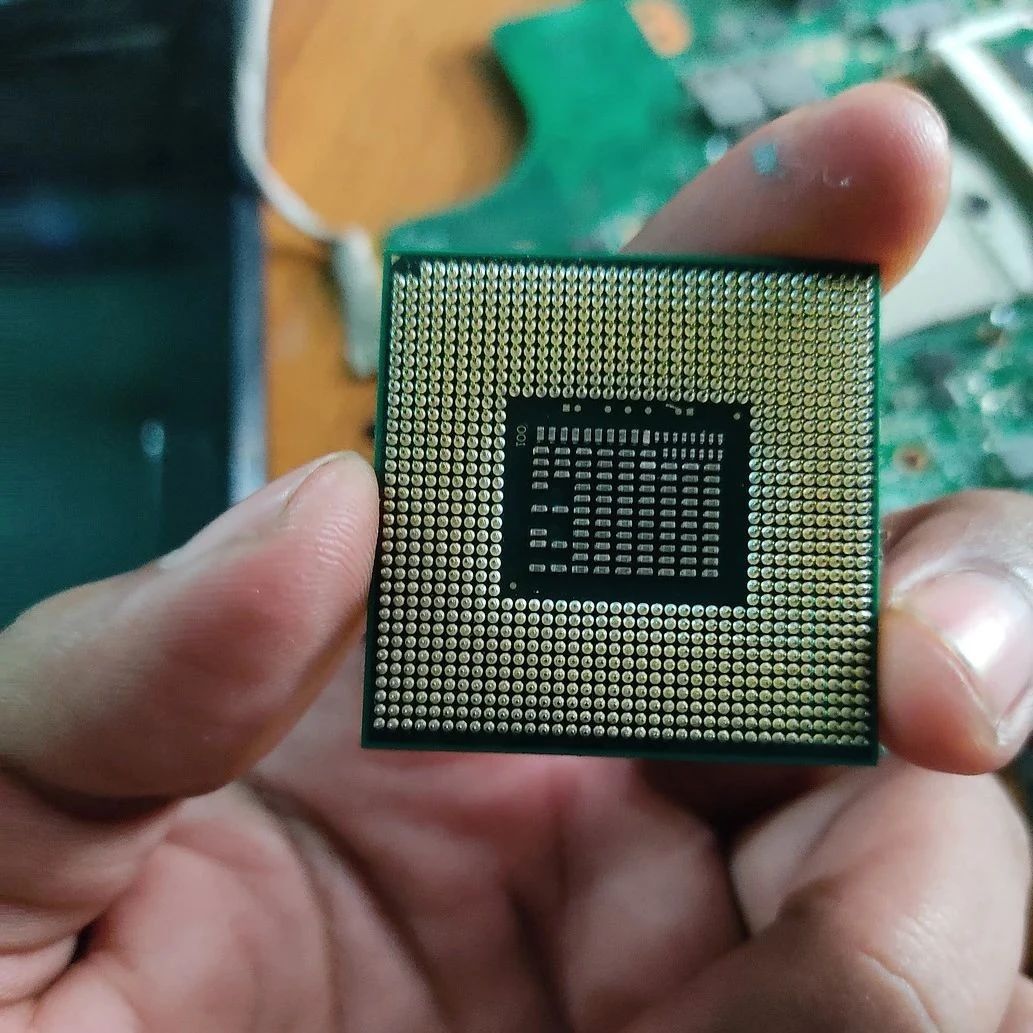
这将是未来的芯片?
半导体行业观察· 2025-04-21 00:58
Core Insights - The IEEE IEDM conference showcased groundbreaking advancements in semiconductor technology, focusing on the future of chips and their applications in AI, mobile, and high-performance computing [1]. Advanced Logic Technologies - The introduction of nanosheet transistors and 3D complementary field-effect transistors (CFET) is crucial for continuing the miniaturization trend of Moore's Law, as current FinFET architectures reach performance limits [3]. - TSMC's upcoming 2nm CMOS logic platform (N2) is set to enhance chip density by over 1.15 times, with a 15% speed increase and a 30% reduction in power consumption compared to the existing 3nm CMOS platform (N3) [4]. - The N2 platform utilizes GAA nanosheet transistors and features the highest density SRAM macro to date, with plans for risk production in 2025 and mass production in late 2025 [4]. - Intel's RibbonFET technology demonstrates the ability to scale down gate lengths to 6nm while maintaining electron mobility, with a focus on achieving low threshold voltages [8][9]. - A fully functional advanced CFET inverter with a gate length of 48nm was demonstrated, marking a significant milestone in CFET technology for future logic applications [14]. Emerging Materials and Devices - High-density aligned carbon nanotube (A-CNT) arrays have shown potential in extending Moore's Law, with a record-setting 100nm gate length MOSFET achieving a saturation current of 2.45mA/μm [22][23]. - Researchers have achieved a record subthreshold slope in WSe2 PMOS devices, highlighting the potential of two-dimensional materials in next-generation electronics [31]. DRAM Innovations - A new 4F2 DRAM design using GAA IGZO vertical channel transistors has been developed, demonstrating significant potential for high-density, low-power applications [33]. - Research on IGZO TFT threshold voltage instability has identified solutions to enhance reliability in future memory technologies [39]. Memory Computing Advances - A 3D integrated chip based on metal-oxide CFET has been developed, significantly reducing area, delay, and energy consumption compared to 2D CIM circuits [48]. - 3D FeNAND arrays have shown a 4,000-fold increase in CIM density, with a computation efficiency 1,000 times higher than 2D arrays [50]. High-Frequency and Power Devices - Intel's GaN MOSHEMT transistors, built on a 300mm GaN-on-TRSOI substrate, exhibit excellent RF performance, crucial for advancing 6G wireless communication [54][56]. - A Ga2O3 JFET has been developed to operate at 250°C, showcasing its potential for high-voltage applications in power electronics [58]. Sensor and Imaging Developments - A multi-modal sensor capable of measuring pressure, gas, and temperature has been developed, achieving high accuracy and sensitivity [65]. - Sony researchers have created a single-chip solution for simultaneous RGB imaging and distance measurement, enhancing mobile device capabilities [68]. Diverse Research Themes - Interest in selector-only memory (SOM) technology is growing, with research focusing on optimizing materials for better performance and reliability [78][79]. - AI-driven simulations are being utilized to model thermal behavior in electronic devices, addressing challenges in temperature management [81][82].


三星否认泰勒工厂投产延迟
半导体行业观察· 2025-04-20 03:50
Core Viewpoint - Samsung has denied reports of delays in the production timeline for its Taylor, Texas plant, reaffirming its commitment to a 2026 launch despite challenges in ramping up production of next-generation wafers [1][2]. Group 1: Production Plans and Employment - Samsung has paused its production plans at the Taylor plant, initially set for 2026, now pushed to 2027 due to various obstacles [1]. - The company aims to create 10,000 jobs in the Austin and Taylor areas, highlighting the significance of the plant for local employment opportunities [1][2]. - The Taylor project is expected to enhance semiconductor production capabilities, supporting next-generation technologies such as 5G, AI, and high-performance computing [1]. Group 2: Technical Challenges - Samsung has faced difficulties in improving the yield of its 2nm process technology, which may have contributed to the limited staffing at the Taylor facility [2]. - The company has withdrawn personnel from the plant due to challenges in achieving production targets for the next-generation process nodes [2].
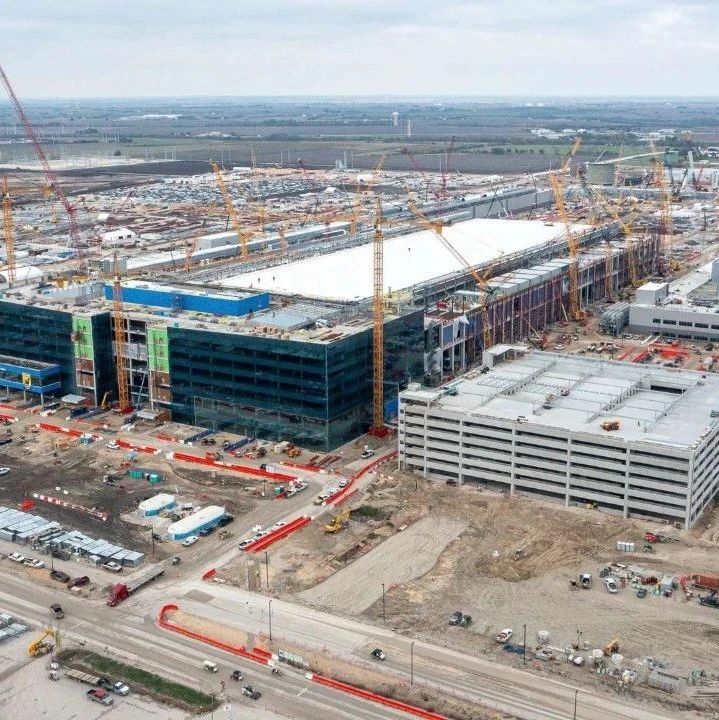
台湾永光 电子化学事业研发协理 黄新义确认演讲 | 2025异质异构集成封装大会(HIPC 2025)
势银芯链· 2025-04-18 08:28
"宁波膜智信息科技有限公司"为势银(TrendBank)唯一工商注册实体及收款账户 势银研究: 势银产业研究服务 势银数据: 势银数据产品服务 势银咨询: 势银咨询顾问服务 重要会议: 4月29日,2025势银异质异构集成封装产业大会(浙江宁波) 点此报名 添加文末微信,加 先进封装 群 台湾永光 电子化学事业研发协理 黄新义 已确认参 加 2025势银异质异构集成封装产业大会 ,并作为嘉宾进行主题为 《 绿色感光材料协助先进 封装产业达成ESG目标 》 的演讲。 黄新义, 电子化学事业研发协理。 学历 Education :中央大学 化学与材料工程 博士 经历 Experience:台湾永光化学工业股份有限公司 电子化学事业 研发协理 (2024~) 电子化学事业 研发处长 (2016~2024) 工程师, 组长, 课长, 经理 (1997~2016) 30+ 专利, 期刊, 演讲 台湾永光化学工业股份有限公司 创立于1972年,秉持「追求进步创新,发扬人性光辉, 增进人类福祉」的经营理念,以「正派经营,爱心管理」为文化核心,以永续经营为使 命,致力研发、生产对人类有正面价值的高科技化学品,与客户共创价值, ...
中美关税+反制,盯紧这两大方向就够了!
摩尔投研精选· 2025-04-17 11:06
东吴证券在最新策略月报中也指出,当前关税冲击引发美国经济衰退预期强化,3月美国 贸易政策不确定性指数创下历史新高,驱动全球大类资产进入高波状态。 今天市场全天低开后震荡反弹,沪指录得8连涨。截至收盘,沪指涨0 . 1 3%,深成指跌 0 . 1 6%,创业板指涨0 . 0 9%。全市场超3100只个股上涨。 相较于海外经济体面临的衰退压力,我国在政策工具箱充足、地产/债务风险可控且经济 韧性支撑下,具备独特的抗压优势,中长期维度无需过分悲观。 沪深两市全天成交额9 9 9 5亿元,较上个交易日缩量1124亿元,内第三次跌破万亿大关。 量能萎缩反映资金短期趋于谨慎。 值 得 注 意 的 是 , 今 天 尾 盘 又 是 狂 买 指 数 ETF , 只 要 有 人 砸 , 国 家 队 就 买 , 照 惯 常 经 验,"国家队"在托底节点,一般是先稳沪深300,再拉中证1 0 0 0。 此外,国务院新闻办公室将于2025年4月21日(下周一)下午3时举行新闻发布会,请商 务部副部长兼国际贸易谈判副代表凌激和工业和信息化部、国家卫生健康委、中国人民银 行有关负责人介绍《加快推进服务业扩大开放综合试点工作方案》有关情况, ...
TSMC(TSM) - 2025 Q1 - Earnings Call Transcript
2025-04-17 10:29
Financial Data and Key Metrics Changes - First quarter revenue decreased by 3.4% sequentially in NT dollars and 5.1% in U.S. dollars, impacted by smartphone seasonality but partially offset by growth in AI-related demand [5][6]. - Gross margin decreased by 0.2 percentage points sequentially to 58.8%, primarily due to the earthquake impact and the start of overseas dilution [6][15]. - Operating margin decreased by 0.5 percentage points sequentially to 48.5% [6]. - First quarter EPS was TWD 13.94 and ROE was 32.7% [6]. - Cash and marketable securities at the end of the first quarter totaled TWD 2.7 trillion or US$81 billion [9]. Business Line Data and Key Metrics Changes - Revenue contribution by technology: 3-nanometer process technology contributed 22% of wafer revenue, while 5-nanometer and 7-nanometer accounted for 36% and 15%, respectively [7]. - Revenue contribution by platform: HPC increased by 7% quarter-over-quarter to account for 59% of first quarter revenue, while smartphone decreased by 22% to 28% [8]. Market Data and Key Metrics Changes - The company expects second quarter revenue to be between US$28.4 billion and US$29.2 billion, representing a 13% sequential increase and a 38% year-over-year increase at the midpoint [13]. - The full-year 2025 revenue is expected to increase by close to mid-20s percent in U.S. dollar terms, supported by robust AI-related demand and a mild recovery in other end market segments [25]. Company Strategy and Development Direction - The company plans to invest an additional US$100 billion in advanced semiconductor manufacturing in the U.S., bringing total investment to US$165 billion [31][36]. - The capital budget for 2025 is expected to be between US$38 billion and US$42 billion, with 70% allocated for advanced process technologies [18]. - The company aims for a long-term gross margin of 53% and higher, despite expected margin dilution from overseas fabs [16][17]. Management's Comments on Operating Environment and Future Outlook - Management noted that the January 21 earthquake impacted production but recovery efforts were successful [21]. - The company continues to observe robust AI-related demand and expects revenue from AI accelerators to double in 2025 [26]. - Management remains cautious about potential tariff impacts but has not seen changes in customer behavior so far [24][77]. Other Important Information - The company is working on balancing supply and demand for CoWoS capacity, with expectations of continued strong demand [50][145]. - The construction of new fabs in Arizona and Japan is ongoing, with plans to ramp up production based on customer demand [35][37]. Q&A Session Summary Question: AI demand and CoWoS capacity - Management acknowledged that while there have been rumors about CoWoS demand adjustments, the demand remains strong and is expected to exceed supply in 2026 [46][54]. Question: U.S. investment and tariff implications - Management clarified that the expansion in Arizona is driven by customer demand, particularly from U.S. companies, and they are in discussions with the U.S. government for necessary permits [61][62]. Question: Geopolitical risks and production planning - Management stated that they are mindful of potential impacts from recent tariff announcements but have not seen changes in customer behavior [76][77]. Question: Semiconductor tariffs and involvement in negotiations - Management confirmed that they do not get involved in tariff negotiations between governments [90]. Question: Revenue outlook and customer behavior - Management indicated that the strong second quarter guidance is driven by demand for 3-nanometer and 5-nanometer technologies, with no observed changes in customer behavior due to tariffs [99][101]. Question: Shareholder returns and buyback policy - Management reiterated their commitment to a sustainable and steadily increasing dividend policy rather than adopting a share buyback framework [152].