
商业航天

Search documents
三大指数集体收跌,创业板指跌1.79%,化工、贵金属板块逆势爆发
Feng Huang Wang Cai Jing· 2026-01-20 07:16
Market Overview - The three major indices collectively declined, with the ChiNext Index dropping over 2% at one point. The Shanghai Composite Index closed down 0.01%, the Shenzhen Component Index down 0.97%, and the ChiNext Index down 1.79% [1] - The total trading volume in the Shanghai and Shenzhen markets reached 2.78 trillion yuan, an increase of 69.4 billion yuan compared to the previous trading day [5][6] Index Performance - Shanghai Composite Index: 4113.65, down 0.01% [2] - Shenzhen Component Index: 14155.63, down 0.97% [2] - ChiNext Index: 3277.98, down 1.79% [2] - The market saw over 3100 stocks decline, with a significant number of stocks in the chemical sector hitting the daily limit up [2] Sector Performance - The chemical sector showed strong performance, with several stocks such as Hongbaoli and Shandong Heda hitting the daily limit up [2] - Precious metals continued to perform well, with stocks like Zhaojin Gold and Hunan Silver reaching the daily limit up [2] - The real estate sector was active, with stocks like Dayuecheng and City Investment Holdings also hitting the daily limit up [2] Stock Movements - AI application stocks saw partial gains, with companies like Jiayun Technology and Yue Media hitting the daily limit up [3] - Conversely, sectors such as computing hardware and commercial aerospace experienced significant declines, with stocks like Shenjian Co. and Aerospace Power facing consecutive limit downs [3]



收评:创指高开低走跌1.79% 贵金属、化工板块领涨
Xin Lang Cai Jing· 2026-01-20 07:08
Market Overview - The three major stock indices experienced fluctuations throughout the day, with the ChiNext Index leading the decline, dropping nearly 2% [1] - The Shanghai Composite Index closed at 4113.65 points, down 0.01%; the Shenzhen Component Index closed at 14155.63 points, down 0.97%; and the ChiNext Index closed at 3277.98 points, down 1.79% [1] Sector Performance - The precious metals sector continued to strengthen, with Hunan Silver and Zhaojin Gold both hitting the daily limit [1] - The chemical sector also showed robust performance, with China Chemical and Hongqiang Co. among several stocks reaching the daily limit [1] - The real estate sector was active throughout the day, with stocks like Dayue City and Hefei Urban Construction hitting the daily limit [1] - The tourism and hotel concept stocks gained strength, with Dalian Shengya and Jiuhua Tourism reaching the daily limit [1] - Conversely, the CPO sector saw a collective adjustment, with Tongyu Communication hitting the daily limit down [1] - The commercial aerospace sector experienced significant declines, with Chaojie Co. dropping over 10% [1] Overall Market Sentiment - Overall, there were more declining stocks than advancing ones, with over 3100 stocks declining across the two markets [1] - The leading gainers included the epoxy propylene, precious metals, and glyphosate sectors, while military electronics, military information technology, and terahertz sectors faced the largest declines [1]
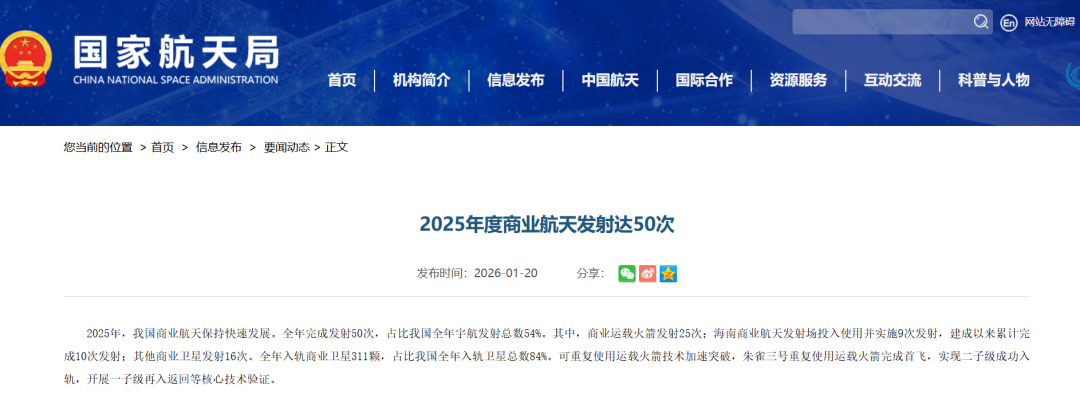
2025年度商业航天发射达50次 占比我国全年宇航发射总数54%
Zhong Guo Xin Wen Wang· 2026-01-20 06:58
Core Insights - In 2025, China's commercial space sector is projected to achieve 50 launches, accounting for 54% of the country's total space launches for the year [1] Group 1: Launch Statistics - The commercial launch sector will conduct 25 rocket launches [1] - The Hainan commercial space launch site will be operational with 9 launches conducted, totaling 10 launches since its establishment [1] - A total of 16 other commercial satellite launches are expected [1] Group 2: Satellite Deployment - The year will see 311 commercial satellites placed into orbit, representing 84% of all satellites launched by China [1] Group 3: Technological Advancements - Breakthroughs in reusable rocket technology are accelerating, with the Zhuque-3 reusable rocket successfully completing its maiden flight and achieving successful orbit insertion of its second stage [1] - Core technology validations, including the re-entry and return of the first stage, are being conducted [1]
经济日报:股价大起大落 商业航天不能被炒作带歪了
Jing Ji Ri Bao· 2026-01-20 06:58
Core Viewpoint - The commercial aerospace sector has experienced significant volatility in stock prices, driven by market enthusiasm and policy support, followed by a sharp correction due to valuation concerns and regulatory scrutiny [2][3]. Group 1: Market Dynamics - The commercial aerospace sector saw a surge in interest and stock price increases at the beginning of 2026, leading to a wave of trading halts due to abnormal price fluctuations [1]. - The market opportunity became clearer with advancements in reusable rocket technology and the introduction of satellite communication features in consumer devices, attracting substantial capital investment [2]. - The "14th Five-Year Plan" has identified aerospace as a strategic emerging industry, with various local governments establishing funds and policies to support the entire commercial aerospace value chain [2]. Group 2: Valuation and Regulatory Concerns - The commercial aerospace sector accumulated a valuation bubble, with an average price-to-earnings (P/E) ratio of 96 times, and some leading stocks exceeding 1,000 times, indicating a significant disconnect between earnings and valuations [3]. - Regulatory bodies, such as the Shanghai Stock Exchange, have issued warnings regarding inaccurate and incomplete information disclosures by companies, raising concerns about speculative trading practices [3]. - The market correction was exacerbated by shareholder sell-offs and a lack of capital support for inflated stock prices, leading to a significant downturn [3]. Group 3: Long-term Outlook and Challenges - Despite short-term volatility, the long-term development of the commercial aerospace sector is supported by ongoing policy backing, technological breakthroughs, and market demand [3]. - The industry faces challenges in expanding application scenarios and controlling costs, necessitating long-term efforts to enhance technology maturity and optimize cost structures [3].
001270,天地板
Shang Hai Zheng Quan Bao· 2026-01-20 06:49
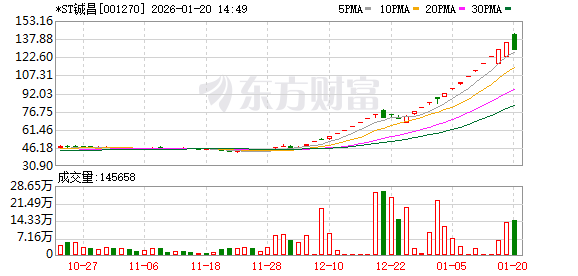
Group 1 - The commercial aerospace sector experienced a downward trend on January 20, with multiple stocks, including *ST Chengchang and Aerospace Power, hitting the daily limit down. Stocks like Superjet Co. and Xicet Testing fell over 13%, while Zhenlei Technology and Aerospace Micro dropped over 11% [2][3] - *ST Chengchang opened with a rapid rise to the daily limit but later experienced significant volatility, ultimately hitting the limit down. As of the report, *ST Chengchang was priced at 128.66 yuan per share [2][3] - The Shenzhen Stock Exchange issued a regulatory notice regarding *ST Chengchang's stock price volatility, leading to a suspension for investigation and a risk warning announcement. Following its resumption on January 16, the stock continued to hit the daily limit up, with some investors engaging in abnormal trading behaviors [2][3] Group 2 - The company *ST Chengchang was established in November 2010 and specializes in the research, production, sales, and technical services of microwave and millimeter-wave analog phased array T/R chips [7]


国家航天局:可重复使用运载火箭技术加速突破
Shang Hai Zheng Quan Bao· 2026-01-20 06:49
Core Insights - In 2025, China's commercial space sector is projected to achieve rapid growth with a total of 50 launches, accounting for 54% of the country's total space launches for the year [1] - The commercial launch activities will include 25 launches of commercial rockets, 9 launches from the Hainan commercial space launch site, and 16 other commercial satellite launches [1] - A total of 311 commercial satellites are expected to be placed into orbit, representing 84% of the total satellites launched by China in the year [1] - The technology for reusable launch vehicles is advancing, highlighted by the successful maiden flight of the Zhuque-3 reusable rocket, which achieved key technology validations [1] Summary by Categories Launch Activities - 50 total launches planned for 2025, making up 54% of China's annual space launch total [1] - Breakdown includes 25 commercial rocket launches, 9 from Hainan launch site, and 16 other satellite launches [1] Satellite Deployment - 311 commercial satellites to be launched, which is 84% of the total satellites launched by China [1] Technological Advancements - Significant progress in reusable rocket technology, with Zhuque-3 completing its first flight and validating core technologies [1]
新兴产业行业周报:商业航天发展步入快车道 重视人形机器人产业趋势
Xin Lang Cai Jing· 2026-01-20 06:39
Market Overview - A-share major indices showed a significant rebound this week, with the weekly performance of the indices as follows: CSI 300 at -0.57%, ChiNext 300 at 1.39%, STAR 50 at 2.58%, CSI 500 at 2.18%, CSI 1000 at 1.27%, and the humanoid robot index at 1.48%, with the STAR 50 showing the most notable recovery [1] Recent Events and Highlights - China applied to the International Telecommunication Union (ITU) for frequency resources for over 200,000 satellites, with more than 190,000 satellites coming from the newly established Radio Innovation Institute. Experts are optimistic about the institute's role in integrating industry resources and leveraging China's large market to accelerate its industry to catch up with SpaceX [2] Current Perspectives - The establishment of the humanoid robot and embodied intelligence standardization technical committee by the Ministry of Industry and Information Technology is viewed positively for the humanoid robot industry chain, with related companies including Hengshuai Co., Junpu Intelligent, Anpeilong, Keda Li, Lens Technology, Changying Precision, Sanhua Intelligent Control, Fengmao Co., Top Group, and Wuzhou Xinchun [3] - Guangdong has launched its first provincial-level drone governance system, creating a drone resource pool and a provincial management platform to build a "one network for unified flight" service ecosystem, with related companies including Xindong Link, Wanfeng Aowei, Wolong Electric Drive, and Zongshen Power [3] - The China Academy of Information and Communications Technology's Tair System Laboratory recently issued a liquid cooling capability testing report and certificate to Shenzhen Invech Technology Co., indicating that AI data center construction is expected to drive demand for liquid cooling equipment, with related companies including Invech, Nanfeng Co., Chuanrun Co., and Bojie Co. [3] - China's application to the ITU for over 200,000 satellites coincides with the U.S. Federal Communications Commission granting SpaceX significant authorization to build, deploy, and operate an additional 7,500 second-generation Starlink satellites, with related companies including Superjet Co., Xindong Link, Guoji Precision, and Electric Science Digital [3]


国家航天局:2025年度商业航天发射达50次
Mei Ri Jing Ji Xin Wen· 2026-01-20 06:19
Core Insights - In 2025, China's commercial space industry is expected to maintain rapid growth, completing 50 launches, which accounts for 54% of the country's total space launches for the year [1] Launch Statistics - Among the 50 launches, 25 will be commercial rocket launches [1] - The Hainan commercial space launch site will be operational, conducting 9 launches, with a cumulative total of 10 launches since its establishment [1] - Additionally, 16 other commercial satellite launches are planned [1] Satellite Deployment - A total of 311 commercial satellites will be placed into orbit, representing 84% of the total satellites launched by China in the year [1] Technological Advancements - The technology for reusable launch vehicles is advancing rapidly, with the successful maiden flight of the Zhuque-3 reusable rocket, achieving successful orbit insertion of its second stage and validating core technologies for first stage re-entry and recovery [1]
冰火两重天!宽基ETF遇冷流出,行业ETF热火朝天!资金新态势下,哪些ETF备受关注?
Sou Hu Cai Jing· 2026-01-20 06:15
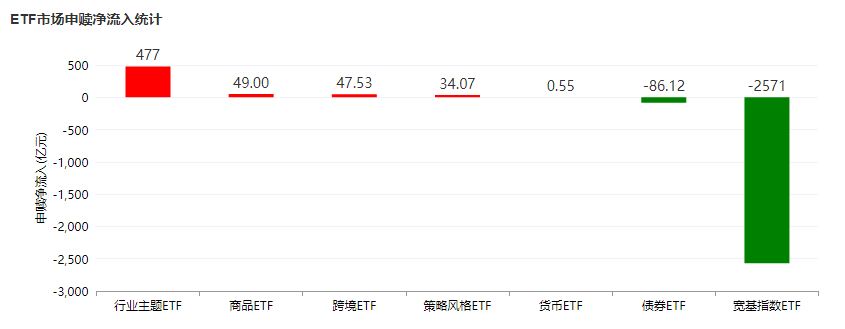
Core Viewpoint - The market is experiencing significant capital movement, with broad-based ETFs seeing a net outflow of over 250 billion yuan in the past week, while industry-specific ETFs are attracting inflows, particularly in high-growth sectors like semiconductors, non-ferrous metals, satellites, and AI applications [1][3][5]. Group 1: ETF Fund Flows - Broad-based ETFs have seen a net outflow exceeding 250 billion yuan in the last week, with the CSI 300 ETF alone accounting for over 120 billion yuan of this outflow [1]. - In contrast, industry-specific ETFs have become the main destination for capital inflows, particularly in the semiconductor, non-ferrous metals, satellite, and AI application sectors over the past month [3]. Group 2: Market Dynamics - The current market dynamics have shifted from being policy-driven to a dual-driven model of industrial trends and capital consensus, with funds continuously flowing into high-growth and technology sectors [6]. - Large institutional investors are adjusting their positions in response to market volatility, leading to a temporary cooling of the market while promoting long-term healthy development [5]. Group 3: Investment Opportunities - Key sectors to watch include: 1. **Semiconductors**: Rapid growth in AI-related chip demand, with domestic manufacturers accelerating development and a long-term growth trend in the global storage market [7]. 2. **Non-Ferrous Metals**: Entering a super cycle since 2025, driven by liquidity easing, supply constraints, and new demand from emerging industries like AI and renewable energy [7]. 3. **AI Applications**: Expected to see explosive growth in 2026, with multiple catalysts including government initiatives and advancements in AI technology [7]. 4. **Commercial Aerospace**: Benefiting from new policies and increased launch frequency, marking a significant milestone in the industry [8]. 5. **Robotics**: Anticipated to enter a pivotal phase in 2026, driven by advancements in applications, computing power, and capital investment [9].
光大期货金融期货日报-20260120
Guang Da Qi Huo· 2026-01-20 06:11
1. Report Industry Investment Rating No relevant content provided. 2. Core Viewpoints of the Report - The stock index is expected to be volatile. The market showed a pattern of rising and then falling throughout the day, with the three major indexes showing mixed performance. The central bank's interest rate cut is expected to guide funds into relevant sectors, boost the valuation of these sectors, and increase corporate profits. However, the market has entered a high - level volatile mode, and short - term fluctuations have increased. In the long - term, the risk of a significant decline in the index is relatively low [1]. - The bond market is expected to continue its bearish trend. The central bank's structural interest rate cut boosts the financing demand in relevant fields and is conducive to enhancing market risk appetite. The current economy maintains resilience and accelerates high - quality transformation, and the central bank emphasizes the reasonable recovery of prices, which is expected to lead to a bearish bond market [2]. 3. Summary by Relevant Catalogs Research Views - **Stock Index**: The market had a mixed performance with some sectors rising and others falling. The central bank's decision to cut the interest rates of various structural monetary policy tools by 25BP is expected to support specific sectors. The adjustment of the minimum margin ratio for margin trading may increase the risk - aversion sentiment of funds. The current market is in a high - level volatile mode, and short - term fluctuations are large. The long - term upward trend of the market is driven by technological innovation and geopolitical factors [1]. - **Treasury Bonds**: On January 19, 2026, the central bank conducted a 7 - day reverse repurchase operation of 158.3 billion yuan, with a net injection of 7.22 billion yuan. The central bank announced a series of policies including interest rate cuts, tool optimization, and quota expansion on January 15. The structural interest rate cut is expected to boost market risk appetite, but the bond market is expected to continue its bearish trend [2]. Daily Price Changes - **Stock Index Futures**: From January 16 to January 19, 2026, the IH contract decreased by 0.22%, the IF contract increased by 0.11%, the IC contract increased by 0.68%, and the IM contract increased by 0.09% [3]. - **Stock Indexes**: During the same period, the Shanghai Composite 50 index decreased by 0.12%, the CSI 300 index increased by 0.05%, the CSI 500 index increased by 0.67%, and the CSI 1000 index increased by 0.40% [3]. - **Treasury Bond Futures**: The TS contract remained basically stable, the TF contract decreased by 0.02%, the T contract decreased by 0.02%, and the TL contract decreased by 0.22% [3]. Market News - In 2025, China's GDP exceeded 140 trillion yuan, with a year - on - year growth of 5%, and the GDP growth in the fourth quarter was 4.5% [4]. - In December 2025, the added value of industrial enterprises above the designated size in China increased by 5.2% year - on - year, and the high - tech manufacturing industry showed good momentum, with the 3D printing equipment increasing by 52.5% throughout the year [4]. - In December 2025, the year - on - year growth rate of China's social consumer goods retail sales dropped to 0.9%, with pressure on home appliance and building decoration retail [5]. - In 2025, China's fixed - asset investment decreased by 3.8% year - on - year, with the mining investment increasing by 2.5% and the manufacturing investment increasing by 0.6% [6]. - In 2025, China's real estate development investment was 8.2788 trillion yuan, a year - on - year decrease of 17.2%, and the real estate development climate index continued to decline [7]. - In December 2025, the housing prices in first, second, and third - tier cities in 70 large and medium - sized cities generally decreased month - on - month, and the year - on - year decline widened [8]. Chart Analysis - **Stock Index Futures**: The report provides charts showing the trends of IH, IF, IM, IC main contracts, and the basis trends of these contracts [10][11][12][13][14]. - **Treasury Bond Futures**: The charts include the trends of treasury bond futures main contracts, treasury bond spot yields, basis, inter - period spreads, cross - variety spreads, and capital interest rates [17][18][19][20][21][24]. - **Exchange Rates**: The report presents charts of the central parity rates of the US dollar and the euro against the RMB, forward exchange rates, the US dollar index, and exchange rates between different currencies [26][27][28][30][31].