半导体

Search documents
港股午盘|恒指涨0.59% 半导体板块走强
Xin Lang Cai Jing· 2026-02-16 04:37
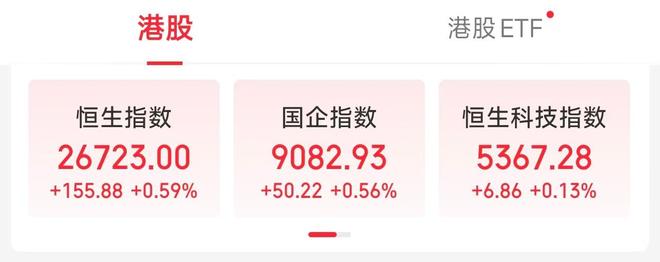
如何抓住黄金波段机会?聪明钱的选择,黄金+股票一键搞定>> 恒指报26723.0点,涨0.59%,恒生科技指数报5367.28点,涨0.13%,AI应用概念大涨,MINIMAX-WP 涨24%;智谱涨4%;有色金属板块大涨,洛阳钼业涨逾5%,紫金矿业、灵宝黄金涨逾4%。半导体板块 走强,澜起科技涨逾14%,兆易创新涨逾9%。(AI生成) ...
港股蛇年收官!三大指数低开高走 恒指收涨0.52% 多只AI概念股创上市高
Xin Lang Cai Jing· 2026-02-16 04:36
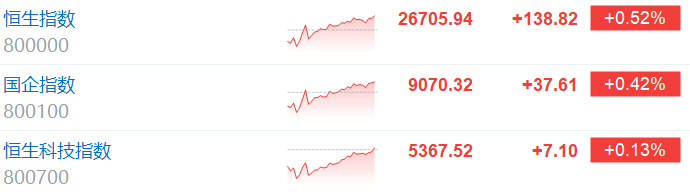
格隆汇2月16日|蛇年最后一个交易日,港股三大指数今日低开高走,恒指收涨0.52%报26705.94点,国 指涨0.42%报9070.32点,恒生科技指数涨0.13%报5367.52点。AI概念股大涨,智谱涨4.74%、 MINIMAX-WP大涨24.56%、海致科技集团涨29.59%,均创上市新高。老铺黄金、洛阳钼业涨超6%,宁 德时代涨超2%,恒生指数公司近日宣布最新季检结果,上述三股均获纳入恒指成份股;而灵宝黄金获 纳入恒生综合指数,亦收涨近5%。科网股普涨,腾讯音乐涨近5%,百度、美的集团涨超1%,腾讯涨 0.19%。半导体板块走强,澜起科技涨超14%,兆易创新涨超9%。因春节假期,港股今日仅交易半日, 下午开始休市。格隆汇祝您财运亨通、心想事成、马年大吉! 如何抓住黄金波段机会?聪明钱的选择,黄金+股票一键搞定>> | 恒生指数 | | 26705.94 | +138.82 | +0.52% | | --- | --- | --- | --- | --- | | 800000 | | | | | | 国企指数 | | 9070.32 | +37.61 | +0.42% | | 800100 | | ...

港股蛇年收官:三大指数收红, 恒指涨0.59%全年累涨超32%,恒生科指涨0.13%盘中一度跌近2%,港股“AI双雄”齐创新高
Jin Rong Jie· 2026-02-16 04:28
Market Performance - The Hong Kong stock market experienced a half-day trading session on February 16, with the Hang Seng Index rising by 0.59% to close at 26,723 points, while the Hang Seng Tech Index increased by 0.13% to 5,367.28 points, and the National Enterprises Index rose by 0.56% to 9,082.93 points [1] - For the year of the Snake, the Hang Seng Index has accumulated a gain of over 32%, the Hang Seng Tech Index has risen over 13%, and the National Enterprises Index has increased by over 23% [1] Sector Performance - The precious metals, semiconductor, and oil sectors showed strength, while defense, consumer discretionary, and hardware sectors underperformed [3] - Major technology stocks saw declines, with Alibaba down 0.26%, JD.com down 2.26%, and Xiaomi down 0.16%, while NetEase and Meituan saw gains of 2.32% and 0.43%, respectively [3] AI Sector Developments - AI application stocks surged, with Hong Kong's "AI twins" Zhizhu and MiniMax-W reaching new highs, with Zhizhu rising by 4.74% and MiniMax-W increasing by 24.26% [4] - Zhizhu launched its new flagship model GLM-5, which has gained popularity overseas, and announced a price increase for its AI programming subscription plan by at least 30% [6][7] Semiconductor Sector Insights - The semiconductor sector showed localized strength, with stocks like Zhaoyi Innovation and Lanke Technology rising by over 17% [9] - A price increase trend for storage chips is emerging, with Kioxia expected to implement a pricing policy that will raise average selling prices by approximately 50% starting in Q1 2026 [12] Precious Metals Market - The precious metals sector is performing strongly, with companies like Luoyang Molybdenum and Zijin Mining seeing gains of over 5% [8] - Analysts from ANZ have raised their Q2 gold price forecast from $5,400 to $5,800 per ounce, citing ongoing structural drivers despite recent price corrections [8]
涨价潮推动存储概念走强 澜起科技、兆易创新齐创新高
Zhi Tong Cai Jing· 2026-02-16 04:04
Group 1 - The storage concept continues to strengthen, with companies like Longsys Technology (06809) and Gigadevice Semiconductor (03986) reaching new highs, with Longsys up 17.08% to HKD 216.6 and Gigadevice up 12.05% to HKD 414.6 [1] - A price surge in storage chips is intensifying, with Japanese storage giant Kioxia expected to implement a revised pricing policy for North American customers starting in Q1 2026, anticipating an average selling price (ASP) increase of approximately 50% [1] - Morgan Stanley estimates that Kioxia's adjusted gross margin will reach 66% in Q1, indicating a significant improvement in profitability for the NAND industry [1] Group 2 - According to Counterpoint's February memory price tracking report, memory prices are expected to rise by 80%-90% by Q1 2026, primarily driven by a substantial increase in general server DRAM prices [1] - For instance, the contract price for 64GB RDIMM server memory has surged from USD 450 in Q4 of the previous year to over USD 900 in Q1, with expectations to exceed USD 1,000 in Q2 [1]

怎么看全球产业格局之变
Sou Hu Cai Jing· 2026-02-16 03:16
Core Insights - The global industrial landscape is undergoing a systematic restructuring driven by unilateralism and protectionism, particularly from the U.S., leading countries to reassess and localize their industrial strategies to mitigate external risks [2][3]. Group 1: Characteristics of Industrial Restructuring - The restructuring is characterized by a shift from global integration to regionalization and a "1+N" multi-point layout, as countries seek to diversify production bases to enhance supply chain resilience. For instance, China's share of U.S. imports decreased from 21.6% in 2017 to 13.4% in 2024, while Mexico and Vietnam saw increases [3]. - The industrial value creation is transitioning from traditional manufacturing to service-oriented and green industries, with high-value services becoming integral to the industrial value chain. China's exports of new energy vehicles, lithium batteries, and photovoltaic products surged from 284.4 billion yuan in 2020 to 1.28 trillion yuan by 2025, a 3.5-fold increase [4]. - The technological innovation landscape is shifting from a unipolar to a multipolar model, with the U.S. leading in AI and high-end semiconductors, while the EU excels in green technology. This has led to a complex competitive environment where countries must invest heavily in independent R&D due to increasing technological barriers [7][12]. Group 2: Organizational and Regulatory Changes - The role of state intervention in industrial organization is becoming more pronounced, with countries employing strategic policies to influence industrial layouts. The U.S. and EU are using subsidies and regulations to shape their industrial ecosystems, leading to a competitive model centered around "chain master" enterprises [8][13]. - The weakening of traditional multilateral frameworks like the WTO is giving rise to a proliferation of regional trade agreements, which often include specific provisions for critical sectors like semiconductors and renewable energy, embedding values and standards into trade rules [8][13]. Group 3: Implications for China - To adapt to these profound changes, China must enhance its resilience and competitiveness by establishing itself as an indispensable hub in the global supply chain, leveraging its vast domestic market to attract high-end production factors [14]. - The focus should be on developing new productive forces and optimizing industrial structures, particularly by integrating productive services into the entire value chain to increase added value and expanding green exports [14][15]. - Strengthening technological advantages through foundational and original innovations is crucial, particularly in key areas like chip design, to overcome technological barriers and establish leadership in international standards [15][16].
【IPO一线】上海朋熙半导体启动IPO辅导 已完成辅导备案登记
Ju Chao Zi Xun· 2026-02-16 02:31
辅导备案报告显示,朋熙半导体已于日前与国泰海通证券签署辅导协议,拟在境内交易所上市。尽管报 告未披露具体上市板块及募资规模,但此举标志着这家成立仅六年的半导体企业正式迈入资本化快车 道。 公开信息显示,朋熙半导体成立于2019年7月24日,法定代表人彭泽慧,注册资本8000万元人民币,注 册地位于中国(上海)自由贸易试验区新金桥路。公司前身为上海朋熙半导体有限公司,2025年底完成 股份制改造,核准日期为2025年12月29日。 官网显示,朋熙半导体是专注于半导体集成电路制造CIM 系统的公司,是国内极少数拥有完全自主的 知识产权且具备完整CIM产品与解决方案的服务商,不仅包含规划咨询、产品研发等服务,更拥有技术 创新以及实施高效运维的综合实力,在大数据技术架构、AI算法、产品智能化、工业自动化等方面也 有着深入的研究和应用实践。 朋熙半导体现已汇聚了众多世界及国内的CIM行业精英,可根据客户需求,从软件、硬件、现场实施等 方面构建高度定制化的CIM解决方案,特别是在12 吋晶圆厂CIM 解决方案上,是国内少数能够提供整 体方案设计与现场建设的服务商。凭借多年的技术积累和自身实力,已与国内众多顶尖半导体制造公 ...
刚刚,市场跳水!这一板块,直线拉升
Xin Lang Cai Jing· 2026-02-16 02:30
Market Overview - The Hang Seng Index opened slightly lower on February 16, with a decline of 0.25%, while the Hang Seng Tech Index fell by 0.19% and the Hang Seng China Enterprises Index decreased by 0.08%. The tech index saw a drop of nearly 2% during the day before narrowing its losses [1][16]. - The market experienced volatility, with sectors such as precious metals, semiconductors, and oil and petrochemicals showing strength, while sectors like defense, consumer discretionary, and hardware equipment struggled [1][16]. Sector Performance - The non-ferrous metals sector rose by 3.88%, semiconductor sector increased by 2.57%, and oil and petrochemical sector gained 2.21% [2][17]. - In contrast, sectors such as defense and military (-2.90%), consumer discretionary (-2.24%), and hardware equipment (-1.94%) faced declines [2][17]. Notable Stocks - In the non-ferrous metals sector, notable performers included Luoyang Molybdenum, which rose over 7%, and Lingbao Gold, which increased by over 6%. Other companies like China Nonferrous Mining, Shandong Gold, Jiangxi Copper, and Minmetals Resources also saw gains [3][19]. - The semiconductor sector saw significant gains, with companies like Zhaoyi Innovation rising over 17% and Lianqi Technology increasing by over 13% [11][26]. AI Application Stocks - AI application stocks opened higher, with Fubo Group rising over 10% and MINIMAX-WP increasing nearly 6%. Zhihui continued its recent momentum, reaching a peak of 540 HKD per share with a rise of over 11% [8][24][25]. Upcoming Changes - The Hang Seng Index will increase its constituent stocks from 88 to 90, adding Ningde Times, Luoyang Molybdenum, and Laopu Gold, while removing Zhongsheng Holdings. This change will take effect on March 9 [7][22].

AI芯片加速,三星斩获代工大单
半导体行业观察· 2026-02-16 01:58
Core Viewpoint - Tesla is accelerating its in-house chip development, focusing on the production of next-generation AI5 and AI6 chips, aiming to surpass the current global AI chip output [2][6]. Group 1: Recruitment Strategy - Tesla's recruitment for AI chip design engineers emphasizes practical experience over formal education, asking candidates to describe three challenging technical problems they have solved [3]. - The choice to recruit in South Korea is strategic, leveraging the advanced manufacturing capabilities of companies like Samsung and SK Hynix, which are key suppliers of High Bandwidth Memory (HBM) technology [3]. Group 2: Chip Specifications and Production Strategy - Tesla's chip production strategy involves a dual-foundry approach, utilizing different wafer foundry partners to enhance flexibility and reduce single-source risks [4][8]. - The specifications for AI4, AI5, and AI6 chips show significant improvements: AI6 is expected to integrate multiple functions into a single SoC, enhancing efficiency and reducing power consumption [6][10]. Group 3: Manufacturing Locations and Partnerships - AI4 is manufactured by Samsung in South Korea, while AI5 is being developed with TSMC in Taiwan and the U.S. Arizona, and AI6 will be produced at Samsung's facility in Taylor, Texas [7]. - The decision to produce AI6 at Samsung's Texas facility is influenced by supply chain risk management, policy incentives, and cost structures, particularly in light of the U.S. CHIPS Act [9]. Group 4: Implications for Autonomous Driving and Robotics - AI6 is positioned as a core component for Tesla's advancements in embodied AI, supporting both autonomous driving and humanoid robots, with a significant increase in demand expected as production scales up [10]. - Advanced packaging technologies are anticipated to be utilized for AI6 to meet high bandwidth and computational requirements, supporting large neural network models [10]. Group 5: Semiconductor Supply Chain Dynamics - TSMC currently holds major orders for AI5, but Tesla's expansion in South Korea and push for localized advanced manufacturing indicate a shift in global supply chain dynamics [11]. - The success of Taiwan's semiconductor supply chain will depend on maintaining technological advantages in advanced packaging and integration technologies [14].


速度提升1万倍,纳米级超快光开关新突破!
半导体行业观察· 2026-02-16 01:58
德国研究人员推出了一种由极薄半导体层制成的超快光开关,其运行速度比当今的电子晶体管快约 10,000 倍。 由奥尔登堡大学物理学家团队设计的新型光学器件,可用作光开关或光晶体管。研究人员表示,超快光开关为光数据处理提供 了广阔的应用前景。 这种被描述为纳米结构"活性超材料"的原型由银和原子级薄的半导体层制成。它能够在飞秒(即千万亿分之一秒)的时间尺度 上控制光。 "如果我们想在纳米尺度上制造超快光开关,我们的发现就特别有意义,"奥尔登堡大学实验物理学教授、该研究的主要作者克 里斯托夫·利瑙博士表示。 纳米尺度光学 利瑙和他的研究团队着手寻找一种材料,利用聚焦激光束,可以在短短几个飞秒内操控或切换其反射特性。作为参考,一飞秒 等于十亿分之一秒的百万分之一。 在这个项目中,研究团队使用了一种超薄的银纳米狭缝阵列。然后,他们在其表面铣削出一个平行沟槽网格,每个沟槽的宽度 和深度约为 45 纳米(十亿分之一毫米)。 参与这项研究的英国剑桥大学的科学家们随后将一层仅有三个原子厚的半导体晶体二硫化钨单层涂覆到该结构的表面上。 莫里茨·吉廷格博士(左)和丹尼尔·蒂默博士(右)站在这项研究所依据的实验装置前。图片来源:奥尔登 ...

存储芯片,走向失控
半导体行业观察· 2026-02-16 01:58
Core Viewpoint - A global storage crisis is emerging, driven by a significant shortage of memory chips, particularly DRAM, which is impacting profits across various sectors, including consumer electronics and automotive industries [2][3][4]. Group 1: Causes of the Crisis - The shortage of DRAM is primarily attributed to the increasing demand from artificial intelligence data centers, which require high bandwidth memory (HBM) for processing large datasets [3][6]. - Companies like Alphabet Inc. and OpenAI are purchasing millions of memory chips for AI applications, leading to a competitive squeeze on supply for consumer electronics manufacturers [4][5]. - The price of DRAM has surged dramatically, with some prices increasing by 75% from December to January, reminiscent of hyperinflation [4][23]. Group 2: Impact on Companies - Major semiconductor manufacturers, including SK Hynix, Samsung, and Micron, control over 90% of global memory chip production and are experiencing record valuations due to the demand surge [4][5]. - The shift in production focus from traditional DRAM to HBM has resulted in reduced availability of standard memory chips for consumer electronics, affecting companies like Apple and Tesla [2][5]. - The memory crisis is causing significant disruptions in product release schedules, with companies like Sony considering delays for their next-generation gaming consoles [19][23]. Group 3: Market Predictions - TrendForce predicts that DRAM and NAND flash prices will rise by 90% to 95% and 55% to 60%, respectively, in the first quarter alone [4][6]. - The demand for HBM is expected to grow by 70% year-on-year by 2026, indicating a long-term shift in the memory market dynamics [6][22]. - The supply-demand imbalance is projected to persist throughout the year, with potential declines in smartphone shipments and increased prices for low-end devices [23][19].