锂电

Search documents
高工锂电年会前瞻|加工费修复,六氟磷酸锂领涨
高工锂电· 2025-10-07 09:41
Core Viewpoint - The lithium battery industry is experiencing a price rebound in hexafluorophosphate lithium (6F), driven by supply-demand dynamics and increasing demand from energy storage and automotive sectors [2][3][6]. Supply Side - The current effective monthly production capacity for 6F is approximately 24,500 tons, while demand in September is expected to exceed 23,000 tons, indicating a tight supply-demand balance [5]. - Major companies dominate the market, with the top three firms accounting for over 70% of production [5]. - The price of 6F has increased from 50,000 yuan/ton to 58,500 yuan/ton since August, reflecting a rise of over 15% [4]. - The cost increase in lithium carbonate contributes to a cost increment of about 3,000-5,000 yuan/ton, but the actual price increase of 6F exceeds this range, indicating a shift in processing fee dynamics [5]. - Limited new production capacity is expected, with leading companies operating at over 80% utilization [7]. - A significant cost gap of over 30,000 yuan/ton exists between leading and smaller firms, suggesting potential for further processing fee increases [7]. Demand Side - The surge in demand for energy storage batteries has been a key driver for the price increase, with production rates hitting historical highs since July [6]. - The upcoming fourth quarter is anticipated to see increased demand from both domestic and international automotive companies, further boosting the need for 6F [6]. - Industry estimates predict that demand for energy storage and power batteries will maintain a growth rate of over 20% in 2025, providing long-term support for 6F [6]. Future Outlook - The supply-demand balance for 6F is expected to tighten, with a potential supply gap emerging by Q4 2026, which could lead to stronger price elasticity [8]. - Processing fees for 6F are projected to rise by 2,000 yuan/ton starting in Q4 2025, with further increases of 5,000-20,000 yuan/ton anticipated in 2026, indicating a recovery in performance and potential for growth [7].


项目接连落地,江苏锂电产业再上“新台阶”!
起点锂电· 2025-10-07 08:42
主办单位: 起点固态电池、起点锂电、SSBA固态电池联盟 协办单位及固态年会总冠名: 茹天科技 倒计时30天 CINE2025固态电池展暨固态电池行业年会 活动时间: 2025年11月6-8日 活动地点: 广州南沙国际会展中心(2楼船厅及广州厅) 活动规模: 展商规模200+、参会企业2000+、专业观众20000+ 同期活动: 2025起点固态电池金鼎奖颁奖典礼、SSBA固态电池产业联盟理事会 第一批展商及赞助商: 金钠科技/茹天科技/海四达钠星/融捷能源/易事特钠电/泰和科技/隐功科技/科迈罗/国科炭美/晟钠新能/中钠能源/乔岳智能/津工能源/科达新能 源/时代思康/富钠能源/极电特能/华普森/瑞扬新能源/亮见钠电/叁星飞荣/珠海纳甘新能源/皓升新能源/扬广科技/银川苏银产业园/兆钠新能源/精诚模具/儒特股份/希 倍动力/先导干燥/瓦时动力/博粤新材料/苏州翼动新能/亿隆能源/钠创新能源/瑞森新材料/海裕百特/凯德利/长篙新材/清研电子 /孚悦科技 等 长三角和珠三角地区为中国锂电产业链两大重要根据地,江苏省则是长三角锂电圈最重要的组成部分。 江苏省锂电产业有技术创新引领、全链条覆盖、规模化制造三大特征, ...

浙江2亿元锂电项目开工
起点锂电· 2025-10-07 08:42
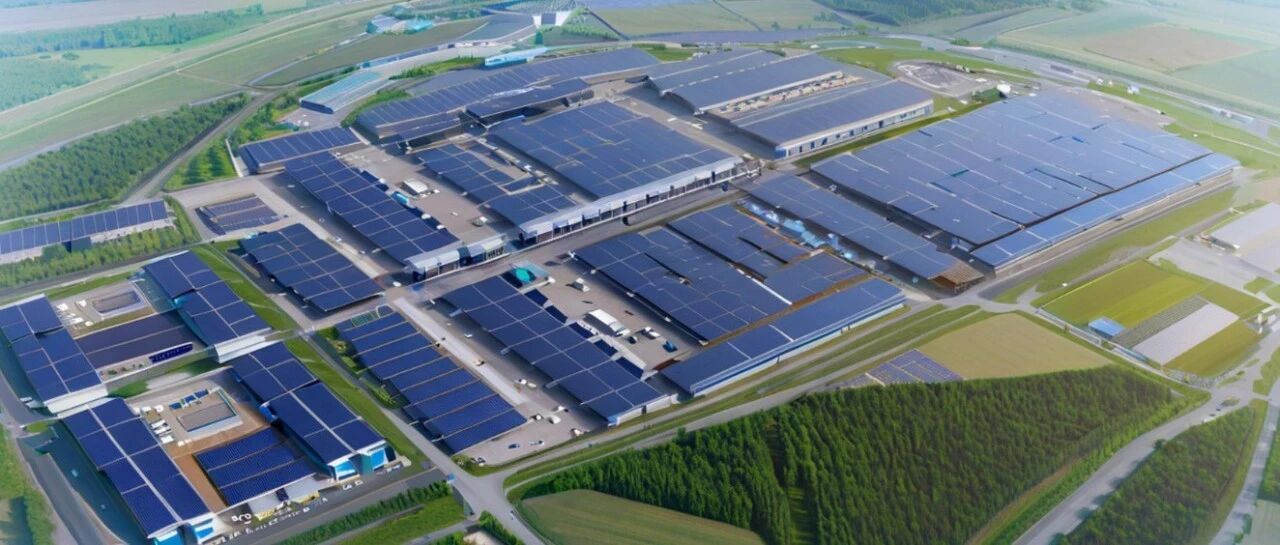
Group 1 - The CINE2025 Solid-State Battery Exhibition and Industry Annual Conference is scheduled for November 6-8, 2025, at the Guangzhou Nansha International Convention Center, with over 200 exhibitors and 20,000 professional attendees expected [2][3][6] - The event will feature the 2025 Qidian Solid-State Battery Golden Ding Award Ceremony and the SSBA Solid-State Battery Industry Alliance Council [2][3] - The first batch of exhibitors and sponsors includes companies such as Jin Na Technology, Ru Tian Technology, and Hai Si Da Sodium Star, among others [2][3][4] Group 2 - The project by Huaming Gaona New Materials Co., Ltd. for producing 15,000 tons of aluminum oxide ceramic powder for lithium battery separators has commenced construction, with a total investment of 200 million yuan, including 160 million yuan in fixed assets [3] - The project aims to establish four advanced production lines for different specifications of high-precision products, catering to the diverse needs of lithium battery separator manufacturers [3] - Upon completion, the project is expected to generate an annual sales revenue of 240 million yuan and contribute approximately 23.4 million yuan in tax revenue [3]
300亿锂电龙头或易主 创始人去世不足3年 72岁江苏船王将入局
2 1 Shi Ji Jing Ji Bao Dao· 2025-10-05 15:01
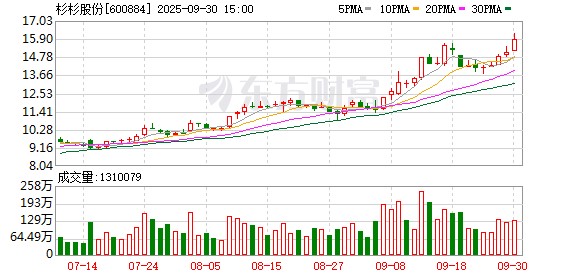
Group 1: Company Restructuring - The control dispute within the company, triggered by the sudden death of founder Zheng Yonggang, has concluded with the signing of a restructuring investment agreement involving the controlling shareholder, Ningbo Fucheng Group, and its subsidiary, Ningbo Pengze Trading [2][3] - The new actual controller, Ren Yuanlin, is expected to lead the company through challenges including performance recovery, industry integration, and strategic restructuring [2][3] - The restructuring investors plan to acquire a 23.36% stake in the company through a combination of direct acquisition and trust partnerships, with a total consideration of approximately 3.284 billion yuan [3] Group 2: Financial Performance - In the first half of 2025, the company reported a revenue of 9.858 billion yuan, a year-on-year increase of 11.78%, and a net profit of 207 million yuan, reflecting a significant growth of 1079.59% [7] - As of September 30, 2025, the company's stock price has increased by 113.42% year-to-date, reaching 15.9 yuan per share [7] Group 3: Industry Context - The lithium battery industry is experiencing a strong rebound, driven by global energy transition and electrification trends, benefiting companies like Ningbo Shanshan [7][11] - The company is actively expanding its global footprint, with a significant project in Finland aimed at enhancing its competitiveness in the European market [8] - The company holds 359 authorized patents in the anode materials field, showcasing its technological leadership and long-standing experience in the industry [9]

前三季度31省GDP预测:山东远超浙江,江西14,甘肃接近万亿
Sou Hu Cai Jing· 2025-10-05 06:51
Core Insights - The economic competition among Chinese provinces is intensifying, with a national GDP forecast to exceed 101.6 trillion yuan, reflecting a growth of 4.47% compared to the same period last year [1] Group 1: Economic Performance - Guangdong and Jiangsu remain the leaders in the economic rankings, both surpassing 8 trillion yuan in GDP, with Jiangsu showing a nominal growth rate of 3.23% [1] - Tibet leads the nation with a remarkable growth rate of 10.27%, while smaller economies like Hainan and Ningxia are achieving stable growth through specialized industries [1] - Shandong's GDP is projected to reach 7.71 trillion yuan, significantly outpacing Zhejiang's 6.86 trillion yuan, with a growth rate of 4.48% [1] Group 2: Regional Highlights - Jiangxi has shown resilience, ranking 14th with a forecasted GDP of 25,788 billion yuan, a 4.88% increase from last year, driven by its electronic information industry [3] - Gansu is nearing the 1 trillion yuan mark with a forecast of 999.9 billion yuan, achieving a growth rate of 6.2% through its renewable energy initiatives [4] Group 3: Growth Dynamics - The data indicates that 19 out of 31 provinces achieved growth rates above 5%, showcasing a positive interaction between major economic provinces and resource-rich regions [5] - The Beijing and Shanghai metropolitan areas maintain a growth rate of 6%, while the Chengdu-Chongqing economic circle continues to grow steadily at 5% [5]

高工锂电年会前瞻 | 硫化锂赛道接连抛出“上量”信号
高工锂电· 2025-10-04 09:41
Core Viewpoint - The lithium sulfide sector is experiencing significant growth, with companies ramping up production capabilities and advancements in solid-state battery technology, indicating a faster-than-expected demand increase for lithium sulfide in the coming years [4][10]. Group 1: Industry Developments - Tianqi Lithium announced the commencement of a pilot project for a 50-ton lithium sulfide production line in Sichuan, emphasizing low risk and rapid mass production capabilities [2]. - Enjie Co. reported the completion of a pilot line for high-purity lithium sulfide, with a capacity of 100 tons, and has established a 10-ton solid-state electrolyte production line [2]. - Shanghai Xiba has acquired relevant assets related to lithium sulfide and plans to expand production through joint ventures [2]. Group 2: Market Demand and Projections - The demand for lithium sulfide is projected to reach a hundred-ton level by 2025, with expectations of a shift to a thousand-ton level by 2026, indicating a faster growth trajectory than previously anticipated [4]. - The industry is witnessing a surge in interest in sulfide solid-state batteries, with multiple companies, including Yiwei Lithium Energy and Guoxuan High-Tech, disclosing advancements in their solid-state battery products [3]. Group 3: Production and Purity Challenges - Lithium sulfide constitutes 77% to 80% of the cost of solid-state electrolytes, with current market prices ranging from 3 million to 4 million yuan per ton, making cost reduction critical for the commercialization of solid-state batteries [6]. - High purity lithium sulfide is essential for producing high-performance solid-state electrolytes, with impurities adversely affecting ionic conductivity and posing safety risks [7]. - The current market purity levels for lithium sulfide range from 99.5% to 99.9%, with advancements being made towards achieving 99.99% purity by domestic companies [8]. Group 4: Technological Approaches - Different companies are adopting varied production methods for lithium sulfide, including the hydrogen sulfide neutralization method, which has achieved scale and is represented by Shanghai Xiba [12]. - The liquid-phase method is being pursued by companies like Tianqi Materials and Huasheng Lithium, leveraging their expertise in electrolyte and fine chemical production [14]. - The lithium-sulfur direct solid-phase method, favored by major lithium companies, is noted for its high purity output but faces challenges in scalability due to the high cost of lithium metal [15][16]. Group 5: Equipment and Process Challenges - The production of lithium sulfide is constrained by the need for specialized equipment that can handle its corrosive nature and sensitivity to moisture and oxygen [18]. - Current industry practices involve three main equipment solutions, with the hydrogen sulfide-hydroxide method leading in terms of engineering capabilities and cost reduction potential [18].

牵手宁德时代重组 锂电上游龙头20cm涨停
2 1 Shi Ji Jing Ji Bao Dao· 2025-10-04 00:47
Core Viewpoint - The strategic cooperation between Fulin Precision (300432.SZ) and CATL (300750.SZ; 3750.HK) has entered a critical turning point, with CATL set to increase its stake in Fulin's subsidiary, Jiangxi Shenghua, to 51% through a capital increase of 2.563 billion yuan [2][5]. Group 1: Strategic Cooperation and Financial Impact - CATL will invest 2.563 billion yuan to gain controlling interest in Jiangxi Shenghua, leading to a significant increase in Fulin's stock price, which hit a 20% limit up, closing at 22.22 yuan per share, with a market capitalization of 38 billion yuan [2]. - In 2024, Fulin Precision's revenue is projected to be 8.47 billion yuan, with Jiangxi Shenghua contributing 4.829 billion yuan and Mianyang Fulin Precision New Energy contributing 1.684 billion yuan [4]. - The partnership has evolved since 2021, with CATL progressively increasing its investment and stake in Jiangxi Shenghua, culminating in a commitment to purchase at least 140,000 tons of lithium iron phosphate annually from 2025 to 2029 [5][6]. Group 2: Operational and Management Changes - The change in ownership of Jiangxi Shenghua signifies a deeper collaboration in terms of equity and capital, with CATL taking control of the management, appointing four out of seven board members [6]. - Jiangxi Shenghua's financial health has improved, with total assets reaching 7 billion yuan and net assets increasing from 725 million yuan to 1.189 billion yuan by the end of 2025 [7]. Group 3: Product Development and Market Position - Jiangxi Shenghua specializes in high-pressure lithium iron phosphate materials, which are crucial for the lithium battery industry, and has been recognized for its innovative production techniques [9]. - The demand for high-pressure lithium iron phosphate is expected to surge, with Fulin Precision having a production capacity of 300,000 tons, positioning it as a key player in the fast-charging battery market [10]. - The collaboration with CATL is anticipated to enhance Jiangxi Shenghua's product structure and profitability, with projections indicating a significant increase in the production of higher-generation products [11].


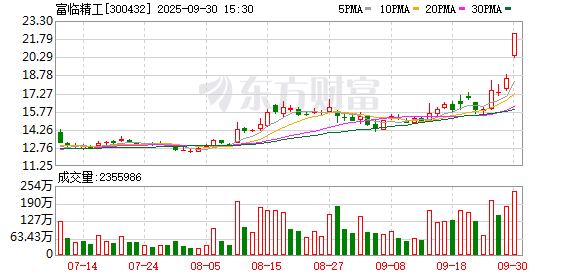
牵手宁德时代重组,锂电上游龙头20cm涨停
2 1 Shi Ji Jing Ji Bao Dao· 2025-10-04 00:40
Core Viewpoint - The strategic partnership between Fulin Precision (300432.SZ) and CATL (300750.SZ; 3750.HK) has entered a critical turning point, with CATL increasing its stake in Fulin's subsidiary, Jiangxi Shenghua, to 51% through a capital increase of 2.563 billion yuan, marking a significant shift in control and collaboration [2][5]. Group 1: Financial and Operational Highlights - Fulin Precision's core business includes lithium battery cathode materials, automotive engine and transmission precision components, and has expanded into robotic intelligent joint modules and components [5]. - In 2024, Fulin Precision is projected to achieve revenue of 8.47 billion yuan, with Jiangxi Shenghua contributing 4.83 billion yuan and Mianyang Fulin Precision New Energy contributing 1.68 billion yuan, alongside a net profit of 402 million yuan [5]. - Jiangxi Shenghua's total assets reached 7 billion yuan by mid-2025, with net assets increasing from 725 million yuan at the end of the previous year to 1.189 billion yuan [7]. Group 2: Strategic Developments - The partnership between Fulin Precision and CATL dates back to 2021, with CATL initially investing 20 million yuan and subsequently increasing its stake to 20% by 2022 [5]. - A business cooperation agreement signed on August 12, 2024, commits CATL to purchase at least 140,000 tons of lithium iron phosphate annually from Jiangxi Shenghua from 2025 to 2027, with the procurement volume expected to be no less than 80% of Jiangxi Shenghua's production capacity [6]. - The recent capital increase and shareholding change signify a deeper integration of operations and management, with CATL appointing four out of seven directors on Jiangxi Shenghua's board [6]. Group 3: Market Position and Product Development - Jiangxi Shenghua specializes in high-density lithium iron phosphate materials, which are critical for enhancing battery performance and are recognized as a key competitive advantage in the lithium battery industry [9]. - The demand for high-density lithium iron phosphate is expected to surge, particularly with the anticipated growth in fast-charging battery technologies, positioning Jiangxi Shenghua as a leader in this niche market [9]. - The production capacity for high-density lithium iron phosphate at Fulin Precision is currently at 300,000 tons, which is crucial for meeting the increasing market demand [9].
牵手宁德时代重组,锂电上游龙头20cm涨停
21世纪经济报道· 2025-10-04 00:40
Core Viewpoint - The strategic partnership between Fulin Precision (富临精工) and CATL (宁德时代) has entered a critical phase, with CATL set to increase its stake in Fulin's subsidiary, Jiangxi Shenghua, to 51% through a capital increase of 2.563 billion yuan, marking a significant shift in control and collaboration [2][6]. Group 1: Financial and Operational Highlights - Fulin Precision's core business includes lithium battery cathode materials, automotive engine and transmission precision components, and has expanded into robotic intelligent electric joint modules and components [5]. - In 2024, Fulin Precision is projected to achieve revenue of 8.47 billion yuan, with Jiangxi Shenghua contributing 4.83 billion yuan and Mianyang Fulin Precision New Energy contributing 1.68 billion yuan, alongside a net profit of 402 million yuan [5]. - As of mid-2025, Jiangxi Shenghua's total assets are estimated at 7 billion yuan, with net assets increasing from 725 million yuan at the end of last year to 1.189 billion yuan [8]. Group 2: Historical Context and Strategic Developments - The collaboration between Fulin Precision and CATL dates back to 2021, with CATL initially investing 20 million yuan in Jiangxi Shenghua, followed by additional investments that increased its stake to 20% by early 2022 [6]. - In August 2024, a business cooperation agreement was signed, committing CATL to purchase at least 140,000 tons of lithium iron phosphate annually from Jiangxi Shenghua from 2025 to 2027, later extended to 2029 [6]. - A recent announcement indicated that Jiangxi Shenghua received a 1.5 billion yuan advance payment from CATL to secure lithium iron phosphate supply and support raw material construction [6]. Group 3: Product and Market Dynamics - Jiangxi Shenghua specializes in high-pressure dense lithium iron phosphate materials, which are critical in the lithium battery industry, particularly for fast-charging applications [10][11]. - The demand for high-pressure dense lithium iron phosphate is expected to surge, with the market anticipated to grow significantly in 2025, termed the "supercharging year" [10]. - Fulin Precision has established a production capacity of 300,000 tons of high-pressure dense lithium iron phosphate, positioning itself as a key player in the competitive landscape [11]. Group 4: Future Outlook - With CATL's controlling stake, Jiangxi Shenghua is expected to enhance its product structure and profitability, with projections indicating that the proportion of fifth-generation products will exceed 70% by 2026, leading to improved profit margins [12].
锂电原料安全如何保障
中国能源报· 2025-10-04 00:34
Core Viewpoint - The rapid development of the new energy vehicle and energy storage markets has led to a significant imbalance in the supply and demand of lithium resources, necessitating a multi-faceted approach to address these challenges [3][4]. Supply and Demand Dynamics - China has the largest market for new energy vehicles and energy storage, with demand for lithium battery materials growing rapidly. In the first half of this year, the production and sales of new energy vehicles increased by 41.4% and 40.3% year-on-year, respectively, while the production of power and other batteries rose by 60.4% [4]. - The production of lithium carbonate reached 389,000 tons in the first half of the year, a year-on-year increase of 29%, providing a solid foundation for the development of the new energy industry [4]. - The domestic lithium resource development volume is expected to reach 300,000 tons in 2024, a year-on-year increase of 28%, with the self-supply guarantee rate rising to 40% [4]. Global Resource Development - Chinese enterprises are actively participating in global lithium resource development through bidding, asset restructuring, and project cooperation, with overseas investments exceeding 100 billion yuan (approximately 10 billion USD) by mid-year [5]. - Over 90% of overseas lithium resource projects are led by private enterprises, which play a crucial role in ensuring the safety of China's new energy industry chain [5]. Challenges and Risks - The lithium battery industry faces long-term sustainability challenges, including insufficient domestic resource development and a lack of high-quality raw materials [7]. - The price of lithium materials has experienced significant fluctuations, with lithium carbonate prices peaking at 600,000 yuan per ton in November 2022 before dropping below 600,000 yuan [8]. - Global economic conditions and international dynamics have increased risks in overseas lithium mining, with countries like Mexico and Chile implementing regulations that complicate foreign investment [8]. Strategic Directions - The lithium raw material industry should focus on "safety, innovation, green, and collaboration" to address development challenges and enhance production capabilities [10]. - A national lithium resource reserve system should be established to ensure stable supply, with increased exploration efforts in key regions [10]. - Companies should avoid short-term profit-driven decisions and instead focus on rational assessments of industry scale and supply-demand relationships [10]. Recycling and Sustainability - A dual-driven model of tiered utilization and recycling should be established, promoting standardized recycling networks and encouraging collaboration between automakers, battery manufacturers, and recycling entities [11]. - The industry should enhance recovery technologies to improve the recovery rates and purity of metals like lithium, cobalt, and nickel, while reducing costs [11]. - Active participation in the formulation of global lithium raw material industry rules is essential, along with strengthening cooperation with resource and consumer countries to create a mutually beneficial global industrial ecosystem [11].