
光纤光缆

Search documents
市场最前沿|从“一根丝”的突破,看民营企业创新活力
Xin Hua She· 2025-12-24 11:35
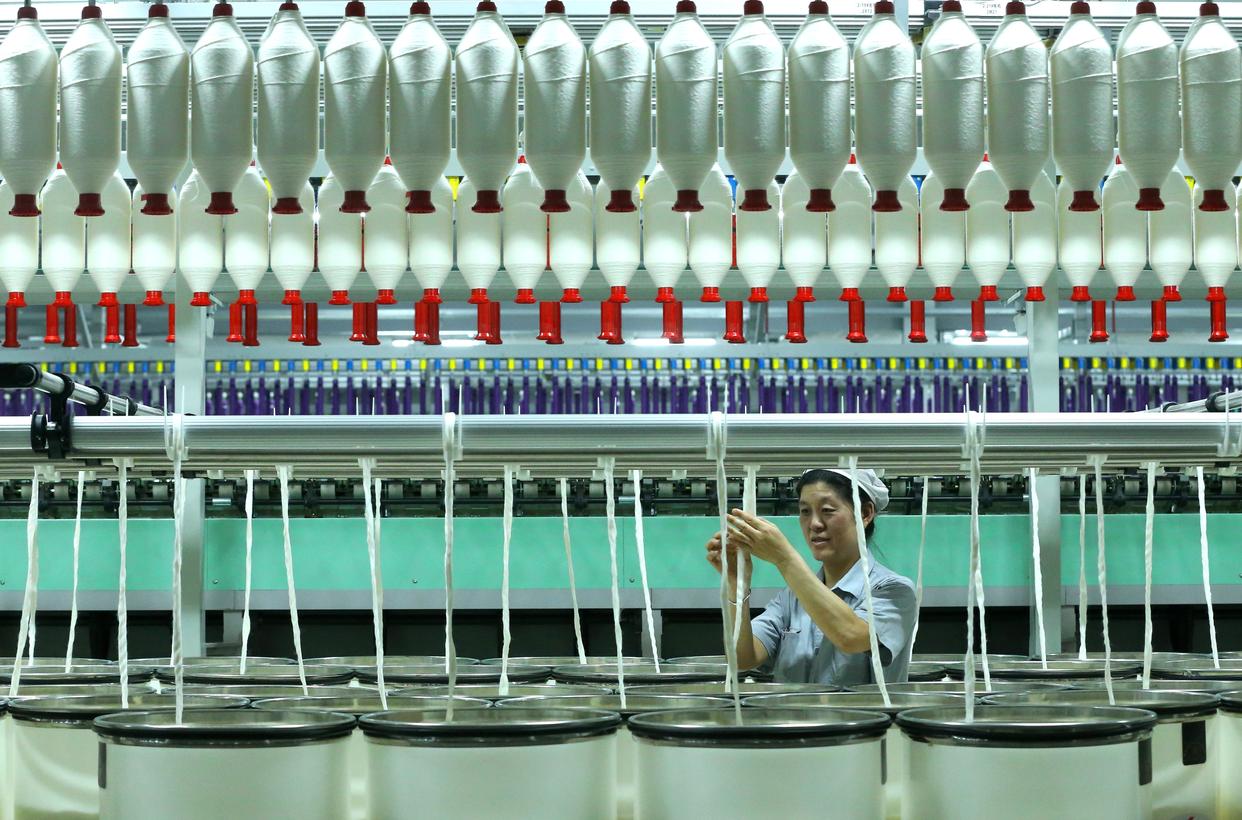
Group 1 - The textile industry is undergoing a transformation, with private enterprises innovating in niche areas to enhance productivity and competitiveness, exemplified by the Erdos Cashmere Group's shift to automated production and integration of 5G technology [1] - The core of China's cashmere industry is to elevate its position in the global value chain through innovation and systematic upgrades, focusing on technology empowerment and value reconstruction rather than mere scale expansion [1] - Collaborations between private enterprises and research institutions are driving innovation, such as the development of functional cotton nano-fiber composite yarns by Shandong Weiqiao Group, which offers temperature-regulating fabric [1] Group 2 - Changfei Fiber Optic Cable Co., Ltd. has emerged as a leader in the next-generation fiber optic sector, showcasing its advancements at the "China Optics Valley" International Optoelectronic Expo, and has mastered all key technologies from preform to fiber and cable [3] - The company has established joint laboratories to tackle fundamental technologies and facilitate the industrialization of core materials, emphasizing a collaborative approach to innovation that directly addresses production challenges [3] - The focus on application-oriented research and development has allowed Changfei to become a standard-setting leader in the industry, demonstrating the importance of aligning scientific inquiry with market needs [3] Group 3 - Ningbo Bowei Alloy Precision Fine Wire Co., Ltd. has achieved remarkable precision in cutting wire, essential for manufacturing high-precision components, continuously pushing the limits of diameter reduction from 0.33mm to 0.015mm over the past decade [5] - Ounait Cable Group has developed cables that maintain flexibility in extreme cold and resist harsh environmental conditions, showcasing the importance of innovation in creating specialized products for specific market needs [5] - Private enterprises contribute significantly to technological innovation in China, accounting for 70% of the nation's technological advancements and encompassing a large portion of specialized and high-tech enterprises [5]

智通港股通活跃成交|12月24日
智通财经网· 2025-12-24 11:01
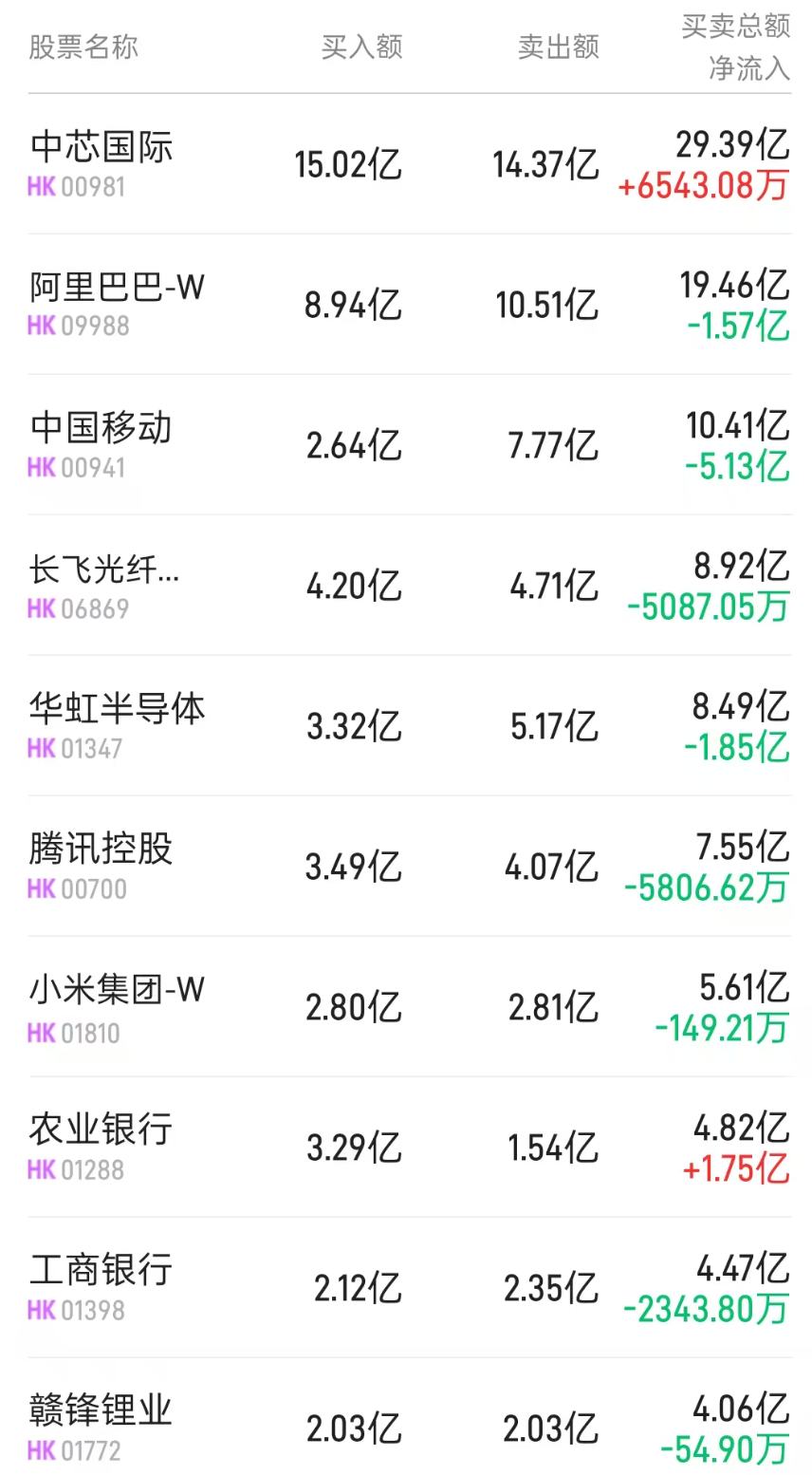
Group 1 - On December 24, 2025, SMIC (00981), Alibaba-W (09988), and China Mobile (00941) were the top three companies by trading volume in the Southbound Stock Connect, with transaction amounts of 2.939 billion, 1.946 billion, and 1.041 billion respectively [1][2] - In the Shenzhen-Hong Kong Stock Connect, SMIC (00981), Alibaba-W (09988), and Tencent Holdings (00700) also ranked as the top three companies by trading volume, with transaction amounts of 1.678 billion, 1.074 billion, and 0.916 billion respectively [1][2] Group 2 - In the Southbound Stock Connect, the top ten active trading companies included SMIC (00981) with a net buying amount of 65.43 million, while Alibaba-W (09988) and China Mobile (00941) had net selling amounts of 1.57 billion and 513 million respectively [2] - In the Shenzhen-Hong Kong Stock Connect, SMIC (00981) had a net buying amount of 425 million, while Alibaba-W (09988) and Tencent Holdings (00700) recorded net selling amounts of 1.31 billion and 553 million respectively [2]



北水动向|北水成交净卖出11.75亿 中芯国际(00981)通知下游客户涨价 北水全天加仓近5亿港元
智通财经网· 2025-12-24 10:01
Summary of Key Points Core Viewpoint - The Hong Kong stock market experienced significant net selling from Northbound funds, totaling HKD 11.75 billion, with notable net selling in major stocks like China Mobile, Tencent, and Alibaba. Conversely, stocks such as SMIC and Agricultural Bank saw net buying, indicating a mixed sentiment among investors. Group 1: Northbound Fund Activity - Northbound funds recorded a net selling of HKD 11.75 billion, with HKD 5.52 billion from Shanghai Stock Connect and HKD 6.24 billion from Shenzhen Stock Connect [1] - The most bought stocks included SMIC (00981) and Agricultural Bank (01288), while the most sold stocks were China Mobile (00941), Tencent (00700), and Alibaba-W (09988) [1] Group 2: Stock Performance Details - SMIC had a net inflow of HKD 654.31 million, with a total trading volume of HKD 29.39 billion [2] - China Mobile faced a net outflow of HKD 5.13 billion, with total trading volume of HKD 10.41 billion [2] - Tencent experienced a net outflow of HKD 580.66 million, with total trading volume of HKD 7.55 billion [2] Group 3: Sector Insights - SMIC and Huahong Semiconductor saw net buying of HKD 4.9 billion and HKD 1.05 billion respectively, driven by price increases in the 8-inch BCD process platform due to high demand for AI server power chips [5] - Agricultural Bank received a net inflow of HKD 1.74 billion, while Industrial and Commercial Bank faced a net outflow of HKD 234.3 million, with expectations of improved bank performance in the coming years [5] - Stone Pharmaceutical saw a net inflow of HKD 1 billion following management changes, indicating potential stability in leadership [6] Group 4: Market Trends and Predictions - The demand for optical fibers is expected to rise due to the growth of AI, with limited production capacity leading to a supply-demand imbalance [6] - The lithium market may face upward price pressure due to delays in the resumption of a major lithium mine, which could affect supply during the peak demand season [7] - Alibaba and Tencent's significant net outflows reflect short-term liquidity concerns, but the long-term outlook for the Hong Kong market remains positive due to the ongoing AI industry cycle [7]

通光线缆(300265.SZ):公司尚无空芯光纤产品
Ge Long Hui· 2025-12-24 07:56
Group 1 - The company, Tongguang Cable (300265.SZ), has stated that it currently does not have any hollow core fiber products [1] - The subsidiary established in partnership with Yangtze Optical Fibre and Cable Joint Stock Limited Company focuses on the research, development, production, and sales of optical fibers and cables [1]

开源证券:料光纤光缆需求及价格稳步提升 受惠于AI数据中心建设驱动
智通财经网· 2025-12-24 03:55
Core Viewpoint - The demand for optical fibers and cables is expected to increase due to the ongoing advancements in AI model training and application deployment, which will drive the global optical fiber and cable market [1][2] Demand Side Summary - The continuous iteration of AI large models and accelerated application deployment will likely sustain the demand for optical fibers and cables globally [1] - The need for massive data flow within data centers will promote the use of high-end single-mode and multi-mode fibers along with ultra-high-speed optical modules, facilitating efficient short-distance data transmission and flexible interconnections [1] - G.654.E optical fibers will significantly enhance transmission distance and system capacity, aiding in the construction of more efficient and economical long-distance high-bandwidth networks [1] - The development of hollow-core fibers, which offer low latency, wide bandwidth, low loss, and low nonlinearity, is being actively promoted, indicating a potential long-term increase in demand for these new technologies [1] Supply Side Summary - The production cycle for optical preforms is long and technically demanding, leading to potential short-term supply tightness in the market [1] - The traditional optical preform production methods, including PCVD, OVD, and VAD, require high technical maturity and precise control, making capacity expansion challenging [1] - The increasing demand for optical fibers and cables will raise capacity requirements for manufacturers, likely driving up utilization rates in the short term [2] Market Outlook - Predictions indicate that global demand for optical fibers and cables could reach hundreds of millions of core kilometers by 2025, maintaining a growth trend [2] - Prices have shown a significant rebound since May, and the construction of AI data centers is expected to continue driving demand and price stability for optical fibers and cables [2] - The industry may experience a supply-demand imbalance in the short term due to limited capacity expansion among global manufacturers [2] Recommended Companies - Companies recommended for investment include Hengtong Optic-Electric (600487.SH) and Zhongtian Technology (600522.SH) [2] - Beneficiary companies include Yangtze Optical Fibre and Cable (06869, 601869.SH), Yongding Co., Ltd. (600105.SH), FiberHome Technologies Group (600498.SH), and TeFa Information (000070.SZ) [2]


研报掘金丨开源证券:预计光纤光缆需求及价格稳步提升 短期或将供不应求
Xin Lang Cai Jing· 2025-12-24 03:21
Core Viewpoint - The report from Kaiyuan Securities indicates that the demand for optical fibers and cables is expected to increase due to the ongoing iteration of AI large model training and the accelerated application of AI in inference, which will drive global demand for optical fibers and cables [1] Group 1: Demand Drivers - The massive data flow demand within data centers, along with the collaboration of high-end single-mode and multi-mode fibers and ultra-high-speed optical modules, is likely to enable efficient short-distance data transmission and flexible interconnection, pushing intelligent computing centers towards higher density and lower power consumption [1] - The development of new technologies such as hollow-core fibers, which offer advantages like low latency, broad bandwidth, low loss, and low nonlinearity, is being actively promoted both domestically and internationally, suggesting a gradual increase in demand for hollow-core fibers in the long term [1] Group 2: Market Outlook - In the short term, there may be a supply-demand imbalance, with limited capacity for global manufacturers to expand production, potentially leading to a situation of supply shortage [1] - The demand and prices for optical fibers and cables are expected to maintain a steady upward trend, driven by the robust growth of AI and the resulting needs for interconnection within data centers and DCI [1] Group 3: Recommended Stocks - Recommended stocks include Hengtong Optic-Electric and Zhongtian Technology, while beneficiaries include Yangtze Optical Fibre and Cable, Yongding Co., Fenghuo Communication, and TeFa Information [1]
再论光纤光缆或涨价 | 投研报告
Zhong Guo Neng Yuan Wang· 2025-12-23 03:02
Core Viewpoint - The continuous iteration of AI large model training and the acceleration of AI application implementation are expected to drive global demand for optical fibers and cables, particularly in data centers [1][2]. Demand Side - The construction of AI data centers and DCI interconnections is likely to sustain the demand for optical fibers and cables, with high-end single-mode and multi-mode fibers, along with ultra-high-speed optical modules, facilitating efficient short-distance data transmission and flexible interconnections [2]. - G.654.E optical fibers significantly enhance transmission distance and system capacity, contributing to the development of more efficient and economical long-distance high-bandwidth networks [2]. - The demand for hollow-core fibers is anticipated to gradually increase due to their advantages such as low latency, wide spectrum, low loss, and low nonlinearity, with active promotion of new technologies in both domestic and international markets [2]. Supply Side - The production cycle for traditional optical preforms is long, and the manufacturing process has high technical requirements, leading to potential short-term supply tightness [2]. - The expansion of optical fiber production capacity is constrained by the lengthy production cycle of optical preforms and the need for high precision in the manufacturing process, which may result in a tight supply situation in the short term [2]. - According to predictions from the Asia-Pacific Optical Fiber and Cable Industry Association and the China Academy of Information and Communications Technology, global demand for optical fibers and cables is expected to reach hundreds of millions of core kilometers by 2025, maintaining a growth trend [2]. Investment Opportunities - The global development of AI is likely to continue driving demand for optical fibers and cables in data centers and DCI interconnections, creating a potential supply-demand imbalance in the short term [3]. - Recommended investment targets include Hengtong Optic-Electric and Zhongtian Technology, with beneficiaries including Yangtze Optical Fibre and Cable, Yongding Holdings, FiberHome Technologies, and TeFa Information [3].
中金:AI重塑光纤需求结构 供需拐点有望推动量价齐升
智通财经网· 2025-12-23 02:26
Core Viewpoint - The demand for optical fibers and cables is being profoundly reshaped by AI, leading the industry into a new supply-demand cycle, with a potential supply shortage expected in the next two years [1] Group 1: AI Impact on Demand - AI is projected to account for 35% of the downstream demand for optical fibers and cables by 2027 [1] - The growth in AI is driving the construction of data centers, which has previously received limited attention due to the high proportion of traditional telecom demand [1] - The demand for optical fibers and cables is expected to rise from less than 5% in 2024 to 35% by 2027, resulting in a global fiber demand of 880 million core kilometers by 2027 [1] Group 2: Supply Dynamics - The global supply of optical fiber rods is currently around 25,000 tons, with a cautious expansion attitude from existing manufacturers [2] - The production capacity of optical fiber rods is expected to grow to approximately 26,000 tons by 2027, with annual supply capacity for optical fibers reaching about 850 million core kilometers, which may fall short of annual demand [2] Group 3: Market Concerns - Supply shortages are anticipated to first occur in North America, where AI demand is highest, while Chinese manufacturers have limited exposure [3] - Domestic operators may not benefit from price elasticity in the short term due to the centralized procurement mechanism [3] - The revenue share of domestic operators for leading companies has decreased to below 40%, with potential profit elasticity expected to be realized after the next procurement cycle [3]
AI后周期的两个确定性方向
猛兽派选股· 2025-12-23 02:14
Core Viewpoint - The article discusses the emergence of a new trend in the market, driven by advancements in AI technology, particularly focusing on the M9 material and the rising prices of optical fiber rods as key investment opportunities [1]. Group 1: Breakthrough in Quantity - The M9 material, essential for high-end computing substrates, is set to experience significant growth due to the deployment of Nvidia's Rubin architecture and Google's TPU products, expected to reach a tipping point by 2025 [1]. - Q fabric, a core component of M9 material, is facing an expanding supply-demand gap, with price expectations for domestic Q fabric projected to rise to 250-300 RMB per square meter by 2026, up from a previous estimate of 200-250 RMB [1]. - Core companies in this sector include China National Materials (leading domestic Q fabric producer) and Feilihua (leading quartz material company) [2]. Group 2: Price Recovery - The optical fiber market is undergoing a structural change driven by AI, with demand expected to grow significantly; global optical fiber demand is projected to reach approximately 600 million core kilometers by 2025, with AI-related demand increasing from 5% to 10% annually [3]. - The supply side is constrained by the production of optical rods, which are essential for fiber production and face high technical barriers, leading to a strong likelihood of price increases [4]. - Historical data shows that previous supply constraints led to significant price increases in the optical fiber market, indicating a potential for similar trends in the current AI-driven environment [5]. - Key companies in the optical fiber sector include Yangtze Optical Fibre and Cable (leading in optical fiber and rod production) and Hengtong Optic-Electric (integrated layout benefiting from both submarine cables and AI fiber demand) [5].

开源证券:短期或将供不应求 重视光纤光缆投资机会
智通财经网· 2025-12-23 01:40
Core Viewpoint - The demand for optical fibers and cables is expected to steadily increase due to the growth of AI data centers and DCI interconnections, alongside advancements in hollow-core fiber technology [1][2]. Demand Side - The construction of AI data centers and DCI interconnections is likely to continuously drive the demand for optical fibers and cables, as the iterative training of AI models and the acceleration of AI applications will create a massive flow of data [2]. - High-end single-mode and multi-mode fibers, along with ultra-high-speed optical modules, will facilitate efficient short-distance data transmission and flexible interconnections, promoting the evolution of intelligent computing centers towards higher density and lower power consumption [2]. - G.654.E optical fibers will significantly enhance transmission distance and system capacity, aiding in the development of more efficient and economical long-distance high-bandwidth networks [2]. - The advantages of hollow-core fibers, such as low latency, wide spectrum, low loss, and low nonlinearity, are driving both domestic and international advancements in this technology, suggesting a gradual increase in demand for hollow-core fibers in the long term [2]. Supply Side - The production cycle for traditional optical preforms is lengthy, and the manufacturing process requires high technical standards, leading to potential short-term supply constraints [3]. - The main methods for preform preparation include PCVD, OVD, and VAD, with the fiber drawing process being complex and requiring precise control, which poses challenges for manufacturers [3]. - The increasing demand for optical fibers and cables is expected to push manufacturers' capacity utilization rates to high levels, but the long production cycle for preforms and the allocation of capacity to new products may result in a tight supply situation in the short term [3]. - According to predictions from the Asia-Pacific Optical Fiber and Cable Industry Association and the China Academy of Information and Communications Technology, global demand for optical fibers and cables is expected to reach hundreds of millions of core-kilometers by 2025, maintaining a growth trend [3]. - Prices have shown a significant rebound since May, and the construction of AI data centers is anticipated to continue driving the steady increase in demand and prices for optical fibers and cables [3].