
化纤

Search documents
新乡化纤:2026年第一次临时股东大会决议公告
Zheng Quan Ri Bao· 2026-01-15 13:17
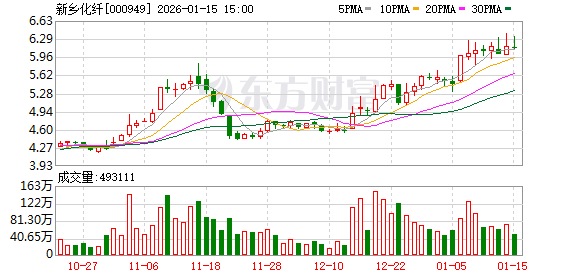
Group 1 - The company, Xinxiang Chemical Fiber, announced the approval of several key resolutions at its first extraordinary general meeting of shareholders in 2026, including the change of the purpose of repurchased shares and their cancellation [2] - The revised proposals and the expected plan for daily related transactions for the year 2026 were also approved during the meeting [2]


运河关注|运河潮涌润商脉 2026扬州十大富豪揭晓!
Sou Hu Cai Jing· 2026-01-15 10:39
Core Insights - The economic vitality of Yangzhou has surged since the reform and opening-up, with a significant rise in private entrepreneurs who have created notable business legends [1] - The total wealth of the top ten billionaires in Yangzhou has reached 56.1 billion RMB, with two individuals surpassing 10 billion RMB and two newcomers making their debut on the list [1] Group 1: Top Billionaires - The richest individual is Liang Qin, chairman of Yangjie Electronics Technology, with a net worth of 16 billion RMB, ranking 411th nationally [4] - Zhu Daqing, chairman of Tianfu Long Group, ranks second with a net worth of 13 billion RMB, marking his first appearance on the list [7] - Zhu Yinghui, holding 36.17% of Rongtai Co., ranks third with a net worth of 5.5 billion RMB, also making her debut on the list [8] Group 2: Notable Achievements - Zhou Guangrong, chairman of Haichang New Materials, has a combined net worth with his wife of approximately 5.3 billion RMB, leading a prominent powder metallurgy company [10] - Fu Helian, chairman of Aidi Pharmaceutical Group, is the highest-educated billionaire on the list, focusing on innovative drug development [11] - Zou Weimin, chairman of Chuan Yi Technology, has a net worth of about 3.1 billion RMB, having established a successful company in the notebook industry [12] Group 3: Emerging Entrepreneurs - Li Hongqing, former actual controller of Aoliwei Sensor, has a net worth of at least 3.8 billion RMB, having taken control of the company through capital operations [14] - Zhang Wensheng, chairman of Beijiajie Group, has a net worth of around 2.4 billion RMB, having built a leading company in oral care products [15] - Lin Mingwen, chairman of Yangzhou Jinqiu Tourism Products, has a net worth of approximately 1.5 billion RMB, becoming a major player in outdoor equipment manufacturing [17] Group 4: Young Entrepreneurs - Zhu Xingrong, general manager of Tianfu Long Group and the youngest billionaire at 42, holds a 13.14% stake in the company with a net worth of about 2.3 billion RMB [19] - Over half of the top ten billionaires started from grassroots sales or technical positions, demonstrating their ability to seize opportunities in industry transformation [19]






中信建投期货:1月15日能化早报
Xin Lang Cai Jing· 2026-01-15 01:42
Group 1: Rubber Market - Domestic natural rubber price for full latex increased to 15,850 CNY/ton, up by 150 CNY/ton from the previous day [4] - Thai mixed rubber price reached 15,150 CNY/ton, up by 100 CNY/ton from the previous day [4] - As of January 11, 2026, China's natural rubber social inventory was 1.256 million tons, an increase of 24,000 tons, or 1.9% [4][21] - The total inventory of dark rubber in China was 835,000 tons, up by 2.5% [4][21] - The market is expected to see high volatility in RU, NR, and Sicom prices in the short term due to seasonal factors and inventory dynamics [5][22] Group 2: PX Market - PX industry load in China increased by 0.3 percentage points to 90.9%, while Asia's load also increased by 0.3 percentage points to 81.2% [6][23] - The demand for PX is expected to rise as downstream PTA facilities restart, leading to a narrowing of PX inventory accumulation in January [6][23] - Despite geopolitical tensions affecting oil prices, the polyester industry remains supported, although seasonal demand weakness is anticipated [6][23] Group 3: PTA Market - PTA industry load increased by 0.1 percentage points to 78.2%, remaining at a historically low level [7][24] - New order sentiment is weak, with a decline in operating rates in the Jiangsu and Zhejiang regions [7][24] - PTA inventory is expected to face accumulation pressure in January due to seasonal demand decline and maintenance schedules [7][24][25] Group 4: EG Market - Ethylene glycol industry load increased by 0.5 percentage points to 74.2%, with significant room for further improvement [10][27] - Despite rising shipping costs and potential import reductions, domestic supply remains ample, leading to significant supply pressure [10][27] - January is expected to see inventory accumulation, with February potentially being the peak period for inventory pressure in the first half of the year [10][27] Group 5: PF Market - The direct-spun polyester short fiber load remained stable at 99.1%, supported by low inventory levels [11][28] - Demand from downstream yarn enterprises is cautious as they prepare for the holiday season, leading to a decline in purchasing [11][28] - Short-term demand weakness is expected to continue to suppress prices, although cost support remains [11][28] Group 6: PR Market - The bottle-grade PET industry load increased by 0.8 percentage points to 74.8%, but remains at historically low levels [11][28] - Demand is limited due to the traditional off-season for beverage consumption, with limited production recovery expected in January [11][28] Group 7: Soda Ash Market - Soda ash futures saw a slight decline, with stable spot prices [12][29] - Recent production increased by 57,000 tons to 754,000 tons, leading to increased supply pressure [12][29] - Downstream demand has slightly decreased, with inventory levels showing mixed trends [12][29] Group 8: Glass Market - Glass futures experienced a slight decline, with stable spot prices [13][30] - Recent production decreased, while downstream purchasing activity has improved, leading to a reduction in inventory [13][30] - Seasonal demand weakness is anticipated, with short-term price fluctuations expected [13][30] Group 9: Caustic Soda Market - Caustic soda prices have seen slight declines, with high supply levels maintained [14][31] - Downstream demand remains weak, impacting market prices [14][31] Group 10: PVC Market - PVC futures declined by 10 CNY/ton to 4,878 CNY/ton, with ongoing supply pressure [15][32] - The supply side remains in an upward trend, while demand is expected to improve only slightly [15][32] - Short-term market dynamics are expected to remain volatile, with a focus on price fluctuations [15][32]


芳烃橡胶早报-20260115
Yong An Qi Huo· 2026-01-15 01:23
1. Report Industry Investment Rating - No relevant information provided in the report 2. Core Viewpoints of the Report - **PTA**: Near - term TA device slightly reduces load, polyester load remains stable, inventory continues to decline, but polyester maintenance plans are intensively released, basis weakens, and spot processing fees shrink. PX domestic operation is at a high level, and overseas load increases. In the future, with high PX profits, domestic supply will remain high and overseas operation will recover, reducing the de - stocking amplitude in the far - month. TA's own processing fees have also improved, and short - term upward space is limited before the Spring Festival due to polyester maintenance plans. However, the overall pattern has not changed before new device production. Attention should be paid to the progress of overseas operation improvement [1] - **MEG**: Near - term domestic oil - based production has some load reduction, overseas maintenance increases month - on - month. Port inventory decreases at the beginning of the week due to low arrivals, and the arrival forecast rebounds during the week. The basis remains weak, and coal - based efficiency improves month - on - month. Recently, domestic supply is stable with a slight increase, overseas maintenance increases, overall inventory accumulation continues, and the absolute inventory is not low. The pattern is expected to remain weak under new production, and attention should be paid to short - selling opportunities on rebounds [1] - **Polyester Staple Fiber**: The front - end device operates stably, with an operation rate of 97.6%. Production and sales improve month - on - month, and inventory slightly decreases. On the demand side, the operation rate of the polyester yarn end remains stable, raw material inventory decreases, and finished product inventory accumulates, with stable efficiency. After raw material price adjustments, the spot processing fee of staple fiber has improved, but the futures price remains low. Downstream demand is expected to continue to weaken seasonally. With limited inventory pressure, the operation rate remains high. It has a medium - low valuation and weak driving force, with limited overall contradictions. Attention should be paid to the situation of warehouse receipts [1] - **Natural Rubber and 20 - grade Rubber**: No specific overall view on the trend is provided in the report, only price data and changes are presented - **Styrene and Related Products**: No specific overall view on the trend is provided in the report, only price and profit data and their changes are presented 3. Summary by Related Content PTA - **Price and Spread Data**: From January 8 - 14, 2026, crude oil prices rose from $62.0 to $65.0, PX processing fees decreased from $345.0 to $337.0, PTA spot prices fluctuated, and the basis was 2605(- 70) [1] - **Device and Operation Conditions**: Yisheng New Materials' 3.6 million - ton device and Ineos' 1.25 million - ton device are under maintenance. Near - term TA device slightly reduces load, and polyester load remains at 78.2% [1] - **Market Outlook**: PX high - profit situation leads to high domestic supply and overseas operation recovery, reducing the far - month de - stocking amplitude. TA processing fees improve, and short - term upward space is limited [1] MEG - **Price and Spread Data**: From January 8 - 14, 2026, MEG prices fluctuated slightly, and the basis was around 05(- 148) [1] - **Device and Operation Conditions**: Inner Mongolia Yankuang's 400,000 - ton device increases load. Near - term domestic oil - based production has some load reduction, and overseas maintenance increases month - on - month [1] - **Market Outlook**: Domestic supply is stable with a slight increase, overseas maintenance increases, overall inventory accumulates, and the pattern is expected to remain weak [1] Polyester Staple Fiber - **Price and Spread Data**: The spot price is around 6529, and the market basis is around 02 - 80 [1] - **Device and Operation Conditions**: The front - end device operates stably at an operation rate of 97.6%, production and sales improve, and inventory slightly decreases. The operation rate of the polyester yarn end remains stable [1] - **Market Outlook**: After raw material price adjustments, the spot processing fee improves, but the futures price remains low. Downstream demand weakens seasonally, and with limited inventory pressure, the operation rate remains high [1] Natural Rubber and 20 - grade Rubber - **Price Data**: From January 8 - 14, 2026, prices of various types of rubber, such as Shanghai whole - milk rubber and Thai cup - lump rubber, fluctuated, with some showing daily and weekly increases or decreases [1] Styrene and Related Products - **Price and Profit Data**: From January 8 - 14, 2026, prices of styrene and related products, such as ethylene and pure benzene, changed, and the production profits of PS, EPS, and ABS also fluctuated [1]
反内卷-新需求-涤纶长丝行业近况更新
2026-01-15 01:06
Summary of Polyester Filament Industry Conference Call Industry Overview - The polyester filament industry is currently facing production cuts due to rising upstream raw material prices, particularly PX, which has significantly squeezed profit margins. As a result, major manufacturers have announced a 15% production cut starting January 14, 2026, for one quarter [1][4]. - The production load in the polyester filament industry is low, with expectations to drop below 80% during the Spring Festival. Major companies like Hengyi and Xinfengming are planning maintenance, which will further impact production [1][5]. Key Points and Arguments - **Production Cuts**: The 15% production cut is aimed at controlling inventory pressure, especially as downstream demand weakens ahead of the Spring Festival [1][4]. - **Market Outlook for 2026**: The polyester raw material market is expected to remain strong due to no new PX and PTA capacities coming online in the first three quarters of 2027, while polyester demand is projected to grow by 5% [1][6]. - **Export Opportunities**: The cancellation of BIS certification for Chinese polyester filament by India is expected to significantly boost exports in 2026, with an estimated increase of around 500,000 tons, or approximately 10% growth [1][9]. - **Domestic Market Conditions**: Domestic end-product inventory is low, which may lead to a replenishment trend in 2027, although overall demand still requires policy stimulation for significant growth [1][10]. Challenges and Opportunities - **Challenges**: The industry faces challenges from volatile raw material prices and weak terminal demand, which complicates cost transmission [7]. - **Opportunities**: Strict adherence to production cut plans can effectively control inventory pressure, creating favorable conditions for market recovery. The supply-demand balance is expected to improve, leading to a slight increase in industry chain prices in 2026 [7][8]. Future Growth Directions - The future growth of the polyester filament industry is concentrated in three areas: functional fibers, recycled fibers (especially textile-to-textile recycling), and bio-based fibers, which are expected to see significant demand growth [2][17]. Additional Insights - **Inventory Management**: Downstream enterprises are likely to accelerate inventory replenishment in response to anticipated price increases, especially if the price trend is upward [14][16]. - **Global Market Dynamics**: The Indian market is particularly promising for growth, with an expected annual growth rate of 6-7% in demand, provided that anti-dumping measures are not implemented [13][12]. This summary encapsulates the key insights and projections regarding the polyester filament industry, highlighting both the challenges and potential growth avenues in the coming years.
研报掘金丨东吴证券:首予新凤鸣“买入”评级,看好公司未来成长性
Ge Long Hui A P P· 2026-01-14 07:41
Group 1 - The core viewpoint of the article highlights the ongoing anti-involution in the domestic polyester chain, with the Egyptian filament project opening new growth opportunities for the company in the long term [1] - By the end of December 2025, major domestic polyester filament manufacturers plan to implement self-discipline production cuts to maintain prices, with a planned reduction of 10% for POY and 15% for FDY, and further reductions expected around the Chinese New Year [1] - The company's net profit attributable to shareholders faced pressure in the third quarter, primarily due to PTA profitability impacts [1] Group 2 - The large refining industry continues to push for anti-involution, which is expected to lead to an upward trend in the polyester chain's prosperity [1] - The Egyptian filament project plans to add 360 acres of land for the construction of manufacturing plants for POY, FDY, and DTY, aiming for an annual production capacity of 360,000 tons of functional polyester fibers [1] - The project will also involve leasing a terminal at a nearby port for tank area construction, which will help the company avoid trade barriers and respond to tariffs and trade wars, enhancing its international influence and market competitiveness [1] Group 3 - With the ongoing anti-involution in the polyester chain, the company's profitability is expected to improve in the future [1] - The company is viewed positively for its future growth potential, with an initial coverage rating of "Buy" assigned [1]


聚聚聚聚聚聚聚:聚聚聚聚聚聚聚聚
Zi Jin Tian Feng Qi Huo· 2026-01-14 04:51
1. Report Industry Investment Ratings - PTA: Core view - Neutral; Spot - Cautiously bearish; Processing profit - Cautiously bearish [5] - PX: Core view - Neutral; Device change - Cautiously bearish; Import - Cautiously bearish; Processing profit - Cautiously bearish [6] - Ethylene glycol (MEG): Core view - Neutral; Month - spread - Cautiously bearish; Spot - Cautiously bearish; Import - Cautiously bullish [7] 2. Core Views of the Report - PTA: Supply changes little, demand has a seasonal load - reduction plan, supply - demand weakens marginally, processing fees remain high, short - term drivers are not obvious, buy on dips, and focus on cost changes [5][64] - PX: Supply - demand is okay, short - term PXN is above 350, both domestic and foreign supplies are increasing marginally, short - term valuation is not low, focus on capital preference [6][86] - MEG: Coal cost is strong, affected by Iran's geopolitics, expected imports may decline, near - term still faces inventory accumulation pressure, polyester has a production - cut plan starting mid - month, short - term range - bound operation [7][135] 3. Summaries According to Relevant Catalogs PTA Supply - side - Device changes: Weilian increases load, YS Ningbo, Dahua, and Hainan are under maintenance, Sichuan Energy Investment is under maintenance until late January, Dushan 3 is under maintenance, Ineos operates at 70% and plans maintenance in mid - January, and New Materials has a maintenance plan in January. Long - stopped devices are expected to continue maintenance in 2026, and planned maintenance in January - February is not low [49][64] - Inventory: As of January 9, PTA social inventory (excluding credit warehouse receipts) decreased to 2.6 million tons, with polyester factory inventory and warehouse receipt inventory slightly declining, and current inventory pressure is not large [50] - Balance sheet: Near - term changes are small, with an increase in polyester's planned load reduction. The PTA processing fee of over 300 is not low. In January, production is 6.5 million tons, import is 0.2 million tons, export is 3.6 million tons, and total consumption is 5.977 million tons, with a surplus of 1.65 million tons [61][64] Demand - side - Polyester load: As of January 9, it was 90.8%, with cash - flow pressure and average inventory of about 12.7 days. From mid - January, polyester factories will gradually carry out maintenance, and the subsequent operating rate will decline seasonally. The load is estimated to be 91%, 88%, and 84% from December to February [19][41] - Downstream orders: Terminal demand is seasonally weakening. As of January 9, the operating rates of texturing, weaving, and dyeing decreased slightly to 72% (- 2%), 56% (- 3%), and 69% (-) [10] PX Supply - side - Device changes: Domestic load is 90.9%, Asian load is 81.2%. Shanghai Petrochemical slightly increases load, and Zhejiang Petrochemical plans to reduce load in mid - January. In Asia, FCFC in Taiwan reduces load, GS restarts in mid - January, Kuwaiti aromatics are under maintenance, and India's OMPL does not restart for the time being. Imports are expected to increase [83][86] - Balance sheet: In January, production is 3.39 million tons, import is 0.9 million tons, demand is 4.258 million tons, and inventory changes by 0.33 million tons. Supply - demand is in a loose balance, and PXN around 350+ has a relatively high valuation [85][86] Demand - side - Downstream demand: Demand orders are marginally weakening, weaving load is seasonally slightly declining, polyester load remains stable at a high level of 90.8%, and polyester inventory pressure is not large [6] MEG Supply - side - Device changes: As of January 9, the total MEG load is 74%, and the coal - based load is 79%. Domestic maintenance volume changes little. Chengdu Petroleum plans 10 - day maintenance in late January, while Fude, Sinochem Quanzhou, and Shenghong are under maintenance, and Zhejiang Petrochemical slightly reduces load. BASF's EG device is in progress. Coal - based Henan Energy Yongcheng is under 2 - week maintenance, Yankuang restarts, and Huayi increases load. Overseas, two 360,000 - ton devices of Taiwan Nanya are shut down, and devices in Saudi Arabia, Iran, Kuwait, and the US are under maintenance [102][121][135] - Inventory: As of January 12, the MEG port inventory in East China is about 802,000 tons, a month - on - month increase of 77,000 tons. Inventory is moderately high. The arrival forecast is not low, and port inventory is expected to rise slightly. Polyester factories' raw material stocking days are 14.6 days, and downstream stocking remains stable [129] - Balance sheet: In January, production is 1.9 million tons, import is 0.6 million tons, total consumption is 2.37 million tons, and the surplus is 0.13 million tons. Overseas maintenance increases, import is expected to improve, but polyester is seasonally under maintenance, and ports are still accumulating inventory [131][135] Demand - side - Polyester load: As of January 9, it is 90.8%. Polyester has a maintenance plan starting mid - January, and the load is estimated to be 91% and 88% in December and January [19][135] - Terminal orders: Terminal orders are slightly weakening, and stocking days are about half a month [135]
东吴证券晨会纪要2026-01-14-20260114
Soochow Securities· 2026-01-14 04:07
Macro Strategy - The report anticipates a "good start" for financial data in January 2026, with expectations of a seasonal surge in new loans at the end of 2025 [1] - The US economy shows mixed signals, with a surprising drop in unemployment alleviating concerns about job market deterioration, contributing to a rise in US stock markets [1] - Upcoming focus includes the December US CPI and potential outcomes of the Trump tariff case, with expectations of limited market impact from the tariff case [1] Financial Products - A-share trading volume has surpassed 3 trillion yuan, indicating heightened trading sentiment, but short-term volatility may increase [2] - The macro timing model for January 2026 scores 0, historically correlating with a 76.92% probability of A-share index gains in the following month, averaging a 3.18% increase [2] - The report recommends a balanced allocation based on risk preferences, highlighting sectors like commercial aerospace and innovative pharmaceuticals [2] Industry Insights - The report discusses the "K-shaped" consumption differentiation in China, where high-end quality consumption contrasts with high-cost performance consumption [3][18] - This differentiation reflects a shift in consumer behavior, where emotional value becomes increasingly important alongside practical value [18] - Retail strategies are adapting to this trend, with brands like Xiaomi and BYD offering both high-end and cost-effective products to meet diverse consumer needs [19] Company Analysis - Cangge Mining's profit forecast for 2025-2027 has been revised upwards due to stable potassium chloride prices and rising lithium and copper prices, with a projected net profit increase of 50% to 90 billion yuan by 2027 [9] - New Fengming's polyester chain is expected to benefit from industry self-discipline measures, with a projected net profit of 11 billion yuan by 2027, supported by a new investment in an Egyptian project [10] - Tongkun Co. is positioned as a leading polyester filament producer, with a projected net profit of 20 billion yuan by 2027, benefiting from ongoing industry improvements and a new green fiber project [11] - Rebio Biotech, a leader in the siRNA field, is expected to tap into a potential market worth 10 billion USD with its FXI siRNA product, currently in phase 2 clinical trials [12][13]
中信建投期货:1月14日能化系早报
Xin Lang Cai Jing· 2026-01-14 01:31
Group 1: Rubber Market - Domestic all-latex rubber price is 15,700 yuan/ton, down 100 yuan/ton from the previous day; Thai No. 20 mixed rubber price is 15,050 yuan/ton, down 80 yuan/ton [4] - As of January 11, 2026, the total inventory of natural rubber in Qingdao is 568,200 tons, an increase of 1,980 tons, or 3.62% from the previous period [4][17] - With the arrival of winter in the Northern Hemisphere, the pricing framework is expected to shift from dynamic pricing based on supply and demand to static pricing based on inventory levels, leading to high volatility in rubber prices [5][18] Group 2: PX Market - The PX industry load in China increased by 0.3 percentage points to 90.9%, while the Asian industry load also increased by 0.3 percentage points to 81.2%, indicating stable supply and demand [6][19] - The demand side is supported by the restart of downstream PTA facilities, which is expected to boost PX demand [19] - The overall supply of PX is expected to remain high in January, with inventory accumulation expected to narrow [19] Group 3: PTA Market - The PTA industry load increased by 0.1 percentage points to 78.2%, remaining at a low level compared to previous years [7][20] - New order sentiment is weak, and the operating rate of terminal factories in Jiangsu and Zhejiang is declining [20] - PTA inventory is expected to face accumulation pressure in January due to seasonal demand weakness [20] Group 4: EG Market - The domestic ethylene glycol (EG) industry load increased by 0.5 percentage points to 74.2%, indicating stable supply and demand [21] - Despite rising shipping costs and potential import reductions, domestic supply remains ample, leading to significant supply pressure [21] - January is expected to see inventory accumulation, with February potentially being the peak period for inventory pressure in the first half of the year [21] Group 5: Soda Ash Market - Soda ash futures experienced a slight decline, with the latest production increasing by 57,000 tons to 754,000 tons, indicating rising supply pressure [24] - Downstream demand has slightly decreased, with the latest inventory at 156,500 tons, down 800 tons from the previous week [24] - The overall market sentiment is weak, with short-term soda ash prices expected to fluctuate [24] Group 6: Glass Market - Glass futures saw a significant decline, while spot prices remained stable [25] - Recent production has decreased, and downstream purchasing activity has improved, leading to a reduction in inventory [25] - The latest glass inventory decreased by 67,000 tons to 2,776,000 tons, indicating a seasonal demand weakness [25]
东方盛虹:1月13日召开董事会会议
Mei Ri Jing Ji Xin Wen· 2026-01-13 13:13
Group 1 - The company Dongfang Shenghong held its 36th meeting of the 9th board of directors on January 13, 2026, to discuss the proposal for changing the company's registered capital and amending the articles of association [1] Group 2 - The solar energy industry is experiencing a rush to export products ahead of the April 1 deadline, while some companies are facing challenges due to skyrocketing raw material costs, such as silver, leading to difficult decision-making [1]
