畜牧养殖

Search documents
天康生物:拟购买羌都畜牧51%股权
Ge Long Hui· 2025-12-12 13:06
公司聘请符合《中华人民共和国证券法》(以下简称"《证券法》")规定的评估机构新兰特房地产资产 评估有限公司对标的公司股东全部权益进行了评估。本次收购不包含羌都畜牧下属新疆羌都天保羊业有 限公司和新疆羌都天厚羊业有限公司(合称"羊业公司"),评估范围不包含模拟剥离的羊业公司相关资 产和负债。根据《天康生物股份有限公司拟股权收购涉及的新疆羌都畜牧科技有限公司股东全部权益价 值项目资产评估报告》(新兰特评报字[2025]第595号),截至评估基准日2025年6月30日,标的公司股 东全部权益的评估结果为人民币351,100万元(最终以经国有资产有权部门或其授权单位备案确认的评 估值为准)。经各方友好协商,确定标的公司100%的股权价值为350,000万元。本次评估基准日后,标 的公司将向股权转让前的股东进行100,000万元(含税)利润分配,该等利润分配金额将在标的公司的 股权价值中相应扣减。因此,交易各方最终协商确定标的公司51%股权的股权转让价款为人民币 127,500万元。 格隆汇12月12日丨天康生物(002100.SZ)公布,基于公司业务发展需求及战略布局,公司于2025年12月 11日与新疆七星羌都集团 ...

金新农:12月12日召开董事会会议
Mei Ri Jing Ji Xin Wen· 2025-12-12 08:59
Company Overview - Jin Xin Nong (SZ 002548) announced a temporary board meeting on December 12, 2025, to discuss the expected guarantee limits for 2026 for the company and its subsidiaries [1] - As of the report, Jin Xin Nong has a market capitalization of 4.6 billion yuan [1] Revenue Composition - For the first half of 2025, Jin Xin Nong's revenue composition is as follows: - Feed processing accounts for 66.97% - Animal husbandry accounts for 32.1% - Other industries account for 0.58% - Raw material trading accounts for 0.35% [1]

种养结合绘丰景 一村一品促振兴
Zhong Guo Zi Ran Zi Yuan Bao· 2025-12-12 06:53
Group 1 - Shandong Province's Wudi County is actively developing the under-forest economy, promoting a model of combined planting and breeding, which enhances farmers' enthusiasm for forestry production and supports rural revitalization and sustainable development of the forestry industry [1] - The Zongwang Village's ecological breeding cooperative reports that the economic benefits of raising藏香猪 (藏香猪) are significant, with a single adult pig selling for up to 5000 yuan, and the cooperative has over 500藏香猪 and 200 wild藏香猪, generating an annual profit exceeding 800,000 yuan [1] - The cooperative's 20 acres of under-forest breeding base demonstrates a successful model for integrating agriculture and forestry, contributing to local economic growth [1] Group 2 - The natural breeding method for golden cicadas in Guojia Village shows a survival rate of 16% in the first year, three times higher than traditional methods, with a maximum yield of 10,000 yuan per acre, significantly surpassing traditional forestry planting returns [2] - The scale of golden cicada breeding in Guojia Village has reached 53 acres, involving 18 households, and has encouraged surrounding communities to engage in similar breeding activities [2] - Liu Xilin from Wuying Village has developed a method of "worm farming under trees" using cow dung, which processes 4,000 cubic meters of cow dung annually and produces 1,000 cubic meters of worm castings, achieving a comprehensive yield of 10,000 yuan per acre [2]
重磅!2025年广东农业企业品牌价值50强榜单发布
Nan Fang Nong Cun Bao· 2025-12-12 04:05
Core Insights - The 2025 Guangdong Agricultural Enterprises Brand Value Top 50 list was officially released, showcasing a total brand value of 259.195 billion yuan, reflecting a steady growth from 257.224 billion yuan in 2024 [9][10]. Group 1: Top Performers - Leading companies include Foshan Haitian (57.192 billion yuan), Wen's Food (49.158 billion yuan), and Guangdong Haida (38.765 billion yuan), maintaining their positions in the top three for two consecutive years [11][12]. - Other notable companies in the top ten are Shenzhen Baiguoyuan (20.304 billion yuan), Guangzhou Qian Dama (18.335 billion yuan), and Guangdong Hengxing Group (9.415 billion yuan) [12][13]. Group 2: Emerging Brands - Young brands such as Guangdong Kuaishu Group, Rontong Agriculture, and Jun Chuang Group have rapidly increased their brand values, surpassing 100 million yuan, leveraging social media and digital technologies to connect with consumers [17][18][19]. Group 3: Evaluation and Impact - This is the second year of the Guangdong Agricultural Enterprises Brand Value Top 50 evaluation, which has gained significant attention and media coverage, becoming a key reference for observing the development of the agricultural sector in Guangdong [20][24]. - The evaluation committee, composed of branding experts and industry leaders, has positioned the list as an authoritative certification in the AI digital era [25]. Group 4: Key Trends - The list highlights three significant trends: 1. Technological innovation is crucial for reshaping agricultural brand value, with many companies enhancing product quality and production efficiency [30]. 2. Sustainable development principles are increasingly integrated into core business strategies, reflecting active exploration in this area [31]. 3. Brand narratives are evolving from functional descriptions to deeper emotional connections with consumers, enhancing brand affinity and influence [32]. Group 5: Event Significance - The release of the list coincided with the Greater Bay Area Agricultural Products Trade Fair, providing a platform for brand showcasing and industry collaboration, thus promoting high-quality development in Guangdong's agricultural sector [34][36].




畜牧ETF(159867)涨近1%,中央储备冻猪肉轮换收储即将开始
Sou Hu Cai Jing· 2025-12-12 02:09
Group 1 - The China Livestock Breeding Index (930707) increased by 0.44% as of December 12, 2025, with notable gains in constituent stocks such as Luo Niu Shan (000735) up 6.21%, and BioShares (600201) up 2.99% [1] - The Central Reserve Frozen Pork Rotation Storage Auction will take place on December 18, 2025, with 3,100 tons available for bidding, as announced by the China Storage Network [1] - Recent analysis indicates that traditional peak season for pork consumption is leading to a steady recovery in demand, driven by colder weather and increased demand for cured meats in southern regions, although supply remains high due to previous production capacity [1] Group 2 - As of November 28, 2025, the top ten weighted stocks in the China Livestock Breeding Index account for 65.6% of the index, including Muyuan Foods (002714) and Wens Foodstuff Group (300498) [2] - The index reflects the overall performance of listed companies involved in livestock feed, veterinary drugs, and livestock farming [1]




广发证券:生猪养殖板块迎来左侧布局窗口期 26年中期猪价有望迎来向上拐点
智通财经网· 2025-12-12 01:49
Group 1: Pig Farming Industry - The current sales of fat pigs and piglets are in a loss state, indicating that the industry is in a precondition for capacity reduction [1] - Continuous losses in farming, combined with the "anti-involution" policy, are expected to accelerate capacity reduction in the industry, creating a left-side layout window for the pig farming sector [1] - By 2026, it is anticipated that there will be an upward turning point in pig prices, as competition in the industry intensifies and companies focus on comprehensive competitive capabilities rather than just cost competition [1] Group 2: Dairy Industry - In 2025, raw milk prices are expected to continue to bottom out, with industry losses driving a reduction in dairy cow inventory [2] - As the effects of previous capacity reduction become evident, the supply and demand for raw milk are gradually balancing, leading to a stabilization and rebound in spot milk prices in the second half of 2025 [2] - The beef supply is entering a contraction phase, with expectations for beef prices to continue to rise in 2026, increasing performance elasticity [2] Group 3: Feed Industry - The water feed sector is expected to maintain stable aquaculture volumes in 2026, with a trend of technical upgrades and structural adjustments continuing [3] - Domestic feed demand for livestock and poultry is projected to decline from high levels, while structural changes in the overseas feed industry present opportunities for Chinese feed companies to expand internationally [3] Group 4: Animal Health Industry - The animal health industry faces intensified competition, with product prices under pressure as the farming sector transitions from profit to loss [4] - Revenue and profitability in the industry may face significant challenges, prompting companies to accelerate business transformation and explore opportunities in the pet business [4] Group 5: Pet Food Industry - The industry is beginning to show a trend towards concentration, with leading companies like Guibao Pet and Zhongchong Co. performing well [5] - In the medium to long term, there is optimism for industry growth and the rise of domestic brands, with companies leveraging global production layouts to mitigate trade friction impacts [5] Group 6: Agricultural Planting Industry - Corn prices are expected to bottom out and rebound in 2025, with a strong possibility of fluctuations in 2026 [6] - The corn seed market is currently in a state of oversupply, undergoing a destocking phase, and may see improved conditions as inventory levels decrease [6]

外购仔猪成本均价每头超五百元,唐人神第三季度养猪业务亏损增加
Xin Jing Bao· 2025-12-11 13:29
Core Viewpoint - The company expects to achieve over 6.5 million tons in feed sales, over 5 million pigs sold, and meat revenue exceeding 1.6 billion yuan by 2025 [1] Group 1: Company Overview - The company, 唐人神, has developed a full industry chain model from feed production to pig farming and meat processing, with feed business accounting for approximately 62% of total revenue [1] - The company has been focusing on low-cost pig farming to continuously reduce breeding costs, creating a positive interaction among its feed, breeding, and meat businesses [1] Group 2: Financial Performance - The company reported losses in both the first three quarters and the third quarter of this year [1] - In the first half of the year, the average selling price of fat pigs decreased by 0.34 yuan per kilogram, impacting profits by approximately 100 million yuan and leading to a year-on-year profit decline [1] - The primary reason for the third-quarter loss was the low pig prices, with a significant proportion of pigs sold being purchased piglets, which had an average cost exceeding 500 yuan per head, increasing losses in the breeding business [1] - The company has prudently set aside 160 million yuan for inventory impairment due to anticipated low pig prices in the future [1]

西平县侨联赴侨资企业开展调研
Sou Hu Cai Jing· 2025-12-11 10:13
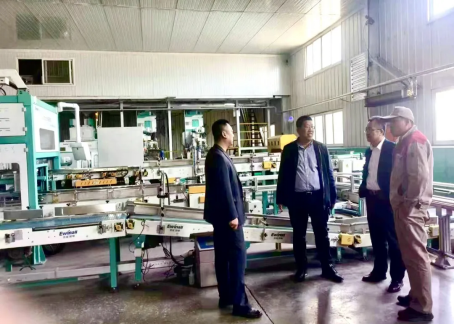
调研组通过实地走访、与企业负责人交流等方式,详细了解各企业生产经营现状、市场销售、带动周边群众就业及发展愿景等方面的情况,重点查看了生 产车间、仓储设施,查阅了相关工作记录,并与企业负责人和一线员工进行了深入沟通。 近日,西平县侨联先后到人和乡龙一食品、五沟营镇海蓝牧业等侨资企业开展调研,听取企业负责人发展心声,聚焦企业发展中的关键问题与需求,凝聚 服务企业、助力发展的共识,为推动全县经济高质量发展贡献力量。 在海蓝牧业调研时,听到企业负责人介绍其生产的部分产品已成功销往香港等地后,县侨联主席张晓娟表示,市侨联今年以来正积极推进"助企出海"行 动,鼓励本土企业把握机遇,进一步拓展港澳及海外市场,县侨联也将充分发挥桥梁纽带作用,全力为企业开拓市场提供支持、创造条件。 ...
牦牛变“活存折”
Jin Rong Shi Bao· 2025-12-11 03:33
Core Viewpoint - A transformative industry change is occurring in the highland livestock sector of Aba Prefecture, China, driven by the integration of technology and finance, particularly through a collaborative mechanism involving "technology + credit + insurance + industry" [1][2] Group 1: Industry Context - Aba Prefecture's Hongyuan County is a key area for rural revitalization and is one of Sichuan Province's 39 underdeveloped counties, facing economic challenges but possessing unique yak resources [1] - The yak industry is seen as a critical lever for overcoming development bottlenecks, with a focus on ecological and green development goals [1] Group 2: Technological Integration - The People's Bank of China in Aba has facilitated a partnership between Agricultural Bank of China and PICC to incorporate advanced technologies like "facial recognition" and AI image analysis into financial services [2] - Each yak is assigned a unique "digital ID," with 554 yaks already having their facial data collected and insured [2] Group 3: Financial Innovations - The Agricultural Bank of China has introduced the "Smart Livestock Loan," allowing live yaks to be used as collateral for loans, marking a significant shift in financing practices [2] - A loan of 1 million yuan was successfully issued to Xiangfa Animal Husbandry Development Co., overcoming traditional barriers related to live asset collateral [2] Group 4: Risk Management and Security - The new model employs intelligent risk control for dynamic monitoring of the entire breeding process, ensuring financial security for institutions while reducing financing costs for livestock enterprises [2] - Blockchain technology is utilized to document the entire process of asset registration, insurance claims, and loan approvals, effectively eliminating the risk of double collateralization [2] Group 5: Impact on Local Farmers - Local farmers express relief and optimism as the new system provides them with easier access to loans, transforming yaks into profitable assets [2]
农行辽宁省分行:全力护航“北粮南运”金色通道
Zhong Guo Jin Rong Xin Xi Wang· 2025-12-10 13:26
转自:新华财经 精准滴灌港口粮贸,畅枢纽、保流通 围绕辽宁在"北粮南运"格局中的枢纽定位,农行辽宁省分行持续加强对港口粮食贸易、仓储物流等关键 环节的金融支持,创新专属信贷产品,优化服务流程,全力保障粮食供应链高效运转,让优质东北玉米 更快、更好地抵达南方市场。9月以来,农行辽宁省分行粮食流通领域贷款累计投放28亿元,同比多增 18亿元。 农行沈阳分行客户经理走进粮食领域 农行锦州开发区支行客 中国农业银行辽宁省分行(简称农行辽宁省分行)积极发挥国有大行作用,围绕粮食收购、仓储、流通 等环节全力保障"北粮南运"通道畅通。 重点服务龙头企业,稳收购、保安全 农行辽宁省分行深入对接重点龙头企业和大型收储主体的生产计划和产业布局,制定综合服务方案、提 供大额信贷支持,助力企业从容应对长周期、大规模的收购任务。9月以来,农行辽宁省分行已向农业 产业化龙头企业累计投放贷款17亿元。 重点客户十月稻田了解融资需求 农行沈阳分行持续加大对十月稻田等重点龙头企业信贷支持力度,建立深度稳固的银企合作关系。同时 依托龙头企业的产业辐射与聚合效应,推出"稻米产业集群"整体授信服务模式,为45家区域稻米加工骨 干企业提供整体授信额度 ...