软件与服务

Search documents
AI机遇VS债务泡沫:甲骨文何以成为AI泡沫担忧的“先锋”?
Ge Long Hui· 2025-12-22 10:57
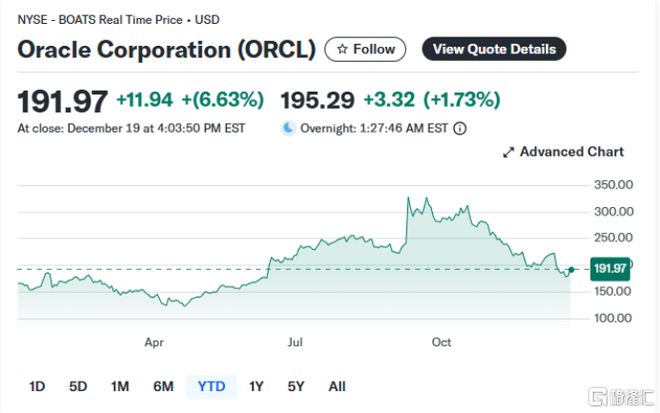
Core Viewpoint - Oracle's stock price experienced extreme volatility in 2025, soaring 42% in a single day in September before plummeting over 40%, yet still recording a 16% increase for the year, reflecting the ongoing debate in the tech industry regarding whether AI represents a generational opportunity or a potential risk [1] Group 1: Debt and Uncertainty - In early 2023, Oracle announced a joint venture with OpenAI and SoftBank, committing $500 billion to AI infrastructure, which initially sparked market enthusiasm [3] - Following the June earnings report, optimism around AI continued to drive stock prices, but a September report revealed Oracle's remaining performance obligations surged from $138 billion to $455 billion, far exceeding market expectations, leading to a record single-day stock price increase [3] - However, concerns about the returns on significant debt incurred for AI investments have emerged, with Oracle's stock dropping over 40% from its September peak [3] - Analysts noted that as Oracle and other companies issue more bonds, their leverage increases, raising associated risks [3] Group 2: Financial Performance and Strategic Execution - Oracle's total debt rose 40% year-over-year to $124 billion, while cash outflows increased from $2.7 billion to $10 billion [5] - The company quietly disclosed in SEC filings that it would incur an additional $248 billion in data center leasing commitments from Q3 FY2026 to FY2028, which are not reflected on the balance sheet [5] - Analysts expressed concerns about Oracle's tight margin for error in executing its strategy compared to larger cloud service providers like Microsoft and Google [5] - Oracle's ability to generate cash flow from data centers remains uncertain, particularly as companies exploring AI profitability are still in the early stages [5] Group 3: AI Demand and Project Delays - Investors are skeptical about whether AI demand will meet the expectations set by tech companies' substantial investments [6] - Oracle indicated that if clients cannot pay, it can quickly repurpose its AI infrastructure for other customers [6] - There are concerns that delays in Oracle's data center projects could extend the return period for AI investments, with reports suggesting a postponement of completion dates from 2027 to 2028 [7] - Despite these challenges, Oracle is included in a new national AI initiative backed by the U.S. government, which could potentially help the company navigate its debt and project uncertainties [7]


创识科技实际控制人张更生被采取留置措施
Zhi Tong Cai Jing· 2025-12-22 10:15
创识科技(300941)(300941.SZ)发布公告,公司于近日收到邹平市监察委员会签发的《立案通知书》 和《留置通知书》,公司控股股东、实际控制人张更生先生被立案调查并实施留置措施。张更生先生已 于2025年5月17日辞任公司董事、董事长,目前未在公司担任董事及高管职务。 ...

ETO Markets 出入金:2万亿泡沫裂缝里的散户血亏与AI融资断链
Sou Hu Cai Jing· 2025-12-22 09:48
Group 1 - The U.S. private credit market, once marketed as a "high-dividend safe haven," is now facing severe challenges due to high interest rates, a wave of defaults, and liquidity issues [2] - Blue Owl Capital, managing $180 billion in assets, abruptly withdrew from a $10 billion financing negotiation with Oracle, citing execution risks and Oracle's high leverage, which led to a spike in Oracle's five-year CDS to the highest level since 2009 [2] - The confidence in the "off-balance-sheet financing" model for AI infrastructure has plummeted, jeopardizing the capital expenditure chain of tech giants [2] Group 2 - Business Development Companies (BDCs) targeting retail investors have experienced a "double whammy" this year, with FS KKR Capital's stock price dropping by 33% and BlackRock BDC's default rate rising to 7% [2] - The VanEck BDC ETF has underperformed the S&P 500 by over 20 percentage points this year, indicating significant distress in the sector [2] - BDCs, which once promised monthly dividends, now derive 14% of their income from "payment-in-kind" (PIK), suggesting borrowers are unable to pay cash interest [2] Group 3 - A liquidity trap has emerged, as Blue Owl's attempt to merge private BDCs with public BDCs to alleviate redemption pressure was rejected by shareholders due to a 14% discount to net asset value, resulting in the deal's failure [2] - There is a significant disconnect between public market prices and private valuations, leaving retail investors unable to exit their positions and witnessing the evaporation of their principal [3] - Jamie Dimon's earlier warning about seeing "a cockroach" now appears to be just a glimpse of a larger issue within the $2 trillion private credit market, where retail investors are the last to join but the first to bear the losses [3]



800多位员工七成来自武汉本地,恒生电子在汉打造第二研发总部
Chang Jiang Ri Bao· 2025-12-22 09:42
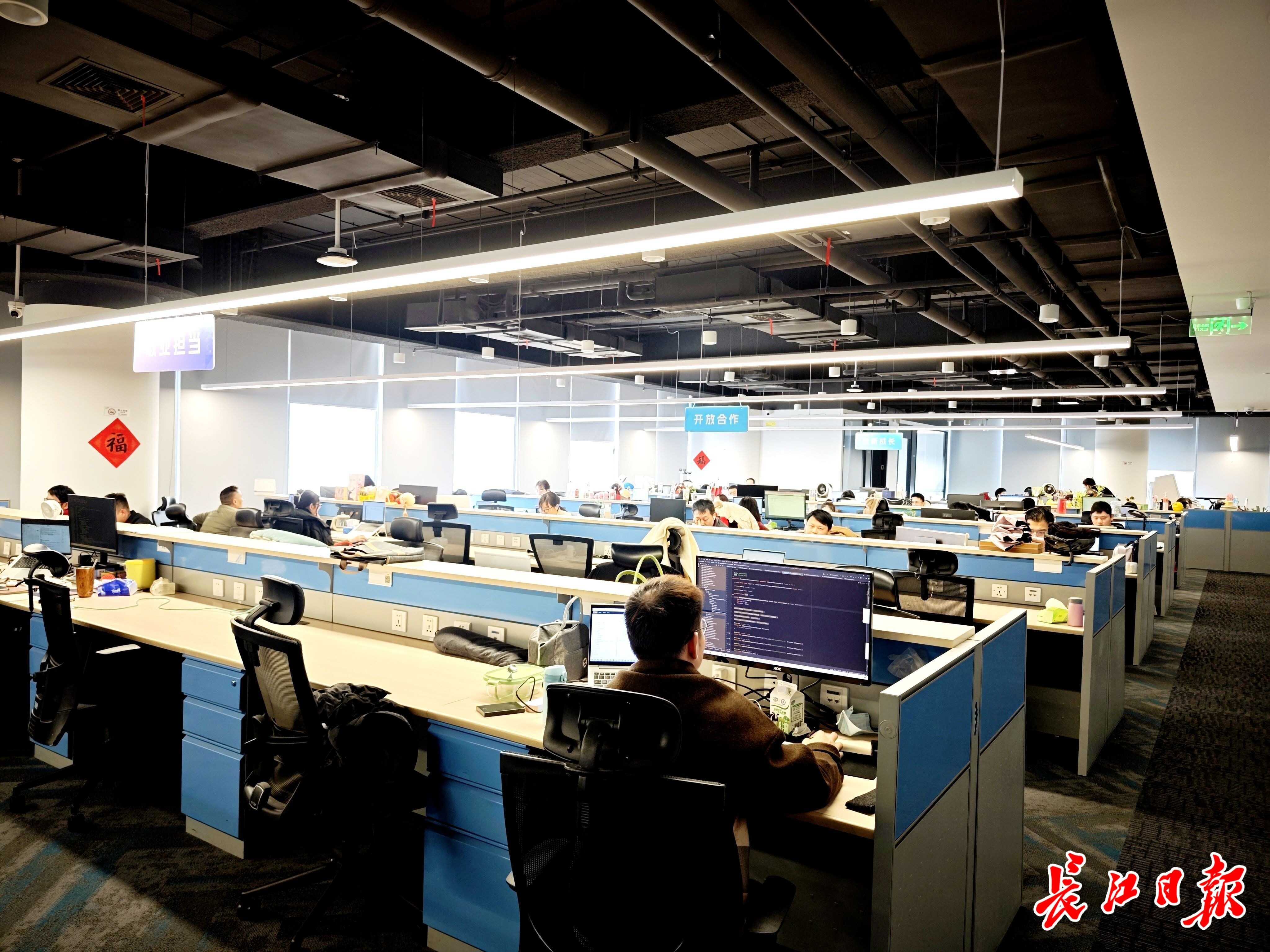
12月22日,位于江汉区万松街道一栋现代化写字楼的恒生电子(武汉)有限公司内(以下简称恒生武汉),键盘敲击声与低声讨论此 起彼伏。数百名研发人员紧盯屏幕,正在进行金融交易系统的测试与优化。这里是恒生电子在杭州之外的第二个研发总部。据介绍,自 2023年8月17日武汉总部揭牌以来,公司团队也超过800人,其中近八成都是在武汉引进的。 2023年,恒生电子在江汉区注册成立武汉公司并投入运营。这不是恒生与武汉的初次结缘,早在1995年公司成立之初,恒生就已为武 汉的金融机构提供服务;2006年,恒生电子武汉研发中心成立,是其在杭州之外最早设立的外地研发中心。而将研发中心升级为第二总 部,则意味着与武汉更深度的绑定与更宏大的布局。 据了解,恒生武汉目前800余人的团队中,只有200人是从杭州总部来到武汉,其余的都是在武汉引进的人才。倪守奇表示,公司未来 三年将扩张到2000人,将以武汉本地招聘为主。 走进武汉恒生数智科技有限公司(以下简称恒生数智)的办公区,年轻的面孔占据主流。"我们每年校招的主要目标就是武汉高校 圈。"恒生数智总经理阚晓晖介绍。 如今,恒生电子已将武汉公司定位为"以研发为主的总部平台",来自武汉团队 ...

万达信息今日大宗交易折价成交100万股,成交额649万元
Xin Lang Cai Jing· 2025-12-22 09:22
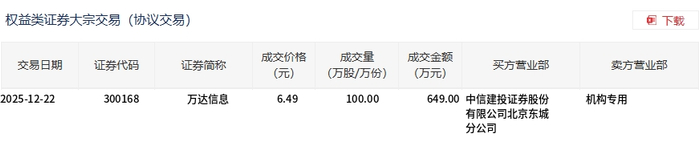
| 权益类证券大宗交易(协议交易) | | | | | | | 团 下载 | | --- | --- | --- | --- | --- | --- | --- | --- | | 交易日期 | 证券代码 | 证券简称 | 成交价格 (元) | 成交量 (万股/万份) | 成交金额 (万元) | 买方营业部 | 卖方营业部 | | 2025-12-22 | 300168 | 万达信息 | 6.49 | 100.00 | | 649.00 中信建投证券股份 有限公司北京东城 分公司 | 机构专用 | 12月22日,万达信息大宗交易成交100万股,成交额649万元,占当日总成交额的5.93%,成交价6.49 元,较市场收盘价6.52元折价0.46%。 ...

勿接“下落的利刃”!分析师Q2绩后唱衰甲骨文(ORCL.US):股价恐持续回调
美股IPO· 2025-12-22 08:30
Core Viewpoint - Oracle's stock price experienced a significant decline following the release of its second-quarter financial report, prompting analysts to advise against buying during the current price dip [3][13]. Financial Performance and Valuation - Oracle's second-quarter financial report for fiscal year 2026 revealed concerning signs that may lead to continued stock price declines, despite the recent drop attracting potential bottom-fishers [3][13]. - The company's forward P/E ratio stands at 48, with a PEG ratio of 3.3, significantly higher than major AI competitors like Nvidia and Meta [3][12]. - The stock's current P/E ratio based on non-GAAP measures is approximately 25.9, which is over 15% higher than its five-year historical average of 22.4 and about 10% above the industry average [10][11]. Debt and Capital Expenditure Concerns - Oracle's long-term debt has increased significantly from approximately $76 billion to nearly $100 billion in recent years [5][7]. - Total lease commitments have tripled over three years, rising from about $6.2 billion to over $20 billion, primarily due to capital and operating leases related to data centers and hardware [6][7]. - The company has halted its stock repurchase program and has become a net issuer of new shares, raising concerns about the sustainability of its expansion strategy [4][8]. Share Dilution and Capital Allocation - Historically, Oracle has been a net buyer of its own stock, reducing the number of shares outstanding from approximately 4.3 billion to 2.8 billion over the past decade. However, this trend reversed in the current fiscal year, with a significant reduction in buybacks and an increase in new stock issuance [8][9]. - The weighted average diluted shares have increased to 2.894 billion, indicating dilution during a period of rising debt and cash flow pressures [9]. Conclusion and Recommendations - Analysts express concerns about the high valuation risks, particularly when adjusted for the company's increased debt burden, suggesting that potential investors should remain cautious and avoid buying during the current price dip [12][13].

关税惊魂、AI狂热与“过山车式剧烈波动”! 六张图回顾美股“狂野的2025年”
Zhi Tong Cai Jing· 2025-12-22 08:27
Core Viewpoint - The year 2025 has been marked by extreme volatility in the U.S. stock market, driven by factors such as Trump's tariff policies, AI investment enthusiasm, and ongoing Federal Reserve monetary policy debates [1][2][3]. Group 1: Market Volatility and Trends - The S&P 500 index experienced a significant drop in April due to Trump's aggressive tariff policies, nearly entering a bear market, but rebounded sharply as these policies were relaxed, leading to new highs driven by AI-related investments [1][2]. - The Cboe Volatility Index (VIX) spiked above 50 in April, marking the highest level since the COVID-19 pandemic, before falling back below 20 as market conditions stabilized [2][3]. - The S&P 500 index has risen approximately 16% year-to-date, recovering from a 15% drop in April, indicating a strong performance despite earlier volatility [3]. Group 2: Fund Flows and ETF Activity - April 2025 saw significant net outflows from ETFs, particularly those tracking the Nasdaq 100, as investors reacted to tariff concerns, marking the fastest withdrawal pace in over two years [4][7]. - Following the easing of tariff pressures, inflows into the Invesco QQQ ETF surged in May, indicating a recovery in investor sentiment [7]. Group 3: Analyst Predictions and Market Adjustments - Wall Street analysts rapidly adjusted their year-end targets for the S&P 500, initially lowering them due to tariff fears, then raising them again as market conditions improved [8][11]. - The historical context of such rapid adjustments was noted, with comparisons to the early days of the COVID-19 pandemic [12]. Group 4: Bubble Concerns and Valuation Levels - Concerns about an AI bubble emerged early in 2025, with notable investors warning of inflated valuations in tech stocks, particularly those benefiting from AI advancements [13][16]. - The S&P 500's current price-to-earnings ratio is among the highest levels seen this century, raising alarms about potential overvaluation [16]. Group 5: Market Concentration Risks - The top 10 stocks in the S&P 500 account for nearly 40% of the index, raising concerns about market concentration risks and the potential for increased volatility [17][21]. - The "Magnificent Seven" tech giants have driven significant market gains, but their dominance poses risks for diversified investment strategies [18][21]. Group 6: International Market Performance - Despite a strong rebound in the U.S. market, it has underperformed compared to international indices, highlighting a shift in investor sentiment towards global markets amid U.S. policy uncertainties [25][28]. - The narrative of "American exceptionalism" is weakening, as international markets have outperformed the U.S. due to concerns over domestic economic policies and rising deficits [28][29].



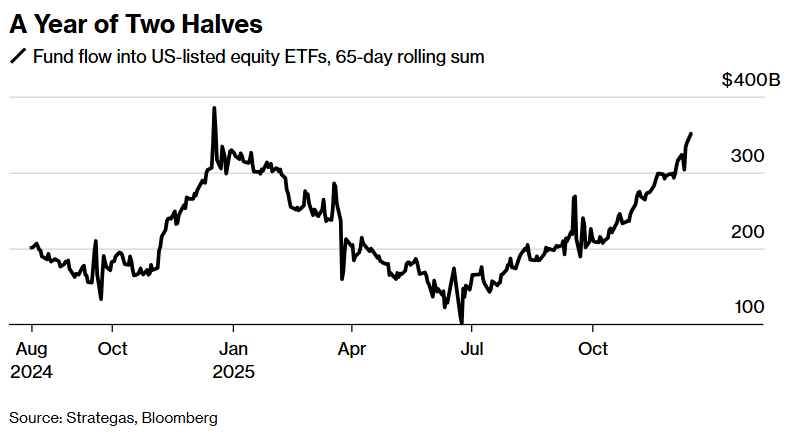
关税惊魂、AI狂热与“过山车式剧烈波动”! 六张图回顾美股“狂野的2025年”
智通财经网· 2025-12-22 08:23
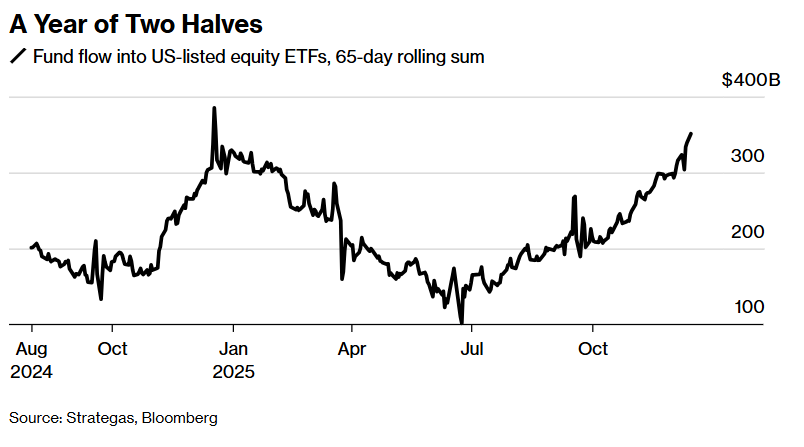
Market Overview - The year 2025 has been characterized by extreme pricing trajectories in the U.S. and global stock markets, with the S&P 500 index experiencing significant volatility due to Trump's tariff policies and subsequent AI investment enthusiasm [1][2] - The S&P 500 index has risen by 16% year-to-date, recovering from a 15% drop in April, driven by strong corporate earnings and expectations of Federal Reserve interest rate cuts [3] Tariff Impact - Trump's aggressive tariff policies initially led to a rare market downturn, pushing the Nasdaq into a technical bear market, but a reversal in these policies allowed for a rapid recovery [2][3] - The Cboe Volatility Index (VIX) spiked above 50 in April due to tariff fears, marking the highest level since the COVID-19 pandemic, before dropping back below 20 as the situation stabilized [2] AI Investment Surge - The AI infrastructure investment wave, led by tech giants like Google, Microsoft, and Meta, has created unprecedented demand for AI computing capabilities, contributing to the stock market's recovery [1][2] - Concerns about an "AI bubble" have emerged, with some investors warning of potential risks associated with inflated valuations in the tech sector [13][16] Market Concentration Risks - The top 10 stocks in the S&P 500 now account for nearly 40% of the index, raising concerns about market concentration risks and the potential for increased volatility [17] - The "Magnificent Seven" tech giants, including Apple, Microsoft, and Nvidia, have been pivotal in driving the S&P 500 to new highs, but their dominance poses risks for diversified investment strategies [18][21] Active Management Challenges - Active fund managers have struggled to outperform the S&P 500, with only 22% of large-cap active funds beating the index, the lowest rate since 2016 [23] - The concentration of returns among a few tech stocks has made it difficult for active managers to achieve diversification and manage risk effectively [21][23] International Market Performance - The U.S. stock market has underperformed compared to international indices, with several countries' benchmarks significantly outperforming the S&P 500 in 2025 [25][28] - The narrative of "American exceptionalism" is showing cracks as U.S. policy uncertainty and rising deficits have led to a decline in the attractiveness of U.S. assets [28][29]



Top gainers, losers on NSE, BSE Mid day 22nd Dec: Sensex gains over 500 pts, Nifty above 26,100 level, Shriram Finance, Wipro, Infosys lead gainers
BusinessLine· 2025-12-22 08:18
Market Overview - Equity indices experienced a significant rally on Monday, driven by positive investor sentiment, renewed foreign fund inflows, a stronger rupee, and favorable global market cues [1] - The benchmark indices, Sensex and Nifty 50, traded near their day's highs, with Sensex up by 536.16 points (0.63%) at 85,465.52 and Nifty 50 increasing by 179.30 points (0.69%) to 26,145.70 [1] Sector Performance - Smallcap stocks outperformed midcap stocks with a 1.10% increase, while all sectoral indices, except realty, showed positive performance [2] - IT and metal indices rose nearly 2%, indicating strong sectoral gains [2] - Market breadth was positive, with 2,269 stocks advancing, 801 declining, and 103 unchanged, reflecting robust investor participation [2] Notable Stocks - Shriram Finance, Wipro, Infosys, Bharti Airtel, and Hindalco were among the top gainers in the Nifty 50, while State Bank of India, HDFC Life, Tata Consumer Products, SBI Life, and Kotak Mahindra Bank saw the most significant declines [3] - In the midcap index, Cochin Shipyard and National Aluminium surged by 5-6%, while SAIL, RVNL, KEI Industries, and UPL increased by 3-4% [5] - Smallcap stock JWL experienced a remarkable rally of 14%, with GRSE, Hindustan Copper, KEC International, and MCX rising by 5% [5] Market Momentum - A total of 82 stocks reached their 52-week highs, while 45 stocks hit their 52-week lows, indicating strong market momentum [4] - Nearly 78 stocks were locked in upper circuits, significantly outnumbering the 38 stocks in lower circuits, further emphasizing the bullish market sentiment [4]

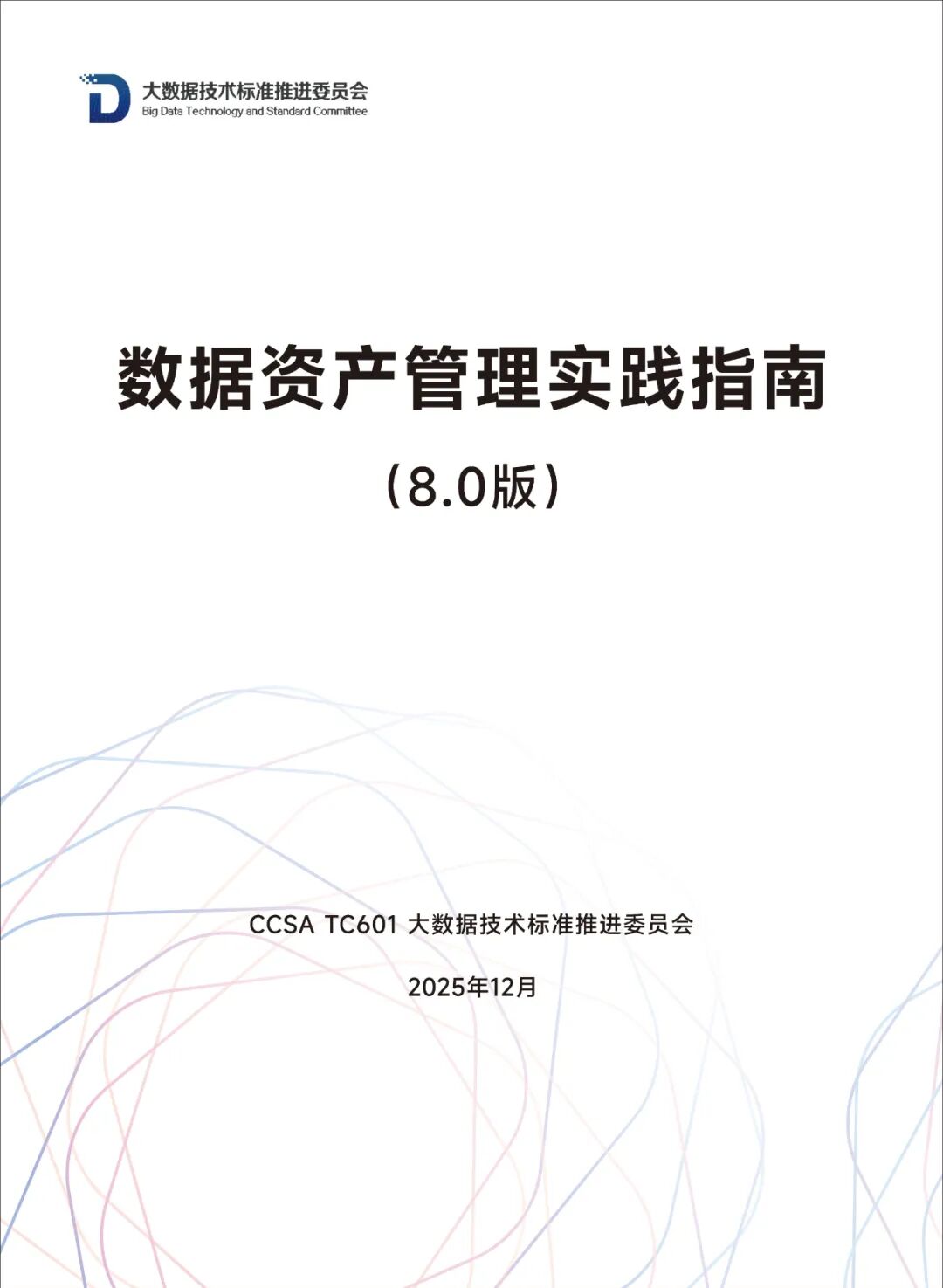
数据如何从“成本”变“资产”,再到“资本”?这份官方权威指南(8.0版)讲透了
3 6 Ke· 2025-12-22 08:17
Core Insights - The article emphasizes the importance of data asset management as a strategic necessity for companies to leverage data as a core asset for growth and innovation in the evolving digital economy [1][18]. Group 1: Data Value Transformation - The 8.0 version of the guide outlines a three-stage transformation of data value: resourceization, assetization, and capitalization, providing a clear path for companies to follow [2][28]. - Resourceization focuses on ensuring data quality, security, and availability, which are prerequisites for value release [2][28]. - Assetization aims to make data's value visible and measurable through activities like registration, valuation, and internal/external circulation [2][28]. - Capitalization allows data to be treated as a stable asset, enabling innovative financing methods such as pledging for loans and securitization [2][28]. Group 2: Practical Implementation Paths - The guide identifies four core paths for companies to realize data value: digitalization of industries, digital management, digital productization, and ecosystem collaboration [4][5]. - It provides tailored strategies for different types of companies, including value operation-focused firms, transaction innovation-driven companies, compliance-driven enterprises, and foundational management-focused organizations [5][6][7]. Group 3: Future Trends - The report anticipates five key trends in data asset management: integration of AI in data management, real-time decision-making through digital twins, establishment of precise value measurement frameworks, expansion of knowledge management, and active participation in data market ecosystems [9][10][11][12][13]. Group 4: Target Audience - The guide is designed for various stakeholders, including CEOs and CDOs for strategic direction, data department heads for optimizing management systems, business managers for understanding data's role in innovation, and finance/legal personnel for compliance challenges [14][15][16][17].