
养老

Search documents
21评论丨促消费政策应聚焦五个重点领域
2 1 Shi Ji Jing Ji Bao Dao· 2025-12-04 22:40
庞溟(国家金融与发展实验室特聘高级研究员) 随着中国经济进入新阶段,居民消费率的提高将成为宏观调控、增长内涵和发展质量新的重要的观察指 标和定量目标,并有望作为衡量经济内生动力和社会民生改善的重要参照。 展望后续,预期各项促消费政策将聚焦于五个重点领域,为消费市场的持续扩容提供坚实支撑: 大规模设备更新和消费品以旧换新政策推行一年多来,在稳投资、扩消费、促转型、惠民生等方面取得 明显成效,特别是以旧换新带热了多元消费需求。展望2026年,预期相关政策在结构上将更为突出和提 升服务消费的比重。这意味着政策导向正在从单纯的商品消费扩展到教育、医疗、养老、文旅等服务领 域,更加注重满足居民多样化、品质化的消费需求,推动消费结构进一步优化,带动相关产业链的升级 和扩展,形成新的增长点。 近日,财政部、商务部发布《关于开展消费新业态新模式新场景试点工作的通知》,宣布将支持50个左 右城市开展试点工作,包括4个直辖市、5个计划单列市和部分省会城市,以及若干文旅资源相对丰富的 其他城市。与以往单一的消费促进政策不同,本次试点明确提出新业态、新模式、新场景三维度,强调 财政资金不仅要支持传统消费扩容,更要引导地方在数字化、智 ...


解锁银川幸福密码:让民生温暖直达人心
Zhong Guo Xin Wen Wang· 2025-12-03 01:01
Group 1 - The core viewpoint of the article highlights the significant improvements in the quality of life in Yinchuan, with a focus on community services and facilities that enhance the well-being of residents [1][5] - Over the past five years, Yinchuan has allocated over 70% of its fiscal funds to the improvement of people's livelihoods, addressing key concerns such as employment, education, healthcare, and elderly care [2][5] - The city has implemented 109 new and expanded projects for primary and secondary schools and kindergartens, adding 88,000 new student places, which alleviates the "enrollment anxiety" faced by families [2][3] Group 2 - Yinchuan has achieved full coverage of five-level remote outpatient services and three major remote diagnosis centers, enhancing the convenience of medical services for residents [3] - The average disposable income for urban and rural residents in Yinchuan has reached 49,164 yuan and 22,299 yuan respectively, with annual growth rates of 5.7% and 7.9%, consistently outpacing economic growth [3] - The city has established 814 elderly care facilities and 98 senior universities, making elderly care and leisure activities more accessible [3][5]

中国超大规模市场重塑全球增长格局
Jing Ji Ri Bao· 2025-12-03 01:01
Core Insights - The global economy is facing significant downward risks, while the Chinese market demonstrates resilience and offers strategic opportunities for global enterprises due to its unique scale and competitive advantages [1][8]. Consumption Market - China's consumer market is characterized by continuous growth in scale, structural optimization, and improving quality, leading to a significant competitive advantage [2]. - From 2014 to 2024, China's total retail sales of consumer goods are projected to grow from 26.2 trillion yuan to 48.3 trillion yuan, reflecting both total volume and structural optimization [2]. - By 2024, final consumption expenditure is expected to contribute 44.5% to economic growth, solidifying its role as the primary driver of economic expansion [2]. Investment Market - China's investment market is attractive due to its complete industrial system, continuously upgrading industrial structure, and significant investment returns [4]. - China is the only country with all industrial categories recognized by the United Nations, showcasing strong resilience in its manufacturing sector [4]. - The urbanization rate is projected to reach 67% by 2024, indicating substantial investment demand potential [4]. Innovation Ecosystem - China's innovation ecosystem benefits from a vast array of application scenarios, rapid technological iteration, and a strong talent pool [5]. - China ranks 10th in the Global Innovation Index, marking a significant rise and leading among middle-income economies [5]. - As of July 2024, 250 million people in China have received higher education, providing a robust talent reserve for innovation [5][6]. Market Environment - The continuous improvement of China's market environment is evident through deepened institutional openness, optimized business conditions, and the establishment of fair competition [7]. - Since the establishment of the first free trade zone in 2013, significant institutional innovations have been replicated nationwide, enhancing foreign investment conditions [7]. - By the end of 2024, the total number of registered business entities in China is expected to reach 189 million, fostering a collaborative development environment among state-owned, private, and foreign enterprises [7]. Overall Market Advantages - China's market advantages are comprehensive and systemic, characterized by a large and continuously upgrading consumer market, a solid and improving investment environment, a vibrant and talent-rich innovation ecosystem, and an increasingly open and transparent institutional environment [8]. - In the face of global economic uncertainties, China's stability and growth potential are particularly valuable, with expectations of maintaining a high contribution rate to global economic growth over the next five years [8].
精准施策 不断增进三秦百姓福祉
Shan Xi Ri Bao· 2025-12-02 22:39
Core Viewpoint - Since the beginning of the 14th Five-Year Plan, Shaanxi has prioritized the aspirations of its people for a better life, focusing on employment, education, healthcare, and social security to enhance the sense of gain, happiness, and security among its citizens [1] Employment Stability - Employment is regarded as the foundation of people's livelihoods, with Shaanxi placing it at the forefront of economic and social development. The province has implemented targeted measures to stabilize employment for key groups [2] - Youth employment initiatives focus on college graduates, with a consistent job placement rate of over 80% for graduates over the past five years. Special plans have been introduced to create one million job training positions [2] - For migrant workers, Shaanxi promotes both local and external employment opportunities, maintaining a stable workforce of over 2.1 million former poverty-stricken individuals each year [2] - The province has assisted 669,800 unemployed individuals in finding jobs and 201,500 individuals facing employment difficulties, ensuring zero-employment families are dynamically cleared [2] Public Service Enhancement - The core expectations of the public revolve around quality education, accessible healthcare, and warm elderly care, which are the main focus areas for Shaanxi's public service improvements [3] - In education, Shaanxi has made significant strides towards equitable and high-quality education, with a focus on improving resources and reducing disparities between urban and rural areas [3][4] - Healthcare services have been enhanced to ensure quality medical resources are available closer to home, with the establishment of four provincial medical centers and several traditional Chinese medicine hospitals [4] - Elderly care services have been improved, with a focus on community-based support, resulting in the establishment of numerous elderly care centers and meal assistance programs [4] Service Optimization - Shaanxi has focused on addressing public service bottlenecks through digital reforms, enhancing the efficiency of healthcare and social services [5][6] - The province has transitioned from traditional medical insurance cards to digital codes, achieving a 94.53% activation rate for insurance codes, facilitating easier access to medical services [5] - Healthcare processes have been streamlined, with 2,305 public medical institutions eliminating prepayment for outpatient services, thereby lowering barriers for patients [5] - Social services have been simplified, with marriage registration now available across provinces and significant reductions in processing times for funeral services [6]
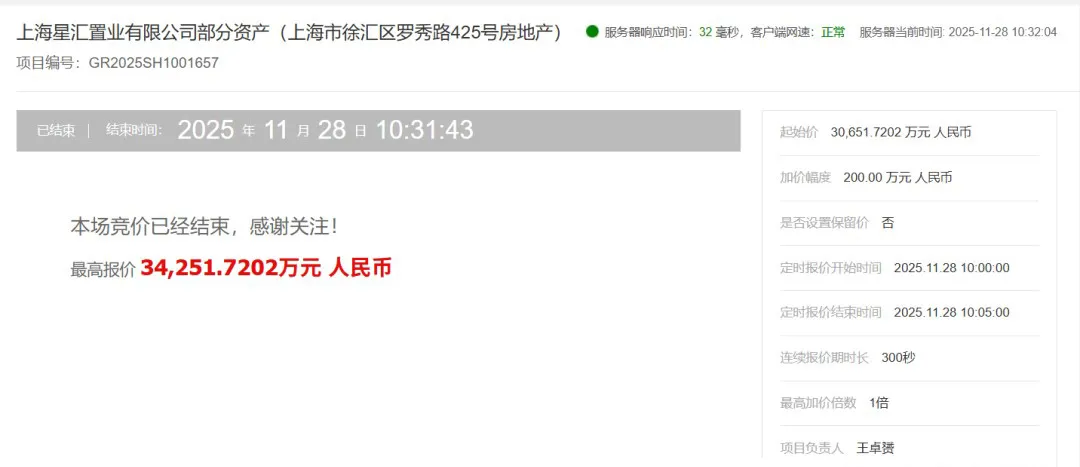
复星、大家联手入局?上海徐汇一宗养老资产3.4亿元成交
Cai Jing Wang· 2025-12-02 10:56
Core Insights - A high-quality elderly care asset auction in Shanghai has concluded, attracting significant industry attention, with the asset sold for 342.5 million yuan, reflecting a premium rate of approximately 11.7% [1][2] Group 1: Auction Details - The asset was listed for auction starting October 13 and concluded on November 10, with a starting price of 306.5 million yuan [2] - The asset is located at 425 Luoxiu Road, Xuhui District, covering an area of 8,000 square meters and a total construction area of 26,559 square meters, including 20,386 square meters above ground and 6,173 square meters underground [2] - The project is part of the Shang Hai Yue Ting residential complex, which opened in late 2022 with an average price of approximately 94,000 yuan per square meter [2] Group 2: Market Demand and Infrastructure - The surrounding area has a high demand for elderly care services, with 30% of the population aged 60 and above within a 3-kilometer radius, and convenient transportation options including two metro lines under construction [2] - Nearby medical facilities include major hospitals within a 10-minute drive, providing essential healthcare resources for integrated medical and elderly care services [2] Group 3: Company Strategies and Developments - Fosun and Dajia Insurance's joint acquisition aims to fill the gap in high-end elderly care services in the Xuhui District, leveraging Dajia's capital strength and Fosun's operational expertise [2] - Dajia Insurance has established a comprehensive insurance group with a focus on elderly care, launching the "Dajia's Home" brand to cater to diverse elderly needs [3][7] - Fosun Health has secured over 11,000 beds across nearly 10 cities, focusing on high-end elderly care communities and integrated health services [8][11] Group 4: Industry Growth Potential - The elderly care market is projected to exceed 12 trillion yuan by 2024 and reach 25 trillion yuan by 2030, driven by an aging population [12] - In Shanghai, the elderly population aged 60 and above is expected to reach 5.78 million by the end of 2024, representing 37.6% of the total population, indicating a strong demand for quality elderly care services [12] - The auctioned project is the first public trading pilot for implementing high-quality elderly care service development in Shanghai, signaling a shift towards professional, large-scale, and high-quality elderly care solutions [13]

第四届保险养老融合与发展论坛(合肥站)成功举办
2 1 Shi Ji Jing Ji Bao Dao· 2025-12-01 11:13
Core Viewpoint - The aging population in China is a significant national issue, and the integration of insurance and elderly care is becoming a crucial model to address the challenges posed by this demographic shift [2][3][5]. Group 1: Forum and White Paper Insights - The "Fourth Insurance and Elderly Care Integration and Development Forum" was held in Hefei, focusing on innovative financial solutions and service upgrades in elderly care [1]. - The "China Urban Commercial Elderly Care White Paper 2026" was released, highlighting three uncertainties in "Chinese-style elderly care" and introducing a "Three-Dimensional Nine-Question" diagnostic model for families [1][5]. Group 2: Challenges and Strategic Directions - China faces four major challenges related to rapid aging: low fertility rates, insufficient wealth for retirement, weak family support, and inadequate elderly care facilities [3]. - The integration of insurance and elderly care is seen as a strategic direction for the third pillar of pension systems, with a focus on collaborative efforts among government, enterprises, families, and individuals [2][3]. Group 3: Consumer Concerns and Solutions - Consumers express concerns about the uncertainties in elderly care needs, services, and wealth management, with 67.6% prioritizing the safety of retirement wealth [5]. - The "Three-Dimensional Nine-Question" model aims to help families diagnose and plan their elderly care solutions based on these uncertainties [5]. Group 4: Integration of Insurance and Elderly Care - The integration of the elderly care and insurance sectors is viewed as a strategic choice, creating a business model that combines product and service offerings [6]. - The company has developed a comprehensive insurance product system that aligns insurance policies with elderly care benefits, promoting a dual assurance for customers [6]. Group 5: Urban Elderly Care Model - The "City Center Elderly Care" model focuses on renovating existing urban buildings to provide elderly care services, allowing seniors to remain in familiar environments [7]. - This model has been recognized for its ability to maintain close proximity to family and quality medical resources, enhancing the overall elderly care experience [7][8]. Group 6: Performance and Future Plans - As of now, the company has established 16 communities across 14 cities, with occupancy rates nearing 90% in newly opened facilities and up to 99% in mature locations [8]. - The company aims to continue evolving the "City Center Elderly Care" model, enhancing service capabilities to provide quality elderly care in urban settings [10].

年底5元以下低价股捡漏,7只潜力股推荐,跨年黑马等你选
Sou Hu Cai Jing· 2025-11-30 18:37
Group 1: Consumer Sector - The government has implemented substantial measures to boost consumption, focusing on smart products, green energy, and products for the elderly [1] - The fourth round of "trade-in" subsidies is accelerating, targeting home appliances, digital products, and home decoration, with a deadline for consumers to act by December 31 [1] Group 2: Alcohol and Pharmaceutical E-commerce - A company specializing in both liquor and pharmaceutical e-commerce has seen revenue growth of nearly 30%, with high gross margins due to increased demand during year-end banquets [1] - The pharmaceutical e-commerce segment benefits from stricter regulations, providing a competitive edge, while innovative drugs are in phase three clinical trials, indicating strong cash flow and a low price-to-earnings ratio compared to peers [1] Group 3: Prepared Dishes and New Retail - A company focused on prepared dishes and new retail is experiencing rapid market growth, with the market size exceeding 600 billion, although its actual revenue contribution is only over 10% [3] - The main business remains traditional retail with lower gross margins, and new production facilities for prepared dishes will not be operational until 2026, posing risks for large investments [3] Group 4: Healthcare Sector - Companies specializing in cold medicine are expected to see revenue spikes during the flu season, with over 40% of their revenue coming from this period, but they have low R&D investment, limiting long-term growth potential [3] Group 5: Elderly Care and AI Medical Services - A company focusing on elderly care and AI medical services has seen over 50% revenue growth in community care and rehabilitation, with AI diagnostic systems implemented in numerous grassroots hospitals [5] - The company has high R&D investment compared to industry averages, but its diverse business lines contribute limited short-term profits, making it suitable for long-term investment [5] Group 6: Private Hospitals and Smart Medical Services - A company operating in private hospitals, smart medical services, and coal has seen over 30% revenue growth in private hospitals, with stable cash flow from coal operations [6] - The company has a diversified risk profile but lacks a core growth engine, making it suitable for conservative investors [6] Group 7: High-end Manufacturing - The high-end manufacturing sector is receiving strong policy support, with a focus on industrial mother machines, which are expected to modernize by 2027 [6] - A company producing CNC machines has reported over 60% profit growth in the first three quarters, with a nearly 40% year-on-year increase in industrial mother machine revenue [6] Group 8: New Energy and Digital Economy - The new energy and digital economy sectors are experiencing explosive growth, with data trading becoming a national focus and data center capacity reaching 500 PB [8] - The company involved in data business has seen revenue double, with stable cash flow from cement operations and lower valuations compared to peers, indicating potential for increased profitability if the data business model is successful [8]

老龄化浪潮下养老概念股前景几何?专家警示核心竞争力是关键
Cai Jing Wang· 2025-11-27 10:38
Core Viewpoint - The recent fluctuations in the stock price of Yuexin Health are influenced by macro policies and market conditions, particularly within the aging concept sector, which is experiencing both growth and volatility [1][2]. Group 1: Market Dynamics - On November 27, Yuexin Health's stock surged to a peak price of 5.31 yuan before closing at 5.10 yuan, reflecting a 5.59% increase, influenced by movements in the aging concept sector [1]. - The aging concept sector is seeing increased interest due to the growing elderly population and their rising consumption capabilities, leading to more companies extending their products and services into the aging sector [1][2]. Group 2: Investment Insights - Investors are advised to focus on the long-term core competitiveness of aging enterprises, which includes stable cash flow, clear business models, and strong product and technology moats [2]. - Many aging enterprises currently lack stable, large-scale aging business support and are overly reliant on subsidies, which poses risks for investors [2]. Group 3: Company Overview - Yuexin Health, established in 1993 and listed in 2007, has transitioned from manufacturing ceramics to focusing on the health industry, particularly in aging services [2][3]. - The company operates under a dual-brand strategy, with "Simik" for its ceramic business and "Yuexin" for its health services, emphasizing a five-in-one model of medical care, health, education, and research [3]. Group 4: Industry Potential - The silver economy in China is valued at approximately 7 trillion yuan, accounting for about 6% of GDP, with significant growth potential compared to developed countries where the aging industry represents 20% of GDP [3]. - Yuexin Health is developing three main product lines in the aging service sector, focusing on active elderly care, specialized care for dementia patients, and vocational training in caregiving [3]. Group 5: Policy and Innovation - Recent government initiatives aim to enhance the supply of aging-friendly products, including the development of elderly care robots and multifunctional nursing beds [4][5]. - Yuexin Health plans to expand its aging services, including home care and community day care, while also investing in the development of smart rehabilitation devices [5][6]. Group 6: Long-term Outlook - The aging industry is viewed positively for long-term investment due to policy support and demographic changes, although it is characterized by heavy assets, long investment cycles, and slow returns [10]. - The industry is expected to benefit from ongoing government strategies to address population aging, indicating a strong future outlook for aging-related businesses [10].
汽车消费、首发经济、适老化产品研发……这场发布会回应诸多热点
Di Yi Cai Jing Zi Xun· 2025-11-27 03:25
Group 1 - The core viewpoint of the news is the introduction of policies aimed at enhancing the adaptability of supply and demand in consumer goods to stimulate consumption and promote economic circulation [1][2]. Group 2 - The Ministry of Industry and Information Technology emphasizes the importance of aligning production supply with changing consumer trends to maximize consumption potential and ensure quality and suitability of products [2]. - The Ministry plans to collaborate with relevant departments to enhance the development of elderly care products, including service robots and age-friendly standards [3]. - The Ministry of Commerce will promote reforms in the automotive circulation sector, expanding the second-hand car market and related services to boost automotive consumption [4]. - The Ministry of Commerce encourages the "first launch economy," supporting businesses in releasing new products and establishing new stores to foster healthy consumption and new growth points [5]. - The National Development and Reform Commission will strengthen the planning and construction of parking facilities and charging infrastructure to improve convenience for consumers [6]. - The Ministry of Culture and Tourism will support the introduction of high-quality cultural and tourism products and promote innovative cultural experiences to enhance consumer engagement [7].
【滔滔两岸潮】从“碧潭少年”到“天津姑爷”:台青井然的十六载“银发”创业路
Zhong Guo Xin Wen Wang· 2025-11-25 07:32
Core Insights - The article highlights the entrepreneurial journey of Taiwanese youth Jingran, who has been deeply involved in the elderly care industry in mainland China for sixteen years, integrating Taiwanese service expertise with mainland internet technology [1] Group 1: Background and Motivation - Jingran graduated in 2009 and was inspired to contribute to the aging society after witnessing elderly groups traveling in Kunming [1] - His initial motivation stemmed from a desire to address the challenges posed by an aging population [1] Group 2: Business Development - Jingran has led his team to create a smart elderly care platform and has undertaken public-private partnership projects in Yunnan, enhancing the quality of elderly care services [1] - The model he employs emphasizes "complementary advantages across the Taiwan Strait," positioning his business as an industry benchmark [1] Group 3: Personal Growth and Community Engagement - Jingran has received significant support from colleagues, including a long-term partnership with a director who has been likened to a "close confidante" [1] - He has established a family in Tianjin, which has provided him with a strong support system and a sense of belonging [1] - As the chairman of the Youth Committee of the Tianjin Taiwan Enterprise Association, he actively encourages more Taiwanese youth to explore opportunities in Tianjin [1]
