饮料

Search documents
娃哈哈“动刀”渠道
Bei Jing Shang Bao· 2025-08-14 16:38
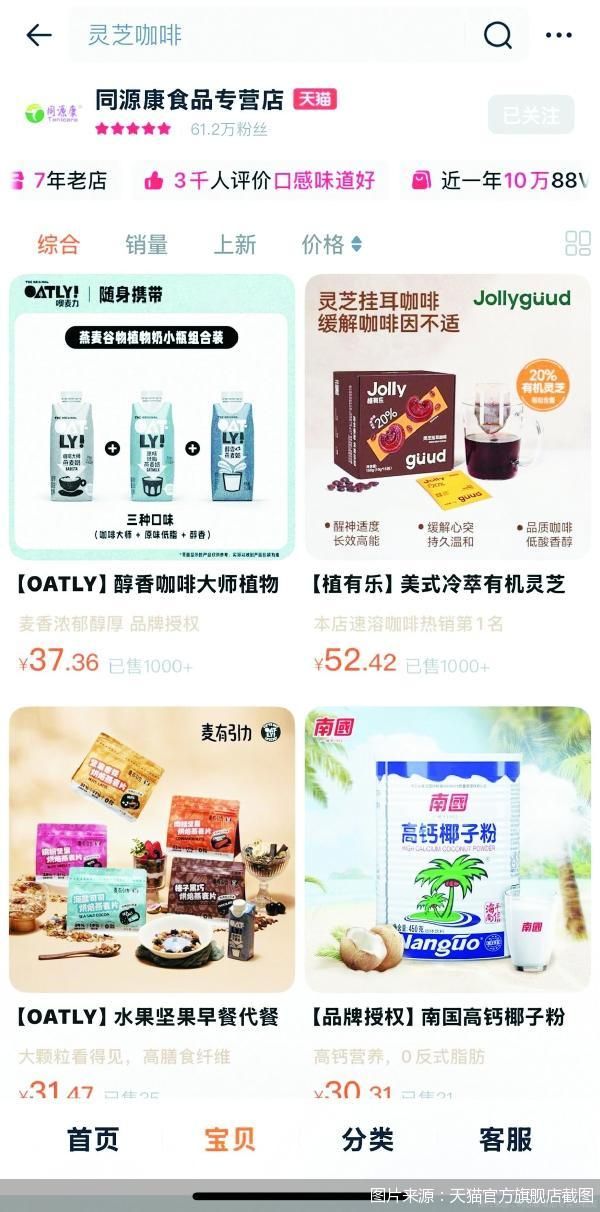
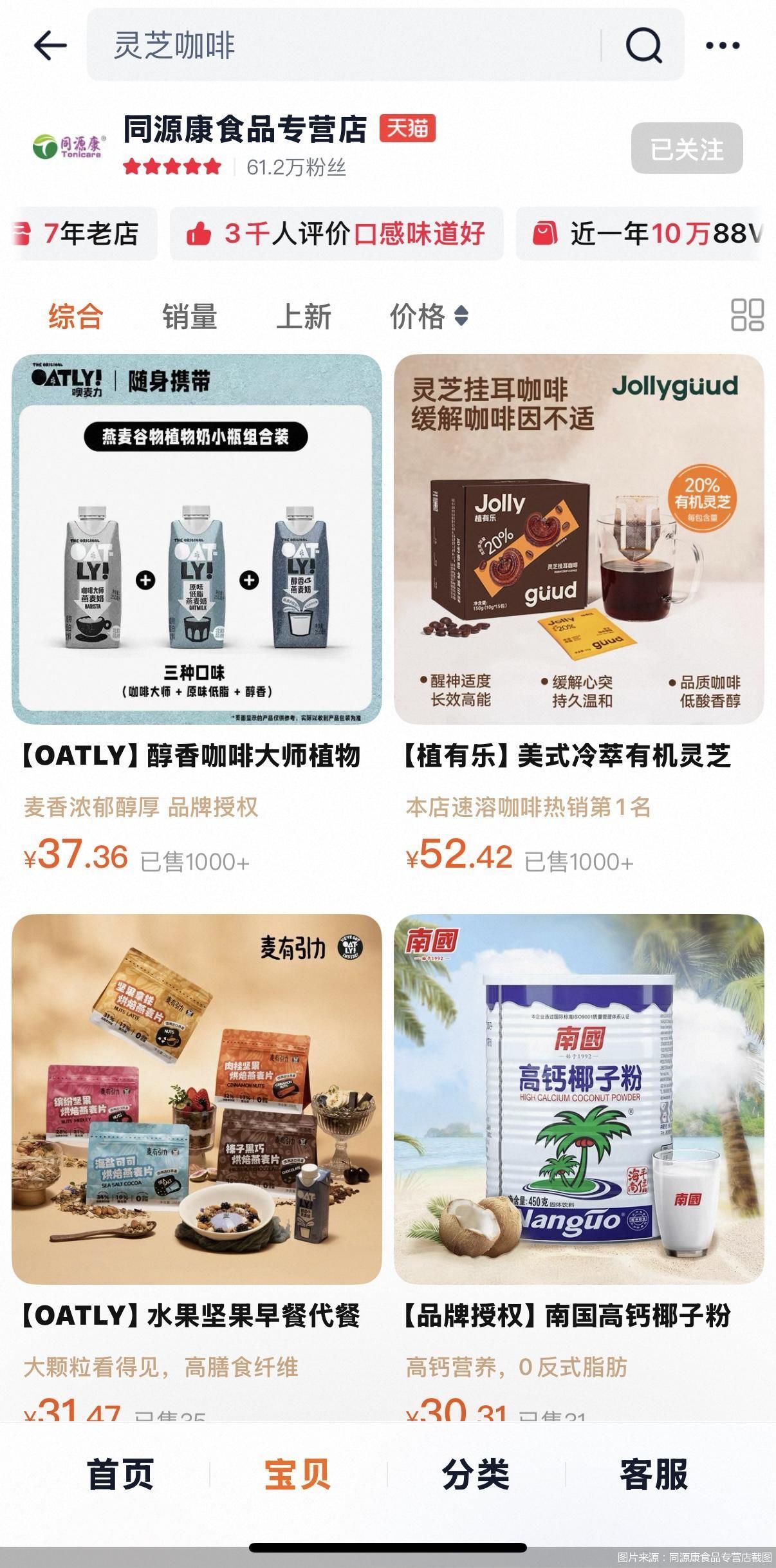
Core Viewpoint - The renaming of the Tmall Wahaha flagship store to "Tongyuan Kang Food Specialty Store" and the termination of cooperation with Wahaha indicates a strategic shift in the company's e-commerce operations, aiming to adapt to market competition and consumer demands [1][4]. Group 1: Store and Operational Changes - The new store "Tongyuan Kang Food Specialty Store" has no Wahaha products and is independently operated, with a customer service representative confirming that cooperation with Wahaha will end by the end of 2024 [1][4]. - The new Tmall Wahaha flagship store is operated by a subsidiary of Hongsheng Group, which is controlled by Wahaha's chairman, Zong Fuli [5]. - Wahaha has initiated a tender for a new operational service for its Tmall flagship store, targeting an annual sales goal of 45 million yuan and the creation of at least three online best-selling products [4]. Group 2: Distributor and Sales Strategy - Wahaha has been terminating contracts with distributors generating less than 3 million yuan in annual sales, consolidating them into larger distributors to enhance operational efficiency [7][9]. - Despite the terminations, Wahaha's overall number of distributors has increased this year, indicating a dynamic optimization of its distribution strategy [7]. Group 3: Production and Investment - Wahaha has closed 18 production lines across various locations, while Hongsheng Group is investing in new production facilities, including a 1 billion yuan project for a new beverage production base [8]. - The company is restructuring its production and sales layout to improve market responsiveness, which has led to the closure of some factories [8]. Group 4: Market Competition and Strategic Positioning - The beverage industry is highly competitive, and Wahaha's strategy to eliminate low-performing distributors is a common practice in the fast-moving consumer goods sector to enhance resource allocation and market competitiveness [9]. - Experts suggest that Wahaha should improve transparency and communication regarding its strategic decisions to mitigate public misunderstandings [9].

娃哈哈改名,宗馥莉彻底不装了!
Xin Lang Cai Jing· 2025-08-14 15:27
Group 1 - The core point of the article revolves around the power struggle within Wahaha, particularly focusing on Zong Fuli's strategic moves amidst the inheritance dispute with her half-siblings [1][20] - Zong Fuli has rebranded the former Wahaha flagship store on Tmall to "Tongyuan Kang Food Specialty Store," indicating a significant shift in the company's branding strategy [2][5] - The rebranding is part of Zong Fuli's efforts to eliminate the influence of Du Jianying, a key figure in the company, and to assert her control over Wahaha [11][14] Group 2 - Zong Fuli has made a substantial investment of 1 billion yuan in a new factory in Xi'an, which aims to consolidate Wahaha's market resources in the northwest region [21][22] - The new factory will include multiple production lines for various beverage categories, reflecting a strategic shift towards a more diversified product offering [21][22] - Recent changes in the company's operational structure include the closure of 18 factories and a shift to outsourcing production, which has raised concerns about the impact on profit distribution among stakeholders [27][29] Group 3 - Zong Fuli's actions, including the closure of old factories and the overhaul of the distributor system, signal a move towards modernizing Wahaha and breaking away from traditional operational models [30][33] - The company is focusing on enhancing its online presence and addressing consumer trust issues following the shift from direct management to a distributor model [31][33] - Zong Fuli's strategic decisions are aimed at transforming Wahaha into a modern enterprise, indicating her desire to establish her own legacy separate from her father's influence [30][33]

“不变”的娃哈哈 “变了”的终端市场
Bei Jing Shang Bao· 2025-08-14 14:50
Core Viewpoint - The rebranding of the Tmall Wahaha flagship store to "Tongyuan Kang Food Specialty Store" has raised speculation about the company's future direction and its ongoing challenges in the competitive beverage market [1][5]. Group 1: Store Rebranding and Operations - The Tmall store has ceased to offer Wahaha products, with customer service indicating that the partnership will end by the end of 2024 [1]. - The new store is operated by a subsidiary of Hongsheng Group, which is controlled by Wahaha's chairman, Zong Fuli [6]. - The store "Tongyuan Kang Food Specialty Store" has been operational for seven years and has 612,000 followers, selling various brands [5]. Group 2: Strategic Changes and Market Position - Wahaha is undergoing channel reforms and optimizing its terminal layout to adapt to market pressures from competitors like Nongfu Spring and Master Kong [1]. - The company has announced a target of 45 million yuan in annual sales for its Tmall flagship store, aiming to create at least three online hit products [5]. - Wahaha has also initiated a bidding process for the operation of its Tmall flagship store, indicating a shift in its operational strategy [6]. Group 3: Distributor and Production Adjustments - Wahaha has been terminating contracts with underperforming distributors, specifically those with annual sales below 3 million yuan, to streamline its distribution network [7]. - The company has closed 18 production lines across various locations, while Hongsheng Group is investing in new production facilities, including a 1 billion yuan project in Xi'an [8]. - The strategic shift aims to enhance market responsiveness and operational efficiency, reflecting a broader trend in the fast-moving consumer goods sector [8].

“不变”的娃哈哈,“变了”的终端市场
Bei Jing Shang Bao· 2025-08-14 14:16
Core Viewpoint - The rebranding of the Tmall Wahaha flagship store to "Tongyuan Kang Food Specialty Store" indicates a strategic shift for Wahaha as it terminates its partnership with the original store operator and seeks to adapt to market pressures from competitors like Nongfu Spring and Master Kong [1][5][6]. Group 1: Store and Operational Changes - The new store "Tongyuan Kang Food Specialty Store" has no Wahaha products and operates independently, with a customer service representative confirming that the partnership will end by the end of 2024 [1][5]. - The store has been operational for seven years and has 612,000 followers, selling various brands like OATLY and 乐荷 [5]. - Wahaha has initiated a tender for a new Tmall flagship store operator, aiming for an annual sales target of 45 million yuan and the creation of at least three online hit products [5][6]. Group 2: Changes in Distribution Strategy - Wahaha is terminating partnerships with distributors generating less than 3 million yuan in annual sales, consolidating operations with larger distributors to enhance efficiency [7]. - The company has seen a significant drop in daily sales on its Douyin flagship store, from 50,000-75,000 yuan to 10,000-25,000 yuan, alongside a decrease in followers [7]. - Wahaha has closed 18 production lines across various locations, while its new partner, Hongsheng Group, is investing in new production facilities, including a 1 billion yuan project for a new beverage base [8]. Group 3: Market Position and Strategic Response - The beverage industry is highly competitive, prompting Wahaha to modernize its operations and improve efficiency by reducing the number of small distributors [8]. - The strategic shift under the leadership of Zong Fuli aims to enhance market responsiveness and operational efficiency, which is a common practice in the fast-moving consumer goods sector [8]. - Experts suggest that Wahaha should address public concerns transparently to mitigate misunderstandings regarding its strategic decisions [9].
燕京啤酒半年报:利润高增背后,饮料赛道能否撑起第二增长极
Sou Hu Cai Jing· 2025-08-14 12:19
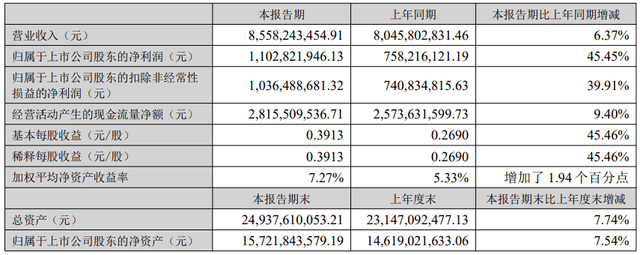
Core Viewpoint - Yanjing Beer reported a contradictory financial performance for the first half of the year, with a net profit surge of 45.45% to 1.103 billion yuan, while revenue only grew by 6.37%, marking the third consecutive year of "profit growth without revenue growth" [1][2]. Financial Performance - Revenue for the reporting period was 8.558 billion yuan, up 6.37% from 8.046 billion yuan in the same period last year [2]. - Net profit attributable to shareholders reached 1.103 billion yuan, a 45.45% increase from 758 million yuan year-on-year [2]. - The net profit excluding non-recurring gains was 1.036 billion yuan, reflecting a 39.91% increase from 740 million yuan [2]. - Operating cash flow increased by 9.40% to 2.816 billion yuan compared to 2.574 billion yuan last year [2]. - Basic and diluted earnings per share rose by 45.46% to 0.3913 yuan [2]. - The weighted average return on equity improved by 1.94 percentage points to 7.27% [2]. - Total assets increased by 7.74% to 24.938 billion yuan, while net assets attributable to shareholders rose by 7.54% to 15.722 billion yuan [2]. Sales and Product Performance - Beer sales volume grew by only 2.03%, significantly below the industry average [2]. - Revenue from mid-to-high-end products accounted for 70.11% of total revenue, but growth slowed to 9.32%, down from double-digit growth in the same period last year [3]. - Ordinary products saw a decline in gross margin, indicating reduced pricing power amid competition from major brands like Budweiser and Tsingtao [3]. Strategic Challenges - The beverage segment, touted as a "second growth curve," reported a dramatic revenue increase of 98.69% to 8.3015 million yuan, but this only represented 0.97% of total revenue [3]. - The chairman's strategy to penetrate niche markets has faced challenges, with new products struggling to gain traction outside of core markets [4]. - The beverage business's expansion may lead to resource misallocation and could burden the already pressured beer segment's profitability [4]. - The company faces intense competition from both established beer giants and emerging beverage brands, complicating its path to growth [4].

港股异动 西藏水资源(01115)涨超12% 预计中期净利润同比增长约300% 高端产品持续上升
Jin Rong Jie· 2025-08-14 08:13
Core Viewpoint - Tibet Water Resources (01115) has announced a positive earnings forecast, expecting a net profit of approximately RMB 36 million for the six months ending June 30, 2025, representing a growth of about 300% compared to the previous year's net profit of approximately RMB 9 million [1]. Group 1: Financial Performance - The company anticipates a significant increase in net profit due to a rise in water product sales [1]. - The expected net profit for the upcoming period is RMB 36 million, a substantial increase from RMB 9 million in the same period last year [1]. Group 2: Market Trends - The growth in sales is attributed to an increase in consumer health awareness and a rising demand for high-end products sourced from Tibet [1]. - The company has been focusing on community engagement and home delivery services, enhancing consumer access to its premium products and improving the overall consumer experience [1].
西藏水资源涨超12% 预计中期净利润同比增长约300% 高端产品持续上升
Zhi Tong Cai Jing· 2025-08-14 07:31
Core Viewpoint - Tibet Water Resources (01115) has announced a positive earnings forecast, expecting a net profit of approximately RMB 36 million for the six months ending June 30, 2025, representing a growth of about 300% compared to the previous year's net profit of approximately RMB 9 million [1] Group 1 - The company's stock price increased by over 12%, currently trading at HKD 0.55 with a transaction volume of HKD 11.68 million [1] - The significant increase in net profit is attributed to a rise in water product sales, driven by heightened consumer health awareness and a growing demand for high-end products sourced from Tibet [1] - The company has been focusing on community engagement and home delivery services, enhancing consumer access to its premium products and improving the overall consumer experience [1]
港股异动 | 西藏水资源(01115)涨超12% 预计中期净利润同比增长约300% 高端产品持续上升
智通财经网· 2025-08-14 07:29
Core Viewpoint - Tibet Water Resources (01115) has announced a positive earnings forecast, expecting a net profit of approximately RMB 36 million for the six months ending June 30, 2025, representing a growth of about 300% compared to the previous year's net profit of approximately RMB 9 million [1] Group 1 - The company's stock price increased by over 12%, reaching HKD 0.55, with a trading volume of HKD 11.68 million [1] - The significant increase in net profit is attributed to a rise in water product sales, driven by heightened consumer health awareness and a growing demand for high-end products sourced from Tibet [1] - The company has been focusing on community engagement and home delivery services, enhancing consumer access to its premium products and improving the overall consumer experience [1]
这个夏天,康师傅冰红茶的“痛快”营销凭什么“无可替代”?
Zhong Guo Shi Pin Wang· 2025-08-14 01:57
Core Insights - The core idea of the articles revolves around how Master Kong's Ice Tea has successfully engaged Generation Z through innovative marketing strategies, particularly by integrating the concept of "pain" into music marketing, thereby resonating deeply with young consumers [1][11][21] Group 1: Marketing Strategy - Master Kong's Ice Tea has shifted from traditional celebrity-driven marketing to a more authentic approach by embedding the "pain" concept into music marketing, creating a unique and engaging experience for young audiences [1][5] - The show "Shining Summer 2," which features a high-profile lineup and has achieved significant viewership, serves as a platform for the brand to connect with its target demographic, achieving a reading volume of 5.91 billion and over 61.99 million discussions [5][21] - The interactive voting mechanism in "Shining Summer 2" allows audiences to have a direct impact on the show's outcome, enhancing user engagement and aligning with the brand's "pain" philosophy [9][19] Group 2: Cultural Impact - The program has been described as a "pain revolution" in the music variety show space, breaking traditional boundaries and redefining what young people seek in entertainment [11][21] - The nationwide college music competition, "Pain New Generation," serves as a platform for aspiring artists, further solidifying the brand's commitment to nurturing young talent and dreams [12][16] - The collaboration between the college competition and "Shining Summer 2" allows participants to transition from campus to a major stage, showcasing the brand's role as a facilitator of youth aspirations [16][19] Group 3: Brand Evolution - The marketing campaign reflects the evolution of Master Kong's Ice Tea brand DNA, focusing on product innovation and emotional resonance with consumers [15][17] - The introduction of various product lines, including low-sugar and seasonal flavors, demonstrates the brand's commitment to meeting the diverse needs of young consumers [17][21] - The brand's strategy emphasizes genuine integration into the lifestyles and narratives of young people, ensuring its relevance and longevity in a competitive market [21]

宗馥莉旗下核心公司,为何要在这个城市投资10个亿?
Mei Ri Jing Ji Xin Wen· 2025-08-13 23:47
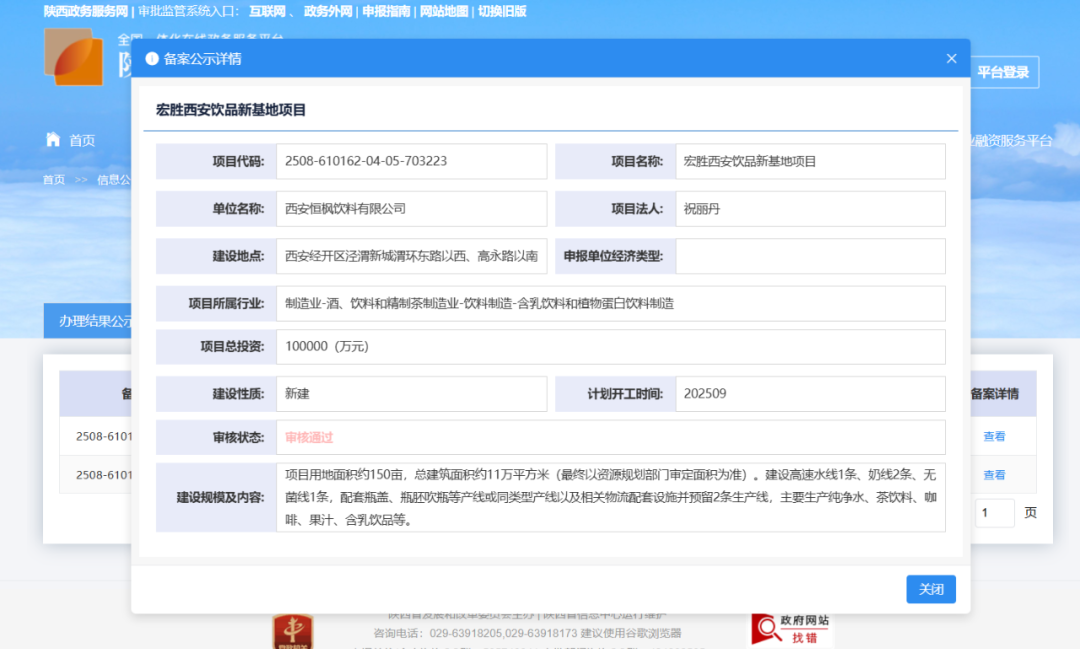
Group 1 - Xi'an Hengfeng Beverage Co., Ltd. has received approval for the Hongsheng Xi'an beverage new base project, which will include multiple core production lines and logistics facilities [1][2] - The project is part of Wahaha's 1 billion yuan investment plan in the beverage sector, aiming to produce a variety of drinks including purified water, tea, coffee, juice, and dairy beverages [1][2] - The new base is strategically located in Xi'an Economic Development Zone, which has a robust beverage industry ecosystem with major players like Pepsi, Coca-Cola, and Danone, contributing to nearly 10 billion yuan in output value [1][8] Group 2 - Wahaha, one of China's largest food and beverage producers, has over 80 production bases nationwide and aims for total revenue exceeding 70 billion yuan in 2024 [2][4] - The establishment of the Xi'an base marks Wahaha's first foray into Shaanxi province, following its initial investment in the region over 20 years ago [2][4] - The new factory will feature advanced production lines and is seen as a shift towards modernized and efficient production methods, reflecting a strategic move under the leadership of Zong Fuli [4][6] Group 3 - The Xi'an project is part of a broader trend of local governments enhancing their investment ecosystems, focusing on long-term ecological benefits rather than short-term incentives [13][19] - The region's industrial foundation and the presence of over 200 Fortune 500 companies make it an attractive location for investment, with a focus on building a mature industrial ecosystem [7][12] - The local government has implemented a full-cycle service plan for industrial projects, aiming to streamline processes from site selection to construction [16][19]