
创新药

Search documents
科技股,走低
Zhong Guo Ji Jin Bao· 2025-10-31 11:29
Market Overview - Major technology stocks in Hong Kong have generally declined, with the Hang Seng Technology Index dropping over 8% in October [2][4] - The Hang Seng Index fell by more than 3%, while the Hang Seng China Enterprises Index decreased by over 4% [2] - The financial sector also experienced widespread declines, with major Chinese financial stocks dropping significantly [8] Technology Sector - Notable declines were observed in major tech stocks: Hua Hong Semiconductor down 7.43%, SMIC down 5.30%, Alibaba down 4.07%, Tencent down 3.38%, and Kuaishou down 3.08% [4][5] - The trading volume for Alibaba and Tencent exceeded 10 billion HKD [4] Pharmaceutical Sector - The pharmaceutical and biotechnology sector saw gains, with companies like 3SBio up 11.27%, Fosun Pharma up 6.72%, and Rongchang Biopharma up 6.51% [6][7] - The recent initiation of the 2025 National Medical Insurance negotiations and the introduction of a "commercial insurance innovative drug catalog" mechanism have contributed to the positive sentiment in this sector [6] Financial Sector - The financial sector faced significant declines, with major brokerage firms like Everbright Securities, Huatai Securities, and Dongfang Securities all dropping over 5% [8][9] - Insurance stocks also fell, with China Life Insurance and China Ping An experiencing declines of 0.81% and 1.66%, respectively [10][11] Coal and Oil Sectors - The coal sector has shown a strong performance, with prices exceeding 770 RMB/ton, indicating a significant upward trend since mid-September [12] - The oil sector also reported an increase, with the oil stock index rising by 7.98% this month [14]

科技股,走低
中国基金报· 2025-10-31 11:15
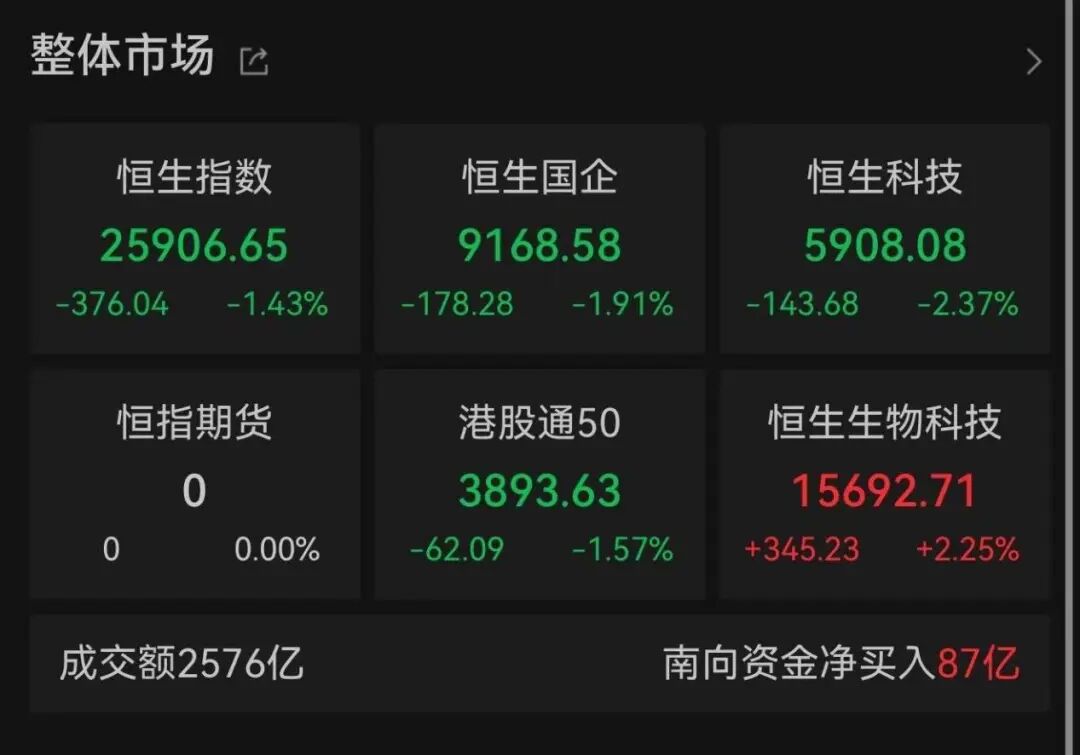
Market Overview - The Hong Kong stock market indices have generally declined in October, with the Hang Seng Technology Index experiencing the highest adjustment of over 8% [6] - As of October 31, the Hang Seng Index closed down 1.43% at 25,906.85 points, the Hang Seng Technology Index down 2.37%, and the Hang Seng China Enterprises Index down 1.91% [5][7] - The financial sector has also seen a widespread decline, with major financial stocks dropping significantly [14] Technology Sector - Major technology stocks have broadly declined, with notable drops including Hua Hong Semiconductor down 7.43%, SMIC down 5.30%, Alibaba down 4.07%, Tencent down 3.38%, and Kuaishou down 3.08% [9][10] - The trading volume for Alibaba and Tencent exceeded 10 billion HKD [9] Pharmaceutical Sector - The pharmaceutical and biotechnology sector has seen a rise, with companies like 3SBio, Fosun Pharma, and Rongchang Biopharma increasing by 11.27%, 6.72%, and 6.51% respectively [12] - The recent introduction of a "commercial insurance innovative drug catalog" mechanism in the national medical insurance negotiations has contributed to the positive sentiment in the sector [12] Financial Sector - The financial sector has faced significant declines, with major brokerage stocks such as Everbright Securities, Huatai Securities, and Dongfang Securities all dropping over 5% [15] - Insurance stocks like China Life, China Pacific Insurance, and China Property & Casualty have also seen declines of 5.80%, 5.23%, and 3.16% respectively [17] - Bank stocks such as China Everbright Bank and Postal Savings Bank have decreased by 5.34% and 4.36% respectively [18] Coal and Oil Sector - The coal index has risen over 10% this month, with coal prices exceeding 770 RMB per ton, driven by favorable supply-demand dynamics [19] - The oil sector index has also increased by 7.98% this month [23]

吴清发声!今天A股,新信号!
Sou Hu Cai Jing· 2025-10-31 11:05
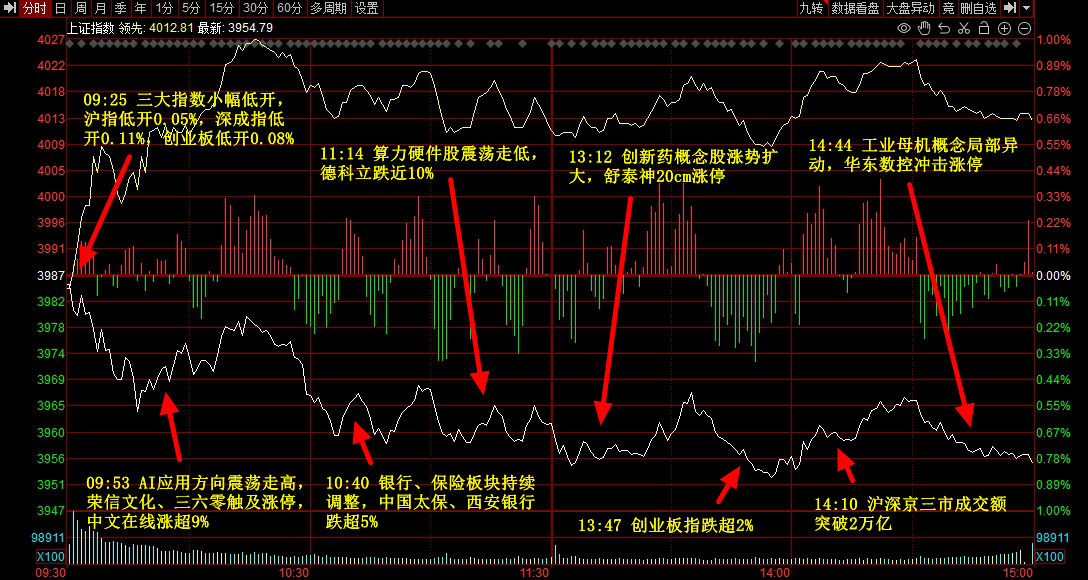
Market Overview - The A-share market closed with all three major indices declining, with the Shanghai Composite Index down 0.81% to 3954.79 points, the Shenzhen Component down 1.14% to 13378.21 points, and the ChiNext Index down 2.31% to 3187.53 points [1] - The total trading volume in the Shanghai and Shenzhen markets was 23,498 billion yuan, a decrease of 1,145 billion yuan from the previous day [1] - The Shanghai Composite Index recorded a monthly increase of 1.85%, briefly surpassing 4,000 points, while the ChiNext Index fell by 1.56% for the month [1] Innovation Drug Sector - The innovative drug sector led the market gains, with companies like Sanofi and Shuyou Pharmaceutical seeing significant increases [4] - The introduction of a "commercial insurance innovative drug directory" mechanism in the 2025 national medical insurance negotiations is expected to benefit innovative drugs that are not yet included in the basic medical insurance directory [4] - A total of 535 drug names passed the formal review for the basic drug directory, while 121 drug names were approved for the commercial insurance innovative drug directory [4] Cultural Media Sector - The cultural media sector showed strong performance, with companies like Fushi Holdings and Rongxin Culture reaching their daily limit [7] - The overseas box office for Chinese films has exceeded 1 billion yuan this year, with a significant number of films achieving international releases [8] - Analysts predict that the film industry will continue to grow, driven by a recovery in content supply and advancements in AI technology [8][9] AI Animation Content - The "AI manga drama" concept is gaining traction, with predictions that the market size could exceed several hundred billion yuan by 2025 [9] - The integration of AI technology with content production is expected to create new opportunities across the industry chain [9] Investment Strategy - Investors are advised to adjust their portfolios during market fluctuations, with high-position investors encouraged to reduce volatility and low-position investors to gradually increase their holdings [10]

港股创新药ETF(159567)涨5.46%,成交额33.27亿元
Xin Lang Cai Jing· 2025-10-31 11:05
Core Viewpoint - The Hong Kong Innovative Drug ETF (159567) has shown significant growth in both share volume and fund size since its inception, indicating strong investor interest and market performance [1][2]. Group 1: Fund Performance - As of October 31, 2024, the Hong Kong Innovative Drug ETF (159567) closed with a gain of 5.46% and a trading volume of 3.327 billion yuan [1]. - The fund's share volume increased by 1968.65% from 3.95 million shares at the end of 2023 to 81.79 million shares by October 30, 2024 [1]. - The fund's size grew by 1650.00%, from 378 million yuan to 6.612 billion yuan during the same period [1]. Group 2: Liquidity - Over the last 20 trading days, the cumulative trading amount for the fund reached 23.202 billion yuan, with an average daily trading amount of 1.16 billion yuan [1]. - Year-to-date, the cumulative trading amount for the fund is 234.346 billion yuan, averaging 1.172 billion yuan per day over 200 trading days [1]. Group 3: Fund Management - The current fund manager, Ma Jun, has managed the Hong Kong Innovative Drug ETF (159567) since its inception, achieving a return of 64.72% during the management period [2]. - The fund's top holdings include companies such as BeiGene, CanSino Biologics, Innovent Biologics, and others, with significant percentages of the portfolio allocated to these stocks [2].


A股五张图:这是什么鬼的神仙持仓体验?
Xuan Gu Bao· 2025-10-31 10:30
Market Overview - The market experienced a collective decline, with the Shanghai Composite Index, Shenzhen Component Index, and ChiNext Index falling by 0.81%, 1.14%, and 2.31% respectively, despite over 3,700 stocks rising and more than 1,500 stocks declining [3] - The innovation drug sector saw significant rebounds, with multiple companies such as Lianhuan Pharmaceutical and Sanofi China hitting the daily limit [3] - The media sector also showed strength, with stocks like Rongxin Culture and Shandong Publishing reaching their daily limits [3] - The AI, Hainan Free Trade Port, and super fusion concepts exhibited strong performance, while technology stocks collectively declined [3] Monthly Performance - For October, the Shanghai Composite Index and North China 50 saw monthly gains of 1.85% and 3.54%, while the Shenzhen Component Index, ChiNext Index, and Sci-Tech Innovation 50 recorded declines of 1.1%, 1.56%, and 5.33% respectively [4] Regulatory Actions - The China Securities Regulatory Commission (CSRC) has initiated investigations into certain industry institutions for spreading false information, emphasizing a "zero tolerance" policy towards such activities [6] Stock Performance - Zhendong Medical has shown remarkable performance, with a cumulative increase of 290% over two months, reaching a closing price higher than its peak during the pandemic [12] - In contrast, technology stocks faced significant declines, particularly in sectors like CPO and PCB, with companies such as Dekoli and Dingtaik Technology experiencing heavy losses [14][13] Fentanyl Concept Stocks - Fentanyl-related stocks showed slight fluctuations, with companies like Wanfu Biology and Dongfang Biology experiencing significant intraday gains, ultimately closing up over 2% [18][19] - The overall performance of the fentanyl concept stocks is linked to the strength of the pharmaceutical sector on that day [19] Textile Industry Insights - The textile industry is expected to benefit from a reduction in tariffs, potentially lowering costs by 10% and enhancing international competitiveness [21] - The overall textile sector showed slight gains, with stocks like Jialin Jie hitting the daily limit, while Meibang Clothing faced a significant drop after reporting substantial losses [22]


龙虎榜复盘 | 市场迎小幅切换,机构包场创新药
Xuan Gu Bao· 2025-10-31 10:15
Group 1 - The core viewpoint of the articles highlights the significant net buying and selling activities of institutional investors in the stock market, with 37 stocks listed on the institutional leaderboard, 20 of which saw net buying and 17 net selling [1][2] - The top three stocks with the highest net buying by institutions are Zejing Pharmaceutical (¥207 million), Shutaishen (¥198 million), and Yongxing Materials (¥125 million) [1] - Shutaishen has attracted net buying of ¥198 million from five institutions, indicating strong interest in the stock [2] Group 2 - The report from Founder Securities on October 31 indicates that the industry is entering a new upward cycle, with overseas orders accelerating and the industry in its early growth phase, suggesting strong upward momentum [2] - The CXO sector, particularly the early research industry chain, is identified as having significant growth potential, with innovative drugs poised for historic opportunities in overseas markets [2] - A report by QuestMobile reveals that the number of active mobile users in China's AI application sector has surpassed 700 million, indicating robust growth in this industry [2]
创新药逆势大涨,调整结束了?新财富最佳分析师与广发基金经理联袂解读
新财富· 2025-10-31 09:49
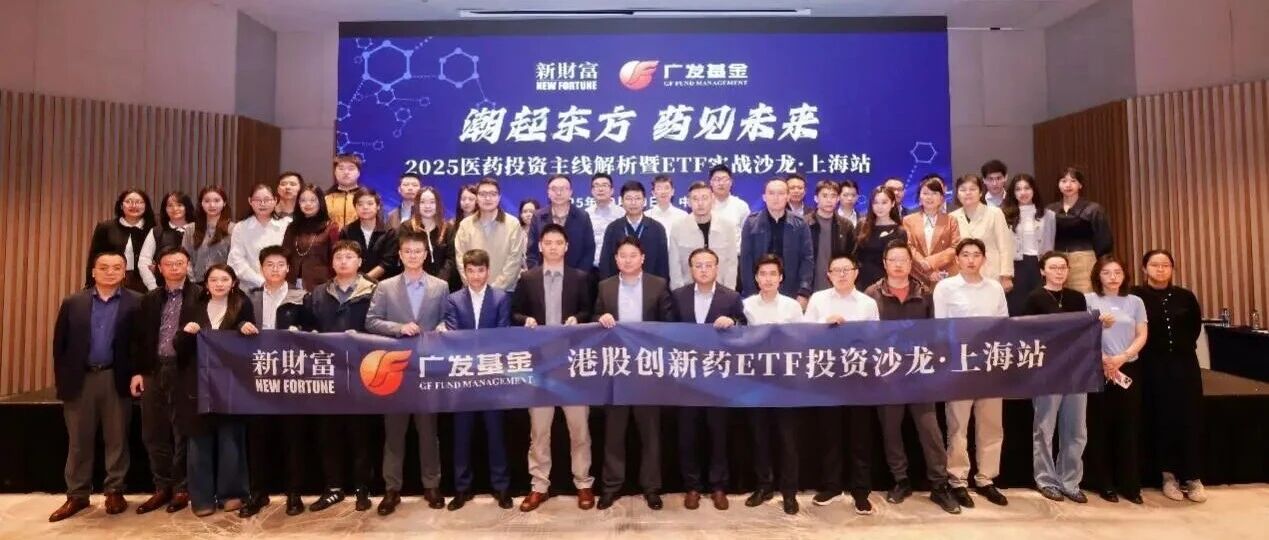
Core Insights - The article discusses the current state of the innovative drug sector, highlighting the shift in market sentiment from optimism to caution, raising questions about whether this is a risk accumulation or an opportunity for investment [1] Group 1: Industry Overview - The innovative drug industry in China has evolved significantly over the past decade, transitioning from a position of lagging behind global standards to achieving leadership in certain areas [5] - The industry has undergone a complete cycle influenced by policy guidance, procurement pressures, and regulatory adjustments since the milestone event of "722 clinical data verification" in 2015, now being recognized as a "strategic emerging industry" [5] - The internationalization capability, exemplified by "License-out" strategies, has become a key factor in determining the value of companies within the sector [5] Group 2: Investment Strategies - Current adjustments in the innovative drug sector have made the "odds" of investment more attractive, although a repeat of the previous quarter's rapid growth may be challenging [6] - Investors are encouraged to utilize increasingly diverse ETF and index tools to mitigate risks and capture overall industry growth opportunities [5][9] - The Hong Kong stock market is highlighted as a favorable platform for investing in innovative drugs due to its unique advantages, including access to quality targets and international funding recognition [9] Group 3: Market Potential - The Chinese innovative drug market is projected to grow into a trillion-dollar sector, driven by increasing clinical demand, improved payment capabilities, and supportive policies [9] - Historical performance indicates that the Hong Kong innovative drug sector exhibits unique volatility characteristics, responding significantly during market rebounds and major academic conferences [10] Group 4: Advisory Services - The role of investment advisors is emphasized as crucial in transforming deep insights from analysts and fund managers into actual returns for clients, focusing on selecting the right sectors, timing, and investment tools [13] - A systematic approach combining sector selection, timing, and fund manager choice can significantly enhance annual excess returns for clients [13]

20%涨停!创新药,大爆发!
Zheng Quan Shi Bao· 2025-10-31 09:29
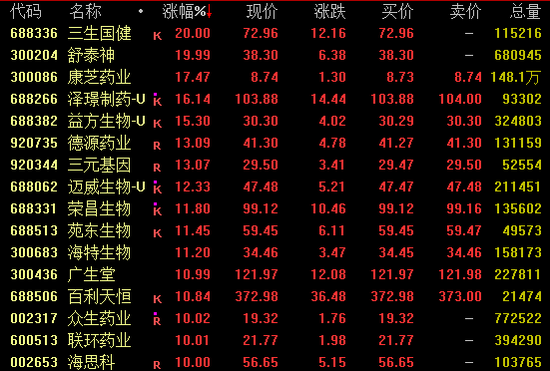
Market Overview - A-shares experienced a decline on October 31, with the ChiNext Index dropping over 2% and the Hang Seng Index falling more than 1% [1] - The Shanghai Composite Index closed down 0.81% at 3954.79 points, while the Shenzhen Component Index fell 1.14% to 13378.21 points [1] - The total trading volume in the Shanghai, Shenzhen, and Beijing markets was 23.501 billion yuan, a decrease of 1.145 billion yuan from the previous day [1] Innovation Drug Sector - The innovation drug concept surged in the afternoon, with companies like Sanofi and Shuyou Pharmaceutical hitting the 20% limit up [2][4] - Other notable performers included Zai Lab and Yifang Bio, which rose over 15% [2] - Institutions noted that some innovative products have achieved a positive cycle of R&D investment returns, with sales reaching new highs [4] AI Application Sector - The AI application concept was active, with stocks like Fushi Holdings and Foxit Software hitting the 20% limit up [6] - The industry is experiencing rapid growth, with the AI-driven animation market projected to exceed 20 billion yuan in scale [6][8] - The growth is attributed to AI's ability to reduce costs and improve efficiency, alongside support from video platforms [6][8] Specific Company Highlights - Time Space Technology achieved an 8-day consecutive limit up, reaching a historical high, despite warnings of potential market overheating [9] - The company is in the process of acquiring 100% of Jiahe Jingwei, which may introduce integration risks due to its different industry focus [9]


20%涨停!创新药,大爆发!
证券时报· 2025-10-31 09:24
Market Overview - A-shares experienced a decline on October 31, with the ChiNext Index dropping over 2% and the Hang Seng Index falling more than 1% [1][2] - The Shanghai Composite Index closed down 0.81% at 3954.79 points, while the Shenzhen Component fell 1.14% to 13378.21 points [2] - The total trading volume in the Shanghai, Shenzhen, and Beijing markets was 23.501 billion yuan, a decrease of 1.145 billion yuan from the previous day [2] Innovation Drug Sector - The innovation drug sector saw a significant surge, with companies like Sanofi and Shuyou Pharmaceutical hitting the 20% daily limit [5] - Other notable performers included Zai Lab and Yifang Bio, which rose over 15%, and several other stocks also reached their daily limit [5][6] - Analysts suggest that the domestic innovation payment system has allowed some innovative products to achieve a positive cycle of R&D investment returns, with sales reaching new highs [7] - Investment opportunities are identified in dual/multi-antibody drugs targeting unmet clinical needs and in areas like ADCs and small nucleic acids [7] AI Application Sector - The AI application sector was notably active, with stocks like Fushik Holdings and Foxit Software hitting the 20% limit [9] - The rapid growth of AI-driven content, particularly in the form of AI-manufactured dramas, is expected to expand significantly, with a projected market size exceeding 20 billion yuan [11] - The growth is attributed to AI's ability to reduce production costs and time, alongside support from video platforms [11] Company Highlights - Shikong Technology achieved an 8-day consecutive limit-up, reaching a historical high, despite warnings about potential market overheating and risks associated with its acquisition plans [12][13] - The company is in the process of acquiring 100% of Jiahe Jingwei, which involves significant uncertainties and risks related to integration and market conditions [13]


ETF甄选 | 三大指数震荡回调,创新药、影视、软件等相关ETF逆势走强
Xin Lang Cai Jing· 2025-10-31 09:18
Market Overview - The market experienced a decline on October 31, 2025, with all three major indices closing lower: Shanghai Composite Index down 0.81%, Shenzhen Component Index down 1.14%, and ChiNext Index down 2.31% [1] Sector Performance - Biopharmaceuticals, chemical pharmaceuticals, and cultural media sectors showed the highest gains, while insurance, small metals, and semiconductors faced the largest declines [1] ETF Performance - Innovation drugs, film and television, and software-related ETFs performed well, likely driven by relevant news [2] Biopharmaceutical Sector - The National Medical Insurance negotiation began on October 30, 2025, introducing a "commercial insurance innovative drug catalog" mechanism, which includes innovative drugs with high clinical value that are not yet part of the basic medical insurance catalog [2] - According to Industrial Securities, the ongoing business development (BD) in the innovative drug sector is expected to sustain the current industry prosperity, with a focus on "innovation + internationalization" [2] Cultural Industry - Cultural enterprises reported a net profit of 909.3 billion yuan in the first three quarters, a year-on-year increase of 14.2%, with an operating income profit margin of 8.30% [2] - The cultural industry is experiencing a transformation driven by AI-generated content (AIGC), which is expected to create new opportunities in the industry [3] Software Industry - The software and information technology service industry in China saw a revenue of 1,111.26 billion yuan in the first three quarters, reflecting a year-on-year growth of 13.0% [4] - Longjiang Securities highlighted the importance of achieving complete autonomy in key areas, particularly in the domestic operating system and chip industries, as a response to global technological competition [4]