
水泥

Search documents
2025年7月工业企业利润点评:“反内卷”对企业利润的初步影响
Minsheng Securities· 2025-08-27 06:52
Group 1: Overall Profit Trends - In the first seven months of 2025, profits of industrial enterprises totaled CNY 40,203.5 billion, a year-on-year decrease of 1.7%[1] - The "anti-involution" policy has begun to show its initial impact on enterprise profits, particularly affecting industrial added value and profit margins[1] - The support for profit growth from industrial production has weakened, with a shift from volume support to revenue profit margin improvement[1] Group 2: Industry-Specific Insights - Profit growth rates for upstream, midstream, and downstream industries in July were -12.7%, 8.2%, and -7.5% respectively, showing significant improvement in upstream and midstream sectors compared to June[2] - Upstream industries face weak terminal demand, limiting profit growth potential, while rising costs are squeezing downstream profits[2] - Private enterprises showed the most significant profit growth in July, with a year-on-year increase of 2.3%, compared to -6.9% for state-owned enterprises[3] Group 3: Inventory and Future Outlook - Enterprises are more inclined to reduce inventory rather than replenish it, indicating a preference for "de-stocking" in the current economic environment[3] - Risks include potential policy shortcomings, unexpected changes in the domestic economic situation, and fluctuations in exports[3]
A股异动丨四川双马跌约5% 股东拟合计减持不超2%公司股份
Ge Long Hui A P P· 2025-08-27 06:50
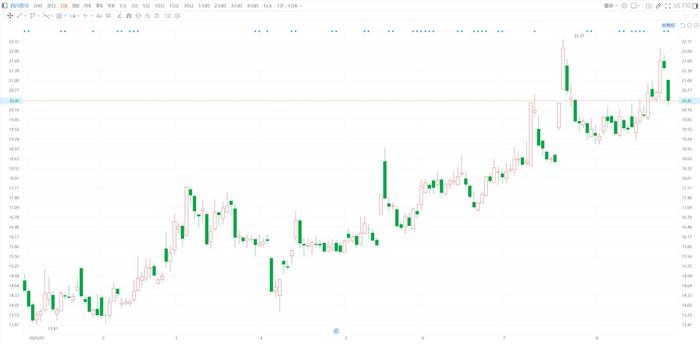
格隆汇8月27日|四川双马(000935.SZ)现跌4.93%报20.42元,暂成交4亿元,最新市值155.9亿元。四川 双马公告称,公司股东LCOHC和天津赛克环企业管理中心(有限合伙)分别计划在本公告披露之日起15 个交易日后的连续90个自然日内以集中竞价和大宗交易方式合计减持本公司股份不超过757.22万股,占 公司总股本的0.9919%,占剔除回购专用证券账户中的股份数量后总股本的1%。(格隆汇) ...


突破3800点!A股逻辑已经彻底改变
Sou Hu Cai Jing· 2025-08-27 02:05
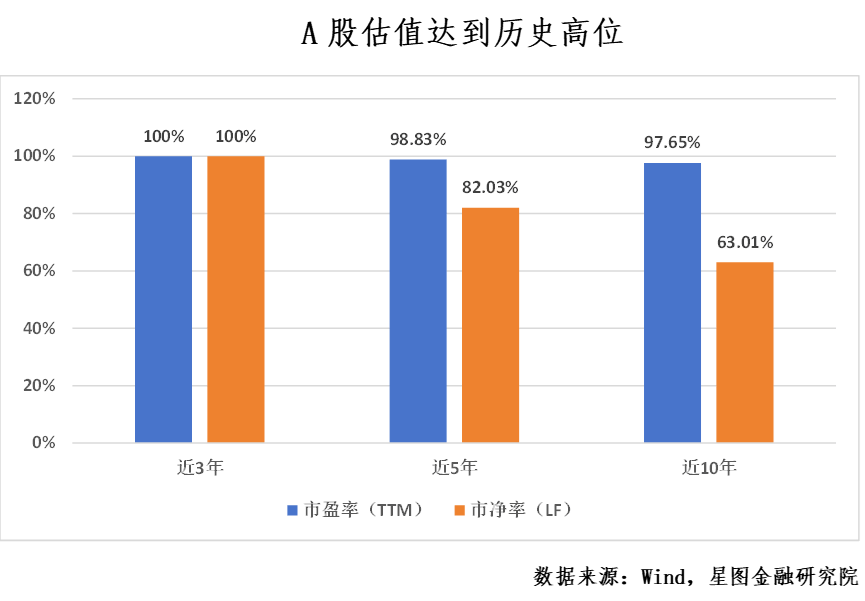
Market Overview - The A-share market has rapidly risen, reaching a 10-year high, with the index stabilizing above 3800 points and approaching 3900 and 4000 points, indicating strong market participation and a healthy "volume-price rise" pattern [1] - The current bull market is considered to be in the nurturing phase, driven by valuation recovery, with the potential for further upward movement being limited as the market approaches historical highs [1] Valuation Metrics - The current price-to-earnings (P/E) ratio of the Shanghai Composite Index is 16.57, which is at the 100% historical percentile for the past 3 years, and the price-to-book (P/B) ratio is 1.51, also at high historical percentiles [1] - The asymmetry in upward and downward momentum suggests a higher risk of correction as valuations continue to recover [1] Economic Drivers - The core of the long-term upward trend in the A-share market relies on substantial improvements in corporate profitability, which is currently under pressure due to weak macroeconomic demand and ongoing adjustments in the real estate sector [9] - Domestic economic stimulus policies and the recovery of overseas demand are crucial for driving demand-side improvements, while supply-side efforts must focus on optimizing industrial structures and eliminating excess capacity [9] Policy Impact - Recent macroeconomic policies have shown effectiveness, with GDP growth reaching 5.3% year-on-year, surpassing the annual target of 5% [11] - Policy measures include adjustments in real estate regulations and direct subsidies to households, aimed at transitioning the economy towards consumption and service-driven growth [11] Global Economic Context - The Federal Reserve's dovish stance and anticipated interest rate cuts in major economies are expected to support a recovery in manufacturing, which is sensitive to financing costs [12] - The potential for increased export demand from overseas markets could provide significant support for the profitability of A-share listed companies [12] Supply-Side Developments - The implementation of anti-involution policies is expected to improve profit margins for companies by reducing excessive competition and promoting healthier market dynamics [15] - Historical precedents suggest that supply-side reforms can lead to significant improvements in profitability for key industries [15] Profitability Trends - Recent data indicates signs of improving corporate profitability, with industrial profits showing a narrowing decline and expectations for positive growth in A-share earnings after four years of decline [16] - Non-financial listed companies are projected to see revenue and net profit growth of approximately 1.6% and 8.3%, respectively [16] Investment Strategy - The overall bullish outlook remains, but the market may experience a "three steps forward, one step back" pattern during the nurturing phase of the bull market [19] - Focus on high-growth sectors such as robotics, innovative pharmaceuticals, and artificial intelligence, while also considering cyclical sectors like food and beverage, power equipment, and non-ferrous metals for potential investment opportunities [19]
多维度助力企业绿色发展
Qi Lu Wan Bao· 2025-08-26 21:28
Group 1 - The core viewpoint of the articles emphasizes the efforts of the Qingdao Ecological Environment Bureau in optimizing the business environment and enhancing the management of pollutant discharge permits in the cement industry through targeted training and support [1][2][3] Group 2 - The Qingdao Ecological Environment Bureau organized specialized training for the cement industry focusing on the quality verification of discharge permits and reporting standards, utilizing a practical approach to address common operational challenges [1] - The bureau has implemented a "1+3+1" service model to provide personalized environmental assessment and discharge permit services, significantly improving project approval efficiency and reducing processing times by approximately 30 days for 155 enterprises [2] - The bureau's initiatives include the establishment of a "Doctor Service Station" for ongoing technical consultation and the "Xu Xiaoke" volunteer action to assist enterprises in resolving issues related to discharge permits, benefiting over 20 participants through specialized training [2] - Future plans involve continuing to focus on enterprise needs, enhancing guidance and support for discharge permit management, and promoting green and high-quality development within the region [3]
天山股份股价回调3.73% 盘中振幅超6%
Jin Rong Jie· 2025-08-26 20:35
Group 1 - The stock price of Tianshan Co., Ltd. closed at 6.97 yuan on August 26, down 0.27 yuan from the previous trading day, with an opening price of 7.30 yuan, a high of 7.38 yuan, and a low of 6.92 yuan, resulting in an intraday volatility of 6.35% [1] - Tianshan Co., Ltd. is a significant building materials enterprise in the Xinjiang region, primarily engaged in the production and sale of cement and ready-mixed concrete, with products widely used in infrastructure construction and real estate development [1] - On August 26, the stock experienced rapid fluctuations, with a rebound exceeding 2% within 5 minutes at 9:35 AM, followed by a decline of over 2% within 5 minutes at 9:38 AM, indicating active market trading [1] Group 2 - On August 26, the net outflow of main funds was 171 million yuan, accounting for 0.35% of the circulating market value, while the cumulative net inflow of main funds over the past five trading days was 261 million yuan, representing 0.53% of the circulating market value [1]

海螺水泥(600585.SH)发布上半年业绩,归母净利润43.68亿元,增长31.34%
智通财经网· 2025-08-26 16:46
智通财经APP讯,海螺水泥(600585.SH)发布2025年半年度报告,该公司营业收入为412.92亿元,同比减 少9.38%。归属于上市公司股东的净利润为43.68亿元,同比增长31.34%。归属于上市公司股东的扣除非 经常性损益的净利润为41.98亿元,同比增长31.81%。基本每股收益为0.83元。此外,拟向全体股东每 股派发现金红利0.24元人民币(含税)。 ...
上峰水泥“建材+新经济”双轮驱动展现协同效应
Zheng Quan Ri Bao· 2025-08-26 16:44
Core Viewpoint - Gansu Shangfeng Cement Co., Ltd. reported a slight decline in revenue but significant growth in net profit for the first half of 2023, indicating effective cost control and operational efficiency in a challenging market environment [1][2]. Financial Performance - The company achieved operating revenue of 2.272 billion yuan, a year-on-year decrease of 5.02% [1]. - Net profit attributable to shareholders was 247 million yuan, reflecting a year-on-year increase of 44.53% [1]. - The net profit excluding non-recurring gains and losses was 282 million yuan, up 33.47% year-on-year [1]. - The net cash flow from operating activities reached 476 million yuan, an increase of 23.99% year-on-year [1]. - The comprehensive gross profit margin was 31.80%, up 6.38 percentage points year-on-year, maintaining a competitive position in the industry [1]. Cost Control and Operational Efficiency - The company focused on "increasing revenue, reducing costs, controlling expenses, and enhancing efficiency," leading to improved cost competitiveness [1]. - Manageable expenses decreased by 8.87 million yuan year-on-year [1]. Business Expansion and New Ventures - Shangfeng Cement has gradually expanded into related industries such as sand and gravel aggregates, environmental disposal, smart logistics, and photovoltaic energy storage while focusing on its core cement business [1][2]. - In the first half of the year, the company sold 5.1906 million tons of sand and gravel aggregates, a year-on-year increase of 37.46% [2]. - The company processed 7.85 million tons of hazardous and solid waste, generating revenue of 51.0192 million yuan [2]. - In the renewable energy sector, photovoltaic power generation reached 14.1637 million kWh, a 92.1% increase year-on-year, while energy storage discharge was 1.2757 million kWh, up 182% [2]. Strategic Outlook - The dual-driven model of "building materials + new economy" is showing collaborative effects and growth potential [3]. - The company is cautiously investing in emerging fields such as new materials and semiconductors, with several projects in the listing application and guidance stages [3]. - The cement industry is currently in a critical phase driven by policy and market forces, with measures in place to control new capacity and optimize existing capacity [3]. - Seasonal demand is expected to weaken in the third quarter but may balance out as the traditional peak season approaches in September and the fourth quarter [3].

上峰水泥20250826
2025-08-26 15:02
Summary of Shangfeng Cement Conference Call Company Overview - **Company**: Shangfeng Cement - **Date**: August 26, 2025 Key Points Financial Performance - Revenue decreased by 5% in the first half of 2025, while net profit increased by 44% and non-recurring net profit grew by over 30% due to asset optimization and cost control [2][4] - Management, financial, and sales expenses as a percentage of revenue decreased, indicating effective cost management [4] Regional Performance - Significant contributions from the western regions, particularly Xinjiang and Ningxia, with a gross margin in the northwest reaching 43.6%, significantly higher than East China (31.65%) and Southwest (14.51%) [2][5] - Xinjiang achieved high profits through staggered production and price maintenance [5] Business Segments - Steady growth in environmental protection, aggregate, and new energy sectors, with aggregate and new energy segments growing over 30% [2][6] - Aggregate sales increased by 30%, with a gross margin improvement of 2 percentage points, primarily driven by growth in the Ningxia region and product structure adjustments [12] Strategic Initiatives - Implementation of a dual-driven strategy focusing on new economic investments, particularly in semiconductor materials, with multiple projects underway and several companies preparing for IPOs [2][7] - The company aims to enhance resource utilization efficiency and extend its business into downstream industries, leveraging its abundant limestone reserves [15] Cost Management - Clinker costs decreased by 25 CNY/ton and cement costs by 10.67 CNY/ton, mainly due to falling coal prices and the use of alternative raw materials, resulting in an overall cost reduction of approximately 13% [2][10][11] - The company has achieved a comprehensive energy consumption reduction to below 100 standard coal [33] Industry Outlook - The cement industry is facing challenges from anti-overproduction policies, with the Ministry of Industry and Information Technology expected to release a growth stabilization plan [2][34] - Anticipation of a gradual elimination of about 25% of production capacity over the next two years due to policy enforcement [34][35] Investment and Capital Expenditure - The company has sufficient liquidity and is reallocating funds to ensure investment project financing while actively pursuing cost reduction and efficiency improvements [3][32] - Capital expenditures are being controlled, focusing on essential projects while maintaining a cautious approach to new investments in emerging sectors [31][16] Market Conditions - The Guizhou market is experiencing severe overcapacity, with measures taken by some companies to stabilize the market [9] - The company is addressing low gross margins in Guizhou through production optimization and market promotion strategies [8] Future Expectations - The company remains optimistic about future demand and supply adjustments, despite potential challenges from external policies and market fluctuations [18][34] - The focus will be on maintaining profitability and adapting to changing market conditions while pursuing strategic growth opportunities [19][20] Dividend Policy - The company has set a minimum dividend payout ratio of 35%, with adjustments based on overall performance [27] External Factors - Rising coal prices in July and August have impacted costs, but recent price corrections have improved the overall supply situation [28][29] This summary encapsulates the key insights from the Shangfeng Cement conference call, highlighting the company's financial performance, strategic initiatives, regional contributions, and outlook for the cement industry.
底仓再审视(二):如何做到攻守兼备配底仓
Guoxin Securities· 2025-08-26 14:48
1. Report Industry Investment Rating No information about the industry investment rating is provided in the report. 2. Core Views - Layout of the bottom - position is as important as flexible offense. A basket of "high - dividend × low - volatility" dividend assets can provide a natural "shock absorber" for the portfolio, and the combination can withstand extreme market conditions by suppressing volatility with stable cash flows and low β and then capturing market mismatches with the remaining positions [3]. - To amplify returns in the dividend pool, a dual - screening approach is more reliable than relying solely on the "high - dividend" indicator. Adding a second filter such as low - volatility, earnings quality, or institutional holdings can eliminate potential risks and further increase the returns of general dividend assets [3]. - On top of the dividend bottom - position, there are systematic excess opportunities from the left - to - right shift of the industrial cycle. Priority should be given to companies with stable cash flows despite pressured profits. Industries such as cement, silicone, and phosphate chemicals are currently in the preferred range, while the photovoltaic chain is still in a state of "double losses in profit and cash flow". The overall allocation strategy involves initially establishing an observation position, increasing the position after confirming the leading indicators of the profit inflection point, and exiting when profits weaken again or the gross margin is inverted [3]. 3. Summary by Relevant Catalogs 3.1 Bottom - Position Allocation Necessity: "Pure Left" and "Pure Right" Are Not Desirable - In a market with an increasing industry rotation center, it is crucial to build a long - term core position first. A 15 - year quarterly rotation experiment on 31 Shenwan primary industries shows that both extreme left - side bottom - fishing and extreme right - side chasing result in single - digit annualized returns and significant drawdowns. In contrast, a dividend portfolio characterized by "high - dividend × low - volatility" can provide double - digit annualized returns and keep drawdowns within an acceptable range. Therefore, increasing the exposure of "high - dividend + low - β" in the bottom - position can provide a safety cushion for the portfolio [7]. - Dividend assets are the optimal core bottom - position in terms of return - to - drawdown. Historical stress tests show that the dividend index has shallower drawdowns, a stable 3 - year rolling Sharpe ratio, and does not require market timing in the long - term perspective. It also has higher probabilities of achieving positive returns in different holding periods compared to most broad - based and style indices [10][12][21]. 3.2 Dividend Yield Single - Factor Trap - Selecting stocks based solely on the "high - dividend" factor often leads to choosing high - volatility stocks with limited return increases and large drawdowns. Adding a second filter such as low - volatility or earnings quality can improve the overall cost - effectiveness. Statistical regression shows that the dividend yield alone has a weak explanatory power for future returns [29]. - Several case studies illustrate different types of "false high - dividend" traps. For example, some companies rely on one - time gains to support high dividends, some have high dividends due to falling stock prices rather than improved profitability, and some have high dividends at the peak of the business cycle or due to high leverage. To avoid these traps, specific financial and operational criteria need to be set [37][40][44]. 3.3 High - Dividend Smart - Beta's Distortion Risk - Modified dividend indices such as "Dividend Quality" and "Dividend Potential" have larger fluctuations and deeper drawdowns than the CSI Dividend Index. Their style drift and uncontrolled risk exposure lead to higher volatility, especially in bear markets. The main reasons are their high - concentration weighting, high - valuation requirements, and frequent chasing of market highs [60][64]. - The CSI Dividend Index selects 100 stocks based on a three - year dividend yield with a diversified weighting, while the Dividend Quality and Dividend Potential indices select 50 stocks by adding factors such as ROE and EPS growth, with a more concentrated and high - chasing weighting. As a result, they are more likely to suffer from double - kills of earnings and valuation when the market weakens [64]. 3.4 Potential Ways to Enhance Dividend Low - Volatility - **Dividend + Pricing Power Approach**: Traditional high - dividend indices have several drawbacks, including style drift, inclusion of high - risk high - dividend stocks, and right - side trading characteristics. A comprehensive scoring system based on pricing power, price - to - earnings ratio, and stability can be used to select the top 20 stocks for a portfolio. A ten - year back - test shows that this combination has better performance in terms of cumulative return, annualized return, and drawdown control compared to the CSI Dividend Index [83][84]. - **Considering Institutional Participation Rate**: Incorporating institutional holdings into high - dividend screening reveals that stocks with high institutional participation (≥20%) from stable - cash - flow industries have better risk - return profiles, including higher cumulative returns, greater upside potential, and controlled drawdowns. In contrast, stocks with low institutional participation (<20%) from cyclical industries perform less well. Therefore, combining high - dividends with institutional recognition can build a safer and more sustainable dividend portfolio [89]. 3.5 Bottom - Position Is Not Just Dividends: Quality Low - Volatility and Cash Cows - The "quality + low - volatility" dual - screened bottom - position established in June 2020 can achieve a balance between offense and defense. By filtering out high - leverage and low - resilience companies and compressing risk thresholds, it has achieved a five - year rolling net value increase of about 1.6 times, with stable single - digit annualized returns and significantly reduced volatility and drawdowns compared to ordinary low - volatility strategies [94]. - The long - term returns of dividend assets mainly come from stable dividends and profits rather than valuation increases. From 2014 - 2025, the annualized total returns of Dividend Low - Volatility and CSI Dividend after reinvestment were 13.9% and 13.2% respectively, with dividend contributions exceeding 9 percentage points and accounting for over 70% of the total returns [98]. - The cash - cow enhancement framework uses six dimensions to examine potential risks in high - dividend portfolios and provides corresponding enhancement measures. These measures include equal - weighting industries and quality sorting to address concentration risks, using free - cash - flow and growth thresholds to eliminate "high - dividend traps", and implementing valuation gates and hedging strategies to manage valuation risks [108]. 3.6 Industrial Cycle Reversal: From Left to Right - At the inflection point of the industrial cycle, multi - dimensional indicators such as fundamentals, inventory, price, valuation, and funds often show concurrent inflection points. The consistency in the industry dimension, from raw material prices to mid - stream production and downstream demand, can improve the reliability of inflection - point signals. For example, the anti - involution market rhythm is often in line with this "consistency chain" [111][112]. - At the company level, by dividing samples into leading, mid - stream, and tail companies, monitoring the second - order derivatives of 10 key indicators can help identify the acceleration of marginal improvements in demand, pricing, or cash flows. When at least three indicators in any two of the three sample layers show positive second - order derivatives, it can be regarded as a company - level consistency inflection point [114]. - The industrial cycle reversal framework uses a "three - light" approach to determine investment opportunities. When the three conditions of valuation repair, profit - cash flow resonance improvement, and completion of inventory reduction and demand expansion are met simultaneously, it indicates a three - dimensional resonance of supply - demand, profit, and sentiment, and investors can make aggressive investments. Otherwise, they should continue to hold the dividend bottom - position [115].
万年青(000789.SZ)发布上半年业绩,归母净利润4077.08万元,同比增长2601.49%
智通财经网· 2025-08-26 14:17
智通财经APP讯,万年青(000789.SZ)发布2025年半年度报告,报告期内,公司实现营业收入22.11亿 元,同比下降14.56%。实现归属于上市公司股东的净利润4077.08万元,同比增长2601.49%。实现归属 于上市公司股东的扣除非经常性损益的净利润76.91万元。基本每股收益0.0525元。 ...
