
批发零售

Search documents
甘肃嘉懿兴商贸有限公司成立 注册资本100万人民币
Sou Hu Cai Jing· 2025-08-27 10:19
Group 1 - A new company, Gansu Jiayi Xing Trading Co., Ltd., has been established with a registered capital of 1 million RMB [1] - The legal representative of the company is Peng Bin Jia [1] - The company's business scope includes various activities such as road cargo transportation, fertilizer production, internet sales, and sales of daily necessities [1] Group 2 - The company is authorized to engage in the production of fertilizers, subject to approval from relevant authorities [1] - It also covers a wide range of sales activities including hardware, building materials, and chemical products [1] - The company is involved in the research and development of bio-organic fertilizers, excluding licensed businesses [1]
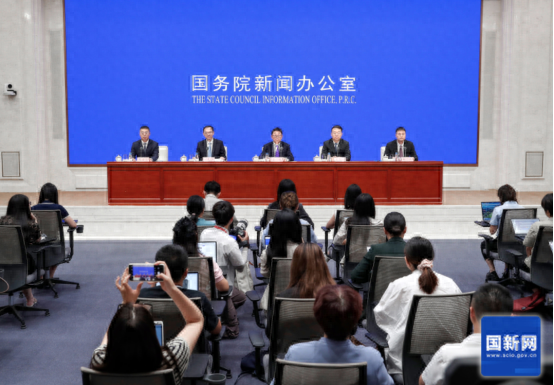
商务部:中国对外投资平稳健康发展,展现强大韧性和活力
Huan Qiu Wang· 2025-08-27 05:16
Group 1 - China is both a major destination for foreign investment and a leading country for outbound investment globally [1][3] - In 2024, China's outbound investment is projected to reach $162.78 billion, marking a year-on-year growth of 10.1%, maintaining a top position worldwide [3] - Since 2012, China's outbound investment flow has ranked among the top three globally for 13 consecutive years, with over 50,000 enterprises established overseas by the end of 2024 [3] Group 2 - China's outbound investment stock exceeds $3 trillion, accounting for 7.2% of global outbound investment, with a continuous increase in international competitiveness of Chinese enterprises [3] - The investment landscape is diversifying across 18 sectors, with nearly 80% of investments concentrated in manufacturing, finance, information technology, wholesale and retail, and leasing and business services [3] - Emerging sectors such as green low-carbon, digital economy, green minerals, and blue economy are also seeing steady investment growth [3] Group 3 - In 2024, direct investment in Belt and Road Initiative countries is expected to reach $50.99 billion, a 22.9% increase, representing 26.5% of China's total outbound investment [3] - By the end of 2024, the investment stock in Belt and Road countries will amount to $370 billion, making up 11.8% of the total outbound investment stock [3] - The Belt and Road Initiative has significantly promoted the rapid development of China's outbound investment, showcasing China's commitment to open cooperation [3]

哈森股份:8月26日召开董事会会议
Mei Ri Jing Ji Xin Wen· 2025-08-26 22:07
Group 1 - The core viewpoint of the article highlights the announcement made by Hason Co., Ltd. regarding its board meeting and the review of its 2025 semi-annual report [1] - Hason Co., Ltd. reported that for the year 2024, its revenue composition is as follows: wholesale and retail industry accounts for 93.46%, metal structure manufacturing for 3.8%, other businesses for 1.55%, and specialized equipment manufacturing for 1.19% [1]

张家口恒盟商贸有限公司成立 注册资本50万人民币
Sou Hu Cai Jing· 2025-08-26 21:16
Core Insights - Zhangjiakou Hengmeng Trading Co., Ltd. has been established with a registered capital of 500,000 RMB [1] - The company is engaged in a wide range of business activities including retail and wholesale of stationery, office supplies, and daily necessities [1] - The legal representative of the company is Zhang Zhiheng [1] Business Scope - The company operates in various sectors such as retail and wholesale of stationery and office supplies [1] - It also provides services related to computer and office equipment maintenance, network technology services, and advertising [1] - Additional activities include cultural and artistic exchange organization, technical services, and information consulting [1]
第二十五届投洽会来了,将首次发布中国对外投资活跃度指数
2 1 Shi Ji Jing Ji Bao Dao· 2025-08-26 10:45
Group 1 - The current investment fair has seen a significant increase in activities related to foreign investment compared to previous years, with a special session dedicated to foreign investment for the first time [1] - The 25th China International Investment Trade Fair will be held from September 8 to 11 in Xiamen, Fujian Province, focusing on three main areas: "Investing in China," "Chinese Investment," and "International Investment" [1] - China is now both a major destination for foreign investment and a leading global investor, with foreign investment reaching $162.78 billion in 2024, marking a 10.1% increase from the previous year [1] Group 2 - Since 2012, China's foreign investment outflow has ranked among the top three globally for 13 consecutive years, with over 50,000 enterprises established abroad by the end of 2024 [2] - China's foreign investment spans 18 sectors, with manufacturing, finance, information technology, wholesale and retail, and leasing and business services accounting for nearly 80% of the total [2] - Direct investment in Belt and Road Initiative countries reached $50.99 billion in 2024, a 22.9% increase from the previous year, representing 26.5% of China's total foreign investment [2] Group 3 - Between 2021 and 2024, China's foreign investment has facilitated nearly $1.2 trillion in goods trade, contributing significantly to employment and tax revenue in host countries, thereby achieving mutual benefits [3]
详解千亿级增值税留抵退税 政策大调整
Sou Hu Cai Jing· 2025-08-25 17:20
Core Viewpoint - China has made a significant policy adjustment regarding the value-added tax (VAT) refund system, becoming more cautious about refunds to improve policy guidance and efficiency [1][2]. Group 1: Policy Adjustments - The Ministry of Finance and the State Taxation Administration announced new VAT refund policies effective from September, focusing on specific industries [1][2]. - The adjustment aims to enhance the precision of tax policies and reduce the burden on tax administration [1][2]. Group 2: Industry-Specific Changes - The manufacturing, scientific research and technology services, software and information technology services, and ecological protection and environmental governance sectors will continue to enjoy monthly VAT refunds [3]. - Other sectors previously eligible for full refunds, such as wholesale and retail, agriculture, accommodation, and education, will now face new restrictions and reduced refund rates [3][4]. Group 3: Real Estate Sector - The real estate development sector will maintain its previous VAT refund policy, allowing eligible taxpayers to apply for a 60% refund on newly added VAT credits after meeting specific conditions [4][5]. - This policy aims to stabilize the real estate market and alleviate financial pressure on developers [5]. Group 4: General Industry Adjustments - For industries outside the specified sectors, a new threshold of 500,000 yuan for newly added VAT credits has been established, with a tiered refund rate of 60% for amounts up to 10 million yuan and 30% for amounts exceeding that [6]. - The new policy reflects a shift from broad-based tax reductions to more structured tax policies, addressing fiscal constraints and preventing tax fraud [6][7].
杭州加码支持现代商贸流通体系建设
Hang Zhou Ri Bao· 2025-08-25 02:55
Group 1 - The core viewpoint of the news is the issuance of implementation guidelines by Hangzhou's Commerce and Finance Bureau to support the construction projects under the modern commercial circulation system pilot city program, with subsidies up to 20 million yuan [1] - The new guidelines increase the subsidy cap for individual projects from 10 million yuan to 20 million yuan, enhancing financial support for the projects [1] - The pre-funding ratio for ongoing projects has been raised, allowing for a pre-funding of no less than 50% of the approved support amount [1] Group 2 - The funding for the modern commercial circulation system pilot city construction mainly includes five major support areas, such as promoting the integration of urban and rural commercial circulation [2] - Projects aimed at building a supply guarantee system for essential goods will receive increased support, focusing on key areas like consumer terminal outlets and central kitchens [2] - The guidelines also emphasize improving the rural commercial circulation system, including upgrading township commercial centers and enhancing the agricultural product supply chain [2] Group 3 - The establishment of an urban and rural recycling system is also a focus, with the implementation of the "123 Project" to create a comprehensive recycling network across the city [3] - The project aims to set up recycling points and sorting centers to improve the efficiency of waste material recovery and utilization [3] - The initiative includes developing industry standards and fostering market entities to enhance the recycling process [3]
详解千亿级增值税留抵退税政策大调整
第一财经· 2025-08-23 07:38
Core Viewpoint - China has made a significant policy adjustment regarding the value-added tax (VAT) refund system, becoming more cautious about refunds to reduce fiscal pressure and improve management efficiency [3][4]. Summary by Sections VAT Refund Policy Adjustment - The Ministry of Finance and the State Taxation Administration announced a new VAT refund policy effective from September, aimed at enhancing policy precision and reducing compliance costs [3][4]. - The VAT is China's largest tax, generating over 6 trillion yuan annually [3]. Historical Context - Since 2011, China has piloted VAT refunds for specific industries to alleviate financial pressure on enterprises, with significant expansions in 2019 and 2022 [4][5]. - The total amount of VAT refunds surged to 2.46 trillion yuan in 2022, a 3.8-fold increase from 2021, as part of measures to support businesses during the pandemic [5]. Changes in Eligible Industries - The new policy continues to allow full monthly refunds for the manufacturing, scientific research, software, and environmental sectors, while imposing restrictions on previously eligible sectors like wholesale and retail [6][10]. - Industries such as wholesale, retail, agriculture, and hospitality will now receive partial refunds (60% or 30%) instead of full refunds [6][10]. Real Estate Sector Provisions - The real estate sector has a separate VAT refund policy, allowing developers to apply for refunds under specific conditions, maintaining stability in the sector [7][9]. - The policy aims to support the real estate market amidst ongoing challenges, with a focus on maintaining operational stability [8][9]. General Industry Adjustments - Other industries not included in the specified categories will face stricter requirements for VAT refunds, including a minimum threshold of 500,000 yuan for new refundable amounts [10][11]. - The new policy reflects a shift from broad tax cuts to more targeted fiscal measures, addressing the need for fiscal sustainability and risk prevention [10][11]. Implementation and Management - The State Taxation Administration has issued detailed guidelines to ensure the effective implementation of the new VAT refund policy [11]. - Tax revenue data indicates a slight decline in overall tax income, with VAT revenue showing a modest increase of 3% year-on-year [11].
惠州市惠城区壹铜商贸商行(个体工商户)成立 注册资本1万人民币
Sou Hu Cai Jing· 2025-08-23 07:14
Core Points - A new individual business named Huizhou Huicheng Yitong Trading Company has been established with a registered capital of 10,000 RMB [1] - The business scope includes licensed projects such as the sale of freshly made drinking water and food sales, including online food sales [1] - General projects include health consulting services (excluding medical services), wholesale and retail of edible agricultural products, daily necessities sales, and home appliance sales [1] Business Scope - Licensed projects: Freshly made drinking water sales, food sales, and online food sales [1] - General projects: Health consulting services, wholesale and retail of edible agricultural products, daily necessities sales, home appliance sales, and internet sales (excluding items requiring licenses) [1] - The business is allowed to operate independently based on its business license, except for projects that require approval from relevant authorities [1]
东莞市明阳鸿运商贸有限公司成立 注册资本3万人民币
Sou Hu Cai Jing· 2025-08-23 07:14
Group 1 - A new company named Dongguan Mingyang Hongyun Trading Co., Ltd. has been established with a registered capital of 30,000 RMB [1] - The company's business scope includes a wide range of activities such as retail and wholesale of daily necessities, hardware products, clothing, household appliances, electronic products, cosmetics, toys, furniture, chemical products, metal materials, machinery, automotive parts, sports equipment, and more [1] - The company is also involved in domestic trade agency, internet sales (excluding items requiring licenses), software sales, and supply chain management services [1]