有色金属冶炼和压延加工业

Search documents
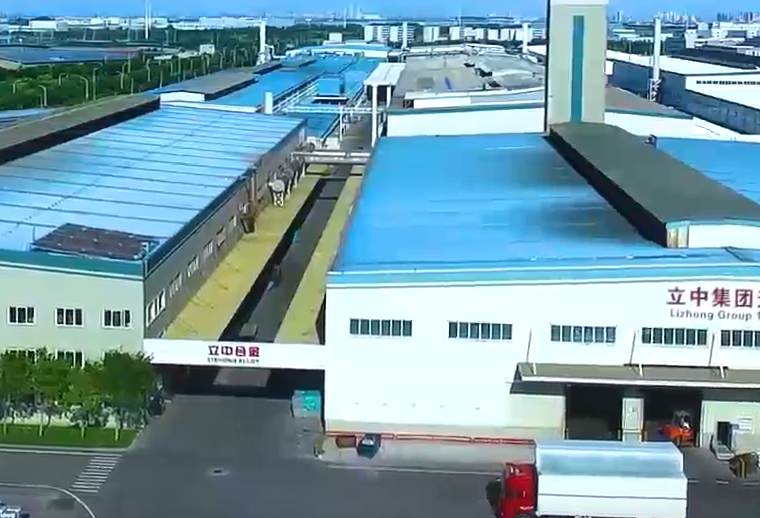
立中集团子公司与国内头部新能源车企共建联合创新实验室,深化铝材协同创新
Ju Chao Zi Xun· 2026-01-19 02:53
Core Viewpoint - The announcement highlights a strategic partnership between Lichung Group's subsidiary and a leading domestic new energy vehicle company to establish a Joint Innovation Laboratory focused on the research and industrialization of aluminum alloy materials for automotive and humanoid robots [2][3]. Group 1: Collaboration Objectives - The core purpose of the collaboration is to leverage talent and resources effectively, enhancing technological advantages to promote research, development, and application upgrades of aluminum alloys for automotive use [2]. - The Joint Innovation Laboratory will focus on six key areas, including standardization of aluminum alloy materials, development of integrated aluminum alloy materials, and creation of testing standards for performance verification [2]. Group 2: Organizational Structure - The Joint Innovation Laboratory will have a management structure comprising two directors, two deputy directors, and a management committee of 3-6 members to ensure efficient collaboration [3]. - Intellectual property generated from the collaboration will generally be jointly owned by both parties, with specific agreements for individual projects [3]. Group 3: Industry Context and Previous Agreements - The announcement also mentions that Lichung Group has been executing other framework or intention agreements with various partners, including government entities and automotive companies, which are currently progressing normally [4]. - The company disclosed that there have been no changes in shareholding among major stakeholders and management personnel in the three months prior to the signing of this agreement [4].


国家统计局:2025年中国十种有色金属产量同比增3.9%
Guo Jia Tong Ji Ju· 2026-01-19 02:15
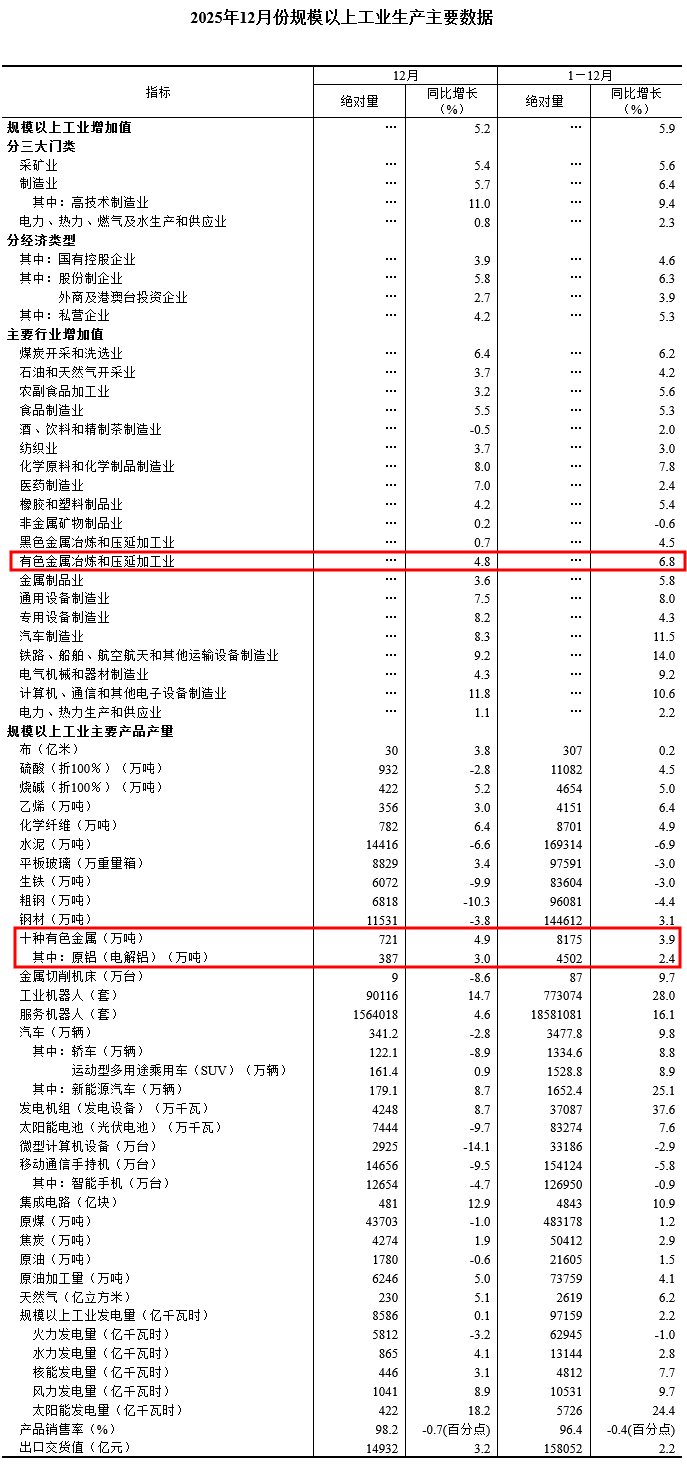
Group 1: Core Insights - The value added in the non-ferrous metal smelting and rolling industry increased by 4.8% year-on-year in December 2025, with a cumulative increase of 6.8% for the entire year [1] - The production of ten types of non-ferrous metals reached 7.21 million tons in December, reflecting a year-on-year growth of 4.9%, while the cumulative production for the year was 81.75 million tons, up 3.9% [1] - Electrolytic aluminum production in December was 3.87 million tons, marking a 3.0% year-on-year increase, with a total production of 45.02 million tons for the year, which is a 2.4% increase [1] Group 2: Industrial Performance - The industrial added value for large-scale industries grew by 5.2% in December and 5.9% for the year [2] - The mining industry saw a year-on-year increase of 5.4% in December and 5.6% for the entire year [2] - Manufacturing industry growth was recorded at 5.7% in December and 6.4% for the year, with high-tech manufacturing growing by 11.0% in December and 9.4% for the year [2] Group 3: Key Industry Metrics - The coal mining and washing industry increased by 6.4% in December and 6.2% for the year [2] - The chemical raw materials and chemical products manufacturing industry reported an 8.0% increase in December and 7.8% for the year [2] - The automotive manufacturing industry experienced an 8.3% growth in December and 11.5% for the year [2]
2025年四季度全国规模以上工业产能利用率为74.9%
Guo Jia Tong Ji Ju· 2026-01-19 02:01
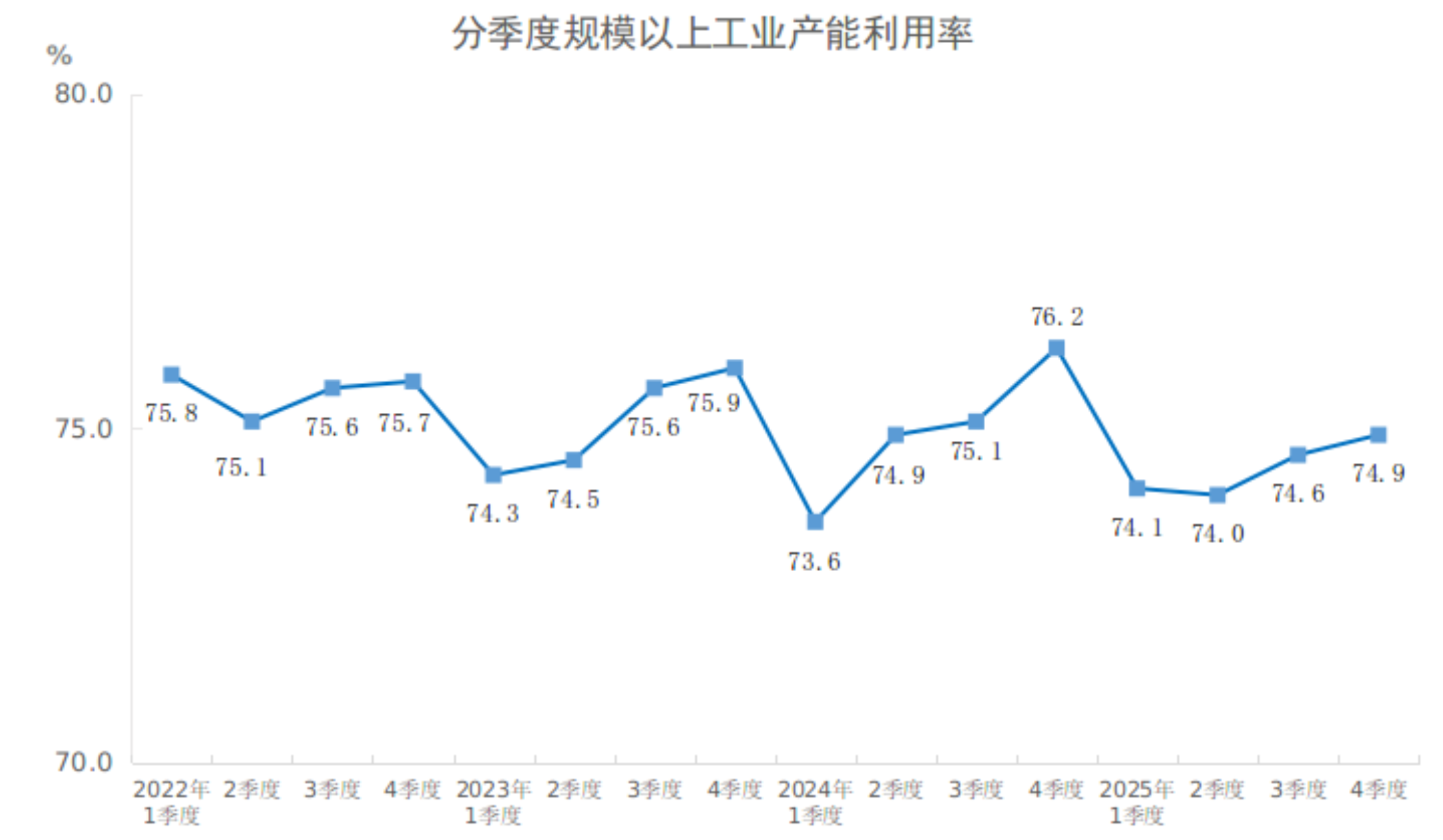
Core Viewpoint - The national industrial capacity utilization rate for large-scale industries in Q4 2025 is reported at 74.9%, showing a 0.3 percentage point increase from Q3 but a 1.3 percentage point decrease compared to the same period last year [1][4]. Group 1: Overall Industrial Capacity Utilization - The overall industrial capacity utilization rate for the entire year of 2025 is 74.4%, which is a decrease of 0.6 percentage points from the previous year [6]. - The Q4 capacity utilization rate reflects a mixed performance across different sectors, with some industries experiencing significant declines [6]. Group 2: Sector-Specific Capacity Utilization - In Q4 2025, the mining industry has a capacity utilization rate of 71.7%, down by 3.9 percentage points year-on-year [6]. - The manufacturing sector's capacity utilization rate stands at 75.2%, a decrease of 1.2 percentage points from the previous year [6]. - The electricity, heat, gas, and water production and supply sector shows a capacity utilization rate of 74.0%, down by 0.8 percentage points year-on-year [6]. Group 3: Detailed Industry Breakdown - Coal mining and washing industry has a capacity utilization rate of 69.1%, down by 4.8 percentage points year-on-year [6]. - The food manufacturing industry reports a capacity utilization rate of 68.5%, a decrease of 2.2 percentage points from the previous year [6]. - The textile industry has a capacity utilization rate of 77.1%, down by 1.7 percentage points year-on-year [6]. - The chemical raw materials and products manufacturing industry shows a capacity utilization rate of 74.1%, down by 2.3 percentage points [6]. - The black metal smelting and rolling industry has a capacity utilization rate of 78.5%, with a slight increase of 0.4 percentage points year-on-year [6]. - The automotive manufacturing industry reports a capacity utilization rate of 76.0%, down by 1.2 percentage points from the previous year [6]. - The computer, communication, and other electronic equipment manufacturing industry has a capacity utilization rate of 79.7%, showing a slight increase of 0.3 percentage points year-on-year [6].
产业债系列报告:基本面修复下的有色金属产业债
Hua Yuan Zheng Quan· 2026-01-18 14:13
1. Report Industry Investment Rating The report does not explicitly mention the industry investment rating. 2. Core Views of the Report - The fundamentals of each link in the non - ferrous metal industry chain are jointly repaired, and the core indicators of the issuing entities in the non - ferrous metal industry have improved [1][4]. - It is recommended to focus on allocating AA+/AAA - rated central enterprises and regional leading state - owned enterprises, and select entities with relatively superior core financial indicators, and appropriately extend the duration for higher coupon yields [3][56]. - The credit spread of non - ferrous metal industrial bonds has been narrowing, and coupon income may need to be explored in the medium - and long - term of high - quality central and state - owned enterprises [51][52]. 3. Summary by Relevant Catalogs 3.1产业链各环节基本面协同修复 - **Overall Industry Operation**: From January to November 2025, the cumulative year - on - year growth rate of the industrial added value of the non - ferrous metal mining and dressing industry above the national scale was 7.6%, and that of the smelting and rolling processing industry was 7.1%. The output of ten common non - ferrous metals reached 7,447.4 million tons, and the overall operating income scale exceeded 9 trillion yuan, with a cumulative year - on - year increase of 13.3% [5]. - **Upstream Resource Mining**: Central and local state - owned enterprises dominate. China has advantages in rare metals like rare earths but has a high external dependence on strategic minerals. In 2025, the price of non - ferrous metals showed an upward trend, driving the improvement of the operating conditions of upstream mining enterprises [1][8][9]. - **Mid - stream Smelting and Processing**: In January - November 2025, the output of refined copper and electrolytic aluminum increased by 7.0% and 2.4% respectively. The output of deep - processed products was much higher than that of smelting products. There was a structural differentiation in the prosperity, with new - energy metal smelting being a highlight [2][16][22]. - **Downstream Application**: Basic metals are mainly used in traditional industries, while lithium, cobalt, and nickel are used in emerging fields. In 2024, the demand for lithium increased by nearly 30%, and the demand for nickel and cobalt increased by 6% - 8%, with the new - energy industry being the core driving force [23]. 3.2有色金属行业发行主体核心指标改善 - **Profitability**: From Q1 to Q3 in 2025, 36 issuing entities achieved a total operating income of 41,067 billion yuan and a net profit of 2,058 billion yuan, with year - on - year increases of 8.5% and 30.6% respectively. The average ROE was 6.91%, and the average net sales profit margin was 6.04%, both showing significant improvements [4][25]. - **Operating Ability**: The average inventory turnover was 6.27 times, and the average current asset turnover was 2.45 times, with year - on - year increases of 0.28 and 0.17 times respectively, indicating improved payment collection and capital return efficiency [4][27]. - **Solvency**: As of Q3 2025, the average asset - liability ratio was 58.0%, the current ratio was 1.18 times, and the quick ratio was 0.61 times. The EBITDA interest coverage ratio increased significantly, indicating enhanced debt repayment ability [4][33]. 3.3有色金属产业债结构分布及机会挖掘 - **Bond Structure**: As of January 7, 2026, there were 290 non - ferrous metal industrial bonds with a total balance of 290.1 billion yuan. Most of the bonds were issued by state - owned enterprises and had high ratings, and the remaining maturity was mostly less than 3 years [43]. - **Credit Spread**: Since 2025, the credit spread of non - ferrous metal industrial bonds has been narrowing, mainly due to the low - interest - rate environment, sufficient capital, and the improvement of industry fundamentals [51]. - **Coupon Income**: The average static coupon of AA+ and above bonds with a remaining maturity of less than 3 years is less than 2%. Coupon income may need to be explored in the medium - and long - term of high - quality central and state - owned enterprises, such as the 3 - 5Y AA+ bonds with a static coupon of 2.13% as of January 7, 2026 [52]. - **Recommended Bonds**: The report recommends some 3 - 5Y non - ferrous metal industrial bonds issued by central and state - owned enterprises for investors' reference [58][59].



氧化铝周报 2026/01/17:成本支撑持续下移,基本面拐点仍需等待-20260117
Wu Kuang Qi Huo· 2026-01-17 14:52
Report's Industry Investment Rating - Not provided in the report Core Viewpoints - After the rainy season in Guinea, shipments are gradually recovering, and the resumption of production at the AXIS mine is expected to cause the ore price to decline with fluctuations. Attention should be paid to the support at the import cost level of Guinea's ore. The over - capacity pattern in the alumina smelting sector is difficult to change in the short term, and the inventory accumulation trend continues. The National Development and Reform Commission has proposed to prevent blind investment and disorderly construction in alumina and copper smelting, increasing the market's expectation of the implementation of supply contraction policies in the future. However, a sustained rebound still faces three dilemmas: an oversupplied smelting sector, a downward - shifting cost support, and the pressure of expiring warehouse receipts for delivery. In the short term, it is recommended to wait and see, as the cost - effectiveness of chasing long positions is not high. One can wait for opportunities to arrange short positions in the near - term contracts on rallies. The reference operating range for the domestic main contract AO2605 is 2600 - 2900 yuan/ton, and attention should be focused on supply - side policies, Guinea's ore policies, and the Federal Reserve's monetary policy [12][13] Summary by Directory 1. Weekly Assessment - **Futures Price**: As of 3 pm on January 16, the alumina index fell 3% to 2745 yuan/ton this week, and the open interest decreased by 74,000 lots to 703,000 lots. The alumina futures price retreated from its high this week, the spot price was sluggish, and the futures price rebound was still difficult to sustain. The Shandong spot price was reported at 2565 yuan/ton, at a discount of 52 yuan/ton to the 02 contract. The spread between the first - and third - month contracts closed at - 37 yuan/ton [11][24] - **Spot Price**: This week, the alumina spot prices in various regions continued to decline. The spot prices in Guangxi, Guizhou, Henan, Shandong, Shanxi, and Xinjiang decreased by 25 yuan/ton, 25 yuan/ton, 25 yuan/ton, 30 yuan/ton, 35 yuan/ton, and 40 yuan/ton respectively. With the continuous inventory accumulation trend, the spot prices in most regions remained under pressure [11][21] - **Inventory**: During the week, the total social inventory of alumina increased by 75,000 tons to 5.393 million tons. Among them, the inventory in electrolytic aluminum plants increased by 28,000 tons, the inventory in alumina plants remained unchanged, the in - transit inventory increased by 55,000 tons, and the port inventory decreased by 8,000 tons. The total warehouse receipts of alumina on the Shanghai Futures Exchange increased by 17,200 tons to 176,800 tons during the week; the inventory in the delivery warehouse was 217,100 tons, an increase of 21,100 tons from last week [11][70][72] 2. Spot and Futures Prices - **Spot Price**: The alumina spot prices in various regions continued to decline, with different decreases in different regions due to the continuous inventory accumulation [21] - **Futures Price and Basis**: The alumina futures price retreated from its high, and was difficult to sustain a rebound. The Shandong spot price had a discount to the 02 contract, and the spread between the first - and third - month contracts was - 37 yuan/ton as of January 16 [11][24] - **Bauxite Price**: The bauxite prices in various regions remained unchanged this week. The CIF price of Guinea's bauxite decreased by 1.5 dollars/ton to 63 dollars/ton, and that of Australia's bauxite decreased by 2 dollars/ton to 60 dollars/ton. After the rainy season in Guinea, the ore shipments increased, and the resumption of the AXIS mine exacerbated the bauxite oversupply pattern. With the high port inventory, the ore price is expected to decline with fluctuations, and attention should be paid to the support at 60 dollars/ton for the CIF price of Guinea's bauxite [29] 3. Supply Side - **Bauxite Production**: In December 2025, China's bauxite production was 4.94 million tons, a year - on - year decrease of 3.1% and a month - on - month increase of 5.16%. The total production in the first twelve months of 2025 was 60.15 million tons, a year - on - year increase of 1.14% [33] - **Bauxite Import**: In November 2025, China imported 15.11 million tons of bauxite, a year - on - year increase of 22.34% and a month - on - month increase of 9.76%. The total import in the first eleven months of 2025 was 186.51 million tons, a year - on - year increase of 29.44%. Among them, the import of Guinea's bauxite in November 2025 was 10.71 million tons, a year - on - year increase of 33.84% and a month - on - month increase of 19%, while the import of Australia's bauxite was 3.41 million tons, a year - on - year decrease of 2.73% and a month - on - month decrease of 10.78% [35][37][39] - **Bauxite Inventory**: In December 2025, China's bauxite inventory increased by 2.97 million tons to 56.26 million tons, remaining at a high level in the past five years. The inventory in Shanxi decreased by 41,000 tons, and that in Henan increased by 22,000 tons, with the main increase coming from Shandong [42] - **Alumina Production**: In December 2025, China's alumina production was 8 million tons, a year - on - year increase of 8.75% and a month - on - month increase of 2.07%. The total production in the first twelve months of 2025 was 90.65 million tons, a year - on - year increase of 10.06%. As of January 16, 2026, the weekly alumina production was 1.853 million tons, a slight increase of 2,000 tons from last week [44][45] - **Alumina Factory Profit**: The alumina spot price declined, putting pressure on the profit of alumina factories. According to the alumina spot price on January 16, the production profit in Guangxi could reach 120 yuan/ton. The profits in Shandong using Australian and Guinea's ores were 90 yuan/ton and 25 yuan/ton respectively, approaching the loss situation. Factories in inland areas using overseas ores in Shanxi and Henan had losses of 130 yuan/ton and 20 yuan/ton respectively [48] - **Alumina Import and Export**: In November 2025, the net alumina import was 64,400 tons. As of January 16, the FOB price of Australian alumina decreased by 3 dollars/ton to 305 dollars/ton, and the import profit and loss was - 83 yuan/ton, with the import window closed [50][52] - **Overseas Alumina Production**: In December 2025, the overseas alumina production was 5.51 million tons, a year - on - year increase of 5.66% and a month - on - month increase of 4.23%. The total production in the first twelve months of 2025 was 62.71 million tons, a year - on - year increase of 3.61% [54] 4. Demand Side - **Electrolytic Aluminum Production**: In December 2025, China's electrolytic aluminum production was 3.83 million tons, a year - on - year increase of 3.05% and a month - on - month increase of 4.02%. The total production in the first twelve months of 2025 was 44.38 million tons, a year - on - year increase of 2.71% [59] - **Electrolytic Aluminum Operation and Start - up**: In December 2025, the operating capacity of electrolytic aluminum was 44.69 million tons, a month - on - month increase of 50,000 tons. In November, the start - up rate of electrolytic aluminum decreased by 0.46% to 96.76% [62] 5. Supply - Demand Balance - The report provides an alumina balance sheet for 2026, showing the supply - demand differences, total demand, total supply, net exports, export and import volumes, alumina consumption by electrolytic aluminum, electrolytic aluminum production, operating capacity of electrolytic aluminum, alumina production, and operating capacity of alumina in different months and the cumulative data [65] 6. Inventory - **Social Inventory**: The total social inventory of alumina increased by 75,000 tons to 5.393 million tons during the week, with different changes in different types of inventory [70] - **Futures Inventory**: The total warehouse receipts of alumina on the Shanghai Futures Exchange increased by 17,200 tons to 176,800 tons during the week, and the inventory in the delivery warehouse was 217,100 tons, an increase of 21,100 tons from last week [72]
今年市场的两条主线:AI和地缘、反内卷
Sou Hu Cai Jing· 2026-01-17 01:57
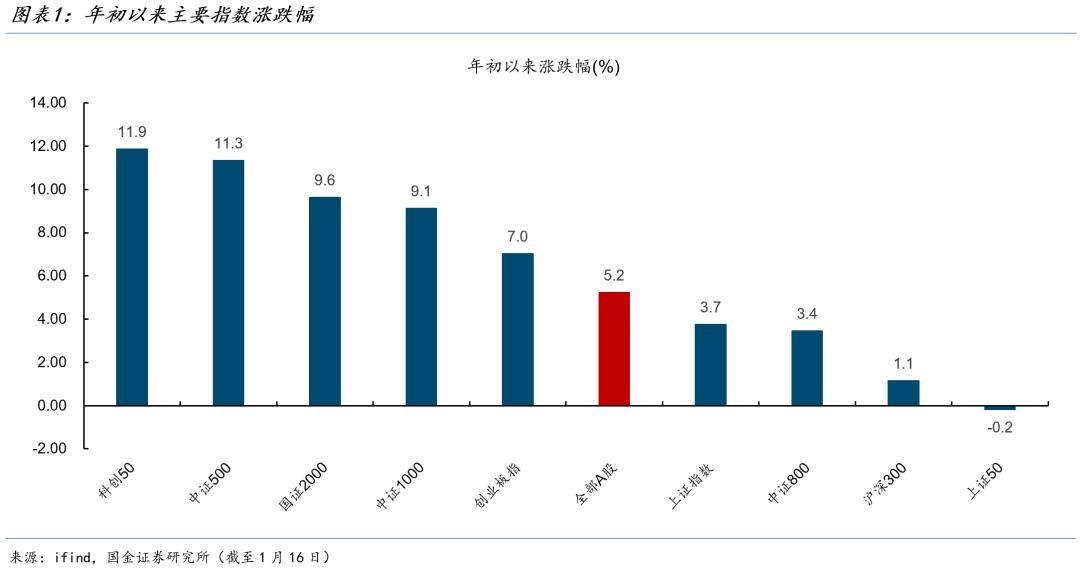
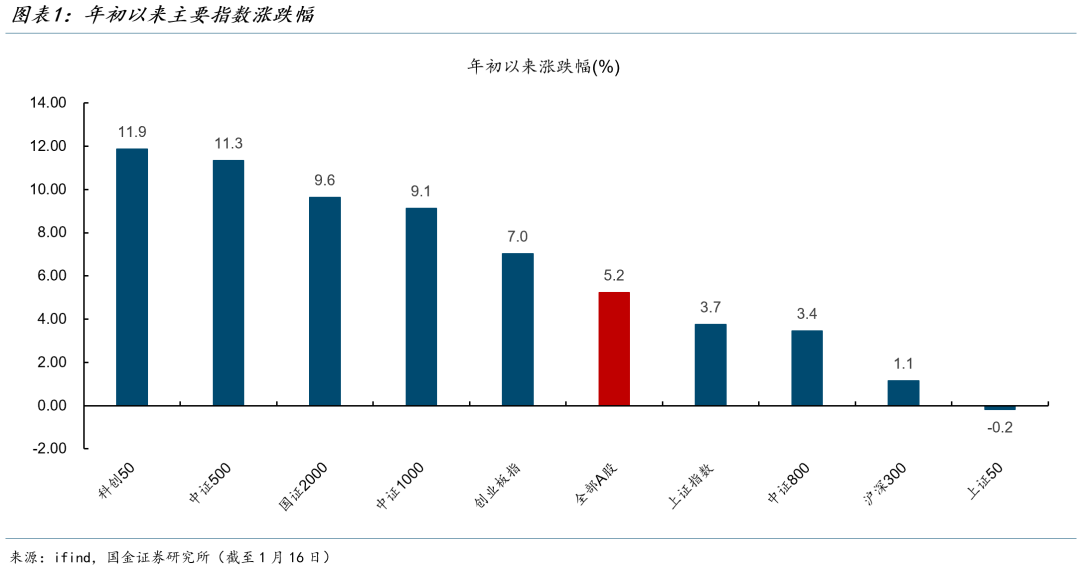
Group 1 - The core theme for A-share pricing in 2026 revolves around AI and geopolitical factors, reflecting the U.S. focus on technology for growth and geopolitical strategies for elections, while another underpriced theme is "anti-involution," corresponding to China's push for reform-driven momentum [1][8] - Since the beginning of 2026, the A-share market has shown a "good start" with a cumulative increase of 5.2% in the Wind All A index and an average daily trading volume exceeding 3 trillion yuan, with the Sci-Tech 50, CSI 500, and National 2000 indices leading the gains at 11.9%, 11.3%, and 9.6% respectively [2] - The leading sectors include media, computer, non-ferrous metals, and military industries, with year-to-date increases of 16.0%, 14.0%, 14.0%, and 9.0%, indicating that the current market focus is on "AI and geopolitical" themes [2] Group 2 - The impact of AI is evident not only in the A-share market but also in marginal changes in the macro economy, with the PPI in December 2025 rising by 0.2% month-on-month, marking the highest increase since 2024, driven in part by AI's contribution to price improvements in non-ferrous and technology sectors [5][8] - In December 2025, prices in the non-ferrous metal mining and smelting industries rose by 3.7% and 2.8% respectively, with AI-driven electricity demand significantly boosting prices for metals like copper, silver, lithium, and cobalt [5] - The prices of external storage devices and integrated circuits increased by 15.3% and 2.4% respectively in December 2025, with high-end AI chips occupying advanced process resources, leading to structural tensions in chip availability [7] Group 3 - The improvement in PPI reflects strategic choices made by China and the U.S. in the current global macro context, which are expected to become two main pricing themes for A-shares in 2026: "AI and geopolitics" and "anti-involution" [8] - The "anti-involution" theme is entering a new phase in 2026, with recent discussions emphasizing the need to address malicious low-price dumping and promote healthy competition [9] - Recent policy changes indicate a clearer execution strategy for "anti-involution," focusing on "quality over price" in industries like photovoltaics and energy storage, with regulatory bodies emphasizing quality standards and price monitoring [10][12] Group 4 - The cancellation of export tax rebates for photovoltaic products and the reduction of tax rates for battery products reflect the national-level implementation of "anti-involution," aimed at allowing competitive companies to raise prices and retain funds for domestic investment [11] - Local governments are shifting their competitive advantages from unsustainable policy incentives to sustainable business environments and professional service capabilities, indicating a broader commitment to "anti-involution" practices [12] - Strengthened regulatory enforcement against monopolistic and unfair competition behaviors signals an acceleration of "anti-involution," aiming to enhance market order and promote a virtuous cycle of quality and pricing in the industry [12]
宋雪涛:今年市场的两条主线
智通财经网· 2026-01-17 01:46
Market Performance - The A-share market has shown a "good start" in 2026, with the total return of the Wind All A index reaching 5.2% and the average daily trading volume exceeding 30 trillion yuan [1] - The leading sectors include technology and small-cap stocks, with the Sci-Tech 50, CSI 500, and National Index 2000 showing cumulative gains of 11.9%, 11.3%, and 9.6% respectively [1] Sector Analysis - The media, computer, non-ferrous metals, and military industries have led the market, with year-to-date gains of 16.0%, 14.0%, 14.0%, and 9.0% respectively, indicating a market focus on "AI and geopolitics" [1] - The AI-driven market trend is extending from upstream computing infrastructure to downstream AI applications, with geopolitical conflicts in regions like Venezuela and Iran catalyzing the non-ferrous and military sectors [1] Economic Indicators - The Producer Price Index (PPI) in China rose by 0.2% month-on-month in December 2025, marking the highest monthly increase since 2024, with AI contributing to this improvement, particularly in non-ferrous and technology prices [3] - Prices in the non-ferrous metal mining and smelting industries increased by 3.7% and 2.8% respectively, driven by rising electricity demand due to AI [3] - In the technology sector, prices for external storage devices and integrated circuits rose by 15.3% and 2.4%, respectively, with high-end AI chips impacting the availability of other chips [3] Policy and Structural Changes - The "anti-involution" policy is gaining traction, contributing to the PPI recovery, with lithium-ion battery manufacturing prices increasing by 1.0% and new energy vehicle manufacturing prices turning from a decline of 0.2% to an increase of 0.1% [4] - The strategic choices made by China and the U.S. in the current global macro context are expected to shape A-share pricing in 2026, focusing on "AI and geopolitics" and "anti-involution" [6] - The "anti-involution" initiative is transitioning from capacity governance to operational entity management, emphasizing quality competition and regulatory compliance [7][8] Government Initiatives - Local governments are shifting their focus from unsustainable policy incentives to sustainable business environments and professional service capabilities in attracting investments [10] - Recent central government actions have intensified the regulation of anti-monopoly and unfair competition, signaling a stronger push for "anti-involution" [10] - The cancellation of export tax rebates for photovoltaic products reflects the national level's commitment to "anti-involution," aiming to enhance the competitiveness of leading enterprises [8]
宋雪涛:今年市场的两条主线
雪涛宏观笔记· 2026-01-17 01:22
Core Viewpoint - The main pricing themes for A-shares in 2026 are centered around AI and geopolitical factors, reflecting the U.S. focus on technology for growth and geopolitical selection, while another theme that has not been fully priced in is "anti-involution," corresponding to China's pursuit of reform for momentum [2][9]. Market Performance - Since the beginning of 2026, the A-share market has shown a "good start" with a cumulative increase of 5.2% in the Wind All A index and an average daily trading volume exceeding 3 trillion yuan. The Sci-Tech 50, CSI 500, and National 2000 indices have led the gains with increases of 11.9%, 11.3%, and 9.6% respectively, indicating that technology and small-cap stocks are outperforming large-cap stocks [4]. - The leading sectors include media, computer, non-ferrous metals, and military industries, with year-to-date increases of 16.0%, 14.0%, 14.0%, and 9.0% respectively, reflecting the current market's focus on "AI and geopolitics" [4]. AI Impact on Economy - AI's influence is evident in both the A-share market trends and marginal changes in the macro economy. In December 2025, China's PPI rose by 0.2% month-on-month, marking the highest monthly increase since 2024, with AI contributing to improvements in PPI, particularly in non-ferrous and technology sectors [6][9]. - In December 2025, prices in the non-ferrous metal mining and smelting industries increased by 3.7% and 2.8% respectively, driven by AI-related electricity demand, which significantly boosted prices of metals like copper, silver, tungsten, tantalum, aluminum, lithium, cobalt, and nickel [6]. Pricing Dynamics - In December 2025, prices for external storage devices and integrated circuits rose by 15.3% and 2.4% respectively, with AI-related high-end chips occupying advanced process resources, leading to structural tensions in chip availability. Samsung and SK Hynix plan to raise server DRAM prices by 60%-70% in Q1 2026, significantly higher than previous cycles [8]. - The implementation of "anti-involution" has also contributed to the month-on-month recovery of PPI, with lithium-ion battery manufacturing prices increasing by 1.0% and the price of complete new energy vehicles turning from a decline of 0.2% to an increase of 0.1% [8]. Strategic Choices - The improvement in PPI reflects strategic choices made by China and the U.S. in the current global macro context, which are expected to become the two main pricing themes for A-shares in 2026. The "AI and geopolitics" theme corresponds to the U.S. seeking new productive forces in a stagflation environment, while the "anti-involution" theme aligns with China's push for reform to drive momentum through fiscal and income distribution reforms [9]. Anti-Involution Developments - The "anti-involution" theme is entering a new phase in 2026, as highlighted by recent policy discussions emphasizing the need to address malicious low-price dumping and promote healthy competition [10]. - The core of "anti-involution" in the industry is "quality over price," with regulatory bodies emphasizing compliance in price competition within the photovoltaic industry and addressing irrational competition behaviors [11]. - Recent policy changes, such as the cancellation of export tax rebates for photovoltaic products, reflect the national-level commitment to "anti-involution," allowing leading companies to raise prices to absorb costs and redirect funds to domestic consumption [12][13]. Regulatory Environment - Strengthened anti-monopoly and anti-unfair competition regulations signal an acceleration of "anti-involution," with the market regulator engaging with leading companies in the silicon material and photovoltaic sectors to prevent collusion and ensure fair competition [14].
上市公司动态 | 中国中冶预计2025年归母净利降50%以上;江淮汽车预计2025年净亏16.8亿;北方稀土2025年净利预增117%-135%
Sou Hu Cai Jing· 2026-01-16 16:43
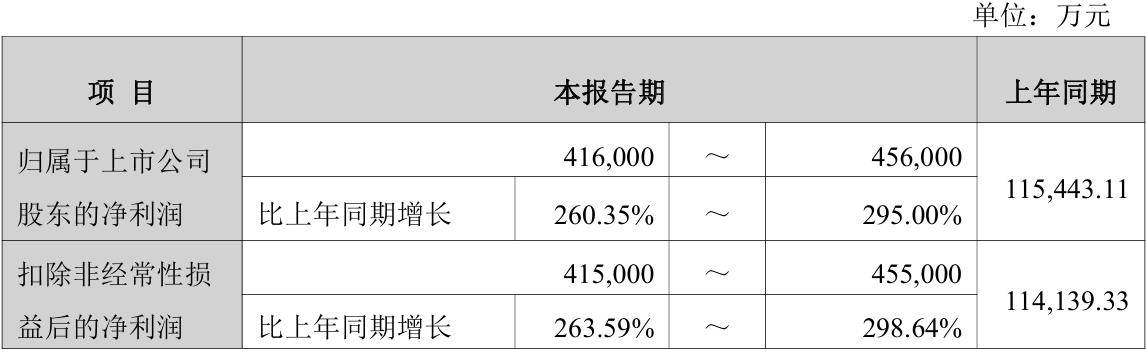
Key Points - China Metallurgical Group Corporation (China MCC) expects a decline of over 50% in net profit attributable to shareholders in 2025 due to losses in the real estate sector and increased asset impairment provisions [1] - JAC Motors anticipates a net loss of approximately 1.68 billion yuan in 2025, although this represents a reduction in losses compared to the previous year [2] - Northern Rare Earth forecasts a net profit increase of 116.67% to 134.60% in 2025, driven by improved sales and production efficiency in rare earth products [3] - Shenghong Technology projects a net profit increase of 260.35% to 295% in 2025, attributed to the growing demand for AI infrastructure and high-end products [4] - Lanke Technology expects a net profit increase of 52.29% to 66.46% in 2025, benefiting from strong demand in the AI industry [7] - Aiwai Electronics anticipates a net profit increase of 17.70% to 29.47% in 2025, focusing on high-value chip solutions [25] - Longxin General expects a net profit increase of 47.15% to 60.53% in 2025, driven by steady growth in its core motorcycle and general machinery businesses [28] - China One Heavy Industry predicts a net loss of 310 million to 460 million yuan in 2025, although this represents a significant reduction from the previous year's loss [35] - Kunda Technology expects a net loss of 1.2 billion to 1.5 billion yuan in 2025, impacted by industry supply-demand imbalances [34] - Daqing Energy anticipates a net loss of 1 billion to 1.3 billion yuan in 2025, although this reflects a narrowing of losses compared to the previous year [42]


核心收购项目已终止,德福科技终止2025年19.3亿元募资计划
Ju Chao Zi Xun· 2026-01-16 02:26
Core Viewpoint - Defu Technology has decided to terminate its plan to issue A-shares to specific investors for the year 2025, primarily due to the cancellation of its major investment project, the acquisition of 100% equity in a Luxembourg copper foil company [2] Group 1: Termination of A-Share Issuance - On January 15, Defu Technology announced the termination of its plan to issue A-shares for the year 2025, which was initially approved on September 16, 2025, with a fundraising target of no more than 1.93 billion yuan [2] - The net proceeds from the planned issuance were intended for the acquisition of the Luxembourg copper foil project, electronic chemical products for copper foil additives, and to supplement working capital [2] - The board of directors decided to terminate the issuance after a careful assessment, as the main investment project, the acquisition of the Luxembourg copper foil company, has been canceled [2] Group 2: New Domestic Acquisition Plan - Concurrently with the termination of the overseas acquisition, Defu Technology announced a new domestic acquisition plan on January 11 [2] - The company signed a letter of intent to acquire at least 51% equity in Anhui Huiru Technology Co., Ltd. through cash purchase and capital increase, making Huiru Technology a subsidiary [2] - Huiru Technology specializes in the research, production, and sales of high-performance electrolytic copper foil, with a current annual production capacity of 20,000 tons and established production capabilities [2]