
汽车金融

Search documents
中国银行业协会:2024年汽车金融公司总资产8551亿元
Cai Jing Wang· 2025-07-31 04:16
Core Insights - The China Banking Association released the "China Automotive Finance Company Industry Development Report (2025)" highlighting the growth and current status of automotive finance companies in China [1] Group 1: Industry Overview - As of the end of 2024, there are 24 automotive finance companies in China (excluding Huatai Automotive Finance) with total assets amounting to 855.134 billion yuan [1] - The retail financing balance stands at 690.024 billion yuan, indicating a robust financing environment for automotive purchases [1] Group 2: Specific Loan Growth - The balance of loans for new energy vehicles reached 204.096 billion yuan, reflecting a year-on-year growth of 23.44%, which significantly supports the consumption of new energy vehicles [1] - The balance of loans for used cars is 78.381 billion yuan, with a year-on-year increase of 26.06%, demonstrating strong support for the used car market [1]

对话易鑫首席AI科学家、高级副总裁张磊:AI如何重塑汽车金融服务生态
3 6 Ke· 2025-07-31 03:58
Core Insights - The article discusses the transformative impact of artificial intelligence (AI) on the global economy, highlighting China's dual advantages as both a large-scale application scenario and a hub for breakthroughs in chips and algorithms [3] - The World Artificial Intelligence Conference (WAIC 2025) showcased AI's evolution from an "industrial variable" to a "civilizational constant," emphasizing its significance in various sectors [3] Company Overview - Yixin Group is an AI-driven fintech platform established in 2014 and listed in Hong Kong in 2017, focusing on providing accessible automotive financing and value-added services [4] - The company operates in over 340 cities, serving more than 100 manufacturers and financial institutions, and has partnered with 42,000 dealerships, cumulatively serving over 10 million users [4] AI Integration and Challenges - The automotive finance industry is transitioning from a labor-intensive model to an AI-intensive one, with AI expected to play a central role in decision-making processes [7] - Key challenges include making high-quality, transparent decisions and ensuring data privacy compliance while achieving effective outcomes [5] Service Efficiency - Yixin has streamlined its automotive finance service chain, achieving rapid online approval processes that can reach "second-level" efficiency in risk control, significantly enhancing user experience [6] Future Trends - The industry is expected to see a gradual shift towards AI-driven decision-making, with Yixin's proprietary "Zhixin Multi-Dimensional" AI model being a significant development, having passed regulatory approval [7] - The company aims to position itself as a technology enabler within the automotive finance ecosystem, promoting intelligent development across the industry [8] Strategic Positioning - In the next 3 to 5 years, the industry is anticipated to undergo deep integration of AI, transforming it from a tool to a strategic asset that enhances operational efficiency and user experience [11] - Yixin's strategy includes supporting Chinese automotive enterprises in their global expansion, filling a niche in the market for companies that assist Chinese firms abroad [12]

全国24家汽车金融公司资产规模8551亿元 行业平均资本充足率连续五年提升
Zheng Quan Shi Bao Wang· 2025-07-30 09:22
Core Insights - The report highlights the significant growth and resilience of the automotive finance industry in China, with a focus on the year 2024 as a transformative period for the automotive sector [1][2] Market Overview - As of the end of 2024, the total asset scale of 24 automotive finance companies reached 855.134 billion yuan, maintaining a high level [2] - Retail financing balance stood at 690.024 billion yuan, with new energy vehicle loans at 204.096 billion yuan, reflecting a year-on-year growth of 23.44%, and used car loans at 78.381 billion yuan, with a year-on-year growth of 26.06% [2] - Wholesale financing balance was 76.9 billion yuan, providing ongoing financial support to the automotive supply chain [2] Industry Performance - The average liquidity ratio for the industry was 195.90%, average capital adequacy ratio was 26.96%, and average non-performing loan ratio was 0.65%, all indicating a healthy industry status [2] - The average non-performing loan ratio increased by 0.07 percentage points compared to the previous year, while the average capital adequacy ratio has improved for five consecutive years [2] Strategic Developments - Automotive finance companies are actively responding to increasing market competition by optimizing business structures, enhancing service efficiency, and reducing operational costs to improve core competitiveness and sustainability [3]
中银协:新能源汽车2024年年末贷款余额同比增长23.44%
Cai Jing Wang· 2025-07-30 04:18
Core Insights - The report by the China Banking Association indicates that the automotive finance sector is maintaining a robust asset scale, with total assets reaching 855.134 billion RMB by the end of 2024 [1] - Retail financing balances are significant, with a total of 690.024 billion RMB, including 204.096 billion RMB for new energy vehicle loans, which grew by 23.44% year-on-year, and 78.381 billion RMB for used car loans, which increased by 26.06% [1] - Wholesale financing balances stand at 76.9 billion RMB, providing ongoing financial support to the automotive supply chain [1] Regulatory and Management Indicators - The automotive finance companies are showing strong regulatory and management metrics, with an average liquidity ratio of 195.90% and an average capital adequacy ratio of 26.96% by the end of 2024 [1] - The average non-performing loan ratio is reported at 0.65%, indicating a healthy financial environment within the industry [1]
更好赋能汽车产业“加速跑”
Jin Rong Shi Bao· 2025-07-30 03:53
Group 1: Automotive Industry Growth - In the first half of 2023, China's automotive production and sales reached 15.62 million and 15.65 million units, respectively, marking year-on-year growth of 12.5% and 11.4% [1] - China's automotive sales share in the global market has increased to 36%, up by 4 percentage points from the previous year [1] - The "Two New" policy has positively impacted the automotive consumption market, with significant growth in vehicle trade-in subsidies and consumer incentives [1] Group 2: Export Trends - China's automotive export value is projected to rise from $34.5 billion in 2021 to $117.4 billion in 2024, indicating explosive growth [2] - In the first half of 2023, China exported 3.083 million vehicles, a year-on-year increase of 10.4%, with 1.06 million of those being new energy vehicles, up 75.2% [2] - The Chinese automotive supply chain is developing multi-level cooperation with leading global automotive nations, enhancing its influence in the global market [2] Group 3: Automotive Finance Support - The People's Bank of China and six other departments have issued guidelines to encourage financial institutions to develop consumer-oriented financial products [3] - Automotive finance companies are addressing high financing thresholds by offering products like "0 down payment" and extending interest-free periods to ease consumer financial burdens [3] - The automotive finance sector faces increased competition from banks and other financial institutions, which are entering the market with lower costs and aggressive marketing strategies [3] Group 4: Regulatory Measures - Regulatory bodies are implementing measures to standardize market practices, including prohibiting unfair competition tactics such as high commissions [5] - Local banking associations are promoting healthy development in automotive finance by discouraging practices that force consumers into high-commission products [5] - As high-interest policies phase out, the automotive finance industry is expected to experience a return to healthy competition, allowing companies to explore diversified business models [5]
2024年末全国24家汽车金融公司零售融资余额超6900亿元
Xin Hua She· 2025-07-29 09:32
Core Insights - The report from the China Banking Association indicates that by the end of 2024, the retail financing balance of 24 automotive finance companies in China will reach 690.24 billion yuan, with significant growth in loans for new energy vehicles and used cars [1] Group 1: Automotive Finance Companies' Performance - The balance of loans for new energy vehicles is projected to be 204.096 billion yuan, reflecting a year-on-year growth of 23.44% [1] - The balance of loans for used cars is expected to be 78.381 billion yuan, with a year-on-year increase of 26.06% [1] - The wholesale financing balance of these automotive finance companies is anticipated to be 76.9 billion yuan, providing ongoing financial support to the automotive industry [1] Group 2: Financial Health and Digital Transformation - The average liquidity ratio of the industry is projected to be 195.90%, indicating strong liquidity [1] - The average capital adequacy ratio is expected to be 26.96%, suggesting robust capital health [1] - The average non-performing loan ratio is forecasted to be 0.65%, which is considered a healthy level [1]
中银协:2024年末全国 24 家汽车金融公司资产规模8551.34亿元
Ren Min Wang· 2025-07-29 08:24
Group 1 - The core viewpoint of the report is that the automotive finance industry in China is experiencing significant growth, particularly in the areas of new energy vehicle loans and used car financing, which are crucial for supporting consumption in these markets [1] - As of the end of 2024, the total asset scale of 24 automotive finance companies in China is projected to reach 855.134 billion RMB, indicating a stable and high level of asset management [1] - Retail financing balances are reported at 690.024 billion RMB, with new energy vehicle loans at 204.096 billion RMB, showing a year-on-year growth of 23.44%, and used car loans at 78.381 billion RMB, with a year-on-year growth of 26.06% [1] Group 2 - The report highlights that automotive finance companies are deepening their digital transformation efforts, which enhances operational efficiency and management precision [1] - Key regulatory and management indicators remain strong, with an average liquidity ratio of 195.90%, an average capital adequacy ratio of 26.96%, and an average non-performing loan ratio of 0.65% as of the end of 2024 [1] - The wholesale financing balance is noted to be 76.9 billion RMB, which continues to support the liquidity of the automotive industry supply chain [1]
报告:2024年末全国24家汽车金融公司资产规模超8500亿元
Zhong Guo Xin Wen Wang· 2025-07-29 06:19
Core Insights - The report indicates that by the end of 2024, the total asset scale of 24 automotive finance companies in China will exceed 855.13 billion yuan, maintaining a high level of performance [1] - Retail financing balance is projected to be 690.02 billion yuan, with significant growth in loans for new energy vehicles and used cars, reflecting strong support for the consumption of new energy vehicles and the used car market [1] Industry Overview - The automotive finance industry is expected to benefit from ongoing economic improvement and policy support, with production and sales of vehicles projected to surpass 30 million units, showcasing resilience and vitality [1] - The rise of new energy vehicles, breakthroughs in intelligent technology, and diversified consumer demand are reshaping the automotive industry landscape [1] Financial Performance - As of the end of 2024, the average liquidity ratio of the industry is expected to reach 195.90%, with an average capital adequacy ratio of 26.96% and an average non-performing loan ratio of 0.65%, indicating a stable financial environment [2] - Automotive finance companies are focusing on innovation and specialization in financial services to enhance their competitive edge in a challenging market [2] Strategic Initiatives - Companies are enhancing their digital transformation efforts to improve operational efficiency and management precision, while also adhering to regulatory requirements [2][3] - There is a strong emphasis on developing targeted financial products in collaboration with manufacturers, creating a seamless online financial service experience, and improving brand influence through new media [3] Social Responsibility - Automotive finance companies are actively engaging in social responsibility initiatives, including support for small and micro enterprises, and various charitable activities aimed at promoting sustainable development [3] Future Outlook - The automotive finance industry is expected to continue its self-upgrading and innovation, exploring a uniquely Chinese path in automotive finance to support high-quality development in the automotive sector [3]
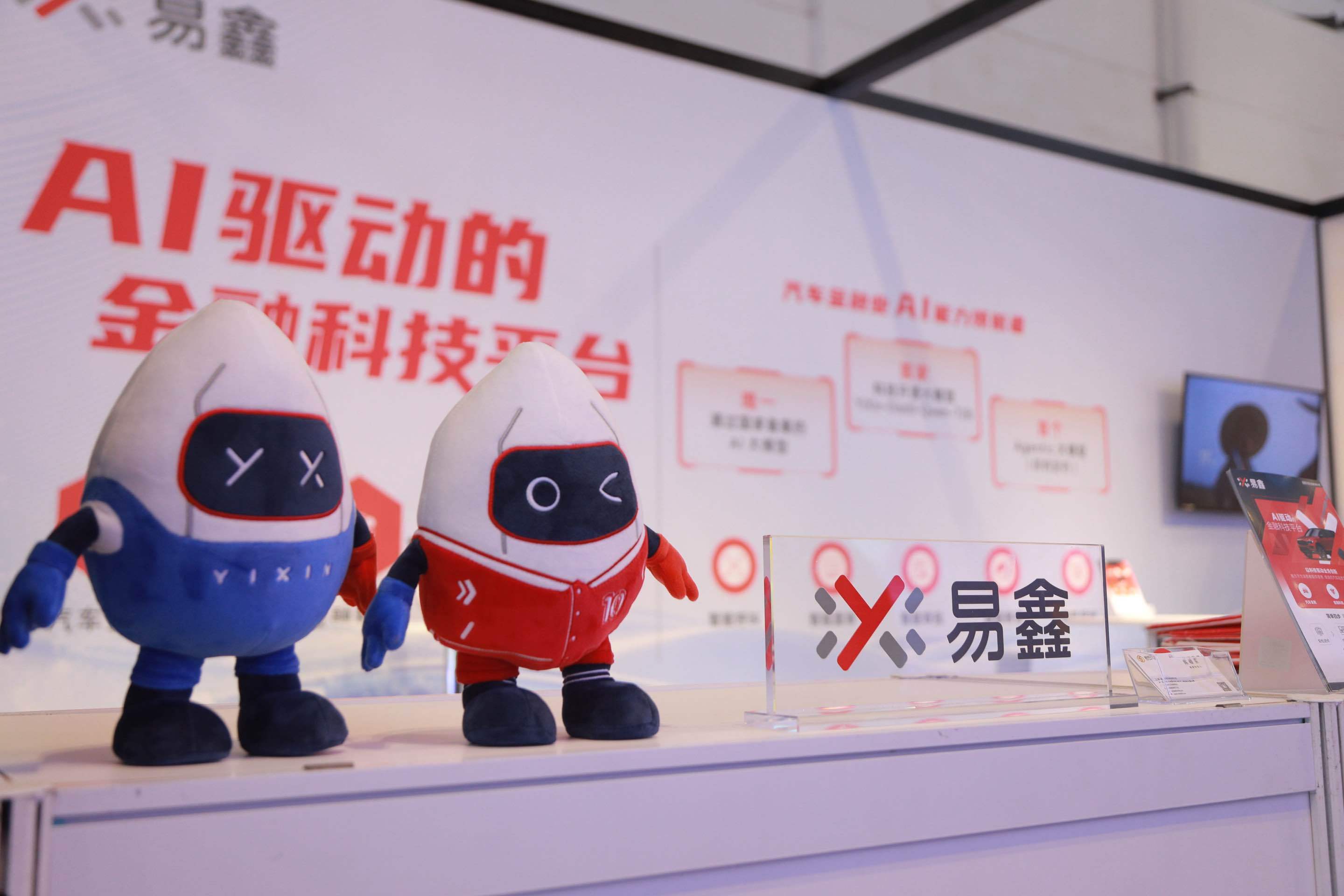
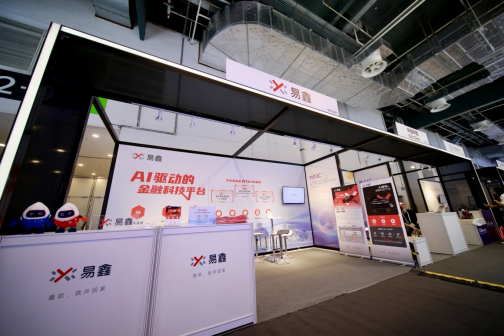
易鑫首度亮相WAIC,汽车金融首个Agentic大模型已进入攻坚阶段
Xin Lang Zheng Quan· 2025-07-27 09:06
Core Insights - The World Artificial Intelligence Conference (WAIC 2025) was held in Shanghai from July 26 to 29, showcasing significant advancements in AI technology and its applications in various industries, particularly in automotive finance [2][3] - Yixin (02858.HK) made its debut at the conference, presenting its AI innovations in the automotive finance sector, including the development of the first Agentic large model in the industry, which is currently in the critical phase of development [1][4][8] Company Developments - Yixin has been advancing AI technology in risk control and business applications since 2018, establishing a decision flow platform, model platform, and multiple generations of robotic platforms, with a comprehensive layout of large models and multimodal technology in 2023 [4][6] - The company achieved several industry firsts, including being the first in China's automotive finance sector to file for a generative AI large model in 2024 and launching a high-performance inference model in March 2025 [6][10] - The Agentic large model is designed to automate and optimize the entire process of automotive finance, significantly improving efficiency and user experience by enabling dynamic decision-making and collaboration among virtual assistants [8][10] Industry Impact - The advancements in AI technology by Yixin are expected to enhance the efficiency of the automotive finance industry and drive digital transformation across the entire supply chain [10] - The focus on vertical scene deepening in AI technology indicates a shift from general capabilities to specialized applications tailored to the characteristics of the automotive finance sector [10]
英国最高法院:关于汽车金融委员会上诉案的裁决将于8月1日作出。
news flash· 2025-07-25 15:38
Core Viewpoint - The UK Supreme Court is set to deliver a ruling on the appeal case concerning the Automotive Finance Committee on August 1 [1] Group 1 - The case involves significant implications for the automotive finance industry in the UK [1] - The outcome of the ruling may influence regulatory practices and financial agreements within the sector [1]