
理财

Search documents
452只产品近6月年化收益率超5%,哪些明年有望延续表现?
2 1 Shi Ji Jing Ji Bao Dao· 2025-12-15 08:29
Core Viewpoint - The A-share market is experiencing a bullish trend in 2025, with the Shanghai Composite Index surpassing 4000 points, indicating a return of market confidence [1] Group 1: Market Overview - The significant growth in the stock market has increased investor risk appetite, leading to a capital shift from the bond market to the stock market, highlighting the "stock-bond seesaw" effect [1] - The bond market in 2025 is characterized by a fluctuating and differentiated trend, with convertible bonds showing considerable gains and credit bonds and government bonds experiencing moderate increases [1] - As of December 12, 2025, 452 RMB public wealth management products have achieved an annualized yield of over 5% in the past six months, with 366 fixed-income products and 77 mixed products also exceeding this threshold [1] Group 2: Future Outlook - The slow bull market is expected to continue into 2026, driven by the 15th Five-Year Plan emphasizing economic development and technological innovation [1] - The 2026 economic meeting of the Political Bureau stresses the cultivation of new productive forces, with policy support directed towards sectors like semiconductors and artificial intelligence [1] Group 3: Investment Products - The "Hua Xia Wealth Management 'Tian Gong Ri Kai Wealth Management Product No. 5 (AI Computing Power Index)'" has a near six-month annualized yield of 75.98% and focuses on tracking the Hua Xia AI Computing Power Index [3] - The "Minsheng Wealth Management 'Fu Zhu Pure Bond 91-Day Holding Period No. 27 Wealth Management Product A'" is designed to invest primarily in high-grade credit bonds, with a risk level of R2 [4] - The "Ningyin Wealth Management 'Ningxiang Convertible Bond Enhanced Fixed Income Wealth Management No. 2'" has an annualized yield of 5.48% and employs a flexible asset allocation strategy [5] Group 4: Investment Strategy - Investors are advised to focus on equity products in the technology and consumer sectors, while being cautious of potential volatility and avoiding blind chasing of high prices [2] - The bond market is likely to continue experiencing low interest rates and low spreads, with a focus on short-duration high-rated credit bonds to mitigate risks [2] - The "fixed income plus" products that include convertible bonds have successfully hedged against long bond pullbacks while enhancing yields, but investors should be cautious with the "equity portion" of these investments [2] Group 5: Conclusion - The equity market in 2026 is expected to remain technology-driven, while the bond market will continue its fluctuating cycle, suggesting that investors should prioritize stable investments aligned with their risk tolerance [6]
策略标签时代:你的“固收+”理财,从此“看得见逻辑”
Jin Rong Jie Zi Xun· 2025-12-15 02:39
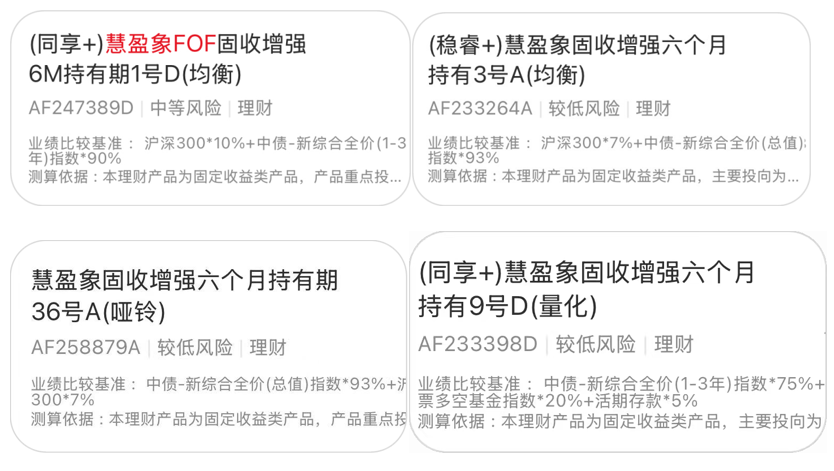
你是否也曾面对琳琅满目的理财产品,却感觉像是在开"盲盒"——只知道名字,看不清内核? 在银行理财净值化转型的深水区,"稳健收益"的需求内核未变,但实现路径正被重塑。过去简单叠加资产的"固收+"模 式已显局限,一个清晰的行业共识正在浮现:理财公司的价值创造,关键在于能否提供清晰、可解释且能有效管理波 动的投资策略。 一个鲜明的信号是产品沟通语言的变化。以信银理财固收+产品线"慧盈象"系列为例,在银行APP上,产品体系中明确 标注了"均衡""量化""哑铃""双息""红利"等策略标签,将核心逻辑前置。这本质上是一次主动的透明化沟通实践,将专 业的投资方法论,转化为客户可理解、可感知的语言。 "白盒沟通"的界面升级 将策略作为产品的核心识别标签,实质上重构了与客户的沟通界面。 它通过提供"均衡""量化""哑铃"等清晰的策略标签,来回应客户"低风险偏好与较高收益期望并存"的复杂需求。这些标 签本身就成为一份高效的投资概要,目的是降低客户的理解门槛,将决策依据从事后回溯,前置为基于策略框架的事 前判断。 当"多资产多策略"成为标配,竞争的关键便不再是"有无",而是策略的清晰度与可解释性。这正是构建差异化专业信 任的基础。 ...

养老规划底气何来?中邮理财这份“成绩单”给出了答案
Zhong Guo Zheng Quan Bao· 2025-12-14 23:43
Group 1 - The article emphasizes the growing concern over aging-related skin issues such as wrinkles and fine lines, highlighting that while skin aging is a natural process, there are methods to delay aging and prevent skin diseases [1] - It cites the "2023 China Sub-health Data Analysis Report," indicating that over 70% of the population in China is in a sub-health state, with individuals aged 18 to 45 making up 57% of this group [1] - The article suggests that young people should develop good lifestyle habits and healthy eating practices to lay a solid foundation for a healthier old age [1] Group 2 - It mentions that as people age, their bodies increasingly rely on their minds and spirits, and learning can enhance brain connections, helping to combat dementia [1] - Maintaining curiosity and a learning mindset is encouraged to adapt to changes in the times and to avoid or delay cognitive decline [1]
多方共议居民财富“迁徙”:以专业化服务陪伴客户穿越市场周期
2 1 Shi Ji Jing Ji Bao Dao· 2025-12-12 14:23
Core Insights - The forum discussed the migration of household wealth and the outlook for wealth management in a bull market, highlighting the importance of understanding risk tolerance and investment options for different customer segments [1][4]. Group 1: Wealth Management Strategies - ICBC Wealth Management emphasized that new investors, who have recently moved away from deposits, need to understand the volatility associated with net value management, suggesting R1 products as suitable for low-risk clients [1]. - Beijing Life Insurance highlighted the dual function of life insurance in providing risk coverage and asset appreciation, making it an essential component of comprehensive family asset planning [1][2]. - Suggestions for family insurance asset allocation included prioritizing high-leverage protection products, such as critical illness insurance and medical insurance, to cover core risks, with a recommendation to allocate 5%-10% of annual income for this purpose [2]. Group 2: Technological Integration in Financial Services - CITIC Securities is focusing on building a robust service system through the "Lingxi Platform" and upgrading the "Youwen System" to enhance customer service with a blend of intelligent and human responses [3]. - Jia Shi Wealth is adopting an account-driven approach to investment, providing a product shelf that includes protection, income generation, and appreciation, while ensuring continuous support for clients [3]. Group 3: Targeting Young Investors - JD Technology's Kentrui is addressing the unique characteristics of young internet investors, who are accustomed to high volatility in stocks and lack patience for slow returns from funds, by using familiar language and scenarios for investment education [4]. - The industry consensus emphasizes that successful wealth management should focus on systematic planning based on individual risk tolerance, family lifecycle, and long-term financial goals, rather than chasing short-term trends [4].
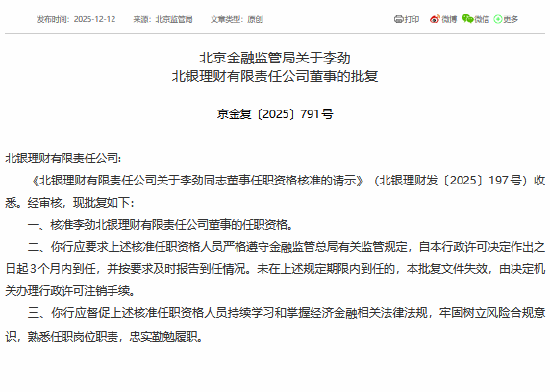
李劲获批担任北银理财董事
Xin Lang Cai Jing· 2025-12-12 12:06
12月12日金融一线消息,北京金融监管局今日发布关于李劲北银理财有限责任公司董事的批复,核准李 劲北银理财有限责任公司董事的任职资格。 责任编辑:曹睿潼 12月12日金融一线消息,北京金融监管局今日发布关于李劲北银理财有限责任公司董事的批复,核准李 劲北银理财有限责任公司董事的任职资格。 责任编辑:曹睿潼 ...
2只“固收+权益”近一年净值涨超6%,偏好投资金融债
2 1 Shi Ji Jing Ji Bao Dao· 2025-12-12 10:25
Overall Performance - As of December 4, 2025, there are 1,247 "fixed income + equity" public wealth management products with investment periods of 2-3 years, of which 684 products (54.85%) have disclosed net values and achieved positive quarterly returns over the past year. The average net value growth rate is 3.23%, with a maximum drawdown average of 0.24% [3] - Notable products include three from Huaxia Wealth Management, two each from Everbright Wealth Management and Bank of China Wealth Management, and one each from Xingyin Wealth Management, Hangzhou Wealth Management, and Huizhou Wealth Management [3] Highlighted Product Analysis - Everbright Wealth Management's "Sunshine Gold 36M Incremental Enjoyment No. 2" and "Sunshine Gold 36M Incremental Enjoyment No. 1" rank first and second, with average net value growth rates of 7.12% and 6.21%, respectively. Both products primarily invest in private asset management products, with holding ratios of 83.11% and 93.94% [4] - The top ten holdings of both products include policy bank bonds and financial bonds, with "Sunshine Gold 36M Incremental Enjoyment No. 2" focusing more on policy bank bonds, while "Sunshine Gold 36M Incremental Enjoyment No. 1" also includes perpetual bonds and low-volatility dividend index funds [4] - As of the end of Q3, the net asset values of "Sunshine Gold 36M Incremental Enjoyment No. 2" and "Sunshine Gold 36M Incremental Enjoyment No. 1" are 198 million and 74 million, respectively, indicating a more than twofold difference in scale [4] Unique Product Insights - Huizhou Wealth Management's "'Anying' Fixed Income Enhanced Closed-End Wealth Management Product 230274 (Cycle Dividend)" is the only product in the current ranking with "0 drawdown," achieving an average net value growth of 5.81%, ranking fourth. This product primarily invests in cash, bank deposits, and bonds, with the top ten holdings including non-publicly issued corporate bonds and non-standard assets (trust plans), where non-publicly issued corporate bonds account for 43.26% [5]
数字金融:以业务赋能为中心、以数智化为手段、以安全为基石,开启理财新篇章
Shang Hai Zheng Quan Bao· 2025-12-12 06:29
"十五五"规划建议指出要大力发展科技金融、绿色金融、普惠金融、养老金融、数字金融。 数字金融是打通金融服务"最后一公里"、提升服务质效的重要底座。兴银理财自成立以来,始终以服 务"国之大者"的担当深耕数字金融领域,将数字化转型作为战略发展的"生命线"。在研判行业数字化转 型趋势、深入调研同业实践的基础上,公司绘制了数字化转型蓝图,确立"以业务赋能为中心、以数智 化为手段、以安全为基石"的实施方案,全力推动数字技术与理财业务深度融合。 数字金融以赋能业务为中心 坚持"科技向善",数字金融的价值体现为对业务的赋能,最终还是要落脚到员工生产力的解放和广大居 民体验的优化改善上,是推动科技金融、绿色金融、养老金融和普惠金融等落地的"加速器"。兴银理财 立足自身禀赋,聚焦市场服务、投研风控、运营管理三大核心领域,以数字化手段补短板、强优势、固 根基,让数字金融真正服务于业务发展、惠及广大客户。 首先是补齐市场服务的短板。银行理财从母行资管部转型而来,过去普遍存在"隔着母行渠道推产品、 做服务"的问题,不够接地气,因此系统设计在多渠道服务支撑、客户精准服务方面存在短板,这也是 一直以来兴银理财数字化转型要重点突破的方向。 ...
固收增强理财测评:南银领衔城商行,以“行稳致远”不负客户托付
2 1 Shi Ji Jing Ji Bao Dao· 2025-12-12 03:47
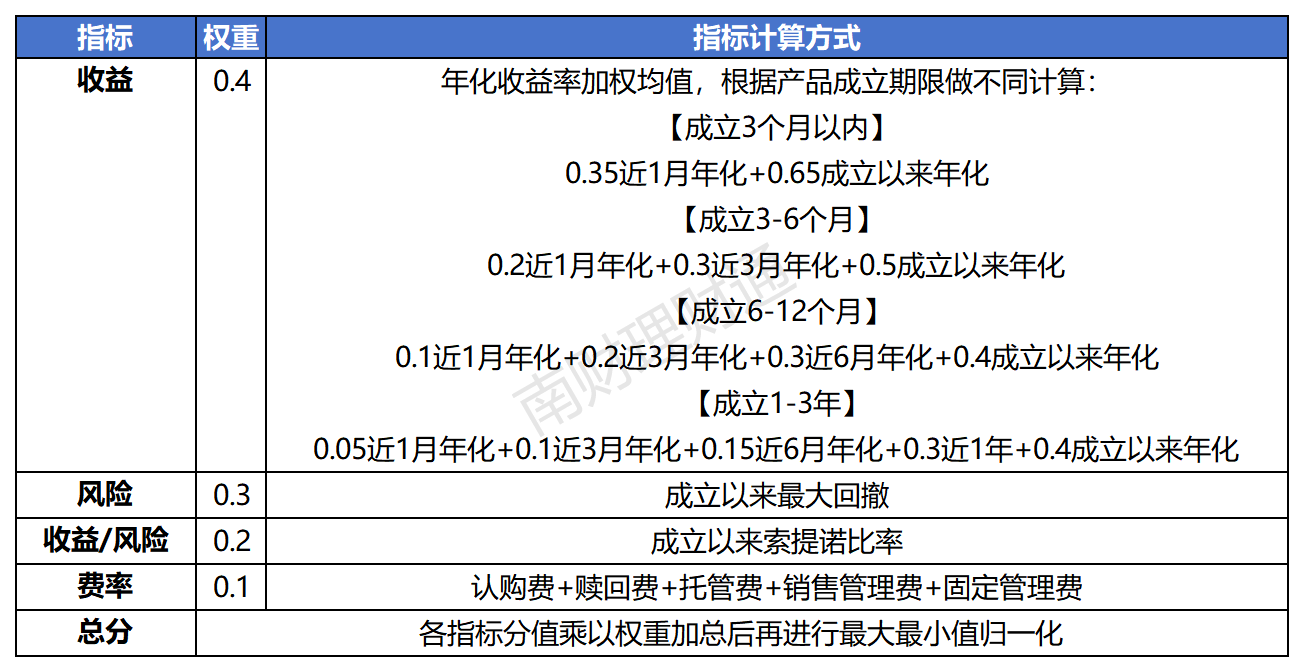
南银理财领衔城商行,以"行稳致远"不负客户托付 (6-12月固收增强理财测评) 近期,在低利率环境与权益市场结构性机会的双重驱动下,兼顾收益增厚和风险控制的固收增强策略理财产品受到关注,成为震荡市的优质选择。那么,哪 些固收增强理财产品表现更优?抗跌能力更强?哪家机构实力最强?本期,南财理财通课题组对固收增强理财产品进行测评。 测评说明: 由于6—12月期限产品数量占比较高,本期课题组重点测评6—12月期限的开放式公募人民币固收增强理财产品,根据产品不同的成立时限进行分组测评,细 分为3个月以内、3—6月、6—12月、1—3年、3年以上。 测评指标: | 指标 | 权重 | 指标计算方式 | | --- | --- | --- | | 收益 | 0.4 | 年化收益率加权均值,根据产品成立期限做不同计算: | | | | 【成立3个月以内】 | | | | 0.35近1月年化+0.65成立以来年化 | | | | 【成立3-6个月】 | | | | 0.2近1月年化+0.3近3月年化+0.5成立以来年化 | | | | 【成立6-12个月】 | | | | 0.1近1月年化+0.2近3月年化+0.3近6月年化 ...
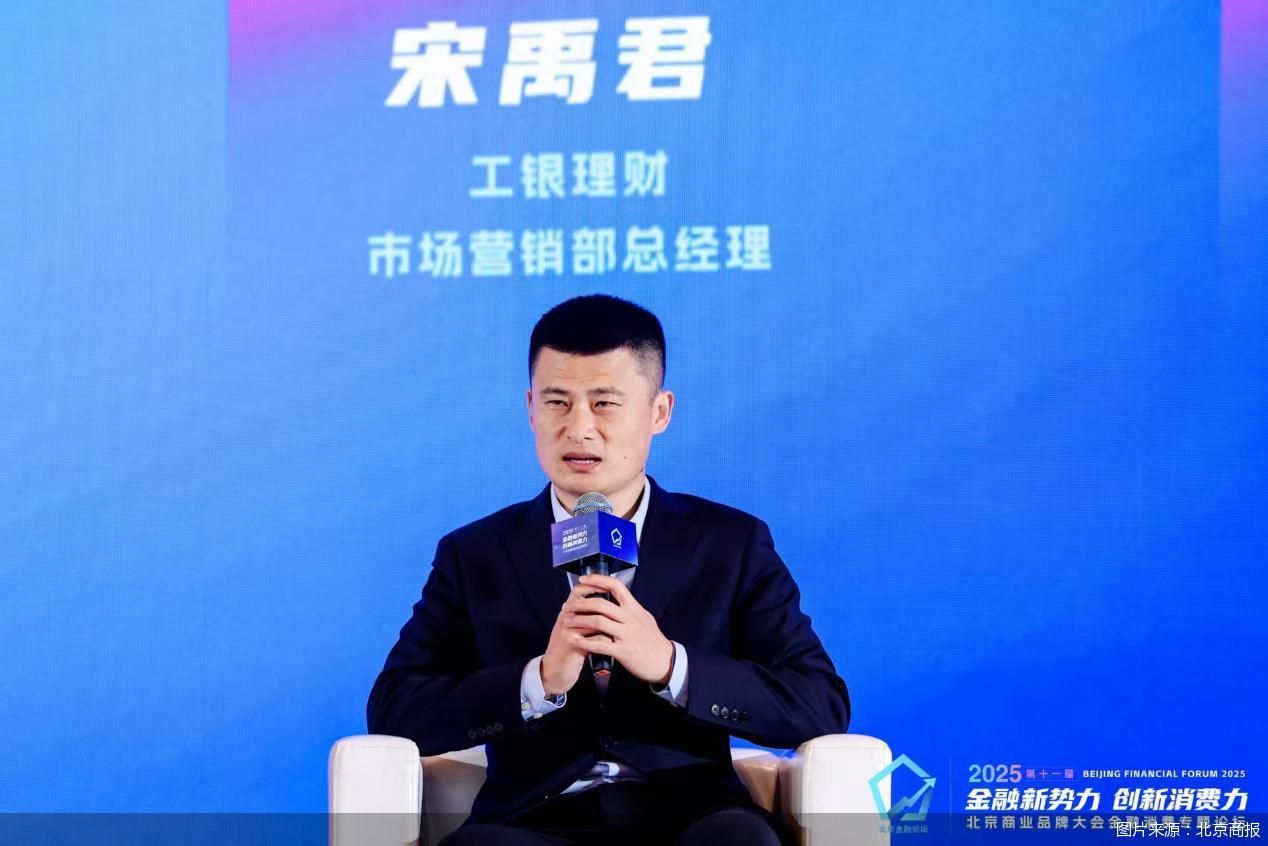
工银理财宋禹君:理财公司以多样化、多层次的产品布局,承接居民财富需求
Bei Jing Shang Bao· 2025-12-11 12:49
Core Insights - The forum discussed the reallocation of residents' deposits and the strategies of wealth management companies in the context of a changing financial landscape [1] Group 1: Factors Influencing Deposit Reallocation - The reallocation of residents' deposits is driven by multiple factors, including a continuous decline in social interest rates, which supports the development of the real economy [3] - The emergence of diverse investment opportunities in capital and commodity markets, such as A-shares, Hong Kong stocks, and precious metals like silver and copper, is attracting residents to seek diversified investments for better asset preservation and appreciation [3] - The increasingly rich ecosystem of the asset management industry allows wealth management companies to offer comprehensive financial options to clients [3] Group 2: Wealth Management Product Landscape - The current scale of bank wealth management products has reached 32.13 trillion yuan, showcasing significant scale advantages [3] - Wealth management companies are committed to providing higher quality products and improving performance returns to help residents preserve and grow their wealth, aligning with the mission of inclusive finance [3] - Wealth management products are characterized by low volatility and stability, aiming to create favorable returns for clients while effectively controlling drawdowns [3] Group 3: Risk Levels and Product Offerings - The risk levels of existing wealth management products are categorized into five levels (R1 to R5), with R1 being the lowest risk suitable for deposit migration clients [4] - Leading wealth management companies, including ICBC Wealth Management, have achieved a comprehensive product layout across all risk levels, terms, strategies, and underlying assets [4] - In addition to R1 products, pure bond and "fixed income plus" products are available for clients with higher risk tolerance, with a wide range of investable categories including A-shares, Hong Kong stocks, preferred stocks, REITs, US stocks and bonds, commodities, and futures options [4]
短期限纯固收产品最高涨超4% 部分产品全仓现金类资产
2 1 Shi Ji Jing Ji Bao Dao· 2025-12-11 09:17
Overall Performance - As of December 4, 2025, there are a total of 6,475 public pure fixed-income products with a maturity of three months or less, including different share classes [1] - Among these, 4,106 products have disclosed net values and achieved positive returns for nearly six consecutive months, representing 63.41% of the total [1] - Three wealth management companies are featured in the current ranking, with Minsheng Wealth Management having four products, while Huaxia Wealth Management and Xinyin Wealth Management each have three products, totaling six products that achieved "0 drawdown" over the past six months [1] Highlighted Product Analysis - The top product, Huaxia Wealth Management's "Fixed Income Pure Bond Shortest Holding 60 Days Wealth Management Product E Class A," has an average net value growth rate of 4.95% over the past six months [2] - Since its establishment in March 2025, this product has shown a steady upward trend, with a maximum drawdown of only 0.41% despite experiencing significant volatility during mid-July to mid-August [2] - The runner-up product, Minsheng Wealth Management's "Fuzhu Pure Bond 91 Days Holding Period 27th Wealth Management Product A," has an average net value growth rate of 3.97% and is the only product among the top three to achieve "0 drawdown" [2] - As of the end of Q3 this year, the product's bond holdings reached 73.32%, with the top ten holdings consisting entirely of credit bonds [2] Additional Insights - Other products achieving "0 drawdown" over the past six months include Minsheng Wealth Management's "Fuzhu Pure Bond 14 Days Holding Period 17th Wealth Management Product A" and "Fuzhu Pure Bond 7 Days Holding Period 28th Wealth Management Product A," as well as Xinyin Wealth Management's "Anyingxiang Fixed Income Stable Profit 21 Days Holding Period 2nd Wealth Management Product G Class" and "Anyingxiang Fixed Income Stable Profit 3 Months Holding Period 27th Wealth Management Product G Class," along with Huaxia Wealth Management's "Fixed Income Pure Bond Shortest Holding 90 Days Wealth Management Product K Class B" [2][3] - The average net value growth rate of the "0 drawdown" products exceeds 3%, but it is noteworthy that the three "0 drawdown" products from Minsheng Wealth Management have similar investment strategies, with the top ten holdings consisting solely of credit bonds [3] - Xinyin Wealth Management's "Anyingxiang Fixed Income Stable Profit 3 Months Holding Period 27th Wealth Management Product G Class" has all its holdings in cash and bank deposits as of the end of Q3, making it difficult to ascertain its sources of returns [3]