娱乐业

Search documents
世纪娱乐国际发布中期业绩 股东应占溢利2533.8万港元 同比扭亏为盈
Zhi Tong Cai Jing· 2025-11-28 10:29
Core Viewpoint - Century International (00959) reported a profit of HKD 5.76 million for the six months ending September 30, 2025, marking a significant turnaround with a net profit attributable to shareholders of HKD 25.338 million, compared to a loss in the previous period, resulting in a basic earnings per share of HKD 0.1976 [1] Financial Performance - The company achieved revenue of HKD 5.76 million during the reporting period [1] - The net profit attributable to shareholders was HKD 25.338 million, indicating a year-on-year turnaround from a loss [1] - Basic earnings per share were reported at HKD 0.1976 [1]
利雅得季六届活动共吸引来自135个国家的8000万游客
Shang Wu Bu Wang Zhan· 2025-11-26 16:26
Core Insights - The Riyadh Season has attracted 80 million visitors from 135 countries since its inception on October 11, 2019 [1] - The sixth edition of the Riyadh Season, which opened on October 10, has already drawn over 3 million visitors [1] - The Riyadh Season is part of Saudi Arabia's Vision 2030, aimed at promoting the tourism and entertainment sectors [1] Industry Summary - The Riyadh Season features a variety of unique experiences, including theater and music performances, video games, international dining, and thrilling adventure activities [1] - The initiative is a key component of Saudi Arabia's strategy to diversify its economy and enhance its global tourism appeal [1]
山雨欲来风满楼,日企紧张了
Guan Cha Zhe Wang· 2025-11-18 09:08
Group 1 - Japanese companies reliant on Chinese consumers and tourists are preparing for potential challenges due to deteriorating Sino-Japanese relations, with tourism, retail, and entertainment sectors expected to be most affected [1][3] - Following diplomatic tensions, Japanese stocks related to tourism and retail experienced significant sell-offs, with notable declines in companies such as Mitsukoshi Isetan (down 11.31%) and Takashimaya (down 6.18%) [1][3] - The number of Chinese tourists visiting Japan from January to September reached approximately 7.49 million, a year-on-year increase of over 40%, making them the largest group of foreign visitors [3][5] Group 2 - Chinese tourists accounted for 27.7% of total foreign tourist spending in Japan from July to September, amounting to 590.1 billion yen, a 26.1% increase from the previous year [5] - The impact of declining Chinese tourist numbers could lead to significant economic losses for Japan, with estimates suggesting a potential loss of 2.2 trillion yen and a GDP decrease of 0.36% [7][8] - The Japanese tourism sector is facing uncertainty, with reports of cancellations for group tours and a notable decrease in ticket bookings for flights to Japan [5][8]

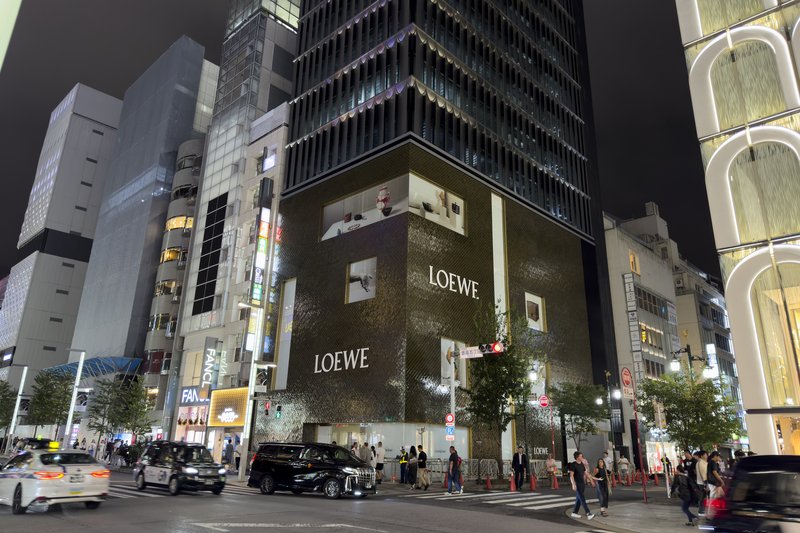
【实用】哪些企业需要缴纳文化建设费?要怎么申报呢?一文带你了解
蓝色柳林财税室· 2025-11-05 01:30
Core Viewpoint - The article discusses the Cultural Industry Development Fee, a non-tax revenue collected by the government to promote the healthy development of cultural industries, specifically targeting advertising and entertainment services. Taxpayer Entities - Taxpayers include advertising media units and outdoor advertising operators providing services within the People's Republic of China, as well as individuals and units providing entertainment services. Foreign advertising units providing services in China without a local establishment are also subject to this fee, with the service recipient acting as the withholding agent [1]. Definition of Services - Advertising services encompass various forms of promotion for clients' goods and services, including activities like advertising agency services and the publication of ads across multiple media [1]. - Entertainment services refer to businesses providing venues and services for entertainment activities, such as nightclubs, bars, and recreational facilities [1]. Calculation of Sales Amount - The taxable sales amount for advertising services is calculated as the total inclusive price received for services minus any paid advertising fees to other companies. Proper documentation, such as VAT invoices, is required for deductions [2]. - For entertainment services, the taxable sales amount is the total inclusive price received for the services provided [2]. Declaration Process - Taxpayers can log into the electronic tax bureau to view pending declarations and access the Cultural Industry Development Fee declaration page through specific menu options [4][5]. - The declaration process includes two methods: supplementary declaration and form-filling declaration, with options to edit deductible items for advertising services [6][7]. Important Notes - Taxpayers engaged in both advertising and entertainment services must submit separate declarations for each service type [10]. - Small-scale taxpayers with monthly sales not exceeding 20,000 yuan (or quarterly sales of 60,000 yuan) are exempt from the Cultural Industry Development Fee [10].

【实用】哪些企业需要缴纳文化建设费?要怎么申报呢?一文带你了解
蓝色柳林财税室· 2025-11-04 01:20
Core Viewpoint - The article discusses the Cultural Industry Development Fee, a non-tax revenue collected by the government to promote the healthy development of cultural industries, specifically targeting advertising and entertainment services. Taxpayer Entities - Taxpayers include advertising media units and outdoor advertising operators providing services within the People's Republic of China, as well as individuals and units providing entertainment services. Foreign advertising units providing services in China without a local establishment are also subject to this fee, with the service recipient being the withholding agent for the fee [1][2]. Definition of Services - Advertising services encompass various forms of promotion for clients' goods and services, including activities related to newspapers, magazines, radio, television, and online platforms. Entertainment services refer to businesses providing venues and services for entertainment activities, such as nightclubs, bars, and recreational facilities [1][2]. Calculation of Sales Amount - The taxable sales amount for advertising services is calculated as the total inclusive price received for services minus any paid advertising fees to other companies. For entertainment services, it is the total inclusive price received for the services provided [2]. Declaration Process - Taxpayers can log into the electronic tax bureau to view pending declarations. They can access the declaration page through specific menus for non-tax income declaration [4][5]. Declaration Methods - The declaration can be done through two methods: supplementary declaration and form-filling declaration. Taxpayers can confirm data accuracy and make necessary adjustments during the supplementary declaration process [6][7]. Important Notes - If a taxpayer engages in both advertising and entertainment services, separate forms must be filled out for each service type. Discrepancies in the amounts reported in the declaration can lead to submission failures, requiring manual corrections [10][11]. Small-scale taxpayers with monthly sales not exceeding 20,000 yuan (or quarterly 60,000 yuan) are exempt from this fee [11].

广东总量居全国首位,5万亿俱乐部年底有望扩员
3 6 Ke· 2025-10-31 02:20
Core Insights - The GDP data for the first three quarters of 2025 has been released, with 28 provinces reporting their figures, showing a diverse economic performance across the country [1][4]. GDP Rankings and Growth - Guangdong leads with a GDP of 10,517.698 billion yuan, maintaining its position as the top province for 36 consecutive years, with a growth rate of 4.1% [4][5]. - Jiangsu follows closely with a GDP of 10,281.1 billion yuan and a growth rate of 5.4%, surpassing the 10 trillion yuan mark [2][7]. - Gansu has the highest growth rate at 6.1%, indicating strong economic performance [3]. Economic Performance by Province - 20 provinces outperformed or matched the national average growth rate of 5.2% [1]. - Shandong, with a GDP of 77,115 billion yuan and a growth rate of 5.6%, is on track to join the 10 trillion yuan club [10][11]. - Beijing is projected to reach a GDP of 49,843.1 billion yuan by the end of 2024, potentially entering the 5 trillion yuan club [12][13]. Sectoral Contributions - Guangdong's industrial output increased by 3.5%, with advanced manufacturing and high-tech sectors growing by 5.4% and 6.4%, respectively [5]. - In Jiangsu, the industrial output rose by 6.8%, with equipment manufacturing growing by 9.4% [8]. - Hubei showed robust growth in all three economic drivers, with fixed asset investment up by 6.5% and foreign trade reaching a record high [9]. Consumer Market Trends - In Guangdong, retail sales of cultural and office supplies, home appliances, and communication equipment grew significantly, with increases of 21.0%, 31.0%, and 16.5%, respectively [6]. - Shandong's retail sales also showed strong growth, with a total of 30,386.1 billion yuan, reflecting a 5.6% increase [11].
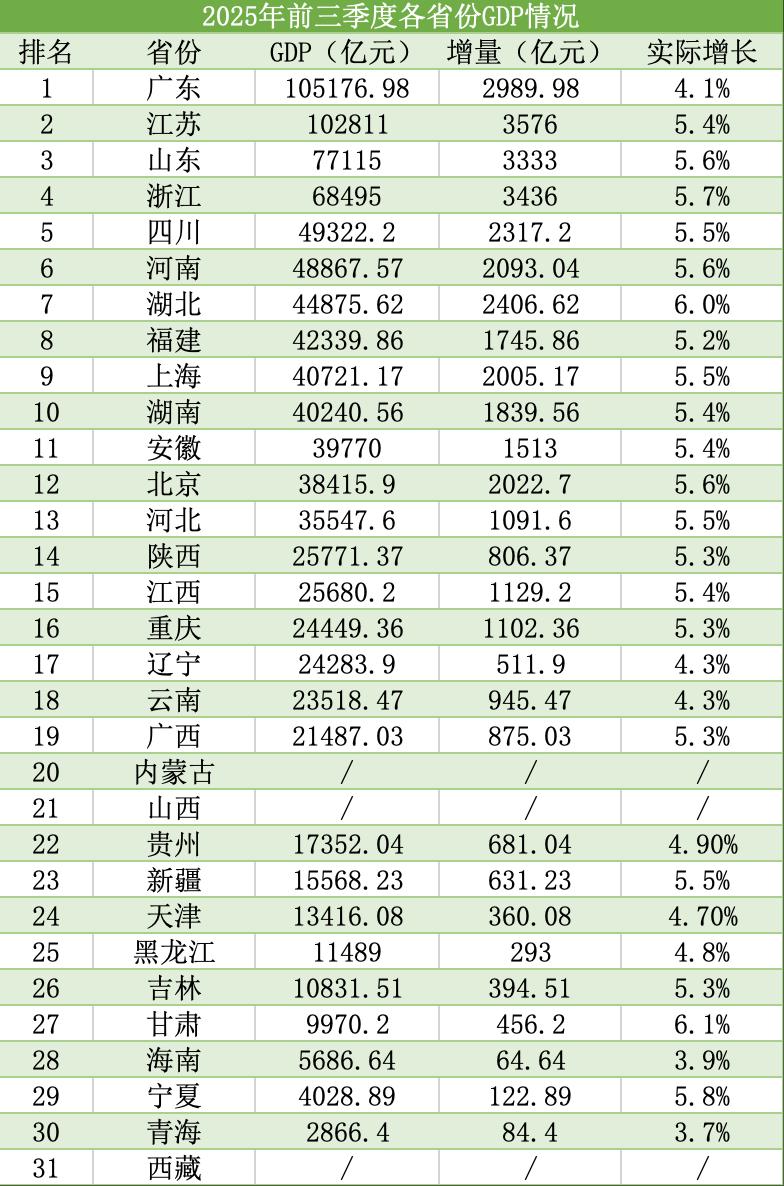
77115亿元!山东前三季度GDP增长5.6%
Qi Lu Wan Bao· 2025-10-28 07:36
Economic Overview - Shandong's GDP for the first three quarters reached 77,115 billion yuan, growing by 5.6% year-on-year, surpassing the national average, indicating strong economic resilience [1] - The primary industry added value was 4,825 billion yuan, growing by 3.9%; the secondary industry added value was 30,150 billion yuan, growing by 5.3%; and the tertiary industry added value was 42,140 billion yuan, growing by 6.1%, becoming the main driver of economic growth [1] Agriculture Sector - The total output value of agriculture, forestry, animal husbandry, and fishery grew by 4.3%, maintaining the same growth rate as the first half of the year [2] - Vegetable production increased by 3.1%, and fruit production grew by 2.6% [2] - Livestock production showed positive trends, with major livestock and poultry products increasing by 4.0%, and pig slaughtering up by 4.4% [2] Industrial Sector - The added value of large-scale industries in Shandong grew by 7.8%, indicating a sustained positive trend in industrial economy [3] - Equipment manufacturing saw a remarkable increase of 12.0%, significantly higher than the overall industrial growth [3] - The automotive industry grew by 17.0%, while the electronics sector increased by 16.6%, showcasing the rapid development of high-end manufacturing [3] Service Sector - The revenue of large-scale service industries grew by 5.4%, with 87.5% of industries experiencing revenue growth [4] - Consumer upgrade sectors performed well, with entertainment growing by 19.4% and business services by 16.9% [4] - Retail sales of consumer goods totaled 30,386.1 billion yuan, growing by 5.6%, with online retail sales increasing by 17.1% [4] Investment Trends - Despite a 3.7% decline in overall fixed asset investment, industrial investment grew by 7.7%, highlighting a shift towards high-quality development [6] - High-end manufacturing investment surged, with general equipment manufacturing up by 29.5% [6] Foreign Trade - Shandong's total import and export value reached 2.62 trillion yuan, growing by 5.5%, with exports at 1.60 trillion yuan and imports at 1.02 trillion yuan [7] - Private enterprises played a crucial role, with their import and export growth at 6.8%, accounting for 75.7% of total trade [7] Social Welfare - The employment situation remained stable, with 1.059 million new urban jobs created, reflecting resilience amid economic pressures [8] - Per capita disposable income reached 33,826 yuan, with urban and rural incomes growing by 4.4% and 5.1% respectively [8]
观山湖区“双节”旅游、消费增速均排贵阳市第一
Sou Hu Cai Jing· 2025-10-10 09:32
Group 1: Tourism and Economic Impact - During the period from October 1 to 8, the total number of tourists received in the Guanshanhu District reached 806,100, with total spending amounting to 463 million yuan, representing year-on-year growth rates of 22.28% and 23.91% respectively, ranking first in Guiyang City [1] - The "Double Festival" period saw various shopping malls hosting 151 themed events, attracting 3.23684 million visitors and generating consumption of over 354.14 million yuan, with a year-on-year increase of 9.32% and 24.1% respectively [3] - Notable shopping centers like Century Golden Source and China Resources Vientiane Mall reported significant increases in foot traffic and sales, with Century Golden Source attracting 942,000 visitors (up 7%) and generating 136.749 million yuan (up 33%), while China Resources Vientiane Mall attracted 435,800 visitors (up 24.87%) and generated 79.16 million yuan (up 29.05%) [4] Group 2: Cultural and Recreational Activities - The district hosted a variety of engaging activities during the holiday, including traditional cultural events and modern entertainment, which attracted large crowds and enhanced the festive atmosphere [7][11] - The newly opened "Huanhuayang Young" cultural tourism complex received nearly 17,000 visitors in its first four days, becoming a popular destination for nearby travelers [11] - Established attractions like Guizhou Provincial Museum and Baohua Lake Scenic Area continued to draw significant visitor numbers, with A-level scenic spots receiving 132,717 visitors and Guizhou Provincial Museum receiving over 150,000 visitors during the holiday [15] Group 3: Service Enhancements and Visitor Experience - The Guanshanhu District implemented measures to ensure adequate supply and stable prices during the holiday, enhancing the overall consumer experience [11] - Various service improvements were made at popular tourist spots, including free photography services and upgraded parking facilities, to provide a more convenient and enjoyable experience for visitors [19] - The district's focus on customer service included the establishment of information points and the introduction of smart storage services, contributing to a welcoming environment for tourists [19]

擦亮夜经济城市招牌
He Nan Ri Bao· 2025-10-08 23:27
Core Insights - The article emphasizes the importance of integrating local characteristics to create unique brand advantages in the development of night economies across different cities [1][2]. Group 1: Night Economy Development - The National Day and Mid-Autumn Festival holiday period showcased a surge in travel and consumer activity in China, highlighting the vibrant night economy [1]. - Cities like Luoyang and Zhengzhou have been recognized for their thriving night economies, as evidenced by the "Top 10 Nightlife Cities for National Day 2025" list released by Gaode [1]. - Luoyang is leveraging its rich historical and cultural heritage to develop unique night tourism experiences, such as night tours of the Longmen Grottoes and Luoyang Ancient City [1]. - Zhengzhou's nightlife features a blend of historical landmarks and modern attractions, creating a unique romantic atmosphere for visitors [1]. Group 2: Economic Implications - Night economy encompasses various sectors, including transportation, dining, tourism, and entertainment, serving as a significant driver for GDP growth [2]. - The article argues that night economy should not be limited to simple leisure activities but should reflect the broader status and prospects of the tertiary industry in cities [2]. - To enhance the night economy, cities need to move away from isolated efforts and instead focus on scientific planning and coordinated public services to create scale effects [2]. Group 3: Cultural and Creative Aspects - The article highlights the need for cities to maximize their historical and cultural resources to differentiate their night economies and enhance public life [3]. - Creative marketing and clear positioning are essential for cities to stand out and attract visitors to their night economies [3].
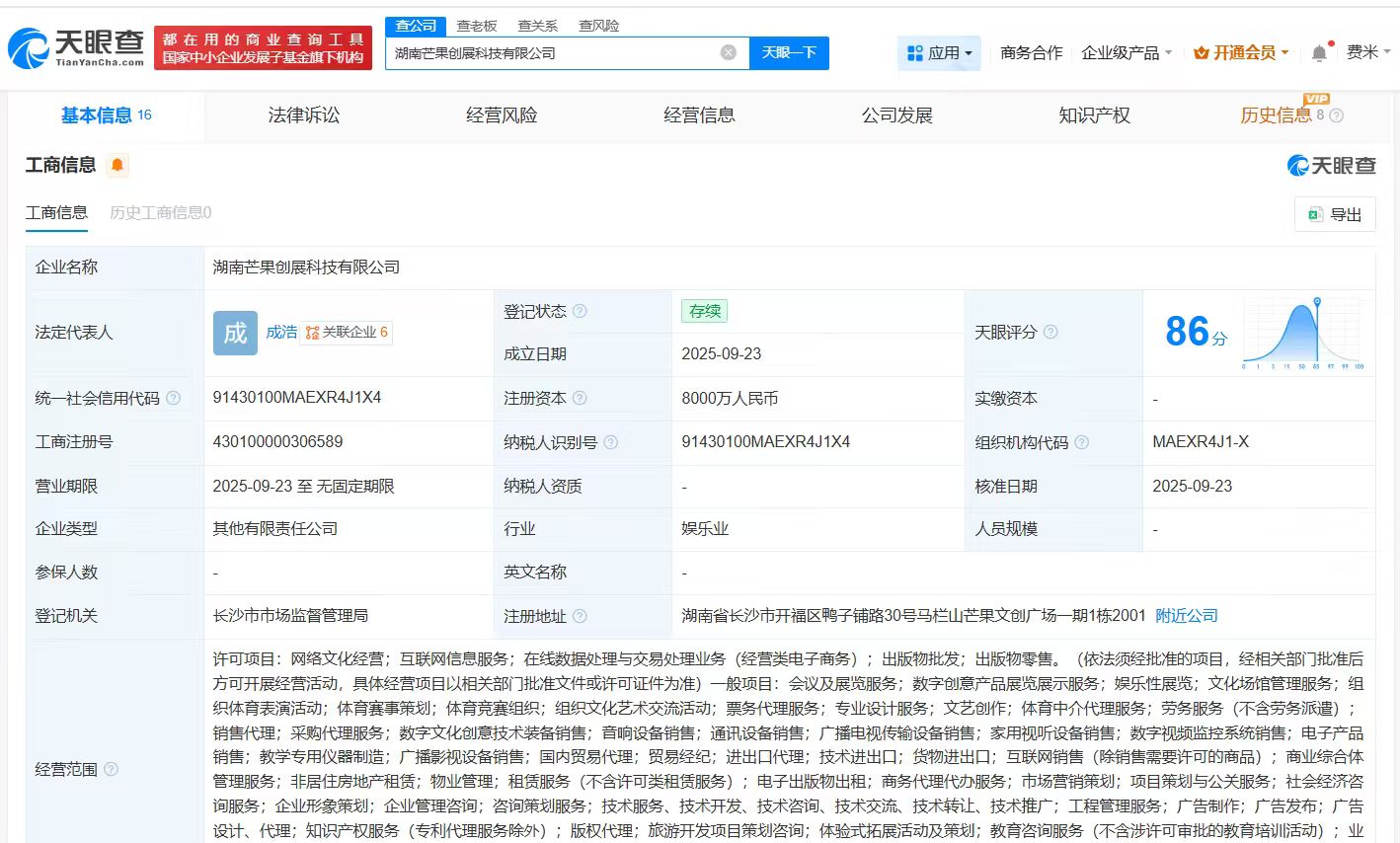
芒果超媒等成立创展科技公司
2 1 Shi Ji Jing Ji Bao Dao· 2025-09-25 02:51
Group 1 - Hunan Mango Chuangzhan Technology Co., Ltd. was recently established with a registered capital of 80 million RMB [1] - The company is co-owned by Changsha Malanshan Investment Development Co., Ltd., Mango Super Media, Mango Media Co., Ltd., and Zhongguang Tianze Media Co., Ltd. [1] - The business scope includes online cultural operations, internet information services, and online data processing and transaction processing [1] Group 2 - The company was registered on September 23, 2025, and is located in Changsha, Hunan Province [2] - The shareholders hold the following stakes: 37.5% by Changsha Malanshan Investment Development Co., Ltd., 37% by Mango Super Media, 14% by Mango Media Co., Ltd., and 11.5% by Zhongguang Tianze Media Co., Ltd. [2] - The company is classified under the entertainment industry and operates as a limited liability company [2]