
数字广告

Search documents
2026春节广告趋势:PropellerAds专家预测流量高峰
Sou Hu Cai Jing· 2026-02-09 03:04
Group 1: Core Insights - The Spring Festival, also known as Lunar New Year, is a significant marketing opportunity for advertisers, characterized by increased consumer engagement and spending [1] - The advertising focus during the Spring Festival should align with the festive atmosphere and user psychology, emphasizing light, entertaining, and instant gratification content [4][5] Group 2: Advertising Target Markets - Key advertising markets include first-tier cities in mainland China, with traffic shifting to second and third-tier cities during the holiday [4] - Stable performance is expected in Southeast Asian markets (Malaysia, Singapore, Indonesia, Vietnam, Thailand, Philippines) and overseas Chinese communities in cities like Sydney, San Francisco, London, and Vancouver [4] Group 3: Popular Activity Types and Traffic Strategies - Successful activities during the Spring Festival revolve around gifting and the "new beginning" mindset, with e-commerce, travel, entertainment, and financial products being popular [5] - Mobile-first strategies, including push notifications and pop-up ads, are effective in reaching users, with social platforms like Douyin, Xiaohongshu, and WeChat performing well during the festival [5] Group 4: User Behavior Changes and Traffic Peaks - User traffic exhibits three peaks: pre-festival preparation, during the festival with increased impulsive spending, and post-festival for secondary purchases [6] - Emotional decision-making drives shopping behavior, shifting from self-use to gifting, with increased average transaction values and a focus on packaging and delivery convenience [6] Group 5: Creative Strategies and Marketing Optimization - Creative strategies should focus on themes of luck and wealth, gifting, and urgency, utilizing festive elements like red and gold colors, lanterns, and zodiac symbols [7] - Messaging that emphasizes perfect gifts for family and limited-time offers can enhance conversion rates [7]


巨量引擎发布2025年度治理报告:以AI治AI,守护广告生态良性发展
Huan Qiu Wang· 2026-02-06 08:03
Core Insights - The report released by the company highlights the transformation of the advertising industry driven by AIGC technology and the emergence of new security risks [1] - The company has established a comprehensive risk control system based on the principle of "AI governing AI," effectively enhancing user experience and commercial efficiency [1][3] Group 1: AI Governance and Risk Control - The company has developed an intelligent risk control system capable of identifying new risks such as deep forgery and AI agent cheating, with a peak daily handling of over 200,000 black market accounts [3] - The Consumer Complaint Index (CCR) system was introduced to quantify and analyze user complaints, resulting in a 56.2% year-on-year decrease in content CCR and a 67.1% decrease in fulfillment CCR in 2025, significantly improving user advertising experience [3] Group 2: Empowering Compliance and Protecting Vulnerable Groups - The company has transitioned from a "governor" to an "enabler," launching an intelligent compliance support system that includes detailed AI review guidelines and a one-click content correction tool [5] - A special protection plan was introduced for elderly and underage users, resolving issues for over 5,800 individuals with a 91% problem resolution rate, while overall user satisfaction with advertising complaints increased by 11% year-on-year [5] Group 3: Industry Collaboration and Social Responsibility - The company is actively promoting its governance practices as public assets, with its CCR-based advertising experience governance system recognized as an excellent case by the China Advertising Association [8] - The company has engaged in social value creation by producing anti-fraud microfilms and conducting educational sessions on digital literacy in collaboration with law enforcement, addressing 18 criminal cases and apprehending 104 suspects in 2025 [8][9]

巨量引擎年度治理报告:全年拦截百亿违规素材,关停400万+风险账户
2 1 Shi Ji Jing Ji Bao Dao· 2026-02-05 13:06
Core Insights - The report emphasizes the transformation of the advertising industry through AIGC technology while highlighting new security risks that have emerged in the AI era [1] - The company has established a comprehensive risk control system based on the "AI governance AI" concept, achieving significant improvements in user experience and commercial efficiency [1] Group 1: AI Governance and Risk Control - The company has transitioned the "AI governance AI" concept into systematic practice, creating an intelligent risk control system capable of identifying new risks such as deep forgery and AI agent cheating, with a peak daily handling of over 200,000 black market accounts [3] - The introduction of the Consumer Complaint Index (CCR) system has led to a 56.2% year-on-year decrease in content CCR and a 67.1% decrease in fulfillment CCR, significantly enhancing user advertising experience [3] Group 2: Empowering Compliance and Protecting Vulnerable Groups - The company has evolved from a "governor" to an "enabler," launching an intelligent compliance support system that includes detailed AI review guidelines and a one-click AIGC content correction tool, resulting in a 194% increase in rule center page views and compliance training covering over 3 million people [5] - A special protection plan for elderly and underage users has been implemented, resolving issues for over 5,800 users with a 91% resolution rate, while overall user satisfaction with advertising complaints increased by 11% year-on-year [5] Group 3: Industry Collaboration and Social Responsibility - The company is actively promoting its governance practices as industry public assets, with its CCR-based advertising experience governance system recognized as an excellent case by the China Advertising Association [7] - The company has engaged in social value creation by producing anti-fraud microfilms and conducting educational sessions in schools, while also assisting law enforcement in tackling 18 criminal cases related to advertising [7] Group 4: Expert and Industry Response - Experts have noted that the company's initiatives reflect a shift from individual corporate risk management to a comprehensive ecosystem co-construction, indicating a significant trend in the high-quality development of platform enterprises [8] - The company has committed to continuous investment in safety governance systems and AI risk control technology, aiming to uphold compliance and user trust while fostering a healthy industry ecosystem [8]

未来10年,这18个赛道将带来48万亿美元收入
创业家· 2026-02-04 10:35
Core Insights - McKinsey's report identifies 18 industry sectors likely to reshape the global business landscape, predicting revenues of $29 trillion to $48 trillion by 2040, contributing 18-34% to global GDP growth [2] E-commerce - By 2040, e-commerce's share of global retail revenue is expected to rise to 27%-38% from approximately 20% currently [3] - Growth drivers include market expansion in developing countries and new product categories in developed markets, such as healthcare and emotionally valuable products [4] - Significant investments are anticipated in customer acquisition and last-mile delivery across e-commerce platforms [5] Electric Vehicles - Electric vehicles (EVs) are projected to exceed 50% of global passenger car sales by 2040 [6] - Breakthroughs in battery technology and smart algorithms will significantly influence this sector, prompting increased R&D investments from both EV manufacturers and traditional automakers [7] Cloud Services - The demand for higher storage and computing capabilities is driven by a more interconnected world and the need for AI products requiring substantial computational power [9] - The cloud services industry experienced a 17% compound annual growth rate from 2005 to 2020, with similar growth expected in the coming decades [10] Semiconductors - The semiconductor industry is forecasted to grow at a compound annual growth rate of 6%-8% over the next decade, driven by demand in computing, data storage, automotive, communication, and industrial electronics [11] AI Software Services - The rapid development of AI has led to its classification as a distinct sector, with increasing usage of AI assistants [12] - Companies in the AI space are engaged in a competitive race to develop advanced foundational models and applications [13] Digital Advertising - Digital advertising is expanding in value globally, fueled by an increasing number of internet users and more time spent online [14] - Continuous algorithm improvements enhance platforms' abilities to target customers and track advertising costs, although competition for user attention necessitates higher investments in engaging content [15] Streaming Video - Investment in customer acquisition and content production is rising, prompting streaming platforms to seek new revenue models [17] - Developing countries are expected to contribute to growth in subscription and advertising revenues, with projections indicating over 1 billion households subscribing to long-form video services by 2040 [18] Shared Autonomous Vehicles - The advent of autonomous driving technology may reduce the necessity for personal vehicle ownership [19] - By 2040, shared autonomous vehicles could account for 25%-51% of shared mobility revenue [20] Space Economy - The world is on the brink of entering a space economy era, with advancements in reusable rocket technology [21][22] Cybersecurity - Cybercrime caused approximately $950 billion in direct economic losses in 2020, with indirect losses potentially reaching $4-6 trillion [24] - Increasing awareness of cybersecurity has led companies to enhance their investments in this area [25] Batteries - Significant advancements in battery technology have tripled energy density over the past few decades [26] - The global energy transition is driving demand for batteries, particularly in electric vehicles, energy storage, and consumer electronics, with EVs expected to represent over 80% of the battery market by 2040 [28] Video Games - By 2030, an estimated 40% of the global population may become video game players [30] - New gaming models, such as mobile and cloud gaming, are accelerating market growth, with free-to-play games generating substantial revenue [32] Robotics - The integration of AI with robotics is creating significant expectations for humanoid robots as "ultimate intelligent agents" [33] Industrial and Consumer Biotechnology - Breakthroughs in gene editing and other technologies are accelerating the application of biotechnology in agriculture, alternative proteins, consumer products, and bio-materials [37] Modular Construction - Modular construction methods can significantly enhance building efficiency, addressing global housing shortages and high costs [38] Nuclear Fission Power - Safer, smaller modular reactors may supplement renewable energy sources, with commitments from over 20 countries to double nuclear energy output by 2050 [40] Air Traffic - Electric vertical takeoff and landing vehicles and delivery drones represent major technological shifts in air traffic [41] Obesity Treatment Drugs - The prevalence of obesity is projected to rise from 15% in 2020 to 24% by 2035, indicating a potential market for effective weight loss products [43]

Why Walmart Continues to Rally While Executives Sell the Stock
Yahoo Finance· 2026-01-27 18:13
Core Insights - Walmart is experiencing significant stock performance, trading near all-time highs at approximately $118 per share and nearing a $1 trillion market capitalization, outperforming competitors and the broader retail sector [3] - Despite the positive market performance, insider trading shows a concerning trend with over $60 million in sales and no open-market purchases by insiders in the last 12 months, which typically signals a lack of confidence in the company's future [4] - The company is undergoing a transformation from a traditional grocer to a high-margin technology firm, which may explain the disconnect between stock performance and insider selling [4] Insider Trading Dynamics - Recent insider sales include outgoing CEO Doug McMillon selling approximately 19,416 shares valued at over $2.3 million and incoming CEO John Furner selling around $1.5 million in stock, alongside other executives [5] - The trend of insider selling, while appearing bearish, is contextualized by the leadership transition and is not necessarily indicative of weak corporate fundamentals [6] Institutional Confidence - Institutional investors continue to show confidence in Walmart, driven by its dominance in the retail sector, a strong competitive position, and a reliable dividend, despite the insider selling [6]

“七巨头“财报本周亮剑:AI万亿豪赌迎生死大考,华尔街已举“惩罚之锤”
智通财经网· 2026-01-26 00:00
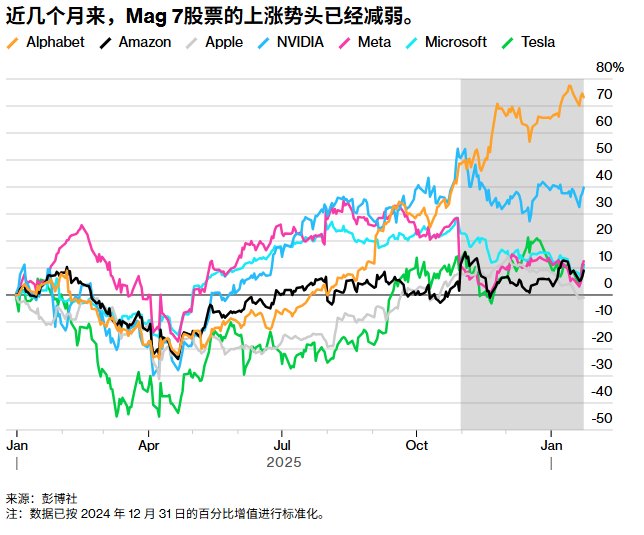
Core Viewpoint - Investors are focusing on niche stocks in the artificial intelligence sector, with upcoming earnings reports from major tech companies serving as a critical indicator for the continuation of this strategy into 2026 [1] Group 1: Performance of Major Tech Companies - The "Tech Seven" companies, including Google, Amazon, Apple, Meta Platforms, Microsoft, Nvidia, and Tesla, have significantly influenced the stock market over the past three years, but this trend reversed by the end of 2025, leading to skepticism about the returns on their substantial investments in AI [1] - Following the peak of the Tech Seven index on October 29, 2025, five of the seven companies saw their stock prices decline, underperforming the S&P 500 index, with only Google and Amazon recording gains [1] Group 2: Shift in Investor Focus - Traders have shifted their attention to companies benefiting from substantial funding from large tech firms, with stocks like Sandisk, Micron Technology, and Western Digital seeing significant price increases of over 130%, 76%, and 67% respectively since the Tech Seven index's peak [2] - The performance of tech stocks is now expected to be driven by earnings, with major firms needing to demonstrate satisfactory results to attract capital back into the sector [2] Group 3: Upcoming Earnings Reports - Microsoft, Meta Platforms, and Tesla are set to release their earnings reports on Wednesday, followed by Apple on Thursday, with Alphabet and Nvidia's reports scheduled for early February [2] - The Tech Seven group is projected to see a 20% profit growth in the fourth quarter, marking the slowest growth rate since early 2023, indicating pressure on these companies to show returns on their capital expenditures [2][4] Group 4: Capital Expenditure and Growth Expectations - Major tech companies are expected to increase their capital expenditures significantly, with projections of around $475 billion in 2026, up from $230 billion in 2024, necessitating visible returns on these investments [4] - If these companies fail to meet growth targets, they risk substantial stock price declines, as seen with Meta Platforms, which experienced an 11% drop following its capital expenditure announcement without clear profitability guidance [5] Group 5: Market Dynamics and Valuation - Despite the challenges, the Tech Seven stocks are not considered expensive historically, with an expected price-to-earnings ratio of 28, aligning with the average over the past decade [8] - The S&P 500 index's performance is heavily influenced by the Tech Seven, which accounts for over one-third of the index's weight, making it difficult for investors to completely avoid these stocks [5]





七巨头“财报本周亮剑:AI万亿豪赌迎生死大考,华尔街已举“惩罚之锤
Zhi Tong Cai Jing· 2026-01-25 23:59
Core Viewpoint - Investors are focusing on niche stocks in the artificial intelligence sector, with upcoming earnings reports from major tech companies serving as a critical indicator for the continuation of this strategy into 2026 [1] Group 1: Performance of Major Tech Companies - The "Tech Seven" companies, including Google, Amazon, Apple, Meta Platforms, Microsoft, Nvidia, and Tesla, have significantly influenced the stock market over the past three years, but skepticism is growing regarding their AI investments and returns [1] - As of October 29, 2025, five of the seven companies saw their stock prices decline, underperforming the S&P 500 index, with only Google and Amazon showing gains [1] - The group is expected to report a 20% profit growth for Q4, marking the slowest growth since early 2023, indicating pressure to demonstrate returns on substantial capital expenditures [3][6] Group 2: Shift in Investor Focus - Following the decline of the Tech Seven index, traders have shifted their attention to companies benefiting from funding from these tech giants, with stocks like Sandisk, Micron Technology, and Western Digital seeing significant price increases [2] - The performance of these smaller companies is attributed to expectations of economic growth and attractive valuations, suggesting a broader market shift towards performance-driven investments [2] Group 3: Earnings Reports and Expectations - Major companies like Microsoft, Meta Platforms, and Tesla are set to release earnings reports soon, with Alphabet and Nvidia following later, which will provide insights into various sectors including cloud computing and digital advertising [2][3] - Microsoft’s Azure business has shown remarkable growth, with a 39% revenue increase in Q1, driven by demand for AI model training, and expectations for continued growth in the upcoming quarter [5] Group 4: Capital Expenditure and Investor Sentiment - Major tech companies are projected to increase capital expenditures to approximately $475 billion by 2026, up from $230 billion in 2024, raising investor expectations for returns [6] - The market is cautious, as companies that fail to meet growth targets may face significant stock price declines, as evidenced by Meta Platforms' 11% drop following its capital expenditure announcement [6] Group 5: Market Dynamics and Valuation - The Tech Seven companies dominate the S&P 500 index, accounting for over one-third of its total weight, making it challenging for investors to avoid these stocks [7] - Despite the recent performance issues, the expected price-to-earnings ratio for the Tech Seven is 28, aligning with historical averages, indicating that these stocks are not overly expensive [10]

从“七巨头信仰”到“用表现说话” 下周美股面临财报生死局
Ge Long Hui A P P· 2026-01-25 14:26
Core Viewpoint - The "Big Seven" tech companies—Alphabet, Amazon, Apple, Meta, Microsoft, Nvidia, and Tesla—have led the stock market for most of the past three years, but this trend reversed by the end of 2025 as Wall Street began to question the substantial investments made in artificial intelligence and the timeline for returns on these investments [1] Group 1: Stock Performance - An index tracking the Big Seven reached a record high on October 29, but since then, five of these companies have seen their stock prices decline, underperforming the S&P 500 index [1] - Only Alphabet and Amazon have maintained an upward trajectory, with Alphabet's stock increasing nearly 20% [1] Group 2: Market Sentiment - Darrell Cronk, Chief Investment Officer at Wells Fargo Wealth and Investment Management, stated that tech stocks have become a "show me" story, indicating that funds will flow back into the tech sector if large tech companies continue to deliver strong performance [1] - Upcoming earnings reports from Microsoft, Apple, Tesla, and Meta will provide insights into the health of various sectors, including cloud computing, electronic devices, software, and digital advertising [1]

未来10年,这18个赛道将带来48万亿美元收入
创业家· 2026-01-25 09:33
Core Insights - McKinsey's report identifies 18 industry sectors likely to reshape the global business landscape, predicting revenues of $29 trillion to $48 trillion by 2040, contributing 18-34% to global GDP growth [2] E-commerce - By 2040, e-commerce's share of global retail revenue is expected to rise to 27%-38%, up from approximately 20% currently [3] - Growth drivers include market expansion in developing countries and new product categories in developed nations, such as healthcare and emotionally valuable products [4] - Significant investments are anticipated in customer acquisition and last-mile delivery across e-commerce platforms [5] Electric Vehicles - Electric vehicles (EVs) are projected to exceed 50% of global passenger car sales by 2040 [6] - Breakthroughs in battery technology and smart algorithms will significantly influence this sector, prompting increased R&D investments from both EV manufacturers and traditional automakers [7] Cloud Services - The demand for higher storage and computing capabilities is driven by a more interconnected world and the need for AI products requiring substantial computational power [9] - The cloud services industry experienced a 17% compound annual growth rate (CAGR) from 2005 to 2020, with similar growth expected in the coming decades [10] Semiconductors - The semiconductor industry is essential for the digital world, with demand from computing, data storage, automotive, communication, and industrial electronics driving growth [11] - A sustained CAGR of 6%-8% is forecasted for the semiconductor sector over the next decade [11] AI Software Services - The rapid development of AI has led to its classification as a distinct sector, with increasing usage of AI assistants [12] - Companies in the AI space are engaged in a competitive race to develop advanced foundational models and applications [13] Digital Advertising - Digital advertising, through search, social media, and media services, is expanding in value as internet usage among the middle class increases [14] - Continuous algorithm improvements enhance platforms' abilities to target customers and track advertising costs, although competition for user attention necessitates increased investment in engaging content [15] Streaming Video - Investment in customer acquisition and content production is rising, prompting streaming platforms to seek new revenue models [17] - Developing countries may provide incremental growth in subscription and advertising revenue for streaming services, with projections indicating over 1 billion households subscribing to long-form video services by 2040 [18] Shared Autonomous Vehicles - The advent of autonomous driving technology may reduce the necessity for personal vehicle ownership [19] - By 2040, shared autonomous vehicles could account for 25%-51% of shared mobility revenue [20] Space Economy - The world is on the brink of entering a space economy era, with advancements in reusable rocket technology changing the aerospace industry [21][22] Cybersecurity - Cybercrime caused approximately $950 billion in direct economic losses in 2020, with indirect losses potentially reaching $4-6 trillion [24] - Increasing awareness of cybersecurity has led companies to enhance their investments in this area [25] Batteries - Significant advancements in battery technology have tripled energy density over the past few decades [26] - The global energy transition is driving demand for batteries, particularly from electric vehicles, energy storage, and consumer electronics, with EVs expected to comprise over 80% of the battery market by 2040 [28] Video Games - By 2030, an estimated 40% of the global population may become video game players [30] - New gaming models, such as mobile and cloud gaming, are accelerating market growth, with free-to-play games generating substantial revenue [32] Robotics - The integration of AI with robotics is creating significant expectations for humanoid robots as "ultimate intelligent agents" [33] Industrial and Consumer Biotechnology - Breakthroughs in gene editing and other technologies are accelerating the application of biotechnology in agriculture, alternative proteins, consumer products, and bio-materials [37] Modular Construction - Modular construction methods, which involve prefabricating building components for on-site assembly, can significantly enhance construction efficiency [38] Nuclear Fission Power - The development of safer, smaller modular reactors presents opportunities to supplement renewable energy sources [39] Air Traffic - Electric vertical takeoff and landing vehicles and delivery drones are expected to drive significant technological changes in air traffic [41] Obesity Treatment Drugs - The prevalence of obesity is projected to rise from 15% in 2020 to 24% by 2035, indicating a potential market for effective weight loss products [43]

深圳罗湖发布“3+3+4”产业蓝图 老城区如何向新突围?
Nan Fang Du Shi Bao· 2026-01-23 06:07
Core Insights - The article discusses the launch of a strategic plan for the Luohu District in Shenzhen, focusing on building a modern industrial system characterized by "3+3+4" framework aimed at high-quality development [1][8] Group 1: Modern Industrial System - The "3+3+4" modern industrial system includes consolidating three major industries: finance, commerce, and professional services; optimizing three characteristic industries: gold and jewelry, tourism services, and modern logistics; and developing four emerging industries: soft information and artificial intelligence, life and health, safety and energy conservation, and aerospace [2][3] - The strategy emphasizes a gradient approach of "consolidate, optimize, and seize opportunities" to transition from optimizing existing industries to achieving breakthroughs in new growth areas [2] Group 2: Key Industry Developments - In finance, the focus is on enhancing the Hongling New Financial Industry Belt and establishing a VC/PE cluster in Sungang, while promoting fintech and innovative insurance [2] - The commerce sector aims to advance digital transformation and platform development, enhancing traditional consumer goods and fostering new product categories like smart home devices [2] - The professional services sector will leverage building economies to promote the growth of digital advertising, management consulting, and various service industries [2] Group 3: Emerging Industries - In the field of soft information and AI, the plan includes creating an ecosystem for AI applications and establishing innovation centers [4] - The life and health sector will focus on high-end medical devices and AI in healthcare, with plans for a global R&D base for disposable endoscopes [4] - The safety and energy conservation sector aims to innovate application scenarios and support national-level technology development [4] Group 4: Economic Forms - The plan outlines the development of five economic forms: headquarters economy, platform economy, port economy, building economy, and first-release economy, aiming to create a new industrial development pattern [5][6] - The port economy will leverage Luohu's geographical advantages to enhance cross-border industrial integration, while the first-release economy will focus on brand cultivation and innovative application scenarios [6] Group 5: Support Systems - The plan emphasizes a comprehensive enterprise service system that includes project implementation, incubation, and support for growth, alongside a focus on building quality incubators and accelerators [7] - Financial strategies will integrate various funding mechanisms to support industrial development, while also promoting data resource sharing for digital transformation [7] Group 6: Strategic Vision - The strategic vision aims to address the challenges of modernizing industries in an older urban area, combining traditional strengths with new technologies to create new business models and consumption scenarios [8][9] - The initiative reflects a commitment to embracing digital and open economies, positioning Luohu for a significant upgrade in overall capabilities [8]
