有色冶金

Search documents
农业大市加快补齐工业短板
Xin Lang Cai Jing· 2025-12-19 22:31
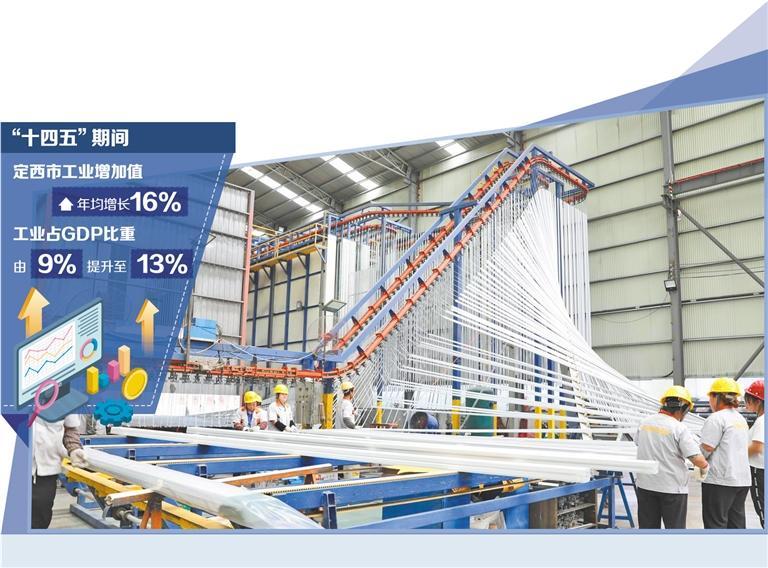
Core Insights - Gansu Dingxi City is transforming its industrial landscape by implementing a "strong industry" initiative, focusing on both traditional and emerging industries to enhance industrial output and attract investment [2][5]. Industrial Growth - As of now, Dingxi has 295 industrial enterprises above designated size, an increase of 177 since 2020, with industrial value added growing at an average annual rate of 16% during the 14th Five-Year Plan period [2][5]. - The proportion of industrial output in GDP has risen from 9% to 13% [2]. Investment and Policy Support - Dingxi High-strength Fasteners Co., Ltd. has achieved an annual production capacity exceeding 100,000 tons, ranking among the top three in the domestic market for high-end wind power fasteners, supported by over 10 million yuan in policy funding [3]. - The city has seen a significant increase in external investment, with funds rising from 20.686 billion yuan in 2020 to 73.082 billion yuan in 2024, reflecting an annual growth rate of 37.1% [5]. Agricultural and Industrial Integration - The integration of traditional agricultural products like medicinal herbs and potatoes into industrial processes is being emphasized, with companies like Gansu Fuzheng Pharmaceutical establishing standardized planting bases and connecting with thousands of farmers [6][7]. - The potato industry has seen a transformation with companies like Gansu Blue Sky Potato Industry Development Co., Ltd. creating a closed-loop ecosystem that includes supply chain finance and product diversification [8]. Green and Digital Transformation - Gansu Dongxing Jiaxin New Materials Co., Ltd. is focusing on a green aluminum alloy production chain, achieving significant energy savings and CO2 reduction [9]. - The integration of digital technologies in industries is enhancing productivity, with companies reporting a 25% increase in efficiency through automation and digital transformation [10]. Future Outlook - Dingxi aims to establish itself as a distinctive industrial hub in the Longzhong region, focusing on resilience, innovation, structural optimization, and low-carbon transformation as part of its strategic development plan [10].

2025新能源发展大会在甘肃敦煌举办
Zhong Guo Jing Ji Wang· 2025-12-18 06:11
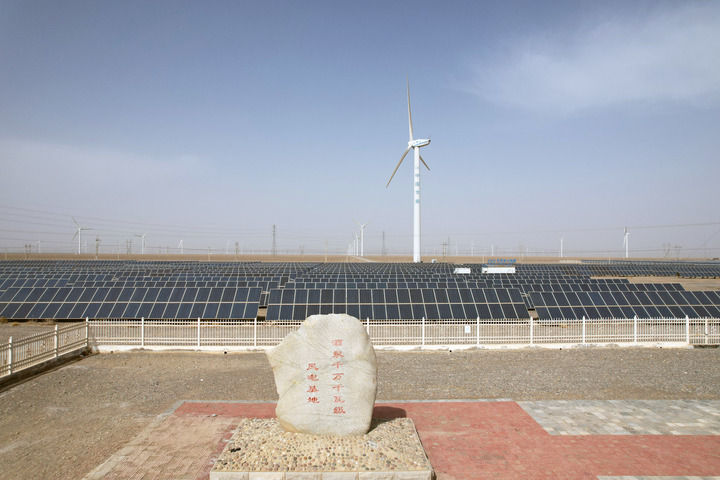
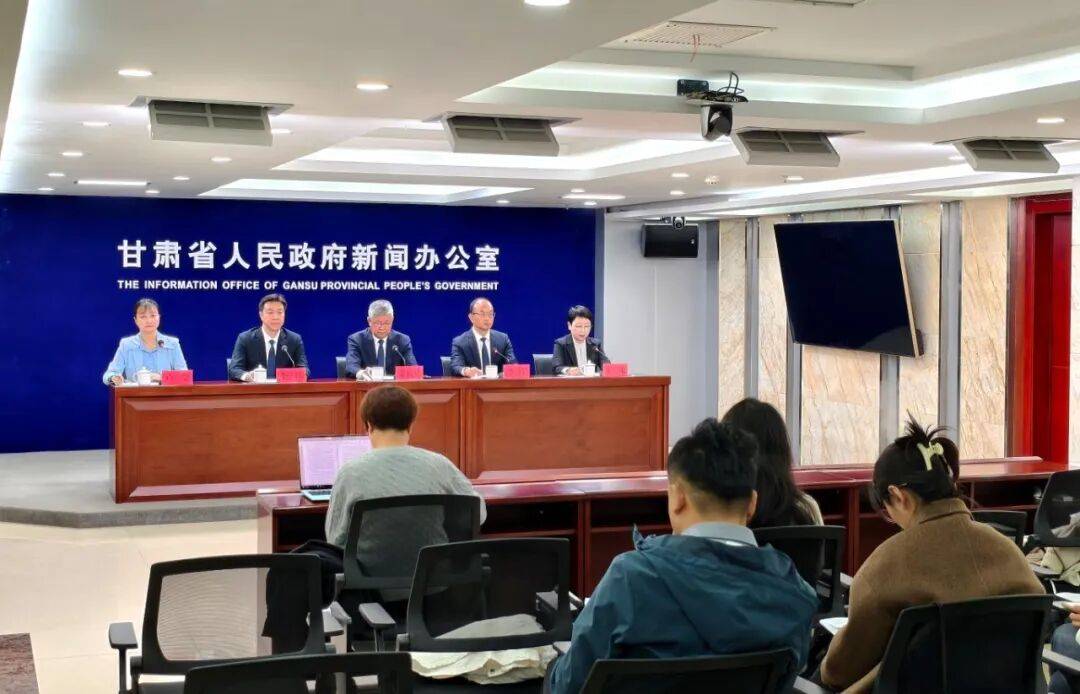
Core Insights - The 2025 New Energy Development Conference was held in Dunhuang, Gansu, focusing on the achievements and future opportunities in the new energy sector during the 14th Five-Year Plan period [1][2] - Gansu province has made significant progress in both traditional industry upgrades and the development of new energy sectors, with a focus on creating a comprehensive industrial chain [1] Group 1: Industry Development - Gansu's new materials industry is projected to reach a value of 130.5 billion yuan by 2024, while the new energy and new energy equipment manufacturing industry is expected to reach 83 billion yuan [1] - The province's installed capacity of new energy reached 77.62 million kilowatts, accounting for 64.1% of the total installed capacity, achieving its 14th Five-Year Plan goals ahead of schedule [1] - Gansu's new energy installed capacity is expected to exceed 80 million kilowatts by the end of this year, which is 3.4 times that of the end of the 13th Five-Year Plan [3] Group 2: Policy and Strategic Initiatives - The province has implemented a series of policy improvements and major project constructions, resulting in five key transformations in the energy sector [2] - These transformations include the shift of new energy from a supplementary power source to a main power source, and the evolution of the equipment manufacturing industry from a fragmented approach to a clustered model [2] - Gansu aims to establish itself as a significant base for new energy and new energy equipment manufacturing in China, with ongoing efforts to enhance resource regulation and grid connectivity [2]
\十五五\规划建议的产业体系布局与有色金属产业格局展望
Chang Jiang Qi Huo· 2025-12-01 10:08
Report Summary 1. Report Industry Investment Rating No relevant information provided. 2. Core View of the Report During the 15th Five - Year Plan period, the development of non - ferrous related industries will prioritize high - quality development, resolve supply - side involution, reduce ineffective supply, and control smelting - end production capacity. Copper, aluminum and other non - ferrous metals and new energy materials will continue to benefit from the optimization and upgrading of traditional industries and the booming development of emerging and future industries. The industrial pattern of non - ferrous and new energy varieties will be further improved and optimized, and price trends will be more boosted by the supply and demand sides [1][2]. 3. Summary by Directory 3.1 "Importance of the 15th Five - Year Plan Period" The 15th Five - Year Plan period is crucial for basically realizing socialist modernization, serving as a connecting link between the past and the future. It is necessary to consolidate advantages, break through bottlenecks, and strengthen weak points. Adhering to high - quality development is particularly important for the non - ferrous metal industry pattern [6]. 3.2 "Main Goals and Industrial System Planning of the 15th Five - Year Plan" - **Main Goals**: The main goals include significant achievements in high - quality development, a substantial increase in the level of scientific and technological self - reliance, new breakthroughs in further comprehensive deep - seated reforms, a notable improvement in social civilization, continuous improvement in people's living standards, new major progress in building a beautiful China, and a more solid national security barrier. High - quality development is prioritized, and the non - ferrous metal industry will focus on high - quality development, addressing supply - side issues and strengthening effective demand. The goal of a substantial increase in scientific and technological self - reliance highlights the importance of science and technology, which will drive the high - quality development of the non - ferrous new energy industry [8][11][12]. - **Industrial System Planning Clues for Non - Ferrous Metals**: In the industrial system planning, traditional industries such as mining and metallurgy related to non - ferrous metals will continue supply - side reforms. Emerging and future industries, such as new energy and quantum technology, will drive the demand for non - ferrous and new energy materials. Non - ferrous metals and new energy materials will benefit from the development of both traditional and emerging/future industries [14][15][16]. 3.3 "Prospects for Non - Ferrous Metal Terminal Industries in the 15th Five - Year Plan" - **Wind Power, Photovoltaic and Grid Energy Storage**: The 15th Five - Year Plan aims to accelerate the construction of a new energy system. The scale of new energy installations is expected to reach a new high, and the demand for energy storage and grid investment will increase to support the consumption and stable operation of new energy [17][20]. - **New Energy Vehicles**: The 15th Five - Year Plan emphasizes green development. The penetration rate of new energy vehicles in China is expected to further increase. Although the growth rate may decline, new energy vehicles will remain an important driver of the domestic economy [21][23]. - **AI Industry**: The 15th Five - Year Plan has higher requirements for scientific and technological self - reliance. The development of the AI industry will drive the growth of semiconductor chips and increase the demand for energy storage in AI data centers, becoming a new growth engine for non - ferrous and new energy materials [24].
甘肃外贸五年平均增速13.9% “新三样”出口增70倍
Zhong Guo Xin Wen Wang· 2025-10-22 09:07
Core Insights - Gansu Province's foreign trade has shown a robust average annual growth rate of 13.9% over the past five years, with a projected total import and export value exceeding 60 billion yuan in 2024, marking the first time in nearly a decade that this threshold has been surpassed [1][3] Trade Growth - The province's foreign trade import and export value increased by 14.5% in the first three quarters of this year [1] - The export value of wind power generation equipment and its components has surged from less than 1 million yuan to over 1 billion yuan annually, totaling 1.06 billion yuan over the past five years [1] New Product Exports - The "New Three Samples" (electric vehicles, photovoltaic products, lithium-ion batteries) have seen exports grow exponentially, with a 70.9-fold increase in value, reaching 350 million yuan in the first three quarters of this year [1][3] Specialty Products - Gansu has exported 361 types of specialty agricultural products to 131 countries and regions, with a total export value of 13.28 billion yuan over the past five years [3] - The average annual export value of basic organic chemicals has exceeded 450 million yuan, which is 2.5 times the average during the 13th Five-Year Plan period [3] Industrial Development - Gansu has developed a robust industrial system focused on petrochemicals, non-ferrous metallurgy, and mechanical electronics, establishing itself as a significant energy and raw materials industrial base in China [3] - The customs authority has implemented innovative regulatory models to ensure efficient customs clearance for imported industrial raw materials and exported industrial products, significantly reducing clearance times by over 80% [3]
聚焦“三城五地”建设 陇南“十四五”开创发展新图景
Sou Hu Cai Jing· 2025-10-18 11:02
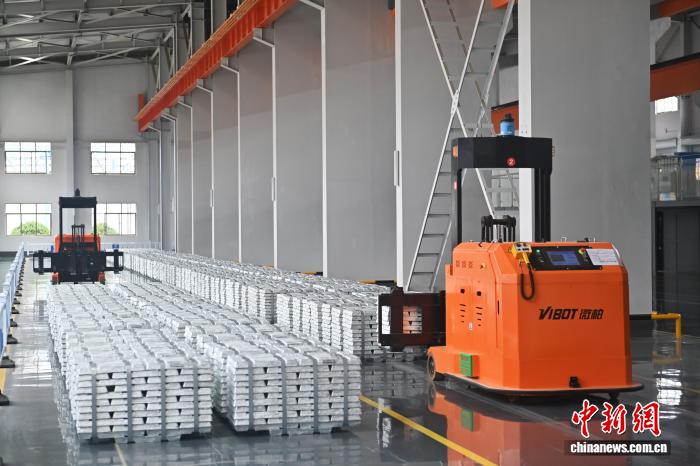
Core Insights - During the "14th Five-Year Plan" period, Longnan City aims for high-quality development focusing on "three cities and five regions" and implements key measures to enhance industrial prosperity, innovation, coordination, ecological sustainability, and social harmony [2][3] Economic Growth - Longnan City's GDP is projected to grow at an average annual rate of 6.6% during the "14th Five-Year Plan" period [3] - The urbanization rate increased from 36.18% to 41.72%, marking the highest growth rate in the province for four consecutive years [3] Industrial Development - The number of industrial projects and investments increased by 281.3% and 220.5% respectively compared to 2020 [3] - Four major industrial chains, including non-ferrous metallurgy, traditional Chinese medicine, modern logistics, and pepper, have surpassed a production value of 100 billion [3] Agricultural Advancements - The comprehensive output value of characteristic mountain agriculture reached 35 billion, 1.9 times that of the end of the "13th Five-Year Plan" [3] - Longnan ranks first in the nation for four agricultural indicators: olive oil base area, fresh fruit output, initial oil production, and economic benefits [3] Industrial Transformation - The number of large-scale industrial enterprises increased from 75 to 151, with significant developments in renewable energy bases [3] Tourism and Culture - The number of 4A and above scenic spots and national-level homestays ranks first in the province, with tourist numbers expected to exceed 45 million in 2024 [3] - Tourism revenue has increased by 213% compared to the end of the "13th Five-Year Plan" [3] Digital Economy - E-commerce sales reached 54.6 billion, with cross-border e-commerce exports expected to grow by 118% in 2024 [3] Investment and Financing - A record 438 investment projects worth over 100 million have been signed, with external funding reaching 98.19 billion [3] Social Welfare - Per capita disposable income for urban and rural residents increased by 24.7% and 39.6% respectively compared to the end of the "13th Five-Year Plan" [3] Environmental Protection - The forest coverage rate increased to 45.27%, and Longnan is recognized as a model city in ecological protection by the Ministry of Ecology and Environment in 2024 [3]
推动黄河流域高质量发展
Jing Ji Ri Bao· 2025-09-20 22:16
Group 1: Ecological Protection and High-Quality Development - The Yellow River Basin is a crucial ecological security barrier and an important area for population activities and economic development in China [1] - Since the implementation of the ecological protection and high-quality development strategy, the ecological environment quality in the Yellow River Basin has steadily improved, with notable highlights in energy and food security [1][2] - The 20th National Congress proposed optimizing the ecological protection and high-quality development mechanism in the Yellow River Basin [1] Group 2: Agricultural Development - The Yellow River Basin contributes significantly to national food security, accounting for 35% of the country's grain, 32% of meat, 40% of poultry eggs, and 49% of milk [2] - Grain production capacity in the Yellow River Basin has steadily increased, with grain output rising from 155 million tons in 2000 to 248 million tons in 2024 [2] - The area of high-standard farmland in the basin reached 45.07% of total arable land by 2024, with effective irrigation water utilization improving to 0.58 [2] Group 3: Agricultural Product Advantages - The construction of specialized agricultural product advantage zones has shown significant results, forming diversified agricultural product clusters along the Yellow River [3] - In 2023, Henan's high-gluten wheat area reached 15 million mu, accounting for nearly 30% of the national total [3] - Shanxi and Inner Mongolia's coarse grain industry cluster produced 6.8 million tons in 2023, representing 43% of the national total [3] Group 4: Green Agricultural Development - Efforts to reduce agricultural pollution and promote green fertilizers have led to a 90% coverage of soil testing and formula fertilization technology in Shandong [4] - The area of ecological agriculture demonstration zones exceeded 50, with carbon trading pilot areas covering over 1 million mu, achieving an annual carbon fixation of 2 million tons [4] Group 5: Industrial Development and Energy Transition - The Yellow River Basin is rich in natural resources, contributing approximately 80% of the country's raw coal output and one-third of the national oil and gas reserves [7][8] - The region has a high concentration of resource-based cities, with traditional industries like steel and chemical production dominating, leading to environmental sustainability challenges [8][9] - The transition to a low-carbon economy is underway, with significant investments in renewable energy, including a cumulative installed capacity of over 135 million kilowatts in Inner Mongolia by 2024 [10] Group 6: Ecological Restoration and Biodiversity - The water quality in the Yellow River Basin has improved significantly, with the main stream achieving Class II water quality for three consecutive years from 2022 to 2024 [13] - Water and soil erosion has been effectively controlled, with the area of soil erosion reduced from 450,000 square kilometers to 245,800 square kilometers [14] - Biodiversity is gradually recovering, with the number of bird species in the Yellow River Delta increasing from 187 to 373 [15] Group 7: Cultural and Tourism Development - The Yellow River Basin is rich in cultural heritage, with 15 world cultural heritage sites and a significant number of intangible cultural heritage projects [18][20] - The region is developing a cultural tourism belt, promoting various themed tourism routes and enhancing regional collaboration [22] - Innovative cultural IPs are being developed to enhance the domestic and international influence of Yellow River culture [23]
白银有色遭立案跌停 70年老牌国企内控失守
Guo Ji Jin Rong Bao· 2025-09-12 13:21
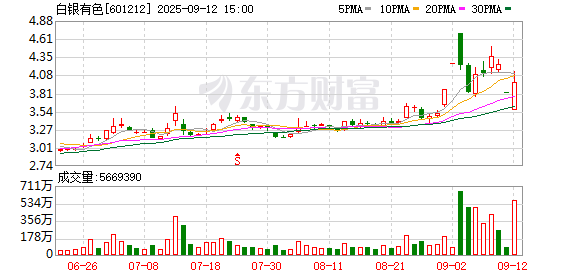
Core Viewpoint - The announcement of an investigation by the China Securities Regulatory Commission (CSRC) into Baiyin Nonferrous Group Co., Ltd. has revealed significant internal control issues within the company, leading to a sharp decline in its stock price and market value [2][3]. Group 1: Investigation and Internal Control Issues - Baiyin Nonferrous has been formally investigated by the CSRC for suspected violations of information disclosure laws, following two undisclosed criminal cases that have raised regulatory concerns [3]. - A theft incident involving 990 tons of zinc ingots, resulting in a court-ordered compensation of 22.68 million yuan, remains unresolved [3]. - Another case involved the embezzlement of 157 million yuan worth of cathode copper products, with related assets frozen by authorities [3]. - The company failed to disclose these criminal cases in its 2023 annual report, citing confidentiality requirements, which did not satisfy regulatory scrutiny [3]. Group 2: Financial Performance and Business Overview - Established in 1954, Baiyin Nonferrous is a long-standing state-owned enterprise in China's nonferrous metal industry, known for its historical production achievements [4]. - The company has a diversified business model covering the mining, selection, smelting, and trading of various metals, with a global presence [5]. - Despite significant revenue growth from 62 billion yuan in 2018 to 86.8 billion yuan in 2024, the company's net profit has remained stagnant, indicating a lack of effective conversion of scale expansion into profitability [5]. - In 2023, the company reported a net profit exceeding 100 million yuan, but this figure fell to 80.79 million yuan in 2024 [5].

白银有色遭立案跌停,70年老牌国企内控失守
Sou Hu Cai Jing· 2025-09-12 12:30
Core Viewpoint - The announcement of a regulatory investigation has exposed significant internal control issues within a long-established state-owned non-ferrous metal giant, which had recently seen its stock price surge [1][3]. Group 1: Regulatory Investigation - The China Securities Regulatory Commission (CSRC) has initiated an investigation, although specific reasons have not been disclosed. However, two undisclosed criminal cases in recent years appear to have triggered this regulatory action [3]. - In November 2023, a theft involving 990 tons of zinc ingots was reported, with a court ruling in June 2024 mandating compensation of 22.6791 million yuan, which has yet to be enforced [3]. - Additionally, in early 2024, former employees conspired with external parties to forge sales documents, resulting in the misappropriation of copper products valued at 157 million yuan. Investigative authorities have frozen assets worth approximately 50.986 million yuan, along with 20 properties and stocks valued at around 42 million yuan [3]. Group 2: Financial Impact - The company failed to disclose these criminal cases in its 2023 annual report, only revealing them in July 2025 after being prompted by the Shanghai Stock Exchange [3]. - A contract dispute involving a subsidiary led to a provision for expected liabilities of approximately 317 million yuan, contributing to a loss of 217 million yuan in the first half of 2025, a staggering year-on-year decline of 1859.82% [3]. - In November 2023, discrepancies amounting to 388 million yuan were discovered between the shipment volume of zinc ingots and actual payments, highlighting severe management flaws in trade operations [3]. Group 3: Company Background - Established in 1954, the company is a prominent state-owned enterprise in China's non-ferrous metal industry, previously recognized for its leading production and tax contributions in copper and sulfur for 18 consecutive years [4]. - In 2008, the company underwent a shareholding reform with strategic investment from CITIC Group, and in 2017, it became the only state-owned non-ferrous metallurgy enterprise listed on the A-share market, with a registered capital of 7.405 billion yuan [4]. - The company's operations encompass the mining, selection, smelting, and trading of various metals, with a global presence across 15 domestic mines and over 10 countries [6]. Group 4: Financial Performance - Despite being a well-known industry player, the company's profitability has been relatively unimpressive. In its first year of listing in 2017, it reported revenues of 56.634 billion yuan and a net profit of 239 million yuan [7][8]. - From 2018 to 2024, revenues increased from 62 billion yuan to 86.8 billion yuan, yet net profits plummeted to 2.59 million yuan in 2018 and remained stagnant around 30 million yuan until 2022. In 2023, net profit exceeded 100 million yuan, but fell back to 80.79 million yuan in 2024 [8][9]. - This indicates that the company's continuous expansion over the years has not effectively translated into improved profitability [9].

白银有色遭立案跌停,70年老牌国企内控失守
IPO日报· 2025-09-12 09:03
Core Viewpoint - The announcement of an investigation by the China Securities Regulatory Commission (CSRC) into Baiyin Nonferrous Group Co., Ltd. has revealed significant internal control issues within the company, leading to a sharp decline in its stock price and market value [1][5]. Group 1: Investigation and Internal Control Issues - Baiyin Nonferrous received a formal investigation notice from the CSRC for suspected violations of information disclosure laws, resulting in a single-day market value loss of approximately 3 billion yuan [1]. - Prior to the investigation, the company's stock had experienced a two-day limit-up surge, with a statement claiming no undisclosed significant information [2]. - The investigation appears to be triggered by two undisclosed criminal cases involving the company, including the theft of 990 tons of zinc ingots and the embezzlement of 157 million yuan worth of copper products [5]. Group 2: Financial Impact and Performance - The company faced a forced provision of approximately 317 million yuan due to a contract dispute involving a subsidiary, leading to a significant loss of 217 million yuan in the first half of 2025, a staggering year-on-year decline of 1859.82% [6]. - In November 2023, a discrepancy of 388 million yuan was discovered between the shipment volume of zinc ingots and actual payments, highlighting severe management flaws in trade operations [7]. - Baiyin Nonferrous has struggled with profitability despite revenue growth, with net profits fluctuating around 30 million yuan from 2018 to 2022, and a drop to 80.79 million yuan in 2024 after a brief increase in 2023 [11]. Group 3: Company Background and Operations - Established in 1954, Baiyin Nonferrous is a long-standing state-owned enterprise in China's nonferrous metal industry, known for its historical production records [8]. - The company operates across various metals, including copper, lead, zinc, gold, and silver, with a production capacity of 10 million tons of mined ore and 600,000 tons of smelting capacity in 2023 [9]. - Despite being a prominent player in the industry, Baiyin Nonferrous's profitability has not been particularly strong, with significant challenges in converting scale expansion into improved financial performance [10].

从持续增长看发展韧性——甘肃经济增速连续十四个季度高于全国平均水平观察
Xin Hua Wang· 2025-08-12 05:37
Economic Growth - Gansu province achieved a GDP growth of 6.3% in the first half of the year, surpassing the national average by 1 percentage point and ranking second in the country [1] - The industrial added value in Gansu increased by 10.2%, exceeding the national growth rate by 3.8 percentage points, maintaining a leading position for 23 consecutive months [3] Industrial Development - Gansu is focusing on strengthening its industrial base, with significant investments in traditional industries such as petrochemicals and metallurgy, while also promoting the transformation and upgrading of these sectors [5][10] - Major projects like the 120 million-ton ethylene upgrade by PetroChina are underway, representing an investment of over 20 billion yuan, aimed at enhancing the petrochemical industry chain [6] New Energy Sector - Gansu has established itself as a leader in renewable energy, with a total installed capacity of over 72 million kilowatts of renewable energy, accounting for over 65% of the province's total power generation capacity [22] - The province has attracted over 170 new energy projects with nearly 50 billion yuan in investments, with expectations for the new energy sector's output value to reach 83 billion yuan in 2024 [20] Infrastructure Development - Gansu is actively investing in infrastructure, with significant projects like the expansion of Lanzhou Zhongchuan International Airport and various railway and highway projects underway [13] - The province has launched 447 major industrial projects with a total investment of 431.8 billion yuan, indicating a strong commitment to infrastructure and economic development [16] Modern Industry System - Gansu is constructing a modern industrial system characterized by advanced manufacturing, digital economy, and modern services, with a focus on creating industrial clusters in sectors like petrochemicals and new materials [8][10] - The province's industrial strategy includes enhancing traditional industries while fostering new emerging sectors such as high-tech industries, which saw a 9.6% increase in added value [18] Social Development and Welfare - Gansu is prioritizing social welfare, with over 80% of public budget expenditures allocated to improving living standards, including education and social security [29][30] - The province is implementing various initiatives to enhance employment and support disaster recovery efforts, ensuring that the local population benefits from economic growth [30][32]