
柑橘种植

Search documents
新华视点丨一方水土一方策:高质量发展的“地方答卷”
Xin Hua Wang· 2025-11-25 06:44
Group 1 - High-quality development is not a one-size-fits-all narrative but is rooted in local practices and future-oriented exploration across various regions in China [1] - Different regions are leveraging their unique resources for transformation, such as the cultural revival in Shenyang and the hydrogen energy initiatives in Shandong [1] Group 2 - The 1905 Cultural Creative Park in Shenyang represents a transformation from industrial heritage to a hub for cultural innovation, showcasing the city's cultural confidence and modern cultural construction [2] - Shandong Zibo is strategically positioning itself in the hydrogen energy sector, utilizing its strong industrial base and abundant hydrogen resources to build a comprehensive hydrogen industry chain [4][9] - Zibo produces approximately 483,000 tons of industrial by-product hydrogen annually, providing a stable hydrogen source for large-scale applications [6] Group 3 - In Shaanxi Qianyang, the apple industry is thriving, with an annual production of 30 million high-quality apple seedlings and a total industry output value exceeding 2.7 billion yuan, benefiting around 12,000 local farmers [11] - Qianyang's apple cultivation practices have achieved efficiency in resource use, including reduced water, fertilizer, land, and labor, while maintaining high yield and quality [12] Group 4 - In Yunnan Qujing, rural tourism is rapidly developing, with various leisure facilities enhancing the local economy and attracting visitors [14][16] - The integration of local natural advantages in Qujing is creating more opportunities for tourism, including weekend and half-day trips [16] Group 5 - In Fujian Jianyang, the "Red Beauty" citrus variety is experiencing a successful harvest, supported by the efforts of technology specialists, which is also encouraging local farmers to engage in diverse fruit cultivation [18][20]


陕西将迎寒潮过程
Shan Xi Ri Bao· 2025-11-14 22:35
Core Insights - A significant cold wave and strong winds are expected in Shaanxi from November 15 to 17, with temperature drops ranging from 8 to 14 degrees Celsius across various regions [1] Weather Impact on Agriculture - The cold wave and precipitation may cause frost damage to young economic fruit trees and branches, particularly affecting tea and citrus crops in southern Shaanxi, and could disrupt the growth of facility-grown vegetables [1][2] - Recommendations for apple and kiwifruit growers include protective measures such as tree trunk whitening, soil covering, and applying antifreeze solutions before the temperature drop [2] - Facility agriculture in northern Shaanxi and western Guanzhong should reinforce structures and prepare heating equipment to mitigate the impact of the cold weather [2] Transportation and Infrastructure - The weather is likely to affect most roadways in Shaanxi, with potential snow accumulation and ice formation in southern Shaanxi, northern Guanzhong, and the Qinba Mountains [2] - Transportation authorities are advised to enhance control measures on key road segments and ensure proper snow and ice removal to maintain traffic order [2]
四川发钱啦!企业融资,政府掏腰包丨川报早读
Sou Hu Cai Jing· 2025-11-04 02:10
Group 1 - The core viewpoint of the article is that Sichuan has introduced new policies aimed at reducing financing costs for enterprises, specifically through direct financial support measures [1][11]. - The "New 18 Measures" policy includes four key initiatives designed to alleviate financial burdens on businesses [11][12]. - The government will provide a reward subsidy to local banks for increasing loans to small and micro enterprises and agricultural sectors, incentivizing banks to support the real economy [2][12]. Group 2 - For loans issued for the elderly care industry, the government will provide a one-time subsidy of 1% of the loan amount, with a maximum of 2 million yuan per enterprise [2][11]. - Non-financial enterprises issuing technology innovation bonds will receive a one-time subsidy of 400,000 yuan, which increases to 800,000 yuan for first-time issuers [2][11]. - Guarantee institutions providing low-rate guarantees for technology bonds will also receive government subsidies, addressing issues of high rates and difficulty in obtaining guarantees [2][11]. Group 3 - The policy aims to enhance the flow of financial resources to enterprises by combining long-term incentives with risk-sharing mechanisms [2][12]. - The new measures are expected to strengthen the support for the agricultural and small business sectors, which are crucial for the local economy [13]. - The initiatives are part of a broader strategy to foster innovation and development in key industries, particularly in the context of the ongoing World Display Industry Innovation Development Conference [10][14].
破解柑橘产业升级难题 金融助力蒲江绘就乡村振兴新图景
Si Chuan Ri Bao· 2025-10-20 22:19
Core Insights - Sichuan Province aims to establish a higher-level "Tianfu Granary" by focusing on specialty agriculture and directing financial resources towards rural industries [1][4] - Industrial upgrades in the citrus sector of Pujiang County face challenges due to low added value and insufficient funding for infrastructure, equipment, and supply chain enhancements [2][3] Financial Initiatives - Industrial financing is being driven by a customized credit plan of 300 million yuan, targeting infrastructure upgrades, equipment purchases, and logistics hubs [3] - The financial support includes the introduction of over 100 smart variable frequency water supply systems and the renovation of approximately 60 irrigation stations to improve soil fertility and irrigation capabilities [3] Agricultural Transformation - The transition from traditional farming to smart agriculture is being facilitated through the establishment of intelligent production lines for juice, dried fruits, and essential oils, along with cold chain storage and logistics [3] - The use of satellite remote sensing and smart market systems is promoting the transformation of traditional orchards into "digital orchards," enhancing ecological value conversion [3][4] Future Outlook - The bank plans to continue increasing credit support for modern agriculture, contributing to the broader goal of rural revitalization in Sichuan Province [4]

从一颗蜜橘的跨境之旅说开去(记者手记)
Ren Min Ri Bao· 2025-10-14 22:12
Core Insights - The article emphasizes the transformation of inland regions in China through enhanced logistics channels and collaborative development, which opens new opportunities for economic growth and trade [1][2][3] Group 1: Economic Potential and Trade Growth - The western region's import and export volume exceeded 4 trillion yuan for the first time in 2024, accounting for 9.2% of China's total trade [1] - In the first three quarters of this year, the western region's foreign trade maintained strong momentum, with a year-on-year growth of 10.2%, reaching 3.21 trillion yuan [1] - The new international logistics channels are facilitating the integration of inland areas into a high-level open economy, with the western land-sea new channel achieving an import and export volume of 611.5 billion yuan, a year-on-year increase of 19.3% [2] Group 2: Industrial Collaboration and Upgrading - The logistics network is enhancing the supply chain cycle, allowing inland regions to leverage their geographical advantages for industrial upgrades and transfers [3] - In the Horgos Comprehensive Bonded Zone, a fur clothing enterprise from Hebei is creating a full industrial chain service platform, attracting skilled technicians from the eastern regions [3] - In Kashgar, a fishing tackle company from Shandong has established a production base, creating over 2,700 jobs and producing high-end carbon fiber products for international markets [3] Group 3: Institutional Reforms and Business Environment - Continuous optimization of the institutional environment is crucial for the success of logistics and industrial development [3] - The General Administration of Customs, in collaboration with 20 departments, has launched a special action for cross-border trade facilitation, implementing measures to streamline customs processes [3] - The development of international logistics channels is reshaping China's open economy landscape and driving industrial upgrades in the central and western regions [3]
受美关税持续冲击 南非积极拓展外贸渠道
Yang Shi Xin Wen Ke Hu Duan· 2025-09-16 08:08
Group 1 - The U.S. has imposed a 30% tariff on South African goods, effective August 7, which is expected to significantly impact South African exporters [2] - South Africa's exports to the U.S. fell by 18% year-on-year in the second quarter, indicating the adverse effects of the tariffs [2] - The South African government and business community are actively seeking to diversify their foreign trade to mitigate the impact of these tariffs [2] Group 2 - The tariffs are particularly detrimental to South Africa's manufacturing and agricultural sectors, affecting towns reliant on these industries, such as citrus-producing regions and automotive manufacturing cities [4] - South African President Ramaphosa has emphasized a strong negotiating stance with the U.S. regarding the tariffs, asserting that the government will not compromise its position [4] - There is a push from the South African government and business sectors to enhance trade cooperation with BRICS nations and emerging markets as a response to the tariff challenges [4]

重庆绿色发展为何“渝”众不同?
Zhong Guo Huan Jing Bao· 2025-08-14 01:40
Core Viewpoint - The article emphasizes the importance of ecological protection and the transformation of ecological advantages into developmental benefits in Chongqing, highlighting various successful practices in ecological civilization construction [1][8]. Group 1: Ecological Wealth Generation - Fengjie County has shifted from a coal-dependent economy to developing the citrus industry, with Fengjie navel oranges achieving a brand value of 38.17 billion yuan in 2024, ranking 20th nationally [2][3]. - The county has invested 293 million yuan in infrastructure and implemented a brand management strategy, resulting in over 50 star-rated orange farms and benefiting more than 50,000 residents [2][3]. - The establishment of a "farmer technology follow-up" system has trained 32,000 farmers annually, and the average income for orange farmers exceeds 100,000 yuan [3]. Group 2: Mining Transformation - The restoration of the Cuoluo Mountain area, previously a mining site, has led to the creation of a national park with an investment of 342 million yuan, achieving a 70% ecological restoration rate [4][5]. - The project has improved living conditions for over 720 households and increased biodiversity in the area [4]. - Cuoluo Mountain Park has become a model for integrating ecological restoration with tourism, recognized by the United Nations [5]. Group 3: Digital Empowerment in Water Management - The "Bayu Water Management" initiative in Chongqing utilizes a data-driven approach to enhance water quality management, achieving a 100% good water quality rate at 74 national control sections [7][8]. - The initiative has established a comprehensive online coordination system, significantly improving the efficiency of pollution source management [7]. - The successful model has been recognized nationally and included in the "China Electronic Government Yearbook" [8]. Group 4: Pollution Control and Rural Development - Dazhu District has made significant progress in rural pollution control, achieving a 94.8% rate in rural sewage treatment by June 2025 [10]. - The district has implemented waste management strategies, including the establishment of 160 waste classification demonstration villages [10][11]. - Agricultural development initiatives have led to a 91.58% resource utilization rate for livestock waste, contributing to the district's economic vitality [11]. Group 5: Urban Water Quality Improvement - Tongliang District has successfully improved the water quality of the Xiao'an River, achieving a stable III class rating after comprehensive pollution control measures [15][16]. - The district has constructed 357 kilometers of new and upgraded sewage pipelines, enhancing the overall sewage treatment capacity [13][15]. - Collaborative agreements with neighboring areas have strengthened regional water quality management efforts [16]. Group 6: Air Quality Enhancement - Jiangbei District has undertaken significant oil depot renovations, reducing VOC emissions by over 400 tons annually through advanced sealing technologies [17][18]. - The transformation of three major oil depots has set a benchmark for industrial pollution control in the region [17][18]. - The district's approach combines policy support, technical guidance, and comprehensive oversight to promote green development [18]. Group 7: Industrial Wastewater Management - Fengdu County has established a "zero direct discharge" zone in its industrial park, significantly improving local water quality [19][20]. - The county's approach includes a comprehensive assessment of wastewater sources and the implementation of targeted remediation plans [19][20]. - The water treatment facility in the area has maintained stable compliance with discharge standards for three consecutive years [20]. Group 8: Comprehensive Environmental Governance - Liangping District has adopted a multi-faceted approach to improve air and water quality, focusing on PM2.5 and ozone control [21][22]. - The district has implemented a "seven-in-one" collaborative strategy for ecological protection and pollution control across administrative boundaries [22][23]. - Efforts to enhance biodiversity and promote green economic activities are underway, aiming for effective ecological value transformation [23].

北上抗日宣言发布地的振兴图景
Zhong Guo Xin Wen Wang· 2025-08-12 03:45
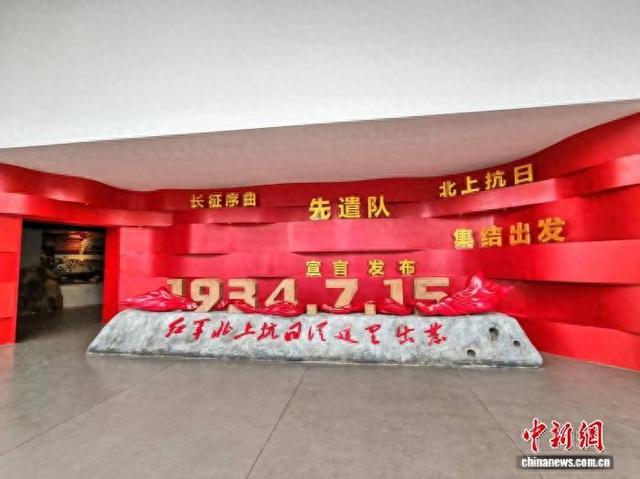
Core Viewpoint - The article highlights the revitalization of Xiaotao Town in Fujian Province, focusing on its agricultural success with early honey oranges and its historical significance as the site of the Northward Anti-Japanese Declaration. Group 1: Agricultural Development - Xiaotao Town has a total citrus area of 38,500 acres, with a total output of 100,000 tons and a total output value of 564 million yuan [3][6] - The early honey oranges have become the largest agricultural pillar industry in Xiaotao Town, indicating a strong agricultural economy [3][6] - The local government is actively promoting the integration of red culture and characteristic industries to enhance collective economy and farmers' income [8] Group 2: Historical Significance - Xiaotao Town is recognized as the departure point for the Northward Anti-Japanese Vanguard, where the declaration was published on July 15, 1934 [6][8] - The town has preserved historical sites and resources related to the Anti-Japanese movement, contributing to the local cultural heritage [6][8] - The Northward Anti-Japanese Vanguard played a crucial role in mobilizing the masses and establishing a foundation for the anti-Japanese national united front [8]
(乡村行·看振兴)三峡夷陵移民村之变:从“移居”到“宜居”
Zhong Guo Xin Wen Wang· 2025-07-22 13:50
Core Insights - The article highlights the transformation of the Three Gorges resettlement villages, particularly in Yichang, from mere relocation to sustainable living environments, showcasing successful agricultural and tourism initiatives driven by supportive policies [1][10]. Group 1: Agricultural Development - The implementation of post-resettlement policies has led to the establishment of competitive green and low-carbon industries, shifting the focus from traditional farming to fruit cultivation, particularly citrus fruits [1][8]. - Xiao Xikou Village has seen significant improvements in agricultural practices, including the installation of irrigation systems and transportation tracks, which have enhanced efficiency and reduced costs for farmers [7][8]. - The area now boasts over 200,000 acres of citrus cultivation, with per capita income from fruit farming accounting for over 30% of local farmers' total income [8]. Group 2: Economic Impact - Luofo Village has developed an ecological tea garden covering 1,100 acres, generating an annual output value of 15 million yuan, and has diversified into tourism with fruit picking and homestays [6][9]. - The integration of agriculture and tourism has resulted in a significant economic boost, with the annual output value of the combined agricultural and tourism industries exceeding 1 billion yuan [9][10]. Group 3: Infrastructure and Community Development - The investment of over 70 million yuan in infrastructure improvements in villages like Xujiacun has transformed living conditions, creating job opportunities and enhancing community engagement [9][10]. - The establishment of cultural and tourism enterprises has provided over 200 jobs and attracted more than 100,000 visitors annually, showcasing the successful integration of local culture and economic development [9].
农发行四川丹棱县支行以科技金融之力驱动柑橘产业升级
Zheng Quan Ri Bao· 2025-05-09 05:26
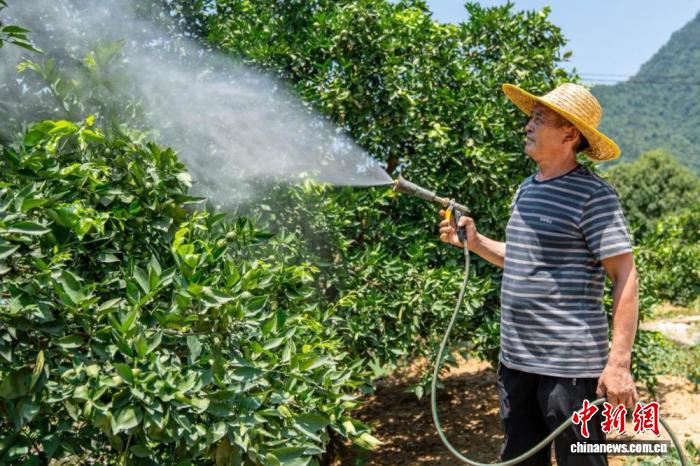
Core Insights - The article highlights the innovative agricultural practices being implemented in Sichuan's Danleng County, focusing on the use of smart greenhouses to enhance citrus production efficiency and sustainability [1][2]. Group 1: Project Overview - The modern agricultural technology demonstration project in Danleng County has a total investment of nearly 5.5 billion yuan, which includes the construction of a high-pressure automatic mist spraying system covering 60,000 acres and fiberglass greenhouses for 50,000 acres [3]. - The project aims to address challenges such as pest control, rising labor costs, and resource waste associated with traditional citrus farming methods [1][2]. Group 2: Financial Support and Impact - The Agricultural Development Bank of China’s Danleng County branch has approved a technology loan of 430 million yuan to support the project, with a total of 91.14 million yuan already disbursed [2]. - The new spraying system will utilize intelligent controls to monitor environmental conditions and pest data, significantly reducing pesticide usage and mitigating environmental pollution risks [3]. Group 3: Economic Benefits - The fiberglass greenhouses are expected to save approximately 2,000 yuan per acre in costs and increase income by another 2,000 yuan per acre compared to traditional methods, leading to significant economic benefits for farmers [3]. - The project is positioned to enhance agricultural sustainability, promote rural revitalization, and drive industry upgrades through reduced production costs and improved economic returns [3].