
橡胶加工

Search documents
上海期货交易所注销6家天然橡胶加工厂注册资格
Jin Tou Wang· 2025-12-12 08:12
摘要2025年12月12日,上海期货交易所发布《关于同意云南农垦集团有限责任公司注销6家天然橡胶加 工厂注册资格的公告》,公告称,根据《上海期货交易所国产天然橡胶交割商品注册管理规定》,经研 究决定:同意注销云南天然橡胶产业集团西双版纳景阳有限公司景洪第一制胶厂等6家天然橡胶加工厂 注册资格。 2025年12月12日,上海期货交易所发布《关于同意云南农垦集团有限责任公司注销6家天然橡胶加工厂 注册资格的公告》,公告称,根据《上海期货交易所国产天然橡胶交割商品注册管理规定》,经研究决 定:同意注销云南天然橡胶产业集团西双版纳景阳有限公司景洪第一制胶厂、云南天然橡胶产业集团西 双版纳景阳有限公司东风第三制胶厂、云南天然橡胶产业集团西双版纳景阳有限公司勐养制胶厂、云南 天然橡胶产业集团西双版纳景阳有限公司橄榄坝第二制胶厂、云南天然橡胶产业集团西双版纳景阳有限 公司勐腊制胶厂、云南天然橡胶产业集团西双版纳景阳有限公司勐满第一制胶厂等6家天然橡胶加工厂 注册资格。 自公告之日起,上述6家工厂生产的天然橡胶不得用于注册生成标准仓单,已生成标准仓单可交割流转 直至有效期为止。 | 序号 | 工厂名称 | 生产代码 | | ...

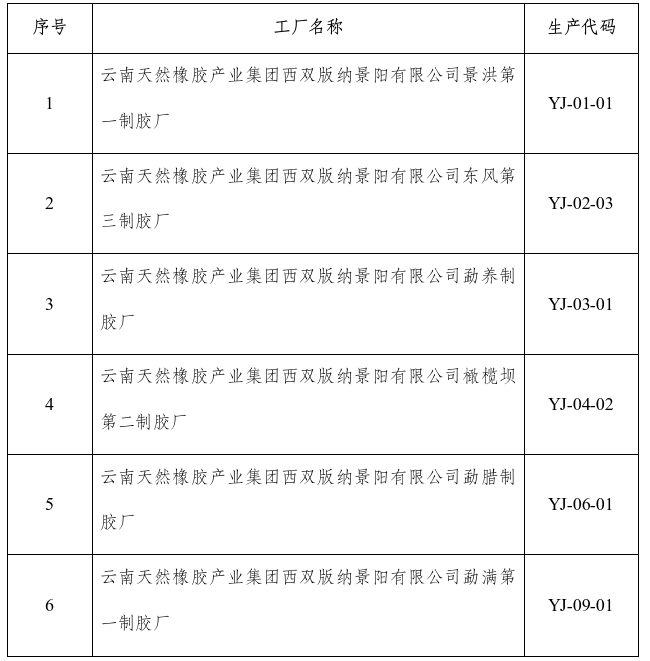
上期所:同意云南农垦集团有限责任公司注销6家天然橡胶加工厂注册资格的公告
Xin Hua Cai Jing· 2025-12-12 07:40
上海期货交易所12日公告称,同意云南农垦集团有限责任公司注销6家天然橡胶加工厂注册资格。自公 告之日起,上述6家工厂生产的天然橡胶不得用于注册生成标准仓单,已生成标准仓单可交割流转直至 有效期为止。 (文章来源:新华财经) ...
海南自贸港加工增值免关税政策下内销货值超110亿元
Hai Nan Ri Bao· 2025-11-30 00:13
Core Insights - The processing value-added duty exemption policy in Hainan Free Trade Port has been implemented since 2021, with 129 approved enterprises and a total processing value of approximately 11.096 billion yuan, resulting in a duty exemption of about 860 million yuan by October 2025 [1][2] Group 1 - The processing value-added duty exemption policy is a key tax policy of Hainan Free Trade Port, initially launched in July 2021 and expanded to areas outside special customs supervision zones in December 2022 [2] - The policy has evolved to include a wider range of industries, now benefiting sectors such as pharmaceuticals, coffee, and jewelry, beyond the initial focus on grain and meat industries [1] - The next steps involve enhancing policy implementation efficiency, exploring the expansion of the policy's applicability, and improving service levels for enterprises [2] Group 2 - The recent approval of Hainan Jingwei Latex Silk Co., Ltd.'s processing value-added record by Haikou Customs highlights the policy's accessibility to enterprises outside key parks and customs-certified companies [1] - The company has reported that the duty exemption allows them to import raw materials for processing into latex silk products, which are then sold to the mainland [1] - The policy aims to ensure smooth and orderly operations within Hainan Free Trade Port while maximizing the benefits for eligible enterprises [2]
橡胶:如何看待贸易行为
2025-11-24 01:46
Summary of Rubber Industry Conference Call Industry Overview - The rubber processing profit in 2025 is under pressure due to high raw material prices and weak downstream demand, leading Thai processing plants to increase raw material purchase prices. Small private enterprises struggle to maintain inventory due to cash flow and financing cost issues [1][2][9] - Tire manufacturers are affected by EU anti-subsidy and anti-dumping policies, resulting in reduced profits. However, leading companies still show profitability, with a noticeable increase in procurement pace in the second half of the year due to low natural rubber inventory [1][3] - Overseas market demand remains weak, with a brief replenishment period from late September to the National Day holiday. Negotiations for 2026 long-term contracts are ongoing, with expected quantities and prices similar to 2025 [1][4] Key Points on Raw Material Prices - Thai raw material prices are expected to remain high due to supply-demand dynamics, with new production lines increasing demand but no significant supply increase anticipated for 2026 [1][5] - The current price of Thai rubber is around 55 THB, with expectations of limited improvement in 2026 due to persistent supply-demand contradictions [5][9] Market Dynamics and Challenges - The disappearance of the normal arbitrage position in 2025 and the large scale of reverse arbitrage positions have pressured the dollar-denominated product prices, leading to a forecasted decrease in import volumes in Q4 [1][6] - The impact of U.S. tariffs is significant, with profits for all-steel tires down by over 50%, affecting pricing in other regions and increasing costs in the supply chain [1][7][8] - The processing plants are currently operating at 60-70% capacity utilization, with many facing losses due to high raw material prices and weak downstream demand [1][10][22] Inventory and Production Insights - Inventory levels in 2025 are lower than in previous years due to cash flow challenges and high financing costs, with many small private enterprises unable to maintain normal inventory levels [2][19] - The overall inventory situation is tight, with no significant replenishment willingness from upstream farmers or processing plants, as they prioritize cash flow [24][27] Regional Insights - In Indonesia, some factories have closed due to rising raw material prices leading to sales losses, and similar situations are observed in Thailand and Africa [11][25] - African rubber processing plants have seen a decrease in profit per ton by $100-200, with supply growth lagging behind demand growth [11] Future Outlook - The rubber processing industry is expected to face challenges in 2026, with both all-steel and semi-steel sectors likely to encounter difficulties [8][9] - The current high raw material prices are not expected to incentivize significant increases in production, as farmers are already motivated to tap into rubber production due to limited alternative income sources [17][18] Conclusion - The rubber industry is navigating a complex landscape characterized by high raw material prices, regulatory challenges, and fluctuating demand. The outlook for 2026 remains cautious, with potential supply shortages looming if current trends continue.
加纳限制天然橡胶出口以推动本土加工
Shang Wu Bu Wang Zhan· 2025-11-20 17:29
Core Viewpoint - The Ghanaian government has announced a restriction on the export of unprocessed rubber to promote local processing and achieve self-sufficiency in supply [1] Group 1: Government Policy - The policy aims to strengthen local manufacturing through an industrial cultivation plan and upgrade the value chain [1] - The initiative responds to long-standing demands from the rubber industry, addressing issues of raw material shortages that have forced local companies like Ghana Rubber Estates Limited to reduce production [1] Group 2: Industry Impact - The Ghana Rubber Processors Association (RUPAG) has praised the policy as a "critical and timely intervention" [1] - RUPAG analysis indicates multiple benefits from the new policy, including securing raw material supply for local factories, maintaining over 70,000 rural jobs, and supporting the repayment of over 650 million cedi planting loans [1] - The association plans to collaborate with the government to enhance production capacity, aiming to increase national dry rubber output from 100,000 tons to 250,000 tons by 2035, ensuring sustainable development of the industry [1]
专访泰国开泰研究中心首席经济学家布林:中泰供应链合作持续深化
2 1 Shi Ji Jing Ji Bao Dao· 2025-10-31 11:29
Group 1 - Renewable energy is a key area for China-ASEAN economic cooperation, with China leading in clean technology, which will attract more investments into Thailand and other ASEAN countries [1][4] - The China-ASEAN Free Trade Area 3.0 upgrade is expected to significantly change business operation models, particularly through the establishment of a unified "single window" system to enhance trade flow [1][3] - The upgrade of the free trade area, which began negotiations in November 2022 and concluded in October 2024, aims to address not only traditional tariff issues but also new areas such as digital economy rules and green economy [2][3] Group 2 - China has been ASEAN's largest trading partner for 16 consecutive years, while ASEAN has been China's largest trading partner for 5 years, indicating strong trade dynamics [2] - The report from the China Financial Forty Forum and the Krung Thai Research Center highlights a continuous increase in China's exports to Thailand and a record high in greenfield investments from China in sectors like automotive manufacturing and electronics [2][3] Group 3 - The cooperation between China and Thailand is evolving from a complementary relationship to strategic integration, with a focus on creating a "win-win model" for regional collaboration [3][13] - The potential for cooperation in renewable energy and food safety is significant, providing more export opportunities for Thailand and the entire ASEAN region [4][11] Group 4 - Thailand's investment environment has unique competitive advantages despite challenges in capital gains and dividend taxes compared to Singapore, particularly in attracting foreign direct investment (FDI) [5][6] - The Thai government is expected to implement measures to enhance transparency and digitize government processes to attract more foreign investments [6][9] Group 5 - Geopolitical risks and trade tensions are prompting companies to adjust their supply chain strategies, with many global firms considering Thailand for diversified production locations to mitigate risks [11][12] - The integration of China and ASEAN is expected to enhance long-term competitiveness, although it may also increase competition for local businesses [13][14]
美兰橡胶占科特迪瓦天然橡胶本地加工能力近30%
Shang Wu Bu Wang Zhan· 2025-10-29 16:03
Core Insights - Côte d'Ivoire is the world's third-largest and Africa's largest producer of natural rubber, with a significant portion exported to Asia, particularly China, South Korea, and Malaysia, which together account for approximately 89% of global natural rubber processing capacity [1] Group 1: Company Overview - Meilan Company plays a crucial role in Côte d'Ivoire's natural rubber industry, operating five processing plants located in Dabou, Diqui, San Pedro, Zagne, and Guitry [1] - The company has an annual processing capacity of 480,000 tons, representing about 30% of the national natural rubber processing capacity [1] - Meilan Company creates over 3,000 direct jobs locally [1] Group 2: Industry Outlook - Côte d'Ivoire's natural rubber production is projected to reach 1.8 million tons in 2024 [1]
中企加速布局泰国市场 金融机构护航“走出去”
Zhong Guo Jing Ying Bao· 2025-10-25 02:57
Core Insights - Thailand has become a significant destination for Chinese enterprises expanding overseas, with continuous growth in China's exports to Thailand and increasing market share of Chinese goods in Thailand's import market [1] - Chinese investments in Thailand have reached new highs, particularly in sectors such as automotive manufacturing, electronic components, and rubber processing [1] - The Thai government promotes a business-friendly environment, making it an attractive opportunity for Chinese companies, especially in automotive manufacturing, digital economy, and clean energy [1] Group 1: Investment Trends - There is a rising trend of Chinese companies investing in Thailand, exemplified by Haier New Energy organizing a delegation to explore business opportunities and projects in the country [2] - Chinese banks, such as Bank of China and Industrial and Commercial Bank of China (ICBC), are providing comprehensive financial services to support Chinese enterprises in Thailand, including cross-border financial services and investment information [2] Group 2: Financial Cooperation - A multi-layered coordination framework for financial cooperation has been established between China and ASEAN, with initiatives like the Chiang Mai Initiative Multilateralization (CMIM) and the Belt and Road Initiative (BRI) facilitating large-scale infrastructure financing [3] - The Regional Comprehensive Economic Partnership (RCEP) has created unified rules for cross-border financial transactions, enhancing regional financial integration [3] Group 3: Challenges Faced - Despite the opportunities, Chinese enterprises face challenges in cross-border fund management and foreign exchange risks when entering the Thai market [4] - Large enterprises encounter complex registration processes and high banking fees, while small and medium-sized enterprises (SMEs) struggle with foreign exchange regulations and cash flow management [4][5] Group 4: Foreign Exchange Risk Management - Effective foreign exchange risk management is crucial for Chinese enterprises in Thailand, with large enterprises employing diverse strategies, yet many still lack formal hedging practices [5] - SMEs have limited access to foreign exchange risk management tools, making them vulnerable to currency fluctuations [5] Group 5: Recommendations for Enterprises - Chinese enterprises are advised to integrate into the local market, adapt culturally, enhance their corporate image, and comply with local laws [6] - Emphasis is placed on the importance of collaboration with local SMEs and optimizing financing strategies [6] Group 6: Role of Financial Institutions - Financial institutions are encouraged to build comprehensive service systems for enterprises going abroad, with large banks collaborating with local banks to enhance service capabilities [7] - Domestic banks should strengthen partnerships with overseas banks to better serve diverse needs of outbound enterprises [7]
“新三样”占中国对东盟制造业投资六成以上 泰国成核心热土
2 1 Shi Ji Jing Ji Bao Dao· 2025-10-23 04:59
Core Insights - Chinese enterprises are increasingly investing in Southeast Asia, with Thailand emerging as a key destination due to its political stability and predictable market conditions [1][2] - The report highlights that ASEAN has become China's largest trading partner, with significant investment in the manufacturing sector, particularly in the "new three types" industries: photovoltaic, new energy vehicles, and lithium batteries [1][2] Investment Trends - From 2020 to 2024, China's cumulative greenfield investment in ASEAN's manufacturing sector is projected to reach $65.91 billion, with $42.26 billion (64.1%) allocated to the "new three types" industries [1] - Investment in new energy vehicles is primarily concentrated in Thailand, Malaysia, and Indonesia, while lithium battery investments are focused in Indonesia, and photovoltaic investments are seen in Vietnam, Thailand, Malaysia, and Cambodia [1][2] Sector-Specific Investments - In Thailand, over 500 Chinese companies have invested more than 547.76 billion Thai Baht (approximately $16.8 billion), creating over 150,000 jobs, with key sectors including electric vehicles, electronics, semiconductors, and rubber processing [3] - Chinese investments in Thailand also extend to infrastructure, logistics, digital economy, tourism, and real estate, driven by the Belt and Road Initiative [3] Challenges Faced - Despite the growth, Chinese enterprises face challenges in Thailand, including regulatory, cultural, and legal hurdles, as well as concerns from local businesses about competition and reliance on Chinese supply chains [4][5] - Local businesses express worries about the depreciation of older models of Chinese electric vehicles due to frequent price cuts and the insufficient localization of production [4] Strategic Recommendations - It is emphasized that Chinese companies should not view Thailand merely as a stepping stone but should integrate into the local market, focusing on cultural adaptation and compliance to build a responsible investor image [5] - The goal of Chinese investment in ASEAN is framed as promoting regional integration rather than merely seeking trade surpluses, with a focus on achieving trade balance [5]
前三季度湖南对非进出口445.2亿元 长沙56.7%增速领跑全省
Chang Sha Wan Bao· 2025-10-23 03:11
Core Insights - Hunan Province's total import and export value to Africa reached 44.52 billion yuan in the first three quarters of 2025, a year-on-year increase of 19.4% [1] - Exports amounted to 21.21 billion yuan, growing by 8.3%, while imports surged by 31.7% to 23.31 billion yuan [1] - Changsha City accounted for 53.7% of the province's total trade with Africa, with a remarkable growth rate of 56.7% [1] Trade Growth Drivers - The China-Africa Economic and Trade Expo, held in Changsha since 2019, has facilitated significant trade growth, with 336 projects signed and a total value of 53.32 billion USD [2] - The fourth expo saw 62 projects signed, amounting to 3.8 billion USD, marking increases of 77% and 117% respectively compared to the previous expo [2] Logistics and Infrastructure - A new cargo flight route from Changsha to Addis Ababa has been established, increasing frequency to five flights per week [3] - The "Xiangyuefei" rail-sea intermodal transport channel has shipped over 200,000 TEUs, enhancing logistics networks [3] Industry Contributions - Major enterprises like SANY, Zoomlion, and Hunan Nonferrous Metals are accelerating their presence in the African market, with the Changsha Free Trade Zone expected to reach 12 billion yuan in trade with Africa [5] - The province's exports of electromechanical products to Africa reached 12.24 billion yuan, with automotive and electrical equipment growing by 57.7% and 149.1% respectively [4] Trade Mode Transformation - Hunan's trade with Africa is shifting from traditional models to diversified operations, with processing trade and bonded logistics growing by 210.5% and 389.3% respectively [6] - Innovative policies and infrastructure upgrades, such as the establishment of a bonded logistics center, have significantly reduced logistics costs and customs clearance times [6] Market Dynamics - Private enterprises dominate Hunan's trade with Africa, accounting for 76.6% of the total import and export value [8] - The Changsha International Trade Group reported a 3.9-fold increase in trade with Africa, reaching 2.438 billion yuan [8] Resource Complementarity - Hunan's imports from Africa saw a significant increase, with bulk commodities growing by 86.1% to 10.97 billion yuan, including a 162.2% rise in natural rubber imports [10] - The province's exports are aligning with African demand, particularly in new energy vehicles, lithium-ion batteries, and photovoltaic products, which saw a 462.4% increase [11] Future Outlook - Continued deepening of cross-border capacity cooperation and the establishment of overseas warehouses in Africa are recommended to enhance supply chains [12]