
老年用品

Search documents
促进银发经济发展 养老服务扩容提质
Bei Jing Shang Bao· 2026-01-13 14:05
Core Viewpoint - The Ministry of Civil Affairs introduced measures to cultivate the elderly care service industry and promote the silver economy through systematic and targeted policy support, aiming to optimize the development environment and stimulate operational vitality [2] Group 1: Brand Development - The measures emphasize strengthening brand creation for elderly care services, encouraging the establishment of distinctive signage and trademarks to enhance brand recognition [3] - Provincial civil affairs departments are encouraged to standardize the names and signage of various elderly care service providers to improve brand identification [3] - The initiative aims to promote high-quality elderly care service brands and leading enterprises through various activities, including the "Respect for the Elderly Civilization" campaign [3] Group 2: Market Supply and Demand - The measures propose optimizing the supply of elderly care services and age-friendly products, promoting community-based service integration through chain operations [4] - The National Intellectual Property Administration will collaborate with the Ministry of Civil Affairs to implement the measures and enhance brand strategy in the elderly care sector [4] - The goal is to improve accessibility, convenience, and intelligence in elderly care services to meet diverse needs [4] Group 3: Technological Empowerment - Technological innovation is identified as a key driver for addressing labor shortages and enhancing service quality in elderly care [5] - The Ministry of Industry and Information Technology is focused on promoting high-quality development in the elderly products industry and the application of smart health services [5] - The measures encourage the development of elderly care technology, including the use of big data, AI, and robotics to provide comprehensive support for the elderly [5][6] Group 4: Development Environment - The measures aim to create a fair competitive environment for elderly care institutions, optimizing support policies and preventing restrictive clauses in government procurement [7] - There is a focus on protecting the rights of service providers by reducing administrative inspections and addressing issues of arbitrary charges and inspections [7] - The initiative includes promoting public awareness of elderly care services through various media channels [7] Group 5: Operational Support - The measures provide support in terms of land, operational stability, and funding for elderly care facilities [8] - There is an emphasis on ensuring land availability for elderly care projects and stabilizing operational timelines for market entities [8] - Financial support policies are to be optimized to alleviate the financial pressure on service providers [8] Group 6: Industry Outlook - The policy is expected to drive upgrades in existing elderly care services and foster new segments such as brand operations, community services, and elderly care technology [8] - This comprehensive approach aims to attract more enterprises, capital, and talent into the silver economy, creating a new ecosystem of "service-technology-industry" collaboration [8]


工信部:持续推动新一代信息技术等与养老服务深度融合
Zheng Quan Shi Bao Wang· 2026-01-13 02:51
Core Viewpoint - The Ministry of Civil Affairs held a press conference to introduce measures aimed at fostering the elderly care service sector and promoting the silver economy, emphasizing the integration of new information technologies with elderly care services [1] Group 1: Key Initiatives - The Ministry of Industry and Information Technology will focus on four main areas to enhance elderly care services: 1. Continuously promote high-quality elderly products and update the directory of excellent aging-friendly products and services [1] 2. Address the pain points in elderly living by increasing the development of products such as care robots, aging-friendly clothing, and easy-to-swallow foods [1] 3. Optimize the standard system for elderly products and smart health care, accelerating the implementation of key standards in smart terminals, smart communities, and smart homes [1] 4. Deepen the application of the internet and the aging-friendly transformation of smart terminals to improve the convenience of life for the elderly, supporting the high-quality development of the silver economy [1]
工信部:加大养老服务机器人、适老鞋服、易吞咽食品等产品研发力度
Xin Lang Cai Jing· 2026-01-13 02:37
Core Viewpoint - The Ministry of Civil Affairs held a press conference to introduce measures aimed at cultivating elderly service operators and promoting the silver economy, emphasizing the integration of new information technologies with elderly services [1] Group 1: Key Initiatives - The Ministry of Industry and Information Technology will focus on four main areas to support the elderly service sector: promoting high-quality elderly products, addressing pain points in elderly living, optimizing standards in elderly products and smart health care, and enhancing internet applications and smart terminal adaptations for the elderly [1] - The first initiative involves the ongoing promotion of quality elderly products and services, including the release of a directory for excellent aging-friendly products and the advancement of silver-age certification for elderly goods [1] - The second initiative targets the development of products that address specific challenges faced by the elderly, such as care robots, age-appropriate clothing, and easy-to-swallow food [1] - The third initiative aims to improve the standard system for elderly products and smart health care, accelerating the implementation of key standards in smart terminals, smart communities, and smart homes [1] - The fourth initiative focuses on deepening the adaptation of internet applications and smart terminals for the elderly, enhancing their convenience of living and supporting the high-quality development of the silver economy [1]

上海首家银发商店开业即销售火爆
Sou Hu Cai Jing· 2026-01-11 03:30
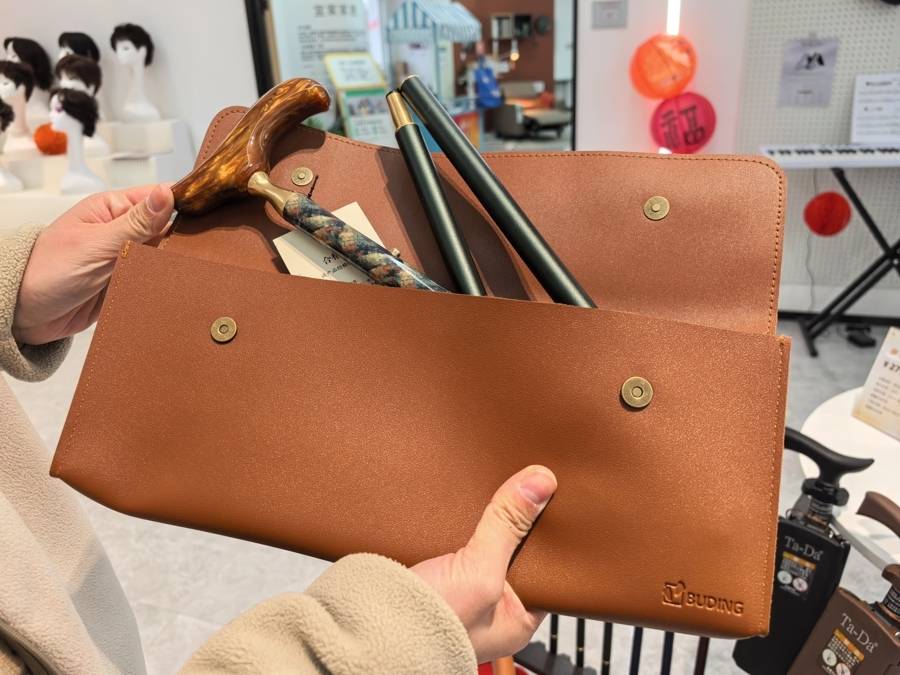
Core Insights - The opening of Shanghai's first "Silver Hair Store" has attracted significant attention, becoming a popular destination for the elderly, with sales exceeding 300,000 yuan within two weeks of opening [1] - The store aims to bridge the gap between innovative products and the elderly population, addressing their specific needs and preferences [1][4] - The growing elderly population in Shanghai, nearing 40%, indicates a stable and capable consumer market for silver-haired products [1] Product Offerings - The store features a wide range of products, including smart aids, age-friendly home decor, health foods, and functional clothing, catering to the evolving tastes of the elderly [2][4] - Popular items include stylish walking shoes and multifunctional carts, which combine practicality with modern aesthetics [5][7] - The store also offers rental services for elderly care equipment, making it more accessible for families [2] Consumer Behavior - The new generation of elderly consumers is increasingly seeking quality and aesthetic appeal in products, moving away from traditional perceptions of elderly goods [4] - A significant portion of purchases is made by children for their elderly parents, indicating a family-oriented consumption pattern [8] Experience-Oriented Shopping - The store operates as a dynamic showroom, adjusting its product offerings based on customer feedback and needs, exemplified by the "wish wall" where elderly customers can express their desires for specific products [9] - The importance of hands-on experience is highlighted, as many elderly customers prefer to try products before making a purchase decision, especially for larger items [10][11] Community Engagement - The store collaborates with local businesses and community initiatives to enhance the shopping experience and provide tailored services, such as policy interpretation for subsidies related to elderly care [13][24] - Other local stores are also exploring unique approaches to cater to the elderly, creating a diverse landscape in the silver economy [14][16] Market Trends - The silver economy in Shanghai is characterized by a diverse range of offerings, from community-focused shops to large retail spaces integrating technology and lifestyle products [18][19] - The market is evolving, with a need for clarity in defining the boundaries of the silver economy, which encompasses both products specifically for the elderly and broader societal changes due to aging [19][20] Future Outlook - The silver store model is seen as a positive development, contributing to a more elderly-friendly society and creating a complete ecosystem for the silver economy [24] - There is an expectation for continued growth and innovation in this sector, with a focus on integrating various aspects of elderly care and consumer needs [24]
市场规模或超6万亿,银发经济重构老年生活新图景
Sou Hu Cai Jing· 2026-01-05 23:21
Core Insights - The article highlights the growing trend of silver economy driven by various factors including smart health care, social interests, emotional companionship, and value realization for the elderly [1] Industry Overview - A series of policies related to elderly care services and the elderly industry are expected to be released by 2025, supporting the robust development of the silver economy [1] - The three core driving forces of silver consumption are elderly care services, health consumption, and cultural entertainment consumption [1] Market Growth - In the first half of 2025, sales revenue for community elderly care services, institutional elderly care services, and home elderly care services increased by 30.4%, 22.6%, and 18.0% year-on-year, respectively [1] - The market size for elderly products in China has grown from 2.6 trillion yuan in 2014 to 5.4 trillion yuan in 2024, with a compound annual growth rate of 7.3% [1] - By 2025, the market size is projected to reach 6.1 trillion yuan, becoming a significant support for the silver economy [1] Technological Integration - New generation information technologies such as 5G, artificial intelligence, big data, and the Internet of Things are deeply integrated and applied in the silver industry, which will further stimulate new vitality in the silver economy [1]
市场规模或超6万亿 银发经济重构老年生活新图景
Sou Hu Cai Jing· 2026-01-05 22:03
Core Insights - A series of policies related to elderly services and the elderly industry have been continuously released in 2025, promoting the robust development of the silver economy [1] - The three core driving forces of silver consumption are elderly services, health consumption, and cultural and entertainment consumption [1] Industry Growth - In the first half of 2025, sales revenue for community elderly care services, institutional elderly care services, and home elderly care services increased by 30.4%, 22.6%, and 18.0% year-on-year, respectively [1] - The market size for elderly products in China has grown from 2.6 trillion yuan in 2014 to 5.4 trillion yuan in 2024, with a compound annual growth rate of 7.3% [1] - The market is expected to reach 6.1 trillion yuan by 2025, becoming a significant support for the silver economy [1] Technological Integration - New generation information technologies such as 5G, artificial intelligence, big data, and the Internet of Things are deeply integrated and applied in the silver industry, which will further stimulate new vitality in the silver economy [1]
理响中国·聚焦2026中国经济丨“十五五”开局之年 为何强调五个“关键着力点”
Yang Guang Wang· 2026-01-02 08:12
Group 1 - The core focus of the Central Economic Work Conference is to ensure a strong start for the 14th Five-Year Plan and to address five key areas for economic work in 2026 [1] - Domestic demand is expected to remain robust, contributing 71% to economic growth in the first three quarters of 2025, with retail sales projected to exceed 50 trillion yuan [4][3] - Key tasks for economic work include promoting consumption, implementing income growth plans for urban and rural residents, and expanding the supply of quality goods and services [4][5][8] Group 2 - The government aims to enhance investment in public welfare sectors such as elderly care, childcare, and healthcare [8] - There is a focus on optimizing government investment through various financial instruments, including special bonds and budget allocations [9][10] - The integration of investment in physical infrastructure and human capital is emphasized to support consumption [10] Group 3 - The manufacturing sector, particularly high-tech industries, is showing growth, with a 9.2% increase in value added from January to November 2025 [12] - The production of electric vehicle batteries and digital products has seen significant increases, with growth rates of 26.5% and 42.2% respectively [14] - The development of new productive forces is crucial for creating new demands and markets, fostering innovation and value creation [14] Group 4 - The establishment of a unified national market is progressing, with significant improvements in logistics and trade facilitation [16] - The Hainan Free Trade Port has officially started operations, indicating a new phase in trade and investment [17] - Plans are in place to enhance the regulatory framework for the unified market and deepen state-owned enterprise reforms [19] Group 5 - Employment stability is a priority, with over 12 million new urban jobs expected annually [21] - The income disparity between urban and rural residents has decreased to a historic low of 2.34:1 [22] - High participation rates in basic social insurance programs reflect improvements in social welfare [23]

从新需求×新供给看中国消费新格局:每一代人都有自己的Labubu
工银国际· 2025-12-16 05:59
Group 1: Macro Economic Insights - The new consumption pattern in China is driven by generational shifts, with each generation having its own cultural symbols, referred to as "Labubu" [1] - The "Implementation Plan" aims to enhance the adaptability of supply and demand, identifying three trillion-level and ten hundred-billion-level consumption hotspots to boost resource allocation efficiency [1] - The Chinese潮玩 market is expected to grow at a compound annual growth rate of approximately 24% from 2022 to 2026, reflecting a structural change in demand [3] Group 2: New Consumption Trends - Future consumption is shifting from purchasing goods to subscribing to experiences, influenced by spatial, temporal, and relational dimensions [2] - Consumers are evolving from mere buyers to co-creators of content and emotional transmitters, emphasizing community relationships and cultural identity [2] - The demand for children's products is transitioning from safety features to cognitive development and emotional growth, with a focus on AI-enabled interactive toys [6] Group 3: Supply-Side Innovations - The supply side is undergoing a structural transformation, with flexible production and rapid iteration becoming industry standards, allowing for quick responses to new consumer trends [8] - The "Implementation Plan" emphasizes differentiated supply for various consumer groups, moving from traditional age-based products to lifestyle-based solutions [8] - The silver economy in China is projected to grow from approximately 7 trillion yuan in 2023 to 30 trillion yuan by 2035, indicating a shift towards comprehensive lifestyle solutions for the elderly [7] Group 4: Investment Opportunities - The investment focus is on three trillion-level sectors (elderly products, smart vehicles, consumer electronics) and ten hundred-billion-level sectors (潮玩, outdoor products, pet supplies, smart wearables, and national trend clothing) [9] - Identifying the next "Labubu" involves assessing emotional needs, sustainable supply systems, and alignment with national development strategies [10]
程实:每一代人都有自己的Labubu︱实话世经
Di Yi Cai Jing· 2025-12-15 12:46
Core Insights - The rise of Labubu is not coincidental but a result of generational aesthetics, emotional symbols, and identity expression [1][2] - The "Implementation Plan" provides a systematic framework for the new demand and supply dynamics, emphasizing the importance of capturing emotional trends and creating a sustainable supply chain [1][2][10] Generational Symbols - Each generation has its own Labubu, representing the spirit of the times, from Transformers for the 70s to digital IPs for Gen Z [2] - The changing emotional structures reflect new consumer demands in China, with the "Implementation Plan" targeting three trillion-level and ten hundred-billion-level consumption hotspots [2][4] New Consumption Trends - Future consumption is shifting from purchasing goods to subscribing to lifestyles, driven by demographic segmentation and interest-oriented consumption [3] - Changes in consumption dimensions include spatial (from traditional malls to immersive experiences), temporal (from one-time purchases to long-term relationships), and relational (from buyers to co-creators) [3] New Demand Dynamics - The demand for new products is shaped by collective choices across generations, with emotional needs such as identity recognition, emotional healing, and self-narrative being crucial [4][5] - The children's market is evolving towards cognitive development and emotional growth, while the elderly market is shifting from passive care to active quality of life improvements [6][5] New Supply Strategies - New supply-side structural reforms focus on leveraging technology and new models for precise supply-demand matching [7] - Flexible production and rapid iteration are becoming standard, with the ability to quickly respond to new consumer trends [7][8] Investment Opportunities - The investment landscape is becoming clearer with three trillion-level sectors (elderly products, smart vehicles, consumer electronics) and ten hundred-billion-level sectors (trendy toys, outdoor products, etc.) identified [9] - Key investment criteria include addressing unique emotional needs, having a sustainable supply system, and aligning with national strategic directions [9][10]
适老供给重在“问老”
Jing Ji Ri Bao· 2025-12-14 22:32
Core Insights - The Ministry of Industry and Information Technology, along with five other departments, has released a plan to enhance the supply-demand adaptability of consumer goods, with a focus on optimizing the supply of elderly products [1] - The elderly products market in China has grown from 2.6 trillion yuan in 2014 to an estimated 5.4 trillion yuan by 2024, reflecting a compound annual growth rate of 7.3% [1] - Despite market growth, there is a significant mismatch between supply and demand, with many products being outdated and lacking in quality, while high-performance products remain unaffordable for many [1] Group 1 - The elderly population's diverse needs require companies to understand the specific demands of different segments, such as active seniors, those with chronic illnesses, and those with disabilities [2] - Companies are encouraged to conduct thorough research to identify the pain points and evolving needs of elderly consumers, moving away from traditional thinking [2] - Current products often fail to meet the higher-level needs of elderly individuals, such as healthcare, leisure, and self-improvement, indicating a gap in the market [2] Group 2 - Many existing products simplify "elderly-friendly" features to just larger fonts and brighter colors, neglecting the actual user experience and aesthetic preferences of seniors [2] - There is a call for more involvement of elderly users in the product development process to ensure that offerings are genuinely aligned with their habits and tastes [2]