航天

Search documents
当马斯克有了第二个标的:特斯拉的估值要变天了
美股研究社· 2026-03-26 10:36
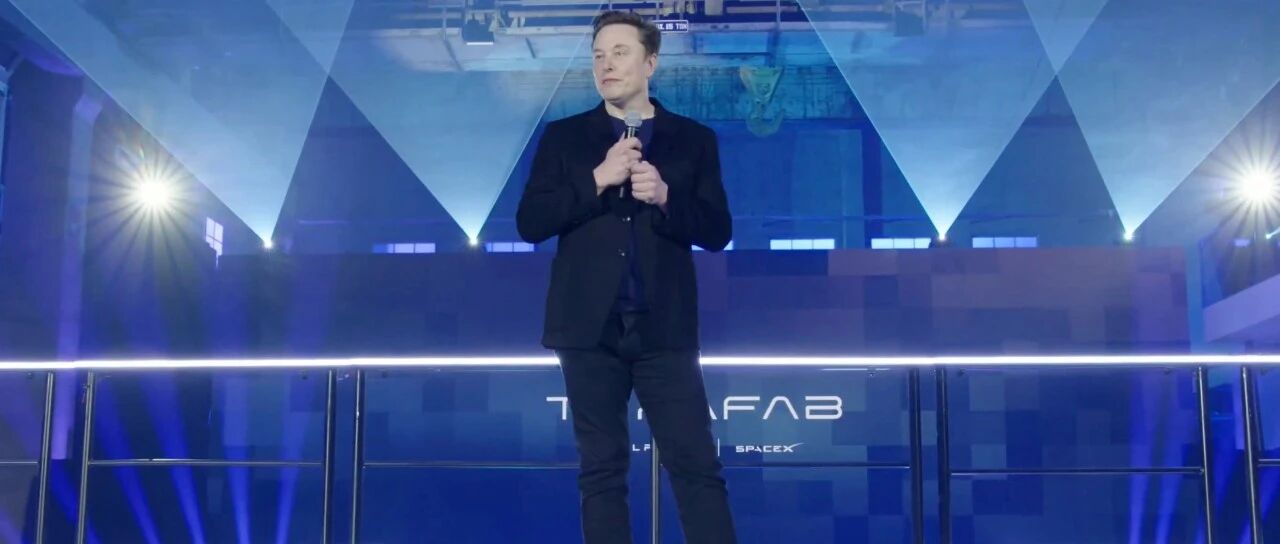
Core Viewpoint - The article discusses the implications of SpaceX's potential IPO on Tesla, highlighting the shift from a narrative-driven valuation to a more asset-based pricing model, which could lead to both short-term benefits and long-term structural changes for Tesla [1][3][16]. Short-term Implications - SpaceX's IPO is expected to create a significant market event, drawing attention and capital, similar to Tesla's inclusion in the S&P 500, which saw an influx of funds beyond expectations [5][7]. - The initial market reaction is likely to be positive, driven by emotional sentiment rather than fundamental support, leading to a potential spike in Tesla's stock price as it becomes the most liquid option for investors seeking exposure to Musk's ventures [8][17]. Mid-term Implications - As SpaceX becomes an independent trading entity, the valuation dynamics for Tesla may change, as investors will no longer need to rely on Tesla to express their confidence in Musk's vision, potentially leading to a re-evaluation of Tesla's valuation [9][10]. - The separation of SpaceX and Tesla could result in a capital shift, with investors reallocating funds from Tesla to SpaceX, which may lead to a decrease in Tesla's valuation as the market reassesses its core business without the added narrative of space exploration [11][10]. Long-term Implications - The IPO of SpaceX signifies a structural change in how Musk's ventures are valued, moving from a single narrative container (Tesla) to multiple independent assets, which could lead to a more transparent and grounded valuation for each business [12][13]. - Tesla will need to focus on its fundamentals, such as the commercialization of autonomous driving and profitability, as the indirect support from SpaceX's narrative diminishes, potentially leading to a decline in its price-to-earnings ratio [13][14]. - Investors will have the opportunity to create a diversified "Musk portfolio," allowing for more tailored investment strategies based on individual risk preferences, which represents a decentralization of investment in Musk's ventures [14]. Conclusion - The article concludes that the SpaceX IPO is not merely adding to Tesla's narrative but is instead extracting elements of that narrative for independent valuation, prompting a critical reassessment of Tesla's worth in the absence of its previous narrative support [16][17].


机械行业太空光伏深度报告:双轨驱动:商业航天+算力革命,太空光伏迎新纪元
Guolian Minsheng Securities· 2026-03-26 08:18
Investment Rating - The report maintains a "Buy" rating for key companies in the space photovoltaic sector, including Maiwei Technology, Dier Laser, Jiejia Weichuang, and Aotwei [2][3]. Core Insights - The space photovoltaic sector is driven by the dual forces of commercial aerospace and the computing revolution, with space photovoltaic technology recognized as the primary energy source for space activities [6][7]. - The report highlights the rapid growth of commercial space launches, with global commercial launches expected to exceed 70% by 2025, and the increasing demand for AI-driven data centers, which necessitate innovative energy solutions [6][9]. - The report emphasizes the technological evolution in space photovoltaic systems, identifying triple-junction gallium arsenide as the current leader, while P-HJT and silicon/perovskite tandem technologies are anticipated to dominate in the near to mid-term [6][10]. Summary by Sections 1. Space Photovoltaics: The Sole Main Energy Source in Commercial Aerospace and Computing Revolution - The global aerospace industry is set to accelerate, with 323 launches and 4508 satellites expected in 2025, primarily driven by the US and China [13]. - The low Earth orbit (LEO) satellites are becoming a focal point, with over 1.3 million satellites currently proposed globally [16][18]. 2. Technological Iteration in Space Photovoltaics - Triple-junction gallium arsenide batteries dominate due to their high efficiency and radiation resistance, but their high cost limits large-scale production [42][47]. - P-HJT batteries are identified as the most cost-effective solution in current mass production technologies, with costs significantly lower than triple-junction gallium arsenide [48][50]. 3. Investment Recommendations - Focus on the SpaceX supply chain, with recommendations for leading companies such as Maiwei Technology (HJT battery equipment), Aotwei (module equipment), Dier Laser (battery laser processing), and Jiejia Weichuang (core battery processing equipment) [10][6]. - Additional companies to watch include Jing Sheng Mechanical and Electrical (silicon wafer growth equipment) and Liancheng CNC (silicon wafer processing equipment) [10].



国元证券晨会纪要-20260326
Guoyuan Securities2· 2026-03-26 05:33
Core Insights - The report highlights the ongoing geopolitical tensions, particularly between the US and Iran, which may impact global markets and investment strategies [4] - The US defense industry is responding to increased defense readiness demands by ramping up production [4] - The report notes significant fluctuations in bond yields, with the 2-year US Treasury yield rising by 0.28 basis points to 3.887% and the 10-year yield falling by 2.17 basis points to 4.332% [4] Economic Data - The Baltic Dry Index decreased by 2.36% to 1989.00, indicating a decline in shipping rates [5] - The Nasdaq Index rose by 0.77% to 21929.83, while the Dow Jones Industrial Average increased by 0.66% to 46429.49 [5] - Crude oil prices (ICE Brent) fell by 1.23% to $103.20, reflecting market volatility [5] - The Hong Kong Hang Seng Index increased by 1.09% to 25335.95, showing positive market sentiment [5] - The Shanghai Composite Index rose by 1.30% to 3931.84, indicating a bullish trend in mainland markets [5]
太空算力竞赛:马斯克负责画饼,中国人负责落实
创业邦· 2026-03-26 03:10
Core Viewpoint - The article discusses the emerging trend of "space computing" in China, highlighting the strategic importance of deploying computational power in space to enhance data processing capabilities and ensure data sovereignty in the AI era [6][10][16]. Group 1: Space Computing Developments - China is the first country to launch a space computing satellite constellation, with the first mission involving 12 satellites capable of achieving a combined computational power of 5POPS, supporting large AI models in orbit [11]. - The ultimate goal of the space computing initiative is to deploy a constellation of 1,000 satellites by 2030, with a long-term vision of 2,800 satellites to create a robust space computing network [11][16]. - The shift from ground-based data processing to in-orbit computation is driven by the need to efficiently handle the vast amounts of data generated by remote sensing satellites, which currently only transmit a fraction of their data back to Earth [13][14]. Group 2: Strategic Importance - The future of space computing is seen as a potential "strategic switch" akin to GPS, where control over space computing resources could influence national security and data sovereignty [16]. - The ability to process data in space allows for quicker decision-making and reduces reliance on ground-based data centers, which may be vulnerable to delays and high costs [13][14]. - This strategic move is essential for China to secure its data sovereignty and ensure that critical services are not dependent on foreign technologies [16]. Group 3: Manufacturing and Cost Efficiency - The article emphasizes that the competitive edge in space computing lies in China's manufacturing capabilities, which have significantly reduced the costs of satellite production and launch [18][23]. - The cost of launching small satellites has decreased from approximately 1 million yuan to around 200,000 yuan due to increased competition among domestic companies [23]. - Innovations in manufacturing, such as using industrial-grade components and adopting a distributed supply chain, have further driven down costs and improved efficiency in satellite production [23][28]. Group 4: Global Implications - The deployment of space computing infrastructure has the potential to provide global benefits, as demonstrated by projects like SAT-CARE, which aims to deliver agricultural insights to farmers in Tanzania [30]. - Unlike private initiatives like Starlink, which may prioritize profit and control, China's approach to space computing emphasizes collaborative international efforts and equitable access to technology [34]. - The vision for space computing is to transform it into a global industrial resource, making advanced computational capabilities accessible to all nations, thereby fostering a new era of technological cooperation [34].
AI智能体退烧、国产硬核突围,英伟达再定行业格局
3 6 Ke· 2026-03-26 02:33
Group 1 - The technology sector is transitioning from "concept hype" to "value realization," with significant breakthroughs and controversies shaping the future landscape of technology [1][19] - AI agents have seen a cooling off period, with users reporting issues related to stability and practicality, highlighting the need for improvement in task execution and tool utilization [2][4] - Major companies are competing in the AI agent space, but many projects remain in the "toy" stage, lacking true business value despite some domestic products making progress in practical applications [4][5] Group 2 - A significant milestone was achieved with the approval of the world's first invasive brain-computer interface (BCI) medical device in China, breaking foreign monopolies and entering the commercialization phase [6][8] - The NEO system, a domestic invasive BCI, has shown promising clinical results, enabling paralyzed patients to perform basic movements and significantly improving their motor function [8] - In the energy sector, breakthroughs in commercial space and advanced physics are accelerating, with successful satellite launches and advancements in antimatter transportation paving the way for practical applications [16][18] Group 3 - NVIDIA's GTC 2026 conference set the tone for the next phase of AI development, focusing on Physical AI and the introduction of the Vera Rubin architecture, which is expected to generate significant chip orders by 2027 [9][11] - The competitive landscape in generative AI is shifting towards efficiency and scene adaptation, with Luma AI's Uni-1 model achieving notable performance improvements and cost reductions [13][14] - The industry is facing challenges in integrating generative AI into business processes, with many companies struggling to establish clear ROI despite significant investments [14]

未知机构:20260325复盘宏观各类资产蕴含的美联储降息预期纳指黄金铜1-20260326
未知机构· 2026-03-26 02:20
Summary of Key Points from Conference Call Records Industry Overview Macro Environment - The market reflects expectations of Federal Reserve interest rate cuts, with the ranking of asset classes indicating that the Nasdaq is perceived to be the most sensitive, followed by gold, copper, 10-year U.S. Treasuries, the U.S. dollar index, 2-year U.S. Treasuries, and federal funds futures [1][1][1]. Geopolitical Developments - Iranian military claims to have launched missiles at the U.S. aircraft carrier "Abraham Lincoln," although the U.S. has not confirmed any damage to the carrier. Iran has warned the U.S. against entering missile range [1][1][1]. - Reports suggest Iran is skeptical of Trump's push for negotiations, viewing it as another potential deception [1][1][1]. - Israel is rumored to have agreed to mobilize up to 400,000 reservists, with U.S. forces, including the 82nd Airborne Division, being deployed to the Middle East [1][1][1]. - Lockheed Martin plans to quadruple the production of precision strike missiles [1][1][1]. Sector-Specific Insights Artificial Intelligence - SemiAnalysis published an article indicating that the Kyber switch tray will feature a CPC or NPC flying line, exceeding expectations for the value chain; the Rubin Ultra 288 will utilize cable cartridges between two cabinets, further expanding the copper interconnect market [2][2][2]. - NVIDIA is reportedly informing its supply chain to shift towards a comprehensive co-packaged copper cable solution [2][2][2]. - GitHub's LiteLLM, which has 40,000 stars and 97 million downloads, has been compromised on PyPI [2][2][2]. - Robotic technology company Roboteq has secured orders worth $600 million [2][2][2]. Semiconductor Industry - SanDisk is set to acquire 139 million shares of Taiwan's Nanya Technology for $1 billion, representing a 3.9% stake, in exchange for a long-term supply agreement [2][2][2]. - Following the acquisition of Biwei, another domestic storage module manufacturer is expected to sign a storage wafer procurement order worth approximately 7 billion RMB [2][2][2]. - Google published a paper on TurboQuant technology, which can reduce KV cache size by six times [2][2][2]. Shipping Industry - COSCO Shipping has resumed new booking services from the Far East to certain countries in the Middle East, avoiding the Persian Gulf and using inland transport to access ports in the region. This service was previously suspended on March 4 [3][3][3]. - Iran reportedly requests details on crew and cargo for vessels passing through the Strait of Hormuz [3][3][3]. Chemical Industry - The President of Indonesia has approved tariffs on coal and nickel exports, with specific rates still under discussion [3][3][3]. - Dow Chemical has doubled the price of polyethylene from $0.15 per pound to $0.30 per pound, effective April 1 [3][3][3]. Satellite Industry - SpaceX plans to submit its IPO prospectus to regulators soon, aiming for a June listing [3][3][3]. - Russia's space agency Bureau 1440 has launched 16 broadband internet satellites into orbit, marking an early operational step for its near-Earth orbit network [3][3][3]. Robotics Industry - Tesla has released a teaser video showcasing various components of its robot project, which aims for an annual production of 10 million units, with land preparation for the project completed [3][3][3]. Military Industry - The domestic unmanned equipment "Atlas" drone swarm combat system has been unveiled [4][4][4]. Hong Kong Market - The market regulatory authority has circulated a notice indicating that the "food delivery war" should come to an end [5][5][5].
探馆2026中关村论坛年会!黑科技扎堆、机器人组团上岗
证券时报· 2026-03-24 14:08
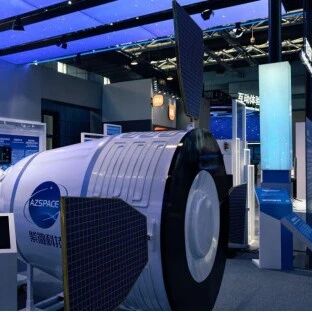
Core Viewpoint - The 2026 Zhongguancun Forum will take place from March 25 to 29, showcasing over 500 cutting-edge technologies and products, emphasizing the integration of technological and industrial innovation [1][3][2]. Group 1: Event Overview - The forum will feature five main sections including forum meetings, results releases, and technology transactions, with participation from over 1,000 guests from more than 100 countries and regions [3]. - The theme of this year's permanent exhibition is "Deep Integration of Technological Innovation and Industrial Innovation," with six major sections highlighting various aspects of innovation [3]. Group 2: Technological Highlights - The exhibition will showcase over 500 cutting-edge technologies from more than 350 organizations, including advancements in artificial intelligence, embodied intelligence, and high-end medical devices [3]. - Ziwei Technology, China's first private spacecraft company, plans to launch its unmanned commercial space station V1.0 in the second quarter of 2026, which will serve as a platform for near-Earth experiments [3]. Group 3: Industry Collaborations - Shougang's cold-rolled automotive sheet factory has established partnerships with over 70 domestic and international manufacturers, including major automotive brands like BMW, Mercedes-Benz, and BYD [5]. - The exhibition features innovative products such as a high-throughput invasive brain-machine interface system and various dexterous robotic hands, showcasing significant advancements in robotics and AI [5][7]. Group 4: Interactive Experiences - The forum will include a robot restaurant where multiple brands of robots will collaborate to handle the entire dining process, enhancing the interactive experience for attendees [9]. - A robot band and dance robots will perform, demonstrating the engaging and entertaining aspects of technology at the event [10].
老黄太疯狂,英伟达要把AI算力送上天,连马斯克都坐不住了
3 6 Ke· 2026-03-24 00:27
Core Insights - NVIDIA is accelerating its "Space AI" initiative, aiming to deploy AI capabilities in space, with the Thor chip already certified for radiation resistance and the development of the NVIDIA Space-1 Vera Rubin space computer underway [1][5][7] Group 1: NVIDIA's Space AI Initiative - NVIDIA's CEO Jensen Huang announced the launch of multiple AI chips and systems at the GTC conference, including plans for AI in space [1] - The Thor chip, designed for high-performance computing, is being adapted for space applications, having passed radiation tests [5][7] - The Starcloud-1 satellite, equipped with NVIDIA's H100 GPU, successfully demonstrated the operation of a large model in space, boosting NVIDIA's confidence in its Space AI plans [3][5] Group 2: Advantages and Challenges of Space AI - Space AI can utilize continuous solar energy due to the lack of atmospheric interference, allowing for uninterrupted power supply [8][10] - Thermal management in space is more efficient due to the extreme cold of space, although challenges remain regarding heat dissipation methods [10][11] - The maintenance of space equipment is nearly impossible, necessitating high redundancy in design, which increases costs [11] Group 3: Potential Applications of Space AI - AI in space could transform satellite functions from merely transmitting data to processing and sending conclusions back to Earth, enhancing communication efficiency [14] - The integration of AI capabilities in satellites could lead to autonomous operations, such as avoiding space debris and conducting deep space exploration without Earth commands [25][27] Group 4: Competitive Landscape in Space AI - Other companies, including SpaceX and Google, are also pursuing space AI initiatives, with SpaceX planning a constellation of satellites for data processing [15][17] - Domestic companies like Zhiqi are entering the space AI sector, with plans to launch their own satellite-based computing systems [20][22] - The competition in space AI is characterized by different strategic goals, with NVIDIA focusing on chip sales, while others aim to build comprehensive AI ecosystems [22] Group 5: Future Implications of Space AI - Space AI could alleviate the increasing energy demands of AI technologies by harnessing solar power, potentially paving the way for sustainable AGI development [24] - The deployment of AI-equipped satellites may revolutionize satellite communication, contributing to the development of a unified 6G network that integrates terrestrial and space-based systems [25][27]
计算机行业研究:空天进展持续加速
SINOLINK SECURITIES· 2026-03-22 07:45
Investment Rating - The report maintains a "Buy" rating for the computer industry, indicating an expected increase in the sector's performance over the next 3-6 months, exceeding the market by more than 15% [1]. Core Insights - The report highlights the ongoing advancements in aerospace technology, particularly with SpaceX's third-generation Starship (Block 3) and its preparations for the 12th orbital flight test, which will validate key technologies for future deep space missions [3][41]. - It suggests that investments in aerospace are entering a second phase, recommending a focus on leading global suppliers related to SpaceX and key domestic manufacturers in the aerospace sector [3]. - Tesla plans to invest $2.9 billion in solar equipment from Chinese manufacturers to accelerate its solar production capacity in the U.S., aiming for 100GW by the end of 2028, which will also support SpaceX's satellite power needs [6][12]. - SpaceX's Starlink project has achieved significant milestones, including the deployment of over 10,000 active satellites, enhancing its position in the global satellite internet market [15][47]. - The establishment of a joint venture by Xicet Testing and several aerospace companies aims to accelerate the development of the aerospace industry in the western region of China [53][54]. Summary by Sections Section 1: Tesla's Acceleration in U.S. Solar Layout and SpaceX's Starlink Breakthrough - Tesla is negotiating with Chinese solar equipment manufacturers for a $2.9 billion procurement to enhance its solar production capabilities in the U.S. [11][12]. - SpaceX's Starlink V3 satellites will feature independently designed chips to improve communication efficiency and bandwidth [13][15]. Section 2: Joint Venture for Aerospace Technology - Xicet Testing and partners are establishing a company focused on satellite design, rocket development, and control services, enhancing the aerospace industry's capabilities in the region [53][54]. Section 3: Related Investment Targets - The report identifies several companies as potential investment targets across various segments, including: - T/S Chain: Laplace, Maiwei, Kosen Technology, and others [3][59]. - Rockets: Western Materials, Feiwo Technology, Aerospace Power, and others [4][59]. - Satellites: Mingyang Smart Energy, China Satellite, and others [4][59]. - Space Computing: Shunhao Technology, Putian Technology, and others [4][59]. - 3D Printing: Huashu High-Tech, Feiwo Technology, and others [4][59].
刚刚,马斯克启动TERAFAB项目:万亿瓦算力工厂,瞄准太空
机器之心· 2026-03-22 05:34
Core Viewpoint - Musk's announcement of the "TERAFAB" project aims to produce over 1 Terawatt (TW) of computing power annually, with 80% allocated for space and 20% for Earth [1][15]. Group 1: Project Overview - The TERAFAB project will be a collaboration between SpaceX and Tesla, focusing on producing a massive scale of AI chips to meet future demands [2][11]. - The project envisions a computing capacity of 1 TW, which is equivalent to 1,000 gigawatts (GW) or 1 million megawatts (MW) [1]. Group 2: Technological Aspirations - Musk's vision includes expanding human civilization to the galaxy, with plans for cities on the Moon and Mars, and utilizing the entire solar system [4][23]. - The Kardashev Scale categorizes civilizations based on their energy consumption capabilities, with Type I being the ability to harness all energy from their home planet [5][6]. Group 3: Infrastructure and Capabilities - SpaceX's Starship is crucial for achieving the goal of transporting approximately 10 million tons of materials to orbit annually, which is necessary for the TW-level computing capacity [11][12]. - The advanced chip factory in Austin will be capable of producing various types of chips and will facilitate rapid iterations in chip design [17]. Group 4: Space vs. Earth - The current annual electricity consumption in the U.S. is only 0.5 TW, while the TERAFAB project aims to produce 1 TW, highlighting the project's scale [15]. - Deploying AI in space may become more cost-effective than on Earth due to the abundance of solar energy and favorable conditions for cooling [19][20]. Group 5: Future Implications - If the TW-level computing capability is realized in space, it could revolutionize AI operations and economic systems, eliminating constraints related to land and cooling systems [24][25]. - The potential for a lunar mass driver could lead to a new economic system that is vastly larger than the current Earth economy [22].