软件和信息服务

Search documents
重庆迭代“满天星”行动 探索产业转型升级发展新路径
Ren Min Ri Bao· 2026-01-05 22:33
Core Viewpoint - The "Starry Sky" initiative has accelerated the development of Chongqing's software and information service industry, marking a new phase of transformation and quality improvement in the sector [1][4]. Group 1: High-Level Promotion and Systematic Operations - Chongqing aims to enhance the quality of its software and information industry, positioning it as a catalyst for the transformation and upgrading of the manufacturing sector [2]. - The initiative addresses the urgent need for industrial upgrades while revitalizing idle commercial spaces, attracting young talent and quality enterprises [2][3]. Group 2: Implementation Mechanisms - A comprehensive work mechanism has been established to ensure the effective implementation of the "Starry Sky" initiative, including quarterly progress meetings led by city government leaders and collaboration among over ten departments [3]. - The initiative employs a combination of overall design, meticulous management, competitive benchmarking, and dynamic optimization to translate plans into practice [3]. Group 3: Achievements and Growth - The software and information service industry in Chongqing has seen significant growth, with 263,000 new employees added, doubling the total since 2021, and 30.5% of new employees being from outside the city [4]. - A total of 3,750,000 square meters of idle buildings have been revitalized, and 26 software industry parks have been established [4]. - The number of new software enterprises reached 17,200, including three billion-level and 20 ten-million-level companies, with 91 software products recognized as national pilot demonstrations [4]. Group 4: Application and Impact - The initiative has led to the release of 4,117 application scenarios, establishing 22 national-level intelligent factories, the highest in Western China [5]. - Various industry events have been held to enhance the influence of the software industry, including the China Industrial Software Conference and the Intelligent Automotive Software Ecosystem Conference [5]. Group 5: Future Directions - The new plan emphasizes the integration of AI technologies, aiming to accelerate the application of "AI+" in various sectors and enhance data empowerment [8][10]. - The initiative will expand its scope from urban centers to all eligible districts, fostering a development pattern of "city-level clusters + characteristic clusters" [9]. Group 6: Talent Development - A talent cultivation mechanism has been established, focusing on collaboration between enterprises and educational institutions to meet industry needs [6][8]. - Over 35,000 skilled professionals have been trained through a collaborative model involving enterprises, universities, and training institutions [6].
南京新年这场重要会议”释放“双新融合”强信号:发榜1.6亿求贤,冲刺万亿产业
Yang Zi Wan Bao Wang· 2026-01-05 05:31
Core Insights - Nanjing is accelerating the construction of a globally influential industrial technology innovation center as it enters the "14th Five-Year Plan" period, focusing on deep integration of technological and industrial innovation [1] Group 1: Strategic Focus Areas - The city will prioritize six key areas: optimizing layout for strategic technology, enhancing industrial clusters, advancing "Artificial Intelligence +", improving technology transfer efficiency, nurturing enterprises, and fostering a healthy ecosystem for integration of various chains [2] - Nanjing aims to invest more in human resources, reduce living costs for young talents, and create a more attractive policy environment to gather global intellectual resources [3] Group 2: Talent Policies - The new talent policy includes the "Nanjing Talent Recruitment Plan," which offers various subsidies for young talents, including living allowances of up to 100,000 yuan for graduates, depending on their degree [4] - The policy aims to alleviate economic pressures on young professionals and enhance the city's appeal as a destination for talent [4] Group 3: Technology Development Initiatives - Nanjing has announced 38 key technology challenges under the "Challenge-Driven Innovation" initiative, with a total investment of 520 million yuan and a specific funding of 160 million yuan for these projects [5] - The city is focusing on seven key industrial technology directions, including biomedicine and artificial intelligence, as part of its "1026" industrial system [5] Group 4: Industry Growth Projections - The software industry in Nanjing is projected to exceed 1 trillion yuan by 2025, marking it as the city's first trillion-level industrial landmark [6] - The smart grid industry is expected to reach 500 billion yuan, while new-generation information communication and integrated circuits are anticipated to maintain double-digit growth [7] Group 5: 6G Development Plans - Nanjing has launched the "6G City" action plan, aiming to achieve significant milestones in 6G technology by 2027, including the release of at least six major research outcomes and the establishment of over 100 new enterprises in the field [8]
总规模500亿元 四川社保科创基金签约揭牌
Ke Ji Ri Bao· 2025-12-31 04:58
Core Viewpoint - The Sichuan Social Security Science and Technology Innovation Fund has been established with a total scale of 50 billion yuan and an initial scale of 20 billion yuan, aimed at supporting key technological advancements and the transformation of scientific achievements in Sichuan and the Chengdu-Chongqing economic circle [1][2]. Group 1 - The fund will focus on strategic emerging industries and advantageous sectors in Sichuan, promoting a healthy ecosystem that integrates technology, industry, and finance [1]. - The fund's investment strategy will target high-growth technology projects in key industries such as artificial intelligence, low-altitude economy, biomedicine, and software and information services [2]. - The fund will adopt a "two-layer, joint management" model, enhancing the participation and influence of investors while ensuring effective fund management [2].
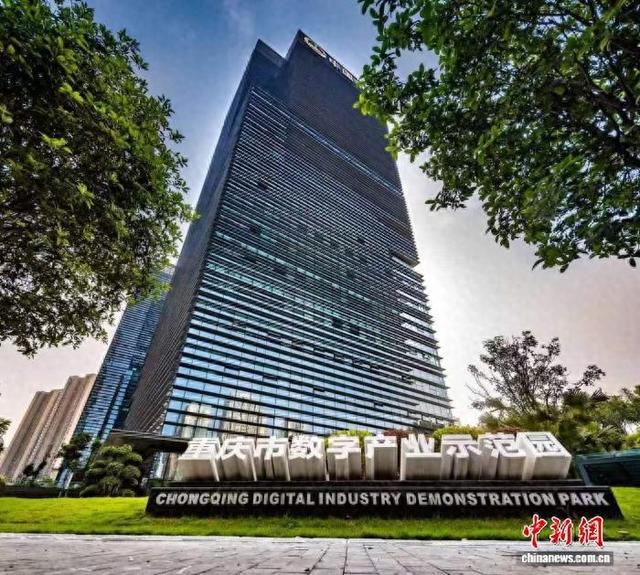
重庆迭代出台“满天星”行动 加快推动软信产业发展
Xin Lang Cai Jing· 2025-12-30 10:50
Core Viewpoint - Chongqing is upgrading its "Starry Sky" action plan to accelerate the high-quality development of the software and information service industry, building on three years of successful implementation [1]. Group 1: Implementation and Achievements - The "Starry Sky" action plan has led to the addition of 263,000 software and information service professionals over three years, doubling the total since 2021, with 30.5% of new hires being from outside the city [3]. - A total of 3.75 million square meters of existing buildings have been revitalized, with 26 software industry parks and 29 city-level "Starry Sky" demonstration buildings established [3]. - The city has seen the establishment of 17,200 new software companies, with 91 software products and applications selected as national pilot demonstrations [3]. Group 2: Future Goals and Strategies - The new implementation plan aims to add 200,000 software and information service professionals by 2027, including 20,000 core talents in software development and "AI+" applications [4]. - The plan targets the creation of over 10 influential software industry clusters and 1,000 new software companies, with aspirations to cultivate five listed companies and five "unicorn" enterprises [4]. - Key tasks include promoting industrial integration, enhancing AI capabilities, and improving service systems to accelerate the intelligent upgrade of manufacturing, urban governance, and emerging industries [4].

准2万亿城市,终于“破零”了
首席商业评论· 2025-12-28 04:12
Core Viewpoint - Nanjing is on the verge of becoming the first city in Jiangsu province to achieve a trillion-yuan software industry, which is crucial for its economic growth and competitiveness as it aims to surpass a GDP of 2 trillion yuan by 2025 [5][8][24]. Group 1: Economic Pressure - Nanjing's GDP reached 18,500.81 billion yuan last year, making it a strong contender for the 2 trillion yuan mark, but it faces significant competition from cities like Ningbo, Qingdao, and others that have also set similar targets [5][9]. - The pressure to advance economically is evident, as Nanjing has no trillion-yuan industry yet, unlike other major cities in the Yangtze River Delta region [6][12]. - The city has acknowledged the need for a "breakthrough battle" in its industry to enhance its competitiveness [6][8]. Group 2: Industry Development Challenges - Nanjing's software industry has not kept pace with national growth rates, with several other cities showing faster growth in software business revenue [8][14]. - The city has historically lagged in developing new industries, with traditional sectors like chemical and steel seeing significant migration, leading to a lack of new industry growth [14][18]. - The private economy in Nanjing is weaker compared to cities like Suzhou and Hangzhou, which affects its overall industrial development [17][18]. Group 3: Strategic Opportunities - Nanjing possesses strong research and development capabilities and is positioned to leverage its geographical advantages to expand its influence beyond its immediate region [17][20]. - The city is actively implementing policies to support the growth of its headquarters economy, attracting major companies like Huawei and Xiaomi to establish regional offices [18][20]. - Nanjing aims to enhance its role as a strategic hub within the Yangtze River Delta, focusing on high-level collaboration and innovation to drive economic growth [22][24].

中共南京市委关于制定南京市国民经济和社会发展第十五个五年规划的建议
Nan Jing Ri Bao· 2025-12-26 02:14
Group 1 - The "14th Five-Year" period has seen significant achievements in Nanjing's economic and social development, maintaining a GDP of over 1.9 trillion yuan and ranking among the top ten inland cities in China [2] - Nanjing's software and information service industry is expected to exceed 1 trillion yuan, with four industries recognized as national advanced manufacturing clusters [2] - The city has been recognized as a national benchmark for business environment, with significant progress in the Jiangbei New Area and the Jiangsu Free Trade Zone [2] Group 2 - The "15th Five-Year" period presents both opportunities and challenges for Nanjing, with a complex and changing development environment [3] - Nanjing's advantages include a strong economic foundation, a large market, and a complete industrial system, while challenges include slow economic growth momentum and uneven public service distribution [4] Group 3 - The guiding ideology for economic and social development during the "15th Five-Year" period emphasizes the importance of Xi Jinping's thoughts and the need for high-quality development [6] - The strategic focus includes innovation, cultural empowerment, enhancing hub capabilities, and international openness [7][8] Group 4 - Key goals for the "15th Five-Year" period include achieving high-quality economic growth, enhancing industrial and technological innovation, and improving urban functionality [9][10][11] - The city aims to significantly enhance its ecological environment and cultural soft power, while ensuring the well-being of its residents [10][11] Group 5 - Nanjing plans to deepen its industrial strength by optimizing traditional industries and fostering emerging sectors, with a focus on technological innovation [13][14] - The city aims to establish advanced manufacturing clusters and support the development of high-tech industries [14][15] Group 6 - The city will enhance its modern service industry by promoting the integration of services with advanced manufacturing and developing a high-quality financial center [16] - Nanjing will implement an "Artificial Intelligence +" initiative to create a comprehensive ecosystem for AI applications across various sectors [17] Group 7 - Nanjing aims to expand domestic demand and enhance economic growth by promoting consumption and effective investment [24][25] - The city will focus on new infrastructure development, particularly in digital and energy sectors, to support economic transformation [26] Group 8 - The city will enhance its global resource attraction capabilities by building a comprehensive transportation hub and strengthening its role in international trade [32][33] - Nanjing will work towards creating a high-level open economy and a favorable business environment to attract foreign investment [34][35] Group 9 - Nanjing will implement national development strategies to improve its urban competitiveness and regional influence [35][36] - The city will promote the high-quality development of the Nanjing metropolitan area and enhance collaboration with neighboring regions [36][37]
准2万亿城市,终于“破零”了
Mei Ri Jing Ji Xin Wen· 2025-12-25 15:07
Core Viewpoint - Nanjing is on track to become the first city in the region to achieve a trillion-yuan software industry, marking a significant milestone in its economic development as it aims to reach a GDP of 2 trillion yuan by 2025 [2][6]. Group 1: Economic Milestones - Nanjing's software industry is expected to exceed 1 trillion yuan this year, positioning it as the city's first trillion-yuan industry [2]. - The city aims to achieve a GDP of 2 trillion yuan by 2025, requiring an economic increment of approximately 150 billion yuan this year [2][5]. - As of 2024, Nanjing's GDP reached 1,850.08 billion yuan, making it one of the closest cities to the 2 trillion yuan threshold [2]. Group 2: Competitive Landscape - Nanjing faces increasing competition from cities like Ningbo, Qingdao, and Wuxi, all of which have set their sights on achieving 2 trillion yuan GDP targets [2][12]. - In 2024, Ningbo's GDP was 1,814.77 billion yuan, closely trailing Nanjing, while Qingdao's GDP was 1,671.95 billion yuan [8]. - The pressure to advance economically is evident, as Nanjing's lack of a trillion-yuan industry contrasts with other cities in the Yangtze River Delta region [3][12]. Group 3: Industry Development Challenges - Nanjing's software industry growth has been slower compared to other major cities, with several cities showing higher growth rates in software business revenue [8]. - The city has historically relied on traditional industries, which have seen a decline, while new industries have not developed at a comparable pace [13]. - The lack of a strong private sector is a significant barrier to Nanjing's industrial growth, with fewer private enterprises compared to cities like Suzhou and Hangzhou [16]. Group 4: Strategic Initiatives - Nanjing has launched several measures to support the development of its headquarters economy, aiming to attract major companies and enhance its industrial landscape [17]. - The city is focusing on innovative strategies to overcome bureaucratic hurdles and enhance its software industry [17]. - Plans are in place to improve transportation and logistics infrastructure, including the expansion of Nanjing Lukou Airport and other key projects, to strengthen its position as a regional hub [26]. Group 5: Regional Integration and Future Directions - Nanjing's development is aligned with the broader strategy of the Yangtze River Delta, emphasizing its role as a strategic hub for economic integration [19][20]. - The city aims to leverage its strengths in research and development to attract international technology and industry projects [23]. - Nanjing's growth strategy includes enhancing its service industry capabilities and becoming a center for innovation and supply chain management [26].
北京软件和信息服务业协会AIGC工作委员会启动
Bei Jing Shang Bao· 2025-12-25 08:48
北京商报讯(记者 程靓)12月25日,据北京软件和信息服务业协会消息,北京软件和信息服务业协会 AIGC工作委员会(以下简称"AIGC工委会")日前在北京软件和信息服务业协会第十一届会员代表大会 第三次会议上正式揭牌启动。 据介绍,AIGC工委会以推动首都AIGC产业高质量发展为宗旨,以促进产业资源协同、技术创新突破和 生态体系完善为核心目标,围绕AIGC技术研发、产业应用、生态培育与标准治理等重点领域,构建协 同创新与产业赋能平台,加快培育具有国际竞争力的AIGC创新集群。 下一步,AIGC工委会将充分发挥行业组织的平台和纽带作用,推动上下游资源对接和跨领域协同创 新,加快AIGC技术赋能千行百业;在产业研究层面,将制定AIGC相关行业标准与规范,深入调研产业 上中下游企业输出产业研究成果;在落地应用层面,围绕行业共性问题和落地需求,推动核心技术攻 关,加快标杆示范场景打造;在生态建设层面,将依托建设加速孵化体系、举办品牌活动赛事,构建创 作者生态社区等路径链接技术、资本与市场资源,持续完善AIGC产业生态,提升产业活跃度和社会影 响力。 AIGC工委会目前有20+首批发起成员单位,包括阿里巴巴、艾迪普、数 ...
四川五条重点产业链上演“相亲会” 99亿元融资需求寻“良缘”
Si Chuan Ri Bao· 2025-12-18 00:18
Core Insights - The article discusses the challenges faced by specialized small and medium enterprises (SMEs) in securing financing, particularly in high-tech sectors, highlighting the need for continuous investment and the mismatch between light asset models and traditional credit systems [1][4]. Group 1: Financing Needs and Challenges - Many enterprises express urgent financing needs, with a specific example of a company requiring 30 million yuan in working capital to expedite research and production [1][3]. - A total of 51 companies reported a combined financing demand of 9.9 billion yuan, with 8.25 billion yuan needed for loans and 1.65 billion yuan for equity financing [5][6]. - The financing challenges vary by company maturity, with early-stage firms struggling to secure traditional loans due to a lack of collateral [3][4]. Group 2: Government and Financial Institution Initiatives - The government has introduced a "toolbox" of policies and financial products to guide enterprises through different development stages, including a compilation of 348 supportive measures [6][7]. - Innovative financial tools, such as the "technology flow" evaluation system, have been developed to assess creditworthiness based on R&D investments and patent values rather than solely on financial data [7]. - Government-led funds, such as the Sichuan Advanced Manufacturing Investment Guidance Fund, have been established to support emerging technologies, with over 2 billion yuan already allocated [7][8]. Group 3: Ecosystem Development for Continuous Engagement - A call for a sustainable ecosystem for ongoing industry-finance connections is emphasized, with government, financial institutions, and enterprises needing to collaborate effectively [8]. - The "one chain per month" investment and financing roadshow is highlighted as a key mechanism for maintaining regular interactions between enterprises and investors [8]. - Companies are encouraged to improve their operational standards and actively engage in the industry chain ecosystem to attract long-term capital [8].

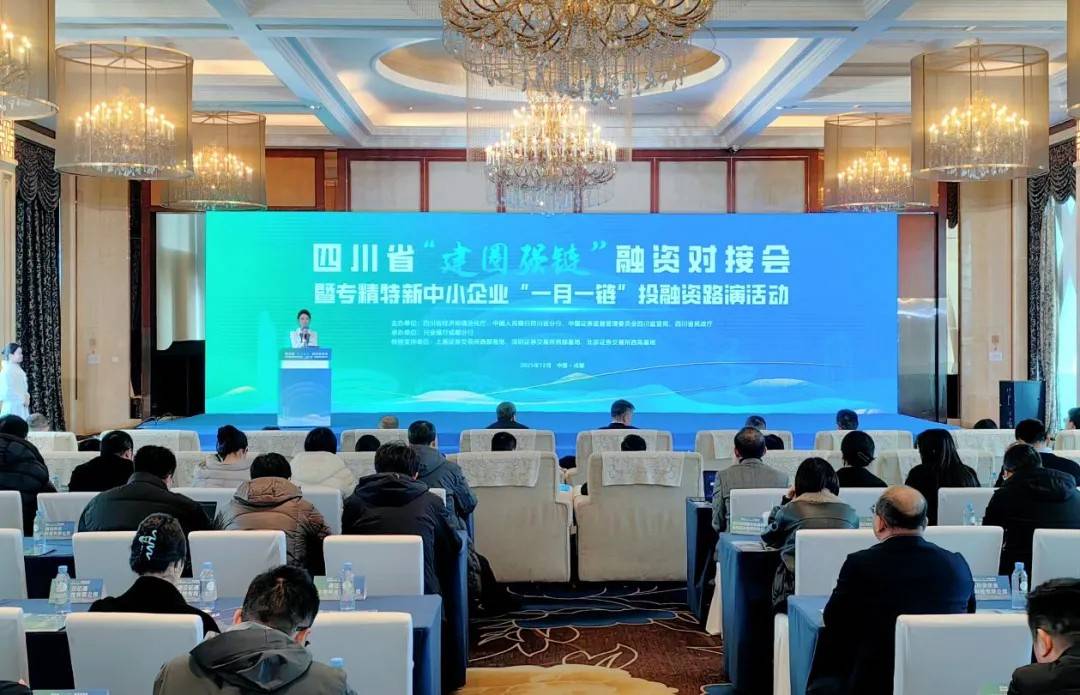
近百亿融资需求、348项惠企政策集中发布!四川“建圈强链”融资对接会引“金融活水”精准滴灌
Sou Hu Cai Jing· 2025-12-16 00:32
Group 1 - The event held on December 15 in Chengdu aimed to facilitate financing connections for specialized and innovative small and medium-sized enterprises, releasing nearly 10 billion in financing needs and 348 supportive policies [1][3][7] - The "Building Circles and Strengthening Chains" strategy is a significant initiative by the Sichuan provincial government to enhance industrial development, establishing a collaborative mechanism since July 2024 [3][4] - The event attracted around 140 participants, including representatives from provincial departments, financial institutions, and investment organizations, highlighting the importance of integrating financial capital with key industrial chains [3][4] Group 2 - The financing demand list identified over 50 key enterprises with financing needs exceeding 9.9 billion, covering various scenarios such as R&D and capacity expansion [7] - The Sichuan Province Financial Product Handbook features 129 specialized financial products from 37 financial institutions, offering comprehensive financial solutions [7] - The 2025 Enterprise Support Policy consolidates 348 recent policies across three government levels, addressing various aspects such as taxation and enterprise cultivation [7][9] Group 3 - The event included presentations from seven financing institutions, showcasing tailored financial products and services, with several projects achieving preliminary connection intentions [9]