
锌冶炼

Search documents
LME暂停KZ及YP锌交割,沪锌突破25000元
Zhong Xin Qi Huo· 2026-01-15 11:14
1. Report Industry Investment Rating - Not provided 2. Core View of the Report - In the short term, there is upward room for zinc ingot prices, and the overall base metal sector is strong. With the potential fermentation of the Fed's policy damage and weak - dollar expectations, it will provide support for zinc prices. However, in the medium - to - long term, global zinc production is still increasing, and the supply of zinc ingots at home and abroad is expected to be excessive in 2026. The short - term zinc price may fluctuate at a high level, and shorting should be cautious. The recommended price range is adjusted to 22,000 - 26,000 yuan/ton [2][4] 3. Summary by Relevant Catalogs Latest Dynamics and Reasons - The Shanghai zinc price has broken through 25,000 yuan/ton, and the LME zinc price has broken through $3,000/ton. The driving factors include: the long - opened Chinese zinc export window from early October to mid - December 2025, the slow recovery of domestic zinc ingot supply after the LME price settlement, the significant rise of other base metals attracting capital attention to zinc, and the LME's suspension of KZ and YP zinc交割 from April 14, 2026. In 2024, Korea Zinc and Young Poong's zinc production was 1.03 million tons and 0.21 million tons respectively, accounting for 9% of the global total. If the suspension is long - term and overseas zinc smelters have production problems in 2026, LME zinc inventory will not significantly recover. But the LME plans to limit members with large positions in near - month contracts, so the squeeze - out pressure on LME zinc is expected to be low [2] Fundamental Situation - Macro - wise, the Fed's policy and weak - dollar expectations are still fermenting, and the central economic work conference set a positive tone. Overall, the macro - expectation is stable. Supply - side, after the LME price settlement, the Shanghai - LME ratio has risen, the zinc concentrate import window has opened, the decline of imported zinc concentrate has slowed, and domestic zinc concentrate production has stabilized. Zinc smelters' raw material inventory and zinc concentrate port inventory are okay, so the decline in zinc ingot production may ease. The domestic zinc ingot export window has closed, but previously locked - price zinc ingots will still be exported, and it takes time for zinc concentrate imports to significantly increase. So, the domestic zinc ingot supply cannot be significantly loosened in the short term. Demand - side, with the arrival of the downstream consumption off - season, terminal demand remains weak, but some enterprises have pre - holiday stocking needs, so the decline in zinc ingot demand may not be obvious. In short, the domestic zinc ingot social inventory is still decreasing [3] Summary and Strategy - Short - term: Zinc prices may fluctuate at a high level, and shorting should be cautious. The price reference range is adjusted to 22,000 - 26,000 yuan/ton. It is recommended to buy copper and aluminum and short zinc in far - month contracts, and close the cross - period and cross - market arbitrage positions when domestic zinc ingot exports basically end. - Long - term: After overseas zinc smelters increase production smoothly and the US dollar index stabilizes, the cross - market long - arbitrage strategy can be re - entered [4]
罗平锌电:关联方拟1.3亿元增资子公司,公司同步增资控股
Xin Lang Cai Jing· 2026-01-14 12:48
Core Viewpoint - The company announced a capital increase plan for its wholly-owned subsidiary, Fuxin Agriculture, involving a total investment of no less than 130 million yuan, with the company retaining a controlling stake of over 51% [1] Group 1: Capital Increase Details - The agreement stipulates that within 15 working days after delivery on May 30, 2025, a designated county-level state-owned enterprise will increase capital by no less than 130 million yuan [1] - Yunnan Zhendong Industrial Group Co., Ltd., a shareholder holding more than 5% of the company, will invest 130 million yuan for a 49% stake [1] - The company will invest 32.9593 million yuan to maintain a 51% stake [1] Group 2: Transaction Implications - This transaction does not constitute a major restructuring and will not change the scope of the consolidated financial statements [1] - The funding for this capital increase will come from the company's own funds and will not affect normal operations [1]

锌价估值持续偏低
Hua Tai Qi Huo· 2026-01-14 02:32
Report Summary 1. Investment Rating - Unilateral: Cautiously bullish [5] - Arbitrage: Neutral [5] 2. Core View - The absolute valuation of zinc is low, and long - term macro factors are still bullish. The report remains optimistic about consumption. Although consumption enters the traditional off - season, zinc consumption maintains relative strength, and the inventory accumulation rate is slow. The supply pressure is expected to decrease quarter - on - quarter, and zinc shows relative resistance to decline under capital disturbances [4]. 3. Summary by Category Market Data - **Spot**: LME zinc spot premium is - $40.90 per ton. SMM Shanghai zinc spot price is 24,330 yuan per ton, up 190 yuan from the previous trading day, with a premium of 70 yuan per ton; SMM Guangdong zinc spot price is 24,290 yuan per ton, up 200 yuan, with a premium of 30 yuan per ton; Tianjin zinc spot price is 24,260 yuan per ton, up 190 yuan, with a premium of 0 yuan per ton [1]. - **Futures**: On January 13, 2026, the SHFE zinc main contract opened at 24,215 yuan per ton, closed at 24,235 yuan per ton, up 205 yuan. The trading volume was 152,709 lots, and the open interest was 68,022 lots. The highest price was 24,735 yuan per ton, and the lowest was 24,035 yuan per ton [2]. - **Inventory**: As of January 13, 2026, the total inventory of SMM seven - region zinc ingots was 118,300 tons, down 200 tons from the previous period. The LME zinc inventory was 106,900 tons, up 100 tons from the previous trading day [3]. Market Analysis - The raw material inventory of smelters has increased slightly, and the enthusiasm for purchasing domestic ores has declined. The domestic ore TC remains stable, while the imported ore TC continues to decline. The Antamina's latest quotation is 0 - 10 dollars per ton. The raw material available days of smelters are not high, and the short - term TC is difficult to rise. The comprehensive smelting profit is difficult to repair, and the output in the first quarter may still be lower than expected, so the supply pressure is expected to continue to decrease quarter - on - quarter. Consumption enters the traditional off - season, but zinc consumption maintains relative strength, the inventory accumulation of social inventory is slow, and the spot premium remains [4]. Strategy - **Unilateral**: Cautiously bullish [5] - **Arbitrage**: Neutral [5]
1月锌锭产量预计增长10%
Xin Lang Cai Jing· 2026-01-12 22:06
Core Viewpoint - Xinen Zinc Industry is expanding its production capacity and market presence, focusing on high-end zinc alloys and new materials, while securing long-term supply agreements to stabilize operations and reduce inventory risks [2][3][4] Group 1: Production and Capacity - The company has launched a new fire-refined zinc production line with a capacity of 50,000 tons, with January zinc ingot production expected to increase by over 10% year-on-year [2] - A new project to add 50,000 tons per year of zinc smelting capacity is accelerating, with construction expected to start in the second quarter [4] - The company plans to establish a production line for over 30,000 tons of high-end zinc and strategic rare metals such as germanium and indium, aiming to break the zero-capacity barrier for strategic rare metals in Guizhou [4] Group 2: Strategic Partnerships - Xinen Zinc signed a long-term sales agreement with Shanghai Mingduo Metal Materials Co., Ltd. for zinc ingots for 2026, allowing for better production planning and focus on high-end zinc alloy development [2] - A strategic cooperation agreement was signed with Guangdong Shenyao New Materials Co., Ltd. to provide customized zinc ingots, including ultra-pure zinc ingots and environmentally friendly zinc ingots compliant with EU RoHS standards [2][3] Group 3: Market Expansion - The company is focusing on the South China market as a strategic priority during the 14th Five-Year Plan, targeting emerging sectors such as new energy vehicles and smart wearable devices [3] - Plans are in place to consolidate its presence in East and South China while expanding cooperation in Southwest and Northwest regions, including agreements with new energy battery companies in Sichuan and Chongqing for high-purity zinc powder supply [4] Group 4: Research and Development - Xinen Zinc is exploring a "smelting + R&D + new materials" integration model, leveraging provincial scientific research capabilities to deepen collaboration with downstream companies in areas like zinc die-casting and zinc-air battery materials [4]

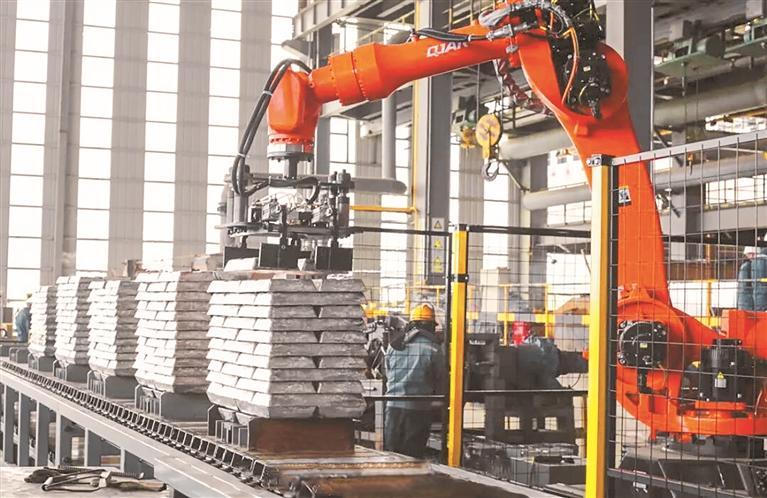
罗平锌电:罗平控股所持5.0001%公司股份无偿划转至震东集团
Guo Ji Jin Rong Bao· 2026-01-09 11:28
Core Viewpoint - The announcement reveals that Luoping Holdings has transferred its 100% stake in Luoping Zinc Electric to Zhendong Group without compensation, resulting in the indirect transfer of 16.17 million shares of Luoping Zinc Electric, which represents 5.0001% of the total share capital of the listed company [1] Group 1 - Luoping Holdings will no longer hold any shares in the listed company after the completion of this equity change [1]
供应扰动忧虑继续,基本金属维持强势
Zhong Xin Qi Huo· 2026-01-08 01:42
1. Report Industry Investment Rating No relevant content provided. 2. Core Viewpoints of the Report - The supply disruption concerns continue, and base metals remain strong. In the short - to - medium term, the logic of weak US dollar expectations and supply disruption concerns remains unchanged. The impact of weak real - time demand is limited, and supply disruption concerns continue to drive up base metals. Long - term, there are still expectations of potential incremental stimulus policies in China, and the supply disruption issues of copper, aluminum, and tin still exist, with expectations of tightening supply - demand [1]. - Copper: Supply disruptions in copper mines are frequent, and copper prices continue to run strongly [2][7]. - Alumina: The market sentiment is high, and alumina prices have rebounded strongly [2][7]. - Aluminum: The capital sentiment is optimistic, and aluminum prices continue to show a strong upward trend [2][9]. - Aluminum alloy: Cost support is strong, and the market continues to show a strong upward trend [2][11]. - Zinc: The short - term supply recovery is slow, and zinc prices fluctuate with non - ferrous metals [2][12]. - Lead: The absolute level of social inventory is low, and lead prices continue to rebound [2][16]. - Nickel: Supported by Indonesian policy expectations, nickel prices have soared [2][17]. - Stainless steel: Driven by the rise in nickel prices, the stainless - steel market has soared [2][21]. - Tin: Supply disruptions have emerged again, and tin prices are fluctuating upwards [2][24]. 3. Summary by Related Catalogs 3.1行情观点 3.1.1 Copper - Information analysis: In 2026, the copper concentrate long - term processing fee benchmark is set at $0/ton and $0/pound. In December 2025, China's electrolytic copper production increased month - on - month and year - on - year. On January 7, 2026, the spot price of 1 electrolytic copper was at a discount to the futures contract. There were strikes at the Mantoverde copper mine in Chile and a delay in the second - phase project of the Mirador copper mine in Ecuador [7]. - Main logic: The Fed's interest - rate cuts and balance - sheet expansion support copper prices. Copper mine supply disruptions are increasing, and the supply is tightening. Refined copper supply is expected to shrink, and although the current demand is weak, the long - term supply - demand is expected to be tight [7]. - Outlook: Copper prices are expected to be volatile and strong due to supply constraints and disruptions [7]. 3.1.2 Alumina - Information analysis: On January 7, 2026, the northern spot comprehensive price of alumina was flat, and the national weighted index decreased slightly. The alumina warehouse receipt was 154,828 tons, unchanged from the previous day [7]. - Main logic: The macro - sentiment amplifies market fluctuations. The supply is in a state of over - accumulation, and the cost support is average. The market is at the bottom and fluctuating, and more smelter production cuts or new ore - end disturbances are needed to boost prices [7]. - Outlook: The current supply - demand is in surplus, but the valuation is in the low - end range, and alumina is expected to remain volatile [7]. 3.1.3 Aluminum - Information analysis: On January 7, 2026, the average price of SMM AOO aluminum increased, and the inventory of aluminum ingots and aluminum rods in the main consumption areas increased. The electrolytic aluminum warehouse receipt on the SHFE increased. Some air - conditioning companies launched the "aluminum replacing copper" standard implementation work, while Gree promised not to raise prices and had no such plan [9]. - Main logic: The macro - outlook is positive. The domestic production capacity and operating rate are high, and the overseas supply has constraints. The current high aluminum prices suppress demand, and inventory has accumulated. Overall, the short - term supply - demand is expected to be tight, and aluminum prices are expected to be volatile and strong [9]. - Outlook: In the short term, aluminum prices are expected to be volatile and strong. In the medium term, the supply increment is limited, and the demand is resilient, so the price center is expected to rise [9][10]. 3.1.4 Aluminum alloy - Information analysis: On January 7, 2026, the price of Baotai ADC12 aluminum alloy increased [11]. - Main logic: The cost support is strong due to the tight supply of scrap aluminum. The weekly operating rate decreased due to raw material shortages and profit issues. The demand is currently based on rigid procurement, and the inventory has slightly decreased. Overall, the cost support and stable supply - demand are expected to keep prices volatile and strong [11]. - Outlook: In the short and medium terms, prices are expected to be volatile and strong due to cost support and potential supply policy disturbances [11]. 3.1.5 Zinc - Information analysis: On January 7, 2026, the spot price of zinc in different regions was at a premium to the futures contract. As of January 7, the SMM seven - region zinc ingot inventory increased. The Mount Isa railway line in Australia was damaged, affecting zinc concentrate supply [12][14]. - Main logic: The macro - outlook is stable. The zinc ore supply is tight in the short term, and the smelter profit has declined. The domestic zinc ingot supply pressure is not large, and the demand is in the off - season. In the short term, zinc prices may remain high and volatile, and in the long term, there is a risk of price decline [14]. - Outlook: In January, zinc prices are expected to be volatile as the production increases slightly, the demand is in the off - season, and the non - ferrous metal sector is strong [14][15]. 3.1.6 Lead - Information analysis: On January 7, 2026, the price of waste electric vehicle batteries increased, and the price of lead ingots increased. The social inventory of lead ingots increased slightly, and the SHFE lead warehouse receipt decreased slightly. After the New Year's Day holiday, the lead industry chain gradually resumed normal trading [16]. - Main logic: The spot premium decreased, the supply was affected by environmental protection with a decline in production, and the demand was mixed. The electric bicycle orders were weak, while the automobile battery orders improved [16]. - Outlook: As smelters resume production, the lead ingot production may increase. The demand is weakening marginally, but the high cost of waste batteries supports prices, so lead prices are expected to be volatile [16][17]. 3.1.7 Nickel - Information analysis: On January 7, 2026, the SHFE nickel warehouse receipt decreased, and the LME nickel inventory increased. The January 2026 KSP price increased. Indonesia plans to regulate the 2026 nickel production quota through RKAB [17][18]. - Main logic: The supply pressure of nickel remains high, and the demand is in the traditional off - season. The policy of Indonesia on nickel production quota is uncertain. Overall, the current supply - demand is loose, and nickel prices are expected to be volatile [17][20]. - Outlook: In January, the supply - demand of nickel is expected to remain loose, and LME inventory is high, suppressing prices. However, if the actual Indonesian quota is low, the oversupply expectation will decline, and nickel prices are expected to be volatile [17][20]. 3.1.8 Stainless steel - Information analysis: The stainless - steel futures warehouse receipt decreased slightly. The price of high - nickel pig iron increased. Indonesia plans to regulate the 2026 nickel production quota through RKAB [21]. - Main logic: The cost of stainless steel is supported by the recovery of nickel - iron prices. The production in December decreased, and the production plan for January may increase slightly. The terminal demand is cautious, and the inventory may accumulate. Overall, stainless - steel prices are expected to be volatile [21][22]. - Outlook: In January, the production may increase slightly, but the demand is weak in the off - season. Considering the long - term suppressed industry profit and mine - end support, stainless - steel prices are expected to be volatile [21][23]. 3.1.9 Tin - Information analysis: On January 6, 2026, the LME tin warehouse receipt increased, the SHFE tin warehouse receipt decreased, and the SHFE tin position increased. The spot price of 1 tin ingot increased [24]. - Main logic: The supply of tin is a major concern. The resumption of production in the Wa State is affected by issues such as explosive approval, and the supply in Indonesia and Africa is also restricted. The supply of tin concentrate is tight, and the production of refined tin is difficult to increase. The demand is expected to increase due to the global economic environment and the development of related industries [24]. - Outlook: Due to high supply risks and low inventory in the industry chain, tin prices are expected to be volatile and strong [24][25]. 3.2行情监测 3.2.1 Index data - Comprehensive index: The commodity index was 2405.76, up 0.78%; the commodity 20 index was 2745.33, up 0.55%; the industrial products index was 2344.88, up 1.20%; the PPI commodity index was 1467.90, up 0.62% [151]. - Non - ferrous metal index: On January 7, 2026, the non - ferrous metal index was 2846.27, up 0.27% on the day, up 6.38% in the past 5 days, up 10.47% in the past month, and up 5.97% since the beginning of the year [152].
供应扰动忧虑继续,基本金属大幅走高
Zhong Xin Qi Huo· 2026-01-06 01:18
Report Industry Investment Rating No clear industry investment rating is provided in the report. Core Viewpoints - In the short - to - medium term, the logic of weak US dollar expectations and supply disruption concerns remains unchanged. The impact of weak real - time demand is limited, and supply disruption concerns continue to drive up base metals. Opportunities for low - buying and long - positions in copper, aluminum, and tin are worth attention. In the long term, with the expectation of potential incremental stimulus policies in China and ongoing supply disruption issues for copper, aluminum, and tin, there is an expected tightening in supply - demand, and the price trends of copper, aluminum, and tin are optimistic [1]. Summary by Related Catalogs 1.行情观点 - **Copper**: Supply contraction expectations are strong, and copper prices are expected to remain at a high level. The macro - environment of loose liquidity supports copper prices. On the supply - demand side, copper mine supply disruptions are increasing, and the supply of refined copper is expected to contract. Although terminal demand is weak and inventory is accumulating, the supply - demand for copper is expected to tighten [7]. - **Alumina**: Cost support is not very effective, and alumina prices are still under pressure. High - cost production capacity has some fluctuations, but the actual supply contraction is insufficient. The market is in a strong inventory - building trend, and raw material prices are weak. The cost support is average, and there is pressure on the upper side of the price [8][9]. - **Aluminum**: With optimistic capital sentiment, aluminum prices have risen significantly. The macro - outlook is positive. On the supply side, domestic operating capacity and utilization rates are high, and there are constraints on medium - term supply. On the demand side, high aluminum prices have suppressed demand to some extent, and inventory has increased. In the short term, the positive macro - outlook and expected tightening of supply - demand suggest that aluminum prices will remain in a strong - side oscillation. In the medium term, the price center is expected to rise [11][12]. - **Aluminum Alloy**: Cost support is strong, and the market has risen significantly. The cost support from tight scrap aluminum supply is solid. Supply is restricted by factors such as raw material shortages and profit inversions. Demand is currently based on rigid needs, and the medium - term demand is expected to improve. With cost support and stable supply - demand, prices are expected to remain in a strong - side oscillation in the short and medium terms [13][14]. - **Zinc**: The import ore TC has not stopped falling, and zinc prices have rebounded with the non - ferrous sector. The macro - outlook may be volatile. On the supply side, zinc ore supply is tight in the short term, and smelter profits are declining. On the demand side, it is the off - season, and demand is average. In the short term, zinc prices may remain in high - level oscillation, and there is a possibility of decline in the long - term [15][16]. - **Lead**: With the accumulation of social inventory, lead prices are oscillating with the non - ferrous sector. On the supply side, production has decreased due to environmental protection and other factors. On the demand side, electric bicycle orders are weak, while automobile battery orders are improving. Lead prices are expected to oscillate [17][18]. - **Nickel**: With repeated expectations of nickel ore quotas, the market is oscillating. Indonesia will regulate nickel production quotas in 2026. On the supply side, there is pressure. On the demand side, it is in the off - season. Nickel prices are expected to oscillate, and the actual quota implementation needs to be monitored [18][20]. - **Stainless Steel**: With repeated expectations of nickel ore quotas, the stainless - steel market has corrected. The cost has some support. Production decreased in December, and there may be a slight increase in January. Terminal demand is cautious, and inventory may accumulate. Stainless - steel prices are expected to oscillate, and Indonesian policy changes need to be tracked [21][22]. - **Tin**: With continued capital games, tin prices are running strongly. Supply risks are high. On the supply side, there are disruptions in various regions, and refined tin production is difficult to increase. On the demand side, it is expected to grow due to factors such as the semiconductor industry and new energy. Tin prices are expected to run strongly in an oscillating manner [22][24]. 2.行情监测 - **Copper**: No specific monitoring content is provided in the given text. - **Alumina**: On January 5, the spot prices in different regions were mostly stable, with a slight decline in Xinjiang. The alumina warehouse receipts were 156,917 tons, unchanged from the previous day [8]. - **Aluminum**: On January 5, the SMM AOO average price was 23,310 yuan/ton, up 850 yuan/ton from the previous day. The inventory of aluminum ingots and aluminum rods in the main consumption areas increased. The warehouse receipts of electrolytic aluminum on the SHFE increased. An Indonesian electrolytic aluminum project started production [11]. - **Aluminum Alloy**: On January 5, the price of Baotai ADC12 was 22,700 yuan/ton, up 400 yuan/ton from the previous day [13]. - **Zinc**: On January 5, the spot premiums of zinc in different regions were reported. As of January 5, the total inventory of zinc ingots in seven regions was 114,800 tons, up 8,700 tons from December 31, 2025. In 2025, the import of zinc concentrates increased significantly [15][16]. - **Lead**: On January 5, the price of waste electric vehicle batteries increased, and the price of lead ingots also rose. The social inventory of lead ingots increased, and the warehouse receipts decreased slightly [17]. - **Nickel**: On January 5, the SHFE nickel warehouse receipts increased, and the LME nickel inventory also increased slightly. Indonesia will regulate nickel production quotas in 2026 [18]. - **Stainless Steel**: The latest stainless - steel futures warehouse receipts decreased. On January 5, the spot premium of Foshan Hongwang 304 was reported [21]. - **Tin**: On January 5, the LME and SHFE tin warehouse receipts decreased, and the SHFE tin positions decreased. The average price of 1 tin ingots increased [24].
宏达股份两家分公司部分生产装置将停产检修和设备更新改造
Zhi Tong Cai Jing· 2026-01-05 10:23
Group 1 - The company Hongda Co., Ltd. (600331.SH) announced that its Shifang Nonferrous Metals Division and Shifang Phosphate Chemical Division will undergo maintenance and equipment upgrades for some production facilities [1] - The Shifang Nonferrous Metals Division has one zinc smelting facility with an annual capacity of 100,000 tons and one zinc alloy production facility with the same capacity [1] - The maintenance for the zinc smelting facility is scheduled to start in January 2026 and is expected to last for 5 months, with production planned to resume in early June 2026 [1] Group 2 - The Shifang Phosphate Chemical Division has phosphate series facilities with an annual capacity of 420,000 tons and compound fertilizer series facilities with a capacity of 300,000 tons [1] - The maintenance for the phosphate series facilities will also begin in January 2026, expected to last for 1 month, with production set to resume in early February 2026 [1]

成交平淡按需采购 预计锌价偏强调整
Jin Tou Wang· 2026-01-05 08:42
Group 1 - On January 5, the spot price of 0 zinc ingots in Shanghai was quoted at 23,970.00 CNY/ton, which is a premium of 150.0 CNY/ton over the futures main price of 23,820.00 CNY/ton [1] - The national zinc price overview on January 5 shows various market prices for 0 zinc ingots, with Shanghai prices ranging from 24,020 CNY/ton to 24,070 CNY/ton, while prices in Guangdong were at 23,720 CNY/ton [2] - The Shanghai Futures Exchange reported a closing price of 23,820.00 CNY/ton for the main zinc futures contract on January 5, with a daily increase of 2.25% and a trading volume of 141,147 contracts [2] Group 2 - As of January 5, the zinc futures warehouse receipts on the Shanghai Futures Exchange totaled 41,374 tons, a decrease of 1,045 tons from the previous trading day [3] - Domestic zinc smelters are continuing to reduce production, with January zinc ingot output expected to remain stable month-on-month despite a seasonal consumption slowdown [3] - The macroeconomic outlook indicates that policy expectations should align with market expectations, avoiding a situation where the market and policy are in conflict [4] Group 3 - The upstream zinc ore import volume is declining due to unfavorable internal and external price comparisons, leading to increased losses in importing zinc concentrate [4] - Domestic smelters are starting winter raw material reserves and are more inclined to purchase domestic zinc concentrate, although competition for domestic ore is intensifying [4] - The downstream market is shifting towards a seasonal slowdown, with the real estate sector dragging down demand, while some support is seen in the automotive sector [4]
锌产业链周度报告-20260104
Guo Tai Jun An Qi Huo· 2026-01-04 08:31
1. Report Industry Investment Rating - No information regarding the report industry investment rating is provided in the content. 2. Core Viewpoints of the Report - The zinc market is currently in a state of complex supply - demand dynamics. The overseas short - squeeze in the zinc market has ended, and the domestic destocking pace will slow down. In the short term, prices may enter a period of consolidation. In the long run, supply - side contradictions will continue to dominate zinc prices, and the expansion of consumption space will determine the upside potential of prices. With the end of the zinc mine expansion cycle, a tight balance in the zinc mine market may become the norm next year, and zinc prices have the potential to rise. Investors are advised to pay attention to the upper price pressure in the short term and mid - term opportunities to buy on dips [3][5]. 3. Summary by Relevant Catalogs 3.1 Market Review - **Price**: The closing price of SHFE Zinc's main contract last week was 23,275, with a weekly increase of 0.19%. The closing price of the night session yesterday was also 23,275, with a night - session increase of 0.00%. The price of LmeS - Zinc 3 was 3,127, with an increase of 1.31% [6][7]. - **Trading Volume and Open Interest**: The trading volume of SHFE Zinc's main contract last Friday was 154,943 lots, a decrease of 16,575 lots compared to the previous week. The open interest was 86,579 lots, a decrease of 8,618 lots. The trading volume of LmeS - Zinc 3 was 13,418 lots, an increase of 7,474 lots, and the open interest was 228,130 lots, an increase of 1,079 lots [6]. 3.2 Industry Chain Vertical and Horizontal Comparison - **Inventory**: Zinc ore and smelter finished product inventories have declined from high levels, and the visible inventory of zinc ingots has decreased. The inventory of zinc ore, smelter finished products, and zinc ingots has shown a downward trend, while the total global visible zinc inventory has significantly increased [9][36]. - **Profit**: Zinc mine profits are at the forefront of the industry chain, and smelting profits are at a historical median level. Zinc mine enterprise profits have rebounded to a medium - high historical level, smelting profits have rebounded to a historical median level, and galvanized pipe enterprise profits have remained stable at a medium - low level compared to the same period [11][12]. - **Capacity Utilization**: Smelting capacity utilization has declined, and downstream capacity utilization is at a medium - low historical level. Zinc concentrate and refined zinc capacity utilization have declined to a medium level compared to the same period in history. Downstream galvanizing capacity utilization has increased, while die - casting zinc and zinc oxide capacity utilization have shown mixed trends, generally at a medium - low historical level [13][14]. 3.3 Trading Aspects - **Spot**: The spot premiums in Guangdong and Tianjin have fluctuated. Overseas premiums have shown differentiation, with the Singapore premium remaining stable, and the LME CASH - 3M has declined from a high level and changed to a Contango structure [17][18]. - **Spread**: The Contango structure of SHFE Zinc has flattened [20]. - **Inventory**: There has been a slight reduction in inventory this week, and the open interest - to - inventory ratio has decreased. LME inventory is mainly concentrated in the Singapore region, with a significant increase in total LME inventory. The proportion of cancelled warrants has dropped significantly to a historical low level. The bonded - area inventory has remained unchanged this week, and the total global visible zinc inventory has significantly increased [28][34][36]. - **Open Interest and Trading Volume**: The domestic open interest is at a medium level compared to the same period in history [37]. 3.4 Supply - **Zinc Concentrate**: Zinc concentrate imports have rebounded significantly, domestic zinc ore production has decreased, the processing fee for imported ore has decreased this week, and the processing fee for domestic ore has decreased significantly. The arrival volume of zinc ore at ports is at a low level, and smelter raw material inventories have increased [40][41]. - **Refined Zinc**: Smelting output has declined and is at a medium level compared to the same period in history. Smelter finished product inventories have increased and are at a high level compared to the same period in history, and zinc alloy production is at a high level [47][48]. - **Recycled Zinc Raw Materials**: Information on recycled zinc raw materials mainly includes the operating rate of 87 independent electric arc furnace steel mills, the average price of galvanized pipe slag in Tianjin, and the daily consumption of scrap steel by 147 steel mills [51][52][53]. 3.5 Demand - **Downstream Processing Materials**: The consumption growth rate of refined zinc is positive. The monthly capacity utilization of downstream industries has slightly increased, mostly at a medium - low level compared to the same period in history. The raw material and finished product inventories of downstream industries show different trends [59][62]. - **End - Users**: The real estate market remains at a low level, and the power grid shows structural growth [76]. 3.6 Overseas Factors - The prices of European natural gas, carbon emissions, and electricity, as well as the profitability of zinc smelters in European countries, are presented, but no specific trends or conclusions are drawn in the summary [77][78][79].