
风电设备制造

Search documents
中国成为全球首个年用电量突破10万亿千瓦时的国家
Yang Guang Wang· 2026-01-18 00:52
Group 1 - The core viewpoint of the articles highlights that China is projected to become the first country to exceed an annual electricity consumption of 10 trillion kilowatt-hours by 2025, with a cumulative growth of 5.0% year-on-year [1][2] - In 2022, the electricity consumption in the primary industry was 149.4 billion kilowatt-hours, showing a year-on-year increase of 9.9%, while the secondary industry consumed 6,636.6 billion kilowatt-hours, growing by 3.7% [1] - The tertiary industry consumed 199.42 billion kilowatt-hours, with a year-on-year growth of 8.2%, and urban and rural residential electricity consumption reached 158.8 billion kilowatt-hours, increasing by 6.3% [1] Group 2 - The secondary industry remains the dominant electricity consumer, accounting for 64% of total consumption, with high-end manufacturing emerging as a new growth point [1] - The electricity consumption in the new energy vehicle and wind power equipment manufacturing sectors grew by over 20% and 30% year-on-year, respectively, indicating a positive trend in the high-end, intelligent, and green development of industries [1] - The contribution rate of the tertiary industry and urban-rural residential electricity consumption to the overall growth of electricity consumption reached 50%, with the internet and related services showing a growth rate exceeding 30% [2]
10万亿度电“点亮”中国:单年用电首破全球纪录,新质生产力成增长主引擎
Sou Hu Cai Jing· 2026-01-18 00:15
Core Insights - China's total electricity consumption is projected to exceed 10 trillion kilowatt-hours by 2025, reaching 10.4 trillion kilowatt-hours, marking a 5% year-on-year increase, which is unprecedented for a single country globally [1][6] - This milestone reflects China's robust economic resilience and profound transformation, with the total electricity consumption doubling from 5 trillion kilowatt-hours in just over a decade [1][3] Economic and Structural Drivers - The growth in electricity consumption is supported by a stable macroeconomic foundation and increased demand due to high temperatures and the rising electrification of daily life, including household appliances and electric vehicles [1][3] - High-end manufacturing sectors, such as new energy vehicles and wind power equipment manufacturing, are expected to see electricity consumption growth rates exceeding 20% and 30%, respectively, becoming key drivers of this growth [3] Emerging Industries - The rapid development of the digital economy is evident, with the internet services and charging industries experiencing electricity consumption growth rates of over 30% and nearly 50%, respectively, indicating a shift towards high-tech and high-value-added economic activities [3][4] - The contrast between the rising electricity consumption in high-tech industries and the declining growth in high-energy-consuming sectors, such as black metal smelting, highlights China's structural adjustments and transformation efforts [4] Power Supply and Stability - Ensuring the safe and stable supply of 10 trillion kilowatt-hours is a significant achievement, supported by a modern power supply system that coordinates efforts across power generation, grid management, and demand-side management [3][4] - Coal power continues to play a stabilizing role, while renewable energy sources like wind and solar are becoming the main contributors to incremental growth, complemented by energy storage solutions [3] Conclusion - The unprecedented figure of 10.4 trillion kilowatt-hours not only demonstrates China's strength as a global manufacturing powerhouse but also showcases its progress towards high-quality development and the establishment of a new power system [6] - This data reflects the vigorous pace of industrial structure upgrades, the commitment to green and low-carbon transitions, and the strong resilience of the Chinese economy in a complex environment [6]

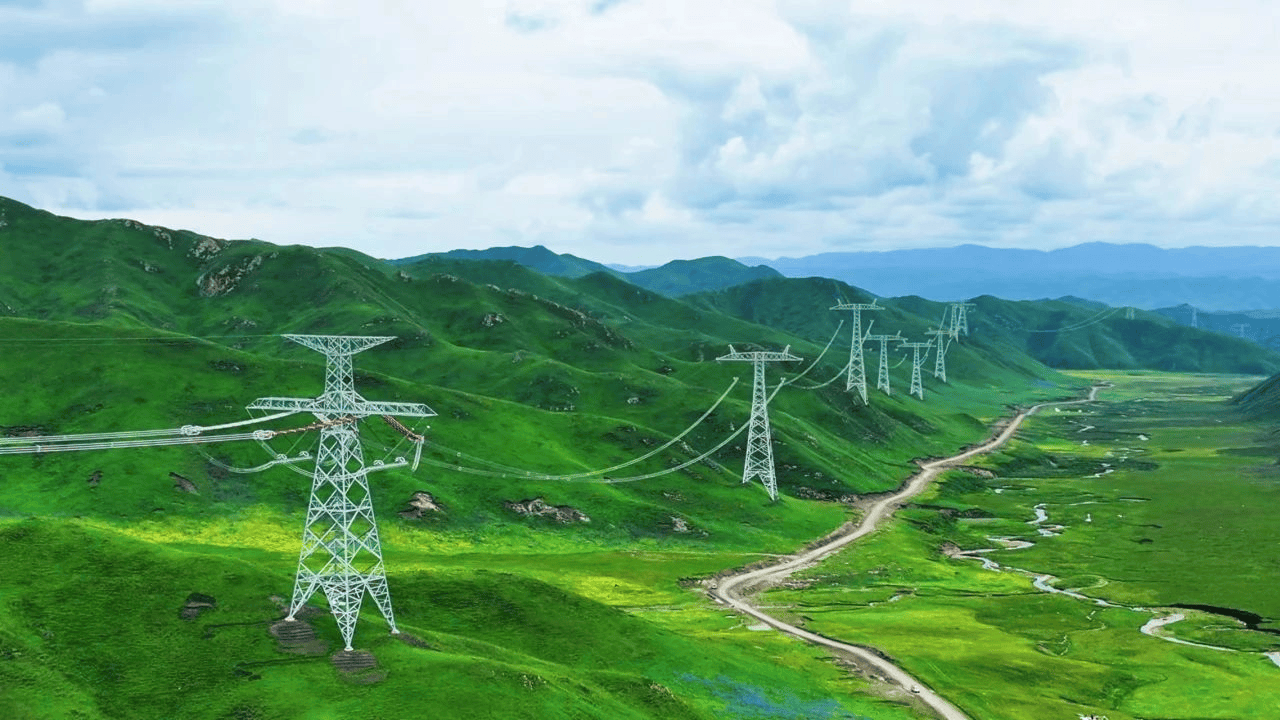
用电量首破10万亿千瓦时 见证中国经济的强劲活力
Xin Lang Cai Jing· 2026-01-17 22:51
Core Insights - China's total electricity consumption is projected to exceed 10 trillion kilowatt-hours by 2025, marking a historic milestone and reflecting the country's robust economic resilience and transition towards a greener economy [1][2]. Group 1: Electricity Consumption Growth - The total electricity consumption in China is expected to reach 10.4 trillion kilowatt-hours by 2025, representing a year-on-year growth of 5% [1]. - This figure is unprecedented for a single country, surpassing the annual electricity consumption of the United States by more than double and exceeding the combined total of the EU, Russia, India, and Japan [1]. - The rapid increase from 5 trillion to 10 trillion kilowatt-hours occurred in just over a decade, highlighting China's unique growth rate among major economies [2]. Group 2: Factors Driving Electricity Demand - The growth in electricity consumption is driven by a stable macroeconomic environment and increased demand for electricity due to high temperatures and enhanced electrification levels [2]. - New energy vehicles and wind power equipment manufacturing are projected to see electricity consumption growth rates exceeding 20% and 30%, respectively, by 2025 [3]. - The digital economy and emerging technologies are creating new electricity demand points, with internet services and related infrastructure seeing over 30% growth in electricity consumption [3]. Group 3: Energy Supply and Infrastructure - China has established a collaborative supply system involving power sources, grids, and demand management to support the anticipated electricity consumption [3]. - The energy supply system includes a mix of coal, hydro, nuclear, and renewable energy sources, with a focus on stabilizing output through advanced storage solutions [3]. - The construction of a unified national electricity market is progressing, with policies like time-of-use pricing being implemented to align electricity demand with supply [3]. Group 4: Structural Changes in Energy Consumption - While electricity consumption in emerging industries is steadily increasing, high-energy-consuming sectors are experiencing a slowdown, with some industries like black metal smelting showing a decline [4]. - The overall trend in high-energy industries is towards structural adjustment and energy-saving transformations, leading to a continuous decrease in energy consumption per unit of GDP [4]. - The achievement of 10 trillion kilowatt-hours reflects the solid foundation of China's manufacturing sector and the steady improvement in electrification levels, indicating a shift towards high-tech and high-value-added industries [4].
2025年全社会用电量首超10万亿千瓦时
Ren Min Ri Bao· 2026-01-17 22:23
Core Insights - By 2025, China's total electricity consumption is expected to exceed 10 trillion kilowatt-hours for the first time, reaching 10,368.2 billion kilowatt-hours, with a year-on-year growth of 5.0% [1] Industry Analysis - Electricity consumption by sector shows that the primary industry will consume 149.4 billion kilowatt-hours, growing by 9.9% year-on-year; the secondary industry will consume 6,636.6 billion kilowatt-hours, with a growth of 3.7%; the tertiary industry will consume 199.4 billion kilowatt-hours, increasing by 8.2%; and urban and rural residential electricity consumption will reach 158.8 billion kilowatt-hours, up by 6.3% [1] - The contribution of the tertiary industry and urban-rural residential electricity consumption to the overall growth of electricity consumption is 50% [1] Future Trends - The electricity consumption scale of China remains the largest globally, with total electricity consumption surpassing 1 trillion kilowatt-hours in July and August 2025 for two consecutive months, marking a global first [1] - The rapid growth in electricity demand is driven by advancements in new production capacities, high-end manufacturing, digital economy, and emerging technologies, with electricity consumption in wind power equipment manufacturing, internet, and related services increasing by over 30%, and the charging and swapping industry nearing a 50% growth rate [1] - Changes in electricity consumption structure and new consumption scenarios reflect a shift in industrial structure towards high technology and high added value, indicating the release of vitality in emerging industries and providing momentum for economic growth [1]
我国年用电量首破10万亿千瓦时
Xin Lang Cai Jing· 2026-01-17 21:49
Core Insights - China's total electricity consumption surpassed 10 trillion kilowatt-hours in July and August 2025, marking a historic global record for a single country, equivalent to more than double the annual electricity consumption of the United States and exceeding the combined annual consumption of the EU, Russia, India, and Japan [1][2][5] - The increase in electricity consumption from 5 trillion to 10 trillion kilowatt-hours occurred in just over a decade, highlighting China's unique growth rate among major economies and reflecting improvements in energy security [2][3] Group 1: Factors Driving Electricity Consumption - The growth in electricity consumption is driven by a stable macroeconomic environment and increased demand for residential electricity due to high temperatures and enhanced electrification [2][3] - High-end manufacturing has emerged as a core engine for electricity consumption growth, with electricity usage in the new energy vehicle and wind power equipment manufacturing sectors increasing by over 20% and 30%, respectively [3] - The rapid development of the digital economy and emerging technologies has created new electricity consumption points, with internet and related services seeing over 30% growth, and the charging and swapping industry approaching a 50% increase in electricity consumption [3] Group 2: Energy Supply and Infrastructure - China has established a collaborative supply system involving power sources, grids, and demand to support the 10 trillion kilowatt-hours achievement, ensuring stable and orderly operation of the electricity system [3] - On the supply side, coal power continues to provide a safety net, while hydropower, nuclear power, and thermal power work together to maintain a solid foundation, with renewable energy sources like wind and solar playing a significant role in increasing capacity [3] - The construction of a unified national electricity market is accelerating, with policies such as time-of-use pricing and peak-valley pricing being implemented to guide users in managing electricity demand dynamically [3] Group 3: Structural Changes in Energy Consumption - While electricity consumption in emerging industries is steadily increasing, the overall growth rate of high-energy-consuming industries is declining, with sectors like black metal smelting and non-metal mineral products experiencing a downward trend [4] - High-energy-consuming industries are undergoing structural adjustments and energy-saving transformations, leading to a gradual exit of outdated production capacity and the widespread application of advanced energy-saving technologies [4] - The continuous decline in energy consumption per unit of GDP indicates a shift towards a greener and more efficient economic model, enhancing the quality of GDP growth [4][5]
我国年用电量首破10万亿千瓦时彰显超大规模经济体强劲韧性
Xin Lang Cai Jing· 2026-01-17 21:49
Group 1 - The core point of the article highlights that China's total electricity consumption is projected to exceed 10 trillion kilowatt-hours by 2025, marking a historic milestone and reflecting the resilience of China's large-scale economy [1][2] - This electricity consumption figure is more than double that of the United States and surpasses the combined annual consumption of the EU, Russia, India, and Japan [1] - The growth in electricity consumption is driven by a stable macroeconomic environment and increased demand for electricity due to high temperatures and enhanced electrification levels [2] Group 2 - High-end manufacturing is identified as a key engine driving electricity consumption growth, with electricity usage in the new energy vehicle and wind power equipment manufacturing sectors expected to grow by over 20% and 30%, respectively [3] - The rapid development of the digital economy and emerging technologies has created new electricity consumption points, with internet and related services seeing over 30% growth, and the charging and swapping industry approaching a 50% increase [3] - The electricity supply system has been strengthened through a collaborative approach involving power sources, grids, and demand, ensuring stable operation amidst rising electricity loads [3] Group 3 - While electricity consumption in emerging industries is steadily increasing, high-energy-consuming industries are experiencing a slowdown, with sectors like black metal smelting and non-metal mineral products showing a decline [4] - The overall trend in high-energy-consuming industries is towards structural adjustment and energy-saving transformations, leading to a continuous decrease in energy consumption per unit of GDP [4] - The achievement of 10 trillion kilowatt-hours underscores the solid foundation of China's manufacturing sector and the steady improvement in electrification levels, reflecting the effectiveness of the energy supply system and the transition towards a greener economy [4]
2025年全社会用电量突破10万亿千瓦时
Yang Shi Wang· 2026-01-17 12:08
Group 1 - The core viewpoint of the news is that China's total electricity consumption is projected to exceed 10 trillion kilowatt-hours in 2025, maintaining its position as the world's largest electricity consumer [1] - In 2025, China's total electricity consumption is expected to reach 10,368.2 billion kilowatt-hours, representing a year-on-year growth of 5.0% [1] - China's annual electricity consumption is more than double that of the United States and exceeds the combined total of the EU, Russia, India, and Japan's 2024 consumption [1] - The electricity consumption of 10 trillion kilowatt-hours is approximately double that of China's total consumption in 2015 [1] Group 2 - The secondary industry is the main electricity consumer, accounting for 64% of total consumption, with high-end manufacturing becoming a new growth point [1] - The electricity consumption in the new energy vehicle and wind power equipment manufacturing sectors has seen year-on-year growth rates exceeding 20% and 30%, respectively [1] - The tertiary industry and urban-rural residential electricity consumption are expected to grow rapidly, contributing 50% to the overall electricity consumption growth [1] - The electricity consumption in the internet and related services sector is projected to grow by over 30%, while the charging and swapping industry is expected to see nearly 50% growth [1] Group 3 - The increase in electricity consumption is supported by a clean and efficient energy supply system, with non-fossil energy accounting for over 60% of installed capacity by 2025 [2] - China is accelerating the construction of nine major clean energy bases and plans to complete four ultra-high voltage transmission lines, enhancing cross-regional and cross-provincial transmission capacity to 370 million kilowatts [2] - The national energy transmission network is being further strengthened with initiatives like "West-to-East Power Transmission" and "North-to-South Power Supply" [2]
用电量首破10万亿千瓦时:见证中国经济的活力
Xin Hua Wang· 2026-01-17 10:41
Core Insights - China's total electricity consumption is projected to exceed 10 trillion kilowatt-hours by 2025, marking a historic milestone and reflecting the resilience of its large-scale economy [1][2] - This consumption level is more than double that of the United States and surpasses the combined annual electricity usage of the EU, Russia, India, and Japan [1] Group 1: Factors Driving Electricity Consumption - The growth in electricity consumption is supported by a stable macroeconomic environment and increased demand for residential electricity due to high temperatures and enhanced electrification [2] - The rapid increase from 5 trillion to 10 trillion kilowatt-hours in just over a decade is unprecedented among major economies, highlighting China's manufacturing prowess and improved energy security [2] Group 2: Sectoral Contributions to Electricity Demand - High-end manufacturing is becoming a key driver of electricity consumption, with sectors like new energy vehicles and wind power equipment expected to see growth rates exceeding 20% and 30%, respectively [3] - The digital economy and emerging technologies are creating new electricity demand points, with infrastructure like charging stations and 5G bases driving over 30% growth in related sectors [3] Group 3: Energy Supply and Management - A robust energy supply system has been established, integrating power generation, grid management, and demand-side measures to ensure stable electricity supply [3] - The energy mix includes coal, hydropower, nuclear, and renewable sources, with significant investments in energy storage and grid infrastructure to manage fluctuations [3] Group 4: Trends in High Energy Consumption Industries - While emerging industries are seeing steady increases in electricity consumption, traditional high-energy sectors like black metal smelting are experiencing a decline [4] - The overall trend in high-energy industries is towards structural adjustment and energy efficiency improvements, contributing to a decrease in energy consumption per unit of GDP [4]
左手风电,右手航天,金风科技靠投资“带飞”?
Guo Ji Jin Rong Bao· 2026-01-12 13:29
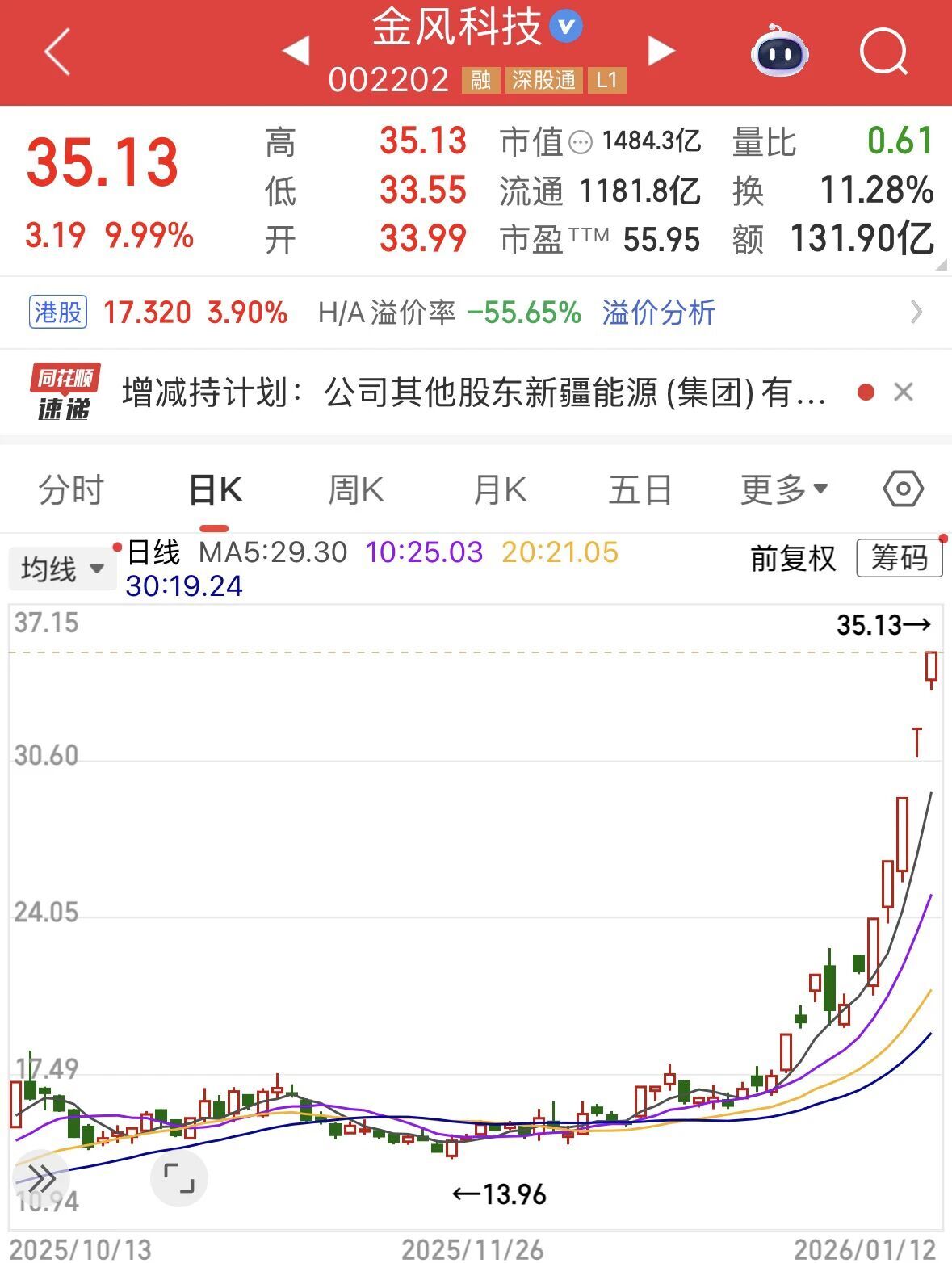
Core Viewpoint - The recent surge in the stock price of Goldwind Technology is primarily linked to its investment in Blue Arrow Aerospace, rather than its core wind power business [3][4][6]. Group 1: Stock Performance - Goldwind Technology's stock price hit a ceiling of 35.13 yuan per share, with a market capitalization of 148.43 billion yuan as of January 12 [1][2]. - The company has experienced five consecutive trading halts, surprising investors [5]. Group 2: Investment Strategy - Goldwind holds approximately 4.14% of Blue Arrow Aerospace, which is expected to become the first publicly listed commercial aerospace company in China [4][6]. - The company has made several successful investments, including in companies like Shangwei New Materials and Jinli Permanent Magnet, yielding significant returns [6][7]. - In 2023-2024, Goldwind's investment income is projected to reach 4.2 billion yuan, surpassing its net profit of approximately 3.2 billion yuan during the same period [6]. Group 3: Financial Performance - For the first three quarters of 2025, Goldwind reported revenues of 48.147 billion yuan, a year-on-year increase of 34.34%, and a net profit of 2.584 billion yuan, up 44.21% [7]. - The company faced significant revenue declines in 2022 and 2023 due to industry price wars and rising raw material costs, but is expected to see a rebound in 2024 [8]. Group 4: Shareholder Actions - Major shareholders, including Xinjiang Energy Group, are planning to liquidate their holdings, with expected proceeds exceeding 300 million yuan [9]. - The fourth-largest shareholder, Harmony Health, has also been reducing its stake, having cashed out approximately 3.8 billion yuan since 2025 [9].

港股收评:新年开门红!恒指涨2.76%,科指涨4%,壁仞科技上市首日大涨近76%
Ge Long Hui· 2026-01-02 08:21
Market Performance - The Hong Kong stock market experienced a strong start in 2026, with the Hang Seng Index rising by 2.76% to close at 26,338.47 points, the Hang Seng China Enterprises Index increasing by 2.86%, and the Hang Seng Tech Index gaining 4% [1] Company Highlights - Baidu's stock surged by 9.35% following the announcement of its plan to spin off Kunlun Chip for a listing in Hong Kong [1] - Technology stocks collectively rose, with Tencent and Alibaba both increasing by over 4%, while Kuaishou and JD.com saw gains of over 3% [1] - Semiconductor stocks showed strong performance, with Hua Hong Semiconductor rising by 9.4% after securing 7.556 billion yuan for an A-share acquisition of Huali Micro, excluding cash components, and SMIC increasing by over 5% [1] - Wall Street's "four domestic GPU dragons," including Birun Technology, saw a significant first-day increase of 75.8%, bringing its total market capitalization close to 81.3 billion HKD [1] - Goldwind Technology's stock rose nearly 21% after Blue Arrow Aerospace's IPO application was accepted, in which the company holds a stake [1] - Other wind power equipment stocks also saw gains, with Shanghai Electric increasing by 6.7% and Harbin Electric rising by nearly 6% [1] - Gaming stocks experienced a broad increase, with NetEase, Zhongjiu Game, and Qingci Game all rising by over 6%, as 1,771 game licenses were issued in 2025, marking the highest number in nearly seven years [1]