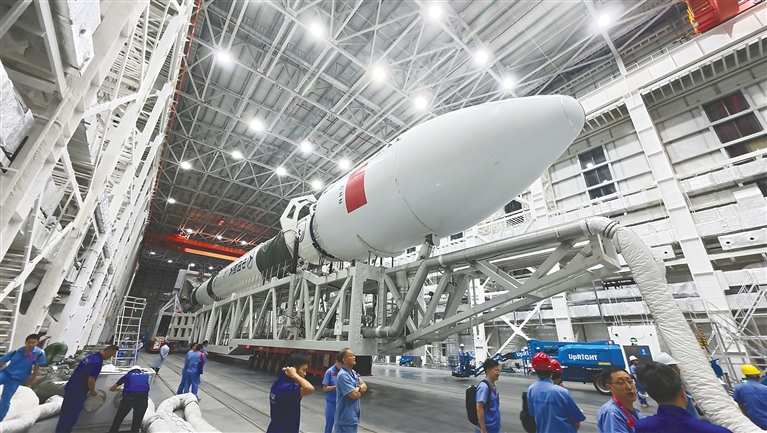
液氧甲烷火箭

Search documents
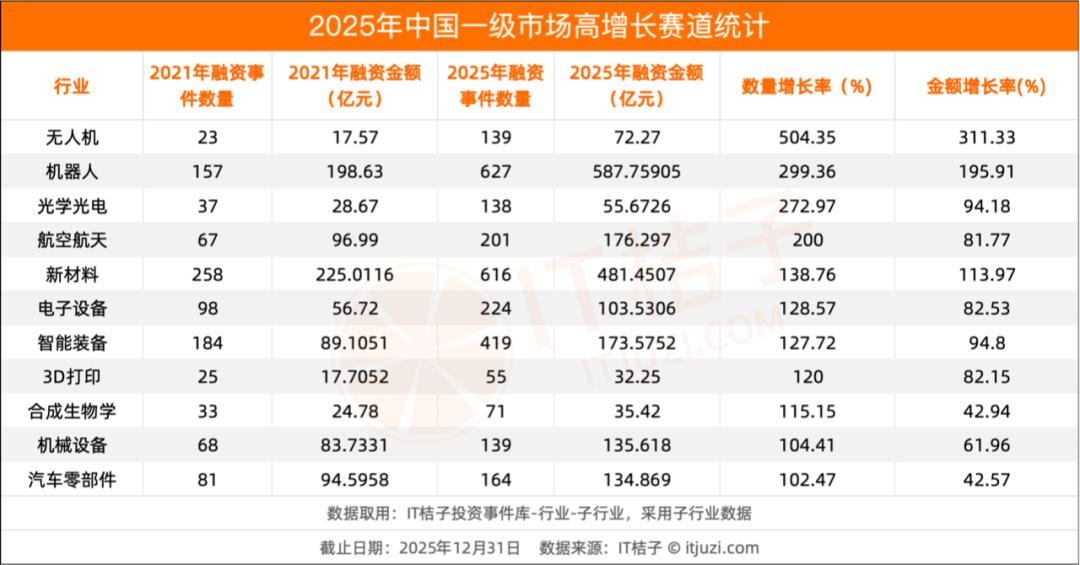
资本大迁徙:五年前后,2025年中国创投11大高增长赛道深度解析
3 6 Ke· 2026-01-20 11:01
Core Insights - The Chinese venture capital market is experiencing a significant shift from consumer-driven sectors to hard technology sectors, with funding for hard tech such as drones, robotics, and new materials increasing dramatically while consumer sectors like second-hand e-commerce and local logistics see funding drop by over 95% [1][15] Funding Growth by Sector - Drones: Funding events increased from 23 in 2021 to 139 in 2025, with total funding rising from 1.757 billion to 7.227 billion yuan, marking a growth rate of 504.35% in event numbers and 311.33% in funding amount [2][3] - Robotics: Funding events surged from 157 to 627, with total funding jumping from 19.863 billion to 58.776 billion yuan, reflecting a growth rate of 299.36% in event numbers and 195.91% in funding amount [2][3] - New Materials: Increased from 258 events and 22.50116 billion yuan in 2021 to 616 events and 48.14507 billion yuan in 2025, showing a growth rate of 138.76% in event numbers and 113.97% in funding amount [2][4] High-Growth Sectors - Aerospace: Funding events grew from 67 to 201, with total funding increasing from 9.699 billion to 17.6297 billion yuan, achieving a growth rate of 200% in event numbers and 81.77% in funding amount [2][4] - Optical and Photonic: Events increased from 37 to 138, with funding rising from 2.867 billion to 5.56726 billion yuan, reflecting a growth rate of 272.97% in event numbers and 94.18% in funding amount [2][4] Key Drivers of Growth - The rise of drones is driven by the transition from consumer to industrial applications, supported by national policies promoting low-altitude economy [7] - Robotics growth is fueled by advancements in AI and the emergence of "embodied intelligence," leading to increased investment in humanoid robots and automation [8] - The push for domestic alternatives and self-sufficiency in sectors like new materials and aerospace is a significant driver of investment, particularly in response to external technology restrictions [9][10] Strategic Insights - The shift towards hard technology represents a fundamental change in investment paradigms, moving from short-term gains to long-term value creation [15] - The demand for automation in manufacturing due to rising labor costs and the need for efficiency is driving investments in robotics and smart equipment [11] - Continuous policy support, including tax incentives and funding for high-tech industries, is crucial for sustaining growth in hard technology sectors [12]

左手风电,右手航天,金风科技靠投资“带飞”?
Guo Ji Jin Rong Bao· 2026-01-12 13:29
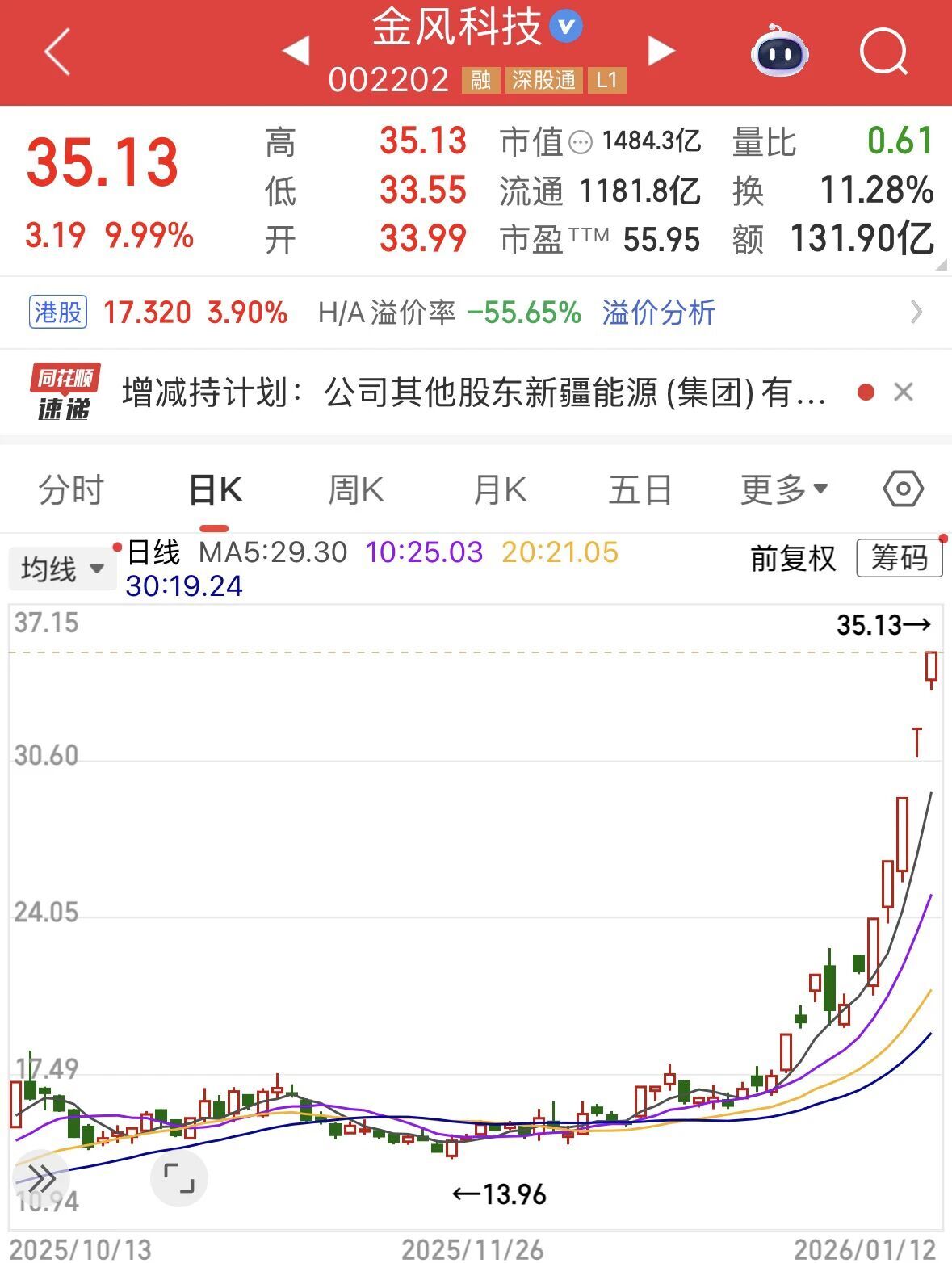
Core Viewpoint - The recent surge in the stock price of Goldwind Technology is primarily linked to its investment in Blue Arrow Aerospace, rather than its core wind power business [3][4][6]. Group 1: Stock Performance - Goldwind Technology's stock price hit a ceiling of 35.13 yuan per share, with a market capitalization of 148.43 billion yuan as of January 12 [1][2]. - The company has experienced five consecutive trading halts, surprising investors [5]. Group 2: Investment Strategy - Goldwind holds approximately 4.14% of Blue Arrow Aerospace, which is expected to become the first publicly listed commercial aerospace company in China [4][6]. - The company has made several successful investments, including in companies like Shangwei New Materials and Jinli Permanent Magnet, yielding significant returns [6][7]. - In 2023-2024, Goldwind's investment income is projected to reach 4.2 billion yuan, surpassing its net profit of approximately 3.2 billion yuan during the same period [6]. Group 3: Financial Performance - For the first three quarters of 2025, Goldwind reported revenues of 48.147 billion yuan, a year-on-year increase of 34.34%, and a net profit of 2.584 billion yuan, up 44.21% [7]. - The company faced significant revenue declines in 2022 and 2023 due to industry price wars and rising raw material costs, but is expected to see a rebound in 2024 [8]. Group 4: Shareholder Actions - Major shareholders, including Xinjiang Energy Group, are planning to liquidate their holdings, with expected proceeds exceeding 300 million yuan [9]. - The fourth-largest shareholder, Harmony Health, has also been reducing its stake, having cashed out approximately 3.8 billion yuan since 2025 [9].

谁在押注“飞天梦”? 160余家机构久坐“冷板凳”静候“摘桃时刻”
第一财经· 2026-01-11 09:52
Core Viewpoint - The announcement from the Shanghai Stock Exchange regarding the listing standards for commercial rocket companies on the Sci-Tech Innovation Board opens a pathway for over 160 investment institutions to see potential exit opportunities after years of investment in the sector [3][4]. Group 1: Industry Overview - The commercial space sector is experiencing a surge, with the Shanghai Stock Exchange's announcement on December 26, 2025, allowing commercial rocket companies to apply for IPOs under the fifth set of standards [4][5]. - Six companies, including Blue Arrow Aerospace and Tianbing Technology, are in the IPO sprint phase, having undergone over 10 rounds of financing in the past decade, with total financing reaching several billion yuan [3][6][7]. Group 2: Financial Performance - Blue Arrow Aerospace has reported cumulative losses exceeding 3.5 billion yuan over three and a half years, indicating a persistent "burning money" state [3][17]. - The financial data shows that Blue Arrow Aerospace's projected losses for 2022 to 2024 are -821 million yuan, -1.216 billion yuan, and -916 million yuan, respectively, with a loss of 635 million yuan in the first half of 2025 [17]. Group 3: Investment Landscape - The investment landscape in commercial space has evolved, with early-stage investments primarily from VC and PE firms, followed by significant participation from local government and industrial capital [9][11]. - Major investors include Sequoia China, Matrix Partners, and other top-tier institutions, which have provided crucial early-stage funding to leading companies in the sector [12]. Group 4: Future Outlook - The potential for IPOs represents a critical exit opportunity for investors, with significant returns anticipated if companies like Blue Arrow Aerospace successfully list [18]. - The market's perception of the commercial space sector remains cautious due to ongoing losses and the slow pace of commercialization, leading to uncertainty about future profitability [16][18].
电力设备及新能源周报20260104:国内政策助力商业航天产业化,多家车企创单月销量新高-20260104
Guolian Minsheng Securities· 2026-01-04 12:20
Investment Rating - The report maintains a "Recommended" rating for several key companies in the electric equipment and new energy sectors, including Ningde Times, Keda Li, and others [5][6]. Core Insights - The electric equipment and new energy sector experienced a decline of 2.18% in the last week, underperforming compared to the Shanghai Composite Index [1]. - The report highlights significant sales achievements in the new energy vehicle sector, with multiple companies reporting record monthly deliveries in December 2025 [2][14]. - The photovoltaic industry is facing a mixed scenario with rising upstream prices but weak downstream demand, leading to a "price without market" situation [3][38]. Summary by Sections New Energy Vehicles - In December 2025, several new energy vehicle manufacturers reported record sales, including Li Auto with 44,246 units delivered, a year-on-year decrease of 24.4% [15][21]. - Leap Motor achieved a delivery of 60,423 units, up 42% year-on-year, while BYD delivered 420,398 units, reflecting a year-on-year decrease of 17.5% [2][21]. New Energy Generation - The main industry chain prices are on the rise, with silicon material prices testing above 65 yuan/kg, although actual transactions are still based on previous orders [38]. - The report notes a significant reduction in demand, with a 78% decrease in procurement for domestic centralized projects [39]. Electric Equipment and Automation - The report indicates that the sixth batch of State Grid's bidding for power transmission and transformation equipment reached 13.205 billion yuan, with a total of 495 packages awarded [54]. - The largest single package was valued at 399.66 million yuan, with various categories such as switchgear and transformers receiving substantial funding [54]. Commercial Aerospace - Domestic policies are accelerating the industrialization of the commercial aerospace sector, with the National Space Administration incorporating commercial aerospace into the national development framework [4]. Market Trends - The report emphasizes the importance of technological advancements and market dynamics in shaping the future of the electric equipment and new energy sectors, suggesting a focus on companies that can leverage these changes for competitive advantage [40][41].




蓝箭航天科创板IPO获受理
证券时报· 2025-12-31 13:44
Core Viewpoint - The Shanghai Stock Exchange has officially expanded the fifth set of listing standards to include the commercial rocket sector, with Blue Arrow Aerospace's IPO application being accepted, aiming to become the first commercial rocket company listed on the Sci-Tech Innovation Board [1][3]. Group 1: Listing Standards and Regulatory Changes - The fifth set of listing standards is now applicable to commercial rocket enterprises, which were previously limited to biomedicine and medical device companies [3]. - The China Securities Regulatory Commission issued guidelines in June to enhance the inclusivity of the fifth set of standards, supporting companies in cutting-edge technology fields such as artificial intelligence and commercial aerospace [3]. - The Shanghai Stock Exchange has released specific guidelines for commercial rocket companies, detailing requirements related to business scope, technological advantages, achievements, industry position, and commercialization plans [3]. Group 2: Blue Arrow Aerospace's IPO Details - Blue Arrow Aerospace is currently in a loss-making state and plans to raise 7.5 billion yuan (approximately $1.1 billion) through its IPO [3]. - The funds raised will be directed towards projects aimed at enhancing the capacity and technology of reusable rockets [3]. - The company is recognized as a pioneer in the development of liquid oxygen-methane rockets in China and successfully launched the world's first liquid oxygen-methane rocket into orbit in July 2023 [4].

金风科技回落,公司持有蓝箭航天部分股权,作为其他非流动金融资产核算
Zhi Tong Cai Jing· 2025-12-30 08:16
Group 1 - The core point of the article is that Goldwind Technology (02208.HK) announced that there has been unusual volatility in its A-share stock trading, but there are no significant changes in its operational situation or external business environment [3] - The company confirmed that there are no major undisclosed matters or significant events in the planning stage, and its largest shareholder has not traded the company's stock during the period of unusual volatility [3] - Goldwind Technology holds equity in Landspace, a private commercial rocket company in China, which is noted for being the first to successfully launch a liquid oxygen-methane rocket [3] Group 2 - According to Everbright Securities, the recent rapid increase in Goldwind Technology's stock price is attributed to the commercial aerospace market, but expectations for its hydrogen-ammonia logic market remain relatively low, indicating potential areas for future focus [3]
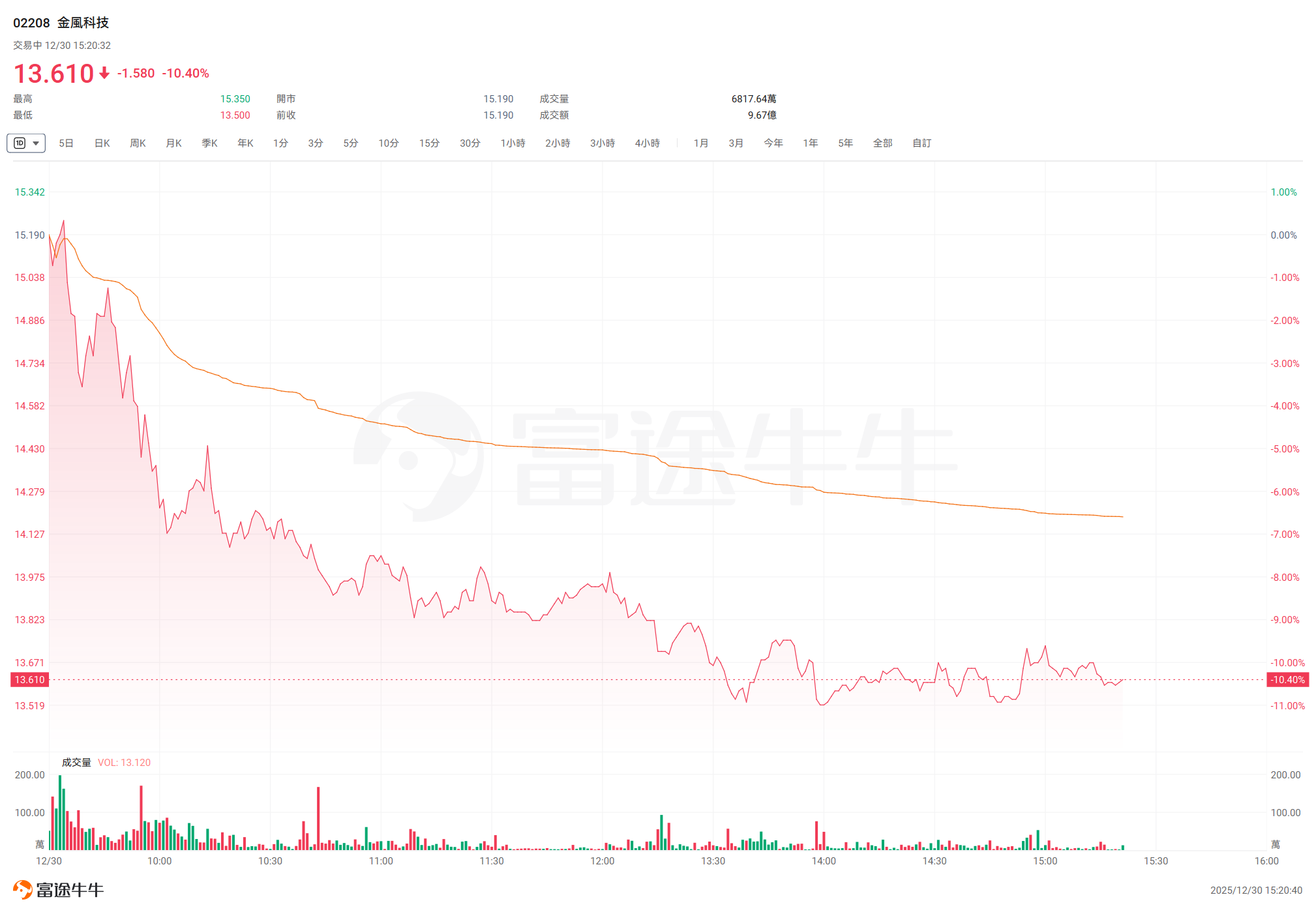
金风科技回落逾8% 公司持有蓝箭航天部分股权 作为其他非流动金融资产核算
Zhi Tong Cai Jing· 2025-12-30 05:59
Core Viewpoint - Goldwind Technology (金风科技) experienced a significant stock price fluctuation, with a rise of over 13% followed by a decline of over 8% in the subsequent trading session, indicating volatility in the market [1] Group 1: Stock Performance - Goldwind Technology's stock closed at 13.88 HKD after a drop of 8.62%, with a trading volume of 657 million HKD [1] - The company announced that there were no significant changes in its operational situation or external business environment, despite the stock's abnormal trading activity [1] Group 2: Shareholder Information - The company has no controlling shareholder or actual controller, and there are no undisclosed significant matters related to the company [1] - During the period of stock volatility, the largest shareholder did not engage in buying or selling the company's shares [1] Group 3: Business Operations - Goldwind Technology holds equity in Blue Arrow Aerospace, which is recognized as one of the earliest private commercial rocket companies in China and the first to successfully launch a liquid oxygen-methane rocket [1] - According to Everbright Securities, the short-term rise in Goldwind Technology's stock price is attributed to the commercial aerospace market, but expectations for its hydrogen-ammonia market logic remain relatively low, suggesting continued monitoring is warranted [1]
杭州宅地土拍收官!全年吸金1425.3亿,暂居全国第一
Xin Lang Cai Jing· 2025-12-23 10:48
Group 1: Real Estate Market in Hangzhou - The 2025 residential land auction in Hangzhou concluded with a total of 92 plots sold for a total amount of 1420.8 billion yuan, marking a year-on-year increase of 21.5% [2] - Including the three counties (Tonglu, Jiande), the total transaction amount for residential land in Hangzhou for 2025 reached 1425.3 billion yuan, ranking first in the country [2] - The specific plot sold in the Yinhai area was acquired by Zhejiang Longda Real Estate for a floor price of 6201 yuan per square meter, with a premium rate of 1.7% [2] Group 2: Blue Arrow Aerospace - Blue Arrow Aerospace has completed its IPO counseling process, with the report submitted to the Beijing Securities Regulatory Bureau [3] - The company received an investment of 10.1 billion yuan from the Wuxi Industrial Development Group, acquiring approximately 5.1% of the shares [4] - The investment will support the establishment of a manufacturing base in Wuxi, aligning with the city's focus on commercial aerospace and future industries [4][5]

航天宏图 × 众能光储 核心战略解读
2025-12-12 02:19
Summary of Key Points from the Conference Call Company and Industry Overview - **Company**:航天宏图 (Aerospace Hongtu) - **Industry**: Commercial Aerospace in China Core Insights and Arguments 1. **Rocket Development**: 航天宏图 plans to launch a 6-ton liquid oxygen-methane rocket by the end of 2026, which would be one of the largest liquid rockets among domestic private enterprises, enhancing commercial space launch capabilities [1][2] 2. **Collaboration with 众能光储**: The partnership aims to introduce flexible perovskite solar wing technology, which increases power generation by 50% while weighing only 1/5 of traditional solar wings, significantly extending satellite operational time and lifespan [1][2] 3. **女娲星座**: The company plans to launch the first batch of 6 satellites in 2026, which will feature computing and radar capabilities, utilizing laser communication for rapid data transmission and creating an interconnected data network [1][3] 4. **Perovskite Solar Cells**: These cells have a high conversion efficiency (over 27% in labs) and excellent radiation resistance, with abundant raw material availability, making them a potential replacement for gallium arsenide in space energy applications [1][4] 5. **Market Expansion**: 航天宏图 is actively expanding into international markets, with expectations that overseas business could contribute 20%-40% of revenue within the next 3-5 years [2][12][13] Additional Important Content 1. **Technical Challenges**: To compete globally, the company identifies three key technical challenges: reusable rockets, space energy, and inter-satellite communication [2][3] 2. **Future Plans for Reusable Rockets**: While the company is developing reusable rockets, the timeline remains uncertain due to challenges in engine research [14] 3. **Financial Support from Local Government**: The local government in 鹤壁 is providing significant support, including funding and credit assistance [16] 4. **Long-term Vision**: The company emphasizes the importance of long-term investment in key areas such as industrial technology and artificial intelligence, projecting a sustained focus on space exploration for the next 10-20 years [7][8] 5. **Investment Value**: 航天宏图 is positioned as a unique player in the market, with strong government support and a dual focus on satellite and rocket development, making it attractive for long-term investors [20][21] Conclusion - 航天宏图 is strategically positioned to enhance its capabilities in the commercial aerospace sector through innovative technology, international expansion, and strong government support, while addressing key technical challenges to achieve its long-term goals in space exploration and satellite deployment.

从首发到高密度常态化发射,我国首个商业航天发射场瞄准新目标
Hai Nan Ri Bao· 2025-11-05 01:43
Core Insights - The Hainan Commercial Space Launch Site aims to accelerate the establishment of a commercial space "mother port" to facilitate high-density and regular launches [1][3]. Group 1: Launch Site Development - The Hainan International Commercial Space Launch Company has achieved the first successful launch of China's first commercial space launch site in just 878 days since its establishment in June 2022, setting a record for "commercial launch speed" [4]. - The second phase of the project is progressing rapidly, covering over 1,100 acres, which will include the construction of the third and fourth launch pads, supporting technical areas, and a reusable rocket sea recovery system [4][5]. - The launch site has adopted a "dual-line operation" model, balancing the construction of the second phase with the operational readiness of the first phase, which tests the comprehensive capabilities of the commercial space launch [4][5]. Group 2: Operational Efficiency - The launch site has implemented a flexible operational model where personnel are allocated based on task requirements, allowing for shared technical expertise between different teams [4][5]. - The site has established a "whoever's product is responsible" mechanism, ensuring that each rocket team is accountable for both the support and testing tasks [4][5]. - Recent achievements include the completion of the deep foundation pit for the fourth launch pad and the successful launch of the Long March 8 rocket carrying 12 satellites, marking a series of six successful launches [5].