
Semiconductor

Search documents
芯片设备,最新预测
半导体行业观察· 2025-10-10 00:52
Core Insights - The global spending on 300mm wafer fab equipment is projected to reach $374 billion from 2026 to 2028, driven by the surge in demand for AI chips and the emphasis on regional self-sufficiency in semiconductor supply chains [1][3] Equipment Spending Forecast - In 2025, global spending on 300mm wafer fab equipment is expected to exceed $100 billion for the first time, growing by 7% to reach $107 billion [1] - Investment is forecasted to grow by 9% in 2026 to $116 billion, by 4% in 2027 to $120 billion, and by 15% in 2028 to $138 billion [1] Market Segmentation Growth - The logic and microelectronics sector is anticipated to lead equipment expansion, with total investments reaching $175 billion from 2026 to 2028, primarily driven by foundries expanding capacity for processes below 2nm [4] - The memory segment is expected to be the second-largest, with total spending of $136 billion over three years, including over $79 billion for DRAM-related equipment and $56 billion for 3D NAND investments [5] - The analog sector is projected to exceed $41 billion in investments over the next three years, while the power-related sector, including compound semiconductors, is expected to see $27 billion in investments [5] Regional Growth - China is expected to maintain its lead in 300mm equipment spending, with investments projected at $94 billion from 2026 to 2028 [7] - South Korea is forecasted to invest $86 billion, ranking second globally, driven by demand for generative AI [7] - Taiwan is projected to invest $75 billion, focusing on 2nm and below capacity to maintain its leadership in advanced foundry technology [7] - The Americas are expected to invest $60 billion, with the U.S. suppliers expanding advanced process capacity to meet AI application demands [7] - Japan, Europe, and the Middle East, along with Southeast Asia, are projected to invest $32 billion, $14 billion, and $12 billion respectively, with policies aimed at alleviating semiconductor supply issues expected to boost investments by over 60% by 2028 compared to 2024 [7]


不用觉得3900很虚,因为一直都是这样的
Sou Hu Cai Jing· 2025-10-09 16:13
Market Overview - The market is currently focused on specific sectors such as AI computing power, semiconductors, and innovative pharmaceuticals, which are seen as having strong fundamentals [2] - The recent rise in the Shanghai Composite Index to a near ten-year high is viewed as somewhat superficial due to the large trading volume not translating into significant gains [1] Economic Indicators - The PMI for September increased slightly to 49.8%, remaining below the expansion threshold, indicating a slow recovery in demand [4] - The production index rose to 51.2%, suggesting some improvement, but overall consumer demand is still lacking [4] Federal Reserve Insights - The New York Fed has indicated a potential for interest rate cuts due to concerns over a slowing labor market, which is perceived as dovish and favorable for the market [4] - There is internal division within the Federal Reserve regarding the direction of monetary policy, reflecting uncertainty in the economic outlook [4] AI Industry Analysis - The AI sector is facing challenges related to computing power, data availability, and commercialization, with many applications still in the early stages of development [5] - The current AI trend is compared to the internet boom of the late 1990s, emphasizing the importance of creating indispensable applications for users [5] Automotive Industry Dynamics - The electric vehicle (EV) market is experiencing increased competition, with companies like BYD and Tesla maintaining strong positions while new entrants struggle [6][7] - The focus has shifted from marketing and brand storytelling to immediate availability and pricing strategies, indicating a more competitive landscape [7] - The automotive industry is characterized by the need for scale and cost control, with a shift away from the "burn cash for users" model seen in tech [9][10] Strategic Considerations for EV Companies - Companies must now demonstrate comprehensive capabilities, including cost advantages and brand strength, to survive in a competitive market [11] - Evaluating EV companies should involve metrics beyond sales volume, such as profit margins and cash flow, with international expansion seen as a viable growth strategy [12]
Richardson Electronics(RELL) - 2026 Q1 - Earnings Call Transcript
2025-10-09 15:02
Financial Data and Key Metrics Changes - Total sales for Q1 FY 2026 were $54.6 million, an increase from $53.7 million in Q1 FY 2025, representing a 1.6% year-over-year growth [2][7] - Excluding healthcare, net sales increased by 6.8% [7] - Consolidated gross margin improved to 31.0% from 30.6% year-over-year [8] - Operating income for Q1 FY 2026 was $1.0 million, compared to $0.3 million in the prior year [9] - Net income rose to $1.9 million from $0.6 million year-over-year, with diluted earnings per share increasing to $0.13 from $0.04 [9] Business Line Data and Key Metrics Changes - PMT sales increased by 2.8%, and excluding healthcare, PMT sales were up 10.5% due to higher demand from semiconductor wafer fab customers [7][12] - Canvys sales increased by 8.3%, reflecting improved market conditions in Europe [8] - GES sales decreased by 10.2% year-over-year, primarily due to the non-recurrence of a large EV locomotive order from the previous year [8][13] - The wind segment within GES saw significant growth, increasing by 86.1% year-over-year [14] Market Data and Key Metrics Changes - The company reported strong demand in the RF and microwave components business, particularly in military applications and semiconductor wafer fab manufacturing [16][68] - GES is focusing on expanding its market share internationally, with new orders from customers in Australia, India, France, and Italy [14][39] Company Strategy and Development Direction - The company is prioritizing engineered solutions and has made investments in infrastructure and design capabilities to support growth [15][17] - Strategic initiatives include the Energy Storage System (ESS) program and global expansion of green energy products [16][18] - The company is adapting to a changing regulatory environment and is focusing on repowering existing wind turbines rather than new installations [59] Management's Comments on Operating Environment and Future Outlook - Management expressed optimism about the growth potential in the project-based business, despite the challenges in forecasting [19] - The company is navigating uncertainties related to tariffs and market conditions but is leveraging its global capabilities to mitigate risks [18] - Management anticipates continued growth in both PMT and GES for FY 2026, driven by strong demand in semiconductor and RF applications [20] Other Important Information - The company generated positive operating cash flow for six consecutive quarters, with a cash position of $35.7 million [5][10] - Capital expenditures for Q1 FY 2026 were $1.0 million, primarily related to manufacturing improvements [11] - The company declared a quarterly cash dividend of $0.06 per common share [11] Q&A Session Summary Question: Status of ULTRA3000s on GE's approved vendor list - The engineering team has signed off, and final signatures from GE's legal team are expected soon, with testing to follow [31][33] Question: Year-over-year growth expectations for semi-fab sales - Q1 of last year was a trough for semi-fab sales, and strong growth is expected in Q3 and Q4 of FY 2026 based on forecasts [34][35] Question: Sales performance outside the U.S. - Sales outside the U.S. are growing, with successful product launches in Australia, India, France, and Italy [38][39] Question: Expected CapEx for the year - Estimated CapEx is in the $4 million-$5 million range, slightly higher than last year [40][42] Question: Details on non-recurring gain in operating income - The non-recurring gain of $0.9 million was from a confidential contractual settlement [51][52] Question: Insights on repower initiatives and operating leverage - The repowering trend supports aftermarket business, and operating expenses are expected to remain controlled with minimal increases [58][63]

5 S&P 500 Stocks -- Including Palantir Technologies and Oracle -- Outpaced the Market in September 2025
Yahoo Finance· 2025-10-09 14:35
Core Insights - In September, the S&P 500 index rose by 3.5%, driven by strong performances from several companies [1] Company Performances - Warner Bros. Discovery saw a significant increase of 68.1% [1] - AppLovin experienced a rise of 49.2% [1] - Western Digital's shares increased by 46.6% [1] - Robinhood Markets rose by 42% due to its addition to the S&P 500 index, which necessitated purchases by index fund managers [4] - Micron Technology also increased by 42%, driven by a strong earnings report and positive management forecasts, particularly due to AI growth [5] - Intel's shares rose by 38.6%, partly due to a $5 billion investment from Nvidia and positive sentiment from Micron Technology [6] - Oracle's shares surged by 24.8% following a 359% increase in long-term performance obligations for its cloud unit, bolstered by a $300 billion agreement with OpenAI [7] - Palantir Technologies increased by 16.1%, benefiting from heightened expectations for AI growth and a strong second-quarter earnings report with a 48% year-over-year revenue increase [9]



芯原股份三季度收入新高仍亏损,国产AI芯片企业盈利受考验
Di Yi Cai Jing· 2025-10-09 13:01
Core Insights - The domestic AI chip industry is experiencing a performance explosion, but most companies still face profitability challenges, making the conversion of large orders into actual profits a key focus for the capital market [1][5] Company Performance - Chipone Technology (688521.SH) reported a significant increase in revenue, expecting to achieve 1.284 billion yuan in the third quarter, marking a 119.74% increase quarter-on-quarter and a 78.77% increase year-on-year [1] - The company signed new orders worth 3.249 billion yuan in the first three quarters, exceeding the total for the entire year of 2024, with 65% of these orders related to AI computing power [1][2] - Despite the revenue surge, Chipone reported a net loss of 320 million yuan in the first half of the year, which is a 12.3% increase in losses compared to the same period last year [1][3] Business Segmentation - The company's one-stop chip customization business is the core growth driver, with expected revenues of 429 million yuan from chip design and 609 million yuan from chip mass production in the third quarter, representing increases of 291.76% and 133.02% respectively [2] - The one-stop chip customization business is projected to account for over 80% of total revenue in the third quarter, while the traditional semiconductor IP licensing business's revenue is expected to remain flat year-on-year [2][4] Order Conversion Efficiency - As of the end of the third quarter, Chipone's backlog was estimated at 3.286 billion yuan, with 90% coming from the one-stop chip customization business, and 80% expected to convert to revenue within a year [3] - The company has maintained a high backlog for eight consecutive quarters, indicating strong demand for AI chips [3] Profitability Challenges - The company's high R&D expenses are a core issue affecting profitability, with R&D costs reaching 1.247 billion yuan in 2024, accounting for 53.7% of revenue [3] - The gross margin for the one-stop chip customization business is significantly lower at 18.17%, compared to 92.73% for traditional IP licensing, further exacerbating profitability pressures [4] Industry Context - The domestic AI chip industry is facing similar profitability challenges, with companies like Moore Threads and Muxi also reporting significant revenue growth but continuing to incur losses [5] - The competitive landscape indicates that the first companies to achieve large-scale production will have a profitability advantage, as the market remains fragmented without a clear leader [6]


通富微电(002156):AMD获超大订单 公司直接受益
Xin Lang Cai Jing· 2025-10-09 12:30
Core Insights - OpenAI and AMD have announced a partnership to deploy a total of 6GW of AMD chips, with an initial deployment of 1GW starting in the second half of next year, potentially generating nearly $100 billion in revenue for AMD over the coming years [1][2] - The company, as a core packaging and testing manufacturer for AMD, is expected to significantly benefit from the increased business scale with major clients [1][2] Financial Performance - In the first half of 2025, the company achieved revenue of 13.04 billion yuan, a year-on-year increase of 17.7%, with contributions from joint ventures with AMD's testing plants in Suzhou and Penang totaling 8.3 billion yuan, up 15.7% [3] - The net profit for the same period was 410 million yuan, reflecting a year-on-year growth of 27.7%, with the Suzhou and Penang plants contributing 730 million yuan in net profit, a 24% increase [3] - The company forecasts net profits of 1.09 billion yuan, 1.85 billion yuan, and 2.71 billion yuan for 2025, 2026, and 2027, respectively, with year-on-year growth rates of 61%, 69%, and 47% [1][3] Valuation Metrics - The expected earnings per share (EPS) for 2025, 2026, and 2027 are projected to be 0.72 yuan, 1.22 yuan, and 1.79 yuan, respectively [1][3] - The current stock price corresponds to price-to-earnings (PE) ratios of 56x, 33x, and 23x for the years 2025, 2026, and 2027, respectively, leading to a "buy" rating [1][3]


全球首颗!复旦大学成功研发全新架构闪存芯片
Sou Hu Cai Jing· 2025-10-09 07:44
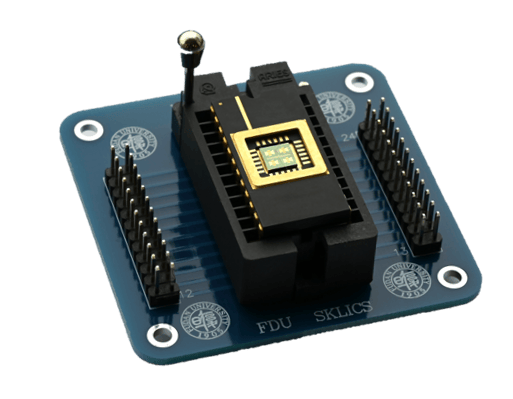
这一突破攻克了新型二维信息器件工程化的关键难题,为新一代颠覆性器件缩短应用化周期提供范例, 也为推动信息技术迈入全新高速时代提供强力支撑。 依托前期完成的研究成果与集成工作,此次打造出的芯片已成功流片。 从基础研究到工程化应用,团队已跨越最艰难一步,后续迭代进程将进一步加快。他们下一步计划建立 实验基地,与相关机构合作,建立自主主导的工程化项目,并计划用3-5年时间将项目集成到兆量级水 平,期间产生的知识产权和IP可授权给合作企业。 责编:史健 | 审核:李震 | 监审:古筝 【大河财立方消息】继今年4月在《自然》提出"破晓"二维闪存原型器件后,复旦大学科研团队又迎来 新突破。北京时间10月8日晚,复旦大学在《自然》(Nature)上发文,题目为《全功能二维-硅基混合 架构闪存芯片》("A full-featured 2D flash chip enabled by system integration"),相关成果率先实现全球 首颗二维-硅基混合架构芯片,攻克新型二维信息器件工程化关键难题。 封装后的二维-硅基混合架构闪存芯片(带PCB板) 复旦大学集成芯片与系统全国重点实验室集成电路与微纳电子创新学院周鹏 ...
从单点突破向集群协同迈进 内江“芯”动
Si Chuan Ri Bao· 2025-10-09 02:17
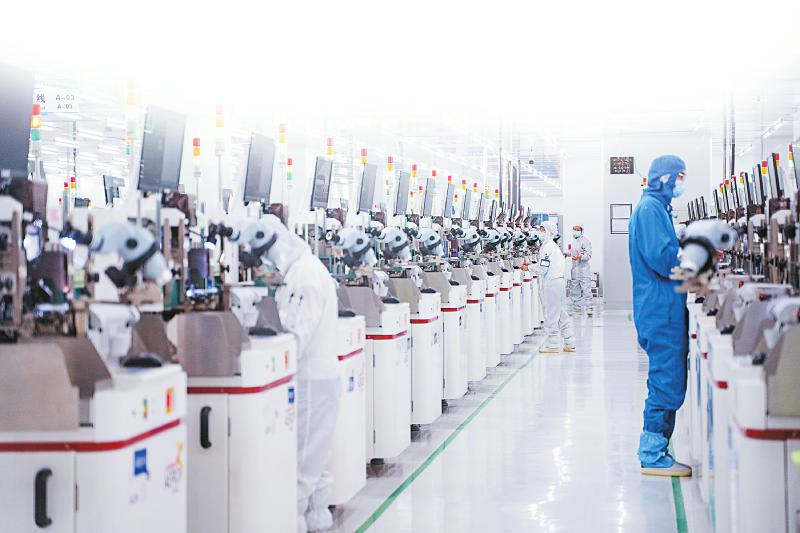
Core Insights - The electronic information industry in Neijiang achieved a revenue of 9.81 billion yuan in the previous year, marking a year-on-year growth of 28.4%. For the first seven months of this year, the industry generated 5.998 billion yuan, reflecting a year-on-year increase of 32.5% [9][10] - Neijiang has established a strong industrial cluster with 38 enterprises above designated size, including 18 national high-tech enterprises and 2 national specialized "little giant" enterprises, primarily focusing on integrated circuits, new displays, and electronic components [3][10] - The establishment of the Neijiang Semiconductor Industry Association signifies a collaborative effort to enhance the development of the electronic information industry [4] Revenue and Growth - The electronic information industry in Neijiang has shown robust growth, with a revenue increase of 32.5% in the first seven months of this year compared to the same period last year [9] - The industry has maintained an average annual growth rate of over 15% in value added over the past five years, with a remarkable growth rate of 41% recorded from January to August this year [10] Project Development - A recent signing event in Neijiang saw the launch of five key projects with a total investment of 7.15 billion yuan, with over half of the projects focusing on the electronic information sector [5][6] - The projects aim to address weak links in the electronic information industry chain, enhancing the "chip-screen" ecosystem by focusing on areas such as flexible display materials and RF chips [5] Industrial Cluster and Ecosystem - Neijiang has formed a relatively complete packaging and testing industry chain in the integrated circuit sector, with leading companies in various segments, including packaging and testing equipment [8] - The local electronic information industry has demonstrated a trend of simultaneous growth in both quantity and quality, with significant advancements in innovation and expansion [8] Future Prospects - Neijiang is actively enhancing its industrial growth space through supportive policies, including the "Digital Economy Industry Support Policy," which has secured over 71 million yuan in special funding since 2022 [10] - The focus on high-end projects and rapid production timelines is expected to further strengthen the local electronic information manufacturing sector [6][10]

美洲互联网:构建人工智能叙事 -关于行业趋势与市场环境的五大关键争论-Americas Technology_ Internet_ Framing the AI Narrative – Five Key Debates About Industry Trends and Market Environment
2025-10-09 02:00
Summary of Key Points from the Conference Call Industry Overview - The focus is on the AI narrative within the technology and internet sectors, particularly regarding consumer and enterprise adoption of AI technologies [1][8] - The discussions are framed around five key debates concerning AI usage, spending trajectories, power and energy needs, and market bubble concerns [1][11] Core Insights Consumer Adoption - Consumer adoption of AI is accelerating, with day-to-day queries and computing activities leading the way. OpenAI reported 700 million weekly active users on ChatGPT as of July 2025 [5][13] - Monetization efforts are expected to scale significantly by 2026, particularly through advertising and commerce initiatives [5][11] - Consumers are increasingly comfortable using AI for both personal and work-related tasks, with 90% of workers using personal AI tools despite only 40% of companies purchasing official subscriptions [14][15] Enterprise Adoption - Internal enterprise adoption of AI is growing, aimed at reducing operational friction and enhancing productivity. However, only 5% of companies report measurable P&L impact from AI investments [30][37] - There is a significant gap between the demand for AI services and the current capacity available, particularly evident in cloud computing backlogs [6][11] - Enterprises are deploying AI to improve efficiency in various areas, including content development and inventory management, but ROI visibility remains low [30][31] Spending Projections - The projected capital expenditure for hyperscalers is approximately $1.4 trillion from 2025 to 2027, with a forecasted 165% increase in datacenter power demand by 2030 [7][11] - The total spend on AI could reach $3-4 trillion by the end of the decade, necessitating a significant reordering of the global economic environment to justify such levels of investment [6][11] Power and Infrastructure Needs - Meeting the rising power demands from AI workloads will require substantial investments in generation capacity, with expectations of $780 billion in grid investments through 2030 [7][11] Market Bubble Concerns - While there are parallels to the late 1990s tech bubble, current market dynamics do not indicate a dramatic re-rating of public market equities. Public market valuations remain below peak levels from the late 1990s [8][10] - The ongoing monitoring of technology adoption and spending is crucial, as current indicators do not suggest an imminent bubble [10][11] Additional Insights - The productization of AI is accelerating, with new monetization pathways emerging through integrated solutions that enhance user experience [27] - AI's impact on various sectors, including advertising, eCommerce, and IT services, is expected to disrupt traditional business models and create new opportunities [32][48] - The competitive landscape is evolving, with established companies needing to innovate rapidly to maintain their market positions against new AI-native entrants [41][42] Conclusion - The AI landscape is rapidly evolving, with significant implications for consumer behavior, enterprise operations, and market dynamics. Continuous monitoring and adaptation will be essential for stakeholders in the technology and internet sectors to navigate these changes effectively [1][11]
China tightens rare earth export controls, targets defence, semiconductor users
Yahoo Finance· 2025-10-09 01:52
Core Viewpoint - China has tightened its export controls on rare earths, specifically targeting processing technology and limiting exports to defense and semiconductor sectors [1][3]. Group 1: Export Controls - The Ministry of Commerce has announced that exports of technology used for mining and processing rare earths, as well as associated magnets, are now barred without permission [2]. - The new rules expand upon previous restrictions, although it remains unclear what additional measures will be implemented [2]. Group 2: Specific Restrictions - Licenses for exporting to defense companies and certain semiconductor users are unlikely to be granted under the new regulations [3]. - Chinese companies are prohibited from collaborating with overseas firms on rare earths without prior approval from the Ministry of Commerce [3].