军工制造

Search documents
突发!俄罗斯遭制裁
Zhong Guo Ji Jin Bao· 2025-10-05 04:48
Group 1 - Ukraine has announced new sanctions against Russia, targeting Russian entrepreneurs, the military-industrial sector, and the oil industry [5][6][7] - The sanctions include measures against 33 individuals and 27 legal entities, aimed at weakening Russia's military industrial capabilities and preventing access to key technologies [7][8] - The sanctions will extend for two years and include companies linked to sanctioned Russian oligarchs [7][8] Group 2 - President Zelensky emphasized the comprehensive pressure policy against Russia and the coordination with partners for synchronized sanctions implementation [8] - Russia's military continues offensive operations in various regions, including Kharkiv and Donetsk, while Ukraine has targeted a major oil refinery in Leningrad region [9]
假如三战爆发,我们必须死守的10座城市!为何还包括一个三线城市?
Sou Hu Cai Jing· 2025-10-04 18:26
Core Viewpoint - The article discusses the strategic importance of various Chinese cities in the context of potential military conflicts, highlighting their roles in defense, resource allocation, and transportation. Group 1: Strategic Cities - Chongqing is described as a "natural strategic fortress" with less than 2% flatland, making it easy to defend and difficult to attack, while also being a major industrial hub in western China [5][7][8] - Chengdu, as the largest city near Chongqing, is positioned to support it in a military context, integrating resources from the entire Sichuan province and housing significant military facilities [11][13][15] - Taiyuan's geographical location makes it crucial for maintaining stability in the northwestern and northern regions of China, as disturbances there could lead to broader conflicts [18] - Xi'an is highlighted for its central role in the northwest, where its capture by enemy forces could disrupt China's strategic layout [21] - Lanzhou serves as the command center for the western military region, playing a vital role in resource integration during conflicts [23] Group 2: Transportation and Logistics - Xuzhou is identified as a critical transportation hub, connecting major geographical regions and serving as a key railway junction, which is essential during wartime [26][28] - Zhengzhou is noted for its role as a "throat" for national goods transportation and personnel movement, making it strategically significant in times of war [30] - Wuhan is recognized for its importance as a transportation nexus, with a developed industrial system that supports military logistics and resource distribution [30] - Changsha is positioned to coordinate support across central and southwestern regions, providing essential resources during conflicts [32] Group 3: Overall Strategic Framework - The article emphasizes that these ten cities collectively contribute to a strategic framework that balances technological development, transportation, resource supply, and defensive capabilities, forming a robust national defense strategy [34]

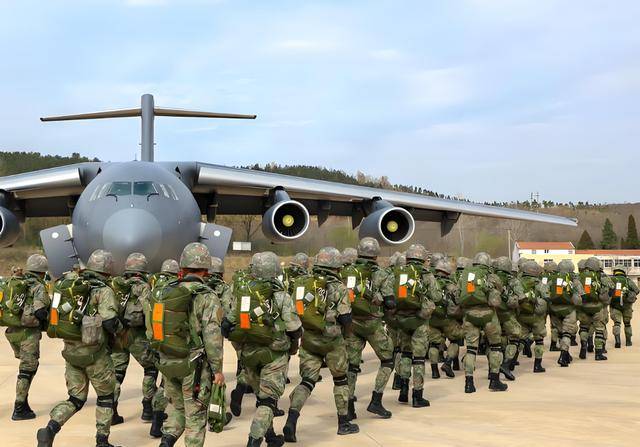
全球军工收入出炉!美失去半成份额,中方收入7700亿,上榜8家
Sou Hu Cai Jing· 2025-10-04 08:29
Core Insights - The global military industry revenue has seen a decline overall, despite significant military conflicts like the Russia-Ukraine war, with notable differences in performance among countries [3][13]. Group 1: United States Military Industry - The United States remains the largest military industry globally, accounting for approximately $320 billion in military revenue in 2022, which is a decrease of about 5% compared to five years ago [3][5]. - Major U.S. companies like Raytheon and Boeing have experienced significant revenue declines, with Raytheon's revenue dropping by 12% [3][5]. - Factors contributing to the decline include the impact of the COVID-19 pandemic on production and supply chain disruptions due to escalating sanctions against China [5]. Group 2: European Military Industry - Europe has 26 companies listed in the military revenue rankings, with a total revenue of around $120 billion, showing a stable growth rate of approximately 0.9% [6][9]. - The UK stands out with a military revenue of about $41.8 billion, significantly higher than other European nations, and has shown a growth trend [9]. - Challenges for European military revenue growth include production capacity issues and delays in data collection related to military support for Ukraine [9]. Group 3: Russian Military Industry - Russia's military revenue in 2022 was approximately $20.8 billion, reflecting a 12% decline, contrary to expectations of growth due to the ongoing conflict [11]. - The accuracy of Russian military data is questionable due to confidentiality, and the country faces significant weaknesses in its military production capabilities [11]. Group 4: Asian Military Industry - In Asia, military revenue from the Middle East is around $18 billion, with Turkey and Israel being significant contributors [12]. - China's military revenue reached approximately $108 billion in 2022, marking a growth of 2.7% and accounting for 18% of global military revenue [12]. - The growth in China's military revenue is driven by a pressing need to enhance national defense capabilities and ongoing modernization of military equipment [12].
中美缠斗出现分水岭,巴铁要卖稀土给美国,赴美签字救美军工一命
Sou Hu Cai Jing· 2025-10-02 06:32
Group 1 - The ongoing competition between the US and China in the rare earth sector has been intense, with the US military industry heavily reliant on Chinese rare earths, making it difficult to find alternative sources [1] - In early 2025, China implemented stricter export license management for seven categories of heavy rare earths, prioritizing national security and industrial interests, which caught the US military industry off guard [1][4] - The US is accelerating its supply chain diversification efforts, seeking sources in Australia and Canada, but these projects are costly and time-consuming, making it challenging to address immediate needs [1] Group 2 - Pakistan has emerged as a new hope for the US due to its rich rare earth resources, although it has long struggled with funding and technological development [1][3] - In August 2025, the US and Pakistan began discussions on critical mineral cooperation, with a focus on a $1 billion investment in the copper-gold mine in Balochistan [3] - A $500 million agreement was signed, outlining a three-step plan to export light rare earths, improve mining infrastructure, and facilitate technology transfer to establish a complete industrial chain in Pakistan [3] Group 3 - China's rare earth policy remains stable, with export license controls implemented in 2023 and further refined in 2025, emphasizing dynamic adjustment and green development [4] - The cooperation with the US is seen as a pragmatic survival strategy for Pakistan, providing short-term cash flow and aiding in industrial upgrades amid significant economic pressures [4][5] - While the agreement offers the US some relief in its supply chain challenges, it does not fully resolve the issues, particularly for the F-35 and drone production that heavily depend on rare earth magnets [5]

锂业巨头大涨!美国政府,又有大动作?
证券时报· 2025-10-01 11:50
Core Viewpoint - The U.S. government has agreed to acquire shares in Lithium Americas to support the development of the Thacker Pass lithium mine project in Nevada, which is crucial for the domestic critical minerals supply chain [5][6]. Group 1: Stock Market Reaction - Following the announcement, Lithium Americas' stock price surged over 40% in after-hours trading, later stabilizing around a 35% increase. By the morning of October 1, the stock had risen more than 30% [2]. Group 2: Government Involvement - The U.S. Department of Energy, led by Secretary Chris Wright, is negotiating to acquire a 10% stake in Lithium Americas, which is seen as a significant move to secure rights to the largest lithium mine in the U.S. [5][6]. - The government is also renegotiating a $2.26 billion loan agreement with Lithium Americas as part of this investment strategy [5]. Group 3: Thacker Pass Lithium Mine - The Thacker Pass lithium mine is noted for having the largest known lithium resources and reserves globally, supporting the development of the northern Nevada lithium mining area. The project commenced construction in March 2023 and aims to achieve an annual production capacity of 160,000 tons of battery-grade lithium carbonate in five phases [7]. - The first phase is expected to produce 40,000 tons of battery-grade lithium carbonate annually, sufficient for 800,000 electric vehicles. Lithium Americas holds a 62% stake in the project, while General Motors owns 38% and has a 20-year purchase agreement for the output [8]. Group 4: Broader Government Investment Strategy - The U.S. government has been actively acquiring stakes in various companies to bolster its domestic supply chains. Recent examples include a $400 million investment in MP Materials, the only rare earth miner in the U.S., and an $8.9 billion investment in Intel to support the semiconductor industry [10][11].

军工股:波音跌超1.5%,特朗普推动军事采购改革与军售加速
Xin Lang Cai Jing· 2025-09-30 14:49
Core Viewpoint - The U.S. defense sector is experiencing mixed stock performance, influenced by President Trump's announcement regarding military procurement reforms and accelerated arms sales [1] Group 1: Stock Performance - Boeing's stock declined by over 1.5% [1] - Lockheed Martin's stock increased by 1.3% [1] - Raytheon Technologies' stock growth narrowed to 1.7% [1] - L3Harris' stock growth narrowed to less than 1.6% [1] Group 2: Government Actions - President Trump stated that Defense Secretary Esper will soon simplify military procurement processes [1] - Esper will expedite foreign military sales [1] - Reforms will be implemented to accelerate military equipment sales, with a directive for companies to speed up production [1]


美股三大指数集体高开,纳指涨0.58%,特斯拉、英伟达涨约1%
Feng Huang Wang Cai Jing· 2025-09-29 13:35
Market Performance - The three major U.S. stock indices opened higher, with the Dow Jones up 0.21%, the S&P 500 up 0.37%, and the Nasdaq Composite up 0.58% [1] Gold and Defense Stocks - International gold prices reached a new high, leading to a rise in gold stocks, with companies like Elysium Gold and Harmony Gold increasing by over 2% [1] - Defense stocks also saw gains, with Lockheed Martin rising nearly 2% [1] Technology Sector - Major technology stocks experienced a broad increase, with Tesla and Nvidia both rising approximately 1% [1] - Electronic Arts (EA) surged over 5% after agreeing to a sale to a consortium, with the transaction valued at approximately $55 billion [1]


军费多不代表花得对!美国军费近9000亿,军工产业还是走进死胡同
Sou Hu Cai Jing· 2025-09-27 04:51
Core Insights - The U.S. military-industrial complex is facing significant challenges despite a record military budget of $895.2 billion for FY2025, which exceeds the combined military budgets of China, Russia, and seven other military powers [1] - The current state of U.S. military production is marked by delays and inefficiencies, with notable examples including the Ford-class aircraft carrier and the F-35 fighter jet, which has seen production halts [1] Group 1: Market Competition and Monopolization - The decline of competition in the U.S. military-industrial sector has led to a monopolistic environment, reducing innovation and increasing costs for the Pentagon [3][5] - Historical market competition during and after World War II fostered a diverse range of manufacturers, but deregulation in the 1980s led to a consolidation of firms, resulting in fewer players like Lockheed Martin and Boeing dominating the market [5] - The lack of competition has allowed companies to increase prices and reduce accountability, exemplified by Lockheed Martin's pricing strategies and Boeing's failed E-7 early warning aircraft tests [5] Group 2: Budget Allocation Issues - The U.S. military's budget allocation is heavily skewed towards ammunition and immediate operational needs, with a 24% increase in ammunition procurement budget to $30.6 billion for FY2024 [7][9] - This focus on short-term needs has led to a neglect of research and development funding, causing significant projects like the F/A-XX sixth-generation fighter and Constellation-class frigate to be delayed or canceled [9] Group 3: Supply Chain Challenges - The U.S. military-industrial complex is heavily reliant on global supply chains, with 19 out of 35 critical minerals sourced primarily from China, impacting production capabilities [10][12] - Supply chain disruptions have contributed to delays in the construction of key military assets, such as the Zumwalt-class destroyer and the F-35 fighter jet [12] Group 4: Export Market Vulnerabilities - The export market for U.S. military equipment is under threat, with 26% of Lockheed Martin's $65.9 billion revenue coming from exports, and Raytheon's export ratio at 39% [14] - Restrictions on exporting advanced equipment like the F-22 and competition from other nations developing their own military technologies further complicate the export landscape [14] Conclusion - The systemic issues within the U.S. military-industrial complex, including monopolization, budget misallocation, and supply chain vulnerabilities, suggest that merely increasing military spending will not resolve the underlying problems [15] - A sustainable military power requires a robust industrial system, effective resource allocation, and a collaborative approach, rather than a focus on arms races [15]
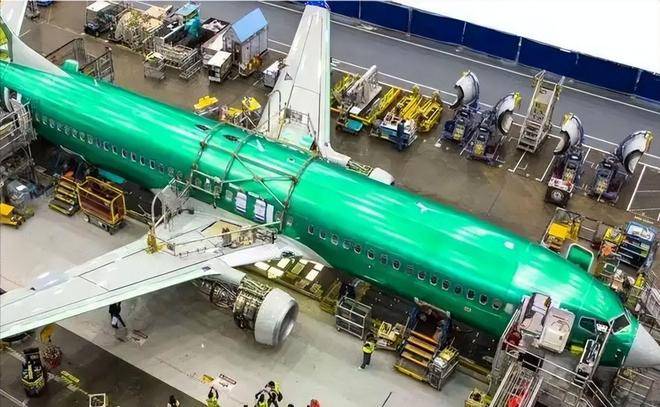
列国鉴|记者观察:德国加码发展军工 打造经济复苏引擎
Xin Hua Wang· 2025-09-26 00:54
Core Viewpoint - Germany's economy, facing a recession for two consecutive years, is heavily investing in the defense industry as a means to stimulate economic recovery, although experts caution that defense spending may not be the primary driver of economic revival [1][3][10]. Economic Context - Germany's economy has been struggling due to rising energy prices and slow industrial transformation, with a notable decline in industrial new orders, which fell by 2.9% in July, marking the third consecutive month of decline [3][4]. - The automotive sector, a key industry, is experiencing a sluggish transition to electric vehicles, leading to a drop in sales and profits among major car manufacturers [3][4]. - The German government has approved a significant budget for defense, with a total budget of €520.5 billion for the fiscal year 2026, including a defense budget of €82.7 billion, a 32% increase from the previous year [3][4]. Defense Industry Investment - The German defense ministry plans to submit over 60 orders by the end of 2025, including projects for a new generation of European fighter jets and infantry fighting vehicles, with budgets ranging from €3 billion to €10 billion [4][6]. - Germany's defense spending has been increasing for three consecutive years, positioning it as the fourth-largest military spender globally by 2024 [6][8]. Industry Dynamics - Major defense companies like Rheinmetall have seen significant stock price increases, with a nearly 2000% rise over the past five years, and are shifting focus from automotive to defense, with plans to completely divest from automotive parts by 2025 [6][7]. - Companies are expanding into new areas, such as Rheinmetall acquiring a naval shipbuilding company and other firms like Hensoldt experiencing a surge in orders for military sensors and radars [7][8]. Employment and Economic Impact - The German Employment Research Institute predicts that the defense industry could create up to 200,000 jobs in the coming years, although there are concerns about the limited economic stimulus potential of military spending [8][10]. - Economic experts argue that the fiscal multiplier effect of military spending is low, suggesting that investments in infrastructure and education typically yield higher returns [10][11]. Challenges and Limitations - The military-industrial complex in Germany faces challenges such as long project cycles and a highly automated production process, which limits job creation [11]. - There is a historical caution against militarization in German society, which may slow the pace of defense industry growth despite recent increases in spending [4][5].

美国务院批准价值超12亿美元对德军售
第一财经· 2025-09-25 23:29
Group 1 - The core point of the article is that the U.S. Department of Defense announced the approval of a sale of AIM-120D-3 advanced medium-range air-to-air missiles to Germany, with an estimated value of $1.23 billion [3] Group 2 - The article highlights that this sale is part of ongoing defense cooperation between the U.S. and Germany, reflecting the strategic military partnership [3] - The approval of this sale indicates a continued trend of U.S. arms exports to allied nations, which may influence the defense industry dynamics in Europe [3]