半导体存储

Search documents
坚定AI科技信心
2025-11-26 14:15
Summary of Key Points from the Conference Call Industry Overview - The AI technology sector is undergoing a once-in-20-years transformation, similar to the early stages of the mobile internet and new energy industries, with a projected compound annual growth rate (CAGR) of 45%-50% over the next five years, and global AI infrastructure investment expected to reach $4 trillion by 2030 [2][4][8]. Core Insights and Arguments - Despite market skepticism regarding potential bubbles and overstated expectations in the AI field, the underlying logic remains unchanged, with increasing computational power required for large model upgrades, as evidenced by companies like NVIDIA and OpenAI ramping up investments [2][6]. - AI technology is beginning to show economic benefits, with companies like Google generating hundreds of billions in revenue through AI while significantly reducing programmer costs, indicating a trend towards improved profitability in the coming years [2][7]. - The AI industry is expected to remain in a state of high demand for the next 1.5 to 3 years, with strong demand anticipated until the end of 2026, and a sustained CAGR of 45%-50% projected for the next five years [2][8][9]. Storage Market Dynamics - Recent significant price increases in the storage market, particularly for DRAM and NAND Flash, with large-capacity TLC NAND Flash reaching historical highs, are expected to continue into Q4, indicating substantial earnings elasticity for related companies [2][25]. - Major storage suppliers like Samsung and SK Hynix are adopting conservative capital expenditure plans for 2026, which may reduce supply-side pressure and support a prolonged storage cycle with high price increases [2][26]. Market Performance and Investment Opportunities - The AI technology sector has shown strong market performance in 2025, with key predictions made at various points throughout the year being validated by market outcomes [3]. - The semiconductor storage sector is transitioning from low-end module models to high-value areas such as main control chip design and packaging, with significant revenue growth expected for enterprise-level SSDs [4][31]. Future Trends and Projections - The AI sector is expected to continue driving demand for DRAM, DDR5, HBM, and enterprise-level SSDs, with predictions of demand exceeding supply capabilities by 2026 [29]. - The light chip sector is experiencing strong growth, with a notable increase in global capacity shortages, indicating a favorable environment for domestic supply chain companies [23]. Challenges and Opportunities - The computing industry is facing challenges due to the AI sector not accelerating significantly yet, but there is confidence in long-term trends, particularly in domestic computing and quantum computing sectors [32][33]. - Investment opportunities in satellite communication are emerging due to increased governmental focus and financing, with companies like Zhenlei Technology and Tongyu Communication expected to perform well [27][28]. Conclusion - The AI and semiconductor storage sectors are poised for significant growth, driven by technological advancements and increasing demand, while companies that adapt to these trends are likely to see substantial benefits in profitability and market position [2][4][9][31].
独立厂商vs垂直整合:存储控制器竞争格局的”双轨”演进
2025-11-12 02:18
Summary of Semiconductor Storage Controller Conference Call Industry Overview - The conference call focuses on the semiconductor storage controller industry, particularly the SSD (Solid State Drive) module market, which is characterized by a dual-track evolution between independent manufacturers and vertically integrated (IDM) firms [1][2][12]. Key Points and Arguments - **Value Composition of SSD Modules**: In SSD modules, NAND Flash accounts for 75%-85% of the value, followed by controllers at 10%-15%, DRAM cache at 5%-10%, and PCB and peripheral components at 3%-5% [1][3]. - **Market Size**: The overall storage controller chip market is valued at approximately $66 billion, with the NAND controller market between $10 billion and $15 billion, and the SSD controller market around $5 billion to $6 billion [1][6]. - **Rising Interest in Semiconductor Storage**: The semiconductor storage industry has gained attention due to increased storage demands driven by AI, particularly in servers and data centers, and rising prices that have piqued market interest [2][12]. - **Competitive Landscape**: Major players include Marvell, Microchip, Silicon Motion, and Phison, with emerging firms in mainland China like Lianyun Technology and Dapuwei. IDM firms like Samsung and SK Hynix also contribute significantly to the market [1][7][12]. - **Advantages of Independent Manufacturers**: Independent storage controller manufacturers possess four key advantages: flexible adaptation to various NAND types, acting as industry glue connecting upstream and downstream, lifecycle stickiness ensuring continuous supply, and rapid response to technological upgrades [2][9]. Additional Important Insights - **Differentiation in Controller Value by Product Tier**: The value contribution of controllers varies by product tier, with low-end consumer SSDs having a controller value share of 5%-10%, while high-end consumer and enterprise SSDs can reach around 20% [1][4]. - **IDM Firms' Strategy**: IDM firms maintain in-house development of high-end SSD controllers to uphold brand image and ensure technological integration, as seen with Samsung's high-end SSD series [2][10]. - **Global Supply Chain Trends**: The global semiconductor storage supply chain is becoming increasingly layered and competitive, with traditional players in the US, South Korea, and Taiwan maintaining significant positions, while mainland Chinese companies are rising through local support and R&D [12]. This summary encapsulates the critical aspects of the semiconductor storage controller industry as discussed in the conference call, highlighting market dynamics, competitive landscape, and emerging trends.

SK hynix发布存储新路线,重塑AI时代新架构 | 投研报告
Zhong Guo Neng Yuan Wang· 2025-11-11 02:56
爱建证券近日发布电子行业周报:SKhynixCEOKwakNoh-Jung在韩国首尔举办 的"SKAISummit2025"峰会上,正式宣布公司转型"全线AI存储创造者"的新愿景,同时揭晓 了包含定制化高带宽内存(CustomHBM)、AI专用DRAM(AI-D)及AI专用NAND(AI- N)在内的三大存储新路线。 以下为研究报告摘要: 投资要点: 存储芯片涨价带动其他电子Ⅲ上涨。本周(2025/11/03-11/07)SW电子行业指数 (-0.09%),涨跌幅排名21/31位,沪深300指数(+0.82%)。SW一级行业指数涨跌幅前五 别为:电力设备(+4.98%),煤炭(+4.52%),石油石化(+4.47%),钢铁(+4.39%), 基础化工(+3.54%),涨跌幅后五分别为:美容护理(-3.10%),计算机(-2.54%),医药 生物(-2.40%),汽车(-1.24%),食品饮料(-0.56%)。本周SW电子三级行业指数涨跌 幅前三分别是:其他电子Ⅲ(+4.88%),被动元件(+4.85%),印制电路板(+4.32%); 涨跌幅后三分别是:品牌消费电子(-3.60%),模拟芯片设计(-2.25%) ...
佰维存储:为子公司提供3亿元担保,累计担保额达60亿元
Xin Lang Cai Jing· 2025-11-10 11:19
Core Points - The company announced that it provided guarantees of 100 million yuan and 200 million yuan to its wholly-owned subsidiaries, Tailai Technology and Hong Kong Baiwei, respectively, to support their business development needs [1] - The guarantee for Tailai Technology is a renewal of an existing guarantee, with no new amount added, and has a term of one year; the guarantee for Hong Kong Baiwei is a new guarantee [1] - As of the announcement date, the total amount of external guarantees provided by the company and its subsidiaries is 6 billion yuan, which accounts for 248.77% of the most recent audited net assets attributable to shareholders [1] - There are no overdue or litigation situations related to these guarantees [1] - The guarantees are within the authorization limit set by the 2024 shareholders' meeting and do not require further review [1]
11月10日主题复盘 | 大消费强势反弹,存储、锂电持续活跃
Xuan Gu Bao· 2025-11-10 08:23
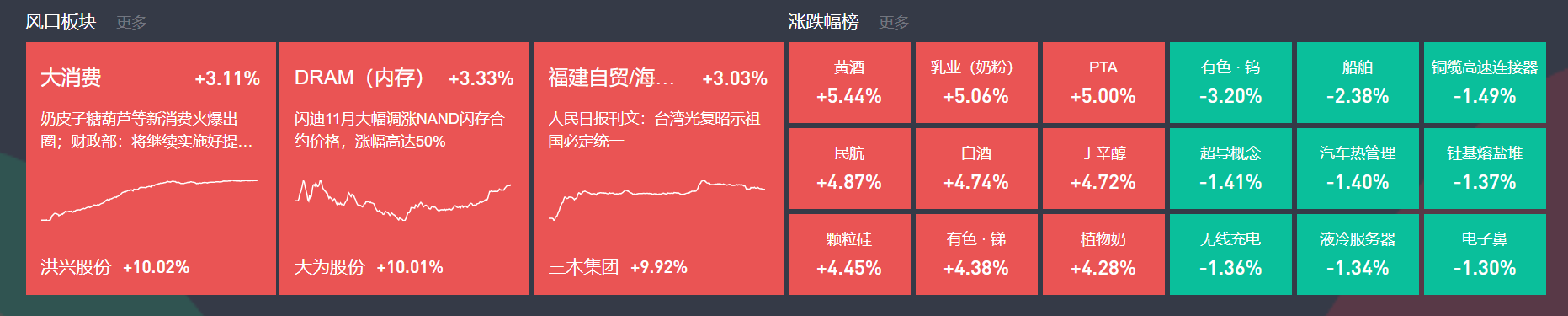
Market Overview - The market experienced fluctuations with mixed performance across the three major indices, with significant gains in the consumer sector, particularly in companies like China Duty Free and Shede Liquor, which saw nearly 20 stocks hitting the daily limit [1] - Financial stocks, including Northeast Securities and Ruida Futures, also surged, while the storage chip sector remained active with companies like Dawi Co. and Wanrun Technology reaching their daily limits [1] Consumer Sector - The consumer sector saw a collective surge, with stocks like Hongxing Co. and Dongbai Group hitting their daily limits, driven by the unexpected popularity of a new snack, "milk skin candy hawthorn," which has become a trending topic on social media [4] - The National Bureau of Statistics reported a year-on-year CPI increase of 0.2% in October, with core CPI rising to its highest level since March 2024 at 1.2% [4] Storage Sector - The storage sector continued its upward trend, with companies like Dawi Co., Shenkong Co., and Hefei Urban Construction hitting their daily limits, and Xiangnong Chip Creation rising by 15% to a new historical high [8] - SanDisk announced a significant price increase of 50% for NAND flash contracts, causing a ripple effect throughout the storage supply chain, leading to companies like Transcend and ADATA pausing shipments to reassess pricing [8][10] Lithium Battery Sector - The lithium battery sector remained strong, with companies like Furui Co. and Tianji Co. hitting their daily limits, supported by a projected increase in production across various lithium battery components [11] - The demand for lithium carbonate is expected to exceed supply in November, with a projected shortfall of 23,500 tons, indicating a favorable outlook for the lithium salt industry [13] Key Stock Performances - Notable stock performances included Hongxing Co. with a 10.02% increase, Dongbai Group at 9.96%, and Dawi Co. at 10.01%, reflecting the overall positive sentiment in their respective sectors [6][12] - The storage sector saw significant gains with Dawi Co. at 29.13, Shenkong Co. at 61.19, and Hefei Urban Construction at 12.43, highlighting the strong market interest in storage solutions [9][12]


【招商电子】存储行业深度报告:AI时代存储需求推动周期上行,涨价浪潮下厂商盈利能力逐季提升
招商电子· 2025-11-09 14:46
Core Viewpoint - The storage industry has entered an accelerated upward cycle driven by explosive demand from the AI era, with limited supply-side capacity leading to a widening supply-demand gap and accelerating price increases [2][4][6]. Group 1: Demand Drivers - The current upward cycle in the storage industry is primarily driven by the explosive demand from AI servers and multimodal applications, marking a shift from traditional demand sources like smartphones and internet companies [3][4]. - Flash storage demand is expected to grow significantly, with data center storage needs projected to increase from 600EB in 2020 to 2.4ZB by 2028, driven by generative AI [4][8]. - The Sora2 model exemplifies the increased storage requirements, consuming nearly 100MB for a 10-second 4K video, a substantial increase compared to traditional text storage needs [11]. Group 2: Supply-Side Dynamics - Storage manufacturers are focusing capital expenditures on high-margin products like HBM, with limited plans for significant NAND Flash capacity expansion, leading to a constrained supply environment [31][34]. - Major manufacturers like Samsung, SK Hynix, and Micron are reporting record revenues and profit margins, indicating strong demand and effective inventory management [5][43]. Group 3: Price Trends - Storage prices have accelerated in October 2025, with increases ranging from 40% to 100% across various product types, driven by heightened demand from AI servers and proactive price adjustments by manufacturers [37][39]. - Specific products like DDR5 and DDR4 have seen significant price hikes, with DDR5 prices increasing by 102.6% in October [39]. Group 4: Future Outlook - The storage industry is expected to continue its upward trajectory into 2026, with supply-demand imbalances likely to persist, supporting ongoing price increases [6][60]. - Investment opportunities are recommended in both overseas and domestic storage manufacturers, particularly those involved in niche storage chips and supply chain components [6][60].



江波龙:近年来公司在企业级存储等方面持续取得突破
Zheng Quan Ri Bao Zhi Sheng· 2025-11-06 11:37
Core Viewpoint - Jiangbolong announced on November 6 that the interval between wafer procurement and memory sales will positively impact the company's gross margin when memory wafer prices rise, although raw material price fluctuations are only one factor affecting performance [1] Group 1: Company Performance - The company has made continuous breakthroughs in enterprise-level storage, high-end consumer storage, overseas business, and self-developed main control chips [1] - Internal growth factors will more directly and sustainably drive the company's profitability improvement [1]
江波龙:公司凭借自研主控芯片成功实现UFS4.1产品的突破
Zheng Quan Ri Bao Zhi Sheng· 2025-11-06 11:37
Core Viewpoint - The company has successfully developed UFS4.1 products using its self-developed main control chip, positioning itself as one of the few enterprises globally capable of such development [1] Group 1: Product Development - The company has achieved a breakthrough in UFS4.1 products, which are currently recognized as high-end embedded storage solutions [1] - The UFS4.1 products, equipped with the company's self-developed main control chip, have been validated by original manufacturers and third-party tests, showing superior performance in process, read/write speed, and stability compared to comparable market products [1] Group 2: Market Recognition - The company has received recognition from major storage manufacturers, including SanDisk, and has gained approval from several Tier 1 clients, with the integration process accelerating [1] - UFS4.1 is the preferred storage configuration for flagship smart terminal models of Tier 1 clients, indicating strong market demand [1] Group 3: Market Trends - The embedded storage market is rapidly transitioning from eMMC to UFS, highlighting a concentrated market with significant growth potential [1]
江波龙:11月3日接受机构调研,包括知名机构盘京投资的多家机构参与
Sou Hu Cai Jing· 2025-11-06 10:21
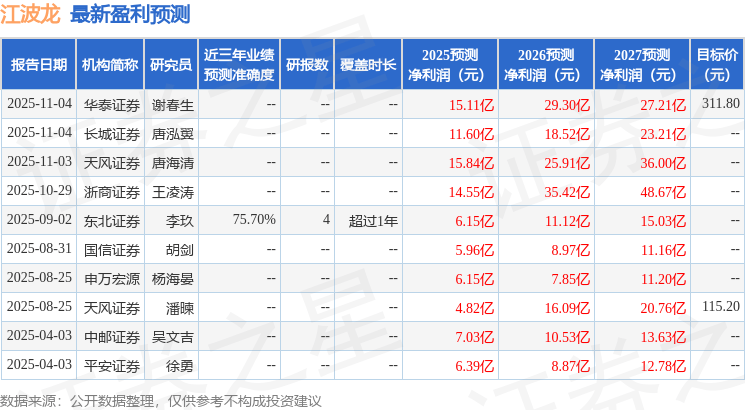
Core Viewpoint - The company, Jiangbolong (301308), is experiencing significant growth in its storage product business, driven by rising demand in the cloud services sector and advancements in its proprietary technologies [1][2][3]. Group 1: Market Dynamics - Recent increases in storage prices are attributed to a surge in investment from North American cloud service providers, leading to a supply shortage of HDDs and a shift in focus towards high-capacity QLC SSDs [2]. - The price of storage products has seen a minimum increase of 20%, with some prices rising over 40%, reflecting the heightened demand in the server market [2]. Group 2: Profitability Impact - The company anticipates that the rising prices of storage wafers will positively impact its gross margin, although raw material price fluctuations are only one factor affecting overall performance [3]. - The company has made significant progress in enterprise storage, high-end consumer storage, and self-developed main control chips, which are expected to drive profitability growth [3]. Group 3: Supply Chain Stability - As a leading independent storage manufacturer, the company maintains a strong inventory turnover rate and has established long-term partnerships with major wafer suppliers, ensuring supply chain resilience [4]. - The company has signed long-term contracts and memorandums of understanding with wafer suppliers, enhancing its ability to secure stable resource supply [4]. Group 4: Product Development and Market Position - The company ranks third in the total capacity of enterprise-level ST SSDs in China for the first half of 2025, leading among domestic brands [4]. - The company is actively developing high-performance storage products for data centers, including new memory types like CXL2.0 and MRDIMM, and has launched the SOCMM2 product designed for data centers [5]. Group 5: UFS4.1 and Embedded Storage - The company has successfully developed UFS4.1 products, which are recognized for their superior performance in terms of process, read/write speed, and stability compared to market alternatives [6]. - UFS4.1 is positioned as a preferred storage configuration for flagship smart terminal models among Tier 1 clients, indicating a strong market opportunity as the embedded storage market transitions from eMMC to UFS [6]. Group 6: Main Control Chip Strategy - The company has launched multiple series of proprietary main control chips, achieving a deployment of over 100 million units by the end of Q3 2025, with ongoing rapid growth [7][8]. - The self-developed main control chips are currently undergoing validation with several Tier 1 manufacturers, indicating a strong potential for revenue growth in the coming year [8]. Group 7: Financial Performance - For the first three quarters of 2025, the company reported a main revenue of 16.734 billion yuan, a year-on-year increase of 26.12%, and a net profit of 713 million yuan, up 27.95% [8]. - In Q3 2025 alone, the company achieved a main revenue of 6.539 billion yuan, reflecting a substantial year-on-year increase of 54.6% [8]. Group 8: Analyst Ratings and Predictions - Over the past 90 days, 9 institutions have rated the stock, with 8 buy ratings and 1 hold rating, indicating strong market confidence [9]. - The average target price set by institutions is 205.92 yuan, with various profit forecasts for the upcoming years showing optimistic growth expectations [9].
深圳华强北有产品翻倍涨价!商户称“每天都在涨,后面可能更贵”,但不敢囤货
Xin Lang Cai Jing· 2025-11-06 07:33
Core Viewpoint - A significant price surge in storage chips is occurring in Shenzhen's Huaqiangbei market, leading to increased prices for flagship smartphones from domestic manufacturers, with some models seeing price hikes of 100 to 400 yuan compared to previous generations [1][2]. Group 1: Price Surge in Storage Products - Storage product prices in Huaqiangbei have doubled, with DDR4 memory prices rising from 180-190 yuan to around 400 yuan, indicating a tight supply-demand relationship [5][6]. - The price of a 1TB SSD has increased to 620 yuan, with reports of prices doubling within a month [5][6]. - The current market is characterized by a "fear of heights" mentality among merchants, who are hesitant to stockpile due to the rapid price increases [5][6]. Group 2: Factors Driving Price Increases - The price surge is attributed to a significant shortage of storage chips, particularly driven by the demand from AI applications, which has led to a shift in production focus from traditional DRAM to HBM and DDR5 [7][9]. - Major manufacturers like Samsung and SK Hynix have reduced production of older DRAM products, exacerbating supply constraints [10][14]. - The AI boom has created a "swallowing demand" for storage, with AI servers requiring significantly more DRAM and NAND than traditional servers [10][9]. Group 3: Industry Dynamics and Cycles - The storage industry is characterized by strong cyclical properties, with historical price fluctuations driven by mismatches in supply and demand [13][14]. - The current cycle is distinct from previous ones, as it is primarily driven by AI infrastructure rather than consumer demand [13][14]. - The industry has experienced three major cycles in the past decade, with the latest cycle beginning in 2024, driven by AI-related demand [13][14]. Group 4: Financial Performance of Companies - SK Hynix reported a revenue increase of 39% and a net profit increase of 119% for the third quarter of 2025 [15]. - Jiangbolong's net profit increased by 27.95% to 713 million yuan, while Bawei Storage showed a significant recovery with a 563.77% increase in net profit for the third quarter [17][15]. - Companies like Changxin Storage and Yangtze Memory Technologies are expected to benefit from the ongoing demand for advanced storage products [20][22].