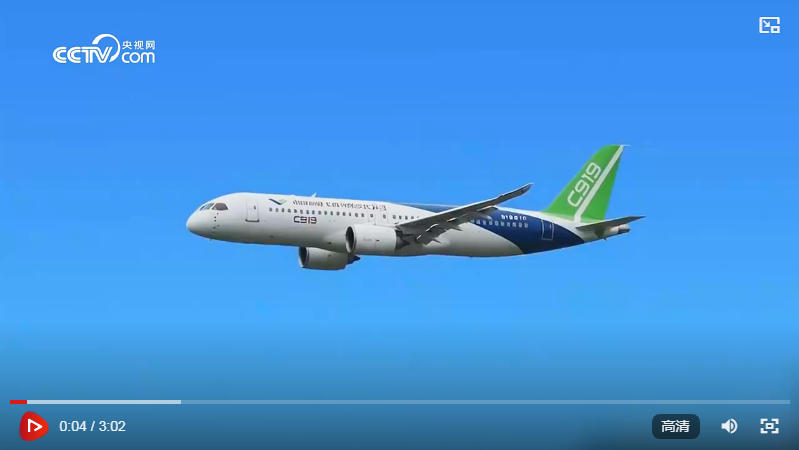
服装制造

Search documents
1.6万元LV大衣“撞衫”86元中学校服,LV回应
第一财经· 2025-10-24 10:56
Core Viewpoint - The article discusses a social media incident where a luxury LV coat priced at 16,000 yuan is compared to a school uniform from a middle school in Changsha, which costs only 86 yuan, highlighting the stark contrast between high-end fashion and affordable school attire [3][8]. Company Information - Changsha Miaoyang Clothing Co., Ltd., the manufacturer of the school uniform, was established in November 2010 with a registered capital of 5 million yuan. The company specializes in the production and processing of school uniforms and holds several trademarks and patents related to clothing [6][7]. Product Details - The LV coat in question is a seasonal limited edition made of 79% cotton and 21% polyamide, designed by the brand's designer. It is currently sold out nationwide [8]. - The coat's design may have some similarities to the school uniform, as both are focused on practicality and seasonal suitability [8]. Market Reactions - The incident has sparked discussions online, with users humorously noting the similarities between the luxury item and the school uniform, emphasizing the value for money of the latter [9][11]. - This is not the first instance of luxury brands having similar designs to school uniforms; previous cases include a GUCCI dress and a Ralph Lauren polo shirt that drew similar comparisons [11].

连云港法院一例入选!江苏省高级人民法院发布金融商事审判典型案例
Yang Zi Wan Bao Wang· 2025-10-23 10:46
Core Viewpoint - The case highlights the effective resolution of enterprise-related disputes by the judiciary, emphasizing the importance of safeguarding the survival and development of private enterprises through mediation and third-party guarantees [1][2]. Group 1: Case Details - A commercial bank filed a lawsuit against a clothing factory and its legal representative for a loan repayment dispute involving a loan of 1 million yuan with a 4.0525% annual interest rate [1]. - The clothing factory, a labor-intensive small and medium-sized private enterprise with nearly 80 employees, faced financial difficulties that hindered timely loan repayment despite a strong willingness to repay [1]. - The court recognized the potential for mediation and facilitated discussions among the parties, ultimately leading to a third party providing a guarantee for the loan [1]. Group 2: Mediation Process - The court employed a combination of "back-to-back" and face-to-face communication methods to clarify the legal consequences of non-compliance and assess the repayment capacity of the clothing factory [1]. - The court suggested that the clothing factory seek a third-party guarantor to enhance the likelihood of a successful mediation outcome [1]. - A third party, familiar with the factory's operations, agreed to provide a guarantee, which was positively evaluated by the bank, leading to a mediation agreement for monthly repayments until the debt was fully settled [1]. Group 3: Legal and Social Implications - The case serves as a model for the judiciary's role in resolving enterprise disputes, ensuring that mediation agreements with third-party guarantees are recognized and enforceable [2]. - By allowing third-party guarantees, the court enhances the security of debt recovery and encourages mediation, providing private enterprises with new opportunities for development [2]. - The outcome reflects a successful balance between legal resolution and support for enterprise sustainability, achieving a win-win situation for all parties involved [2].

泸溪县杨帆手袋厂(个体工商户)成立 注册资本50万人民币
Sou Hu Cai Jing· 2025-10-23 06:42
Core Insights - A new individual business named "Luxi County Yangfan Handbag Factory" has been established, with a registered capital of 500,000 RMB [1] - The legal representative of the business is Yang Mei [1] Business Operations - The business scope includes general projects such as road cargo transportation for vehicles with a total mass of 4.5 tons or less (excluding online freight and hazardous goods) [1] - Manufacturing and sales of bags, clothing, and daily necessities are also part of the business operations [1] - The company is authorized to conduct business activities independently based on its business license, except for projects that require approval [1]
港股异动 | 晶苑国际(02232)涨超3% 关税影响重塑美服装采购格局 公司将在越南进一步预留产能增长空间
智通财经网· 2025-10-22 03:36
Core Viewpoint - The stock of Crystal International (02232) has seen an increase of over 3%, currently trading at 6.81 HKD, with a transaction volume of 10.6 million HKD, driven by favorable market conditions and strategic adjustments in response to tariff changes [1] Group 1: Market Conditions - Starting from August 12, 2025, the US and China will again suspend the implementation of a 24% tariff for 90 days, which is expected to create a customer dividend resonance period for manufacturing companies like Crystal International [1] - Tianfeng Securities indicates that the ongoing impact of tariffs has reshaped the procurement landscape of the US apparel industry, with brand clients leaning towards low-cost alternatives to mitigate the burden of high tariffs [1] - This trend may intensify due to signs of economic weakness in the US [1] Group 2: Strategic Initiatives - In response to market conditions, Crystal International will prioritize growth opportunities in Europe and Asia [1] - Vietnam serves as the cornerstone of the company's global production network, accounting for over 60% of total output, and the company plans to reserve capacity for growth while modernizing its factories and building a local vertical supply chain [1] - The company will also actively assess the feasibility of establishing new production bases in regions surrounding Europe to shorten transportation times and enhance its capability to respond to the European market [1]
早报 | 黄金创12年来最大单日跌幅;高市早苗成为日本首位女首相;中荷就安世半导体交换意见;官方辟谣济南趵突泉靠水泵才能喷涌
虎嗅APP· 2025-10-22 00:56
Market Movements - Gold prices experienced a significant drop, with spot gold falling by 5.31% to $4124.36 per ounce, marking the largest single-day decline in 12 years [2] - The Philadelphia Gold and Silver Index plummeted by 9.57%, while spot silver decreased by 7.11% to $48.67 per ounce [2] Corporate Developments - Walmart has suspended job offers to candidates requiring H-1B visas, affecting its headquarters staff, amidst ongoing confusion in the labor market due to changes in immigration policy [3] - OpenAI launched its AI-driven web browser, ChatGPT Atlas, which aims to provide a personalized browsing experience, impacting Google's stock, which fell by 4.8% following the announcement [4] - Apple is facing delays in its foldable iPad project, with potential launch pushed to 2029 due to technical challenges [6][7] Geopolitical Events - Ukrainian President Zelensky announced readiness to end the conflict with Russia and plans to sign a new defense agreement with European partners [5] - Discussions between China and the Netherlands regarding ASML semiconductor issues highlight concerns over global supply chain stability [8][9] Technology Updates - Huawei officially released HarmonyOS 6, marking a significant step in the development of a self-reliant operating system ecosystem in China [29]
雅戈尔时尚股份有限公司关于股份回购比例达到1%暨回购进展公告
Zhong Guo Zheng Quan Bao - Zhong Zheng Wang· 2025-10-22 00:55
Group 1 - The company plans to repurchase shares using between RMB 500 million and RMB 960 million of its own funds, with a maximum repurchase price of RMB 8 per share, for a period not exceeding 12 months [1] - Following the implementation of the first quarter dividend distribution on September 12, 2025, the maximum repurchase price was adjusted to RMB 7.92 per share [1] Group 2 - As of October 21, 2025, the company has repurchased a total of 46,479,100 shares, representing 1.01% of the total share capital, with a maximum purchase price of RMB 7.67 per share and a minimum of RMB 7.28 per share, totaling RMB 345,679,456.07 spent [2] - The company will continue to make repurchase decisions based on market conditions and will fulfill its information disclosure obligations in a timely manner [2]

阿迪达斯羽绒服被质疑为雪中飞代工
Bei Jing Shang Bao· 2025-10-21 11:25
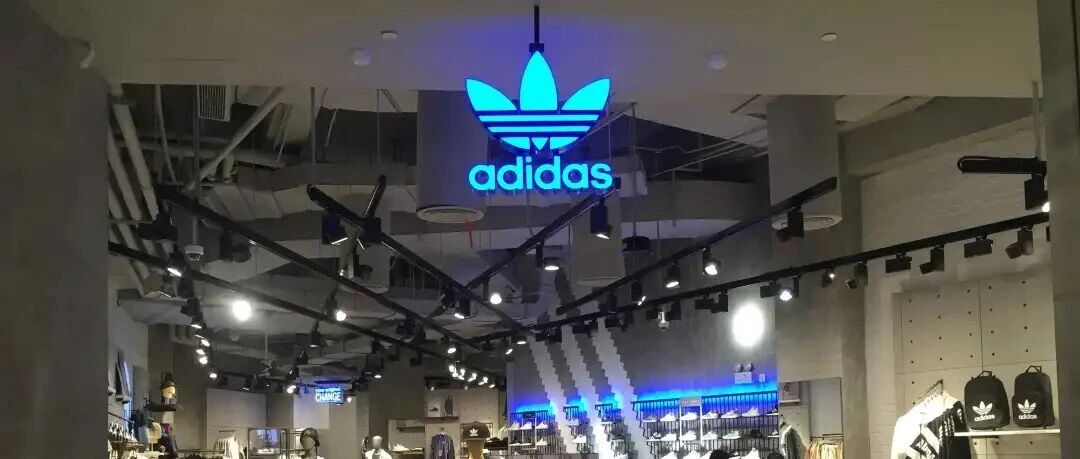
Core Viewpoint - A consumer reported on social media that an Adidas down jacket purchased from a live-streaming platform was actually a product manufactured by a subcontractor, Xuezhongfei, raising concerns about brand authenticity and pricing strategies [1] Company Summary - The jacket in question was labeled as being distributed by Adidas Sports (China) Co., Ltd., with the manufacturer identified as Jiangsu Xuezhongfei Garment Co., Ltd. [1]


阿迪达斯客服回应“羽绒服由雪中飞代工”
第一财经· 2025-10-21 10:45
Core Viewpoint - Recent consumer complaints on social media suggest that Adidas down jackets sold on short video platforms are actually produced by Snow Flying, raising questions about brand pricing and product sourcing [3][6]. Group 1: Product Comparison - An Adidas down jacket priced at 579 yuan has a fill power of 600+ and a down content of 80%, while a similar jacket from Snow Flying is priced at 519 yuan, with a fill power of 680+ and a down content of 90% [6]. - Another Adidas jacket priced at 869 yuan contains 135 grams of duck down and 80% down content, whereas a comparable Snow Flying jacket is priced at 879 yuan, containing 200-249 grams of duck down and 90% down content [7]. Group 2: Company Background - Jiangsu Snow Flying Garment Co., Ltd. was established in September 1997, with a registered capital of approximately 150 million yuan. Its business scope includes textile sales, garment manufacturing, and import-export activities [12]. - Snow Flying is fully owned by Jiangsu Kangbo Intelligent Manufacturing Co., Ltd., which is a wholly-owned subsidiary of Bosideng Co., Ltd. [12]. Group 3: Consumer Feedback and Brand Response - Adidas customer service stated that they do not have information on whether products are outsourced or the details of the manufacturing process, emphasizing that all products are shipped directly from warehouses [7]. - The Adidas official flagship store on short video platforms has received similar consumer inquiries regarding the sourcing of their down jackets [6].
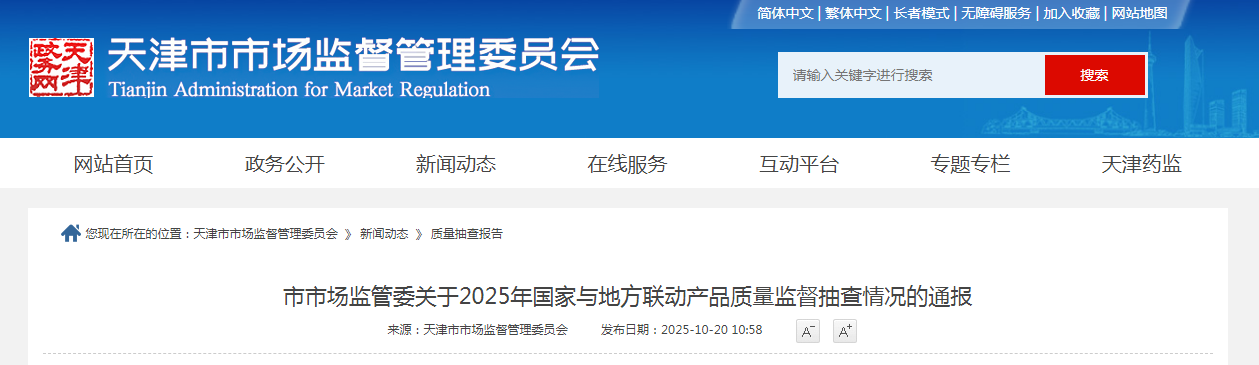
天津市市场监督管理委员会通报2025年国家与地方联动产品质量监督抽查情况
Zhong Guo Zhi Liang Xin Wen Wang· 2025-10-21 08:05
Core Viewpoint - The Tianjin Municipal Market Supervision Administration conducted a quality supervision inspection on various products, revealing a low non-compliance rate of 1.9% across 215 batches inspected, with specific issues identified in electrical cables and down products [1][2]. Group 1: Inspection Overview - The inspection covered seven product categories: electrical cables, down clothing, down quilts, cashmere knitwear, electronic door locks, cement, and building insulation materials [2]. - A total of 215 batches were inspected, with 4 batches found to be non-compliant, resulting in a non-compliance rate of 1.9% [2]. Group 2: Detailed Inspection Results - **Electrical Cables**: Inspected 100 batches from 59 manufacturers and 19 distributors, with 2 batches non-compliant, leading to a non-compliance rate of 2%. Issues were found in insulation thickness and sheath thickness [3]. - **Down Clothing**: Inspected 20 batches from 7 e-commerce operators, with 1 batch non-compliant, resulting in a non-compliance rate of 5%. Non-compliance was related to down content and feather content [3]. - **Down Quilts**: Inspected 20 batches from 2 distributors and 1 e-commerce operator, with 1 batch non-compliant, also resulting in a non-compliance rate of 5%. Issues were found in the content of down and feathers [3]. - **Cashmere Knitwear**: Inspected 20 batches from 1 distributor and 3 e-commerce operators, with no non-compliant products found [4]. - **Electronic Door Locks**: Inspected 10 batches from 10 distributors, with no non-compliant products found [4]. - **Cement**: Inspected 20 batches from 9 manufacturers and 1 distributor, with no non-compliant products found [4]. - **Building Insulation Materials**: Inspected 25 batches from 19 manufacturers, with no non-compliant products found [4]. Group 3: Follow-up Actions - Local market supervision bureaus are required to address the issues identified in the inspection according to relevant laws and regulations, ensuring that non-compliant products are reported to local governments and appropriate measures are taken to maintain product quality and safety [4].
中国生产力
Yang Shi Wang· 2025-10-18 06:44
Core Insights - China's manufacturing sector has evolved from relying on imports to becoming the world's largest and most comprehensive manufacturing powerhouse, showcasing significant productivity and development [2] - The country is experiencing rapid advancements across various fields, with impressive economic indicators reflecting its growth [2][3] Economic Performance - China generates an average GDP of 243 million yuan and a goods import-export value of 83.2 million yuan every minute [2] - Daily production includes approximately 35,900 new energy vehicles and an increase of about 6,845 meters in high-speed rail operating mileage [3] Industry Transformation - Over 800 advanced manufacturing national standards are introduced annually, driving industry upgrades, alongside the addition of 919,600 5G base stations [3] - The transformation from a "world factory" to a high-value manufacturing and technology innovation economy is accelerating, with sectors like high-speed rail, nuclear power, 5G, and new energy vehicles leading the way [3]