油气开采

Search documents
油气ETF博时涨1%,化工提价预期提振
Sou Hu Cai Jing· 2026-01-21 04:21
Group 1 - The Shanghai Composite Index rose by 0.16%, the Shenzhen Component Index increased by 0.76%, and the ChiNext Index gained 0.85% on January 21 [2] - Precious metals, lead, and zinc sectors showed significant gains, with oil and gas ETFs also performing well, particularly the Boshi Oil and Gas ETF which rose by 1.00% [2] - The National Development and Reform Commission announced an increase in domestic gasoline and diesel prices by 85 yuan per ton, marking the first adjustment of retail price limits since 2026 [2] Group 2 - Natural gas power plants have become a crucial part of the U.S. electricity system, with natural gas being the primary fuel source since the shale gas revolution [3] - As of 2024, the U.S. natural gas generation capacity is projected to be approximately 571 gigawatts, accounting for 43% of total generation capacity, the highest among all power sources [3] - The EIA forecasts that the share of natural gas in power generation will be 40% by 2025, with total consumption expected to reach 91.8 billion cubic feet per day, reflecting a growth rate of around 4% over three years [3]



胜利油田油气产量连续三年增长
Qi Lu Wan Bao· 2026-01-21 01:26
本报1月20日讯(大众新闻记者 顾松 通讯员 王维东 于佳) 2025年,中国石化胜利油田新增探明、控制、 预测三级储量连续保持"三个1亿吨",老油田勘探迎来新的增储高峰;油气产量连续三年保持"箭头向 上",生产原油2371.1万吨、天然气9.09亿立方米,实现了"十四五"胜利收官。 胜利油田强化生产、投资、财务"三大计划"深度融合,推进全产业链全要素全过程经营创效,实现油藏 经营价值最大化。油田、胜利石油工程公司、经纬公司深化"大生产、大运行"机制,钻井、压裂等工程 打造效率革命,作业、电力等专业化单位增强支撑保障能力,促进产业链协同发展、价值共生。对 比"十四五"初,2025年,钻井周期缩短39%,压裂效率提高44%、压裂初产提升44.8%。 以科技创新、数智化赋能产业转型升级,胜利油田谋划实施"十五五"期间高质量发展"十大工程",成 立"十大科技产业融合创新团队",推动产业高质量发展塑成新优势,奋力打造"第二增长曲线"。我国首 个百万吨级CCUS(碳捕集、利用与封存)示范区累计注入二氧化碳超230万吨,示范区日产油量从220吨 上升至460吨,产量实现翻番并持续增长;累计建成光伏装机572兆瓦,年发绿电 ...

大寒中,他们用坚守传递暖意
Xin Lang Cai Jing· 2026-01-20 19:55
Group 1 - The article highlights the impact of a cold wave across multiple regions in China, with various sectors working diligently to maintain safety and supply during harsh weather conditions [1][5][6] - Transportation departments are actively engaged in ensuring road safety, with emergency responses initiated in areas affected by ice and snow [2][4] - Energy supply companies are focused on maintaining gas supply during peak demand periods, utilizing digital applications to enhance efficiency while ensuring safety [5][6] Group 2 - Agricultural experts are providing guidance to farmers to mitigate the risks of frost damage to crops, ensuring stable vegetable production during the cold wave [6] - Tourism and service industries are taking precautions to ensure visitor safety in popular destinations, with staff working tirelessly to clear snow and ice [8] - The collective efforts of workers across various sectors are portrayed as a vital support system during the winter season, contributing to community resilience [1][7]
油气开采板块1月20日涨0.82%,蓝焰控股领涨,主力资金净流入3816.91万元
Zheng Xing Xing Ye Ri Bao· 2026-01-20 08:59
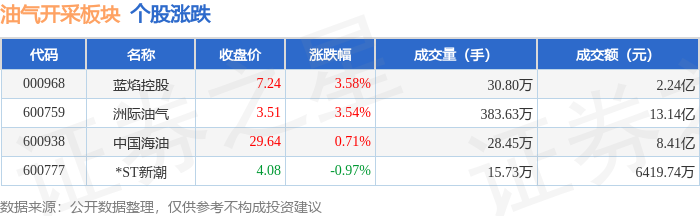
Core Viewpoint - The oil and gas extraction sector experienced a rise of 0.82% on January 20, with Blue Flame Holdings leading the gains, while the overall market indices showed slight declines [1] Group 1: Market Performance - The Shanghai Composite Index closed at 4113.65, down 0.01% [1] - The Shenzhen Component Index closed at 14155.63, down 0.97% [1] - The oil and gas extraction sector's individual stock performance included Blue Flame Holdings at 7.24, up 3.58%, and Intercontinental Oil & Gas at 3.51, up 3.54% [1] Group 2: Capital Flow - The oil and gas extraction sector saw a net inflow of 38.17 million yuan from main funds, while retail investors experienced a net outflow of 39.09 million yuan [1] - Detailed capital flow for key stocks showed Intercontinental Oil & Gas with a main fund net inflow of 68.32 million yuan, but a retail net outflow of 52.41 million yuan [2] - Blue Flame Holdings had a main fund net inflow of 1.92 million yuan, with both retail and speculative funds showing net outflows [2]



中国与欧亚地区国家:基于欧亚开发银行相互投资监测的投资流分析
Sou Hu Cai Jing· 2026-01-20 07:08
Summary of Key Points Core Viewpoint - The report analyzes the foreign direct investment (FDI) flows between China and 13 Eurasian countries, highlighting a significant growth in mutual investments despite a global decline in FDI. By mid-2025, China's cumulative direct investment in the Eurasian region is projected to reach $66.1 billion, marking a 13% increase from 2023 and nearly 80% growth over the past decade [1]. Group 1: Investment Dynamics and Trends - China's cumulative FDI in the Eurasian region reached $66.1 billion by mid-2025, with a notable increase of 13% from 2023, and a total increase of nearly 80% over the past decade [1]. - The investment is highly concentrated, with five countries—Russia, Kazakhstan, Uzbekistan, Mongolia, and Turkmenistan—accounting for 90% of the total FDI [1]. - The Central Asian region has become a key investment focus, representing 54.3% of the total, with Uzbekistan's share increasing from 1% to 16% over ten years, contributing 70% to the investment growth in Central Asia [1]. Group 2: Sectoral Structure of Investments - The industry structure of investments is diversifying, with the share of raw materials decreasing from 68% in 2016 to 54% in 2025, while manufacturing and energy sectors have increased to 22% and 12%, respectively [1]. - Initial (greenfield) investments have risen from 43% to 60%, indicating a long-term trend of Chinese companies establishing new capacities locally [1]. - The share of private enterprises in the investment structure has increased from 22% to 27%, reflecting a diversification of capital sources [1]. Group 3: Future Investment Opportunities - The most promising sectors for future investments include manufacturing, renewable energy, transportation and logistics, and agricultural industrial complexes, aligning with the development needs of Eurasian countries [2]. - Investment funding primarily relies on self-owned capital and mixed financing models, with 95% of projects depending on investors' own capital, highlighting a strong commercial orientation [2]. - Large projects span various sectors, injecting continuous momentum into regional economic development [2].

油气开采板块1月19日涨0.31%,蓝焰控股领涨,主力资金净流出5619.15万元
Zheng Xing Xing Ye Ri Bao· 2026-01-19 08:58
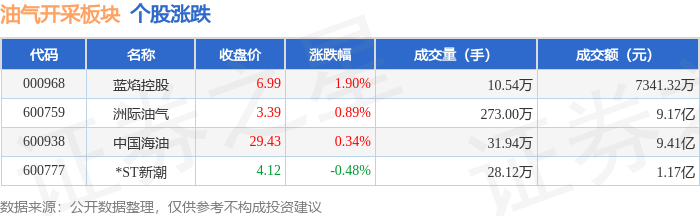
Core Viewpoint - The oil and gas extraction sector experienced a slight increase of 0.31% on January 19, with Blue Flame Holdings leading the gains. The Shanghai Composite Index closed at 4114.0, up 0.29%, while the Shenzhen Component Index closed at 14294.05, up 0.09% [1]. Group 1: Market Performance - The oil and gas extraction sector's individual stock performance is summarized in the table, with Blue Flame Holdings closing at 6.99, up 1.90%, and Intercontinental Oil & Gas at 3.39, up 0.89% [1]. - The trading volume for Blue Flame Holdings was 105,400 shares, with a transaction value of 73.41 million yuan, while Intercontinental Oil & Gas had a trading volume of 2.73 million shares and a transaction value of 917 million yuan [1]. Group 2: Capital Flow - The oil and gas extraction sector saw a net outflow of 56.19 million yuan from main funds, while speculative funds had a net inflow of 83.76 million yuan, and retail investors experienced a net outflow of 27.57 million yuan [1]. - The detailed capital flow for individual stocks indicates that Blue Flame Holdings had a main fund net outflow of 6.16 million yuan, with a speculative fund net inflow of 10.48 million yuan [2]. - Intercontinental Oil & Gas reported a main fund net outflow of 9.91 million yuan, with a speculative fund net inflow of 23.08 million yuan [2].
吉林油田建矿65年:迈向油气新能源综合发展之路
Sou Hu Cai Jing· 2026-01-19 06:47
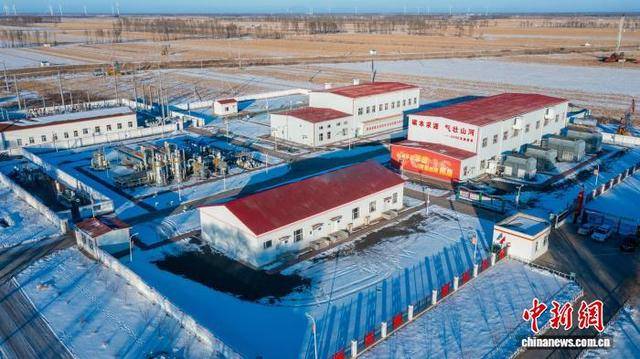
Core Viewpoint - Jilin Oilfield is transitioning from a single crude oil production base to a comprehensive energy system that includes crude oil, natural gas, and renewable energy sources, addressing challenges such as declining reserves and increasing costs [2][3][5]. Group 1: Production and Historical Context - Established in 1961, Jilin Oilfield is one of the earliest developed oil and gas fields in Northeast China, having produced approximately 198 million tons of crude oil and 28.1 billion cubic meters of natural gas over 65 years [1][3]. - The discovery of the Fuyu Oilfield in 1959 marked the end of Jilin Province's "no oil" history, leading to gradual capacity formation despite material shortages and construction constraints [3]. - The oilfield is currently facing challenges related to low permeability and low abundance reservoirs, making stable production a long-term challenge, with annual crude oil production maintained at around 3.8 million tons during the 14th Five-Year Plan period [3]. Group 2: Natural Gas Development - The discovery of the Changling Gas Field in 2005 allowed Jilin Oilfield to have large-scale natural gas resources for the first time, leading to ongoing investments in tight gas and shale gas [5]. - By 2025, natural gas production is expected to reach 1.91 billion cubic meters, contributing to market supply and regional peak shaving tasks, with the operation of the Shuangtuozi gas storage enhancing its role in winter gas supply in Northeast China [5]. Group 3: Renewable Energy Initiatives - Renewable energy is viewed as a long-term option to address resource depletion and emission reduction pressures, with Jilin Oilfield exploring the "oil and gas + renewable energy" path to lower production energy costs and reduce carbon emissions [5]. - The oilfield is leveraging wind, solar, and geothermal resources in western Jilin to develop wind power, photovoltaic, and geothermal projects, aiming for a wind-solar power generation of 1.46 billion kilowatt-hours by 2025, with green electricity accounting for over 35% of production energy [5]. - Jilin Oilfield is transitioning from a single energy consumer to a regional clean energy provider, with centralized wind power projects supplying electricity to the community [5]. Group 4: Carbon Capture and Low-Carbon Initiatives - Jilin Oilfield has established a CCUS demonstration project that captures, transports, and stores CO2 emissions from industrial sources, aiming to sequester over 4 million tons of CO2 by 2025, thereby enhancing oil recovery and reducing net emissions [7]. - The oilfield is exploring "zero-carbon" or low-carbon production models by integrating wind, solar, geothermal, and energy storage with oil and gas production systems, with some blocks achieving comprehensive clean energy substitution for production [7]. - The company aims to balance crude oil stabilization, natural gas supply, and renewable energy expansion during the 15th Five-Year Plan [7].
2025-2026年在越中企投资、税务、用工合规指引
Shang Wu Bu Wang Zhan· 2026-01-16 16:10
Investment Access - The revised Investment Law will take effect on March 1, 2026, with conditional business sector provisions applicable from July 1, 2026 [2] - The new law allows foreign investment to proceed with company establishment before obtaining licenses, except for a few sensitive sectors [2] - The scope of investment approvals has been significantly reduced, with 38 types of conditional business licenses eliminated and 20 industries having their applicability narrowed [2] - Major changes in investment scale, technology, or ownership structure during construction or operation must still be reported or re-registered [2] Tax Incentives - The Corporate Income Tax Law will be implemented on October 1, 2025, with a standard tax rate of 20% and a reduced rate of 15% or 17% for small and micro enterprises [3] - Key industries and regions can benefit from tax incentives, with a 10% tax rate for high-tech and encouraged sectors, plus potential exemptions and reductions [3] - Oil, gas, and certain mineral extraction activities will be subject to higher tax rates and will not receive the same incentives [3] Labor Policies - There will no longer be a national cap on the percentage of foreign employees; local labor authorities will approve based on company size and local hiring challenges [4] - Work permits for foreign employees can be applied for online, with electronic documents linked to passports [4] - Social security and pension contributions will be digitized, with penalties for late or non-payment starting November 30, 2025 [4] - Minimum wage standards will be adjusted based on four wage zones, effective January 1, 2026 [4] Compliance Principles - Companies should verify the industry and region of their projects in advance to maximize tax benefits [5] - Establish a comprehensive labor system that includes local hiring, foreign employee registration, and social security reporting to meet digital regulatory requirements [6] - Rely on local professional service providers to navigate regional policy differences following the decentralization of authority [7]
华创证券张瑜:2026年股票顺风依旧,难有股债双牛(附演讲PPT)
Xin Lang Zheng Quan· 2026-01-16 12:07
Group 1 - The 2026 Global and China Capital Market Outlook Forum was held on January 15, focusing on wealth logic in the AI era and the future of capital markets [1] - Zhang Yu, Chief Economist at Huachuang Securities, presented a keynote speech indicating that the stock market will continue to perform well, but a simultaneous bull market in both stocks and bonds is unlikely [2] - The stock market's trading volume is expected to remain high, but further significant increases may be challenging; the relative performance of the ChiNext board compared to the CSI 300 is becoming more difficult [2] Group 2 - The core issue in China's economic cycle is stabilizing expectations to encourage residents to stop excessive saving, which is essential for improving economic circulation [7] - The 2026 year is seen as a critical year for awakening the allocation value of the Chinese capital market, with external demand and policy support playing significant roles [5] - The forecast for GDP growth in 2026 is between 4.8% and 5.0%, with consumption growth expected to be around 4.5% to 5.0% due to the recovery of essential consumption [21][22] Group 3 - The investment growth rate is projected to rebound to 1.1% in 2026 from -3.1% in 2025, driven by central government-led investments [22] - The export sector is expected to maintain a growth rate of around 5%, benefiting from external demand and trade dynamics [25] - The consumer price index (CPI) is anticipated to turn positive in 2026, with a forecast of approximately 0.8% year-on-year growth [31]
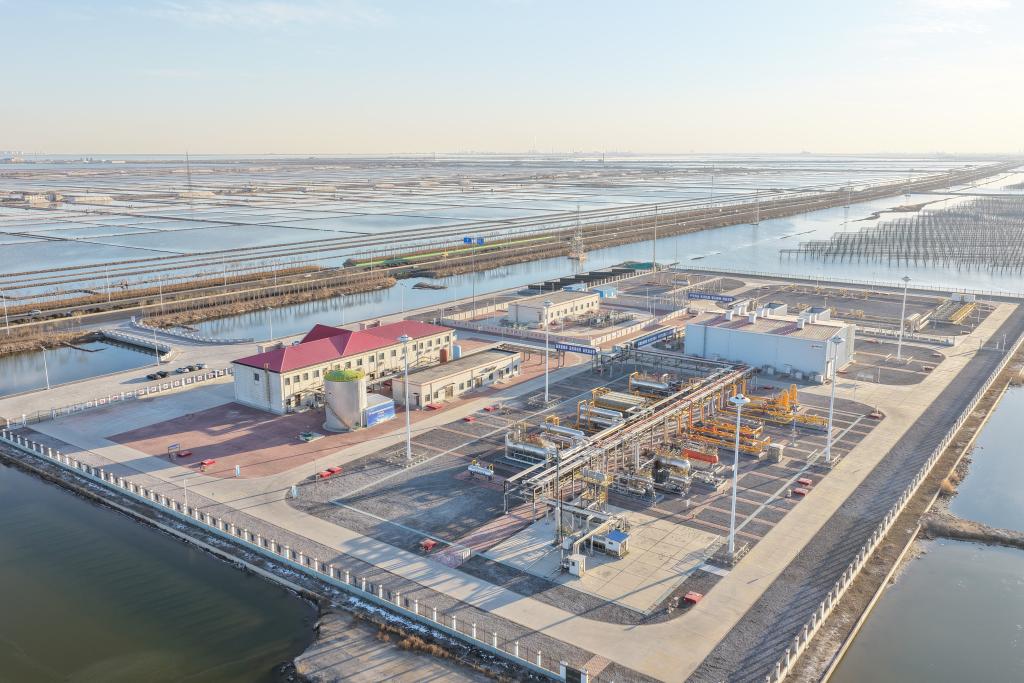
数智技术赋能大港油田储气库群保供提效
Xin Hua Wang· 2026-01-16 11:38
Core Viewpoint - The Dagang Oilfield gas storage facilities play a crucial role in ensuring natural gas supply during winter in the Beijing-Tianjin-Hebei region, achieving a daily gas extraction rate of 25 million cubic meters, which is a 5% increase compared to the same period in 2025, with digital technology being a key factor [1][3]. Group 1 - The Dagang Oilfield gas storage cluster includes multiple underground gas storage facilities such as Dazhangtuo, Bannan, and Lujuhe, serving as essential infrastructure for natural gas supply in the Beijing-Tianjin-Hebei region [1]. - A tailored strategy of "one storage, one policy; one well, one method" has been implemented to maximize the output of key wells, ensuring reliable natural gas supply for the local population [3]. - The first digital command center for gas storage has started operation this winter, integrating real-time data from over 3,000 parameters across six stations, significantly improving operational efficiency [3]. Group 2 - The construction of additional gas storage facilities, such as Banshen 37, is accelerating, with expectations that by the end of the 14th Five-Year Plan, the gas storage cluster will achieve a working gas volume of 5 billion cubic meters per extraction cycle [5]. - Dagang Oilfield aims to enhance its digital capabilities to provide robust energy support for the green and low-carbon transition in the Beijing-Tianjin-Hebei region [5].