
矿产

Search documents
8月份中国大宗商品价格指数公布 连续4个月环比上升
Yang Shi Xin Wen· 2025-09-05 03:26
Core Viewpoint - The China Logistics and Purchasing Federation reported that the commodity price index for August shows a continuous month-on-month increase for four consecutive months, indicating a stable growth trend in the commodity market and enhanced internal economic growth momentum [1][2]. Group 1: Commodity Price Index - The commodity price index for August is 111.7 points, reflecting a month-on-month increase of 0.3% [1]. - Among the 50 monitored commodities, 25 saw price increases in August, with notable rises in coke (20.1%), neodymium oxide (19.1%), and lithium carbonate (16.6%) [1]. - The black metal price index rose by 2.2%, while the non-ferrous metal price index increased by 0.2% [1]. Group 2: Sector Performance - The equipment manufacturing and high-tech manufacturing sectors continue to experience rapid growth, contributing to price recoveries in certain industries [1]. - The energy price index rebounded with a month-on-month increase of 2%, driven by peak summer energy demand and anti-involution policies [1]. - Conversely, the agricultural product price index decreased by 0.8%, and the chemical price index continued to decline by 1% [1]. Group 3: Market Outlook - According to industry experts, the ongoing effects of policies aimed at expanding domestic demand and countering involution are gradually enhancing corporate confidence and accelerating the transition of new and old growth drivers [2]. - The market demand is expected to continue expanding with the arrival of the traditional production peak in September and October, suggesting a stable and progressive development trend for the commodity market [2].
【财经分析】8月中国大宗商品价格指数(CBPI)同比上涨1.2% 系列政策促指数连续四个月正增长
Zhong Guo Jin Rong Xin Xi Wang· 2025-09-05 01:38
Core Viewpoint - The China Commodity Price Index (CBPI) for August 2025 is reported at 111.7 points, reflecting a month-on-month increase of 0.3% and a year-on-year increase of 1.2%, indicating a stable recovery in the commodity market [1][4]. Price Index Summary - The CBPI has shown a continuous month-on-month increase for four consecutive months, signaling a stable recovery in the commodity market [1][4]. - The energy price index has rebounded, reporting 98.7 points with a month-on-month increase of 2% [4][10]. - The black metal price index has continued to rebound, reaching 79.7 points with a month-on-month increase of 2.2% [4][10]. - The non-ferrous metal price index has also risen, reporting 130.4 points with a month-on-month increase of 0.2% [4][10]. - The chemical price index has declined, reporting 101.9 points with a month-on-month decrease of 1% and a year-on-year decrease of 11% [10]. - The agricultural product price index has slightly decreased to 97.1 points, reflecting a month-on-month decline of 0.8% but a year-on-year increase of 1.4% [10]. Commodity Price Changes - Among the 50 monitored commodities, 25 saw price increases while 25 experienced declines in August [8]. - The top three commodities with price increases were coke (20.1%), praseodymium oxide (19.1%), and lithium carbonate (16.6%) [8]. - The top three commodities with price declines were apples (-4.6%), methanol (-3.6%), and urea (-2.8%) [8]. Market Insights - Analysts attribute the rebound in black metal prices to the implementation of policies aimed at expanding domestic demand and reducing competition [6][7]. - The rise in energy prices is linked to the peak summer energy demand and the ongoing implementation of "anti-involution" policies [6]. - The increase in non-ferrous metal prices is influenced by expectations of interest rate cuts by the Federal Reserve and a gradual recovery in domestic demand [6]. - The decline in chemical prices is primarily due to seasonal demand weakness and a drop in international oil prices, which has weakened cost support [10]. - The mineral price index has decreased due to high temperatures and heavy rainfall affecting project construction progress and downstream demand [10].


“美国不要?那就卖给中国!”面对川普的关税惩罚,印度人很自信
Sou Hu Cai Jing· 2025-09-04 07:30
Core Viewpoint - The Indian business community is experiencing unprecedented anxiety due to the U.S. imposing high tariffs on Indian goods, which significantly impacts India's economy as the U.S. market accounts for nearly 20% of India's total foreign trade. However, there is a growing optimism that the Chinese market, with its 1.4 billion population, could potentially replace the U.S. market's position [1]. Group 1: Trade Dynamics - The bilateral trade between India and China was approximately $120 billion in 2024, representing only 2% of China's total foreign trade, indicating substantial growth potential [1]. - Modi's government has shown a proactive stance in improving relations with China, contrasting with the previous seven years of leaning towards the West, during which Modi did not visit China [2]. Group 2: Competitive Landscape - China, as a global manufacturing hub, has achieved self-sufficiency in industrial products, making it challenging for Indian manufactured goods to compete in terms of quality and price. For instance, Indian smartphone brands often rely on Chinese components, limiting their competitive edge in the Chinese market [3]. Group 3: Political and Economic Factors - India's export strengths lie primarily in agricultural and mineral products. Although China requires significant raw material imports, trade decisions are influenced by economic factors and unresolved border disputes between the two nations. Modi's actions, such as visiting Japan before a potential visit to China, suggest a complex diplomatic stance [5]. - Despite Modi's positive rhetoric towards China, India is unlikely to abandon its pro-Western foreign policy, as evidenced by substantial Western investments in India through initiatives like "Make in India" [5]. - The future of India-China trade relations hinges on three critical factors: progress on border issues, the formation of a political consensus within India, and the outcomes of U.S.-India negotiations. In the short term, the Chinese market is unlikely to fully replace the U.S. market share [6].

佳鑫国际资源(03858)发布中期业绩,股东应占亏损599.6万港元,同比收窄90.6%
智通财经网· 2025-08-31 10:39
智通财经APP讯,佳鑫国际资源(03858)发布2025年中期业绩,收入1.26亿港元,上年同期:无;公司权 益持有人应占亏损599.6万港元,同比收窄90.6%;每股基本亏损1.82港分。 集团于过往期间并未产生任何收入。集团于2025年4月开始商业生产,并于期间内开始产生收入,其乃 来自销售钨精矿。 ...
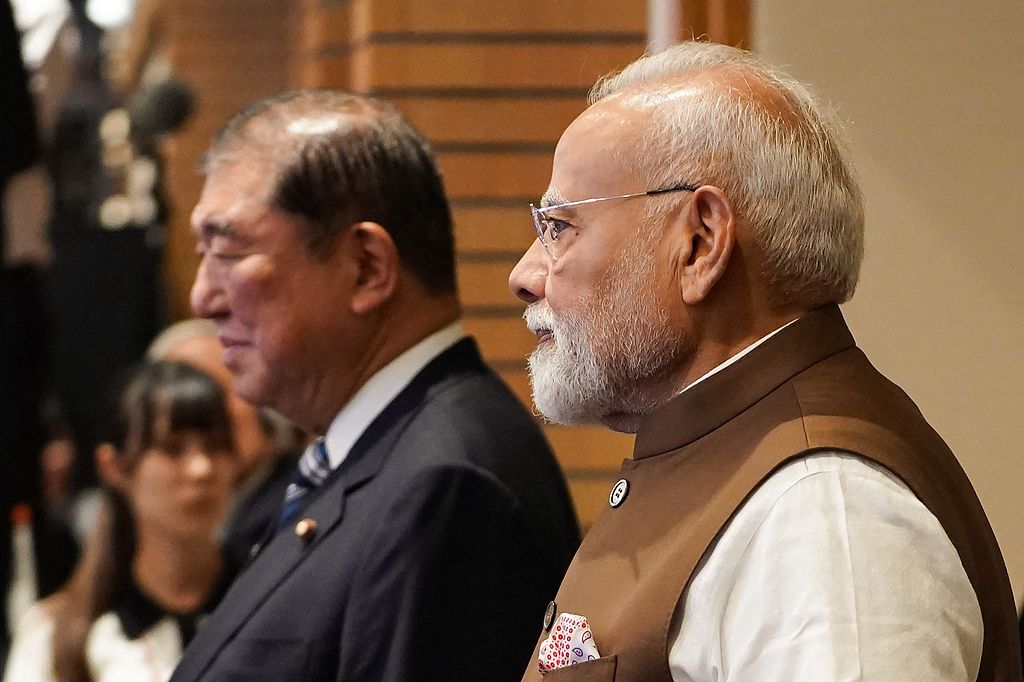
石破会莫迪,日印面对美关税重压“抱团取暖”
Huan Qiu Shi Bao· 2025-08-29 22:40
Group 1 - Japan and India are strengthening cooperation in economic investment and security, with a focus on enhancing trade and cultural exchanges [1][3] - India has secured a commitment from Japan for investments totaling 680 billion USD over the next decade, as part of an economic security agreement [1][3] - The two countries have revised the "Security Cooperation Declaration" for the first time in 17 years, emphasizing joint development of defense equipment and advanced military technologies [3] Group 2 - The collaboration between Japan and India is seen as a response to China's activities in the Indo-Pacific region, with both countries expressing serious concerns over the situation in the East and South China Seas [3] - Modi's visit to Japan and subsequent attendance at the Shanghai Cooperation Organization summit in China indicates India's strategy to balance relations among major powers [1][4] - The relationship between India and China is reportedly improving, with Modi highlighting the importance of stable bilateral relations for regional and global peace [4][5]
中美贸易战的背后,最大受益国发声:中国已取消所有反制和壁垒
Sou Hu Cai Jing· 2025-08-28 10:28
Core Insights - The article highlights that Australia has emerged as a significant beneficiary in the ongoing US-China trade war, as China has lifted trade barriers against Australian products, marking a shift in diplomatic relations [1][3][5]. Group 1: Trade Relations - After a period of strained relations, China has removed trade barriers on Australian products, including barley, wine, and beef, leading to a significant increase in exports [3][5]. - In 2023, the bilateral trade between China and Australia reached a record high of $210 billion, with South Australia’s exports to China increasing by 33% [5][11]. - Australia has not been affected by high tariffs from the US, with an average tariff of only 10%, the lowest among all trade partners, due to its critical role in the rare earth supply chain [7][9]. Group 2: Diplomatic Strategy - Australia has successfully navigated the US-China tensions by maintaining a balanced diplomatic approach, benefiting economically from China while ensuring security ties with the US [9][13]. - The strategy of not openly siding with China while still engaging in trade has allowed Australia to thrive amidst the geopolitical rivalry [9][15]. - The article suggests that Australia’s approach serves as a model for other countries, demonstrating the effectiveness of flexible diplomacy in a polarized global environment [15][19]. Group 3: Global Trade Dynamics - The ongoing US-China trade war has led to a reconfiguration of global supply chains, with Australia filling the void left by US products in the Chinese market [11][19]. - The World Trade Organization (WTO) has noted a trend towards regionalization, with third-party countries like Australia playing increasingly important roles in global trade [11][19]. - Australia’s experience reflects a broader shift among middle economies towards prioritizing multilateralism over binary alliances in the face of great power competition [15][17].
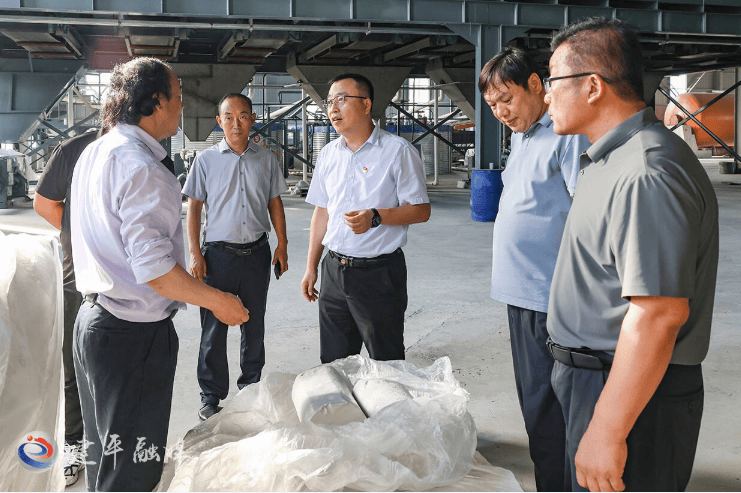
白剑锋到经济开发区调研
Sou Hu Cai Jing· 2025-08-28 08:47
Core Viewpoint - The emphasis on the "project supremacy" concept to ensure the timely production and effectiveness of key industrial projects for high-quality development [1][3] Group 1: Project Development - The county's economic development zone is identified as the main battlefield for economic construction, necessitating enhanced awareness and urgency in advancing key industrial projects [3] - Specific companies visited include YaoHui (Liaoning) Glass Technology Co., Ltd., Weike Mineral (Jianping) Co., Ltd., and Liaoning Yinhua Ceramics Technology Co., Ltd., focusing on project construction and operational conditions [3] - The need for strict adherence to timelines and proactive service to address challenges in project construction and production is highlighted [3] Group 2: Economic Growth and Innovation - Companies are encouraged to target "high-end, intelligent, and green" development directions, promoting deep integration of industrial and innovation chains [3] - The importance of technological innovation in leading industrial transformation and cultivating new economic growth drivers is emphasized [3] Group 3: Safety and Management - The necessity for strict enforcement of safety production responsibilities and meticulous management at construction sites is stressed [3] - The establishment of a safe and stable development environment for project construction and enterprise operations is prioritized [3]
截至今年7月中国对上合组织其他成员国各类投资存量超840亿美元
Ren Min Ri Bao Hai Wai Ban· 2025-08-28 00:03
Core Insights - As of July 2025, China's investment stock in other member countries of the Shanghai Cooperation Organization (SCO) is expected to exceed 84 billion USD, with cooperation expanding from traditional sectors like oil and gas to emerging fields such as digital economy and green development [1] Investment Cooperation - The scale of investment cooperation in the SCO region is continuously expanding under the high-quality construction of the Belt and Road Initiative, with deepening supply chain collaboration [1] - China has signed investment protection agreements with all member countries, and in the past year, upgraded investment agreements with Russia, Kazakhstan, and Tajikistan to enhance mutual investment protection and improve investment access levels [1] - A service trade and investment agreement was signed with Belarus, providing a solid legal foundation and guarantee for investments between China and SCO member countries [1] Trade Growth - Trade volume between China and other member countries reached a historical high, with an estimated trade amount of approximately 512.4 billion USD in 2024, reflecting a year-on-year growth of 2.7%, which is double the amount during the Qingdao Summit in 2018 [1] - In the previous year, China imported nearly 90 billion USD worth of crude oil, natural gas, and coal from other member countries, along with agricultural products worth 13.66 billion USD, with energy products accounting for about one-fifth of total imports [1] - China exported 210 billion USD worth of electromechanical products to SCO member countries, making up 63% of its total exports, contributing to the industrialization, economic transformation, and improvement of local livelihoods in member countries [1]
截至7月中国对上合组织其他成员国 投资存量超840亿美元
Zhong Guo Zheng Quan Bao· 2025-08-27 20:39
Group 1 - The 2025 Shanghai Cooperation Organization (SCO) Summit will be held in Tianjin from August 31 to September 1, 2025, highlighting the ongoing investment cooperation between China and SCO member countries [1] - As of July 2025, China's investment stock in other SCO member countries exceeds $84 billion, with cooperation expanding from traditional sectors like oil and gas to emerging fields such as digital economy and green development [1] - China has signed investment protection agreements with all member countries, including upgraded agreements with Russia, Kazakhstan, and Tajikistan, enhancing mutual investment protection and improving investment access [1] Group 2 - Trade between China and other SCO member countries reached a record high of approximately $512.4 billion in 2024, a 2.7% increase year-on-year, doubling the trade volume since the 2018 Qingdao Summit [2] - In the previous year, China imported nearly $90 billion worth of oil, natural gas, and coal from SCO member countries, with energy products accounting for about one-fifth of China's total imports [2] - The establishment of a connectivity network among SCO countries is rapidly progressing, with significant infrastructure projects like the China-Russia Tongjiang Railway Bridge and the China-Kyrgyzstan-Uzbekistan Railway [2] Group 3 - Following the Tianjin Summit, the Ministry of Commerce will send a delegation to Russia for the 24th SCO Economic Ministers' Meeting on September 6, focusing on implementing the economic outcomes from the Tianjin Summit [2] - Future regional economic cooperation within the SCO will focus on integrated trade and investment development, deepening international supply chain cooperation, and enhancing connectivity [2]
截至7月中国对上合组织其他成员国投资存量超840亿美元
Zhong Guo Zheng Quan Bao· 2025-08-27 20:17
Group 1 - The 2025 Shanghai Cooperation Organization (SCO) Summit will be held in Tianjin from August 31 to September 1, 2025, highlighting the ongoing investment cooperation between China and SCO member countries [1] - As of July 2025, China's investment stock in other SCO member countries exceeds $84 billion, with cooperation expanding from traditional sectors like oil and gas to emerging fields such as digital economy and green development [1] - China has signed investment protection agreements with all member countries, including upgraded agreements with Russia, Kazakhstan, and Tajikistan, enhancing mutual investment protection and improving investment access [1] Group 2 - Trade between China and other SCO member countries reached a record high of approximately $512.4 billion in 2024, representing a year-on-year increase of 2.7%, and is double the trade volume during the 2018 Qingdao Summit [2] - In the previous year, China imported nearly $90 billion worth of oil, natural gas, and coal from other member countries, with energy products accounting for about one-fifth of China's total imports [2] - The connectivity network between China and SCO countries is rapidly forming, with significant infrastructure projects like the China-Russia Tongjiang Railway Bridge and the China-Kyrgyzstan-Uzbekistan Railway underway [2] Group 3 - Following the Tianjin Summit, the Ministry of Commerce will send a delegation to Russia for the 24th SCO Economic Ministers' Meeting on September 6, focusing on implementing the economic outcomes from the Tianjin Summit [3] - Future regional economic cooperation within the SCO will focus on integrated trade and investment development, deepening international supply chain cooperation, and enhancing connectivity [3] - The Ministry of Commerce aims to further improve the regional economic cooperation framework by upgrading trade and investment agreements with more member countries and promoting the coordinated development of goods, services, and digital trade [3]