第三方支付

Search documents
王健林再“割肉”,中国儒意2.4亿拿下“万达弃子”是福是祸?
Guan Cha Zhe Wang· 2025-07-28 13:55
Core Viewpoint - China Ruyi's acquisition of a 30% stake in Kuaiqian Financial for 240 million yuan reflects a strategic move into the financial payment sector, amidst Wanda's financial struggles and the declining valuation of payment licenses [4][5][10]. Group 1: Transaction Details - China Ruyi's indirect wholly-owned subsidiary signed a share transfer agreement with Kuaiqian Financial, with a cash consideration of 240 million yuan, to be paid in three installments [4]. - The estimated valuation of Kuaiqian Financial is approximately 800 million yuan, and post-transaction, China Ruyi will become the largest single shareholder [4][5]. - Kuaiqian Financial is a core asset of Wanda's financial sector and was one of the first to obtain a third-party payment license from the People's Bank of China [4][6]. Group 2: Historical Context - Wanda acquired a 68.7% stake in Kuaiqian for approximately 315 million USD in 2014, but the value of the payment license has since decreased by nearly 70% [5][6]. - Kuaiqian Financial has faced management instability and regulatory challenges, including multiple fines for violations [11][12]. - The payment license is valid until May 2026, and Kuaiqian Financial's current employee count is zero, categorizing it as a micro-enterprise [6][11]. Group 3: Strategic Implications - The acquisition is seen as a pathway for China Ruyi to enter the third-party payment and fintech sectors, potentially creating synergies with its existing online streaming and gaming services [10]. - Analysts suggest that the collaboration could enhance Kuaiqian's service offerings, particularly in B2B payment scenarios, leveraging resources from China Ruyi's other business lines [11]. - However, the future profitability of Kuaiqian remains uncertain due to a shrinking market for card payment processing and the need for significant investment in compliance and risk management [11][12].


【Fintech 周报】存款利率3个月期击穿1%;黄金公司上半年业绩爆表;万达出售快钱金融30%股权
Sou Hu Cai Jing· 2025-07-28 07:51
Regulatory Dynamics - The financial industry is intensifying efforts to combat "involution" competition, with Ping An Bank's Guangzhou branch holding a meeting to promote this initiative and requiring over 2,000 employees to sign a commitment letter [1] - The Guangdong Banking Association has established a "1+3+N" system to address "involution" competition, which includes a negative list from regulatory authorities and self-regulatory measures from various business sectors [1] - The Haidian District Financial Management Bureau in Beijing has issued a risk warning against illegal fundraising under the guise of stablecoins, emphasizing that any fundraising without government approval is prohibited [1] Industry Dynamics - Bank deposit rates continue to decline, with the average interest rate for 3-month deposits dropping to 0.949%, marking a decrease of 5.5 basis points from the previous month [2] - Eight gold mining companies have reported significant profit increases, with three companies expecting net profit growth exceeding 100% and five others projecting over 50% growth [4] - CITIC Financial Assets has increased its stake in China Everbright Bank by 0.92%, raising its ownership from 7.08% to 8.00%, with an estimated investment of approximately 22.25 billion yuan [4] - Three banks in East China have reported positive earnings forecasts for the first half of 2025, with Ningbo Bank achieving a revenue of 371.60 billion yuan, up 7.91% year-on-year [4] - Public funds have increased their holdings in bank stocks by approximately 27% in the second quarter, reaching a total market value of 205.37 billion yuan [5] Corporate Dynamics - Changshu Bank is expanding its operations by absorbing three local village banks in Jiangsu Province, with plans to submit the proposal for shareholder approval [6] - JD Finance has announced a business cooperation with JD Technology Information, adhering to fair pricing principles [7] - Ping An Consumer Finance has received approval to commence credit asset securitization business, subject to regulatory compliance [7] - HSBC Life Insurance has increased its registered capital from 2.314 billion yuan to 2.676 billion yuan [7] - China Pacific Insurance has reported total managed assets exceeding 4 trillion yuan, reflecting an 11.3% growth since the beginning of the year [8] Overseas Dynamics - Indonesia's central bank reported a growth in new loan demand in Q2 2025, with a weighted net balance of 85.22%, although lower than the previous year's 89.11% [9] - Mexico's National Banking and Securities Commission has tightened credit issuance regulations for popular financial companies to mitigate credit concentration risks [10]

没收相应款项并罚款 易通金服济南违法被罚
Zhong Guo Jing Ji Wang· 2025-07-28 03:01
Group 1 - The People's Bank of China (PBOC) imposed a total fine of 1.8895 million yuan on Yitong Jinfu Payment Co., Ltd. for violations related to bank card acquiring and online payment regulations, including the confiscation of illegal gains amounting to 33,503.04 yuan and a fine of 1.856 million yuan [1] - Li Qun, the former general manager of the payment division at Yitong Jinfu, was held responsible for the violations and received a warning along with a fine of 50,000 yuan [1] - Yitong Jinfu, originally named Shandong Yikatong, was rebranded in May 2017 and is a wholly-owned subsidiary of Shandong Yitong Development Group, which is 74.13% owned by Shandong Commercial Group [1] Group 2 - Yitong Jinfu holds three payment business licenses issued by the PBOC, including prepaid card issuance and acceptance, bank card acquiring, and internet payment, making it the first company in Shandong to obtain a third-party payment license [2] - The company specializes in multi-purpose prepaid cards, acquiring, online payment, and financial derivative services, with over twenty payment and platform service products [2] - In December 2019, Yitong Jinfu was fined a total of 2.78 million yuan for failing to fulfill customer identity verification obligations and for opening anonymous or fictitious accounts [2]
中国儒意如何消化万达“弃子”
华尔街见闻· 2025-07-26 10:43
Core Viewpoint - The article discusses the acquisition of a 30% stake in Kuaiqian by China Ruyi from Wanda Group, highlighting the strategic importance of the payment license held by Kuaiqian amidst Wanda's financial struggles and the evolving regulatory landscape in the payment industry [1][2][4][30]. Group 1: Acquisition Details - China Ruyi's subsidiary Shanghai Ruyi Xingchen has signed an agreement to acquire a 30% stake in Kuaiqian for 240 million yuan, to be paid in three installments [2]. - Upon completion of the acquisition, China Ruyi will become the largest single shareholder of Kuaiqian [2]. - The acquisition is seen as a move to leverage Kuaiqian's payment license, which is crucial for expanding China Ruyi's business in various sectors [5][41]. Group 2: Kuaiqian's Value Proposition - Kuaiqian holds a third-party payment license, which is considered valuable in the current market, especially given the tightening regulations on payment institutions [3][9]. - The license allows Kuaiqian to operate in multiple payment scenarios, including internet payments and mobile payments, making it a full-license institution [6][10]. - The scarcity of nationwide payment licenses due to regulatory constraints enhances the significance of Kuaiqian's license for China Ruyi [15][17]. Group 3: Market Context and Challenges - Kuaiqian's transaction volume has significantly declined from over 2 trillion yuan in 2014 to potentially less than 1 billion yuan monthly by mid-2024, indicating operational challenges [19][22]. - The company has faced compliance issues, receiving multiple fines from the central bank for various violations [24]. - The competitive landscape for payment services remains challenging, with major players like Alipay and WeChat Pay dominating the market [10][16]. Group 4: Strategic Intent of China Ruyi - China Ruyi aims to integrate Kuaiqian's payment services with its existing businesses in film, streaming, and gaming, creating synergies [39][41]. - The acquisition aligns with China Ruyi's broader strategy to enhance its operational capabilities and expand its market presence [33][40]. - The company has previously engaged in significant acquisitions to bolster its portfolio, indicating a proactive approach to growth [34][38].

变现520亿,王健林还在卖家当
商业洞察· 2025-07-26 07:56
Group 1 - Wang Jianlin has sold a 30% stake in Kuaiqian Financial for 240 million yuan, marking a significant divestment of his financial assets [2][6][22] - Kuaiqian Financial, a licensed payment institution, was once a core asset in Wang's financial portfolio, but its value has significantly decreased from an estimated 3 billion yuan to around 800 million yuan [13][24] - This sale is part of a broader trend where Wang has liquidated over 52 billion yuan in assets, including hotels and shopping malls, to address financial pressures [7][39] Group 2 - Wang Jianlin's divestment of Kuaiqian follows the sale of 100% of Wanda Hotel Management to Tongcheng Travel for 2.49 billion yuan, indicating a strategic retreat from the hospitality sector [28][34] - The hotel management business, which includes over 200 operating hotels, has been significantly downsized, with Wang now focusing on investment properties and overseas operations [36][41] - The financial strain is evident as Wang's company faces over 43.9 billion yuan in short-term debts, with only 15.1 billion yuan in cash available [44][45] Group 3 - Wang's aggressive asset liquidation strategy aims to maintain creditworthiness, as he has not publicly defaulted on debts despite ongoing financial challenges [45][46] - Legal issues persist, with former partners like Suning and Rongchuang pursuing claims against him, adding to the financial turmoil [48][50] - Control over remaining valuable assets, such as Zhuhai Wanda Commercial Management, is gradually being relinquished as external investors gain influence [52][53]

变现520亿,王健林还在卖家当
36氪· 2025-07-25 12:46
Core Viewpoint - Wang Jianlin is selling off assets to maintain creditworthiness amid financial difficulties, with significant divestitures in his real estate and financial sectors [3][42]. Group 1: Asset Sales - Wang Jianlin announced the sale of a 30% stake in Kuaiqian Financial for 240 million yuan, with the ultimate beneficial owner being Wang himself [5][14]. - This sale is part of a broader trend, as Wang has sold over 55 Wanda Plazas and Wanda Hotels this year, generating more than 52 billion yuan in cash [9][30]. - The divestiture of Kuaiqian Financial marks a significant reduction in Wang's financial assets, as he previously invested 2 billion yuan to acquire control of the company [6][18]. Group 2: Financial Performance and Challenges - Kuaiqian Financial, once a core asset, has seen its valuation drop significantly, with its current estimated worth at 800 million yuan, down from 3 billion yuan when acquired [25]. - The company had transaction volumes exceeding 2 trillion yuan at its peak, but its market position has weakened, potentially falling out of the top ten in the industry [17][22]. - Wang's financial struggles are compounded by ongoing legal issues and debt obligations, with a total of 5 billion yuan in enforced execution against his companies [51]. Group 3: Strategic Shifts - The leadership of Kuaiqian Financial is now in the hands of Ke Liming, who has previously acquired multiple stakes from Wang, indicating a strategic shift in ownership [12][13]. - Wang's asset sales are part of a larger strategy to streamline operations and focus on core business areas, as he has divested from various sectors including hotels and financial services [39][54]. - The remaining valuable assets for Wang include approximately 200 self-owned Wanda Plazas and a 40% stake in Zhuhai Wanda Commercial Management [41].

身家一年缩水820亿,王健林又双叒叕“割肉”甩卖
3 6 Ke· 2025-07-25 10:01
Core Viewpoint - Wang Jianlin, once a prominent figure in China's real estate sector, is now engaged in a challenging asset divestment journey, highlighted by the sale of a 30% stake in Kuaiqian Financial for 240 million yuan, reflecting the company's financial struggles and the need to alleviate funding pressures [1][6]. Group 1: Company Overview - Kuaiqian Financial, established in 2004 and a key player in the payment sector, was acquired by Wanda in 2014 for $315 million, holding a 68.7% stake at that time [2][3]. - The company was once ranked fourth in the industry, with a transaction scale only behind UnionPay, Alipay, and WeChat Pay, showcasing its significant market position [2]. Group 2: Financial Challenges - The current valuation of Kuaiqian Financial is approximately 800 million yuan, indicating a substantial loss compared to the original investment, which is perceived as a "fire sale" by Wang Jianlin [3]. - Wang Jianlin's wealth has drastically decreased from 1,408.4 billion yuan to 588.1 billion yuan within a year, marking a 58% drop and a significant decline in his ranking among China's wealthiest individuals [9]. Group 3: Regulatory Issues - Kuaiqian Financial has faced multiple penalties for regulatory violations, including a fine of 10.04 million yuan in January 2022 for issues related to account management and anti-money laundering [3][5]. - Additional fines were imposed in 2023 for violations concerning fund settlements and management regulations, indicating ongoing compliance challenges [4][5]. Group 4: Strategic Moves - The divestment of Kuaiqian Financial is part of a broader strategy by Wang Jianlin to sell off various assets, including significant stakes in Wanda's core businesses, to manage financial pressures and debt obligations [1][6][7]. - Previous attempts to divest financial assets date back to 2018, indicating a long-standing strategy to streamline operations amid financial difficulties [5].
稳定币专题报告之二:稳定币有望助推人民币国际化,看好第三方支付公司
EBSCN· 2025-07-25 07:54
Investment Rating - The report maintains a "Buy" rating for the industry, indicating an expected investment return exceeding 15% over the next 6-12 months compared to market benchmarks [5]. Core Insights - Stablecoins are anticipated to drive the internationalization of the Renminbi (RMB), with significant growth in its global payment share from approximately 2% in December 2015 to an estimated 4% by December 2024, alongside a rise in cross-border payment volume from 12 trillion yuan to 64 trillion yuan [1][2]. - The global cross-border payment market is projected to reach approximately 200 trillion USD by 2024, with a compound annual growth rate (CAGR) exceeding 6% from 2024 to 2032, indicating substantial potential for RMB payment growth [2][10]. - Third-party payment institutions are expected to benefit from the increasing RMB cross-border payment scale, with the retail cross-border payment market projected to grow from 39.9 trillion USD in 2024 to 64.5 trillion USD by 2032, reflecting a CAGR of 6.2% [3][17]. Summary by Sections Section 1: Stablecoins and RMB Internationalization - Stablecoins are positioned as a key driver for RMB internationalization, leveraging decentralized architecture and offshore circulation capabilities to enhance the RMB's global usage [1][8]. - The RMB's global payment share is expected to rise significantly, supported by upgrades in cross-border clearing systems and the expansion of offshore markets [2][16]. Section 2: Global Cross-Border Payment Market - The global cross-border payment market is on a stable growth trajectory, with transaction volumes projected to reach 194.6 trillion USD by 2024, growing at a CAGR of approximately 9% from 2019 to 2024 [2][10]. - By 2032, the market is expected to expand to 320 trillion USD, with a sustained CAGR of 6.4% [2][10]. Section 3: Opportunities for Third-Party Payment Institutions - The report highlights the significant role of third-party payment institutions in the retail cross-border payment market, where B2B payments dominate with a 79% share [3][17]. - The integration of stablecoins is expected to enhance the global expansion of RMB cross-border payment infrastructure and diversify application scenarios, leading to increased revenue potential for third-party payment companies [3][23]. Section 4: Investment Recommendations - The report recommends focusing on specific companies within the A-share market, including Xinguodu, Lakala, and Newland, as well as Hong Kong-listed companies like Lianlian Digital and Yika [3][27].



中国儒意接盘万达快钱金融30%股权 后者曾被曝涉嫌为高利贷提供支付通道 因合规顽疾四年被罚超1700万
Xin Lang Zheng Quan· 2025-07-25 05:42
Core Viewpoint - China Ruyi announced the acquisition of a 30% stake in Kuaiqian Financial for 240 million yuan, aiming to diversify its fintech business and leverage Kuaiqian's resources and technology for long-term growth opportunities [1][7]. Group 1: Acquisition Details - The acquisition involves a cash payment of 240 million yuan, to be paid in three installments [1]. - After the transaction, China Ruyi will become the largest single shareholder of Kuaiqian Financial, but Kuaiqian will not become a subsidiary of China Ruyi [1]. - The valuation of Kuaiqian Financial at 800 million yuan represents a 76% decrease from the initial valuation of approximately 3.3 billion yuan when Wanda Group acquired it [7]. Group 2: Financial Performance of China Ruyi - In 2024, China Ruyi reported a revenue of 3.671 billion yuan, a slight increase of 1.2% year-on-year [2]. - The company recorded a net loss of 207 million yuan, a shift from profit, primarily due to a fair value loss of 1.121 billion yuan related to contingent liabilities [2]. - Adjusted net profit was reported at 1.151 billion yuan, marking a significant increase of 120% year-on-year [2]. Group 3: Kuaiqian Financial's Background and Compliance Issues - Kuaiqian Financial was one of the first companies to receive a third-party payment license from the People's Bank of China in 2011, focusing on comprehensive payment solutions for medium and large enterprises [3]. - The company has faced multiple compliance issues, including receiving four fines from the central bank totaling over 17 million yuan since 2022 for violations of business management regulations [1][10]. - Kuaiqian has been implicated in providing payment channels for high-interest loan platforms, raising concerns about its compliance and operational integrity [14][16]. Group 4: Wanda Group's Financial Strategy and Challenges - Wanda Group initially viewed its financial sector as a key growth area, with aspirations for its market value to exceed that of its cultural and commercial sectors [5]. - However, the group has struggled with its financial transformation, leading to significant layoffs and a shift in its financial assets, including the planned sale of Kuaiqian [5][6]. - The financial sector's challenges have prompted Wanda to seek buyers for Kuaiqian multiple times, with previous offers failing to materialize [6][8].
二度“接盘”万达资产中国儒意首次回应收购快钱逻辑
Zheng Quan Shi Bao· 2025-07-24 18:22
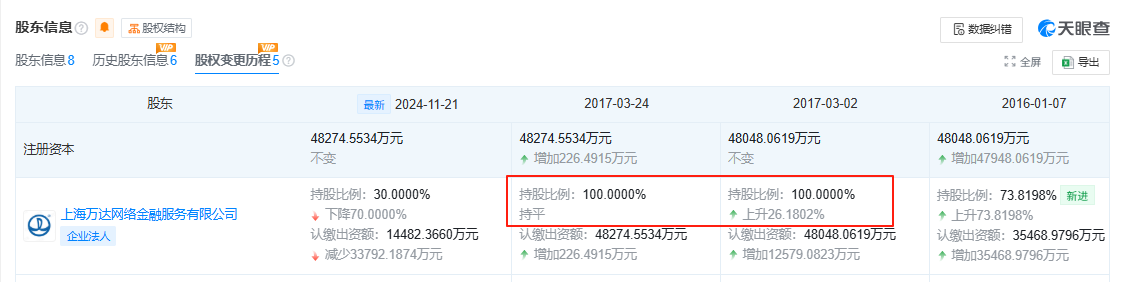
Core Viewpoint - The third-party payment platform Kuaiqian has been acquired by China Ruyi for 240 million yuan, marking its entry into the fintech sector after a series of strategic acquisitions in the entertainment industry [2][3][11]. Group 1: Acquisition Details - China Ruyi announced the acquisition of a 30% stake in Kuaiqian Financial Services for 240 million yuan, with the payment structured in three installments [3][11]. - The seller, Wanda Group, previously acquired a controlling stake in Kuaiqian for 315 million USD in 2014, holding 30% post-acquisition [3][11]. - Kuaiqian has been operating independently under Wanda's ownership, with limited management involvement from Wanda in recent years [4][11]. Group 2: Strategic Rationale - The acquisition is seen as a strategic move for China Ruyi to diversify into the fintech sector, leveraging its existing entertainment and content ecosystem [5][11]. - China Ruyi aims to enhance its platform capabilities by integrating payment solutions into its various business lines, including gaming and cinema [7][11]. - The company has a significant user base, with over 500 million users across its platforms, which could provide substantial growth opportunities for Kuaiqian [7][11]. Group 3: Future Collaboration - China Ruyi plans to maintain Kuaiqian's independent operations while participating in major decisions, including board appointments and strategic direction [7][11]. - There is potential for developing payment products tailored to entertainment scenarios, such as cinema payments and membership wallet solutions [7][11]. - Kuaiqian has initiated overseas expansion efforts, and the partnership with China Ruyi may accelerate these initiatives by providing additional resources [7][11]. Group 4: Market Context - The third-party payment license has become increasingly valuable, with multiple acquisitions in the sector, highlighting the competitive landscape [3][11]. - Kuaiqian, as one of the earliest licensed payment institutions in China, has established a foothold in various sectors, including insurance and finance [6][11]. - The acquisition aligns with regulatory encouragement for compliant and resourceful institutions to participate in the payment industry [5][11].