
连锁餐饮

Search documents
北京市市场监督管理局:已关注到西贝预制菜争议 正进一步了解相关情况
第一财经· 2025-09-15 12:34
Group 1 - The controversy surrounding the prepared dishes of the chain restaurant group Xibei continues to escalate [1] - The Beijing Municipal Market Supervision Administration has taken notice of the related information and is further investigating the situation [1] - Xibei's parent company is Inner Mongolia Xibei Catering Group Co., Ltd., with Beijing Xibei Enterprise Management Co., Ltd. as its largest shareholder [1]


北京市市场监督管理局:已关注到西贝预制菜争议 正进一步了解相关情况
Zheng Quan Shi Bao· 2025-09-15 12:25
Group 1 - The controversy surrounding the prepared dishes of the chain restaurant group Xibei continues to escalate [1] - The Beijing Municipal Market Supervision Administration has taken notice of the related information and is further investigating the situation [1] - Xibei's parent company is Inner Mongolia Xibei Catering Group Co., Ltd., with Beijing Xibei Enterprise Management Co., Ltd. as its largest shareholder [1]

罗永浩:决定放弃追究西贝
Xin Jing Bao· 2025-09-15 12:02
Core Viewpoint - The article discusses the decision of Luo Yonghao to abandon legal action against Xibei, highlighting the impact of personal pride and stubbornness on business decisions, particularly in the context of Xibei's management and practices [1][2]. Group 1: Legal Actions and Decisions - Luo Yonghao has decided to drop the planned defamation lawsuit against Xibei's founder, Jia Guolong, citing that pursuing this would be driven by personal pride and rivalry [2]. - The intention to reward Jia Guolong with 100,000 yuan for exposing Xibei's practices has also been abandoned, as it was deemed an act of emotional response [2]. - Luo has committed to assist individuals planning to file a collective lawsuit against Xibei for allegedly misleading consumers with pre-prepared dishes, indicating a focus on consumer rights [2][3]. Group 2: Consumer Rights and Industry Standards - Luo emphasizes the importance of consumer awareness regarding the use of pre-prepared dishes in restaurants, advocating for transparency rather than deception [4]. - The article mentions that a draft national standard for the safety of pre-prepared foods has passed expert review, which is expected to be implemented soon, reflecting a move towards better regulation in the industry [4]. Group 3: Impact on Media and Communication - The incident has caused a delay in the release of the podcast "Luo Yonghao's Crossroads," which will now be aired the following week, indicating the broader impact of this controversy on Luo's media engagements [5]. - Luo humorously notes that if he goes missing, it may be due to external pressures, suggesting a tense atmosphere surrounding the situation [5].

西贝道歉,但争议远未结束
Zhong Guo Xin Wen Wang· 2025-09-15 10:52
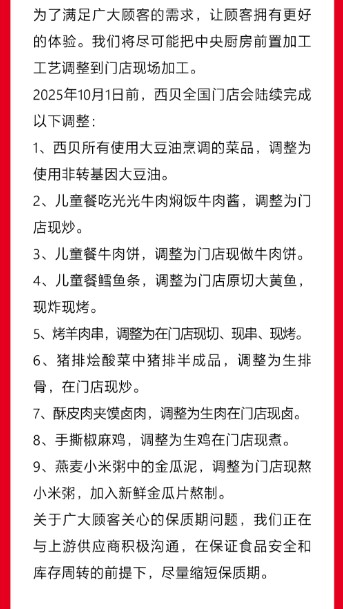
西贝道歉,但争议远未结束 中新网9月15日电(左雨晴) 在与罗永浩对峙5天后,西贝选择了道歉。 9月15日,西贝发布致歉声明,表示将尽可能把中央厨房前置加工工艺调整到门店现场加工。关于广大 顾客关心的保质期问题,西贝称正在与上游供应商积极沟通,在保证食品安全和库存周转的前提下,尽 量缩短保质期。 9月15日,西贝发布致歉声明。 值得注意的是,西贝在致歉信中,将预加工描述为"中央厨房前置加工工艺"。而罗永浩在转发致歉信 时,依然称呼西贝菜品为"预制菜"。 这意味着,即使西贝道歉,但双方在关键争议——"预制菜"的定义上,依旧寸步不让。 究竟谁对谁错? 目前,预制菜国家标准尚未出台。西贝宣称"100%无预制菜"的依据来源于2024年市场监管总局等六部 门发布的《关于加强预制菜食品安全监管 促进产业高质量发展的通知》。 《通知》明确,预制菜是以一种或多种食用农产品及其制品为原料,使用或不使用调味料等辅料,不添 加防腐剂,经工业化预加工(如搅拌、腌制、滚揉、成型、炒、炸、烤、煮、蒸等)制成,配以或不配以 调味料包,符合产品标签标明的贮存、运输及销售条件,加热或熟制后方可食用的预包装菜肴。 实际上,随着预制菜概念的兴起和 ...
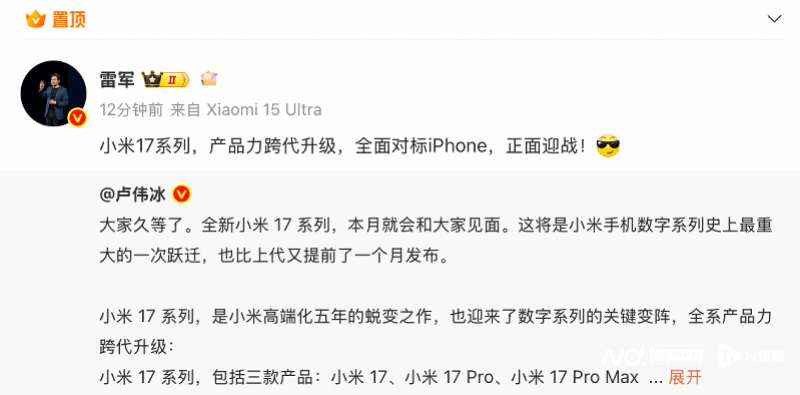
雷军:迎战iPhone!西贝道歉整改,罗永浩再炮轰;娃哈哈被抛弃?宗馥莉放大招;一天工作14小时还欠薪?美的:不实 || 大件事
Sou Hu Cai Jing· 2025-09-15 10:10
Group 1: Xiaomi's Strategy and Product Launch - Xiaomi is set to launch the Xiaomi 17 series, which includes Xiaomi 17, Xiaomi 17 Pro, and Xiaomi 17 Pro Max, this month [2] - This launch is considered the most significant update in the Xiaomi digital series, occurring one month earlier than the previous generation [3] - Over the past five years, Xiaomi has invested over 100 billion RMB in R&D, with plans to increase this investment to 200 billion RMB over the next five years [4] - Xiaomi's founder, Lei Jun, emphasized that the Xiaomi 17 series will fully benchmark against the iPhone, indicating a direct competition strategy [5] Group 2: Market Context and Competition - The iPhone 17 series has seen strong pre-sale performance, with sales volume surpassing the entire previous year's sales within the first minute of pre-sale [7] - Apple plans to produce approximately 100 million units of the iPhone 17 series, an increase from the initial estimate of 90 million units for the iPhone 16 series [8] - Xiaomi is shifting its focus in the high-end smartphone market from the 4,000 to 6,000 RMB price range to the ultra-high price segment above 6,000 RMB [9]


预制连锁餐饮没有未来
Hu Xiu· 2025-09-15 04:42
Core Viewpoint - The article discusses the implications of the pre-prepared food industry and its relationship with chain restaurants, highlighting concerns about food quality, pricing, and the future of traditional dining experiences. Group 1: Industry Dynamics - The pre-prepared food industry and chain restaurants are interdependent, suggesting a potential for a bright future if managed well [8] - Many suppliers for chain restaurants are also involved in the pre-prepared food sector, indicating a lack of diversity in food sources [2][3] Group 2: Consumer Concerns - There are significant concerns regarding food freshness and hygiene standards in the pre-prepared food industry, emphasizing the need for transparency about ingredient sources and preparation methods [9][10] - The pricing of pre-prepared meals should be standardized across different outlets to avoid consumer confusion and dissatisfaction [10] Group 3: Advertising and Marketing - The article criticizes the use of gourmet food advertising by pre-prepared food providers, arguing that it misrepresents the actual quality of the food [11] - There is a call for the industry to respect traditional dining experiences and allow space for small, local restaurants to thrive [12] Group 4: Regulatory and Operational Suggestions - The article suggests implementing more surveillance and transparency in food preparation processes to build consumer trust [15] - It argues that the perception of large cities being limited to pre-prepared food is misleading, advocating for a return to traditional dining experiences [18]
这场预制菜风波,将如何重塑购物中心餐饮生态?
3 6 Ke· 2025-09-15 02:39
Core Viewpoint - The controversy surrounding "pre-prepared dishes" initiated by Luo Yonghao and Xibei has evolved into a deep discussion within the restaurant industry, highlighting consumer rights to information and the long-standing conflict between industrialized production and consumer expectations [1][2][4]. Group 1: Consumer Rights and Trust - The public dispute between Xibei and Luo Yonghao is fundamentally a trust game concerning consumer rights, with differing definitions of "pre-prepared dishes" at the center of the argument [4][6]. - Xibei's perspective aligns with upcoming national regulations, asserting that their dishes do not qualify as pre-prepared unless fully cooked and packaged in a factory [4][6]. - Consumer perception is subjective, often equating any dish not freshly cooked on-site as pre-prepared, leading to a disconnect between expectations and reality [6][7]. Group 2: Industry Dynamics and Challenges - The debate touches on a structural contradiction in modern chain restaurants: the need for industrialized production versus consumer desire for fresh, flavorful experiences [8][9]. - Central kitchens and pre-preparation techniques are essential for operational efficiency, reducing labor costs by over 30% and increasing output efficiency by four times [8][9]. - Consumer resistance to pre-prepared dishes stems from concerns about the loss of culinary experience and the perception of value when high prices are associated with simple reheated meals [9]. Group 3: Transformation of Dining Ecosystem - The ongoing discussion about consumer rights is driving a transformation in the dining ecosystem within shopping centers, which are increasingly seen as key attractions rather than mere food providers [10][16]. - Data indicates that the proportion of dining establishments in shopping centers is projected to rise from 27.4% in 2022 to 29.5% by 2024, reflecting a shift towards more diverse and experiential dining options [10][12]. - The need for transparency in food preparation processes is becoming a critical factor for shopping centers when selecting dining brands, as consumer trust is a valuable asset [16][17]. Group 4: Future Opportunities and Strategies - Brands that emphasize fresh cooking are likely to gain traction, as the controversy creates opportunities for those committed to traditional cooking methods [18]. - Examples of brands that have successfully positioned themselves around fresh cooking include Xianlali and Fei Dazhu, which highlight their commitment to freshly prepared dishes [18]. - The industry is being compelled to find a balance between operational efficiency and consumer experience, with transparent communication being essential for building trust [18].
预制菜与中国连锁餐饮行业发展
2025-09-15 01:49
Summary of Conference Call on Prepared Dishes and the Development of China's Chain Restaurant Industry Industry Overview - The conference discusses the prepared dishes sector within the Chinese chain restaurant industry, highlighting the differences in definitions at consumer, industry, and national levels [1][2][3]. Key Points and Arguments - **Definition Discrepancies**: Prepared dishes are defined differently across various levels. National definitions exclude staple foods and dishes made in central kitchens, and prohibit preservatives [1][2]. - **Central Kitchen Benefits**: Chain restaurants utilize central kitchens to lower costs, ensure product quality consistency, standardize operations, and enhance food safety. However, initial processing or semi-finished products from central kitchens are not classified as prepared dishes under national definitions [1][3]. - **Japanese Influence**: The Japanese restaurant industry has optimized supply chains and food safety standards, establishing a robust system for central kitchens and cold chain logistics, which serves as a model for China's restaurant sector [1][4]. - **Consumer Expectations**: Chinese consumers expect healthy, safe, and innovative menu options from Chinese cuisine. Chain restaurants should enhance supply chain management, improve service levels, develop new products, and focus on brand building to meet these expectations [1][5]. - **Impact of Central Kitchens**: Central kitchens significantly influence the Chinese restaurant industry by improving efficiency and enabling standardized processes, making it easier for new brands to emerge [1][7]. - **Prepared Dishes Classification**: Prepared dishes are categorized into four types: pre-processed ingredients, ready-to-cook, semi-finished products requiring heating, and fully cooked dishes. Central kitchen products do not fall under the prepared dishes category as per the latest regulations [2][6]. - **Market Changes Post-Regulation**: Following new regulations in March 2024, which excluded central kitchen products from the prepared dishes category, consumer confidence in non-central kitchen prepared dishes declined, leading to a rebranding of some products as "quick dishes" [2][13]. Additional Important Insights - **Central Kitchen Types**: There are two main types of central kitchens: those with production licenses that can supply third-party restaurants and those that only supply their own outlets [8][12]. - **Future Trends**: The trend towards central kitchens and prepared dishes is expected to grow, especially as family sizes decrease and younger parents may prefer convenient meal options. Ensuring safety and taste will be crucial for market acceptance [16][17]. - **Technological Integration**: The use of cooking robots is anticipated to enhance the quality of prepared dishes while maintaining standardization, addressing the challenge of flavor consistency in mass production [19]. - **Profitability Comparison**: The profit margins in the Japanese restaurant industry are generally lower than those in China, suggesting that Chinese restaurants have room to balance pricing while maintaining profitability through central kitchen efficiencies [20][21].
罗永浩刚“停战” 西贝又“出事了”?
Hua Xia Shi Bao· 2025-09-15 00:50
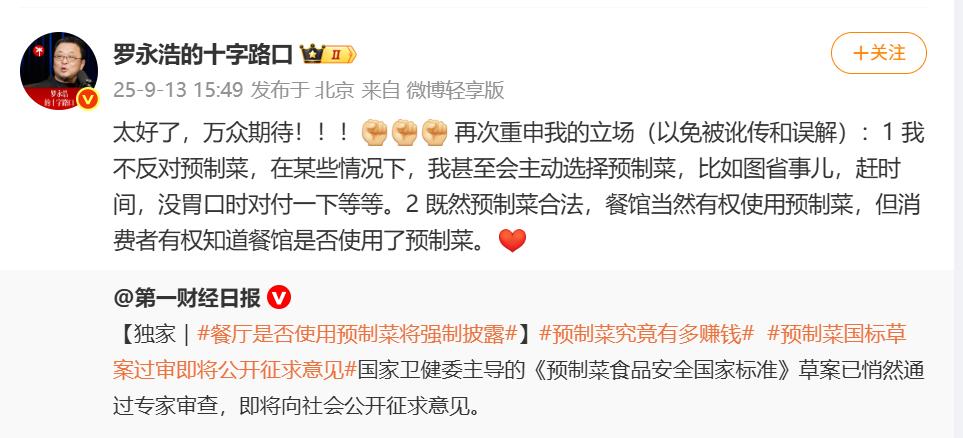
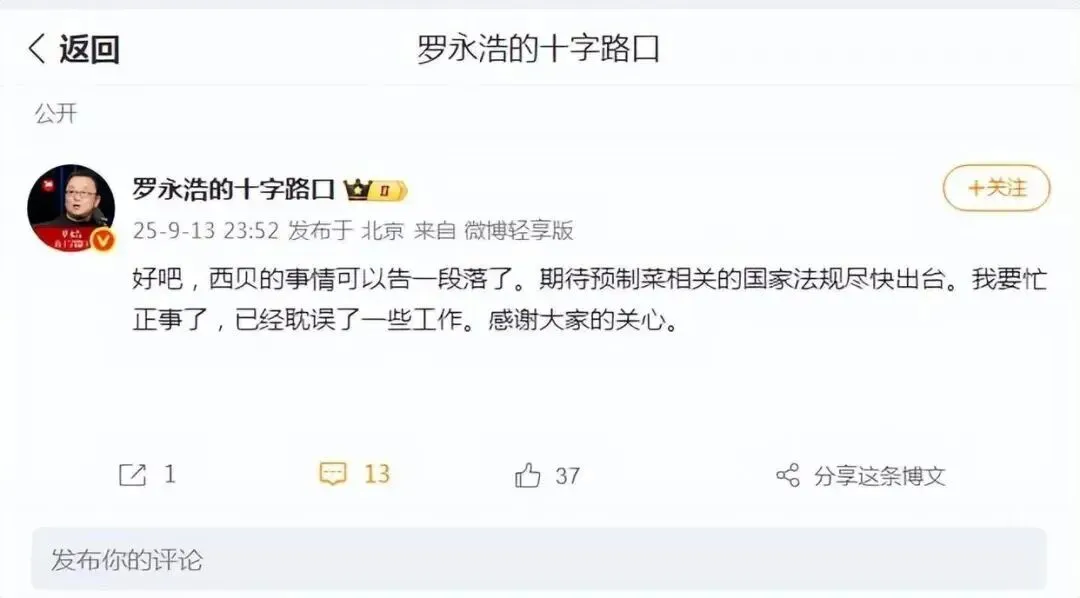
近日,西贝餐饮陷入预制菜舆论风波。 罗永浩"停战" 13日晚,罗永浩微博最新发文称西贝的事情可以告一段落了,全文如下: 好吧,西贝的事情可以告一段落了。期待预制菜相关的国家法规尽快出台。我要忙正事了,已经耽误了一些工作。感谢大家的关心。 回顾事件始末: 此前,13日下午罗永浩发微博转发媒体报道,配文称:"太好了,万众期待!!! 再次重申我的立场(以免被讹传和误解):1.我不反对预制菜,在某些 情况下,我甚至会主动选择预制菜,比如图省事儿,赶时间,没胃口时对付一下等等。2.既然预制菜合法,餐馆当然有权使用预制菜,但消费者有权知道 餐馆是否使用了预制菜。" 9月11日晚间,西贝创始人贾国龙在回应争议时明确表态,将对罗永浩提起诉讼,同时直指罗永浩此前的相关言论已对西贝的品牌声誉与经营造成极大伤 害。 当晚,对于贾国龙要起诉的言论,罗永浩在社交媒体上进行了回应。罗永浩回应称"好,来吧",并表示西贝"能把现做的菜做得全是重新加热的味道,这 肯定是高科技了"。 9月10日,罗永浩在微博吐槽知名连锁餐饮品牌西贝,称"几乎全是预制菜"。罗永浩表示:好久没吃西贝了,今天下飞机跟同事吃了一顿,发现几乎全都 是预制菜,还那么贵,实 ...
西贝“硬刚”罗永浩陷预制菜风波 日营业额降100万贾国龙道歉
Chang Jiang Shang Bao· 2025-09-14 23:09
Core Viewpoint - The controversy surrounding pre-prepared dishes (pre-cooked meals) has gained significant attention following criticism from a public figure, leading to a broader discussion about transparency and consumer rights in the food industry [1][2][3] Group 1: Company Impact - The criticism from the public figure has resulted in a noticeable decline in customer traffic, with reports indicating a drop of approximately 10% in certain locations [2][7] - The company, Xibei, reported a significant loss in daily revenue, estimating a drop of 1 million yuan on October 10 and 11, with projections of 2 to 3 million yuan on October 12 [2][7] - Xibei has committed to transparency by opening its kitchens for public viewing and providing detailed information about its food preparation processes [5][7] Group 2: Industry Trends - There are over 74,000 companies related to pre-prepared dishes in China, with 31 listed on the A-share market, and around 60% of these companies are expected to see a year-on-year decline in performance for 2024 and the first half of 2025 [1] - The National Health Commission is working on a national standard for food safety concerning pre-prepared dishes, which is expected to be publicly solicited for opinions soon [1] - The ongoing debate highlights a growing consumer demand for clarity regarding the use of pre-prepared dishes in restaurants, emphasizing the importance of consumer rights and informed choices [3][9]