
海洋渔业

Search documents
精耕深蓝 加快建设海洋强国
Xin Hua She· 2025-08-14 01:44
Core Viewpoint - The focus is on accelerating the development of a modern marine economy in China, emphasizing innovation, collaboration, and sustainable practices to build a strong marine nation [1][2]. Group 1: Marine Economic Development - China's coastline spans over 18,000 kilometers, with a vast maritime area of approximately 3 million square kilometers, serving as a strategic resource for economic development [2]. - The marine economy has evolved from traditional fishing to a comprehensive system that includes shipbuilding, marine tourism, and deep-sea resource utilization, with a projected marine GDP exceeding 10 trillion yuan in 2024, more than double that of 2012 [2]. - China's shipping and container throughput account for about one-third of the global total, with a 50% share in the offshore engineering equipment market [2]. Group 2: Technological Advancements - Significant advancements in marine technology include the launch of China's first domestically produced aircraft carrier and the successful operation of the "Fighter" manned submersible, which set a record depth of 10,909 meters [6]. - The government is focusing on enhancing innovation in marine technology, with plans to develop key technologies and promote the transformation of traditional marine industries [7]. Group 3: Sustainable Practices and Resource Management - The development of marine resources must be optimized through scientific planning and management, with recommendations for tailored strategies for different bays and enhanced assessments of resource capacity [4]. - The "blue granary" initiative aims to increase the production of high-quality marine products, with projections of 8.25 million tons of marine product output in Shandong by 2024 [8]. Group 4: Global Cooperation and Governance - China is actively participating in international marine governance, exemplified by collaborative Antarctic research involving multiple countries and the establishment of the "Ocean Decade" China Committee [9][10]. - The growth of cruise tourism is notable, with a 40.1% increase in passenger numbers in the first half of the year, reflecting the rising popularity of maritime travel [9].
精耕深蓝,加快建设海洋强国——“中国经济圆桌会”聚焦海洋经济高质量发展
Xin Hua She· 2025-08-13 05:11
Core Viewpoint - The article emphasizes the importance of high-quality development of the marine economy in China, highlighting the need for innovation, efficient collaboration, industrial upgrades, harmony between humans and the sea, and win-win cooperation [3][6][31]. Group 1: Marine Economy Development - China's marine production value is expected to exceed 10 trillion yuan in 2024, more than doubling since 2012 [6]. - The country holds approximately one-third of the global shipping volume and container throughput, with a 50% share in the marine engineering equipment market [6]. - China has maintained over 50% of the global market share in shipbuilding completion, new orders, and backlog orders in the first half of this year, with new orders at a high of 68.3% [6]. Group 2: Technological Innovation and Industry Upgrades - The article discusses the shift in marine economy from "fishing" to "strategic deep blue" development, with a complete marine industry system covering all 15 major marine industries [6]. - There is a focus on enhancing marine technology and innovation, with significant advancements in deep-sea exploration and marine scientific research capabilities [20][25]. - The government plans to implement major projects to cultivate new productive forces in the marine sector, including large-scale utilization of marine energy and the development of marine biomedicine [25][27]. Group 3: Integration and Collaboration - The article highlights the integration of marine industries with urban development, particularly in Shandong, where port construction and logistics systems are being optimized [11][13]. - It emphasizes the importance of international cooperation in marine governance, with China actively participating in global marine ecological protection and scientific research [31][34]. - The growth of cruise tourism is noted, with a significant increase in passenger numbers and cruise ship calls, reflecting the rising popularity of maritime travel [34][35].

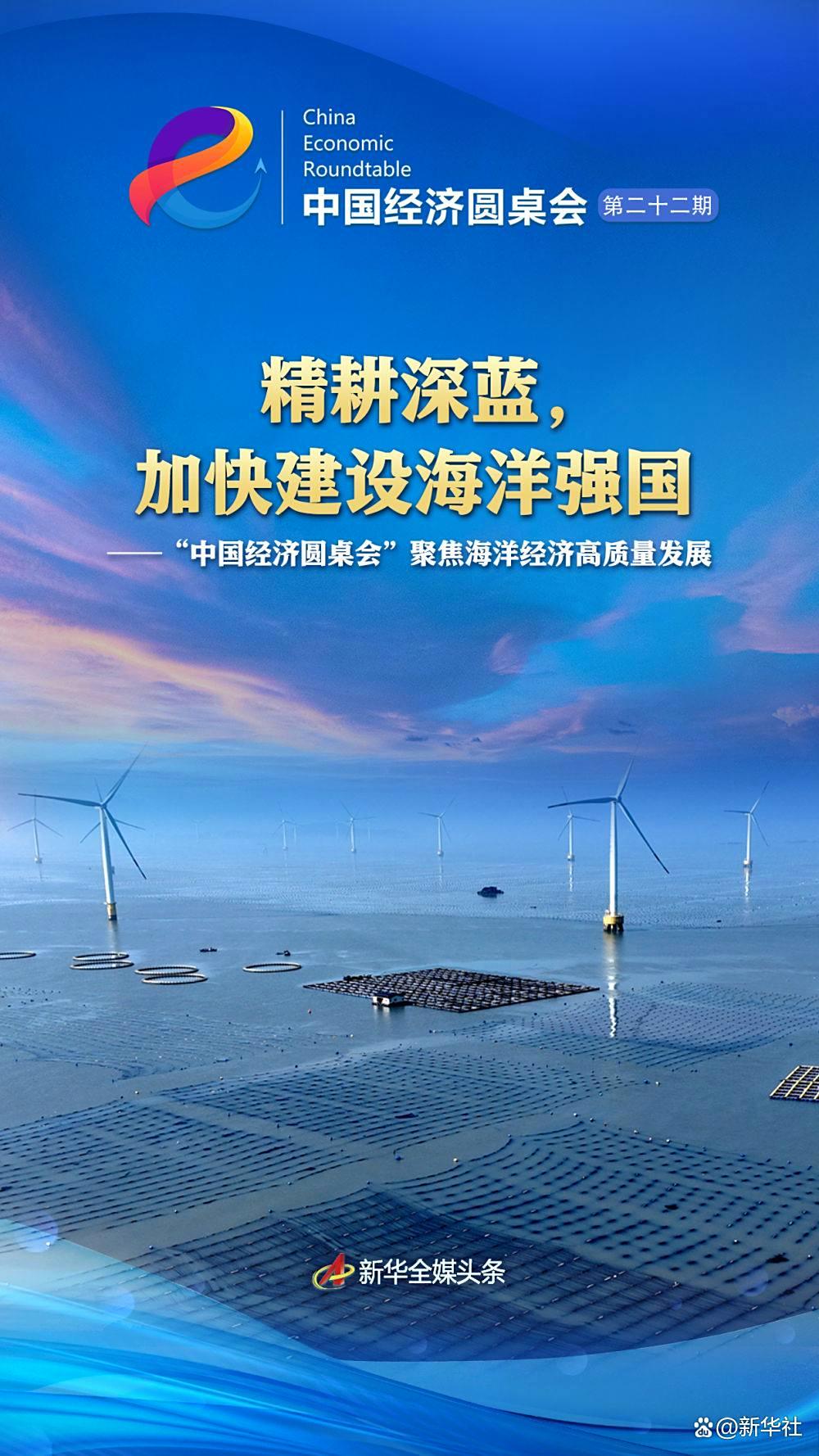
中国经济圆桌会·新华全媒头条|精耕深蓝,加快建设海洋强国——“中国经济圆桌会”聚焦海洋经济高质量发展
Xin Hua She· 2025-08-13 04:01
Core Viewpoint - The article emphasizes the importance of high-quality development of the marine economy in China, highlighting the need for innovation, efficient collaboration, industrial upgrades, and harmonious human-ocean relationships to build a strong marine nation [1][2]. Marine Economic Development - China's coastline spans over 18,000 kilometers, with a vast marine area of approximately 3 million square kilometers, serving as a strategic space and resource treasure for economic development [2]. - The marine economy has evolved from traditional fishing to a comprehensive approach that includes various sectors such as marine fisheries, shipbuilding, and deep-sea resource utilization [2]. - By 2024, China's marine production value is expected to exceed 10 trillion yuan, more than doubling since 2012, with significant shares in global shipping and marine equipment markets [2]. Integration of Marine Industries - The integration of marine industries is evident in the development of port infrastructure and the promotion of coastal industries, with projects like the construction of large-scale wind turbine blades in Shandong [3]. - Shandong aims to enhance its port services and develop high-end shipping services, transitioning from a "port cluster" to an "urban cluster" [3]. Marine Technology and Innovation - China has made significant advancements in marine technology, including the launch of its first domestically produced aircraft carrier and deep-sea exploration vehicles [5]. - The government is focusing on overcoming technological shortcomings and promoting the transformation of traditional marine industries while fostering emerging sectors like offshore wind energy and marine biotechnology [6]. Sustainable Marine Development - The article discusses the importance of sustainable marine development and global cooperation, with China actively participating in international marine governance and ecological protection efforts [8][9]. - Initiatives such as the establishment of the "Ocean Decade" China Committee and various training programs for developing countries highlight China's commitment to global marine collaboration [9]. Future Directions - The article outlines plans for the future, including the promotion of new marine production capabilities and the development of a modern marine industry system [7][10]. - Emphasis is placed on the need for tailored strategies for different marine areas and the integration of marine cities, industries, and ports to achieve high-quality marine economic development [4].
南农晨读 | 赶海
Nan Fang Nong Cun Bao· 2025-08-13 01:33
Group 1 - The third national soil survey, referred to as "Soil Three Survey," has been initiated to assess the health of soil in China after 43 years [4][5] - The internal testing and analysis work is a critical phase of the soil survey, with the accuracy of test results directly impacting the quality of the survey outcomes [8] - Guangdong province has launched the internal testing and analysis work in the second half of 2023, with a goal to complete the first round of sample testing by June 2024 and all 94,000 soil samples by December 2024 [12][13] Group 2 - The "Ning Ming Star Oil Tea" industry has been promoted through a collaborative effort between Guangdong and Guangxi, with a focus on market integration and product introduction to the Guangdong-Hong Kong-Macao Greater Bay Area [50][52] - A promotional event was held in Guangzhou to introduce the "Ning Ming Star Oil Tea" products, attracting attention from local residents and tourists [51]

珠海上新海洋牧场“样板间”:AI一键能养鱼、拎苗入住全托管
2 1 Shi Ji Jing Ji Bao Dao· 2025-08-12 23:06
Core Viewpoint - The Guangdong fishing festival is approaching, signaling the revival of the sea with numerous fishing boats heading to rich fishing grounds, alongside modern marine ranches that represent a new paradigm of energy transition in the industry [1] Group 1: Modern Marine Ranch Development - Guangdong has initiated 139 modern marine ranch projects in 2023, forming a complete industry chain that includes seedling cultivation, equipment manufacturing, feed processing, facility aquaculture, deep processing, public services, and cultural tourism [1] - Zhuhai's "Standard Sea" model employs a "1+N" cluster breeding approach, featuring a central control platform and multiple breeding units, with a total breeding water volume of 245,000 cubic meters [1][2] - By the end of this year, Zhuhai will have 12 deep-sea breeding platforms, leading Guangdong with a total breeding water volume exceeding 1.5 million cubic meters [2] Group 2: Technological Innovations and Efficiency - The introduction of smart aquaculture technologies, such as automatic feeding systems and remote diagnosis, significantly reduces labor costs and fish mortality rates [3] - The "Lingding Ranch No. 1" serves as an intelligent hub with over 1,000 monitoring points for real-time tracking of fish behavior and water quality [3] - The economic structure of the marine ranch will focus on 60% economic species, 30% mid-to-high-end species, and 10% premium products, aiming for an annual output of over 2,500 tons of fish and a revenue exceeding 90 million yuan [3] Group 3: Standardization and Replicability - The "Standard Sea" model aims to create a replicable intelligent aquaculture system, addressing the lack of standardization in domestic marine ranch construction [4][5] - The model allows for modular assembly of equipment, akin to a standardized system, facilitating the transition from project-based to industrialized deep-sea aquaculture [5] - The goal is to establish a local economic model within three years and expand the "Zhuhai Standard" to the national level, ultimately tapping into overseas markets [5] Group 4: Future Infrastructure and Challenges - Zhuhai plans to develop a comprehensive marine infrastructure system, including breeding bases and smart breeding platforms, with an expected breeding water volume exceeding 1.5 million cubic meters by the end of 2025 [6] - Challenges include supply chain bottlenecks for seedlings, vaccines, and feed, as well as market acceptance of high-quality products from deep-sea net cage farming [6]
看看咱超700亿斤的“海产库”(“十四五”,我们见证这些“第一”⑦)
Ren Min Wang· 2025-08-12 22:20
Core Insights - The article highlights the rapid development of China's marine aquaculture industry, emphasizing its role in enhancing food security and diversifying the food supply system [6][8][9] - The construction of national marine ranches and the shift towards deep-sea aquaculture are key strategies for sustainable development in the sector [7][12][16] Industry Development - Fujian Province's Ningde City is actively promoting deep-sea aquaculture, establishing a supply chain from "farming to table" to enhance economic growth [2] - Shandong Province's Rongcheng City showcases vibrant marine ranching activities, indicating a thriving aquaculture sector [4] - Guangdong Province's Maoming City has seen significant success in marine aquaculture, making it a vital economic pillar [6] Aquaculture Statistics - China has built 169 national marine ranches, with deep-sea aquaculture water volume reaching 56.6 million cubic meters and an annual output of 470,000 tons [7][17] - In the first half of the year, national marine product output increased by 4.8%, with sea farming output rising by 5.6% [7] Future Projections - By 2024, China's marine product output is expected to exceed 37 million tons, maintaining its position as the world's largest producer [8][17] - The marine aquaculture sector is projected to account for nearly 60% of global production [17] Technological Advancements - The industry is experiencing technological upgrades, including the use of intelligent deep-sea farming platforms and innovative aquaculture equipment [11][12] - Companies are investing in R&D to enhance product value, with some achieving a threefold increase in the value of abalone products through innovative processing [12] Sustainable Practices - The shift to deep-sea aquaculture is seen as a solution to alleviate pressure on nearshore resources and promote ecological balance [11][16] - The implementation of green technologies in aquaculture is aimed at reducing environmental pollution and improving resource efficiency [16]
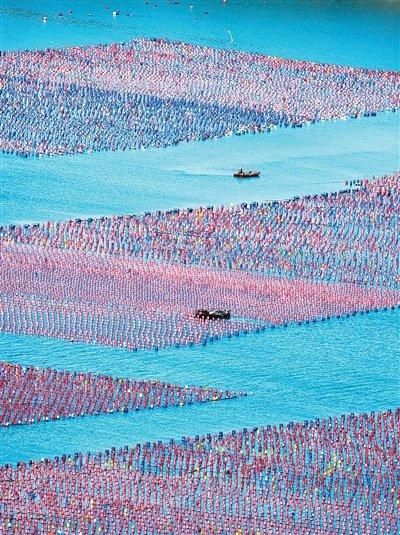
第二十三届南海(阳江)开渔季活动8月15日至17日举行
Nan Fang Ri Bao Wang Luo Ban· 2025-08-11 08:08
Core Viewpoint - The 23rd South China Sea (Yangjiang) Fishing Season will take place from August 15 to 17, featuring 13 activities, the most in its history, aimed at promoting marine culture and integrating agriculture, culture, and tourism [1][2]. Group 1: Economic Impact - The fishing season is a significant agricultural and cultural tourism event in Guangdong, boosting fisheries, coastal tourism, dining, and cultural industries [1]. - Yangjiang aims to leverage marine resources to develop industries such as marine energy, seawater aquaculture, and marine equipment, contributing to the "blue food warehouse" and accelerating blue economic growth [1]. Group 2: Marine Ranch Development - The modern marine ranch industry chain in Guangdong has been continuously improved, encompassing seed breeding, equipment manufacturing, feed protection, facility aquaculture, cold chain logistics, deep processing, and brand sales [2]. - The province has established three national advantageous characteristic industry clusters, including golden pomfret, oysters, and sea bass, promoting the development of two 20 billion-level industry chains [2]. Group 3: Event Highlights - This year's fishing season will see over 3,400 fishing boats participating, marking the highest number of boats in history, with the "Fishing Order Release" as the core event [3]. - A variety of cultural activities, including a beach music festival, world model competition, night kite festival, and fireworks show, will enhance the event's appeal, with an expected daily attendance of nearly 100,000 and tourism revenue exceeding 200 million yuan during the event [3].
土特产变身“金疙瘩” 这些乡村“量身定制”解决融资难
Sou Hu Cai Jing· 2025-08-11 02:34
Core Viewpoint - The recent measures introduced by the People's Bank of China and the Ministry of Agriculture aim to address the challenges of financing in rural areas, focusing on increasing agricultural loans and improving access to financial services for farmers [2][6]. Group 1: Agricultural Financing Initiatives - Agricultural loans in China have been continuously increasing this year, with 19 measures launched to tackle issues such as high costs and slow processing times for rural financing [2]. - In Ningxia, financial officers are actively engaging with farmers to understand their needs and provide tailored financing solutions, such as converting agricultural facilities into collateral for loans [3][4]. - The introduction of online financing products like "Funing Loan" has enabled quick access to funds for agricultural cooperatives, exemplified by a cooperative receiving a loan of 3 million yuan [4]. Group 2: Innovative Financing Models - The "Fiscal + Financial" model in Tianjin has successfully transformed local agricultural products into profitable ventures, with the introduction of specialized loans like "Sweet Potato Loan" to support farmers [6][8]. - The local government has facilitated the expansion of sweet potato cultivation, leading to a significant increase in planting area and production value, which has now surpassed 220 million yuan [8]. - In Guangdong, a differentiated credit assessment system has been established to support technological innovation in agriculture, particularly in marine industries, with a total of 275 million yuan in loans provided [9][10]. Group 3: Impact on Rural Development - The financial support has led to the construction of essential infrastructure, such as cold chain logistics, which is crucial for the marine product supply chain [10]. - The ongoing initiatives are expected to enhance the overall productivity and sustainability of agricultural practices, benefiting various sectors including deep-sea aquaculture and bio-agriculture [10].

南海将迎来开渔季 阳江预计带动旅游收入超2亿元
2 1 Shi Ji Jing Ji Bao Dao· 2025-08-08 14:16
Group 1 - The annual South China Sea (Yangjiang) fishing season event will take place on August 15, with over 3,400 fishing boats participating, marking the highest number of boats in history [1] - The event will feature 13 activities, including a beach music festival, a world model competition, and a fireworks show, highlighting the rich maritime culture and unique traditions of the local fishing community [1] - The event aims to transform the fishing season from a "single ceremony" into a comprehensive cultural and tourism festival, significantly boosting regional tourism and local economy [2] Group 2 - The fishing moratorium in Guangdong lasts from May 1 to August 16 each year, allowing marine life to recover and ensuring sustainable fishing practices [2] - In 2024, the marine fishery industry in Guangdong is projected to exceed 68 billion yuan, with a focus on modern marine ranching and aquaculture, which is expected to grow by 5.47% [3] - Guangdong has established a complete industrial chain around modern marine ranching, including breeding, equipment manufacturing, and logistics, leading to the creation of several national-level fishing port economic zones [3]
上半年海洋经济生产总值超5万亿元,多地布局海洋新经济
Hua Xia Shi Bao· 2025-08-08 13:27
Core Viewpoint - The ocean economy is emerging as a new growth point for coastal provinces and cities in China, with significant government support and policy initiatives aimed at promoting its development [2][3]. Economic Performance - In the first half of the year, China's marine GDP reached 5.1 trillion yuan, marking a year-on-year growth of 5.8% [2]. - The marine GDP is projected to exceed 10 trillion yuan in 2024, reaching 10.5438 trillion yuan, with a growth rate of 5.9%, outpacing the national GDP growth by 0.9 percentage points [3]. - Marine aquaculture production increased by 5.6% year-on-year, contributing to a 4.8% rise in marine food production [3]. Sector Highlights - The marine tourism sector saw an increase in value added to 771.8 billion yuan, growing by 8% year-on-year, with cruise tourism experiencing a surge in passenger numbers [4]. - The marine transportation sector reported a 5.2% increase in cargo volume and a 6.9% increase in cargo turnover [5]. - The marine engineering equipment manufacturing industry maintained a leading international market share, with new orders, completed orders, and hand-held orders accounting for 64.0%, 47.2%, and 57.6% of the global market, respectively [5]. Emerging Industries - There is a rapid rise in emerging marine industries, although traditional industries still dominate, with marine fisheries, coastal tourism, and marine transportation accounting for nearly 90% of the marine economy [6]. - The development of marine renewable energy, marine biomedicine, and high-tech marine equipment is expected to create significant growth opportunities [6]. Regional Developments - Various regions are actively laying out plans for marine economic development, with Hainan aiming to build a modern marine industry system by 2027 [7]. - Shanghai's marine GDP reached 1.1387 trillion yuan in 2024, growing by 11.2%, and the city is focused on developing a world-class shipbuilding and marine engineering equipment industry [8]. - Fujian province, a leader in marine production, is accelerating its investment in the marine biomedicine sector, with a new high-tech industrial park under construction [8]. Overall Outlook - The regional driving effect of the marine economy is becoming increasingly significant, with provinces like Shandong, Guangdong, and Hainan actively promoting marine economic development [9].