磷化工

Search documents
吸金额断层居首!化工板块继续猛攻,磷化工、锂电多点开花,化工ETF(516020)全天强势
Xin Lang Cai Jing· 2026-01-15 06:00
Group 1 - The chemical sector continues to show strength, with the Chemical ETF (516020) experiencing a price increase of 0.77% as of the latest update [1][9] - Key stocks in the sector include Tongcheng New Materials, which hit the daily limit, and Hongda Co., which rose over 4%, along with Guangdong Hongda and Boyuan Chemical, both up over 3% [1][9] - The Chemical ETF has seen significant net inflows, with over 3.1 billion yuan in net subscriptions in the last five trading days and a total of over 6.3 billion yuan in the last ten days [2][11] Group 2 - The Chemical ETF's underlying index has shown a cumulative increase of 46.38% since the beginning of 2025, outperforming major indices such as the Shanghai Composite Index (23.1%) and the CSI 300 Index (20.51%) [2][12] - The basic chemical sector has received a net inflow of over 134 billion yuan in a single day, leading among 30 sectors tracked by CITIC [4][11] - Historical performance of the detailed chemical index shows fluctuations, with a notable increase of 41.09% in 2025, following declines in previous years [5][12] Group 3 - The Chemical ETF (516020) tracks the CSI Sub-Industry Chemical Theme Index, with nearly 50% of its holdings in large-cap leading stocks, including Wanhua Chemical and Salt Lake Co., allowing investors to capitalize on strong market trends [6][14] - The ETF also includes exposure to various sub-sectors such as phosphate fertilizers, fluorine chemicals, and nitrogen fertilizers, providing a comprehensive investment opportunity in the chemical sector [6][14] - Investors can also access the chemical sector through the Chemical ETF linked funds (Class A 012537/Class C 012538) [6][14]





磷化工板块震荡拉升,川金诺涨超10%
Mei Ri Jing Ji Xin Wen· 2026-01-15 02:33
Group 1 - The phosphate chemical sector experienced a significant rally, with Chuanjinnuo rising over 10% [2] - Other companies such as Tianji Co., Yuegui Co., Luhua Technology, Yuntianhua, Xingfa Group, and Chuanheng Co. also saw increases in their stock prices [2]


天原股份(002386.SZ):下属马边无穷丁家磷矿现有储量2000多万吨
Ge Long Hui· 2026-01-15 00:53
Group 1 - The core point of the article is that Tianyuan Co., Ltd. (002386.SZ) has confirmed the existing reserves of its subsidiary, the Mabi Wuqiong Dingjia Phosphate Mine, to be over 20 million tons, with a designed production capacity of 900,000 tons per year [1]

贵州磷化集团 构建三大产业化路径 推动磷石膏资源化利用
Ren Min Ri Bao· 2026-01-14 22:15
Core Viewpoint - Guizhou Phosphate Group is transforming phosphogypsum from an environmental burden into a valuable industrial resource through technological innovation and investment, aiming to promote sustainable development in the phosphate chemical industry [1][8]. Group 1: Phosphogypsum Utilization - Phosphogypsum, a byproduct of phosphoric acid production, poses significant environmental challenges due to its long-term storage, which occupies land and threatens ecological balance [1]. - The company has invested over 4 billion yuan to develop three main industrial pathways for phosphogypsum utilization: building materials, co-production of sulfuric acid and cementitious materials, and municipal & packaging materials [1]. Group 2: Green Building Materials - The company has developed a new type of gypsum wall material, the high-precision interlocking module made from phosphogypsum, which enhances construction efficiency and reduces costs by simplifying the building process [2]. - This new building material offers multiple performance advantages, including fire resistance, sound insulation, and thermal insulation, making it suitable for various construction projects [3]. Group 3: Sulfuric Acid Co-production - Guizhou Phosphate Group has created a closed-loop development model utilizing phosphogypsum to produce sulfuric acid and cementitious materials, effectively recycling and adding value to this industrial byproduct [4]. - The newly established "1468" facility is expected to process 1.4 million tons of phosphogypsum annually, producing 650,000 tons of sulfuric acid and 800,000 tons of cementitious materials, thus transforming waste into a resource [4]. Group 4: Expansion Plans - To further enhance phosphogypsum consumption, the company is planning to build two additional facilities, which will increase annual phosphogypsum processing capacity by 3.4 million tons, establishing a large-scale, sustainable utilization system [5]. Group 5: High-Value Applications - The company has achieved a breakthrough in converting phosphogypsum into high-quality anhydrous gypsum using a liquid-phase crystallization process, addressing the need for higher-value applications in various industries [6]. - The high-quality anhydrous gypsum exhibits superior properties, including low impurity levels and high whiteness, making it suitable for use in plastics, coatings, textiles, and packaging [7]. Group 6: Future Outlook - Guizhou Phosphate Group aims to continue leveraging technological innovation and collaborative efforts across the industry to drive high-quality development in the phosphate chemical sector and contribute to carbon neutrality goals [8].
谁是中西部非省会龙头?新挑战者来了
Mei Ri Jing Ji Xin Wen· 2026-01-14 14:23
Core Insights - Yichang aims to achieve a GDP of 1 trillion yuan within five years, positioning itself as a leading city in the central and western regions of China [2][3][9] Economic Growth - Yichang's GDP reached 619.11 billion yuan in 2024, surpassing Xiangyang and becoming the second-largest city in Hubei [2][3] - The city reported a GDP growth rate of 7% year-on-year in the first three quarters of the previous year, ranking first among the top 50 cities in China [2][3] - The government projects a GDP growth of approximately 6.5% for 2025, maintaining a trend of rapid growth [2][3] Industrial Transformation - Yichang's economic growth is driven by a comprehensive transformation of its chemical industry, with the proportion of fine chemicals rising from 18.6% in 2021 to 47.8% [5] - The city is transitioning from traditional chemical industries to modern sectors such as new materials, health, and high-end equipment [5][10] Phosphate Chemical Industry - Yichang holds 15% of China's phosphate resources, ranking second among the eight major mining areas, with over 4 billion tons of reserves [12] - The city aims to establish a world-class phosphate chemical circular industry cluster, focusing on high-value sectors like battery materials and electronic-grade chemicals [13][14] Transportation Infrastructure - The construction of the Three Gorges Waterway New Channel is expected to enhance Yichang's logistics capabilities, reducing costs and improving connectivity with major cities like Wuhan and Chongqing [21][24] - Yichang's port is projected to handle 149 million tons of cargo in 2024, surpassing Wuhan and becoming the largest port in Hubei [21][24] Strategic Positioning - Yichang is identified as a key strategic point in Hubei's development plan, aiming to become a high-quality manufacturing and logistics hub [22][24] - The city is positioned to leverage its transportation advantages to transition from a "traffic hub" to a "value hub," enhancing both industrial and urban quality [24]

云南多部门解读产业强省路线图 力争2027年工业总产值破2万亿元
Zhong Guo Xin Wen Wang· 2026-01-14 11:44
Core Insights - The "Action Plan" aims for Yunnan Province to achieve an industrial output value exceeding 2 trillion yuan by 2027, with a focus on developing a modern industrial system and addressing key industry challenges [1][2]. Group 1: Industrial Development Goals - The plan sets a target for the industrial output value to surpass 2 trillion yuan by 2027, with a 3% increase in the share of non-tobacco and non-energy industries within the total industrial output [1]. - By 2030, Yunnan aims to establish itself as a significant base for clean energy, strategic non-ferrous metal industries, modern ecological agriculture, and a world-renowned tourism destination [1]. Group 2: Key Industry Focus Areas - The "Action Plan" outlines a "4+5+6" industrial development strategy, focusing on four resource-based industries (green aluminum, silicon photovoltaic, phosphorus chemical, and non-ferrous and precious metals), five advantageous industries (highland characteristic agriculture, cultural tourism, green energy, tobacco, and modern logistics), and six breakthrough areas (biomedicine, new materials, advanced equipment manufacturing, digital economy, low-altitude economy, and biomanufacturing) [2]. - Yunnan's energy sector is highlighted as a key strength, with plans to increase clean energy capacity to over 90% of total installed capacity by 2027, aiming for 180 million kilowatts of installed power by the end of 2025 [2]. Group 3: Technological and Agricultural Innovation - The plan emphasizes the integration of technological innovation with industry, focusing on enhancing strategic emerging industries and supporting biopharmaceutical development and modernization of traditional medicine [2]. - In agriculture, the strategy includes enhancing the quality and efficiency of highland characteristic agriculture through a comprehensive approach that integrates technology, sustainability, quality, and branding [2]. Group 4: Tourism Development - Yunnan is leading the initiative for "Travel and Residence in Yunnan," aiming to strengthen brand promotion and innovate product offerings to enhance its tourism appeal [3].
化工龙头ETF(516220)盘中涨超1%,行业供需格局引关注
Mei Ri Jing Ji Xin Wen· 2026-01-14 06:23
Core Viewpoint - The anti-involution policy is expected to reassess the Chinese chemical industry, leading to a significant slowdown in global chemical capacity expansion [1] Group 1: Industry Outlook - The Chinese chemical industry has abundant net operating cash flow, and the slowdown in capacity expansion will significantly enhance potential dividend yields, shifting the industry from a capital consumption model to a profit return model [1] - Supply-side optimization is anticipated to drive a rebound in industry prosperity, with chemical stocks exhibiting high elasticity and high dividend advantages [1] - Key areas of focus include petrochemicals, coal chemicals, organic silicon, phosphate chemicals, and glyphosate [1] Group 2: Opportunities and Trends - The industry presents four major opportunities: low-cost expansion, improvement in prosperity, breakthroughs in new materials, and high-dividend stocks [1] - The chromium salt industry is experiencing a value reassessment due to increased power demand from AI data centers and commercial aircraft engine demand, with a projected supply-demand gap of 340,900 tons by 2028, representing a 32% gap ratio [1] Group 3: Investment Index - The chemical leader ETF (516220) tracks the sub-sector chemical index (000813), which selects listed companies focused on the manufacturing of fertilizers, pesticides, and plastic products to reflect the overall performance of related listed companies in the chemical industry [1] - This index features cyclical and growth characteristics, concentrating on investment opportunities within the chemical sub-sectors [1]
谁是云南下一个千亿产业?“十五五”产业强省行动计划出炉
Xin Lang Cai Jing· 2026-01-13 12:34
Core Viewpoint - The Yunnan Provincial Government has issued an "Action Plan" aimed at accelerating the construction of a modern industrial system, targeting an industrial output value exceeding 2 trillion yuan by 2027, with a focus on enhancing the proportion of non-tobacco and non-energy industries in the overall industrial structure by approximately 3 percentage points [1] Group 1: Resource-based Industries - The plan emphasizes strengthening resource-based industries, particularly in green aluminum, silicon photovoltaic, phosphorus chemical, and non-ferrous and precious metals sectors [2] - By 2027, the aluminum alloy rate is expected to reach around 80%, with the green aluminum industry chain's output value projected to be approximately 250 billion yuan [2] - The phosphorus chemical industry aims for an output value of 100 billion yuan, with a target of over 80% for the comprehensive utilization rate of phosphogypsum [2] - The non-ferrous metal industry is projected to exceed 550 billion yuan in output value, with a production target of over 10 million tons for 10 types of non-ferrous metals by 2027 [2] Group 2: Characteristic Advantage Industries - The plan identifies five key sectors for enhancing characteristic advantage industries: highland characteristic agriculture, cultural tourism, green energy, tobacco, and modern logistics [3] - By 2027, the total output value of agriculture, forestry, animal husbandry, and fishery is expected to exceed 720 billion yuan [3] - The tourism sector aims for total spending of 1.4 trillion yuan, with the tourism industry's added value accounting for over 8% of regional GDP [3] - The green energy sector targets an installed power capacity of 180 million kilowatts, with clean energy accounting for 90% of the total [3] - The tobacco industry aims for an output value of 192 billion yuan by 2027 [3] - The logistics sector targets over 220 national A-level logistics enterprises and a total social logistics volume of around 6 trillion yuan [3] Group 3: Strategic Emerging and Future Industries - The plan outlines the development of six strategic emerging industries: biomedicine, new materials, advanced equipment manufacturing, digital economy, low-altitude economy, and biomanufacturing [4] - The biomedicine sector aims for revenue of 350 billion yuan by 2027 [4] - The new materials industry is projected to exceed 120 billion yuan in output value [4] - The renewable battery sector targets an output value of over 40 billion yuan, while advanced equipment manufacturing (excluding electronics) aims for over 100 billion yuan [4] - The digital economy's core industry revenue is expected to reach 320 billion yuan [4] - The low-altitude economy is projected to achieve a scale of over 20 billion yuan by 2027 [4] Group 4: Policy Measures - The action plan proposes policy measures focusing on strengthening technological empowerment, optimizing the development environment, deepening open cooperation, and enhancing support and guarantees [5] - It emphasizes the need for region-specific development of local advantages and characteristic industries while accelerating breakthroughs in non-tobacco and non-energy industries [5]
突破“四千亿量级”,贵阳“第一支撑”名副其实!
Sou Hu Cai Jing· 2026-01-13 08:27
Core Insights - The article emphasizes the transformation of Guiyang and Gui'an into a significant growth hub in Southwest China, driven by industrial change and open innovation, marking a new era of high-quality development [1][4]. Industrial Development - Guiyang and Gui'an's industrial economy has undergone a profound transformation, with total industrial output surpassing 400 billion, and the industrial value-added crossing the 100 billion mark, contributing over 31% to economic growth [4]. - Traditional industries like phosphate and aluminum processing are evolving towards high-end, refined production, while new industries such as new energy batteries and vehicles are rapidly developing, showcasing local supply chain capabilities [4][6]. - The region's industrial ecosystem includes leading enterprises with annual outputs exceeding 10 billion, specialized small giants, and numerous industrial entities, indicating a vibrant industrial landscape [6]. Open Economy - Guiyang and Gui'an have actively broken geographical constraints to enhance their open economy, becoming a crucial logistics and trade hub connecting ASEAN and Eurasia [7][9]. - The establishment of the Guiyang International Land Port and multiple international freight routes has significantly reduced logistics costs and improved global connectivity [7]. - High-level open innovation platforms and comprehensive bonded zones have attracted foreign trade and fostered industrial clustering, transitioning from a "channel economy" to an "industrial economy" [9]. Innovation and Digital Transformation - The region's industrial competitiveness is increasingly driven by innovation, with a focus on integrating technological advancements into traditional industries [10][11]. - Guiyang is recognized as a pilot city for the digital transformation of small and medium-sized enterprises, promoting the integration of digital technologies with traditional industries [11]. - The emphasis on green development is evident, with significant reductions in energy consumption and the emergence of national-level green factories, aligning economic growth with ecological protection [11]. Urban and Industrial Synergy - The development of industries has led to an influx of talent, capital, and technology, enhancing urban infrastructure and public services, which in turn supports further industrial upgrades [12]. - The continuous inflow of residents and the improvement of the urban environment are indicative of a positive cycle where industry drives urban development and vice versa [12]. Future Outlook - Guiyang and Gui'an are positioned to leverage their industrial advantages to enhance supply chain resilience and participate more deeply in global value chain restructuring [15]. - The region's future potential lies in its ability to foster core technologies and business models that define the future of industries [15].
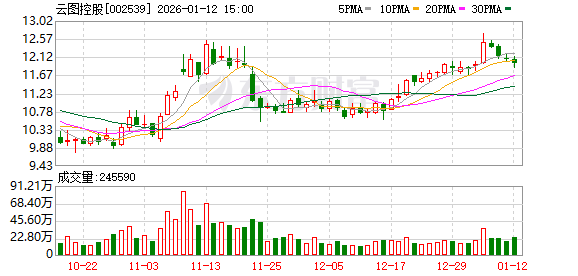
云图控股:雷波牛牛寨东段磷矿储量达1.81亿吨,设计采矿规模为400万吨/年,属于大型矿山
Mei Ri Jing Ji Xin Wen· 2026-01-13 01:02
Group 1 - The core viewpoint of the article is that Yuntu Holdings (002539.SZ) is progressing with the construction of the Niuniuzhai East Section phosphate mine, which has a reserve of 181 million tons and a designed mining scale of 4 million tons per year, but the complex geological conditions are leading to a longer construction period [1] - Since the start of construction in August 2023, the company has completed part of the shaft construction, equipment transportation system setup, and power supply system, and is currently advancing the tunnel excavation project in an orderly manner [1] - To enhance the comprehensive utilization level of the phosphate mine, the company plans to optimize the mining scheme in the first half of 2025 and will invest funds according to the actual engineering milestones [1] Group 2 - The total planned investment for the Niuniuzhai East Section phosphate mine is 2.528 billion, and since the start of construction, approximately 28.81% of the total investment has been made, with 0.1 million expected to be invested in the first half of 2025 [3] - There are concerns regarding the pace of project construction, with questions raised about whether the project will be completed by 2030 based on the current investment ratio [3] - The company is urged to provide updates on the investment progress and production timeline in future announcements [1]