工业机器人

Search documents
2025年进出口总值创历史新高,连续9年实现增长——中国外贸展现韧性与活力
Xin Hua Wang· 2026-01-16 23:47
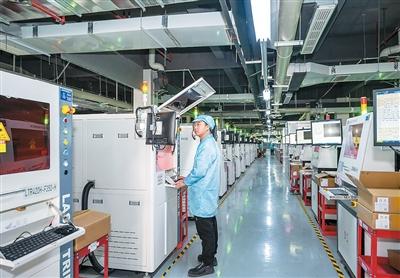
Core Insights - In 2025, China's foreign trade maintained stable growth despite external pressures, with total import and export value reaching 45.47 trillion yuan, a year-on-year increase of 3.8% [4][5] - High-tech product exports grew by 13.2%, contributing 2.4 percentage points to overall export growth, with significant increases in specialized equipment, high-end machine tools, and industrial robots [5][6] - China has become the world's second-largest import market for 17 consecutive years, with imports reaching a historical high in 2025 [7][8] Group 1: Trade Performance - In 2025, China's exports amounted to 26.99 trillion yuan, up 6.1% year-on-year, while imports reached 18.48 trillion yuan, a 0.5% increase [4] - The import growth trend has been consistent, with a notable acceleration in December 2025, where the growth rate reached 4.4% [8] - The successful hosting of the 8th China International Import Expo resulted in a record number of participating companies and an intended transaction amount exceeding 800 billion USD [8] Group 2: Sectoral Highlights - Exports in the green energy sector saw significant growth, with lithium batteries and wind turbine exports increasing by 26.2% and 48.7%, respectively [6] - The export of electric motorcycles and bicycles grew by 18.1%, while railway electric locomotives saw a 27.1% increase [6] - Traditional industries are also evolving, with innovations such as desert air conditioners and culturally integrated ceramics gaining traction in international markets [5] Group 3: Trade Partnerships - China's trade partnerships have expanded, with over 160 countries and regions now considered major trading partners, an increase of more than 20 since 2020 [9] - Trade with ASEAN countries has deepened, and trade with Central Asian nations has surpassed 100 billion USD [9][10] - In 2025, trade with countries involved in the Belt and Road Initiative reached 23.6 trillion yuan, growing by 6.3%, which is higher than the overall foreign trade growth rate [10]

一年亏掉8亿,国产「机器人一哥」豪赌港股
Feng Huang Wang Cai Jing· 2026-01-16 23:38
Core Viewpoint - Nanjing Estun Automation Co., Ltd. (Estun), a leading domestic industrial robot manufacturer, has restarted its IPO process on the Hong Kong Stock Exchange after submitting a second application [1][2]. Group 1: Company Overview - Estun was founded in 1993 and went public on the Shenzhen Stock Exchange in 2015. As of January 16, its market capitalization reached 22.202 billion RMB [2]. - According to Frost & Sullivan, Estun is projected to rank sixth globally among industrial robot manufacturers in terms of revenue in 2024, and it is expected to surpass foreign brands in domestic market shipments in the first half of 2025 [2]. Group 2: Financial Performance - Estun reported a net loss of 818 million RMB in 2024, marking its largest historical loss, compared to a net profit of 184 million RMB in 2022 [8][10]. - Revenue for 2024 decreased by 13.83% to 4.009 billion RMB, with a significant decline in gross profit margin from 32.9% in 2022 to 28.2% in the first nine months of 2025 [10][13]. - The company achieved a net profit of 29.0039 million RMB in the first three quarters of 2025, indicating a weak recovery [13]. Group 3: Customer Concentration - Estun's revenue dependency on its top five customers surged from 16.4% in 2022 to 37.2% in the first nine months of 2025, with the largest customer contributing 18.0% of total revenue [15]. - This high customer concentration poses a risk to the company's revenue stability, as changes in procurement strategies or relationships with major clients could lead to significant revenue fluctuations [15]. Group 4: Financial Health - As of September 30, 2025, Estun's current liabilities net amount reached 171 million RMB, with a current ratio of 0.97 and a quick ratio of 0.73, indicating short-term debt repayment pressure [18]. - The debt-to-equity ratio increased from 0.96 in 2022 to 2.28 in the first nine months of 2025, highlighting rising financial leverage and associated risks [20]. - Inventory turnover days increased from 138 days in 2022 to 194 days in 2024, reflecting high capital occupation pressure [20]. Group 5: Shareholder Risks - The company's controlling shareholder, Wu Bo, has pledged 11 million A-shares for financing, with the pledge starting on May 30, 2025, and maturing on May 14, 2026. However, it is stated that this will not lead to a change in control or adversely affect company governance [21].


【每周经济观察】工业机器人净出口国带来的启示
Jing Ji Ri Bao· 2026-01-16 22:36
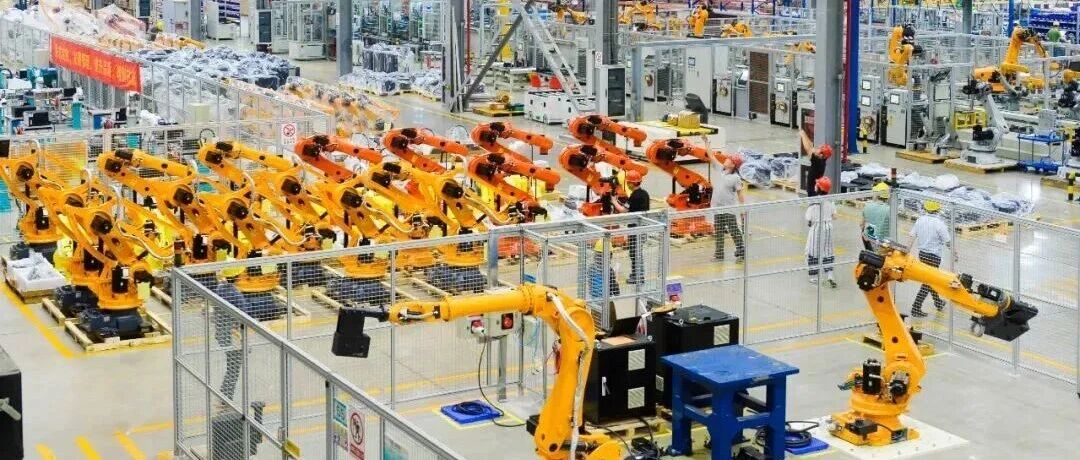
Core Viewpoint - China's industrial robot exports surpassed imports for the first time in 2025, with a year-on-year growth of 48.7%, marking the country as a net exporter of industrial robots [2] Group 1: Industry Overview - The transition to a net exporter of industrial robots signifies a fundamental change in China's manufacturing competitiveness and its ascent in the global value chain [2] - Industrial robots are considered the "jewel in the crown" of manufacturing, with significant industry-wide effects [2] - Historically, countries like Japan and Germany dominated the high-end industrial robot market, but China has shifted from being the largest consumer to a net exporter, reflecting its enhanced manufacturing capabilities [2] Group 2: Technological and Systemic Advancements - The rise of China's industrial robot industry is attributed to the optimization and upgrading of the entire manufacturing ecosystem rather than a single technological breakthrough [3] - Chinese companies have developed a complete and self-controlled supply chain, enabling them to offer standardized products and tailored smart manufacturing solutions that meet local industry needs [3] - The diverse application scenarios in China, covering nearly all current industrial robot applications, have fostered rapid technological iterations in response to market demands [3] Group 3: Collaborative Innovation and Market Dynamics - The rapid development of China's industrial robot industry is a result of collaborative innovation across the industry chain, achieving a balance between performance enhancement and cost control [4] - The integration of artificial intelligence into manufacturing processes is expected to create greater value for customers [4] - China's industrial robot sector exemplifies the broader trend of the foreign trade industry accelerating the cultivation of new competitive advantages [4] Group 4: Future Outlook and Strategic Shifts - The World Trade Organization predicts a more complex global trade environment, necessitating the reconstruction of China's foreign trade advantages for high-quality development [5] - China's status as a net exporter of industrial robots reinforces the commitment to three strategic shifts: from demographic dividends to "engineer dividends," from market-driven technology acquisition to "technology creating markets," and from being participants in the global supply chain to "supply chain reshapers" [5]

一年亏掉8亿,国产“机器人一哥”豪赌港股
凤凰网财经· 2026-01-16 15:42
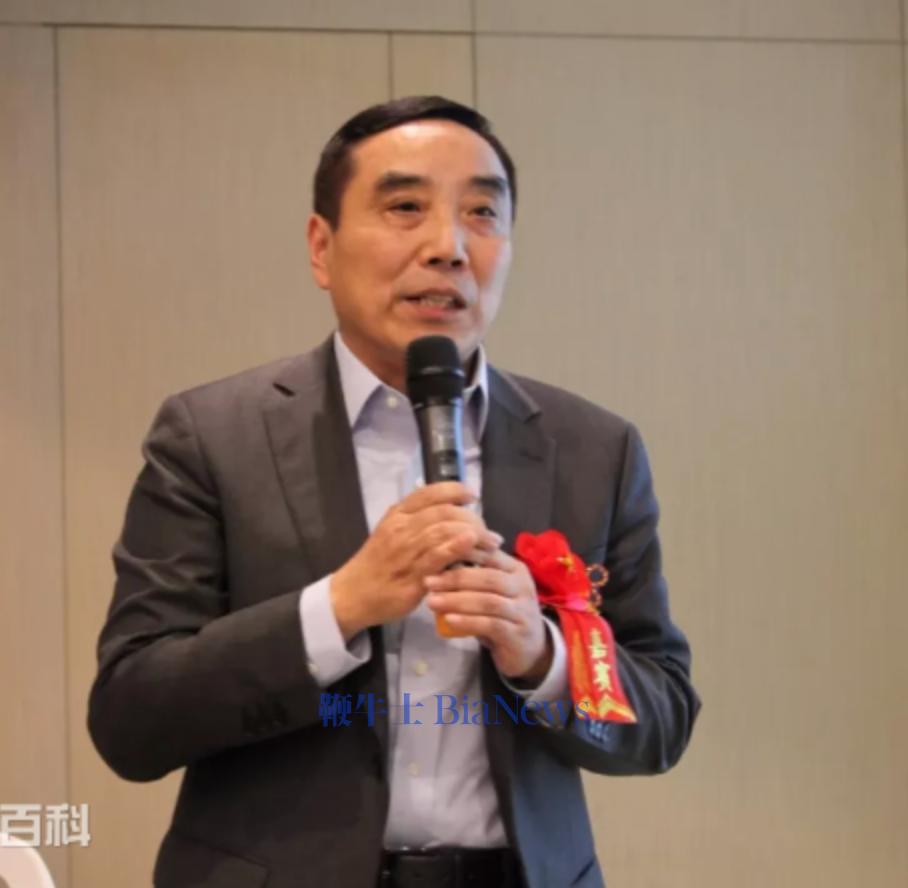
以下文章来源于凤凰网股票 ,作者IPO观察哨 凤凰网股票 . 凤凰网股票,价值投资者家园。凤凰网股票为全球华人投资者提供24小时权威、独到的市场资讯和行情产品,并始终关注中国资本市场的发展与变化。 来源丨凤凰网财经《IPO观察哨》 凤凰网财经《IPO观察哨》梳理发现,埃斯顿成立于1993年,2015年在深交所上市。截至1月16日收盘,其市值达222.02亿元。 另据弗若斯特沙利文数据,公司2024年收入位列全球工业机器人厂商第六;2025年上半年,其国内市场出货量首次超越外资品牌,连续多年保持本土第 一。公司业务主要覆盖汽车、工程机械、锂电等制造领域,提供全产业链解决方案。 天眼查显示,埃斯顿实控人为72岁的创始人吴波,大股东为南京派雷斯特科技有限公司(以下简称"派雷斯特"),而派雷斯特的收益所有人也是吴波。 《胡润全球富豪榜》显示,吴波财富从2023年的110亿元缩水至2025年的95亿元。 (埃斯顿自动化集团董事长吴波,图源:百度百科) 尽管埃斯顿凭借全产业链布局和出货成绩巩固了行业地位,但在冲刺港股之际,其业绩波动剧烈、财务结构失衡等深层问题也暴露无遗。 作者丨DW 据港交所1月15日披露,国产工业机器 ...
埃斯顿二闯港交所:毛利率持续下滑、财务杠杆率上升,A股上市10余年已累计募资19.5亿元
Mei Ri Jing Ji Xin Wen· 2026-01-16 10:52
Core Viewpoint - A股上市公司埃斯顿 has refiled its application for a secondary listing on the Hong Kong Stock Exchange, aiming to raise funds for global capacity expansion, strategic alliances, R&D investments, and debt repayment, despite experiencing significant financial volatility in recent years [1][6]. Group 1: Financial Performance - From 2022 to the first three quarters of 2025,埃斯顿's revenue fluctuated significantly, with a notable decline in both revenue and net profit in 2024, where revenue dropped by 13.82% and net profit turned negative at -818 million yuan [3][4]. - The company's financial leverage has increased sharply, with the debt-to-equity ratio rising from 0.96 in 2022 to 2.54 in 2024, indicating heightened financial risk [3][5]. - The overall gross margin has decreased from 32.9% in 2022 to 28.3% in 2024, reflecting increased competition and changes in product structure [3][4]. Group 2: Revenue Sources and Market Position - As of 2025,埃斯顿 has become the leading domestic industrial robot company in China, surpassing foreign brands in market share, with a global ranking of sixth and a market share of 1.7% [2][3]. - The majority of埃斯顿's revenue comes from the domestic market, accounting for 66.2% to 70.6% during the reporting period, with significant contributions from sectors such as automotive and heavy machinery [3][4]. - The company's revenue from industrial robots and intelligent manufacturing systems has increased, making up 82.5% of total revenue by 2025 [2][3]. Group 3: Operational Challenges - The net cash flow from operating activities turned negative in 2024, dropping from 714 thousand yuan in 2023 to -10.4 million yuan, primarily due to increased financing costs and depreciation [5][6]. - Inventory turnover days increased from 138 days in 2022 to 194 days in 2024, indicating challenges in inventory management and potential overstocking [6][8]. - The company has reported a significant increase in inventory write-downs, from 58.08 million yuan in 2022 to approximately 113 million yuan in 2024, further impacting profitability [6][8]. Group 4: Future Prospects and Strategic Initiatives - The funds raised from the proposed Hong Kong listing are intended to support business development and expansion, enhance the company's market position, and attract foreign investment [1][6]. -埃斯顿's production capacity utilization rates for industrial robots and automation components were 82.8% and 81.8% respectively as of Q3 2025, indicating room for growth despite current underutilization [8]. - The company is actively monitoring its goodwill impairment risks and has committed to annual assessments to manage potential financial impacts from its overseas subsidiaries [8].
2025年上海市实现外贸进出口4.51万亿元,创历史新高
Xin Lang Cai Jing· 2026-01-16 09:53
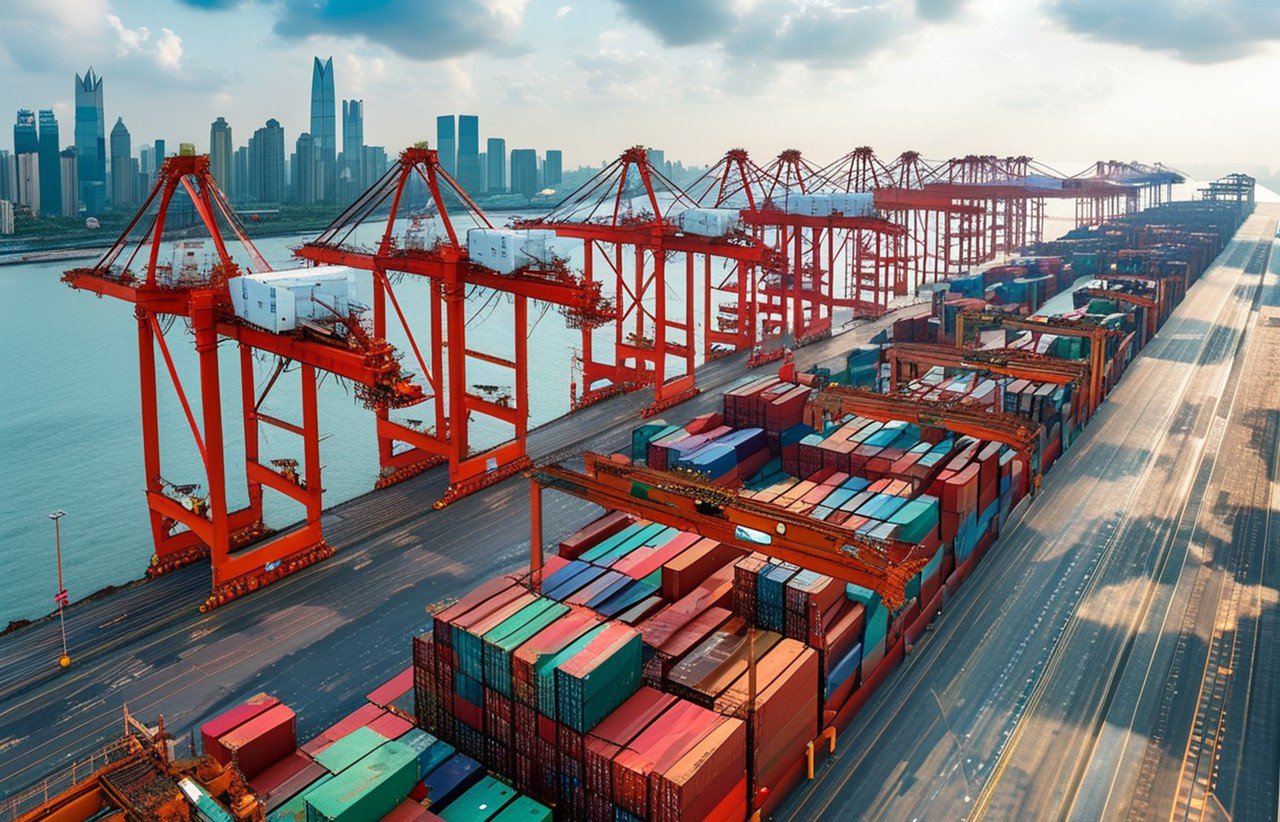
Core Viewpoint - Shanghai's foreign trade achieved a record high of 4.51 trillion yuan in 2025, reflecting the city's strong economic resilience and potential, with exports growing by 10.8% and imports by 1.8% [3][4]. Group 1: Economic Performance - Shanghai's foreign trade maintained stability and achieved growth despite challenging external conditions, with a historical breakthrough of 4.5 trillion yuan in total trade [3]. - The growth rate of Shanghai's foreign trade exceeded the national average by 1.8 percentage points, with export growth leading the nation by 4.7 percentage points, ranking first among the five major foreign trade provinces [3][4]. - Compared to the end of the 13th Five-Year Plan in 2020, Shanghai's foreign trade increased by over 1 trillion yuan, equivalent to adding a new largest trading partner [3]. Group 2: Market Expansion - Shanghai's foreign trade expanded to 167 countries and regions, with double-digit growth in emerging markets such as Africa, India, and ASEAN [4]. - The number of "billion-dollar trade partners" increased to 49, indicating a broadening of trade relationships [4]. Group 3: High-Value Exports - Exports of high-end manufacturing products, referred to as the "new three samples," reached 156.67 billion yuan, with electric vehicle exports surpassing 100 billion yuan and hybrid vehicle exports increasing by nearly 150% [4]. - Exports of advanced industries showed significant growth, with high-end machine tool exports increasing by nearly 30%, industrial robot exports by over 40%, and surgical robot exports experiencing explosive growth of 370% [4]. Group 4: Structural Development - Shanghai's open platforms and district collaboration created a robust development matrix, with special regulatory zones accounting for over 40% of total trade, totaling 1.87 trillion yuan, a growth of 9.4% [5]. - The Waigaoqiao Free Trade Zone's trade volume exceeded 1 trillion yuan, maintaining its position as the leading special regulatory zone in the country [5]. - The Pudong New Area's foreign trade reached 2.76 trillion yuan, accounting for over 60% of the city's total, with several districts showing strong growth rates exceeding 10% [5].
战新产业增加值占比大幅提升!地方国企“十五五”发展目标定了
Xin Lang Cai Jing· 2026-01-16 03:31
Group 1 - The core objective of the "14th Five-Year Plan" for local state-owned enterprises (SOEs) is to significantly enhance technological self-reliance, achieve rapid breakthroughs in key core technologies, and steadily increase the number of leading technology enterprises [1] - The focus for 2026 includes improving quality and efficiency, enhancing growth quality, and exploring growth potential while ensuring smooth economic circulation [1] - A total of 500 billion yuan in new policy financial tools has been fully allocated, supporting over 2,300 projects with a total investment of approximately 7 trillion yuan [1] Group 2 - The emphasis on stabilizing growth includes promoting major project implementation in urban renewal, affordable housing, and new infrastructure such as smart logistics and 5G IoT to stimulate consumption [2] - The State-owned Assets Supervision and Administration Commission (SASAC) aims to strengthen the role of SOEs in technological innovation, optimize the layout of state-owned capital, and enhance traditional industries while developing emerging pillar industries [2][3] - Key areas for SOE reform this year include deepening the "three systems" reform, improving innovation mechanisms, and establishing a regulatory model that balances state asset security with development vitality [3]

埃斯顿1月15日获融资买入4456.35万元,融资余额6.24亿元
Xin Lang Cai Jing· 2026-01-16 01:47
Core Viewpoint - Estun's stock performance shows a decline of 0.76% on January 15, with a trading volume of 572 million yuan, indicating a low financing balance and a decrease in shareholder numbers, while the company continues to grow in revenue and profit year-on-year [1][2]. Group 1: Financial Performance - For the period from January to September 2025, Estun achieved a revenue of 3.804 billion yuan, representing a year-on-year growth of 12.97% [2]. - The net profit attributable to shareholders for the same period was 29.0039 million yuan, showing a significant year-on-year increase of 143.48% [2]. Group 2: Shareholder and Financing Information - As of January 15, Estun's total financing and securities balance was 627 million yuan, with a financing balance of 624 million yuan, accounting for 2.91% of the circulating market value, which is below the 10th percentile level over the past year [1]. - The number of shareholders decreased by 7.92% to 114,300, while the average circulating shares per person increased by 8.60% to 6,846 shares [2]. Group 3: Dividends and Institutional Holdings - Since its A-share listing, Estun has distributed a total of 379 million yuan in dividends, with 78.0356 million yuan distributed over the past three years [3]. - Among the top ten circulating shareholders, Hong Kong Central Clearing Limited is the third-largest, holding 25.6447 million shares, an increase of 6.4466 million shares from the previous period [3].
21专访丨浙商宏观首席林成炜:黄金上涨仍有支撑 长期看好A股
2 1 Shi Ji Jing Ji Bao Dao· 2026-01-15 23:32
Group 1 - The core view is that the trend of residents moving savings from deposits to diversified assets like equities, gold, and insurance will continue into 2026, supported by improving fundamentals and declining deposit rates [1][18] - The A-share market is expected to experience a main upward trend driven by liquidity and risk appetite recovery, with a focus on indices like the CSI 2000, STAR 50, and ChiNext [4][21] - The bond market is anticipated to see a downward trend in interest rates, with the 10-year government bond yield expected to reach around 1.5% [5][22] Group 2 - The RMB/USD exchange rate is projected to peak at around 6.8 in the first half of 2026, with an average around 7 for the year [7][23] - The outlook for commodities includes a bullish stance on precious and non-ferrous metals, while maintaining a bearish view on crude oil, targeting $50 per barrel for WTI [8][24] - The GDP growth target for 2026 is set at approximately 4.8%, with quarterly expectations of 5.1%, 4.8%, 4.6%, and 4.7% [10][26] Group 3 - The fiscal policy for 2026 is expected to be more proactive, with a deficit rate projected between 4.0% and 4.2%, corresponding to a deficit scale of approximately 5.89 trillion to 6.19 trillion yuan [11][27] - The monetary policy is anticipated to be moderately loose, with potential for 50 basis points of reserve requirement ratio cuts and 10 basis points of interest rate cuts throughout the year [12][28] - The demand for financing in 2026 is expected to improve, with new credit estimated at 17.6 trillion yuan, reflecting a year-end growth rate of 6.5% [15][30] Group 4 - Key investment opportunities in 2026 are expected to focus on core technology breakthroughs, integration of technology and industry, and the transformation of manufacturing towards high-end, intelligent, and green practices [16][31] - The investment landscape will likely benefit from policies supporting infrastructure and high-end manufacturing, with a focus on projects that enhance economic stability [11][30]

【宏观】出口逆势破局,继续看好2026年表现——2025年12月进出口数据点评(赵格格/周可)
光大证券研究· 2026-01-15 23:04
Core Viewpoint - The article highlights the optimistic outlook for China's export growth in 2026, driven by strong overseas demand and the competitive advantages of Chinese exports, despite facing high year-on-year comparison bases [3][4]. Group 1: Export Performance - In December 2025, China's exports increased by 6.6% year-on-year, with a cumulative annual growth of 5.5%, primarily due to robust overseas demand and significant competitive advantages in exports [3]. - High-tech products, integrated circuits, and automobiles were the main drivers of export growth, while labor-intensive products contributed less [3]. Group 2: Future Outlook - The outlook for exports remains optimistic, as the fiscal expansion in major economies like the US and EU is expected to boost demand in 2026 [4]. - The alignment of China's advantageous industries with global demand is anticipated to support continued export growth [4]. - The transition of China's export dynamics towards new growth drivers, such as industrial robots and integrated circuits, aligns with global trends in green transformation and intelligent upgrades, potentially increasing their share in global trade [4]. - The easing of US-China trade tensions is expected to reduce uncertainties in exports to the US in 2026 [4].