
造船业

Search documents
前三季度中国造船三大指标市场份额保持全球领先
Zhong Guo Xin Wen Wang· 2025-10-17 13:41
Core Viewpoint - China's shipbuilding industry maintains a leading global market share across three key indicators in the first three quarters of 2025 [1] Group 1: Shipbuilding Completion - From January to September, China's shipbuilding completion volume reached 38.53 million deadweight tons, representing a year-on-year increase of 6.0% [1] Group 2: New Orders - The new orders received during the same period totaled 66.60 million deadweight tons, showing a year-on-year decline of 23.5% [1] Group 3: Backlog of Orders - As of the end of September, the hand-held order volume stood at 242.24 million deadweight tons, which is a year-on-year increase of 25.3% [1] Group 4: Global Market Share - In terms of deadweight tons, China's shipbuilding industry accounted for 53.8%, 67.3%, and 65.2% of the world's total in the three key indicators, respectively [1] - In terms of gross tonnage, the shares were 47.3%, 63.5%, and 58.6%, respectively, continuing to lead globally [1]
非凡“十四五”|由“中国制造”到“中国创造” 我国制造业交出亮眼成绩单
Yang Shi Wang· 2025-10-17 13:32
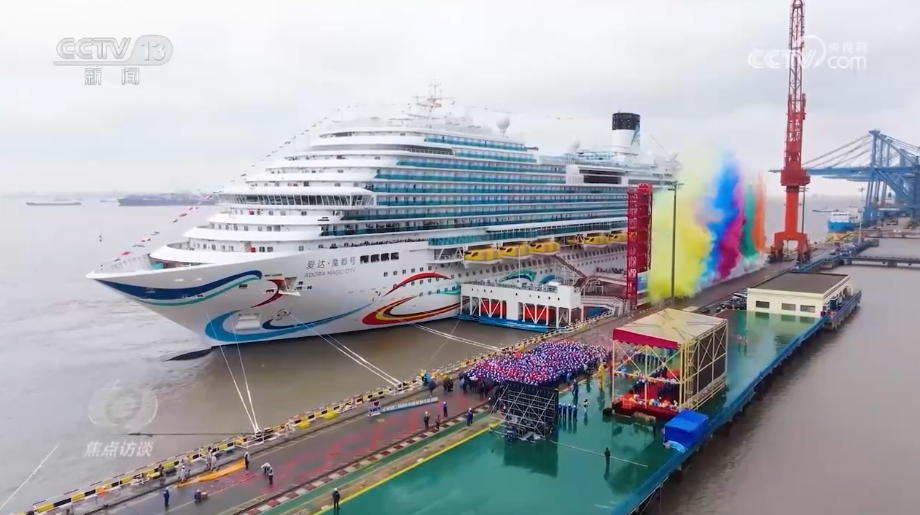
Core Viewpoint - The news highlights the significant achievements of China's manufacturing and shipbuilding industries during the "14th Five-Year Plan" period, showcasing advancements in technology and production capabilities that contribute to national strength and economic development [1][5][7]. Shipbuilding Industry - The successful construction of the second domestically produced luxury cruise ship, "Aida Huacheng," reflects China's growing capabilities in shipbuilding, with delivery expected by the end of 2026 [3]. - The shipbuilding sector has seen a 1:14 multiplier effect on related industries, involving over 500 global suppliers in the design and construction of cruise ships [3]. - The launch of the domestically produced aircraft carrier Fujian marks a new height in China's naval equipment capabilities [5]. Manufacturing Sector - China's total industrial output value increased from 31.3 trillion yuan to 40.5 trillion yuan, while manufacturing output rose from 26.6 trillion yuan to 33.6 trillion yuan during the "14th Five-Year Plan" [7]. - The manufacturing sector's contribution to global growth exceeds 30%, with its output accounting for nearly 30% of global manufacturing [7]. - Innovation has been a driving force, with R&D spending in large manufacturing enterprises exceeding 1.6% of revenue [7]. Advanced Manufacturing - The average annual growth rates for equipment manufacturing and high-tech manufacturing are 7.9% and 8.7%, respectively, with new energy vehicle production surpassing 13 million units last year [9]. - Traditional industries still dominate, accounting for 80% of key manufacturing metrics, emphasizing the need for transformation towards high-end, intelligent, and green manufacturing [9][12]. Smart Manufacturing - The integration of digital and physical economies is exemplified by Nanjing Steel's smart factory, which utilizes AI for efficient production and cost reduction [11][12]. - Over 35,000 basic-level smart factories and 1,260 5G factories have been established, with industrial robots accounting for over 50% of global installations [14]. Specialized Small and Medium Enterprises (SMEs) - The number of specialized and innovative SMEs has exceeded 140,000, contributing significantly to employment and economic vitality [21]. - These SMEs are crucial for enhancing supply chain resilience and driving high-quality economic development [19][21]. - The "14th Five-Year Plan" has seen over 100,000 new specialized SMEs, with a focus on innovation and quality [21].

每年创造一个“世界第一”,上海高端海洋装备领域全链条创新
Xin Lang Cai Jing· 2025-10-17 10:13
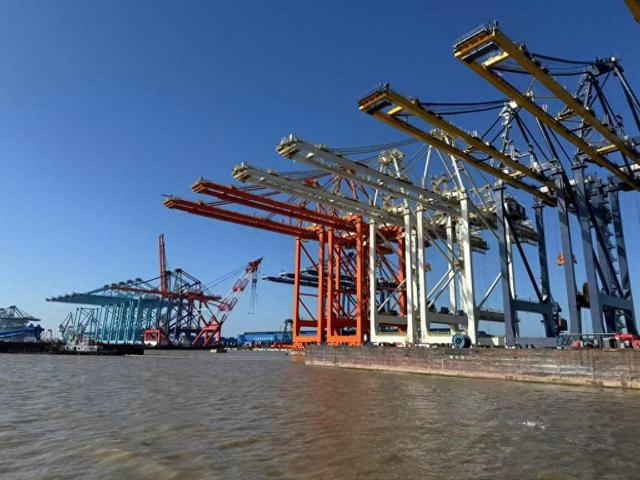
Core Viewpoint - The global port industry is rapidly transitioning towards smart technology, leading to a surge in demand for new port machinery and equipment, particularly in Shanghai's Changxing Island, which is becoming a hub for high-end marine equipment innovation [1][4]. Group 1: Port Machinery Industry - Shanghai Zhenhua Heavy Industries Group has established itself as a global leader in port machinery, capturing 70% of the market share for quay cranes and 50% for yard cranes, with products distributed across 110 countries [4]. - The company invests heavily in R&D, with an annual budget of 1.5 billion yuan, and has created over 50 "world-first" innovations, including automated terminal solutions and advanced crane designs [4][5]. - The trend towards larger and more intelligent equipment is evident, with increasing customer demands for comfort, environmental sustainability, and lifecycle cost efficiency [5]. Group 2: Shipbuilding Industry - The shipbuilding sector is characterized by its complexity and customization, reflecting a nation's industrial capabilities, with China transitioning from a follower to a leader in certain ship types [5][6]. - Jiangnan Shipyard has successfully developed large ethane carriers, receiving over 40 orders, demonstrating the importance of market responsiveness and foundational technology research for long-term growth [6]. - The shipbuilding industry is highly competitive, necessitating continuous innovation, design optimization, and efficiency improvements to meet evolving market demands [6]. Group 3: Research and Development - The Changxing Ocean Laboratory plays a crucial role in supporting innovation within the marine equipment sector, developing key technologies such as intelligent welding and deep-sea mining vehicles [7]. - These advancements not only fill domestic gaps but also support the development of high-tech vessels, enhancing China's capabilities in the global maritime industry [7].

工信部:2025年前三季度我国造船三大指标市场份额保持全球领先
Ge Long Hui· 2025-10-17 06:37
Core Insights - The Ministry of Industry and Information Technology reported that China's shipbuilding completion volume reached 38.53 million deadweight tons from January to September 2025, representing a year-on-year increase of 6.0% [1] - New orders received amounted to 66.60 million deadweight tons, showing a year-on-year decline of 23.5% [1] - As of the end of September, the hand-held order volume stood at 242.24 million deadweight tons, reflecting a year-on-year growth of 25.3% [1] - In terms of deadweight tons, China's shipbuilding metrics accounted for 53.8%, 67.3%, and 65.2% of the global total for the three major indicators, respectively [1] - When measured by gross tonnage, these figures were 47.3%, 63.5%, and 58.6%, indicating that China continues to maintain a leading position globally [1]
一箭三雕!中国一张豁免牌,美国船东纷纷转向
Sou Hu Cai Jing· 2025-10-17 05:12
Core Viewpoint - A silent battle over port fees has officially begun between China and the United States, with both sides imposing special port fees on each other's vessels. However, China's exemption clauses may render the U.S. actions ineffective and subtly shift global shipowners' choices [1][22]. Group 1: U.S. Actions - The U.S. Trade Representative's Office initiated a 301 investigation into China's maritime, logistics, and shipbuilding industries, leading to the decision to impose port service fees on Chinese vessels starting October 14. A 100,000-ton Chinese cargo ship could incur fees up to $5 million per docking [3]. - The U.S. Customs and Border Protection estimates that this move will increase costs for global shipping companies by billions of dollars annually [3]. Group 2: China's Response - In retaliation, China's Ministry of Transport announced special port fees for U.S. vessels starting October 14, covering not only U.S.-flagged ships but also those owned or operated by U.S. entities with at least 25% ownership [5]. - The fee structure is designed to increase gradually, starting at 400 RMB per net ton in 2025 and rising to 1,120 RMB by 2028, potentially costing a 100,000-ton U.S. vessel over 10 million RMB per docking in China by 2028 [5]. Group 3: Exemption Clauses - China's policy includes two exemption clauses that significantly alter the dynamics of the situation. Vessels built in China and those entering Chinese shipyards for repairs without cargo are exempt from the special port fees, providing a cost-saving option for global shipping companies, especially U.S. shipowners [7]. Group 4: Market Reactions - Following the policy implementation, U.S. shipowners face a financial decision. For instance, a 50,000-ton bulk carrier could incur an additional 20 million RMB in port fees annually if using U.S.-built ships, while opting for Chinese-built vessels could save costs and offer a price advantage of about 40% [9]. - Data shows that Chinese shipyards captured 49% of global new ship orders in 2024, while U.S. shipyards accounted for only 0.8% [11]. Group 5: Impact on U.S. Shipbuilding Industry - The U.S. shipbuilding and repair industry is feeling direct pressure, with companies like Huntington Ingalls Industries facing potential losses as clients shift to Chinese shipyards due to cost considerations [14]. - A significant number of U.S. shipping companies are considering moving their repair operations to China, with estimates suggesting this could generate over $1.2 billion in additional market for China's repair industry annually [12]. Group 6: Global Shipping Industry Response - The situation has prompted some major shipping companies to adjust their operational strategies, with firms like Maersk and Hapag-Lloyd suspending direct port calls to China for U.S.-flagged vessels [17]. - The U.S. shipbuilding industry is under pressure, leading to signs of policy adjustments, such as reduced fees for certain vessel types and exemptions for long-term leased LNG carriers [21]. Group 7: Strategic Implications - China's measures are viewed as a sophisticated policy design rather than mere trade retaliation, guiding market resources towards its shipbuilding and repair industries while maintaining market openness [22][23].
从韩国手中抢回造船订单,中国凭什么赢得新西兰信赖
Sou Hu Cai Jing· 2025-10-17 05:11
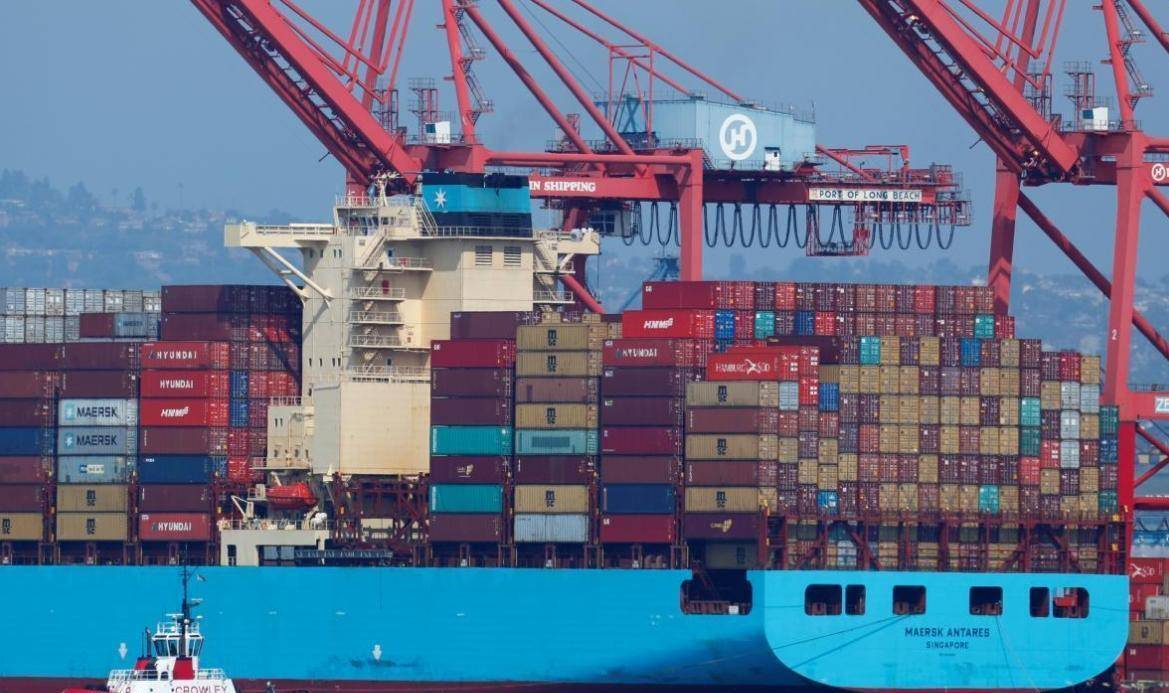
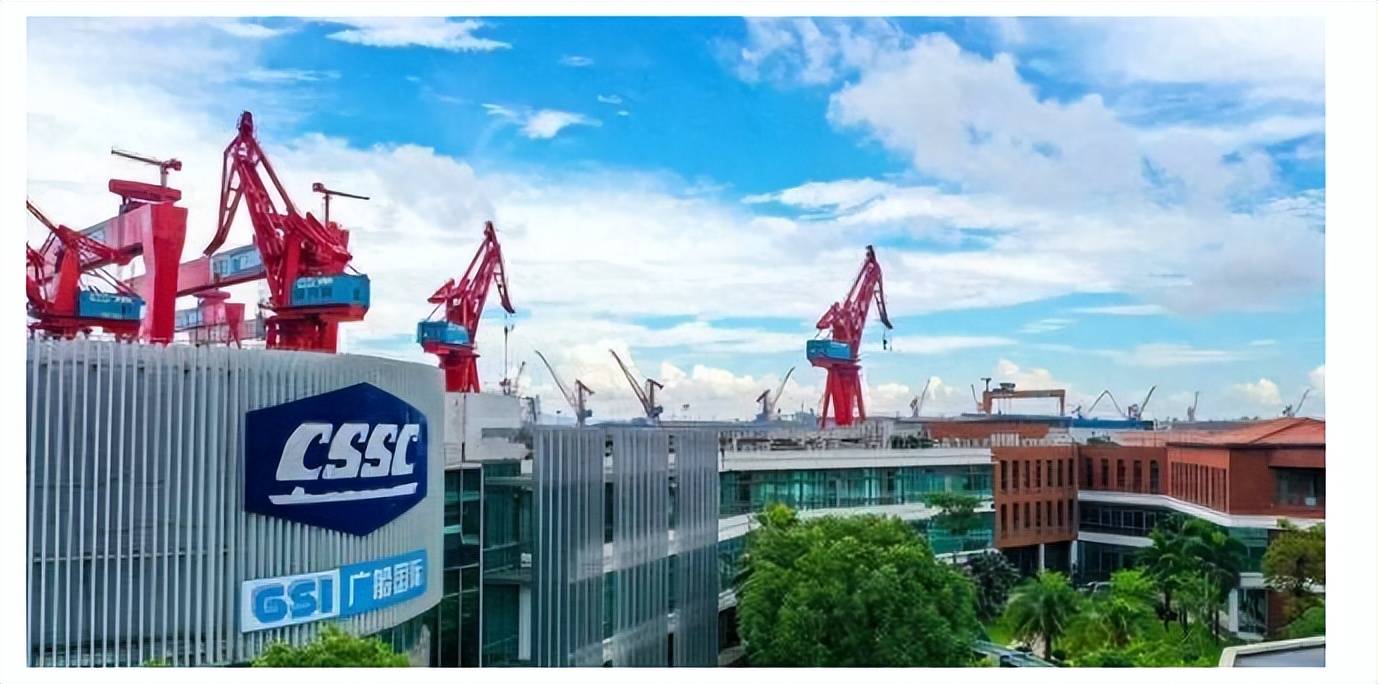
近日,新西兰将两艘大型渡轮的建造订单,交给中国船舶集团旗下的广船国际。这个订单原本由韩国现代尾浦船厂承接,但新西兰方面取消了原有项目,转 而选择中国企业。新西兰铁路部长彼得斯公开表示,对中国船厂的专业能力、技术实力和生产规模充满信心。 这个案例反映了全球造船市场格局的深刻变化。过去几十年,造船中心从欧洲转移到日本,再到韩国,如今中国正在成为不可忽视的力量。中国造船企业不 仅具备成本优势,更重要的是积累了建造各种复杂船型的经验。从大型集装箱船到液化天然气运输船,再到高端渡轮,中国船厂已经证明了自己的能力。 对此,有人直言不讳地说,选择中国就是因为便宜,商家都是追着利润走,中国工人的工资水平较低使得造船成本具有竞争力。但也有人反驳,现在早不是 单纯拼成本了,2024 年中国造船拿了全球 74.7% 的新订单,要是只靠低价,根本守不住这么大的份额。中国船厂能中标,质量和技术才是关键。 全球造船霸主的迁移从来不是简单的 "谁更便宜",而是产业升级的自然结果。20 世纪 60 年代日本超欧美,80 年代韩国超日本,都是先靠成本优势切入, 再靠技术升级站稳脚跟。中国现在走的是同样的路,但步子更快。 这个案例或许预示着全球 ...
非凡“十四五”,中国式现代化迈出坚实步伐
Yang Shi Wang· 2025-10-17 02:46
Group 1 - The article highlights the significant progress and achievements in China's modernization efforts, particularly in infrastructure and manufacturing sectors during the "14th Five-Year Plan" period [2][6][8] - China's shipbuilding industry has seen a remarkable increase, with domestic shipyards capturing 64.2% of global new ship orders as of mid-2023, a 15.1 percentage point increase from the previous five-year period [7] - The manufacturing sector's value added is projected to reach 33.6 trillion yuan by 2024, contributing over 30% to global manufacturing growth during the "14th Five-Year Plan" [8][12] Group 2 - The successful operation of the domestically produced large passenger aircraft C919, with over 1,000 orders received, marks a significant milestone in China's aviation industry [12] - The renewable energy sector has rapidly expanded, with China's renewable energy capacity becoming the largest and fastest-growing globally, generating 2.9 trillion kWh of electricity in a month, equivalent to the annual output of the UK [19] - The agricultural sector has achieved record production levels, with grain output expected to exceed 1.4 trillion jin in 2024, reinforcing China's food security [20][23]
韩国好像也帮不动了,美国造船业想回暖怕是有点难
Sou Hu Cai Jing· 2025-10-17 02:18
Core Viewpoint - The article discusses the challenges faced by the U.S. shipbuilding industry, highlighting the difficulties in repair and production capacity, and the impact of sanctions on Korean shipbuilder Hanwha Ocean's operations in the U.S. market [2][3][4][5][6] Group 1: U.S. Shipbuilding Industry Challenges - The U.S. Navy's "Truman" aircraft carrier has faced significant repair delays, taking eight months to fix a minor collision due to limited dry dock availability [2] - The U.S. shipbuilding industry is struggling with high costs, with the price of building a ship in the U.S. being five times higher than in Asia [5] - The industry is experiencing a shortage of skilled labor, which has led to significant delays in project timelines, as seen with the Italian acquisition of a U.S. shipyard [5] Group 2: Hanwha Ocean's Role and Challenges - Hanwha Ocean has successfully completed maintenance on U.S. Navy vessels, but recent sanctions from China have severely impacted its supply chain, particularly for steel and valves [3][4] - The sanctions could lead to a 10% increase in costs for Hanwha Ocean, further diminishing its competitiveness in the U.S. market [4] - Despite promises of significant investment, the long-term issues in the U.S. shipbuilding industry cannot be resolved quickly, as they require time to develop skilled labor and a robust supply chain [6] Group 3: Future Outlook - The article suggests that the U.S. shipbuilding industry's decline is a chronic issue that cannot be fixed merely by external investment or support from foreign companies like Hanwha Ocean [6] - The potential for recovery in the U.S. shipbuilding sector remains uncertain, with ongoing delays in key projects such as the "Columbia" class submarines and "Constellation" class frigates [6]

拿到法国航运巨头3亿美元船舶订单,印度欢呼
Huan Qiu Shi Bao· 2025-10-16 22:56
Core Viewpoint - The Indian shipbuilding industry has reached a "historic moment" with the signing of a significant order for six LNG-powered container ships from the French shipping giant CMA CGM, valued at approximately $300 million, marking India's first major international order in this sector [1][2]. Group 1: Order Significance - The order consists of six container ships, each capable of carrying 1,700 TEUs, aligning with CMA CGM's commitment to decarbonization in shipping [1]. - This contract is seen as a major achievement for Indian shipbuilders, who aim to establish a stronger global presence, with a target to enter the top 10 shipbuilding nations by 2030 and the top 5 by 2047 [1]. - The CEO of CMA CGM noted that while large vessels are primarily built in China and South Korea, India presents opportunities for the construction of smaller ships [1]. Group 2: Impact on Kochi Shipyard - The Kochi Shipyard, which has built India's first indigenous aircraft carrier and the largest dredger, has gained significant confidence from this order, which may lead to more contracts from major shipowners [2]. - The order is expected to help Kochi Shipyard integrate into the global shipbuilding supply chain, potentially attracting other major shipping companies like Maersk and MSC in the future [2]. - This development is anticipated to stimulate the ecosystem for component and equipment suppliers in India [2]. Group 3: Government Support and Challenges - The Indian government has approved a comprehensive plan worth ₹697.25 billion (approximately $8.4 billion) to enhance industrial capabilities and compete with established shipbuilding nations [3]. - A Shipbuilding Financial Assistance Policy (SBFAP) has been introduced, offering 20%-30% financial aid for ships using green fuels or hybrid propulsion systems, with Kochi Shipyard receiving additional government support for each vessel built [3]. - However, the Indian shipbuilding industry faces challenges such as high infrastructure costs, labor shortages, and a significant reliance on imports for critical components like engines and navigation systems, with costs potentially 25%-30% higher than competitors in China, South Korea, and Japan [3].
商务部:全球供应链安全稳定需要世界各国共同维护
Qi Huo Ri Bao Wang· 2025-10-16 17:42
Core Viewpoint - The Chinese government has expressed strong dissatisfaction with the recent unilateral trade measures imposed by the United States, particularly the "301" investigation and related restrictions, which are seen as detrimental to both Chinese industries and global supply chain stability [1][2]. Group 1: Trade Relations and Measures - The Chinese side has actively engaged in discussions with the U.S. regarding the "301" investigation, maintaining a constructive stance and proposing cooperation suggestions, but the U.S. has remained uncooperative [1]. - The U.S. has implemented 20 measures against China in a short span of 20 days, severely harming Chinese interests and disrupting the atmosphere of economic talks [2]. - The U.S. has extended its export control entity list to include thousands of Chinese companies, which has further escalated tensions [2]. Group 2: Impact on Industries - The U.S. claims that China's recent measures will broadly affect multiple industries, including semiconductors, AI, smartphones, and defense [3]. - China's export control measures on rare earths are aimed at preventing illegal use in weapons and maintaining national security, rather than targeting specific countries [4]. Group 3: Response and Future Actions - China emphasizes that its export control measures are lawful and necessary for national security, and it is willing to facilitate compliant trade through optimized licensing processes [4]. - The Chinese government has communicated its policy objectives to various countries to reduce misunderstandings and is open to dialogue to address mutual concerns [2][3].