
家用电器

Search documents
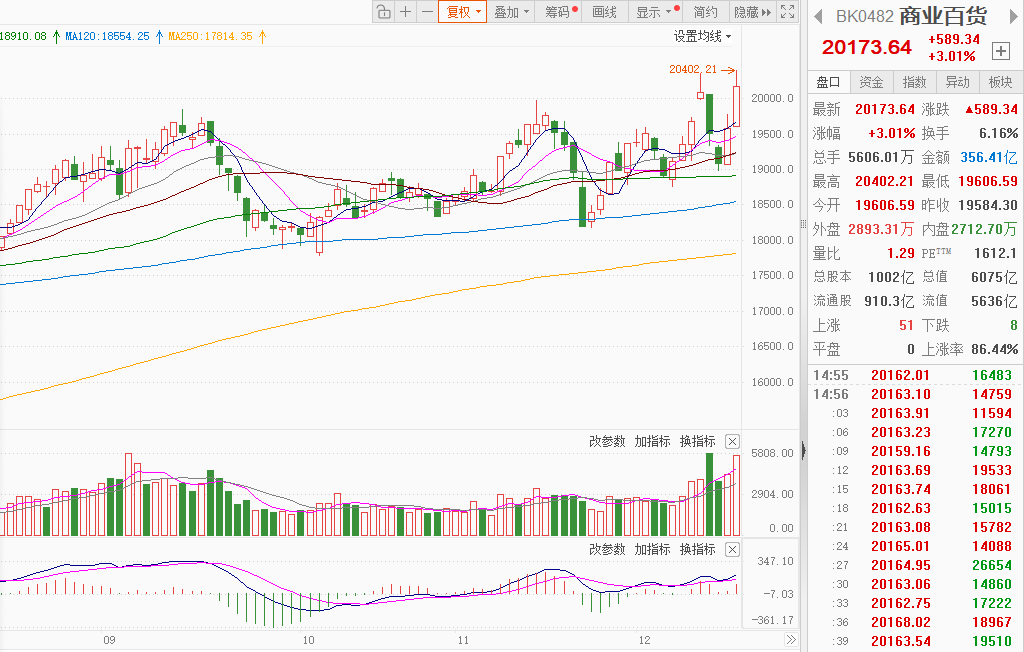
“扩大内需”战略定调,大消费板块掀涨停潮
Huan Qiu Wang· 2025-12-16 08:11
Core Viewpoint - The consumer sector experienced a significant rally on December 16, driven by supportive policies aimed at expanding domestic demand, which has been elevated to a strategic priority for the economy [1][4]. Group 1: Policy Support - The article emphasizes that expanding domestic demand is crucial for economic stability and security, and it is not merely a temporary measure but a strategic initiative [1]. - The National Development and Reform Commission highlighted the need to unleash consumer potential through various measures, including special actions to boost consumption and plans to increase residents' income [1][4]. - The Central Economic Work Conference has prioritized "maintaining demand as the main driver and building a strong domestic market" as a key task for the upcoming year, reflecting the government's commitment to boosting consumption [1]. Group 2: Market Dynamics - The consumer sector's attractiveness is underscored by its current low valuation after a prolonged adjustment period, indicating a significant technical rebound demand [3]. - For instance, the food and beverage sector has a current price-to-earnings (P/E) ratio of 20.8, with a percentile ranking of only 13.04%, compared to over 64 times at its peak in February 2021, highlighting its investment value [3]. - Major consumer companies like Kweichow Moutai, Midea Group, and Haier Smart Home reported year-on-year profit growth in the first three quarters, demonstrating strong operational resilience [3]. Group 3: Investment Opportunities - A number of consumer stocks are showing characteristics of a "golden pit," where stock prices have declined despite strong earnings growth, presenting potential investment opportunities [3]. - Examples include leading condiment company Haitian Flavoring, which saw its stock price drop over 18% while achieving a 10.54% increase in net profit, and TCL Technology, which experienced a 16% decline in stock price with an 18.45% rise in net profit [3]. - Other companies like Xiangyuan Cultural Tourism, Xueda Education, and Bear Electric also fit this profile, offering potential for value investors [3]. Group 4: Future Outlook - Recent initiatives by the Ministry of Commerce and financial regulators to expand and upgrade rural consumption, along with credit support, open new avenues for market expansion [4]. - Analysts expect that the focus on expanding domestic demand will lead to more specific policies in the future, enhancing investor confidence in the consumer sector [4]. - The outlook for traditional consumption is anticipated to improve, while new consumption trends may experience rotation, but overall, the consumer sector is expected to maintain sustainability underpinned by both policy and market fundamentals [4].







西部证券晨会纪要-20251216
Western Securities· 2025-12-16 01:32
Group 1: Banking Sector - The report anticipates that banks will maintain a certain demand for bond allocation in 2026, with an estimated bond allocation amount of 9.19 trillion yuan, reflecting a year-on-year growth rate of 5.4% [1][8] - In 2025, the bond allocation scale of banks increased significantly, with a cumulative bond allocation of 8.2 trillion yuan from January to October, representing a 24% increase compared to the same period in 2024 [7] - The report highlights a structural differentiation in bond allocation, with state-owned banks and city commercial banks increasing their allocation due to relatively sufficient funds, while rural commercial banks showed weaker allocation due to higher deposit pressure [7] Group 2: Defense and Military Industry - The defense industry is expected to focus on domestic demand and military trade breakthroughs, with a projected defense budget of 1.78 trillion yuan for 2025, a year-on-year increase of 7.15% [12] - Key investment areas include the military aircraft engine supply chain, infrared technology for dual-use, and laser weapons with high application prospects in anti-drone fields, with specific companies recommended for investment [2][13] - The report notes that the military-civilian integration will provide long-term alpha for military enterprises, emphasizing the importance of transitioning from scale expansion to high-quality development [2][13] Group 3: Macroeconomic Overview - The report indicates that economic growth momentum remains weak, particularly in domestic demand, with industrial and service sector growth rates continuing to decline [3][15] - November data shows a significant drop in fixed asset investment, with a cumulative decline of 2.6% from January to November, and a 30.3% year-on-year decrease in real estate development investment [16] - The central economic work conference emphasizes the need to expand domestic demand and implement more proactive fiscal policies to address the supply-demand imbalance [17] Group 4: Home Appliance Industry - The home appliance sector is advised to focus on leading companies with strong configuration value, particularly in the white goods segment, with recommendations for Haier and Midea [4][24] - The report highlights the importance of innovation in smart terminals and suggests monitoring companies like Anker Innovation and Roborock for potential growth opportunities [4][24] - The impact of subsidy policies and market sentiment is noted, with expectations for a stable domestic market for home appliances if subsidy policies continue [19][20]
北交所策略专题报告:坚持内需主导,关注政策催化北证消费新机遇
KAIYUAN SECURITIES· 2025-12-15 12:45
Group 1 - The report emphasizes the importance of domestic demand as the primary driver for economic growth in 2026, with a focus on implementing consumption-boosting initiatives and enhancing the domestic market [11][12][13] - The contribution rate of domestic demand to economic growth from 2021 to 2024 is projected to be 86.4%, with final consumption accounting for an average contribution rate of 56.2% [12][13] - The report highlights the shift in the retail industry towards quality and service-driven growth, as discussed in the National Retail Innovation Development Conference [15][16] Group 2 - The North Exchange's consumer services sector saw a weekly increase of 0.44%, with food and beverage sector rising by 3.32% [25][31] - As of December 13, 2025, there are 25 companies related to the consumer services sector in the North Exchange's queue, with an average revenue of 1.242 billion yuan and an average net profit of 140.35 million yuan for 2024 [47][48] - Notable companies in the consumer services sector include Yizhi Moyu, which has a market value of 3.555 billion yuan and a net profit of 62.34 million yuan for 2025 Q1-Q3 [24][35] Group 3 - The Consumer Price Index (CPI) for November 2025 increased by 0.7% year-on-year, primarily driven by rising food prices [36][38] - The average wholesale price of pork is reported at 17.65 yuan per kilogram, while the average price of eggs is at 7.43 yuan per kilogram, reflecting market conditions [40][41] - The report indicates that the average price of fresh milk in major producing provinces is 3.02 yuan per kilogram, remaining stable compared to the previous week [46] Group 4 - The report outlines the significant sales performance during the "Double 11" shopping festival, with home appliances, digital devices, and clothing being the top three categories by sales volume [19][21] - The "Double 12" shopping event is set to further stimulate consumer spending, with various platforms launching promotional activities [18][22] - The report identifies 20 related stocks in the North Exchange for the "Double 12" event, covering categories such as home appliances, personal care, and food and beverages [23][24]
帮主郑重:房价连跌8个月!数据背后的“危”与“机”,中长线视角怎么看?
Sou Hu Cai Jing· 2025-12-15 12:13
Core Viewpoint - The recent data on housing prices indicates a continued decline for the eighth consecutive month, highlighting a significant shift in market dynamics and investor sentiment [1][3]. Market Trends - Housing prices in 70 cities have shown a dual decline both month-on-month and year-on-year, with first-tier cities demonstrating stronger resilience compared to second and third-tier cities, which are under greater pressure [3]. - The downward pressure on new home prices is generally greater than that on second-hand homes, reflecting a broader issue of weak confidence and expectations in the market [3]. Policy Shifts - The focus of government policy has shifted from "de-leveraging and risk prevention" to "risk prevention, market stabilization, and promoting transformation," indicating a more supportive environment for the real estate sector [3]. - Initiatives such as financial support for reasonable financing of real estate companies and optimization of purchase restrictions in key cities aim to transition the market from a "free fall" to a "soft landing" [3]. Investment Strategies - Investors should adopt a "survivor mentality" when selecting real estate stocks, focusing on financially stable companies with low financing costs and high operational efficiency, rather than betting on a broad industry rebound [4]. - Opportunities may arise in the long industrial chain associated with real estate stabilization, particularly in upstream sectors like building materials and home furnishings, as well as downstream areas linked to property management and home appliances [4]. - The emergence of new models, such as affordable housing and urban village renovations, driven by policy support, could create a new market segment, offering stable business growth for related construction and service companies [4]. Conclusion - The recent housing price data serves as a summary of past trends rather than a definitive forecast for the future, signaling the end of an old cycle and the challenging establishment of a new balance [5].

家用电器行业周度跟踪:强调龙头配置价值,关注智能终端持续创新-20251215
Western Securities· 2025-12-15 11:28
Investment Rating - The industry investment rating is "Overweight" [5][11] Core Insights - The report emphasizes the value of leading companies in the home appliance sector, highlighting the importance of continuous innovation in smart terminals [1] - The central economic work conference has set the tone for 2026 economic work, focusing on domestic demand and optimizing policies for large-scale equipment updates and consumer goods replacement [1] - The report suggests that if subsidy policies continue into next year, it will help stabilize the domestic home appliance market and ensure the performance stability of leading companies [1] Summary by Sections White Goods - Online sales data for November shows significant declines: refrigerators, air conditioners, and washing machines saw sales drop by 23.17%, 26.13%, and 6.17% respectively, with volumes down by 28.31%, 26.24%, and 13.65% [2] - Offline sales experienced even steeper declines, with refrigerators, air conditioners, and washing machines down by 49.18%, 51.76%, and 40.4% in sales [2] - The report indicates that the pessimistic sales expectations are already reflected in the market, and the industry is moving past the peak of base pressure [2] - A coalition of major air conditioning companies has initiated a self-regulation agreement to replace copper with aluminum, which may help reduce costs and improve product quality [2] - Despite current weak demand, the report anticipates a gradual reduction in domestic sales pressure due to high base effects and subsidy tapering [2] Black Goods - November data shows a decline in online sales for televisions, with sales down by 27.01% and volumes down by 37.52% [3] - The report notes that the trend of structural upgrades in black goods continues, with MiniLED technology driving up average prices and margins [3] - The upcoming World Cup is expected to catalyze sales, as leading companies focus on high-end channels [3] Consumer Technology - The report highlights the impact of subsidy reductions and high base effects on the market for cleaning appliances, with a notable decline in sales for robotic vacuum cleaners [4] - The report suggests that the industry is experiencing a concentration of domestic brands, driven by AI innovations and cost reductions in the supply chain [4] Investment Recommendations - The report recommends focusing on white goods, particularly Haier and Midea, due to their strong market positions and benefits from ongoing transformations [8] - It also suggests selecting consumer technology stocks, including Anker Innovations and Roborock, as well as opportunities in the 3D printing industry [8] - For overseas expansion, TCL Electronics is highlighted as a company with good growth potential [8]
大消费行业周报(12月第2周):坚持内需主导、提振消费-20251215
Century Securities· 2025-12-15 09:40
Investment Rating - The report maintains a positive outlook on the consumer sector, emphasizing the importance of domestic demand and consumption recovery [1]. Core Insights - The consumer sector experienced a decline across various segments, with notable drops in retail, social services, food and beverage, beauty care, home appliances, and textiles [3]. - High-end liquor, particularly Moutai, is showing signs of bottoming out despite a significant price drop, indicating potential recovery as demand stabilizes [3]. - The central economic work conference highlighted the commitment to boosting domestic consumption, with policies aimed at increasing residents' income and optimizing supply of quality goods and services [3]. - The report suggests focusing on service consumption sectors, which have room for growth compared to developed countries [3]. Summary by Sections Market Weekly Review - The consumer sector saw a broad decline, with specific weekly performance metrics indicating negative trends across various sub-sectors [3][5]. - Notable stock performances included significant gains for certain companies, while others faced substantial losses [3][13][14]. Industry News and Key Company Announcements - Recent regulatory approvals and policy initiatives are expected to impact various sectors, including tourism and electric vehicles, with a focus on enhancing consumer experiences and market growth [15][16][19]. - Companies like Tim Hortons and others reported positive financial results, indicating resilience in the consumer market despite broader sector challenges [19][20].

这才是真正的“睡后收入”:中证A500红利低波,让细分龙头为你“打工”
Sou Hu Cai Jing· 2025-12-15 09:23
Core Viewpoint - The article discusses the Zhongzheng A500 Dividend Low Volatility Index, which aims to provide a balanced investment strategy that combines the safety of dividend stocks with the growth potential of leading companies across various sectors [1]. Group 1: Index Overview - The Zhongzheng A500 Dividend Low Volatility Index is derived from the Zhongzheng A500 Index, which selects 500 leading companies from over 5,000 stocks in the A-share market [1]. - This index further narrows down to 50 stocks that demonstrate continuous dividend payment capability, high dividend yield, and low volatility, ensuring high-quality asset selection [1][4]. Group 2: Selection Criteria - The index employs a rigorous selection process, starting with a "dividend willingness" criterion, requiring constituent stocks to have paid cash dividends for the past three years with a reasonable payout ratio [4]. - The second criterion focuses on "valuation and safety," ranking stocks by dividend yield to filter the top 50%, which typically indicates lower valuations [4]. - The final selection involves identifying the 50 stocks with the lowest volatility among those with high dividend yields, as historically, low-volatility stocks tend to outperform high-volatility ones over the long term [4]. Group 3: Industry Coverage - Unlike traditional dividend indices that are heavily weighted towards sectors like finance, the Zhongzheng A500 Dividend Low Volatility Index covers a broader range of industries, including 27 sub-industries compared to 19 in traditional indices [5]. - This diversified approach includes not only traditional high-dividend sectors like banking and energy but also leading companies in manufacturing and consumer discretionary sectors, such as home appliances and automotive parts [5]. Group 4: Performance Metrics - Since its inception, the Zhongzheng A500 Dividend Low Volatility Index has achieved an annualized return of 14.9%, outperforming both the parent Zhongzheng A500 Index and traditional dividend low volatility indices [8]. - Over the last decade, the index has recorded a cumulative return of 165.9%, significantly higher than the 133.8% return of traditional dividend low volatility indices [10]. - The index maintains a high Sharpe ratio of 82.9% and has a maximum drawdown of -39.3%, indicating better risk-adjusted returns compared to its peers [10]. Group 5: Investment Strategy - The Zhongzheng A500 Dividend Low Volatility Index represents an upgrade in investment strategy, utilizing the natural "buy low, sell high" characteristic of dividends while smoothing volatility and mitigating risks through careful stock selection [11]. - This index is particularly appealing for investors seeking consistent dividend income while also wanting to invest in core assets for long-term stable growth [11].
价值风格表现占优,价值ETF(159263)受市场关注,盘中净申购达8700万份
Mei Ri Jing Ji Xin Wen· 2025-12-15 07:01
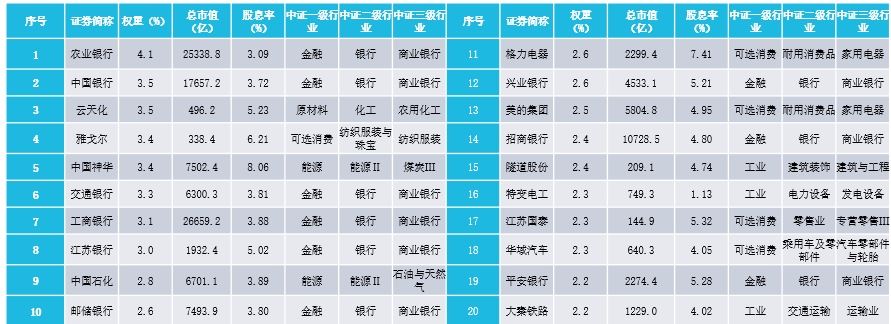
Group 1 - The market experienced fluctuations with the banking sector showing a low opening but recovering, while domestic demand-related sectors led the gains. As of 14:00, the Guozheng Value 100 Index rose by 0.4%, accumulating nearly 7% since October, outperforming similar value style indices. The value ETF (159263) saw a net subscription of 87 million units today, indicating high investor interest [1] - Three government departments jointly issued 11 policy measures to boost consumption, reinforcing the focus on expanding domestic circulation. Market views suggest that the expectations and pricing for domestic and external demand products differ significantly from last year, and if domestic demand-related products exceed expectations, there could be substantial valuation elasticity [1] - The Guozheng Value 100 Index focuses on deep value, utilizing a screening system based on "high dividends + high free cash flow + low PE" to select core value stocks in the market. The top three industries in the index are home appliances, banking, and automobiles, collectively accounting for over 45%. Since its launch in 2012, the index has achieved an annualized return of over 12%. The value ETF (159263) is currently the only ETF tracking this index, facilitating investors in accessing undervalued quality assets in the market [1]
交银国际_消费行业2026年展望:新常态下的消费新动能_
2025-12-15 02:13
Summary of the Conference Call Transcript Industry Overview - **Industry**: Consumer Sector - **2025 Performance**: The consumer market in mainland China has shown a mild recovery, with a year-on-year growth of 4.3% in retail sales from January to October 2025, indicating a steady recovery path [1][6][29]. - **2026 Outlook**: The consumer market is expected to continue its moderate growth, characterized by slower overall demand growth but increasing rational consumption and demand tiering, which will drive structural differentiation and become a key growth driver in niche markets [1][6][7]. Key Insights Consumer Behavior - **Consumer Confidence**: The consumer confidence index has gradually improved but remains below the neutral level of 100, indicating cautious consumer sentiment regarding future income and employment [7][13]. - **Spending Trends**: Consumers are increasingly focused on value for money and emotional value, with a high willingness to pay for emotional experiences, which is reshaping brand competition [26][31][32]. Market Dynamics - **Segment Performance**: Different segments are recovering at varying paces. Categories like home appliances, jewelry, and food staples have shown strong growth, while others like dining and personal care have seen slight declines [23][62]. - **Channel Evolution**: The integration of online and offline channels is deepening, with online growth slightly outpacing offline. New retail formats are emerging, focusing on consumer-centric approaches [37][28]. Technological Impact - **AI Integration**: Artificial intelligence is increasingly being integrated into various industry segments, enhancing operational efficiency and potentially reshaping competitive dynamics [49][50]. Investment Strategy - **2026 Investment Focus**: A balanced strategy is recommended, combining defensive sectors with stable cash flows and high-growth potential opportunities. Key sectors to focus on include: - Defensive companies benefiting from supply-demand improvements, such as Shenzhou (2313 HK) and Yili (600887 CH) [56]. - Fast-growing niche leaders like Pop Mart (9992 HK) and Miniso (9896 HK) [56]. - Industry leaders with strong growth foundations and resilience, such as Anta (2020 HK) and China Resources Beer (291 HK) [56]. Risks - **Macro Uncertainties**: Potential risks include macroeconomic uncertainties, commodity inflation exceeding expectations, international trade uncertainties, and insufficient consumer stimulus policies [57]. Additional Insights - **Emerging Trends**: The rise of emotional consumption is driving growth in categories like trendy toys and cultural products, with brands leveraging IP ecosystems for rapid revenue growth [68][70]. - **Global Expansion**: Chinese consumer brands are increasingly looking to expand internationally, particularly in Southeast Asia, to tap into new growth opportunities [35][36]. This summary encapsulates the key points from the conference call, highlighting the current state and future outlook of the consumer sector, along with strategic investment recommendations and associated risks.
中央经济工作会议:内需占主导,关注后续消费政策:家用电器
Huafu Securities· 2025-12-14 07:09
Investment Rating - The industry rating is "Outperform the Market" [7] Core Insights - The Central Economic Work Conference emphasizes domestic demand as a priority, with a focus on subsequent consumption policies to stimulate both goods and service consumption [3][15] - There is a strong emphasis on innovation, particularly in the artificial intelligence sector, highlighting investment opportunities within the AI industry chain [4][14] - The report indicates that the government will continue to implement policies to boost consumption, including potential extensions of subsidies and consumption vouchers [15] Summary by Sections Central Economic Work Conference - The conference outlined eight key points, prioritizing domestic demand and the construction of a robust domestic market, alongside innovation, reform, and external openness [3][13] - Specific actions include implementing consumption enhancement initiatives and urban-rural income increase plans, as well as optimizing the supply of quality goods and services [3][15] Market Data - The home appliance sector experienced a decline of 1.9% this week, with specific segments like white goods and small appliances seeing drops of 2.5% and 2.2% respectively [5][16] - Raw material prices showed slight fluctuations, with LME copper increasing by 0.82% and LME aluminum decreasing by 0.03% [5][16] Industry Tracking - The report tracks various segments within the home appliance industry, noting significant sales data and price trends for key brands and products [29][30][34][35] - For instance, brands like Haier and Midea have reported varying sales performance across different product categories, with some experiencing substantial declines [29][30][34] Upstream Tracking - The report includes tracking of raw material prices and shipping trends, which are crucial for understanding cost pressures within the industry [37][40] - It highlights the importance of monitoring these factors as they can significantly impact the profitability of home appliance manufacturers [37][40]