
煤炭开采

Search documents
2026年第20期:晨会纪要-20260204
Guohai Securities· 2026-02-04 01:50
Group 1: Alibaba's Financial Outlook - The report projects Alibaba's FY2026Q3 total revenue to reach 291 billion yuan, reflecting a year-over-year growth of 4% and a quarter-over-quarter increase of 17% [3] - Adjusted EBITA is expected to decline by 47% to 29.1 billion yuan, with an adjusted EBITA margin of 10%, primarily due to negative growth in traditional e-commerce profits and ongoing investments in instant retail and AI applications [3][4] - The Chinese e-commerce group is anticipated to generate revenue of 166 billion yuan, with a year-over-year growth of 10%, while the international digital commerce group is expected to achieve 41.6 billion yuan in revenue, also reflecting a 10% year-over-year increase [3][4] Group 2: E-commerce Sector Insights - Traditional e-commerce's customer management revenue growth is expected to slow down, with a projected year-over-year increase of only 2.5%, influenced by a weakening overall e-commerce market [4] - The report highlights that the instant retail segment will continue to see significant investment, with Alibaba aiming to capture the leading market share in this area [4] - The adjusted EBITA for the Chinese e-commerce group is forecasted to decline by 40% to 36.2 billion yuan, largely due to the negative profit growth in traditional e-commerce [4] Group 3: Cloud Intelligence Group Performance - The cloud intelligence group is projected to achieve a revenue growth of 36% to 43.2 billion yuan in FY2026Q3, with an adjusted EBITA of 3.9 billion yuan and an EBITA margin of 9% [5] - The report expresses optimism regarding long-term revenue growth for Alibaba Cloud, driven by strong demand for AI cloud services and ongoing investments in self-developed chips [5] Group 4: International Digital Commerce and Other Businesses - The international digital commerce group is expected to see a revenue increase of 10% in FY2026Q3, with an anticipated adjusted EBITA loss of 1.3 billion yuan [6] - Other business segments are projected to incur a significant adjusted EBITA loss of 8 billion yuan, primarily due to investments in AI and instant retail [6] Group 5: AIDC Industry Overview - The AIDC industry is expected to experience a compound annual growth rate (CAGR) of 40.4% from 2023 to 2028, driven by increasing demand for data centers [9] - Major cloud providers are projected to increase capital expenditures significantly, with a forecasted spending of 284.1 billion USD in the first three quarters of 2025 [9] Group 6: Power Supply and Cooling Systems - The report indicates a shift towards high-voltage and integrated power supply systems in response to the growing demand from AIDC construction [10] - The liquid cooling market for AIDC is expected to exceed 100 billion yuan in 2026, driven by the increasing need for efficient cooling solutions [11] Group 7: Energy Consumption Trends - The report analyzes the transition of electricity consumption from traditional industries to high-end manufacturing and modern services, highlighting the strong demand from emerging sectors like AI and new energy vehicles [16][18] - It projects that by 2026, the electricity consumption from the first, second, and third industries will grow by 10.0%, 3.6%, and 8.4% respectively, indicating a resilient overall electricity demand [19]

微光暖井下 平安赴新岁
Zhong Guo Neng Yuan Wang· 2026-02-03 09:51
0:00 / 2:34 百米井下,是矿工们的坚守;万家灯火,是家人的期盼。矿工家属走进井下,解锁矿工的工作日常,黑黝黝的脸庞刻着奔波,满含期待的目光皆是牵挂。智 能化工作面全程护航,一个拥抱抚平所有惦念,一句平安便是岁末最美的圆满。平安归家,就是家人最暖的期盼,愿每一位矿工,都能岁岁平安,如约回 家! ...
准能集团:强化外委管理 稳产保供再提速
Zhong Guo Neng Yuan Wang· 2026-02-03 09:50
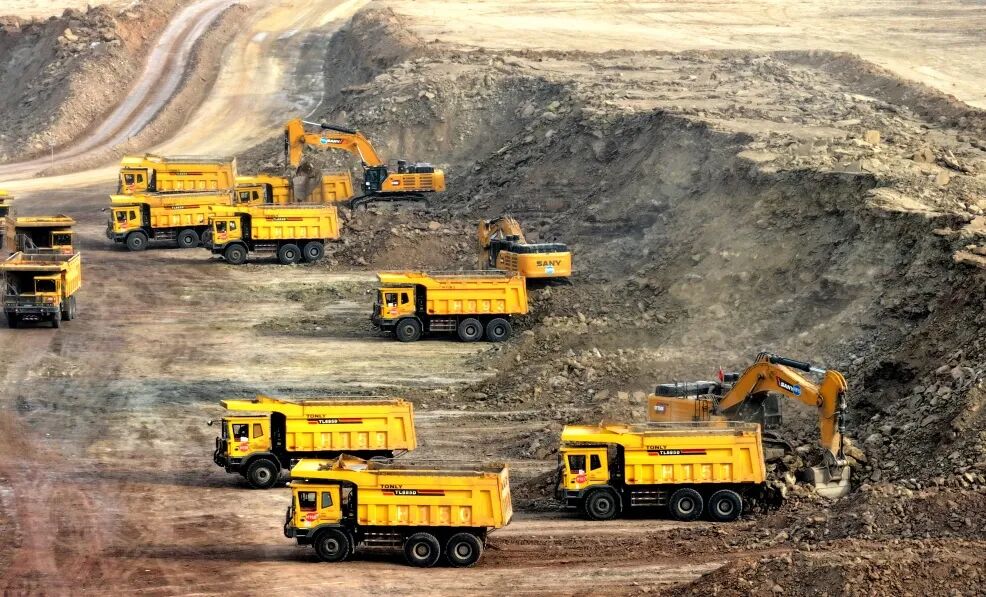
1月6日,在准能集团黑岱沟露天煤矿外委剥离1134和1108采场,350台卡车不间断穿行其中、循环往复,日均剥离运输量稳定在30万立方米, 以高作业强度保证采煤作业面快速推进。 过程管控是管理强化的核心环节。公司将外委作业情况统一纳入安全生产管理体系数智化平台。一方面,倒班安全监管人员与专业技术人员对 外委作业点开展全过程巡查与指导,确保各项规程、措施落实到位;另一方面,积极运用智能化监管手段,通过部署车辆和人员安全监管系 统、固定测速仪、移动式监控摄像头等,实现对作业现场的全天候实时监控与数据分析,极大提升了风险预警与处置能力。 此外,公司还通过压缩外障时间等措施,持续降低安全风险、提高运行效率。多项举措落地实施以来,现场"三违"现象显著减少,设备故障率 同比降低,生产环节衔接更加顺畅,整体安全态势保持平稳向好。 长期以来,外委队伍作为露天煤矿生产作业的重要组成部分,其管理水平直接关系到矿山的生产效率与安全态势。新年伊始,公司为进一步加 强外委管理,重点针对"三类清单"中的禁止、限制类业务全面排查,形成问题清单,分类制定整改方案,目前排查工作有序推进。 公司多举措进行入场管控,大力推行"一体化"培训与考核。 ...

库存去化&寒潮来临,短期煤价有望平稳偏强 | 投研报告
Zhong Guo Neng Yuan Wang· 2026-02-03 09:50
Core Viewpoint - The coal industry is currently at the beginning of a new upward cycle, supported by fundamental and policy factors, making it an opportune time to invest in coal stocks [5] Group 1: Coal Inventory and Consumption - As of January 15, coal inventory in the eight coastal provinces decreased by 583,000 tons week-on-week, a decline of 1.71%, with daily consumption dropping by 100,000 tons/day, a decrease of 4.39% [4] - In the seventeen inland provinces, coal inventory fell by 1,507,000 tons week-on-week, a decrease of 1.59%, while daily consumption increased by 99,000 tons/day, an increase of 2.46% [4] Group 2: Coal Prices - As of January 17, the market price for Qinhuangdao port thermal coal (Q5500) was 697 RMB/ton, up 1 RMB/ton week-on-week; while the price for Datong thermal coal (Q5500) decreased by 12 RMB/ton to 569 RMB/ton [2] - The price for coking coal at Jing Tang port was 1,750 RMB/ton, an increase of 100 RMB/ton week-on-week [3] Group 3: Production Capacity Utilization - As of January 16, the capacity utilization rate for sampled thermal coal mines was 90.6%, an increase of 0.3 percentage points week-on-week; for coking coal, it was 88.47%, an increase of 3.1 percentage points [3] Group 4: Demand and Supply Dynamics - Non-electric demand for coal, particularly in the chemical sector, increased by 46,400 tons/day, a rise of 0.62% week-on-week; however, the steel furnace operating rate decreased to 78.8%, down 0.47 percentage points [4] - The report indicates that coal prices have stopped falling and begun to rebound since late December, driven by improving demand, although the momentum for this rebound may be weakening [5] Group 5: Investment Strategy - The coal sector is characterized by high performance, cash flow, and dividends, with a favorable long-term outlook due to ongoing supply constraints and rising costs [7] - The report suggests focusing on stable companies like China Shenhua, Shaanxi Coal, and others, while also considering those with high elasticity like Yanzhou Coal and others [7]
煤炭开采板块2月3日跌0.19%,昊华能源领跌,主力资金净流出4亿元
Zheng Xing Xing Ye Ri Bao· 2026-02-03 09:11
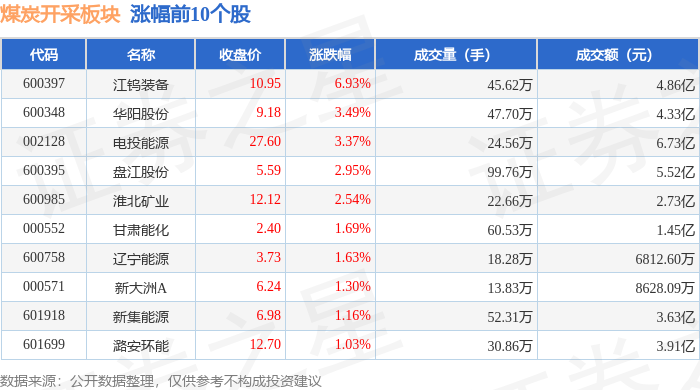
Group 1 - The coal mining sector experienced a decline of 0.19% on February 3, with Haohua Energy leading the drop [1] - The Shanghai Composite Index closed at 4067.74, up 1.29%, while the Shenzhen Component Index closed at 14127.1, up 2.19% [1] - Key stocks in the coal mining sector showed varied performance, with Jiangte Equipment rising by 6.93% and China Shenhua falling by 1.52% [2] Group 2 - The coal mining sector saw a net outflow of 400 million yuan from major funds, while retail investors contributed a net inflow of 301 million yuan [2] - Major funds showed a mixed trend, with Shaanxi Coal and Chemical Industries receiving a net inflow of 42.73 million yuan, while Jiangte Equipment faced a net outflow of 52.98 million yuan [3] - Retail investors favored stocks like SuNeng Co., which had a net inflow of 357.83 million yuan, despite overall sector challenges [3]





红利情报局:高股息主线有望切换至基本面弹性方向
Xin Lang Cai Jing· 2026-02-03 07:52
Core Viewpoint - The high dividend strategy for 2026 is expected to shift towards a focus on fundamental resilience, moving away from historical dividend ratios and static yields towards companies with potential for earnings improvement and increasing future dividends [6][15]. Group 1: Dividend Configuration Direction - Three key clues suggest the dividend allocation direction for 2026: overseas AI investments and manufacturing recovery leading to a power demand gap; resource protectionism in emerging markets coinciding with a rate cut cycle; and a recovery in domestic demand and consumption power, indicating that resources and traditional manufacturing sectors may benefit [6][15]. - The high dividend strategy may focus on structural shifts, seeking companies with fundamental resilience or marginal improvement trends, where future dividend ratios may rise and forecasted yields meet expectations [6][15]. Group 2: Shipping and Port Sector Insights - Regulatory changes regarding shadow fleets may benefit compliant leaders in the oil transportation industry, as a significant gap in effective global oil transport capacity is anticipated due to increased regulatory scrutiny [15]. - The regulatory tightening may lead to a large-scale halt in operations by shadow shipowners, impacting global oil transport turnover, with freight rates expected to show a K-shaped differentiation, where compliant fleets enjoy a safety premium and increased bargaining power [15]. Group 3: Dividend Yield Rankings - The top five sectors by dividend yield include: white goods at 6.10%, commercial banks II at 5.80%, coal mining at 5.46%, rural commercial banks II at 4.90%, and shipping ports at 4.20% [16][17].

——2月信用债策略月报:关注长信用品种的博弈机会
Huachuang Securities· 2026-02-03 07:25
Group 1: Market Overview - In January, credit bond configuration sentiment was strong, leading to a significant compression of credit spreads, with 5-year credit spreads narrowing to the lowest point since 2025[12] - February's market outlook indicates a neutral to favorable pricing environment for bonds, with credit spreads expected to continue narrowing, particularly in the long-term credit segment[8] - The demand for credit bonds remains robust, especially for short-term products, driven by institutional investments and favorable monetary conditions[8] Group 2: Investment Strategies - For bonds with maturities of 5 years or less, focus on structural opportunities, particularly in the real estate sector, where sentiment is expected to improve[3] - Long-term credit bonds (over 5 years) are currently in a favorable positioning window, but investors should be cautious and take profits quickly as spreads compress[3] - Specific recommendations include targeting high liquidity bonds and those with favorable convexity, particularly in the 5.5-6 year and 7.5-8 year ranges[4] Group 3: Sector-Specific Insights - In the urban investment bond sector, low-grade bonds with maturities of 3 years or less still offer attractive yields, while medium to long-term bonds should focus on high-quality issuers[5] - The real estate bond market should concentrate on 1-2 year maturities, particularly for state-owned enterprises, as valuation recovery momentum is strong[5] - For coal bonds, short-term investments should be made cautiously, with a focus on high-rated issuers due to potential price fluctuations in the coal market[5]
——2月信用债策略月报:关注长信用品种的博弈机会-20260203
Huachuang Securities· 2026-02-03 06:32
Group 1 - The report highlights that the credit spread for bonds with maturities of 5 years or less is expected to compress further or maintain low volatility, with a focus on the influx of investment into long-duration credit bonds [2][3] - In January, the credit bond market showed strong sentiment, driven by the implementation of new fund fee regulations and strong institutional allocation, leading to a significant compression of credit spreads [12][15] - The report suggests that long-duration credit bonds are currently in a favorable positioning window, but trading should be executed with timely profit-taking [3][4] Group 2 - The strategy for credit bonds emphasizes identifying structural opportunities in the short to medium-term bonds while positioning for long-duration credits and ensuring timely exits [3][4] - The report indicates that the performance of credit bonds typically outperforms interest rate bonds, with credit spreads narrowing during February, influenced by seasonal factors and market dynamics [17][23] - The analysis of the secondary market shows a general decline in credit bond yields and a compression of credit spreads across various categories [8][15] Group 3 - The report discusses specific sector strategies, including opportunities in urban investment bonds, real estate bonds, coal bonds, and steel bonds, highlighting the importance of selecting high-quality issuers and considering market conditions [5][6] - It notes that the net financing of credit bonds has decreased year-on-year but increased month-on-month, with a rising proportion of long-duration issuances [9][22] - The report emphasizes the need for careful selection of bonds based on liquidity, convexity, and market conditions, particularly for long-duration credit bonds [4][5]
煤炭行业月报(2026年1月):25年供需整体宽松,26年开始有所改善-20260203
GF SECURITIES· 2026-02-03 06:31
Core Insights - The coal industry is expected to see an improvement in supply-demand dynamics starting in 2026 after a generally loose supply in 2025 [1] Group 1: Coal Sector Review - The coal sector outperformed the market in January, with a cumulative increase of 8.3% year-to-date, surpassing the CSI 300 index by 6.7 percentage points [16] - The coal sector's price-to-earnings (PE) ratio is currently at 15.7 times, ranking 5th among all sectors, indicating a relatively high valuation [20][26] - The coal sector's price-to-book (PB) ratio stands at 1.51 times, also reflecting a historical high level [24] Group 2: Coal Market Overview - In December, electricity consumption remained flat year-on-year, while coal imports increased by approximately 12% [29] - Domestic coal prices in January showed stability, with power coal prices rising slightly by 2.1% or 14 RMB/ton compared to the end of December [29] - International coal prices saw a notable increase, with Newcastle's 6000 kcal thermal coal price rising by 3.8% to 110.1 USD/ton [45] Group 3: Domestic Demand and Supply - In 2025, domestic coal production increased by 1.2% year-on-year, while coal imports decreased by 9.6% [56] - The total coal production in 2025 reached 483.2 million tons, with significant contributions from Shanxi, Inner Mongolia, and Shaanxi [56] - The demand for electricity in 2025 grew by 5.0%, with the industrial sector showing varied growth rates [46] Group 4: Key Companies and Financial Analysis - Key companies in the coal sector include China Shenhua, Yanzhou Coal, and Shaanxi Coal, all rated as "Buy" with robust dividend policies [6][7] - Financial metrics for these companies indicate a favorable outlook, with expected earnings per share (EPS) growth and attractive valuation ratios [7]


今日看盘 | 2月2日:指数整体下跌3.79% 山西板块仅4只个股上涨
Xin Lang Cai Jing· 2026-02-02 09:39
文 | 张阳阳 2月2日,A股三大指数集体下跌,截至收盘,上证指数跌2.48%,深证成指跌2.69%,创业板指跌 2.46%;北证50跌2.03%。沪深两市成交额约25847.65亿元,较前一个交易日缩量约2507.73亿元。涨跌 方面,全市场771只股票上涨、4652只股票下跌。 受资源周期股集体重挫、市场情绪恶化及大盘技术指标弱势的共振效应影响,以资源型产业(煤炭、钢 铁)为核心的山西板块表现显著疲软,整体下跌约3.79%。 涨跌情况方面,山西板块41只个股,仅4只上涨,37只下跌,个股分化明显。 特高压、智能电网、电网设备等行业以及概念涨幅居前。山西板块4只上涨个股中,3只经营范围与电 网、电力相关,分别为晋控电力、华翔股份与金利华电,涨幅分别为3.97%、0.65%,和0.54%。 此外,白酒板块走强,涨幅达2.60%。与行业板块走势一致,山西汾酒上涨1.46%。 贵金属及有色金属大幅下跌。山西板块下跌个股中,与之关联的北方铜业也跌幅显著,跌达10.01%。 同时,煤炭开采板块跌5.61%,煤炭概念板跌4.53%。山西板块多只能源股如安泰集团、山西焦煤、美 锦能源也跌幅居前,分别下跌8.93%、8.6 ...