电商

Search documents
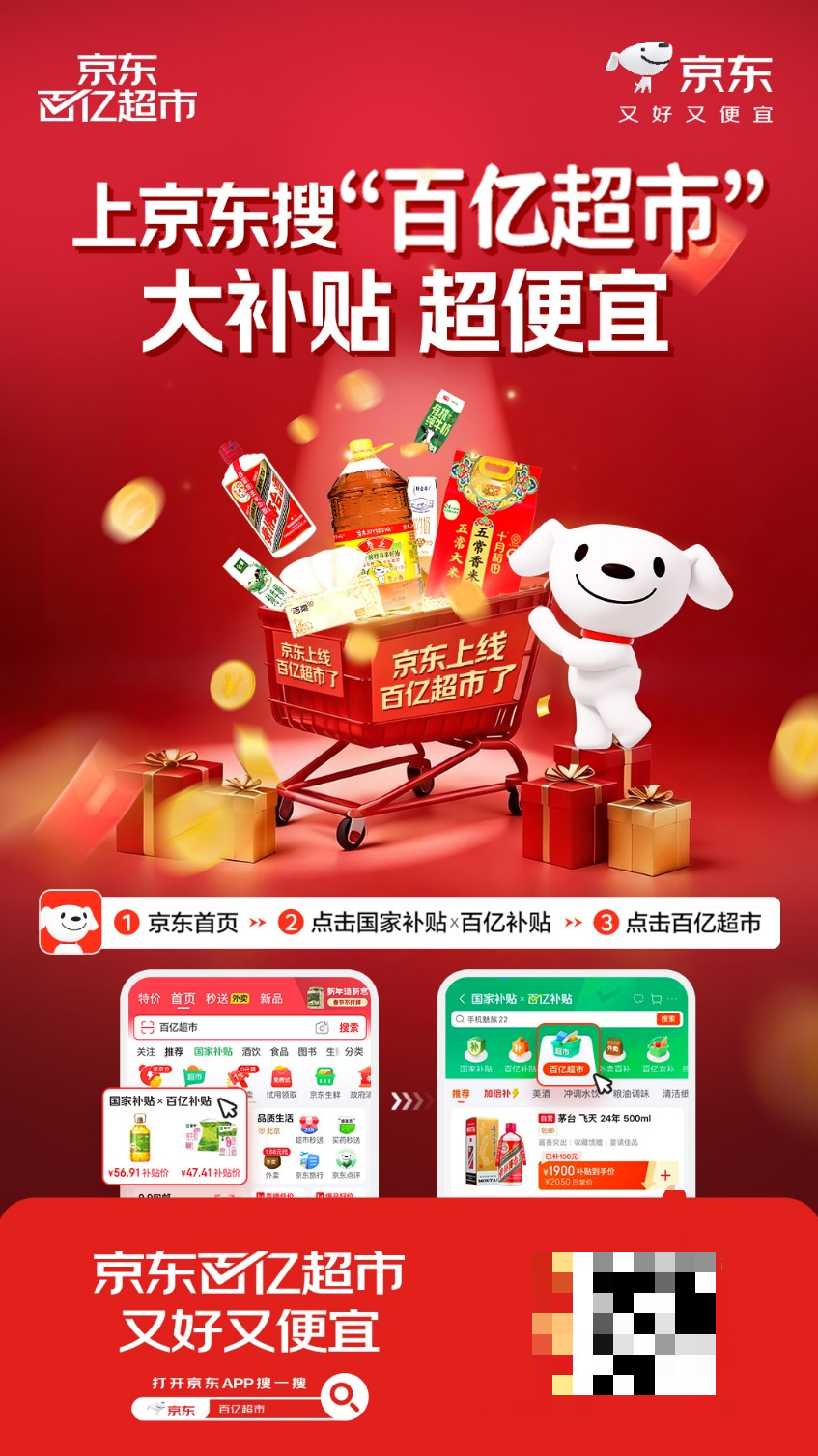
京东“百亿超市”频道上线 未来3年投入超200亿元商品补贴
Zheng Quan Ri Bao Wang· 2026-02-26 12:12
Group 1 - The core initiative is the launch of the "Billion Supermarket" channel on JD APP, aimed at enhancing consumer experience with affordable and quality daily necessities [1][2] - JD plans to invest over 20 billion yuan in product subsidies over the next three years, targeting an additional sales increment of 200 billion yuan for brands [1][2] - The "Billion Supermarket" channel will cover a wide range of products including fresh food, beverages, household items, and personal care products, ensuring quality and affordability for consumers [2] Group 2 - JD Supermarket aims to increase its user base from 300 million to 500 million by 2025, with a growth rate exceeding 20% in user numbers and order volume [1] - The initiative is expected to shift the industry away from low-quality, low-price competition towards a focus on quality and cost-effectiveness [2] - JD is committed to building a reliable trading environment for brands and consumers, enhancing brand trust and ensuring efficient delivery of quality products [2]

亚马逊投资建数据中心;lululemon进军波兰;Valentino任命首席营
Sou Hu Cai Jing· 2026-02-26 11:31
Investment Dynamics - Amazon announced a $12 billion investment to build its first data center campus in Louisiana, in collaboration with Stack Infrastructure, which includes a $400 million investment in local water infrastructure upgrades. The project is expected to create 540 direct full-time jobs and 1,710 related jobs [3] - eBay plans to acquire Etsy's second-hand fashion social platform Depop for approximately $1.2 billion in cash, with the deal expected to close in Q2 2026, pending regulatory approval. This acquisition aims to enhance eBay's C2C offerings and allow Etsy to focus on its core handmade market [6] - Lululemon will open its 100th store in the EMEA region in Warsaw, Poland, on March 13, marking its official entry into the Polish market. The brand plans to enter six new markets in 2026, the highest number in a single year in its history [9] - PepsiCo's Alvalle brand launched a new line of ready-to-eat vegetable soups made from 100% Spanish natural ingredients, with plans to expand into Portugal and other Western European markets [12][13] - Moncler Group reported a 1% year-over-year revenue increase to €3.13 billion for 2025, with a strong fourth quarter growth of 7%. The brand's performance reflects a clear strategy and resilience in a volatile environment [16] - Brunello Cucinelli's revenue grew by 11.5% in 2025, with a net profit of €142 million, slightly above expectations. The brand's success is attributed to the ongoing trend of "quiet luxury" and strong performance in Asia [19] - OTB Group's net sales decreased by 5.9% to €1.6 billion in 2025, with a notable performance from Maison Margiela, which saw an 8.4% sales increase. The group demonstrated resilience despite global uncertainties [22] Personnel Dynamics - Valentino appointed Liran Peterzil as the new Chief Marketing Officer, effective March 2, to oversee global brand strategy and marketing efforts [24] - Saint Laurent appointed Johnny Coca as the creative director for accessories, aiming to enhance the brand's accessory offerings and overall profitability [27] - J.Crew's menswear creative director Brendon Babenzien is leaving to focus on his own brand, Noah, which may create a strategic gap in J.Crew's menswear direction [30]



恒生科技确实实惨,但是你先别慌
佩妮Penny的世界· 2026-02-26 10:51
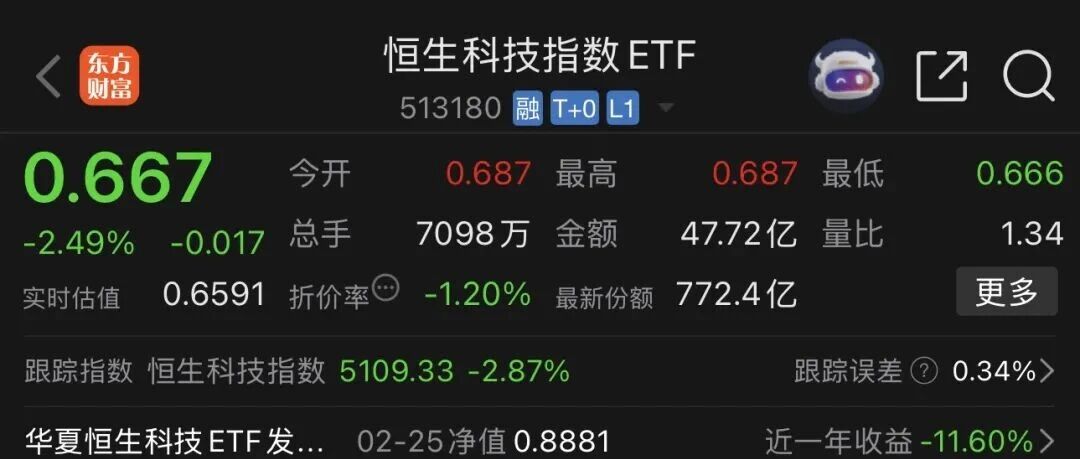
Core Viewpoint - The Hang Seng Technology Index has experienced significant declines, with a drop of 2.49% this year, raising concerns among investors about its future performance [1][2]. Group 1: Index Composition and Performance - The Hang Seng Technology Index consists of the largest 30 Hong Kong stocks related to technology, with annual adjustments involving 2-5 stocks based on technological relevance [7]. - Major components include companies like SMIC (8.54% weight), Alibaba (8.47%), Meituan (7.92%), Tencent (7.72%), and BYD (7.68%) [8]. Group 2: Reasons for Decline - **Liquidity Shock**: The decline is attributed to several factors, including the Federal Reserve's policy changes, which have led to an overreaction in the market, particularly affecting Hong Kong stocks sensitive to overseas liquidity [9]. - **Pressure from Domestic Funds**: Many domestic public funds have over-allocated to Hong Kong stocks and are now facing significant selling pressure as they adjust their portfolios [9]. - **IPO Concerns**: The market is worried about a large number of IPOs (around 300-400 companies), which could negatively impact overall liquidity [9]. Group 3: Sector-Specific Challenges - The index's major companies are facing headwinds, particularly in three sectors: e-commerce and internet giants, new energy vehicles, and software companies [10][11]. - E-commerce giants like Meituan and Alibaba are struggling with profitability due to aggressive competition, with Meituan projected to incur a loss of over 23 billion in 2025 [13]. - The new energy vehicle sector is experiencing a downturn due to price wars and the withdrawal of tax incentives, leading to decreased sales and profit margins [15]. - Consumer electronics companies like Xiaomi are facing rising costs in the semiconductor cycle, which is squeezing their profit margins [15]. Group 4: Valuation and Market Sentiment - Despite the current challenges, the Hang Seng Technology Index is seen as potentially undervalued, with its relative valuation nearing historical lows, at around the 11%-12% historical percentile [15]. - In contrast, A-share valuations in sectors like chips and robotics are significantly higher, indicating a disparity in market sentiment [15]. - The market is characterized by high volatility, with historical patterns showing that after significant declines, the index often reaches new highs [24].
京东上线“百亿超市”频道 未来三年拟投入超200亿元商品补贴
Zhong Guo Jing Ying Bao· 2026-02-26 10:50
Core Viewpoint - JD.com has launched the "Billion Supermarket" channel on its app, focusing on the supermarket category with a significant subsidy investment aimed at boosting brand sales by 200 billion yuan over the next three years [2] Group 1: Investment and Subsidy Plans - JD.com plans to invest over 20 billion yuan in product subsidies within the next three years, targeting an additional sales increment of 200 billion yuan for brands [2] - The "Billion Supermarket" channel will feature the highest subsidy intensity among JD.com's various channels [2] Group 2: Product Coverage and Consumer Experience - The channel will cover a wide range of products including food and beverages, household cleaning, personal care, and baby products, along with some self-operated items from Jingxi [2] - Discounts will be offered through official subsidies, double subsidies, and JD Supermarket card returns, providing a seamless shopping experience without the need for group buying or price comparison [2] Group 3: User Growth and Market Position - JD Supermarket aims to increase its user base from 300 million to 500 million by 2025, with projected growth rates leading the industry [2] - The company anticipates over 20% growth in shopping user numbers and order volume by 2025, while steadily increasing its market share [2] Group 4: Strategic Focus - JD.com intends to leverage its super supply chain capabilities to connect quality brands with essential fast-moving consumer goods, promoting a balanced development of quality and cost-effectiveness in the industry [2] - The strategy includes stabilizing prices, enhancing service efficiency, and ensuring product authenticity to lower consumer decision-making costs and stimulate daily consumption [2]
未来10年,最挣钱的凭什么一定是这群人?
创业家· 2026-02-26 10:34
Group 1 - The core viewpoint of the article is that Amazon's report on global e-commerce trends highlights emerging consumer demands and market opportunities driven by technology, emotional needs, and lifestyle changes [1][39]. Group 2 - Trend One: AI Quality Space - Consumers are willing to spend more on smart home products that enhance emotional interaction and personal comfort, with over 65% of consumers in Europe and the US expressing this willingness [4][6]. - Trend Two: Sleep Economy - 37% of American adults reported a decline in sleep quality in 2023, leading to a growing market for sleep-related products and services that enhance health and quality of life [10][12]. - Trend Three: Happy Office - There is an increasing expectation for workspaces to improve comfort and efficiency, with ergonomic furniture and technology becoming more important [13][14]. - Trend Four: Subtle Technology - Consumers are seeking technology that seamlessly integrates into their lives, enhancing quality without being intrusive, reflecting a demand for thoughtful design [15]. - Trend Five: Pet Economy - The global pet industry is expected to grow by 45% over the next six years, with 55% of pet owners in Europe and Japan willing to invest more in pet healthcare and products [16][19]. - Trend Six: Outdoor Cooking - The rise of camping and outdoor cooking reflects a demand for products that enhance social experiences and lifestyle, moving beyond traditional cooking methods [20][22]. - Trend Seven: Mobile Treasure Chest - Vehicles are evolving into multifunctional spaces, with consumers looking for comfort and efficiency in their car interiors [23][27]. - Trend Eight: Generation Z Consumers - This demographic values sustainability, personalization, and emotional connection in their purchasing decisions, requiring brands to communicate authentically [28][30]. - Trend Nine: Fitness Pioneers - There is a growing focus on health and fitness, with technology enabling more personalized and effective exercise solutions [31][34]. - Trend Ten: E-sports Enthusiasts - Emerging markets are seeing rapid growth in e-sports, with consumers seeking high-performance equipment and immersive experiences [35][37].

京东上线百亿超市频道,三年补贴200亿
Cai Jing Wang· 2026-02-26 10:28
Core Viewpoint - JD.com has launched a new "Billion Supermarket" channel on its app, planning to invest over 20 billion yuan in subsidies over the next three years to boost brand sales by an additional 200 billion yuan [1] Group 1: Investment and Growth Strategy - JD.com aims to invest over 20 billion yuan in product subsidies within the next three years [1] - The company targets an additional sales increment of 200 billion yuan for brands through this initiative [1] Group 2: User Growth Target - JD.com has set a user growth target to increase its user base from 300 million to 500 million by 2025 [1]

京东上线 “百亿超市” 三年补贴 200 亿助力品牌销量新增
Jing Ji Guan Cha Wang· 2026-02-26 10:21
Core Insights - JD.com has officially launched the "Billion Supermarket" channel on its app, aiming to enhance its market presence and sales growth [1] Group 1: Investment and Financial Commitment - JD.com plans to invest over 20 billion yuan in subsidies over the next three years [1] - The investment is expected to help brands generate an additional 200 billion yuan in sales [1]
网经社电商中心主任曹磊2025年发表核心观点摘要&落地执行清单
Sou Hu Cai Jing· 2026-02-26 09:38
Core Insights - The e-commerce industry is at a crossroads, facing challenges such as peak traffic dividends, technological waves, and changing competitive landscapes. Industry players must decide whether to continue struggling in price wars or embrace change to find new growth engines [1] Part 1: Summary of Key Points Live E-commerce: From Wild Growth to Value Reconstruction - Live e-commerce has transitioned from a phase of wild growth to one of value reconstruction, moving away from low-price dumping and impulsive consumption towards building brands and integrating social responsibilities [4][5] - The demand for higher content quality is driven by more rational consumers and platform algorithms favoring socially valuable content [5] "Live + Instant Retail" as a New Growth Driver - The combination of live streaming and instant retail is creating a new consumption loop, requiring platforms to enhance local warehousing and delivery capabilities [6][7] Private Domain Live Streaming: Challenges and Opportunities - Private domain e-commerce is rapidly developing but faces regulatory challenges, particularly in the silver-haired consumer sector. A balance between innovation and consumer protection is necessary for healthy growth [8] AI Applications: Transitioning from Tool Assistance to Growth Driver - AI is reshaping the foundational logic of e-commerce, enabling intelligent product selection, dynamic pricing, and personalized recommendations [9][10] - New AI capabilities allow for complex task planning and autonomous GMV growth, with pilot programs showing promising results [11][12] - The concept of "AI for good" aims to empower marginalized groups, such as disabled streamers, to lower entry barriers and promote inclusive growth [13] Platform Governance: Establishing a "Gatekeeper" Responsibility System - E-commerce platforms must act as gatekeepers, implementing a comprehensive governance system that includes pre-approval, monitoring, and post-processing [14] - Collaboration among government, platforms, and society is essential to combat false reviews and optimize refund mechanisms [15][16] Merchant Pain Points: Intensified Competition and Survival Pressure - Merchants face significant challenges, including price wars, high return rates (65%-80% for women's clothing), and abuse of refund policies, with nearly 40% of merchants experiencing refund rates exceeding 30% [18] Part 2: Actionable Strategies - A systematic response strategy is proposed for small and medium-sized merchants, validated by successful case studies [24] - Key strategies include multi-platform operations, transitioning from public to private domains, expanding brand self-broadcasting, leveraging international markets, utilizing AI in e-commerce, and data-driven decision-making [24][25] Action Guidelines for E-commerce Practitioners - Platform operators should invest in technology infrastructure and build open ecosystems to support digital transformation [25] - Brand merchants should implement omnichannel digitalization, rationally participate in promotions, clarify positioning, and leverage professional data resources for strategic decisions [26] 30-Day Action Path - A detailed 30-day action plan is outlined, targeting a 15% reduction in traffic costs, a 10% decrease in return rates, and a 20% increase in private domain users [27]

京东发布有奖发票活动数据:近8成用户多次参与
Xin Lang Cai Jing· 2026-02-26 08:44
Core Insights - JD.com has launched a prize invoice lottery service on February 10, 2023, as part of a pilot program initiated by the Ministry of Finance, Ministry of Commerce, and State Taxation Administration, covering 11 cities including Beijing, Shanghai, Nanjing, and Wuhan [1][2] User Engagement - During the Spring Festival, the average daily number of users participating in the prize invoice activity increased sevenfold compared to before the festival [1][2] - Over 60% of participants have successfully won prizes, with several users receiving the maximum prize of 800 yuan [1][2] Winning Trends - The first winning users in cities like Taiyuan were generated through JD.com, with multiple users in Beijing and Shanghai winning on the first day of the activity [1][2] Consumption Patterns - Key drivers for invoice participation include purchases of New Year goods, dining, and travel, with supermarket retail invoices accounting for 30% and dining invoices for 22% of the total [1][2] - The travel-related invoices have shown the fastest daily participation growth [1][2] User Retention - The inclusive nature of the activity has led to sustained user engagement, with nearly 80% of users participating repeatedly, and some users have been participating daily since the launch of the activity [1][2]
京东百亿超市频道正式上线,未来三年投入超200亿商品补贴惠享全民
Jin Rong Jie· 2026-02-26 08:41
Core Insights - JD.com has launched the "Billion Supermarket" channel to enhance consumer experience by providing quality daily necessities at affordable prices, with a focus on genuine products and simple discounts [1][2] - The company plans to invest over 20 billion yuan in product subsidies over the next three years, aiming to generate an additional 200 billion yuan in sales for brands [1] - JD Supermarket aims to increase its user base from 300 million to 500 million by 2025, with a projected growth rate exceeding 20% in user numbers and order volume [1] Group 1 - The "Billion Supermarket" channel will cover a wide range of products including food, beverages, household items, personal care, and more, providing consumers with quality goods at competitive prices [1] - The initiative is expected to help the industry move away from low-quality, low-price competition, promoting a focus on quality and cost-effectiveness [2] - JD.com aims to create a reliable shopping platform that ensures high return rates for brands and fosters a trustworthy trading environment for consumers [5] Group 2 - The channel will utilize JD's supply chain capabilities to connect with more quality brands and meet consumer demand for fast-moving consumer goods [2] - The strategy includes stable pricing, efficient service, and product authenticity to lower consumer decision-making costs and stimulate daily consumption [2] - JD.com is committed to building a sustainable retail ecosystem that benefits consumers, brands, and the industry as a whole [5]