
微短剧

Search documents
西安和郑州,争当微短剧“霸总”
2 1 Shi Ji Jing Ji Bao Dao· 2025-09-22 14:00
Core Insights - The micro-short drama market is projected to reach 100 billion yuan by 2027, with cities like Xi'an and Zhengzhou positioning themselves as key players in this growth [1] Group 1: Xi'an's Position in the Market - Xi'an aims to become the "micro-short drama capital," having established itself early in the industry with significant production capabilities [2] - The city is home to over 600 short drama companies, producing 60 out of 100 micro-short dramas nationwide, and has a strong infrastructure for filming [2][4] - Local initiatives include partnerships with universities to cultivate talent and the establishment of a 50 million yuan fund to support micro-short drama development [4][3] Group 2: Zhengzhou's Rapid Growth - Zhengzhou ranks second in annual micro-short drama production, with over 800 production companies and a workforce exceeding 30,000 [7][8] - The city has seen a 29.3% increase in production companies and a fivefold increase in workforce compared to 2023, with a market size growth of 27.4% to 2.3 billion yuan [9][10] - Zhengzhou's government has launched a plan to develop the city into a "micro-short drama creative capital," aiming for a market size of 10 billion yuan by 2027 [10][11] Group 3: Competitive Landscape - Both Xi'an and Zhengzhou face challenges in maintaining their competitive edge, including the need to transition from quantity to quality in production [5][12] - The competition is characterized by a multidimensional struggle for resources, production models, and urban capabilities, with both cities aspiring to be industry leaders [12][13] - Other cities like Beijing and Shanghai are also significant players, controlling key platforms and capital, while regions like Sichuan and Chongqing lead in cultural micro-short dramas [12][13]
传达学习习近平总书记重要讲话精神
Zheng Zhou Ri Bao· 2025-09-15 01:00
Group 1 - The meeting emphasized the importance of adhering to Xi Jinping's thoughts and the implementation of the "Regulations on the Political Work of the Communist Party of China" to enhance ideological and political work [1] - The focus on environmental protection was highlighted, with a commitment to precise pollution control and the promotion of green production and lifestyle to improve air quality [1] - The meeting discussed the need for safety production measures and disaster prevention to ensure high-quality development and safety [1] Group 2 - The meeting addressed the development of the micro-short drama industry, advocating for innovation-driven growth and the establishment of Zhengzhou as a "micro-short drama creation capital" [2] - The "Action Plan for the Revitalization of Leading Agricultural Enterprises in Zhengzhou (2025-2030)" was reviewed, focusing on enhancing industry and brand development to support agricultural modernization [2] Group 3 - The meeting also covered other matters, including the planning for the 2025 Autumn Consumption Month activities [3]
文化战争的隐秘角落:苹果税一年吃掉10个《哪吒》
3 6 Ke· 2025-09-11 09:59
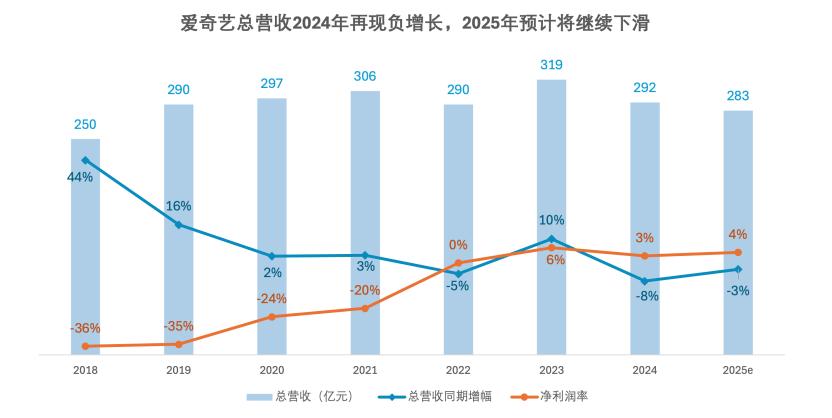
Core Points - Apple has allowed US streaming giants like Netflix to bypass the 30% App Store fee through third-party payment channels, a privilege not extended to Chinese companies, putting them at a competitive disadvantage in the global market [1][3] - The "Apple tax" is expected to extract over 5.2 billion yuan from China's video culture industry by 2025, which could have been invested in quality content production, thereby weakening China's cultural product competitiveness [1][19] - The online video industry in China is facing a downturn, with major platforms like iQIYI and Mango TV experiencing revenue declines, exacerbated by the burden of the Apple tax [10][5] Group 1: Apple Tax Impact - The Apple tax will take approximately 3.7 billion yuan from the long video market and over 1.5 billion yuan from the emerging micro-drama market by 2025 [1][19] - In 2024, the Apple tax burden for iQIYI and Mango TV is projected to reach around 2.2 billion yuan, with expectations to maintain this level in 2025 [10][11] - The total Apple tax for the online video industry is estimated to reach 3.7 billion yuan in 2025, impacting the overall financial health of the sector [12][21] Group 2: Industry Trends - The micro-drama market in China is rapidly growing, with its market size expected to reach 63.4 billion yuan by 2025, surpassing the film box office [17][19] - The introduction of Apple tax on micro-drama platforms could lead to an additional 1.5 billion yuan in fees by 2025, further straining the industry's financial resources [19][26] - The increasing reliance on membership services as a revenue source for platforms like iQIYI and Mango TV is leading to higher Apple tax payments, intensifying cost pressures [10][8] Group 3: Competitive Landscape - Chinese video platforms are facing a significant disadvantage compared to their US counterparts, which benefit from reduced tax burdens and can reinvest more in content creation [19][23] - The disparity in Apple tax policies between China and the US highlights the challenges faced by Chinese companies in competing on a global scale [20][21] - If China were to adopt a similar third-party payment policy as the US, the Apple tax burden could be reduced to 2 billion yuan by 2026, allowing for significant reinvestment in content production [21][22]


省会城市“扎堆”,谁是下一个“爆款”?
Mei Ri Jing Ji Xin Wen· 2025-09-04 23:22
Core Insights - Nanning has officially issued measures to support the high-quality development of the micro-short drama industry, including six categories of support policies with a maximum single reward of 4 million yuan [1] - The micro-short drama market in China is experiencing explosive growth, with market size expected to reach 634.3 billion yuan in 2024 and exceed 1 trillion yuan by 2027 [1][2] Policy Support - New registered micro-short drama companies with annual revenue exceeding 3 billion yuan can receive a one-time reward of 300,000 yuan; companies ranking in the top five for the number of online drama distribution licenses and with revenue over 3 billion yuan can receive up to 4 million yuan [1] - Filming in Nanning's scenic parks can waive entrance and venue fees, and productions that incorporate over 50% of Nanning's city elements can receive subsidies of 5,000 yuan per episode, with a maximum of 100,000 yuan per project [1] Industry Growth - The head company, Guangxi Shanhai Xingchen Media Group, ranks among the top in the national short drama industry, with a market share in the top three and an average monthly box office exceeding 350 million yuan [2] - The local government is increasing policy support, including cash rewards for qualifying micro-short drama products and companies, and access to public spaces for filming [2] Future Development Plans - The "Micro-Short Drama + Cultural Tourism" action plan aims to create over 100 works by the end of 2025, with the micro-short drama industry in Guangxi expected to generate over 5 billion yuan in total revenue [3] - The plan emphasizes developing immersive experiences and enhancing tourist engagement through real-life scenarios and themed attractions [3] Tourism Impact - In 2024, Guangxi is projected to receive 962 million domestic and international tourists, with tourism revenue reaching 1.03 trillion yuan, marking a significant increase [3] - The goal for 2025 is to attract 1.05 billion tourists and achieve over 1.1 trillion yuan in tourism revenue [3]
城市24小时 | 省会城市“扎堆” 谁是下一个“爆款”?
Mei Ri Jing Ji Xin Wen· 2025-09-04 15:58
Group 1 - Nanning has officially issued measures to support the high-quality development of the micro-short drama industry, including six categories of support policies with a maximum single reward of 4 million yuan [1][2] - New registered micro-short drama companies with annual revenue exceeding 3 billion yuan can receive a one-time reward of 3 million yuan, while those ranking in the top five for the number of online drama distribution licenses and revenue exceeding 3 billion yuan can receive up to 4 million yuan [1][2] - The micro-short drama market in China is experiencing explosive growth, with the market size expected to reach 634.3 billion yuan in 2024 and surpass 1 trillion yuan by 2027 [1][2] Group 2 - Nanning has developed a certain scale of micro-short drama industry ecology, with leading companies like Guangxi Shanhai Xingchen Media Group ranking among the top in the national short drama industry [2] - The new policies not only support the establishment and production of micro-short drama companies but also encourage international expansion, offering rewards for export revenues [2] - The integration of micro-short dramas with cultural tourism is seen as a way to enhance local tourism and create new promotional opportunities for regional culture [2][3] Group 3 - The Guangxi government aims to create over 100 "micro-short drama + cultural tourism" works by the end of 2025, with total revenue from the micro-short drama industry exceeding 5 billion yuan [3] - The action plan emphasizes developing immersive experiences and enhancing tourist engagement through real-life scenarios based on micro-short dramas [3] - In 2024, Guangxi is projected to receive 9.62 billion domestic and international tourists, with tourism revenue reaching 1.03 trillion yuan, marking significant growth [3]

城市24小时 | 省会城市“扎堆”,谁是下一个“爆款”?
Mei Ri Jing Ji Xin Wen· 2025-09-04 15:47
Group 1 - Nanning has officially issued measures to support the high-quality development of the micro-short drama industry, including six categories of support policies with a maximum single reward of 4 million yuan [1] - New registered micro-short drama companies with annual revenue exceeding 3 billion yuan can receive a one-time reward of 3 million yuan, while those ranking in the top five for the number of network drama distribution licenses and revenue exceeding 3 billion yuan can receive up to 4 million yuan [1] - The micro-short drama market in China is experiencing explosive growth, with the market size expected to reach 634.3 billion yuan in 2024 and surpass 1 trillion yuan by 2027 [1][2] Group 2 - Nanning has formed a certain scale of micro-short drama industry ecosystem, with leading companies like Guangxi Shanhai Xingchen Media Group ranking among the top in the national short drama industry [2] - The new policies not only support the establishment and production of micro-short drama companies but also encourage international expansion, offering rewards for export revenues [2] - The integration of micro-short dramas with cultural tourism is seen as a way to enhance local tourism and create new promotional opportunities [2][4] Group 3 - The Guangxi government aims to create over 100 "micro-short drama + cultural tourism" works by the end of 2025, with total revenue from the micro-short drama industry exceeding 5 billion yuan [3] - The action plan emphasizes developing real-life experience locations and immersive projects based on micro-short drama narratives to enhance tourist engagement [4] - In 2024, Guangxi is projected to receive 9.62 billion domestic and international tourists, with tourism revenue reaching 1.03 trillion yuan, marking significant growth [4]

给钱给地,谁在争夺“短剧第一城”?
3 6 Ke· 2025-09-02 23:26
Core Insights - The domestic micro-short drama market has surpassed 50.5 billion yuan, marking a historical high and igniting competition among cities for dominance in this emerging industry [1] - Cities are implementing supportive policies aimed at attracting micro-short drama production, with the goal of boosting GDP and establishing themselves as leaders in the new content era [1] Funding - Competition for funding has evolved from merely comparing subsidy amounts to establishing more complex rules that guide the development direction of micro-short dramas [2] - Shanghai has allocated 50 million yuan in support funds by 2025, focusing on high-quality projects with a maximum subsidy of 3 million yuan for top-tier works, which may marginalize smaller teams [2] - Shenzhen's flexible policy allows projects to apply for multiple subsidies, capping at 3 million yuan, which can significantly reduce costs for mid-tier teams but raises concerns about potential policy exploitation [3] Local Policies - Xi'an combines micro-short drama support with local cultural tourism IP, offering an additional 20% reward for award-winning works, promoting both content quality and cultural output [5] - Fujian has set up a special fund of 30 million yuan over three years to support the creation and promotion of high-quality micro-short dramas [6] - Zhengzhou's policy emphasizes local culture, offering up to 300,000 yuan for dramas showcasing Yellow River culture and additional subsidies for filming at iconic locations [8] Production Environment - The production environment is challenged by high costs, low approval efficiency, and resource integration difficulties, prompting local governments to offer various supportive measures [9] - Guangxi's initiative aims to produce 100 cultural tourism short dramas by 2025, linking content with tourism to create a closed loop of content, traffic, and consumption [9] - Changzhou's policy focuses on technological upgrades, providing hardware support and subsidies for using AIGC in script and scene creation [10] Talent Development - The key to establishing a micro-short drama hub lies in talent, with cities like Xi'an and Hengdian seeing significant increases in production volume and crew numbers [15][16] - However, many local talent policies remain basic, failing to address the collaborative training needs between different roles, which is essential for industry advancement [18] - The future of micro-short drama production will depend on creating a comprehensive ecosystem rather than merely relying on subsidies, with a focus on sustainable business models and market-driven growth [18]

反诈短剧来了!《云端捕手》如何用“小剧情”守护“大安全”?
2 1 Shi Ji Jing Ji Bao Dao· 2025-09-02 15:08
Core Viewpoint - The short drama "Cloud Catcher" aims to raise awareness about fraud prevention through storytelling, based on real cases from various platforms under Douyin Group, and is produced in collaboration with multiple organizations [1][4][10]. Group 1: Content and Format - "Cloud Catcher" consists of 62 episodes, each lasting 2 minutes, designed for mobile viewing, aligning with current audience habits [4][7]. - The series features a narrative involving a journalist and a cybersecurity expert who team up to combat fraud, highlighting various prevalent scams [1][4]. - The short drama format is characterized by its brevity, fast pace, and intense conflict, effectively capturing audience attention in a short time [4][7]. Group 2: Audience Engagement - The audience for micro-dramas spans various age groups, with 42.5% aged 18-30, 36.7% aged 40-59, and 15.8% aged 60 and above, indicating a growing interest among older demographics [7][17]. - Short dramas serve as an effective medium to educate audiences about fraud, particularly for those less familiar with online scams [7][8]. Group 3: Industry Trends - The micro-drama industry is transitioning from purely entertainment to a platform for social value, expanding content themes and innovative production models [8][17]. - The integration of mainstream media, platform institutions, and market forces creates a robust content production synergy, enhancing public safety education [10][17]. - The "Micro-drama +" initiative by the National Radio and Television Administration aims to guide the industry towards high-quality development, emphasizing social value alongside entertainment [17].

文化观察:出海微短剧如何摆脱“低级感”?
Zhong Guo Xin Wen Wang· 2025-08-30 23:21
Core Viewpoint - The micro-short drama industry is experiencing rapid growth and is becoming a significant cultural export for China, but it faces challenges related to content quality and cultural representation [2][4][6]. Group 1: Industry Growth and Characteristics - The micro-short drama market is projected to exceed 50 billion yuan in 2024, indicating explosive growth in recent years [2]. - Zhejiang province has emerged as a leader in the micro-short drama sector, with a complete production chain and a high number of production agencies and platforms [3]. - In the first seven months of this year, over 2,300 micro-short drama crews have been hosted in Hengdian, with an expected total of over 4,000 crews for the year [3]. Group 2: Challenges and Criticisms - The industry is facing criticism for a perceived "low-level" quality in content, attributed to three imbalances: commercial versus artistic focus, global versus local cultural elements, and technology versus content innovation [4]. - The reliance on proven "hit" formulas has led to a saturation of similar themes, such as revenge and family drama, which diminishes artistic diversity [4]. - Simplifying content to remove Chinese cultural elements has resulted in a loss of cultural identity, failing to resonate with international audiences [4]. Group 3: Recommendations for Improvement - Experts suggest that micro-short dramas should focus on enhancing quality, rooting in local culture, and expanding internationally while balancing local expression with global appeal [5][7]. - There is a call for deeper exploration of Chinese cultural essence in micro-short dramas, integrating local narratives that reflect real-life experiences [7]. - Establishing a collaborative mechanism between academia and industry is recommended to maintain artistic exploration while ensuring scalability and platform development for micro-short dramas [8].
以人工智能推动文化创新表达
He Nan Ri Bao· 2025-08-29 23:19
Group 1 - The 15th China International Digital Publishing Expo and the 4th National Reading Conference in Henan highlighted the cultural charm of the region, featuring the "Remarkable Oracle Bone Script" exhibition as a key attraction [1] - The exhibition showcased an immersive experience using XR technology, allowing visitors to engage with historical narratives from the Shang Dynasty, enhancing public interest in traditional culture [1] - The rapid development of artificial intelligence (AI) is transforming various sectors, including finance, healthcare, and entertainment, while also providing new opportunities for the innovative development of traditional Chinese culture [1][2] Group 2 - Tencent's collaboration with Anyang since 2022 has focused on the digital preservation of Oracle Bone Script, utilizing AI to create the world's largest database of Oracle characters, making it accessible for public inquiry [2] - The Henan provincial government has issued policies to support the integration of AI technology with industrial innovation, aiming to establish a new hub for AI development [2] - The digital economy, driven by AI, is becoming a leading area of technological revolution, with digital technologies like big data, cloud computing, and 5G permeating various sectors and fostering high-quality development in smart manufacturing and cultural industries [2] Group 3 - The rise of AI tools, such as the writer assistant from Yuewen Group and QQ Music's AI songwriting, is lowering barriers for creators and fostering a new wave of public engagement in the arts [3] - Henan's micro-short drama production has surged, with the province accounting for about 40% of the national output, indicating a significant growth in the cultural industry supported by AI technology [3] - The integration of digital technology in culture allows for diverse expressions and encourages public participation, transforming individuals into active contributors to cultural activities [3]