
海洋渔业

Search documents
农业农村部:支持海南加力推进农业科技创新 高水平建好南繁硅谷
news flash· 2025-07-24 14:39
Core Viewpoint - The Ministry of Agriculture and Rural Affairs will support Hainan in enhancing agricultural technology innovation and establishing a high-level "Southern Breeding Silicon Valley" [1] Group 1: Agricultural Technology Innovation - The Ministry emphasizes the importance of agricultural technology innovation, focusing on seed industry development as a key area [1] - Hainan is encouraged to leverage its resource endowments and free trade port policies to develop tropical characteristic high-efficiency agriculture and natural rubber [1] Group 2: Marine Fisheries Development - The Ministry supports the high-quality development of marine fisheries in Hainan [1] Group 3: Poverty Alleviation and Employment - The Ministry aims to help Hainan consolidate and expand the achievements in poverty alleviation, strengthening employment support measures to prevent large-scale return to poverty [1] Group 4: Rural Development - Hainan is encouraged to learn from the "Ten Thousand Projects" experience and promote the construction of livable and workable beautiful villages tailored to local conditions [1]
城记 | 挺进“深蓝”,哪些城市在领跑中国海洋经济
Xin Hua Cai Jing· 2025-07-24 07:34
Core Insights - A new wave of marine economic development is gaining momentum in China, with local governments taking the lead and central authorities providing direction [1][2] Group 1: Marine Economic Policies and Developments - Shandong initiated the "Modern Marine Industry Action Plan (2024-2025)" in June 2022, followed by Guangdong and Shanghai's respective regulations and plans in June 2023 [1] - The Central Financial Committee's sixth meeting in July 2023 further clarified the direction for high-quality marine economic development [1] Group 2: Shanghai's Marine Economic Performance - Shanghai's marine GDP reached 10,372 billion yuan in 2019, accounting for 27.2% of the city's total GDP and 11.6% of the national marine GDP, making it the only city in China with a marine economy exceeding 10 trillion yuan [2] - By 2024, Shanghai's marine GDP is projected to rise to 11,387 billion yuan [2] Group 3: Competitive Positioning - Shanghai ranks first in marine economic development in China and is among the top three globally, according to various reports [3] - The city is recognized as a global marine center, ranking fourth in the world, following Singapore, Rotterdam, and London [3] Group 4: Research and Innovation Capacity - Shanghai boasts 12 research institutes, 13 marine-related universities, and over 20 municipal innovation platforms, along with significant corporate players in the marine sector [4] - The city is focusing on developing world-class industrial clusters in shipbuilding and marine engineering [4] Group 5: Economic Hinterland and Influence - Shanghai's economic hinterland, supported by the Yangtze River Economic Belt, provides a rich application scenario for marine economic development [5] - The Yangtze River Economic Belt's GDP reached 630,228 billion yuan in 2024, accounting for 47% of the national total [5] Group 6: Challenges and Opportunities in Other Cities - Other coastal cities like Tianjin and Qingdao are striving to enhance their marine economic capabilities but face challenges in innovation and technology transfer [6][7] - Qingdao aims to elevate its marine economic strength to second place nationally by 2025, while Shenzhen is also competing for this position [7] Group 7: Future Directions in Marine Industries - The marine fishery sector in China remains robust, with opportunities for digital marketing integration and high-value utilization of marine resources [8] - Shanghai is positioned to optimize its marine fishery industry chain and establish a global cold chain logistics center for aquatic products [8]
三个关键词,看海洋经济新活力
Ren Min Ri Bao Hai Wai Ban· 2025-07-23 22:22
Core Insights - The marine economy in China is projected to exceed 10 trillion yuan in 2024, marking a 5.9% increase from the previous year, and accounting for 7.8% of the national GDP [7] - The shipbuilding industry has achieved over 50% market share in new ship orders, completed ships, and hand-held orders internationally for the first time [10] - The marine aquaculture sector is evolving into a modern "grain warehouse," with a 4.0% increase in marine fishery value added in 2024 [12] - The offshore wind power industry is experiencing significant growth, with a nearly 30% increase in electricity generation in 2024 [15] Shipbuilding Industry - The Jiangnan Shipyard is set to deliver over 10 LNG ships this year, with a total of approximately 60 LNG ship orders valued at around 150 billion yuan [9] - The shipbuilding industry is focusing on green technology, with a carbon capture system achieving over 80% CO2 capture rate [9] - The marine engineering equipment manufacturing sector has seen new orders increase by 57.1% and delivery orders by 114.3% year-on-year [10] Marine Aquaculture - The "Yenghai 1" marine ranch in Shandong has doubled its yield through integrated seaweed and oyster farming [11] - The development of modern marine ranches is expanding into deeper waters, with average offshore distances increasing from 10 km to 18 km since 2018 [12] - The marine fishery sector's output is expected to reach 4,880 billion yuan in 2024, reflecting a 4.0% growth [12] Offshore Wind Power - The offshore wind power sector is entering a new phase of large-scale development, with significant advancements in technology and capacity [15] - The total electricity generation from offshore wind power is expected to grow by nearly 30% in 2024 [15] - The establishment of a complete industrial chain for offshore wind power equipment is underway, with 35 projects covering various components [14] Emerging Marine Industries - The marine new industries are projected to grow by 7.2% in 2024, with significant advancements in marine pharmaceuticals and bioproducts [15] - The establishment of innovation platforms in marine engineering, offshore wind power, and marine pharmaceuticals is being actively pursued [15] - The marine economy is transitioning from quantitative growth to qualitative improvements, enhancing resource supply and sustainable development capabilities [13][16]

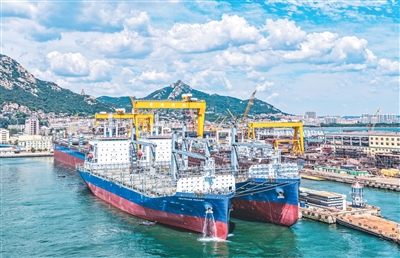
推动“金融+海洋”深度融合
Zhong Guo Zi Ran Zi Yuan Bao· 2025-07-23 09:45
Group 1 - The establishment of the Shenzhen Marine Financial Alliance aims to connect financial resources with the marine industry, facilitating a deep integration of "finance + marine" to support the construction of a marine financial ecosystem in Shenzhen and accelerate the development of a global marine center city [1][2] - The alliance's structure and development plan were introduced by the chairman unit, Bank of China Shenzhen Branch, emphasizing a development path of "policy guidance + market operation + ecological collaboration" [1] - The event featured a financing roadshow where 5 financial institutions promoted marine-specific financial products, and 7 key marine enterprises presented their financing needs, resulting in 26 marine financing projects being matched, covering areas such as green shipping, high-end equipment, marine energy development, and marine fisheries [1] Group 2 - The establishment of the Shenzhen Marine Financial Alliance is expected to deepen financial empowerment for high-quality development of the marine economy, integrating various financial resources such as banking, securities, insurance, and funds [2] - The alliance will promote regular interactions between financial institutions and marine enterprises, exploring marine risk protection systems and innovations in marine financial products to inject sustainable momentum into the marine economy [2]
“全域协同”向新行
Zhong Guo Zi Ran Zi Yuan Bao· 2025-07-23 09:45
Group 1: Core Insights - The article highlights the development of a modern marine ranching model in Jiangmen, Guangdong, which aims to enhance the marine economy and supply fresh seafood to the Guangdong-Hong Kong-Macao Greater Bay Area [1][3] - Jiangmen is leveraging its geographical advantages, with 9,535.2 square kilometers of land and 4,880.5 square kilometers of sea, to promote high-quality marine economic development [1][3] - The establishment of Jiangmen Ocean Group in February 2023 marks a significant step in the full industrial chain of marine ranching, focusing on seedling cultivation, deep-sea farming, and equipment manufacturing [3] Group 2: Marine Economy Development - Jiangmen has implemented a series of policies under the "Marine Strong City" strategy, leading to the rapid formation of diverse industrial clusters such as coastal tourism, marine fisheries, and marine engineering equipment [3] - The first batch of gravity-type net cages was installed in June 2023, and the first large-scale aquaculture equipment "Taishan No. 1" is set to be deployed in 2024, indicating a shift from nearshore to deep-sea aquaculture [3][4] - Jiangmen's seafood supply chain is being enhanced with the establishment of a resource library and processing industrial park, ensuring that "Jiangmen fresh products" reach consumers directly from the deep sea [3] Group 3: Manufacturing and Energy Sector - Jiangmen has a strong manufacturing base in marine engineering, with nearly 100 companies, including major players like Veolia and Nanyang Shipbuilding, contributing to the region's industrial strength [6] - Significant projects include the delivery of the world's largest shallow-draft semi-submersible vessel in 2023 and the launch of China's first green functional mobile floating island in 2024 [6] - The city is also advancing in the energy sector, with over 15 million kilowatts of installed power capacity expected by the end of 2024, positioning it as a major electricity supplier in the Greater Bay Area [6] Group 4: Open Cooperation and Development - Jiangmen is actively integrating into the Greater Bay Area's marine economy through open cooperation, enhancing tourism and modern service sectors [9] - The city is promoting collaborative projects with Shenzhen, focusing on shipbuilding, marine ranching, and high-end marine engineering equipment [9] - The establishment of economic cooperation zones with Hong Kong and Shenzhen aims to leverage regional strengths and create synergistic effects in marine and green industries [9] Group 5: Ecological Protection and Sustainability - Jiangmen is committed to ecological protection, with the largest mangrove area in the Pearl River Delta, and is developing a national wetland park to enhance biodiversity [10] - The city has initiated carbon credit trading for mangrove conservation, showcasing its commitment to sustainable development [10] - Jiangmen's efforts in ecological protection and marine economic development are intertwined, contributing to a sustainable marine economy in the Greater Bay Area [10]
从“蓝色粮仓”到“蓝色动能” 现代渔业激发经济新活力|向海图强 海洋经济破浪前行
证券时报· 2025-07-22 23:52
Core Viewpoint - China's marine fishery is undergoing a profound transformation from traditional production to a modern industry, with a focus on high-quality development and strengthening the marine economy [1]. Group 1: Industry Overview - China's marine fishery maintains a leading global position, with continuous expansion and technological upgrades. In Q1 2025, the national marine product output increased by 4.5% year-on-year, with marine aquaculture output rising by 5.7% [3]. - Technological innovations are evident, such as the launch of the deep-sea aquaculture vessel "Zhanjiang Bay No. 1" and the completion of the "Fuxi No. 1" deep-sea net cage farming platform [3]. Group 2: Industry Leaders and Innovations - Industry leaders are driving upgrades through technological and product innovations. For instance, Dongfang Ocean has established the largest brown algae germplasm resource bank in China, cultivating five national审新品种, accounting for 40% of the national total [4]. - Guolian Aquatic Products has improved its freezing process, reducing the freezing time from 24 hours to 30 minutes using liquid nitrogen technology, which preserves the quality of seafood [4]. Group 3: Challenges and Shortcomings - Despite its leading position, China's marine fishery faces challenges compared to international standards, particularly in the areas of seed quality and equipment automation [6][8]. - The reliance on imported high-end aquaculture species and the lack of automation in deep-sea farming are significant issues that need addressing [7]. Group 4: New Growth Drivers - The development of marine ranching has elevated the scale and quality of China's marine fishery, contributing to national food security and providing high-protein, low-fat seafood options [10]. - The marine fishery is becoming a new growth engine for economic and social development, enhancing food supply capabilities and promoting integrated development across various industries [11].

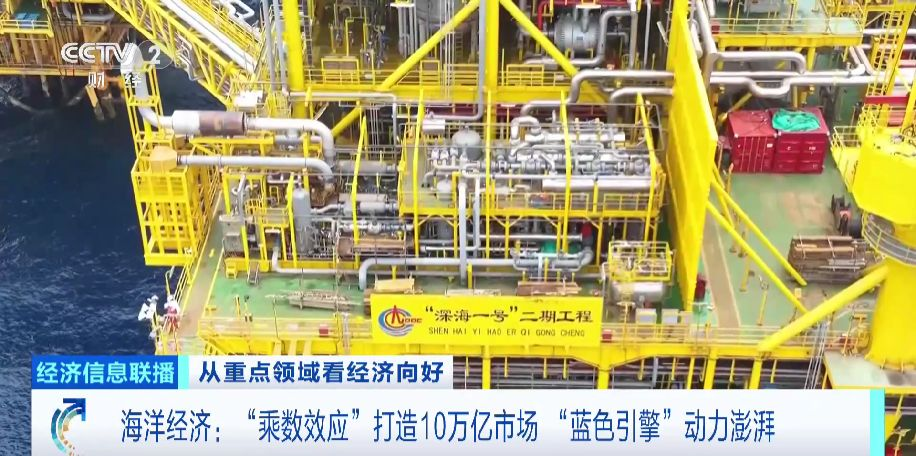
“乘数效应”打造10万亿市场 海洋经济成中国经济增长“蓝色引擎”
Yang Shi Wang· 2025-07-20 00:50
Core Viewpoint - The marine economy in China is emerging as a significant driver of economic growth, with a GDP exceeding 2.5 trillion yuan in the first quarter of this year, marking a year-on-year growth of 5.7% [1] Group 1: Marine Economy Development - The marine economy is becoming a "blue engine" for China's economic growth, as highlighted in the government work report and the recent Central Financial Committee meeting [1] - China's marine economy has surpassed 10 trillion yuan, growing by 75.9% over the past decade, indicating a shift from quantitative to qualitative changes in economic development [28] Group 2: Deep Sea Energy Resources - The "Deep Sea No. 1" gas field is producing over 4.5 billion cubic meters of natural gas annually, reaching its maximum design capacity, and is crucial for energy supply in the Guangdong-Hong Kong-Macao Greater Bay Area [3] - Deep water and ultra-deep water regions contribute 70% to 80% of major global oil and gas discoveries in the past decade, establishing deep sea as a core battlefield for oil and gas reserves [7] Group 3: Offshore Wind Power - The construction of the ±500 kV offshore converter station in Yangjiang is part of China's first offshore integrated flexible direct current project, expected to deliver 6 billion kilowatt-hours of offshore wind power annually by 2026 [9] - China's offshore wind power is transitioning from a follower to a leader, with advancements in core technologies such as large megawatt units and floating wind power [11] Group 4: Marine Aquaculture - The "Suhai No. 1," the world's first self-propelled closed salmon farming vessel, is set to produce 8,000 tons of salmon annually, with an investment of 600 million yuan [14] - Plans to promote five such vessels could lead to an annual production capacity of 40,000 tons, generating a market scale of 28 billion yuan [16] Group 5: Undersea Data Centers - The first commercial underwater intelligent computing center cluster in China has been launched, significantly reducing cooling energy consumption compared to land-based data centers [18] - Each underwater data module can save approximately 120 million kilowatt-hours of electricity annually compared to similar-sized land data centers [20] Group 6: Technological Innovations - The "Nanjiao No. 1" underwater cable-laying robot has achieved a speed of 1,000 meters per hour, doubling the efficiency of traditional operations [22] - This technology supports the establishment of underwater data centers and transoceanic communication systems, extending marine development capabilities [24] Group 7: Integrated Marine Development - The integration of offshore wind power, oil and gas development, marine aquaculture, and digital infrastructure is forming a comprehensive marine development strategy [26] - The marine economy's unique characteristics enable deep integration across primary, secondary, and tertiary industries, enhancing the utilization of marine resources [28]
连云区勇闯海洋经济“无人区”
Xin Hua Ri Bao· 2025-07-14 06:29
Core Viewpoint - The article highlights the advancements in marine agriculture in Lianyungang District, particularly the successful breeding of the blue crab seedling, which marks a significant step in local aquaculture and economic development [1][2]. Group 1: Marine Agriculture Development - Lianyungang District has successfully bred 2 million blue crab seedlings using only 48 wintering crabs, showcasing the potential for local aquaculture [1]. - The blue crab is favored for its strong disease resistance and rapid growth, with a market price of approximately 0.35 yuan per seedling, indicating a promising market outlook [1]. - The district's marine economy is projected to reach a production value of 18.833 billion yuan in 2024, accounting for 58.3% of the regional GDP [1]. Group 2: Technological Innovation in Marine Industry - The marine fishery sector in Lianyungang is evolving from traditional nearshore fishing to deep-sea aquaculture and distant-water fishing, enhancing the industry chain [2][3]. - The district is collaborating with research institutions to introduce new species and technologies, such as ecological health farming methods for various marine species [2]. - The introduction of Antarctic krill development and advanced fishing technologies aims to create a high-value utilization chain for marine resources [2]. Group 3: Economic Growth and Statistics - In the previous year, the marine fishery sector achieved an added value of 1.866 billion yuan, reflecting a 154.6% increase compared to 2020, with an average annual growth rate of 26.3% [3]. - The district is focusing on developing new marine industries, including offshore wind power, marine biomedicine, and high-performance carbon fiber production [3]. Group 4: Research and Development Initiatives - Lianyungang has initiated 17 national and provincial projects in the past three years, receiving nearly 19.13 million yuan in financial support [4]. - The district is actively matching technology talent with enterprises to address innovation needs, signing contracts worth 1.22 million yuan for technology development and services [4]. Group 5: Future Plans and Goals - The district plans to strengthen cooperation with marine-related universities and accelerate the establishment of major technological innovation platforms [5]. - There is a focus on overcoming key technologies in marine high-end equipment, marine biology, and comprehensive seawater utilization to capture high-tech research and development opportunities [5].
做强做优做大海洋产业——高质量发展海洋经济述评(上)
Jing Ji Ri Bao· 2025-07-13 22:09
Core Viewpoint - The Chinese government is focusing on promoting high-quality development of the marine economy, emphasizing the strengthening and expansion of marine industries, including offshore wind power, modern deep-sea fishing, marine biomedicine, and marine tourism [1][4]. Group 1: Marine Economic Growth - The marine economy in China is experiencing strong growth, with the total economic output expected to exceed 10 trillion yuan in 2024 [2]. - The marine economic development scale and efficiency index is projected to be 125.2 in 2024, reflecting a 2% increase from the previous year [2]. - The emerging marine industries' added value has grown by 7.2%, indicating an increasing share in the marine economy [2]. Group 2: Structural Optimization - The marine manufacturing industry's added value reached 3.2 trillion yuan, accounting for over 30% of the marine production value [2]. - The structure optimization and upgrading index is forecasted to be 131.0, showing a 1.8% increase year-on-year [2]. - Traditional marine industries still dominate, but there is significant potential for growth in emerging sectors like marine engineering, renewable energy, and marine biomedicine [2][3]. Group 3: Policy and Regional Development - Various regions, including Shanghai and Guangdong, are implementing policies to enhance marine economic development, aiming for a world-class modern marine industry system by 2030 [4]. - The focus is on optimizing marine productivity and fostering a competitive modern marine industry through regional collaboration [4]. - Local governments are encouraged to leverage their unique advantages to create distinctive marine economic development patterns [4]. Group 4: Integrated Development - The strategy of coordinating land and sea development is crucial for unlocking new growth drivers in the marine economy [5]. - There is a trend towards integrating marine industries with other sectors, such as combining marine advanced manufacturing with modern services [5]. - Innovative models like intelligent ecological marine ranches are being explored to enhance the synergy between different marine activities [5]. Group 5: Quality Improvement and Innovation - Strengthening and optimizing marine industries is a dynamic process that requires continuous adaptation to changing priorities [6]. - The use of digital technologies in deep-sea fishing is highlighted as a means to improve precision and extend the value chain [6]. - Key factors for high-quality development include innovative allocation of technology, talent, and capital, alongside effective management of marine ecological spaces [6].
为海洋经济高质量发展注入澎湃动能(科技视点)
Ren Min Ri Bao· 2025-07-10 22:27
Group 1: Marine Economy Development - The core viewpoint emphasizes the importance of high-quality development in the marine economy as part of China's modernization strategy, driven by technological innovation [1] - The Chinese government is focusing on enhancing independent innovation capabilities in marine technology and fostering leading marine technology enterprises [1] - The article highlights the significance of marine resources and the need for strategic management to boost the marine economy [1] Group 2: Marine Aquaculture - The article discusses the advantages of large-scale aquaculture, specifically the use of oversized net cages that enhance the quality of fish, such as the large yellow croaker [2] - The unique geographical features of the region, including nutrient-rich waters from three rivers, contribute to the area's prominence in yellow croaker production [2] - Innovations in net cage design, such as using high-density polyethylene, improve resilience against harsh weather conditions [2][3] Group 3: Smart Aquaculture Technologies - The integration of smart technologies in aquaculture management allows for real-time monitoring of water quality parameters, significantly reducing disease rates among fish [3] - The establishment of a net-free sound wave marine ranch aims to simulate wild conditions for fish, aiding in the recovery of natural populations [3] Group 4: Wind Power Development - The article outlines the rapid development of offshore wind power in Fujian, with a total installed capacity of 383,000 kilowatts expected by May 2025 [6][7] - The use of domestic equipment in offshore wind projects marks a significant advancement in China's high-end manufacturing capabilities [7] - The article highlights the importance of energy storage solutions to enhance the utilization of offshore wind power [7] Group 5: Seaweed Industry Potential - Seaweed is identified as a valuable resource with significant potential for high-end applications, such as the production of ultra-pure sodium alginate for medical use [8][9] - The successful industrialization of ultra-pure sodium alginate represents a breakthrough in overcoming previous market monopolies [9] Group 6: LNG Dual-Fuel Shipbuilding - The construction of LNG dual-fuel ships is highlighted as a response to international emissions reduction targets, with significant reductions in CO2 emissions [10][12] - The article discusses the challenges faced in developing LNG fuel tanks and the innovative solutions implemented by domestic shipbuilders [11] Group 7: Desalination Projects - The establishment of a large-scale seawater desalination project in Tianjin aims to meet the freshwater needs of the chemical industry, replacing over 5 million tons of freshwater annually [14][15] - The project utilizes advanced dual-membrane desalination technology, achieving significant efficiency in freshwater production [15][16] - The integration of a circular economy model around desalination processes is being developed to enhance resource utilization [16]
