
量子计算

Search documents
中国首个!规模化专用光量子计算机工厂落地深圳,机构看好产业应用前景
2 1 Shi Ji Jing Ji Bao Dao· 2025-11-25 00:11
麦肯锡《量子技术监测》研究报告显示,预计到2035年全球量子技术市场规模将达到970亿美元,其中量子计算最具潜力并将占据最大份额,收入规模预计 将从2024年的40亿美元增长至2035年的720亿美元。 21世纪经济报道记者现场获悉,该制造工厂位于南山智城,总面积约5000平方米,集研发、制造、测试于一体,用于实现光量子计算机的工程化、标准化和 规模化生产,相当于造出一条"流水线"。 "这座工厂具备年产数十台专用光量子计算机的能力,填补了全球在该领域规模化制造的空白。"玻色量子创始人兼CEO文凯表示。 政策面上,"量子科技"被写入《中共中央关于制定国民经济和社会发展第十五个五年规划的建议》,与生物制造、氢能和核聚变能、脑机接口、具身智能、 6G等并列为前瞻布局的未来产业。 11月24日,中国首个规模化专用光量子计算机制造工厂正式落地深圳南山区。 相较其他技术路线,光量子计算不需要超低温,且具有量子比特数规模大、室温稳定运行、相干时间长等多方面优势,在短期内可实现工程化,是商用量子 计算机的新兴形态。 据不完全统计,全球范围内,芬兰量子计算公司IQM、欧洲量子计算服务提供商Quandela、美国量子计算公司Io ...


量子计算加速迈向实用化 多领域应用持续拓展
Zhong Guo Xin Wen Wang· 2025-11-22 07:46
Core Insights - Quantum computing is transitioning from laboratory research to practical applications, with significant advancements showcased at the 2025 World Computing Conference in Changsha [1][3] Group 1: Industry Developments - China is reportedly keeping pace with international standards in quantum sensing and single-photon detection, with some applications already achieving breakthroughs [3] - Quantum sensors are being widely used in smart agriculture and safety monitoring, providing high-precision detection of temperature and magnetic fields [3] - Compared to traditional infrared sensors that require cooling to -200 degrees Celsius and cost hundreds of thousands, quantum sensors significantly reduce costs and eliminate the need for extreme environments, broadening their application scenarios [3] Group 2: Technological Innovations - The conference featured innovative products from Lianxuan Technology, including the portable quantum computer "Gemini Mini Pro" and the superconducting quantum chip "Shaowei," which integrates 25 high-performance qubits and has been exported to regions including the Middle East, Southeast Asia, and Europe [3] - The optical detection technology developed by Aopu Tiancheng is crucial for the practical implementation of quantum computing, exemplified by the Raman spectrometer's ability to identify suspicious powders in one second during police drug investigations [3] Group 3: Future Outlook - Predictions indicate that quantum computers may achieve large-scale applications within five years, with their parallel processing capabilities expected to revolutionize computing power [3] - Quantum computing and artificial intelligence are seen as mutually beneficial, with quantum computing overcoming AI data processing limitations and AI optimizing quantum algorithms [4] Group 4: Educational Initiatives - Lianxuan Technology has initiated a quantum computing research and study project in collaboration with Dahan International Craftsman Institute and Guanggu Chuangka, aiming to create a comprehensive educational model that includes equipment, courses, and practical experience [5] - The company has also partnered with Hunan University of Commerce to integrate quantum education into undergraduate training programs [5]
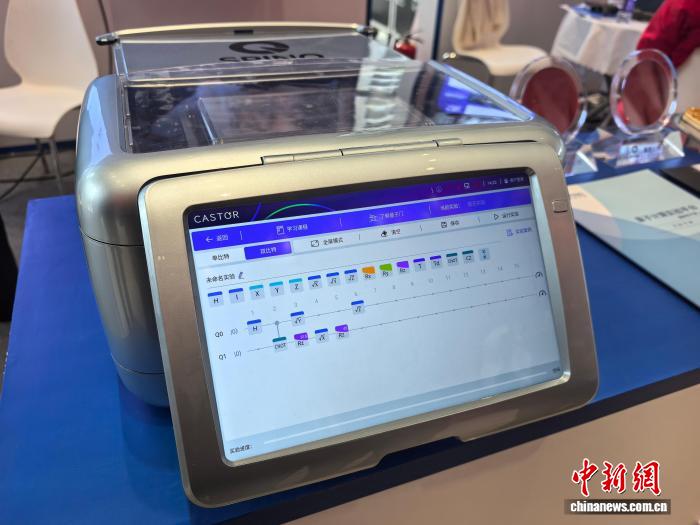
前瞻全球产业早报:我国首台套绿氢煤化工项目全面投运
Qian Zhan Wang· 2025-11-21 09:49
Group 1 - Guangdong aims to exceed 440 billion yuan in AI core industry scale by 2027, with a computing power scale surpassing 60 EFLOPS [2] - The digital economy's core industry added value is expected to account for over 16% of GDP by 2027, maintaining the top position in the country [2] - The plan includes the establishment of three internationally competitive trillion-level digital industry clusters and a data industry with an annual compound growth rate exceeding 15% [2] Group 2 - China's first green hydrogen coal chemical project has fully entered market operation, providing a replicable model for the green transformation of the coal chemical industry [3] - The project utilizes a "green electricity hydrogen production + excess electricity grid connection" collaborative model [3] Group 3 - The number of China-Europe freight trains has surpassed 3,500 this year, marking a historical high since the inception of the service in 2013 [4] - A freight train carrying 55 containers departed from Inner Mongolia, highlighting the increasing volume of trade through this route [4] Group 4 - Lenovo has signed agreements to secure long-term supply of key components amid rising prices and supply shortages [5][6] - The company emphasizes its strong relationships with suppliers to manage current supply challenges effectively [6] Group 5 - EVE Energy has signed a procurement framework agreement with Smoore International for the continuous supply of battery cells and other products until December 31, 2028 [7] Group 6 - Xiaomi has officially rolled out its 500,000th vehicle, setting a record for the fastest production of 500,000 units by a global new energy vehicle manufacturer in just 602 days [8] Group 7 - Meta's chief scientist Yann LeCun announced his departure to start a new venture focused on Advanced Machine Intelligence, aiming to revolutionize AI capabilities [12] Group 8 - The largest rare earth producer in the U.S. plans to build a refining plant in Saudi Arabia in partnership with the U.S. Department of Defense and a Saudi mining company [13] Group 9 - AMD, Cisco, and Saudi HUMAIN are forming a joint venture to deploy AI infrastructure, with plans to start operations in 2026 and reach up to 1 GW capacity by 2030 [15]

华为将发布AI领域突破性技术,解决算力资源利用效率难题;广东省发文加强算力产业供给,算力产业链持续受益——《投资早参》
Mei Ri Jing Ji Xin Wen· 2025-11-20 23:44
每经记者|杨建 每经编辑|彭水萍 (一)重要市场新闻 1、美股三大指数集体收跌,道指跌0.84%,标普500指数跌1.56%,纳指跌486.18点,跌幅2.15%;大型 科技股集体下挫,AMD跌超7%,甲骨文跌超6%,奈飞、英伟达跌超3%,特斯拉、亚马逊跌超2%,微 软跌超1%。中概股多数下跌,纳斯达克中国金龙指数跌3.26%,蔚来跌超6%,小鹏汽车跌超5%,哔哩 哔哩、百度、拼多多跌超4%。 2、美国劳工统计局周四公布本该上月发布的9月非农报告显示,美国9月非农就业人口增长11.9万人, 是预期5.1万的两倍多,同时,8月份新增就业人数从增长2.2万人下修2.6万,至减少0.4万人,7月和8月 非农就业人数合计下修3.3万人。国际油价走低,美油主力合约跌0.88%,报58.73美元/桶;布伦特原油 主力合约跌0.66%,报63.09美元/桶。欧洲三大股指收盘全线上涨,德国DAX指数涨1.11%报23419.35 点,法国CAC40指数涨0.34%报7981.07点,英国富时100指数涨0.21%报9527.65点。 (二)行业掘金 1、华为将于11月21日发布一项AI领域突破性技术,相关技术有望解决算力资源 ...
超导量子计算机“天衍—287”正式运行
Ren Min Ri Bao Hai Wai Ban· 2025-11-20 23:33
Core Insights - The "Tianyan-287" superconducting quantum computer, equipped with the same chip as "Zuchongzhi No. 3," has officially commenced operations, demonstrating "quantum computing superiority" by processing specific problems 450 million times faster than the fastest supercomputer currently available [1] Group 1 - The "Tianyan" quantum computing cloud platform has been launched in November 2023 and is set to be the first quantum computing cloud platform in China that possesses "quantum computing superiority" [1] - The platform has already achieved over 37 million visits and serves users from more than 60 countries and regions, with over 2.7 million experimental tasks completed [1]
晚报 | 11月21日主题前瞻
Xuan Gu Bao· 2025-11-20 14:19
Group 1: Digital Economy and Computing Power - Guangdong Province aims to establish a national digital economy innovation development pilot zone by 2027, targeting a digital economy core industry value-added share of over 16% of GDP and an annual compound growth rate of over 15% for the data industry [1] - The AI industry is experiencing strong demand, as evidenced by Nvidia's recent earnings report, which alleviated concerns about an AI bubble [1] - Domestic computing power supply chains are expected to enter a rapid growth phase, with significant capital expenditure increases anticipated from local cloud service providers [1] Group 2: Huawei's AI Technology - Huawei plans to unveil a breakthrough AI technology on November 21, which could increase computing resource utilization from the industry average of 30%-40% to 70%, effectively doubling existing hardware efficiency [2] - This innovation allows for unified scheduling and efficient utilization of various computing hardware, enhancing the domestic AI computing power supply chain's autonomy and ecosystem integration [2] - The technology aims to compete with international leaders in AI hardware and software collaboration, potentially becoming a crucial support for China's AI infrastructure [2] Group 3: Quantum Computing - IBM and Cisco are collaborating on foundational work for distributed quantum computing, aiming to demonstrate a network concept that integrates large-scale fault-tolerant quantum computers within five years [3] - This initiative seeks to address fundamental challenges faced by quantum computing networks and aims to connect multiple large-scale quantum computers [3] - Quantum computing is viewed as a transformative technology that could lead to significant advancements across various industries, with a projected market size reaching hundreds of billions by 2030 [4] Group 4: Tungsten Market - Chapter Tungsten Industry announced price increases for tungsten products, with black tungsten concentrate at 328,000 yuan per ton and ammonium paratungstate at 478,000 yuan per ton, reflecting a 6% rise from the previous month [5] - The demand for tungsten has surged due to growth in industries like photovoltaics and automotive, while supply constraints have intensified market tensions [5] - The first batch of tungsten mining quotas for 2025 is set at 58,000 tons, a 6.45% decrease from the previous year, indicating tightening supply [5] Group 5: Lithium Iron Phosphate Industry - The China Chemical and Physical Power Industry Association is set to release guidelines to standardize pricing in the lithium iron phosphate sector, aiming to curb below-cost competition [6] - The lithium iron phosphate battery sector dominates new energy storage, with an expected total shipment of 580 GWh in 2025, reflecting a growth rate exceeding 75% [6] - The industry is anticipated to improve its economic outlook as it combats internal competition and benefits from high demand in energy storage applications [6]
国芯科技参股公司合肥硅臻首发基于硅光集成芯片的通用可编程光量子计算机
Zheng Quan Shi Bao Wang· 2025-11-20 11:39
Core Insights - The core focus of the news is the launch of a general-purpose programmable optical quantum computer by Silizhen, a subsidiary of Guoxin Technology, at the 2025 Quantum Technology and Industry Conference in Hefei, marking a significant advancement in quantum computing technology [1][2]. Company Developments - Silizhen's optical quantum computer is designed for general quantum computing, utilizing photons as qubit carriers and integrated photonic chips as the core, enabling self-developed key components with high fidelity, easy deployment, and scalability [1][2]. - The system architecture employs photon path encoding for qubit manipulation and utilizes an interference network for unitary evolution, ensuring efficient collaboration between the optical quantum chip and the measurement and control system [2][3]. - The device currently supports 4 physical qubits, suitable for experimental validation in small to medium quantum computing scenarios, with average fidelity exceeding 99.4% for single and two-qubit states [2][3]. Technological Advantages - The optical quantum computer features high resistance to disturbances due to its use of photons as qubit carriers, providing a stable foundation for computation and execution efficiency [3]. - The modular programmable computing core based on silicon photonic integrated chips allows for resource expansion and functional upgrades, addressing both research exploration and industrial application needs [3]. - Key components such as the entangled photon source, integrated optical quantum computing chip, and measurement and control system are all developed in-house by Silizhen, showcasing the company's technological capabilities [3]. Application Potential - The optical quantum computer is expected to serve various fields, including quantum algorithm validation in research, AI applications like autonomous driving, quantum encryption prototype development in communications, and financial market simulations [3].
未来产业的现在进行时(经济聚焦)
Ren Min Ri Bao· 2025-11-19 22:20
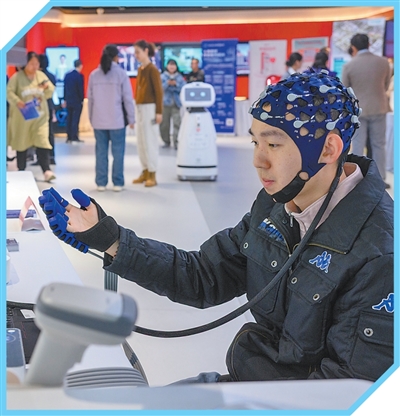
Core Insights - The article discusses the development of future industries in China, focusing on quantum technology, biomanufacturing, nuclear fusion energy, brain-computer interfaces, and embodied intelligence as key growth areas for high-quality development [10][15][18]. Quantum Technology - The "Quantum Avenue" in Hefei is home to numerous tech companies, creating a complete ecosystem for quantum computing, communication, and measurement [11]. - The third-generation superconducting quantum computer "Benyuan Wukong" is set to officially operate in January 2024, with over 80% of its components domestically produced [11]. - "Benyuan Wukong" has been accessed over 37 million times by users from 163 countries, completing 740,000 quantum computing tasks across various fields [12]. Biomanufacturing - Biomanufacturing combines traditional fermentation and synthetic biology, enabling customized production of medical products and sustainable materials [13]. - China holds a significant advantage in biomanufacturing, accounting for over 70% of global fermentation capacity and leading in the production of amino acids and organic acids [13]. - Challenges include the need for core strains and key enzymes, which require improved biological information databases and design tools [14]. Nuclear Fusion Energy - China is making significant strides in nuclear fusion research, with the "China Circulation No. 3" achieving record temperatures of 120 million degrees Celsius for ions and 160 million degrees Celsius for electrons [16]. - The establishment of the first International Atomic Energy Agency fusion research and training center in China marks a shift from participant to key player in global fusion energy development [16]. Brain-Computer Interfaces - Brain-computer interface technology is rapidly expanding into various fields, particularly in healthcare for rehabilitation and assistive technologies [18]. - China is developing a robust ecosystem for brain-computer interfaces, with significant advancements in clinical applications and policy support aimed at creating a competitive industry by 2030 [19]. Embodied Intelligence - The development of humanoid robots is advancing, with companies focusing on high-performance hardware and software to enhance capabilities in various applications [20]. - Shenzhen is emerging as a hub for embodied intelligence, with a complete industrial chain supporting technology development and market application [21]. 6G Technology - 6G technology aims to integrate communication, sensing, advanced computing, and AI, significantly enhancing connectivity and supporting the digital transformation of society and industries [22]. - China is leading in 6G research and is expected to achieve commercial deployment by 2030, with ongoing efforts in technology validation and ecosystem development [23].
玻色量子中标中信银行信用卡中心量子计算服务采购项目
Xin Lang Cai Jing· 2025-11-18 10:20
Core Insights - The article reports that Beijing Boson Quantum Technology Co., Ltd. has won a bid for a quantum computing service procurement project as announced by the official website of CITIC Financial Holdings' electronic procurement system [1] Group 1 - The procurement project is related to quantum computing services [1] - The announcement was made on November 18 [1] - The bid win indicates a significant step for Beijing Boson Quantum in the quantum computing sector [1]

前沿科技竞速,天地一体布局
Yin He Zheng Quan· 2025-11-18 07:54
Investment Rating - The report maintains a "Buy" rating for the telecommunications sector, highlighting opportunities in communication operators, artificial intelligence, satellite internet, and quantum technology [2][3]. Core Insights - The telecommunications sector is experiencing a downturn, with a weekly index drop of 4.77%. However, sub-sectors such as communication network technology services and industry applications have shown better performance [7][6]. - Significant advancements have been made in cutting-edge technologies, including quantum computing and 6G communication, which are expected to drive future growth [5][16]. - The report emphasizes the importance of the upcoming 6G technology, which is projected to be a key growth driver for the telecommunications industry [22][29]. Summary by Sections Market Performance - The telecommunications sector index fell by 4.77% over the past week, with specific sub-sectors performing relatively well [7][6]. - Notable performance metrics include a 31.30% increase in certain stocks, while others saw declines of up to 14.29% [11][15]. Industry Development and Key Events - The "Tianyan-287" superconducting quantum computer has been successfully built, marking a significant milestone in quantum computing [16]. - Major tech companies are competing in the space computing arena, with initiatives from Nvidia, SpaceX, and Google indicating a shift towards space-based AI infrastructure [22][24]. Investment Recommendations - The report suggests focusing on specific stocks within the telecommunications sector, including 300308, 300502, 300383, 601869, and 688027, among others [2][5]. - The emphasis is placed on sectors such as AI, satellite internet, and quantum technology as promising areas for investment [2][5].

